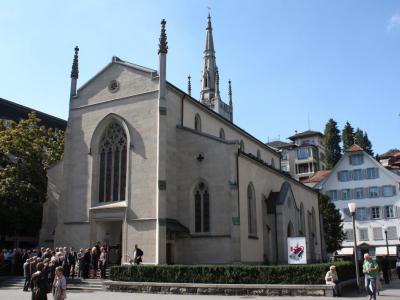


St. Matthew Church (Matthäuskirche), Lucerne
Saint Matthew’s Church is an interesting example of Gothic Revival architecture and holds a special place in Lucerne’s history as the city’s first Protestant church. Its beginnings can be traced to the early 19th century, when German and English visitors began campaigning for a Protestant congregation in Lucerne. Even King Friedrich Wilhelm III of Prussia supported the cause, donating a valuable communion chalice when the Reformed congregation was established in 1827.
The present three-aisled basilica was designed around 1860 by the well-known Zurich architect Ferdinand Stadler, who took inspiration from English church architecture. Construction was made possible with financial support from across Switzerland. A reminder of this contribution can be seen in the side windows, displaying the coats of arms of 22 Swiss cantons.
The owner of the nearby Schweizerhof Hotel donated a suitable plot of land for the church. The foundation stone was laid on January 30, 1860, and just over a year and a half later, on September 29, 1861, the completed church was inaugurated.
As you approach the entrance, look for the sandstone relief dedicated to the Lucerne reformer and humanist Oswald Geisshüsler, better known as Myconius, who lived from 1488 to 1552.
Inside, one of the main features is the large stained-glass window in the choir. It depicts the four Evangelists together with their traditional symbols. From left to right, you’ll see Luke with a bull, Mark with a lion, Matthew with an angel, and John with an eagle. At the back of the church stands the organ, built in 1971 by the organ-making firm J. Neidhart and G. Lhôte.
Saint Matthew’s also has an interesting connection with the German composer Richard Wagner. While living in Lucerne between 1866 and 1872, Wagner married his second wife, Cosima von Bülow, here on August 25, 1870.
The church is normally open on weekdays from 9 am to 5 pm.
The present three-aisled basilica was designed around 1860 by the well-known Zurich architect Ferdinand Stadler, who took inspiration from English church architecture. Construction was made possible with financial support from across Switzerland. A reminder of this contribution can be seen in the side windows, displaying the coats of arms of 22 Swiss cantons.
The owner of the nearby Schweizerhof Hotel donated a suitable plot of land for the church. The foundation stone was laid on January 30, 1860, and just over a year and a half later, on September 29, 1861, the completed church was inaugurated.
As you approach the entrance, look for the sandstone relief dedicated to the Lucerne reformer and humanist Oswald Geisshüsler, better known as Myconius, who lived from 1488 to 1552.
Inside, one of the main features is the large stained-glass window in the choir. It depicts the four Evangelists together with their traditional symbols. From left to right, you’ll see Luke with a bull, Mark with a lion, Matthew with an angel, and John with an eagle. At the back of the church stands the organ, built in 1971 by the organ-making firm J. Neidhart and G. Lhôte.
Saint Matthew’s also has an interesting connection with the German composer Richard Wagner. While living in Lucerne between 1866 and 1872, Wagner married his second wife, Cosima von Bülow, here on August 25, 1870.
The church is normally open on weekdays from 9 am to 5 pm.
Want to visit this sight? Check out these Self-Guided Walking Tours in Lucerne. Alternatively, you can download the mobile app "GPSmyCity: Walks in 1K+ Cities" from Apple App Store or Google Play Store. The app turns your mobile device to a personal tour guide and it works offline, so no data plan is needed when traveling abroad.
Download The GPSmyCity App



St. Matthew Church (Matthäuskirche) on Map
Sight Name: St. Matthew Church (Matthäuskirche)
Sight Location: Lucerne, Switzerland (See walking tours in Lucerne)
Sight Type: Religious
Guide(s) Containing This Sight:
Sight Location: Lucerne, Switzerland (See walking tours in Lucerne)
Sight Type: Religious
Guide(s) Containing This Sight:
Nearby Sights

Walking Tours in Lucerne, Switzerland

Create Your Own Walk in Lucerne
Creating your own self-guided walk in Lucerne is easy and fun. Choose the city attractions that you want to see and a walk route map will be created just for you. You can even set your hotel as the start point of the walk.
Lucerne's Towers Walking Tour
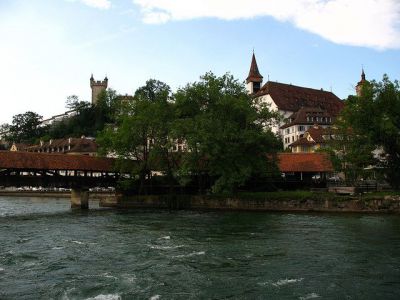
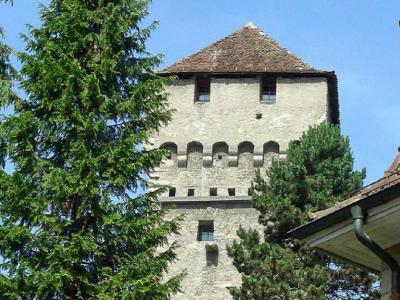
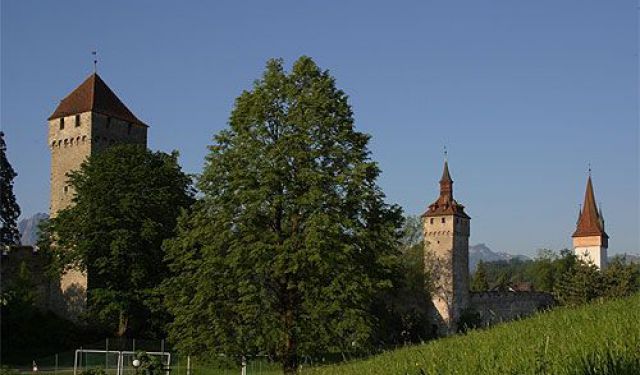
Rising high above Lucerne’s Old Town, the Musegg Wall is one of the city’s most distinctive landmarks. Its line of nine medieval towers forms a kind of stone crown above the rooftops, and from several points along the fortifications you can look out across the city, Lake Lucerne, the Reuss River, and the mountains beyond.
Built mainly during the 13th and 14th centuries, the wall stretches... view more
Tour Duration: 1 Hour(s)
Travel Distance: 1.0 Km or 0.6 Miles
Built mainly during the 13th and 14th centuries, the wall stretches... view more
Tour Duration: 1 Hour(s)
Travel Distance: 1.0 Km or 0.6 Miles
Lucerne's Architectural Jewels Walking Tour
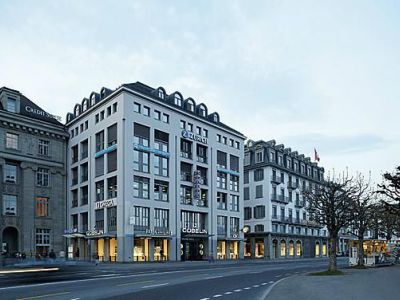
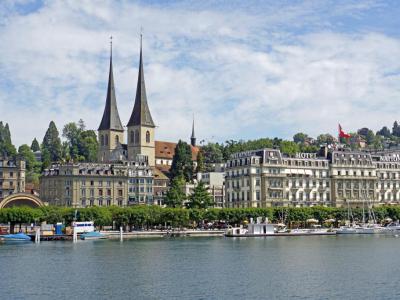
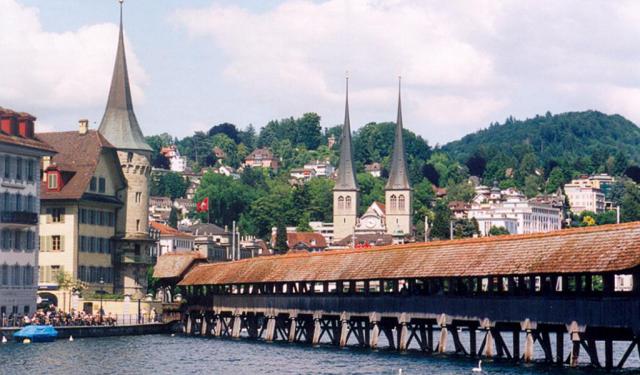
Lucerne’s long religious and cultural history is thoroughly reflected in its architecture, making the city one of Switzerland’s most popular destinations. As you walk through the city center, impressive buildings-from grand civic landmarks to old guild houses, churches, and historic bridges-appear almost naturally along the route.
One of the top local architectural attractions is... view more
Tour Duration: 2 Hour(s)
Travel Distance: 2.3 Km or 1.4 Miles
One of the top local architectural attractions is... view more
Tour Duration: 2 Hour(s)
Travel Distance: 2.3 Km or 1.4 Miles
Lucerne Old Town Walking Tour
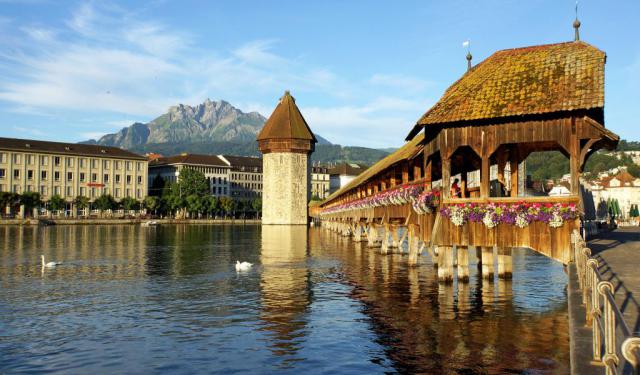
Lucerne has drawn travelers, writers, and musicians for centuries, often for simple reasons: the lake, the mountains, and a city center that’s easy to walk. Figures like the German composer Richard Wagner lived and worked here, and many 19th-century visitors wrote about Lucerne as a comfortable base for exploring central Switzerland. Their impressions still ring true today-Lucerne is... view more
Tour Duration: 2 Hour(s)
Travel Distance: 4.2 Km or 2.6 Miles
Tour Duration: 2 Hour(s)
Travel Distance: 4.2 Km or 2.6 Miles