

Tomb of Dong Khanh, Hue (must see)
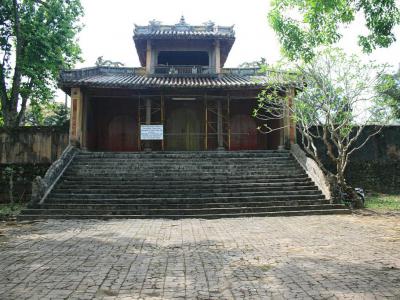
The Tomb of Dong Khanh in Hue stands out as the smallest of the Nguyen dynasty’s imperial mausoleums, shaped more by circumstance than ceremony. Originally built in 1888 as a temple-Tu Truy-dedicated to Emperor Dong Khanh’s father, Nguyen Phuc Hong, it was swiftly repurposed the following year when Dong Khanh died unexpectedly at age 25 after a brief three-year reign. With no time to design a traditional royal tomb, the existing temple was adapted to serve as his final resting place.
Despite its modest scale, the site includes 20 closely grouped buildings oriented toward the southeast. Unlike the typical stone courtyards seen in other imperial tombs, the ceremonial yard here features terracotta statues coated with cement-an economical yet visually distinct approach. The tomb’s rapid construction, completed in just eight months, reinforces its status as an improvised solution rather than a grandiose imperial statement.
The centerpiece of the complex is the Ngung Hy Temple, an ornate structure blending traditional Vietnamese aesthetics with French colonial influences. Its golden-red interiors and uniquely decorated roofs-adorned with terracotta figures of fishermen and floral motifs-set it apart from other royal sites in Hue. This fusion of East and West reflects the cultural and political complexities of the late 19th century.
Just 30 meters from the temple lies the emperor’s sarcophagus, notable for its Roman architectural elements rather than the customary Chinese style. Inside the temple, visitors can also view 24 illustrations depicting scenes from Dong Khanh’s era, offering insight into a short-lived reign overshadowed by instability and foreign influence.
Despite its modest scale, the site includes 20 closely grouped buildings oriented toward the southeast. Unlike the typical stone courtyards seen in other imperial tombs, the ceremonial yard here features terracotta statues coated with cement-an economical yet visually distinct approach. The tomb’s rapid construction, completed in just eight months, reinforces its status as an improvised solution rather than a grandiose imperial statement.
The centerpiece of the complex is the Ngung Hy Temple, an ornate structure blending traditional Vietnamese aesthetics with French colonial influences. Its golden-red interiors and uniquely decorated roofs-adorned with terracotta figures of fishermen and floral motifs-set it apart from other royal sites in Hue. This fusion of East and West reflects the cultural and political complexities of the late 19th century.
Just 30 meters from the temple lies the emperor’s sarcophagus, notable for its Roman architectural elements rather than the customary Chinese style. Inside the temple, visitors can also view 24 illustrations depicting scenes from Dong Khanh’s era, offering insight into a short-lived reign overshadowed by instability and foreign influence.
Want to visit this sight? Check out these Self-Guided Walking Tours in Hue. Alternatively, you can download the mobile app "GPSmyCity: Walks in 1K+ Cities" from Apple App Store or Google Play Store. The app turns your mobile device to a personal tour guide and it works offline, so no data plan is needed when traveling abroad.
Download The GPSmyCity App



Tomb of Dong Khanh on Map
Sight Name: Tomb of Dong Khanh
Sight Location: Hue, Vietnam (See walking tours in Hue)
Sight Type: Attraction/Landmark
Sight Location: Hue, Vietnam (See walking tours in Hue)
Sight Type: Attraction/Landmark
Nearby Sights
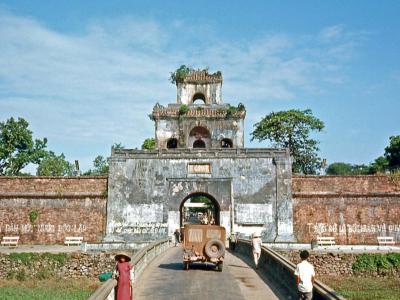
Walking Tours in Hue, Vietnam

Create Your Own Walk in Hue
Creating your own self-guided walk in Hue is easy and fun. Choose the city attractions that you want to see and a walk route map will be created just for you. You can even set your hotel as the start point of the walk.
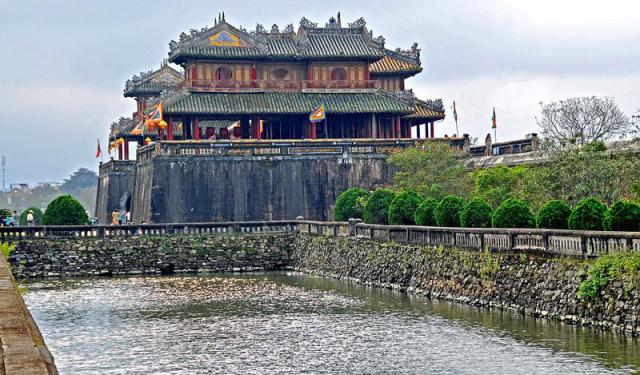
Hue Introduction Walking Tour
Once the seat of the imperial dynasty in the heart of Vietnam, Hue is chock-full of stories. During feudal times, for nearly 150 years - from 1802 to 1945, the city served as the national capital. The royal lifestyle and customs have had a strong impact on the lifestyle of locals, and this impact can still be felt today.
First cited about 200 BCE as the seat of the Chinese military authority in... view more
Tour Duration: 2 Hours
Travel Distance: 3.5 Km or 2.2 Miles
First cited about 200 BCE as the seat of the Chinese military authority in... view more
Tour Duration: 2 Hours
Travel Distance: 3.5 Km or 2.2 Miles
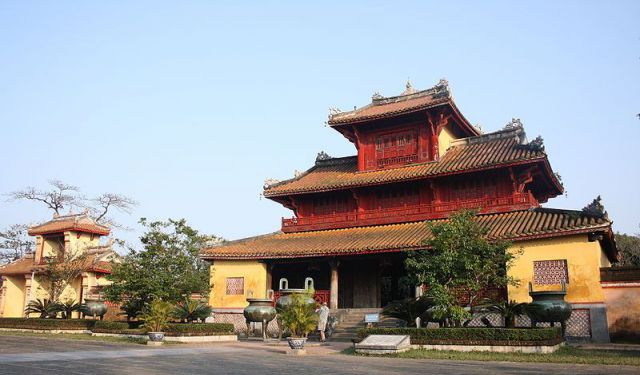
Imperial City Walking Tour
The Kings of the Nguyen Dynasty built their feudal capital along the fertile banks of the Perfume River, whose steady flow, centuries on, still sets up a languid pace that the rest of the city is happy to follow.
Situated within the walls of the Royal Citadel, The Imperial City in Hue is one of, if not the most prominent landmark in Vietnam, renowned for its wonderful collection of oriental... view more
Tour Duration: 2 Hours
Travel Distance: 2.9 Km or 1.8 Miles
Situated within the walls of the Royal Citadel, The Imperial City in Hue is one of, if not the most prominent landmark in Vietnam, renowned for its wonderful collection of oriental... view more
Tour Duration: 2 Hours
Travel Distance: 2.9 Km or 1.8 Miles
City Walks Overview
