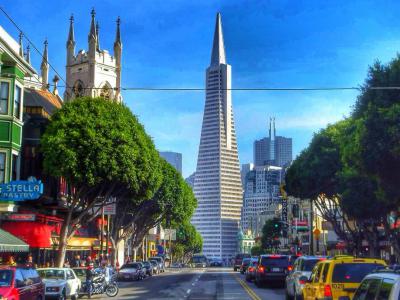


Transamerica Pyramid, San Francisco
Rising above the dense cluster of Victorian and early-20th-century buildings, the Transamerica Pyramid stands as San Francisco’s most striking symbol of modernity. Located at 600 Montgomery Street in the Financial District, the 48-story skyscraper represents a defining moment in the city’s architectural evolution. Conceived in the late 1960s by architect William L. Pereira for Transamerica Corporation’s CEO, John R. Beckett, the building was intended to create a headquarters unlike any other-a bold structure that would project progress and innovation rather than conformity. When first proposed, however, the design was met with fierce debate. Detractors called it alien and incompatible with the city’s historic skyline, while supporters recognized its audacious vision.
Construction began in 1969 and concluded in 1972. At 853 feet (or 260 meters), the building briefly held the title of the tallest skyscraper west of Chicago and even ranked among the world’s top ten. Its distinctive form-a tapering pyramid capped with a spire-was not purely aesthetic. Pereira’s design allowed more natural light to reach the streets below, reducing the canyon-like shadows typical of high-rises, while maintaining stability during earthquakes through a deep, reinforced foundation. Two angular wings along the façade house elevators and stairwells without interrupting the sleek symmetry of the core. The exterior, clad in white quartz aggregate panels, gives the tower its iconic brightness that shifts subtly with the city’s fog and sun.
Despite initial controversy, the Transamerica Pyramid came to define San Francisco’s skyline. Even after Transamerica Corporation relocated its headquarters in 1999, the tower’s silhouette remained so closely tied to the brand that it continues to appear in the company’s logo. Over time, public perception transformed from skepticism to admiration; what was once considered an eyesore became an emblem of the city’s spirit of reinvention. From vantage points like Coit Tower or the Embarcadero, the Pyramid now feels inseparable from the cityscape, harmonizing with the eclectic mix of hills, light, and architecture that define San Francisco.
In recent years, a renovation project led by architect Norman Foster has aimed to restore and modernize the complex. The plans include revitalizing the lobby, expanding the small Redwood Park at its base, and upgrading the surrounding block to reflect contemporary sustainability standards. More than half a century after its debut, the Transamerica Pyramid remains both a historical landmark and a living testament to architectural daring in the face of doubt.
Construction began in 1969 and concluded in 1972. At 853 feet (or 260 meters), the building briefly held the title of the tallest skyscraper west of Chicago and even ranked among the world’s top ten. Its distinctive form-a tapering pyramid capped with a spire-was not purely aesthetic. Pereira’s design allowed more natural light to reach the streets below, reducing the canyon-like shadows typical of high-rises, while maintaining stability during earthquakes through a deep, reinforced foundation. Two angular wings along the façade house elevators and stairwells without interrupting the sleek symmetry of the core. The exterior, clad in white quartz aggregate panels, gives the tower its iconic brightness that shifts subtly with the city’s fog and sun.
Despite initial controversy, the Transamerica Pyramid came to define San Francisco’s skyline. Even after Transamerica Corporation relocated its headquarters in 1999, the tower’s silhouette remained so closely tied to the brand that it continues to appear in the company’s logo. Over time, public perception transformed from skepticism to admiration; what was once considered an eyesore became an emblem of the city’s spirit of reinvention. From vantage points like Coit Tower or the Embarcadero, the Pyramid now feels inseparable from the cityscape, harmonizing with the eclectic mix of hills, light, and architecture that define San Francisco.
In recent years, a renovation project led by architect Norman Foster has aimed to restore and modernize the complex. The plans include revitalizing the lobby, expanding the small Redwood Park at its base, and upgrading the surrounding block to reflect contemporary sustainability standards. More than half a century after its debut, the Transamerica Pyramid remains both a historical landmark and a living testament to architectural daring in the face of doubt.
Want to visit this sight? Check out these Self-Guided Walking Tours in San Francisco. Alternatively, you can download the mobile app "GPSmyCity: Walks in 1K+ Cities" from Apple App Store or Google Play Store. The app turns your mobile device to a personal tour guide and it works offline, so no data plan is needed when traveling abroad.
Download The GPSmyCity App



Transamerica Pyramid on Map
Sight Name: Transamerica Pyramid
Sight Location: San Francisco, USA (See walking tours in San Francisco)
Sight Type: Attraction/Landmark
Guide(s) Containing This Sight:
Sight Location: San Francisco, USA (See walking tours in San Francisco)
Sight Type: Attraction/Landmark
Guide(s) Containing This Sight:
Nearby Sights
Walking Tours in San Francisco, California

Create Your Own Walk in San Francisco
Creating your own self-guided walk in San Francisco is easy and fun. Choose the city attractions that you want to see and a walk route map will be created just for you. You can even set your hotel as the start point of the walk.
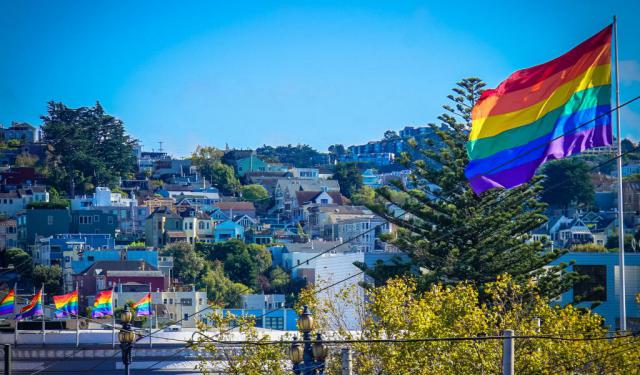
Castro District Walking Tour
It's a well-known fact that San Francisco is the place where the gay and lesbian culture flourished in its modernity in the mid-20th century. The Castro District, where the rainbow flag is flying high, houses several iconic locations that have played pivotal roles in LGBTQ+ history and continue to be celebrated today.
One such is the Castro Theater. This renowned landmark, which has been... view more
Tour Duration: 1 Hour(s)
Travel Distance: 1.4 Km or 0.9 Miles
One such is the Castro Theater. This renowned landmark, which has been... view more
Tour Duration: 1 Hour(s)
Travel Distance: 1.4 Km or 0.9 Miles
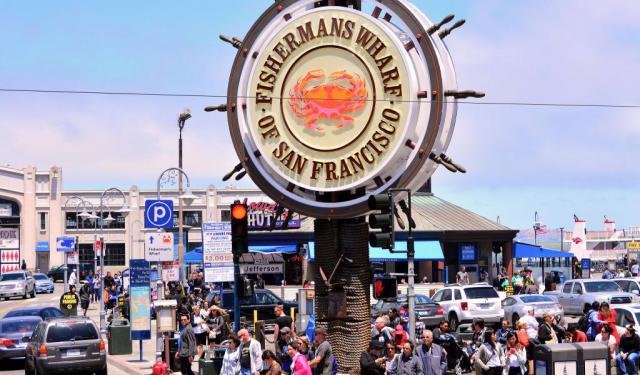
Fisherman's Wharf Walking Tour
Fisherman’s Wharf in San Francisco-here, the smell of salt air meets the scent of sizzling crab, and history rubs elbows with souvenir shops... Once a scrappy working harbor, this stretch of the city’s waterfront is now one of San Francisco's most iconic and visited destinations. Over the years, it's seen it all-gold fever, immigrant grit, and now, selfie sticks galore.
The... view more
Tour Duration: 1 Hour(s)
Travel Distance: 1.5 Km or 0.9 Miles
The... view more
Tour Duration: 1 Hour(s)
Travel Distance: 1.5 Km or 0.9 Miles
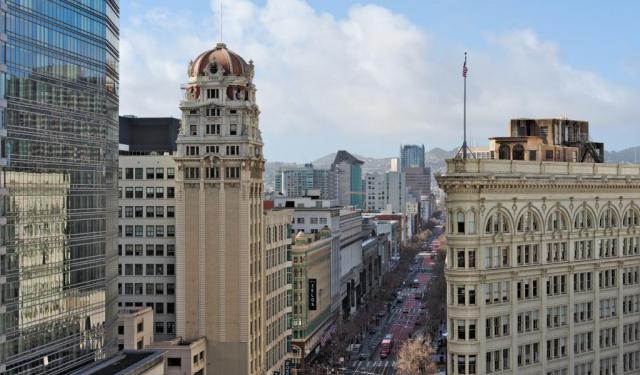
Famous Architecture Walking Tour
San Francisco is one of the world's top travel destinations, famous for its spectacular tourist attractions like Alcatraz Island, Fisherman's Wharf, and the Golden Gate Bridge. But besides that, it also boasts a huge variety of world-known architecture fit to delight the eye of any beholder. Let's give ourselves an aesthetic treat, too, and check out some of the city's most... view more
Tour Duration: 1 Hour(s)
Travel Distance: 2.3 Km or 1.4 Miles
Tour Duration: 1 Hour(s)
Travel Distance: 2.3 Km or 1.4 Miles
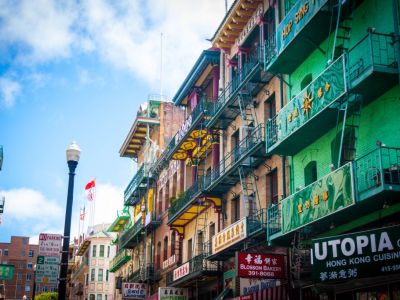
Chinatown Walking Tour
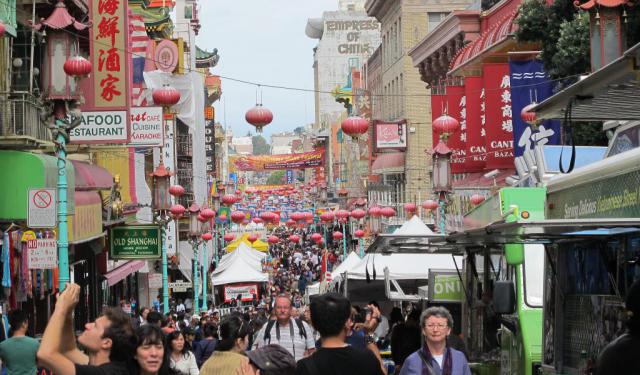
San Francisco’s Chinatown is the oldest Chinese community in North America and one of the largest outside Asia. Established in 1848, this compact area has played a key role in preserving Chinese heritage, including language, religion, and customs, for generations of Chinese immigrants to the United States. Over time, a modest enclave for Chinese laborers has flourished into a major tourist... view more
Tour Duration: 1 Hour(s)
Travel Distance: 0.9 Km or 0.6 Miles
Tour Duration: 1 Hour(s)
Travel Distance: 0.9 Km or 0.6 Miles
Union Square Walking Tour
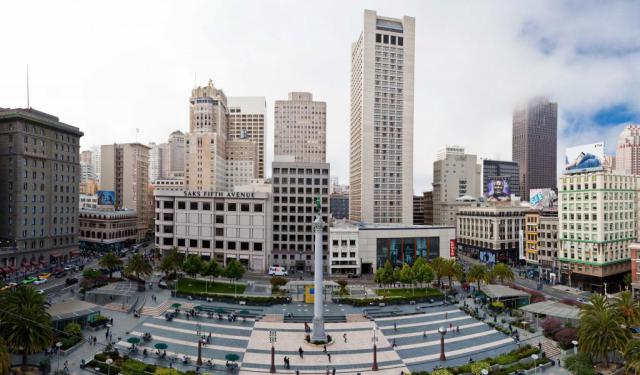
Union Square, a bustling hub in the heart of San Francisco, is a place where locals and tourists alike gather to enjoy a mix of shopping, entertainment, and cultural attractions. In addition to being the third largest shopping area in the United States, the square features an array of restaurants, theaters, and a wonderful concentration of fine art galleries.
One of the prominent landmarks in... view more
Tour Duration: 1 Hour(s)
Travel Distance: 1.5 Km or 0.9 Miles
One of the prominent landmarks in... view more
Tour Duration: 1 Hour(s)
Travel Distance: 1.5 Km or 0.9 Miles
San Francisco Introduction Walking Tour
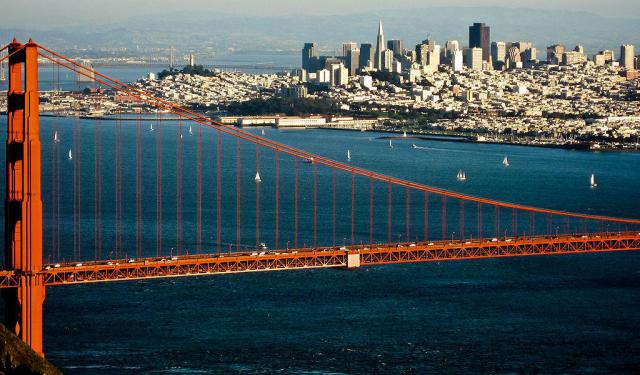
A commercial and cultural hub of northern California, San Francisco is a popular tourist destination known for its steep rolling hills and eclectic mix of world-famous landmarks. The iconic Golden Gate Bridge, the teeth-rattling cable cars carrying riders up and down Nob Hill, Alcatraz Island, and the oldest Chinatown in North America are just some of the city's prominent attractions, each... view more
Tour Duration: 3 Hour(s)
Travel Distance: 5.3 Km or 3.3 Miles
Tour Duration: 3 Hour(s)
Travel Distance: 5.3 Km or 3.3 Miles
Useful Travel Guides for Planning Your Trip
Divine Artisan Chocolates in San Francisco
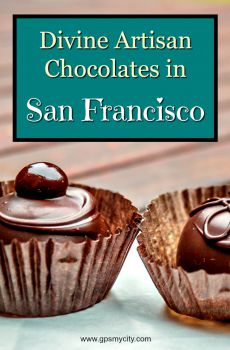
San Francisco is home to the most delicious artisan chocolates! From the historic Ghirardelli Chocolate Factory to New American TCHO chocolates, there are many local chocolate boutiques and factories to visit where you might be treated to a few samples. From exotic flavors such as lavender-walnut...

14 Souvenirs That Scream San Francisco
Home to many historic landmarks, such as Golden Gate Bridge, Chinatown and Alcatraz, San Francisco is closely associated with many iconic images of the American culture, such as Levi's jeans, baseball, and hippie movement. Modern Frisco carefully preserves its legacy by keeping it alive...