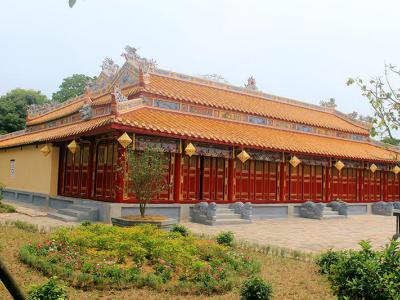


Triệu Miếu (Trieu Temple), Hue
Trieu Temple is one of the earliest and most historically significant ancestral temples in the Imperial City of Hue. Built in 1804 by Emperor Gia Long, it was dedicated to Nguyen Kim, an ancestor of the Nguyen lords, who was posthumously honored as Emperor Trieu To. The temple marked an important step in the Nguyen dynasty’s efforts to establish its legitimacy by linking its lineage to revered predecessors. Located in the southeastern section of the Imperial City, Trieu Temple played an important role in royal ancestor worship and reinforced the Confucian ideals of filial piety and dynastic continuity.
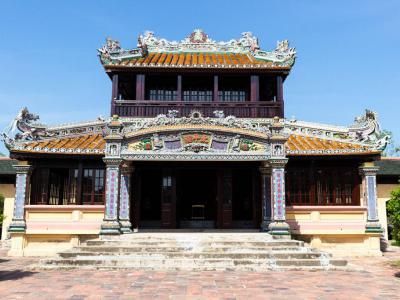
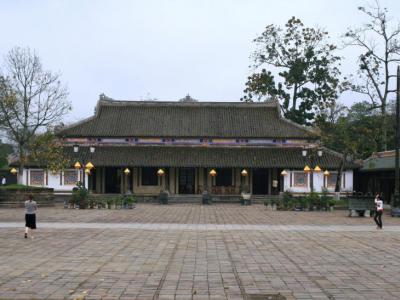
Architecturally, the temple reflects the restrained elegance of early Nguyen design. A spacious courtyard leads to the main shrine, where red-lacquered columns, intricately carved wooden beams, and traditional tiled roofs create a dignified atmosphere of reverence. Altars and incense burners reflect the ceremonial traditions of imperial ancestor worship, while the surrounding structures complement the temple’s symmetrical layout. Although more modest in scale than later temples such as The To Mieu, Trieu Temple embodies the principles of harmony, symmetry, and spatial order that guided Confucian court rituals.
Over the centuries, the temple suffered damage during periods of conflict and underwent various restoration efforts. Conservation work has helped preserve its historic character and architectural significance. Today, Trieu Temple offers visitors a quiet, contemplative glimpse into the spiritual and political life of Vietnam’s imperial court. Its historical importance and understated beauty make it a meaningful stop for those exploring Hue’s UNESCO-listed heritage.
Architecturally, the temple reflects the restrained elegance of early Nguyen design. A spacious courtyard leads to the main shrine, where red-lacquered columns, intricately carved wooden beams, and traditional tiled roofs create a dignified atmosphere of reverence. Altars and incense burners reflect the ceremonial traditions of imperial ancestor worship, while the surrounding structures complement the temple’s symmetrical layout. Although more modest in scale than later temples such as The To Mieu, Trieu Temple embodies the principles of harmony, symmetry, and spatial order that guided Confucian court rituals.
Over the centuries, the temple suffered damage during periods of conflict and underwent various restoration efforts. Conservation work has helped preserve its historic character and architectural significance. Today, Trieu Temple offers visitors a quiet, contemplative glimpse into the spiritual and political life of Vietnam’s imperial court. Its historical importance and understated beauty make it a meaningful stop for those exploring Hue’s UNESCO-listed heritage.
Want to visit this sight? Check out these Self-Guided Walking Tours in Hue. Alternatively, you can download the mobile app "GPSmyCity: Walks in 1K+ Cities" from Apple App Store or Google Play Store. The app turns your mobile device to a personal tour guide and it works offline, so no data plan is needed when traveling abroad.
Download The GPSmyCity App



Triệu Miếu (Trieu Temple) on Map
Sight Name: Triệu Miếu (Trieu Temple)
Sight Location: Hue, Vietnam (See walking tours in Hue)
Sight Type: Religious
Guide(s) Containing This Sight:
Sight Location: Hue, Vietnam (See walking tours in Hue)
Sight Type: Religious
Guide(s) Containing This Sight:
Nearby Sights
Walking Tours in Hue, Vietnam

Create Your Own Walk in Hue
Creating your own self-guided walk in Hue is easy and fun. Choose the city attractions that you want to see and a walk route map will be created just for you. You can even set your hotel as the start point of the walk.
Imperial City Walking Tour
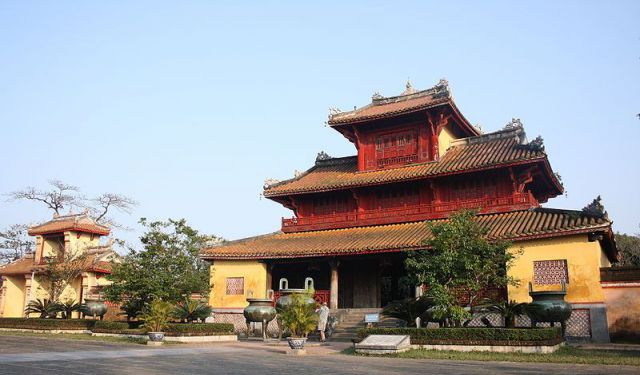
The Kings of the Nguyen Dynasty built their feudal capital along the fertile banks of the Perfume River, whose steady flow, centuries on, still sets up a languid pace that the rest of the city is happy to follow.
Situated within the walls of the Royal Citadel, The Imperial City in Hue is one of, if not the most prominent landmark in Vietnam, renowned for its wonderful collection of oriental... view more
Tour Duration: 2 Hours
Travel Distance: 2.9 Km or 1.8 Miles
Situated within the walls of the Royal Citadel, The Imperial City in Hue is one of, if not the most prominent landmark in Vietnam, renowned for its wonderful collection of oriental... view more
Tour Duration: 2 Hours
Travel Distance: 2.9 Km or 1.8 Miles
Hue Introduction Walking Tour
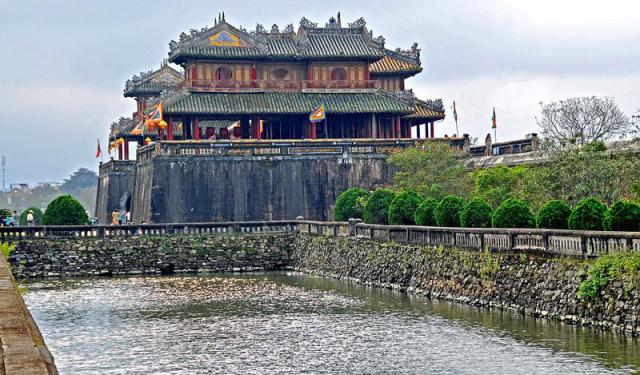
Once the seat of the imperial dynasty in the heart of Vietnam, Hue is chock-full of stories. During feudal times, for nearly 150 years - from 1802 to 1945, the city served as the national capital. The royal lifestyle and customs have had a strong impact on the lifestyle of locals, and this impact can still be felt today.
First cited about 200 BCE as the seat of the Chinese military authority in... view more
Tour Duration: 2 Hours
Travel Distance: 3.5 Km or 2.2 Miles
First cited about 200 BCE as the seat of the Chinese military authority in... view more
Tour Duration: 2 Hours
Travel Distance: 3.5 Km or 2.2 Miles