

Trinity Cathedral, Omaha
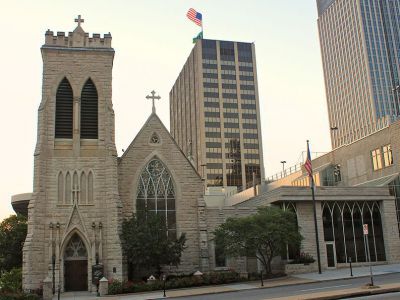
Trinity Cathedral is the cathedral church of the Episcopal Diocese of Nebraska and an early Episcopal landmark. Trinity Parish was organized on April 12, 1856, two years after Nebraska Territory was created. The present cathedral was constructed between 1880 and 1883, replacing an earlier frame church. It became an important center for the development of the Episcopal Church in Nebraska and remains the headquarters of the diocese.
Designed by English architect Henry G. Harrison, with Alfred R. Dufrene supervising construction locally, the cathedral is an example of Late Gothic Revival architecture. It follows a cruciform plan and is built of light-gray, naturally textured stone. Architectural details include pointed Gothic openings, stone tracery, buttresses, a prominent tower, and English Perpendicular influences. Inside, the nave contains extensive stained glass, including three Tiffany windows along its south side, together with carved woodwork, memorial furnishings, and decorative elements added during different periods of the congregation’s history. The cathedral remains an active Episcopal place of worship and continues to serve diocesan and congregational functions. Its history is associated with Bishop Robert Harper Clarkson’s first Episcopal diocesan bishop, who was buried on the cathedral grounds after his death in 1884.
The building was added to the National Register of Historic Places on August 7, 1974, recognizing its architecture and religious importance. Visitors can appreciate its stone exterior, stained glass, memorials, and connection with Episcopal history while respecting its continuing role as a place of worship.
Designed by English architect Henry G. Harrison, with Alfred R. Dufrene supervising construction locally, the cathedral is an example of Late Gothic Revival architecture. It follows a cruciform plan and is built of light-gray, naturally textured stone. Architectural details include pointed Gothic openings, stone tracery, buttresses, a prominent tower, and English Perpendicular influences. Inside, the nave contains extensive stained glass, including three Tiffany windows along its south side, together with carved woodwork, memorial furnishings, and decorative elements added during different periods of the congregation’s history. The cathedral remains an active Episcopal place of worship and continues to serve diocesan and congregational functions. Its history is associated with Bishop Robert Harper Clarkson’s first Episcopal diocesan bishop, who was buried on the cathedral grounds after his death in 1884.
The building was added to the National Register of Historic Places on August 7, 1974, recognizing its architecture and religious importance. Visitors can appreciate its stone exterior, stained glass, memorials, and connection with Episcopal history while respecting its continuing role as a place of worship.
Want to visit this sight? Check out these Self-Guided Walking Tours in Omaha. Alternatively, you can download the mobile app "GPSmyCity: Walks in 1K+ Cities" from Apple App Store or Google Play Store. The app turns your mobile device to a personal tour guide and it works offline, so no data plan is needed when traveling abroad.
Download The GPSmyCity App



Trinity Cathedral on Map
Sight Name: Trinity Cathedral
Sight Location: Omaha, USA (See walking tours in Omaha)
Sight Type: Religious
Sight Location: Omaha, USA (See walking tours in Omaha)
Sight Type: Religious
Nearby Sights


Walking Tours in Omaha, Nebraska

Create Your Own Walk in Omaha
Creating your own self-guided walk in Omaha is easy and fun. Choose the city attractions that you want to see and a walk route map will be created just for you. You can even set your hotel as the start point of the walk.
Omaha Historical Florence Walk
Florence is the oldest community in Omaha; it is the place where the first structures and buildings in the State of Nebraska were built. The community has many sites of historical value. The first inhabitants of Florence were the Mormons who founded Winter Quarters and Cutler's Park. Take this tour to visit some of the most important places in Florence.
Tour Duration: 1 Hour
Travel Distance: 2.2 Km or 1.4 Miles
Tour Duration: 1 Hour
Travel Distance: 2.2 Km or 1.4 Miles
Omaha Museums and Art Galleries Tour
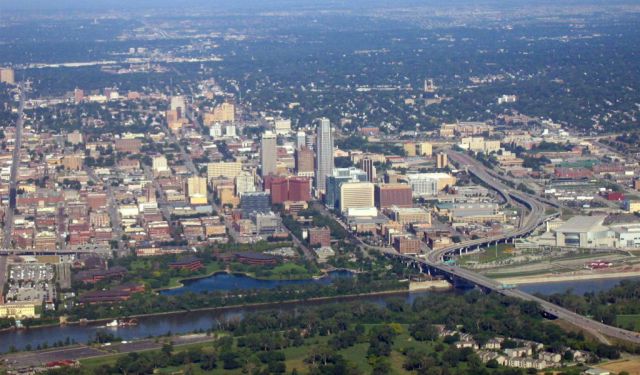
Omaha is the largest city in the State of Nebraska. The city has many preserved old buildings, some of them museums. During this tour you will visit some of the most interesting museums and art galleries in the city. You will get acquainted with the history and art of the city and also will get to see some of the most beautiful works of art in the world.
Tour Duration: 2 Hours
Travel Distance: 3 Km or 1.9 Miles
Tour Duration: 2 Hours
Travel Distance: 3 Km or 1.9 Miles
Omaha Introduction Walking Tour
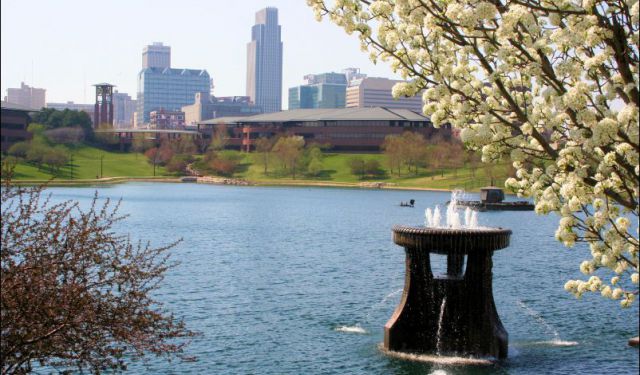
Omaha is the largest city in the state of Nebraska. Known for its pioneer history, museums and cultural centers Omaha is home to nationally and regionally significant landmarks. The city has more than a dozen historic districts, interesting commercial, religious and educational sights which attract a lot of tourists to Omaha City.
Tour Duration: 3 Hours
Travel Distance: 6.5 Km or 4 Miles
Tour Duration: 3 Hours
Travel Distance: 6.5 Km or 4 Miles
City Walks Overview
