

Villa Pacini, Catania
Nestled in the heart of Catania’s historic center, near the Porta Uzeda and under the iconic Arches of the Marina, Villa Pacini, affectionately known as the "Villa of yawns", offers a tranquil retreat from the city’s bustle. The nickname reflects its history as a favored spot for elderly residents seeking relaxation.
Dating back to the late 19th century, Villa Pacini is one of the two oldest gardens in Catania. Originally part of a seaside promenade along the River Amenano’s mouth, the garden underwent significant transformations over the decades. The construction of the Archi della Marina railway viaduct in 1866 claimed much of the garden's original space, and later urban developments, including the establishment of Piazza Alcalà (now Piazza Borsellino) and the doubling of the railway line in the 1960s, further reshaped its layout.
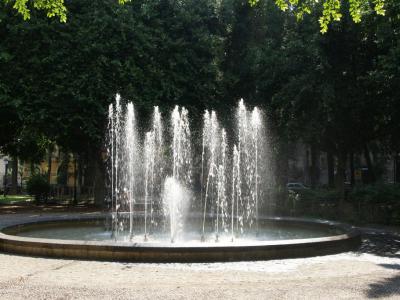
Despite these changes, the park retains its charm. Its circular layout, small central fountain, and children's play area with slides and swings make it a peaceful spot for families and visitors. The garden also features a marble bust of Giovanni Pacini, the celebrated opera composer born in Catania in 1796, crafted by the sculptor Giovanni Dupré. This dedication in 1879 marked the park’s renaming as the Giardino Pacini. Additionally, two headless statues of Bourbon kings hint at the garden’s layered history.
Today, Villa Pacini is bordered by Via Lavandaie and Via Jonica and remains open to the public during daylight hours. Though it no longer enjoys its seaside setting, it remains a quiet refuge, steeped in history, where moments of leisure and play meet the echoes of Catania's past.
Dating back to the late 19th century, Villa Pacini is one of the two oldest gardens in Catania. Originally part of a seaside promenade along the River Amenano’s mouth, the garden underwent significant transformations over the decades. The construction of the Archi della Marina railway viaduct in 1866 claimed much of the garden's original space, and later urban developments, including the establishment of Piazza Alcalà (now Piazza Borsellino) and the doubling of the railway line in the 1960s, further reshaped its layout.
Despite these changes, the park retains its charm. Its circular layout, small central fountain, and children's play area with slides and swings make it a peaceful spot for families and visitors. The garden also features a marble bust of Giovanni Pacini, the celebrated opera composer born in Catania in 1796, crafted by the sculptor Giovanni Dupré. This dedication in 1879 marked the park’s renaming as the Giardino Pacini. Additionally, two headless statues of Bourbon kings hint at the garden’s layered history.
Today, Villa Pacini is bordered by Via Lavandaie and Via Jonica and remains open to the public during daylight hours. Though it no longer enjoys its seaside setting, it remains a quiet refuge, steeped in history, where moments of leisure and play meet the echoes of Catania's past.
Want to visit this sight? Check out these Self-Guided Walking Tours in Catania. Alternatively, you can download the mobile app "GPSmyCity: Walks in 1K+ Cities" from Apple App Store or Google Play Store. The app turns your mobile device to a personal tour guide and it works offline, so no data plan is needed when traveling abroad.
Download The GPSmyCity App



Villa Pacini on Map
Sight Name: Villa Pacini
Sight Location: Catania, Italy (See walking tours in Catania)
Sight Type: Attraction/Landmark
Sight Location: Catania, Italy (See walking tours in Catania)
Sight Type: Attraction/Landmark
Nearby Sights
Walking Tours in Catania, Italy

Create Your Own Walk in Catania
Creating your own self-guided walk in Catania is easy and fun. Choose the city attractions that you want to see and a walk route map will be created just for you. You can even set your hotel as the start point of the walk.

Discover Catania's Historical Churches on Foot
Just as many other Italian destinations, the Sicilian city of Catania is full of churches, especially in the historic center, where the presence of religious sites is particularly high! A good number of local churches date back centuries, and as such represent marvelous pieces of architecture, adding much character to the area. It is also commonplace to find inside most of them, be it a duomo,... view more
Tour Duration: 1 Hour(s)
Travel Distance: 1.6 Km or 1 Miles
Tour Duration: 1 Hour(s)
Travel Distance: 1.6 Km or 1 Miles

A Walk Through Catania’s Baroque Old Town
Most cities avoid danger. But here, the danger is part of the experience. Catania settled beside a volcano and stayed. Lava flows, earthquakes, and ash are a living memory here, shaping everything from building materials to local legends.
Catania is one of Sicily’s oldest cities, with a history shaped by colonization, conquest, natural disaster, and repeated renewal. It was founded in 729 BC... view more
Tour Duration: 2 Hour(s)
Travel Distance: 3.8 Km or 2.4 Miles
Catania is one of Sicily’s oldest cities, with a history shaped by colonization, conquest, natural disaster, and repeated renewal. It was founded in 729 BC... view more
Tour Duration: 2 Hour(s)
Travel Distance: 3.8 Km or 2.4 Miles