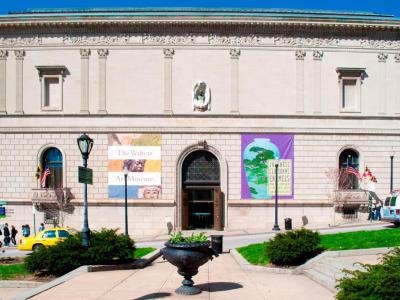


Walters Art Museum, Baltimore (must see)
The Walters Art Museum developed from the private collection of William Thompson Walters and his son, Henry Walters. William concentrated on modern European and Asian art, while Henry expanded the collection to include ancient, medieval, and Renaissance works. After Henry’s death in 1931, the entire collection was donated to the City of Baltimore. The original building, completed in 1909 in the style of an Italian palazzo, still defines the museum’s presence and sets the tone for a collection intended to be both wide-ranging and accessible.
Among the museum’s most notable highlights is the Egyptian collection, particularly the Walters Mummy, often referred to as the “Unknown Lady,” dating to the 9th or 8th century BC. Head to the lower-level galleries after entering the museum. The artifacts are typically grouped together and clearly marked as the ancient art section.
Also significant are the medieval illuminated manuscripts and the European painting collection, which includes works by El Greco, Claude Monet, Édouard Manet, and Henri Rousseau. These are primarily located on the third floor, where the medieval and Renaissance galleries are arranged in sequence. The manuscripts are typically displayed in dimly lit rooms for preservation. Once you exit these manuscript rooms, continue forward along the main gallery axis, where the space opens into larger, brighter rooms displaying European paintings.
Decorative arts form another key highlight, especially the Fabergé eggs, along with the extensive arms and armor displays. These are placed in dedicated display cases along these same levels, often in side rooms branching off the main path.
The Asian collection is equally important, featuring over 1,000 pieces of Chinese porcelain and a strong group of Japanese arms and lacquerware. For the Asian collections, you have to move to a separate wing within the Centre Street Annex, the newer building connected to the original palazzo. To reach it, remain on the upper levels and follow signage directing you toward Asian Art or cross through the glass-enclosed bridge that links the historic building to the modern wing. The Chinese porcelain is displayed in grouped cases, while Japanese arms and lacquerware are often presented nearby in adjacent rooms.
Among the museum’s most notable highlights is the Egyptian collection, particularly the Walters Mummy, often referred to as the “Unknown Lady,” dating to the 9th or 8th century BC. Head to the lower-level galleries after entering the museum. The artifacts are typically grouped together and clearly marked as the ancient art section.
Also significant are the medieval illuminated manuscripts and the European painting collection, which includes works by El Greco, Claude Monet, Édouard Manet, and Henri Rousseau. These are primarily located on the third floor, where the medieval and Renaissance galleries are arranged in sequence. The manuscripts are typically displayed in dimly lit rooms for preservation. Once you exit these manuscript rooms, continue forward along the main gallery axis, where the space opens into larger, brighter rooms displaying European paintings.
Decorative arts form another key highlight, especially the Fabergé eggs, along with the extensive arms and armor displays. These are placed in dedicated display cases along these same levels, often in side rooms branching off the main path.
The Asian collection is equally important, featuring over 1,000 pieces of Chinese porcelain and a strong group of Japanese arms and lacquerware. For the Asian collections, you have to move to a separate wing within the Centre Street Annex, the newer building connected to the original palazzo. To reach it, remain on the upper levels and follow signage directing you toward Asian Art or cross through the glass-enclosed bridge that links the historic building to the modern wing. The Chinese porcelain is displayed in grouped cases, while Japanese arms and lacquerware are often presented nearby in adjacent rooms.
Want to visit this sight? Check out these Self-Guided Walking Tours in Baltimore. Alternatively, you can download the mobile app "GPSmyCity: Walks in 1K+ Cities" from Apple App Store or Google Play Store. The app turns your mobile device to a personal tour guide and it works offline, so no data plan is needed when traveling abroad.
Download The GPSmyCity App



Walters Art Museum on Map
Sight Name: Walters Art Museum
Sight Location: Baltimore, USA (See walking tours in Baltimore)
Sight Type: Museum/Gallery
Guide(s) Containing This Sight:
Sight Location: Baltimore, USA (See walking tours in Baltimore)
Sight Type: Museum/Gallery
Guide(s) Containing This Sight:
Nearby Sights

Walking Tours in Baltimore, Maryland

Create Your Own Walk in Baltimore
Creating your own self-guided walk in Baltimore is easy and fun. Choose the city attractions that you want to see and a walk route map will be created just for you. You can even set your hotel as the start point of the walk.
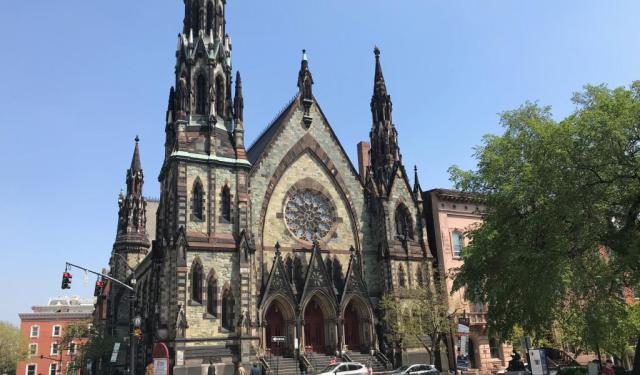
Baltimore's Architectural Jewels
Overall, Baltimore's architecture is a testament to the city's rich and varied history, showcasing a wide range of styles and cultural influences that have shaped the local built environment over the centuries. Outside Federal-style row houses and grand Beaux-Arts museums, Baltimore is also known for a multitude of Art Deco buildings and temples of various styles, constructed between the... view more
Tour Duration: 2 Hour(s)
Travel Distance: 3.9 Km or 2.4 Miles
Tour Duration: 2 Hour(s)
Travel Distance: 3.9 Km or 2.4 Miles

Baltimore Downtown Walking Tour
Before the city fully wakes, picture a harbor under fire, the night sky lit by explosions, and a single question hanging in the smoke: can the flag still be seen at dawn? In 1814, as the bombardment of Fort McHenry came to an end, Francis Scott Key, an American lawyer and poet, looked out and found his answer: “O say can you see, by the dawn’s early light…” From that moment, Baltimore... view more
Tour Duration: 2 Hour(s)
Travel Distance: 3.6 Km or 2.2 Miles
Tour Duration: 2 Hour(s)
Travel Distance: 3.6 Km or 2.2 Miles
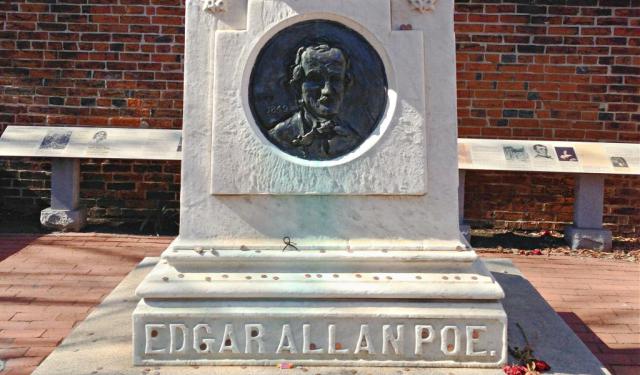
Edgar Allan Poe’s Baltimore
“Deep into that darkness peering, long I stood there wondering, fearing…” wrote Edgar Allan Poe, a line that could just as easily describe his final, mysterious days in Baltimore, the city most closely tied to his life and death.
Edgar Allan Poe was an American writer and poet best known for his tales of mystery, horror, and psychological depth. Although his family had roots in Baltimore,... view more
Tour Duration: 2 Hour(s)
Travel Distance: 5.5 Km or 3.4 Miles
Edgar Allan Poe was an American writer and poet best known for his tales of mystery, horror, and psychological depth. Although his family had roots in Baltimore,... view more
Tour Duration: 2 Hour(s)
Travel Distance: 5.5 Km or 3.4 Miles