Custom Walk in San Antonio, Texas by ouellem4474 created on 2020-01-12
Guide Location: USA » San Antonio
Guide Type: Custom Walk
# of Sights: 13
Tour Duration: 2 Hour(s)
Travel Distance: 4.2 Km or 2.6 Miles
Share Key: 75VQM
Guide Type: Custom Walk
# of Sights: 13
Tour Duration: 2 Hour(s)
Travel Distance: 4.2 Km or 2.6 Miles
Share Key: 75VQM
How It Works
Please retrieve this walk in the GPSmyCity app. Once done, the app will guide you from one tour stop to the next as if you had a personal tour guide. If you created the walk on this website or come to the page via a link, please follow the instructions below to retrieve the walk in the app.
Retrieve This Walk in App
Step 1. Download the app "GPSmyCity: Walks in 1K+ Cities" on Apple App Store or Google Play Store.



Step 2. In the GPSmyCity app, download(or launch) the guide "San Antonio Map and Walking Tours".
Step 3. Tap the menu button located at upper right corner of the "Walks" screen and select "Retrieve custom walk". Enter the share key: 75VQM

1) Market Square (El Mercado) (must see)
Market Square, known locally as El Mercado, is a vibrant three-block outdoor plaza in downtown San Antonio. Celebrated as the largest Mexican market in the United States, it brims with Mexican cafes, restaurants, and an array of stores and stalls offering handcrafted goods such as traditional blankets, clothing, leather items, and metal crafts-all sourced directly from Mexico.
The historic El Mercado building was constructed between 1938 and 1939, replacing the original Giles municipal market house. Initially named the "Municipal Truck Market," it earned the nickname "Farmer's Market" due to farmers selling fresh produce directly from their trucks. By 1975, the sale of produce had ceased, and the open-air space was transformed into an enclosed, air-conditioned market house.
Today, the Historic Market Square serves as a thriving hub for shopping, dining, and cultural experiences. The El Mercado section hosts 32 specialty shops, while the Farmer's Market Plaza boasts 80. Standout businesses include Cano Fruiteria, El Merkadito, Plaza Taxco, and iconic eateries like Mi Tierra Café y Panadería and La Margarita Mexican Restaurant & Oyster Bar, which draw both locals and tourists with their authentic Mexican flavors. Additionally, street vendors and smaller shops offer specialty foods and snacks, adding to the bustling atmosphere.
Market Square is also a cultural epicenter, hosting events and festivals throughout the year. Celebrations like Fiesta del Mercado in April, Dia de los Muertos in November, and Cinco de Mayo are highlights of its annual calendar. The on-site Centro de Artes, managed by the City of San Antonio’s Department of Arts and Culture, features solo and group exhibitions and dynamic programs that showcase the rich heritage of the area.
For an authentic San Antonio experience filled with unique shopping, delectable dining, and vibrant entertainment, Market Square is an unmissable destination.
The historic El Mercado building was constructed between 1938 and 1939, replacing the original Giles municipal market house. Initially named the "Municipal Truck Market," it earned the nickname "Farmer's Market" due to farmers selling fresh produce directly from their trucks. By 1975, the sale of produce had ceased, and the open-air space was transformed into an enclosed, air-conditioned market house.
Today, the Historic Market Square serves as a thriving hub for shopping, dining, and cultural experiences. The El Mercado section hosts 32 specialty shops, while the Farmer's Market Plaza boasts 80. Standout businesses include Cano Fruiteria, El Merkadito, Plaza Taxco, and iconic eateries like Mi Tierra Café y Panadería and La Margarita Mexican Restaurant & Oyster Bar, which draw both locals and tourists with their authentic Mexican flavors. Additionally, street vendors and smaller shops offer specialty foods and snacks, adding to the bustling atmosphere.
Market Square is also a cultural epicenter, hosting events and festivals throughout the year. Celebrations like Fiesta del Mercado in April, Dia de los Muertos in November, and Cinco de Mayo are highlights of its annual calendar. The on-site Centro de Artes, managed by the City of San Antonio’s Department of Arts and Culture, features solo and group exhibitions and dynamic programs that showcase the rich heritage of the area.
For an authentic San Antonio experience filled with unique shopping, delectable dining, and vibrant entertainment, Market Square is an unmissable destination.

2) Spanish Governor's Palace
The Spanish Governor's Palace in downtown San Antonio is a rare and beautiful relic of the Spanish Colonial era in Texas. Constructed in the early 18th century, it stands as the last visible remnant of the Presidio San Antonio de Béxar complex, embodying the architectural elegance of an aristocratic Spanish in-town residence. Recognized as a National Historic Landmark in 1970, it is celebrated by the National Geographic Society as "the most beautiful building in San Antonio."
The building was planned as early as 1722 and completed in 1749, as evidenced by the keystone above its entrance, which bears the coat of arms of Spanish King Ferdinand VI and the completion date. Initially serving as the residence and working office of the local presidio captain, it later housed Spanish governors and functioned as the capital of Spanish Texas by 1772. The structure played a vital role in protecting nearby missions, including the famous San Antonio de Valero Mission (The Alamo) and others within what is now the San Antonio Missions National Historical Park.
This one-story adobe masterpiece features ten rooms, a courtyard, and a fountain, blending masonry and stucco with historical charm. Its location on Plaza de Armas, between Market Square and the San Antonio River Walk, makes it a must-visit site. Open to the public as a museum, it offers visitors a glimpse into Texas’s colonial past-and possibly an encounter with its legendary ghostly residents.
The building was planned as early as 1722 and completed in 1749, as evidenced by the keystone above its entrance, which bears the coat of arms of Spanish King Ferdinand VI and the completion date. Initially serving as the residence and working office of the local presidio captain, it later housed Spanish governors and functioned as the capital of Spanish Texas by 1772. The structure played a vital role in protecting nearby missions, including the famous San Antonio de Valero Mission (The Alamo) and others within what is now the San Antonio Missions National Historical Park.
This one-story adobe masterpiece features ten rooms, a courtyard, and a fountain, blending masonry and stucco with historical charm. Its location on Plaza de Armas, between Market Square and the San Antonio River Walk, makes it a must-visit site. Open to the public as a museum, it offers visitors a glimpse into Texas’s colonial past-and possibly an encounter with its legendary ghostly residents.
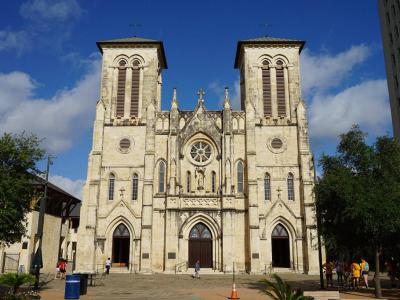
3) Cathedral of San Fernando (must see)
The San Fernando Cathedral, also known as the Cathedral of Our Lady of Candelaria and Guadalupe, is a historic Catholic cathedral located in downtown San Antonio. Facing the city's Main Plaza, it serves as the mother church of the Archdiocese of San Antonio and the seat of its archbishop. The cathedral’s dome marks the cultural and geographical center of San Antonio, underscoring its significance to the city. Listed on the National Register of Historic Places, it is one of the oldest cathedrals in the United States and holds a unique place in Texas history.
The original church, built between 1738 and 1750 by soldiers from the Presidio de San Antonio, their families, and settlers from the Canary Islands, forms the sanctuary of today’s cathedral, earning it recognition as the oldest cathedral in Texas. Named after Ferdinand III of Castile, the church features a revered image of the Virgin of Candelaria, patroness of the Canary Islands, within its interior. A treasured piece of its history is the baptismal font, believed to be a gift from King Charles III of Spain in 1759, making it the cathedral's oldest liturgical furnishing.
The cathedral has played a key role in historical events. In 1831, James Bowie, famed Alamo defender, married Ursula de Veramendi here. During the Battle of the Alamo in 1836, General Antonio López de Santa Anna hoisted a flag of "no quarter" from the church tower to commence the siege. The ashes of the Alamo defenders are interred in the cathedral.
Significant architectural changes were made in 1868 under architect Francois P. Giraud, who expanded the structure in the Gothic style, forming the current nave. Further enhancements included the addition of carved stone Stations of the Cross in 1874 and stained glass windows in 1920, lending the cathedral its striking visual appeal.
A notable modern milestone occurred on September 13, 1987, when Pope John Paul II visited San Fernando Cathedral during the first papal visit to Texas, a moment commemorated by a dedicated marker.
Today, the cathedral remains a vibrant center of Catholic life in San Antonio. It plays a prominent role in community traditions such as Fiesta Week and the Good Friday Passion Play, drawing thousands of visitors each year. San Fernando Cathedral stands as a symbol of faith, history, and culture in the heart of San Antonio.
The original church, built between 1738 and 1750 by soldiers from the Presidio de San Antonio, their families, and settlers from the Canary Islands, forms the sanctuary of today’s cathedral, earning it recognition as the oldest cathedral in Texas. Named after Ferdinand III of Castile, the church features a revered image of the Virgin of Candelaria, patroness of the Canary Islands, within its interior. A treasured piece of its history is the baptismal font, believed to be a gift from King Charles III of Spain in 1759, making it the cathedral's oldest liturgical furnishing.
The cathedral has played a key role in historical events. In 1831, James Bowie, famed Alamo defender, married Ursula de Veramendi here. During the Battle of the Alamo in 1836, General Antonio López de Santa Anna hoisted a flag of "no quarter" from the church tower to commence the siege. The ashes of the Alamo defenders are interred in the cathedral.
Significant architectural changes were made in 1868 under architect Francois P. Giraud, who expanded the structure in the Gothic style, forming the current nave. Further enhancements included the addition of carved stone Stations of the Cross in 1874 and stained glass windows in 1920, lending the cathedral its striking visual appeal.
A notable modern milestone occurred on September 13, 1987, when Pope John Paul II visited San Fernando Cathedral during the first papal visit to Texas, a moment commemorated by a dedicated marker.
Today, the cathedral remains a vibrant center of Catholic life in San Antonio. It plays a prominent role in community traditions such as Fiesta Week and the Good Friday Passion Play, drawing thousands of visitors each year. San Fernando Cathedral stands as a symbol of faith, history, and culture in the heart of San Antonio.
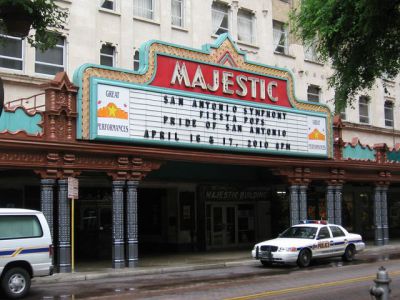
4) Majestic Theatre (must see)
The Majestic Theatre, located on E. Houston Street in downtown San Antonio, stands as a remarkable emblem of theatrical and architectural grandeur. Designed by John Eberson for Karl Hoblitzelle’s Interstate Theatres in 1929, it is the oldest and largest atmospheric theatre in San Antonio, seating 2,264 patrons. This masterpiece not only served as the first fully air-conditioned theatre in Texas but also represented cutting-edge innovation with state-of-the-art sound and projection equipment.
In its heyday, the Majestic Theatre was the largest in Texas and second only to Atlanta's Fox Theatre in the United States. Its opening on June 14, 1929, symbolized the city’s progressiveness, coinciding with San Antonio’s “Prosperity Month.” Attendees flocked to the theatre's grand opening, dressed in fur coats despite the summer heat, to enjoy the luxurious cool air and dazzling performances, including musical films, live acts, and star entertainers like Jimmie Rodgers.
The Majestic’s design reflects Eberson's signature atmospheric style. A vivid blue ceiling mimics a starlit evening sky, enhanced by a cloud projector and star-like bulbs positioned to match the actual constellations of the night it opened, as guided by the National Geographic Society. The opulent décor includes Greek, Roman, and Renaissance sculptures, Spanish-imported cypress trees, and intricate Baroque carvings. Unique features like an 18-foot-tall vertical sign with a strutting peacock and an aquarium-filled lobby exemplify its charm.
Despite challenges during the Great Depression, the Majestic flourished as a haven for entertainment, offering a mix of films and live acts through the mid-20th century. It became a National Historic Landmark in 1993 and remains a Texas Historic Landmark, celebrated for its ornate architecture and cultural significance.
Today, the Majestic Theatre continues to captivate audiences with Broadway productions, concerts, and comedy shows, maintaining its legacy as San Antonio’s premier performing arts venue and a cherished symbol of historical and cultural excellence.
In its heyday, the Majestic Theatre was the largest in Texas and second only to Atlanta's Fox Theatre in the United States. Its opening on June 14, 1929, symbolized the city’s progressiveness, coinciding with San Antonio’s “Prosperity Month.” Attendees flocked to the theatre's grand opening, dressed in fur coats despite the summer heat, to enjoy the luxurious cool air and dazzling performances, including musical films, live acts, and star entertainers like Jimmie Rodgers.
The Majestic’s design reflects Eberson's signature atmospheric style. A vivid blue ceiling mimics a starlit evening sky, enhanced by a cloud projector and star-like bulbs positioned to match the actual constellations of the night it opened, as guided by the National Geographic Society. The opulent décor includes Greek, Roman, and Renaissance sculptures, Spanish-imported cypress trees, and intricate Baroque carvings. Unique features like an 18-foot-tall vertical sign with a strutting peacock and an aquarium-filled lobby exemplify its charm.
Despite challenges during the Great Depression, the Majestic flourished as a haven for entertainment, offering a mix of films and live acts through the mid-20th century. It became a National Historic Landmark in 1993 and remains a Texas Historic Landmark, celebrated for its ornate architecture and cultural significance.
Today, the Majestic Theatre continues to captivate audiences with Broadway productions, concerts, and comedy shows, maintaining its legacy as San Antonio’s premier performing arts venue and a cherished symbol of historical and cultural excellence.
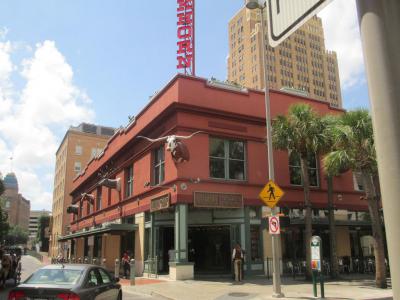
5) Buckhorn Saloon & Museum. Texas Ranger Museum (must see)
The Buckhorn Saloon & Museum and Texas Ranger Museum in San Antonio offer a unique blend of history, wildlife, and Texan heritage. Located on East Houston Street in downtown San Antonio, this privately run museum originated as a personal collection of Albert Friedrich in 1881. Friedrich, the youngest son of a cabinetmaker-turned-horn-furniture craftsman whose clients included Queen Victoria and Kaiser Wilhelm I, began his collection with curiosities gathered during his hunting trips. By 1896, Friedrich had opened the first Buckhorn Saloon at the corner of Soledad and West Houston streets, enticing patrons with a drink in exchange for a set of animal horns, creating the renowned "Buckhorn Hall of Horns."
The Buckhorn Museum houses over 520 species of wildlife from around the globe, featuring mammals, birds, and fish. Standout exhibits include the 78 Point Brady Buck, a world record 1,056-pound black marlin, an 8-foot-longhorn spread, and the first gorilla ever displayed in the United States. The museum's mirrored bar and firearm displays add to its historic charm. Its connection to history is also storied, with Theodore Roosevelt and his Rough Riders rumored to have frequented the original saloon.
The Texas Ranger Museum complements the Buckhorn with its deep dive into Texan law enforcement history. This museum, established in collaboration with the Former Texas Rangers Association in 2006, features an impressive array of Texas Ranger artifacts such as automatic handguns, badges, and photographs. Highlights include Ranger Town, a turn-of-the-century San Antonio recreation complete with a replica saloon, jail cell, and blacksmith shop. Visitors can also view the infamous 1934 Ford V8 Deluxe getaway car of Bonnie and Clyde fame. The museum pays tribute to legendary Rangers like Joaquin Jackson, Frank Hamer, and John B. Armstrong.
Whether you're drawn by the incredible wildlife displays, the historic saloon atmosphere, or the rich legacy of the Texas Rangers, the Buckhorn Saloon & Museum and Texas Ranger Museum provide a fascinating glimpse into the cultural and historical tapestry of Texas.
The Buckhorn Museum houses over 520 species of wildlife from around the globe, featuring mammals, birds, and fish. Standout exhibits include the 78 Point Brady Buck, a world record 1,056-pound black marlin, an 8-foot-longhorn spread, and the first gorilla ever displayed in the United States. The museum's mirrored bar and firearm displays add to its historic charm. Its connection to history is also storied, with Theodore Roosevelt and his Rough Riders rumored to have frequented the original saloon.
The Texas Ranger Museum complements the Buckhorn with its deep dive into Texan law enforcement history. This museum, established in collaboration with the Former Texas Rangers Association in 2006, features an impressive array of Texas Ranger artifacts such as automatic handguns, badges, and photographs. Highlights include Ranger Town, a turn-of-the-century San Antonio recreation complete with a replica saloon, jail cell, and blacksmith shop. Visitors can also view the infamous 1934 Ford V8 Deluxe getaway car of Bonnie and Clyde fame. The museum pays tribute to legendary Rangers like Joaquin Jackson, Frank Hamer, and John B. Armstrong.
Whether you're drawn by the incredible wildlife displays, the historic saloon atmosphere, or the rich legacy of the Texas Rangers, the Buckhorn Saloon & Museum and Texas Ranger Museum provide a fascinating glimpse into the cultural and historical tapestry of Texas.
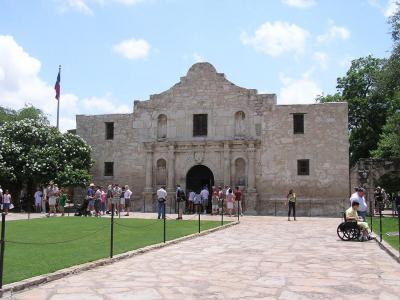
6) Alamo (must see)
The Alamo, originally known as Misión San Antonio de Valero, is a historic Spanish mission and fortress in San Antonio. Founded in the 18th century by Roman Catholic missionaries, the mission was intended to convert local Indigenous populations to Christianity. Secularized in 1793, it was later abandoned and repurposed as a military fortress by the Second Flying Company of San Carlos de Parras, who gave it the name "Alamo," likely referencing the nearby poplar trees.
The site gained iconic status as the location of the 1836 Battle of the Alamo during the Texas Revolution. Here, a small group of Texian defenders, including legendary figures James Bowie and Davy Crockett, held out against Mexican forces led by General Santa Anna before being overwhelmed on March 6, 1836. This pivotal event became a symbol of Texian resistance and sacrifice. After the Mexican Army's retreat, much of the Alamo was destroyed.
The Alamo evolved from a military garrison to a U.S. Army depot before falling into neglect. Preservation efforts began in 1905 with the Daughters of the Republic of Texas, leading to state ownership. In 2015, the Texas General Land Office took over, ensuring its protection as a cultural landmark. That year, the Alamo and nearby missions became a UNESCO World Heritage Site.
Today, the Alamo is one of the most visited historic sites in the United States, drawing over four million visitors annually. The site features the iconic chapel and the Long Barracks, which house a museum showcasing artifacts, weapons, and paintings from the Texas Revolution. Visitors can also view a detailed diorama recreating the compound as it appeared in 1836, along with the Wall of History mural, which chronicles the site's evolution from its mission days to modern times.
The site gained iconic status as the location of the 1836 Battle of the Alamo during the Texas Revolution. Here, a small group of Texian defenders, including legendary figures James Bowie and Davy Crockett, held out against Mexican forces led by General Santa Anna before being overwhelmed on March 6, 1836. This pivotal event became a symbol of Texian resistance and sacrifice. After the Mexican Army's retreat, much of the Alamo was destroyed.
The Alamo evolved from a military garrison to a U.S. Army depot before falling into neglect. Preservation efforts began in 1905 with the Daughters of the Republic of Texas, leading to state ownership. In 2015, the Texas General Land Office took over, ensuring its protection as a cultural landmark. That year, the Alamo and nearby missions became a UNESCO World Heritage Site.
Today, the Alamo is one of the most visited historic sites in the United States, drawing over four million visitors annually. The site features the iconic chapel and the Long Barracks, which house a museum showcasing artifacts, weapons, and paintings from the Texas Revolution. Visitors can also view a detailed diorama recreating the compound as it appeared in 1836, along with the Wall of History mural, which chronicles the site's evolution from its mission days to modern times.
7) The River Walk (must see)
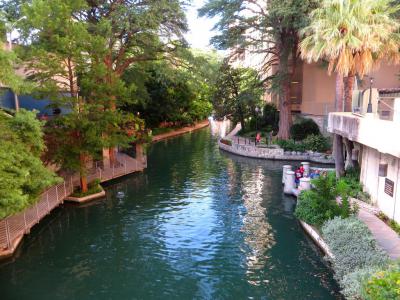
The San Antonio River Walk is a network of walkways along the banks of the San Antonio River, one story beneath the streets of San Antonio, Texas, USA. Lined by bars, shops, restaurants, nature, and public art, the River Walk is an important part of the city's urban fabric and a tourist attraction in its own right.
The River Walk is a successful special-case pedestrian street, one level down from the automobile street. The River Walk winds and loops under bridges as two parallel sidewalks lined with restaurants and shops, connecting the major tourist draws from the Shops at Rivercenter, to the Arneson River Theatre, to Marriage Island, to La Villita, to HemisFair Park, to the Tower Life Building, to the San Antonio Museum of Art, to the Pearl and the city's five Spanish colonial missions, which have been named a World Heritage Site, including the Alamo. During the annual springtime Fiesta San Antonio, the River Parade features flowery floats that float down the river.
The River Walk is a successful special-case pedestrian street, one level down from the automobile street. The River Walk winds and loops under bridges as two parallel sidewalks lined with restaurants and shops, connecting the major tourist draws from the Shops at Rivercenter, to the Arneson River Theatre, to Marriage Island, to La Villita, to HemisFair Park, to the Tower Life Building, to the San Antonio Museum of Art, to the Pearl and the city's five Spanish colonial missions, which have been named a World Heritage Site, including the Alamo. During the annual springtime Fiesta San Antonio, the River Parade features flowery floats that float down the river.
Sight description based on Wikipedia.
8) Tower of Americas (must see)
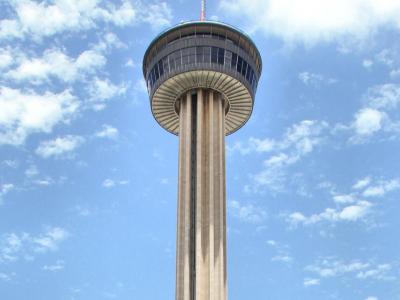
The Tower of the Americas, a prominent 750-foot (229-meter) observation tower and revolving restaurant graces the Hemisfair district in southeastern Downtown San Antonio, Texas. This iconic structure, designed by renowned San Antonio architect O'Neil Ford, debuted as the theme centerpiece of the 1968 World's Fair, HemisFair '68, which celebrated San Antonio's 250th anniversary.
Initially referred to as the "HemisFair Tower," its official name, "Tower of the Americas," was the winning entry in a name-the-tower contest with 68 submissions. At its opening, it claimed the title of the tallest observation tower in the United States, holding this distinction until 1996, when the Las Vegas Stratosphere Tower surpassed it. Today, it remains the tallest occupiable structure in San Antonio and ranks as the 30th-tallest in Texas.
Strategically located in the heart of HemisFair Park, the tower features an observation deck offering panoramic views of the city, accessible by elevator for a fee. The top also houses a revolving restaurant and a lounge, enhancing the visitor experience with a unique dining perspective of San Antonio.
The tower's construction, completed in just 18 months, is a marvel of engineering. Its 1.4-million-pound "top house," encompassing observation decks and the restaurant, was assembled at ground level and then meticulously lifted inch by inch to its final position atop the concrete shaft, using twenty-four steel lifting rods-a process that took twenty days to execute.
Over the decades, the Tower of the Americas has evolved. For over 30 years, its restaurant was operated by Frontier Enterprises, the owners of the local Jim's Restaurants chain. Since then, Landry’s Restaurants has taken over, bringing new life to this historic landmark.
A 30-meter-tall (98 feet) steel mast was added to its roof in 1970, supporting FM antennas. In 2007, these antennas were replaced with a state-of-the-art 16-bay master antenna system, significantly improving signal coverage for three FM radio stations, including HD transmissions.
As a centerpiece of San Antonio's skyline and a symbol of its vibrant history, the Tower of the Americas continues to attract visitors with its breathtaking views, innovative design, and rich cultural significance.
Initially referred to as the "HemisFair Tower," its official name, "Tower of the Americas," was the winning entry in a name-the-tower contest with 68 submissions. At its opening, it claimed the title of the tallest observation tower in the United States, holding this distinction until 1996, when the Las Vegas Stratosphere Tower surpassed it. Today, it remains the tallest occupiable structure in San Antonio and ranks as the 30th-tallest in Texas.
Strategically located in the heart of HemisFair Park, the tower features an observation deck offering panoramic views of the city, accessible by elevator for a fee. The top also houses a revolving restaurant and a lounge, enhancing the visitor experience with a unique dining perspective of San Antonio.
The tower's construction, completed in just 18 months, is a marvel of engineering. Its 1.4-million-pound "top house," encompassing observation decks and the restaurant, was assembled at ground level and then meticulously lifted inch by inch to its final position atop the concrete shaft, using twenty-four steel lifting rods-a process that took twenty days to execute.
Over the decades, the Tower of the Americas has evolved. For over 30 years, its restaurant was operated by Frontier Enterprises, the owners of the local Jim's Restaurants chain. Since then, Landry’s Restaurants has taken over, bringing new life to this historic landmark.
A 30-meter-tall (98 feet) steel mast was added to its roof in 1970, supporting FM antennas. In 2007, these antennas were replaced with a state-of-the-art 16-bay master antenna system, significantly improving signal coverage for three FM radio stations, including HD transmissions.
As a centerpiece of San Antonio's skyline and a symbol of its vibrant history, the Tower of the Americas continues to attract visitors with its breathtaking views, innovative design, and rich cultural significance.

9) La Villita Historic Arts Village (must see)
Nestled near the heart of downtown San Antonio, just a short stroll from Alamo Plaza, the La Villita Historic Arts Village is a vibrant testament to the city’s rich history and cultural diversity. Recognized on the National Register of Historic Places, this historic district encompasses 27 preserved 19th-century dwellings that offer a fascinating glimpse into early residential life in San Antonio.
La Villita’s roots trace back to its beginnings as a Native American settlement, later evolving into a Spanish military outpost. After a devastating flood in 1819 destroyed its original jacales (primitive brush huts), more permanent adobe houses rose in their place. In the mid-19th century, European immigrants-primarily Germans, along with French and Italian settlers-added their architectural touch, blending with earlier Mexican influences. The result is a neighborhood showcasing a mosaic of styles, from modest stucco-clad homes to larger, more ornate structures reflecting Victorian trends.
By the early 20th century, La Villita had fallen into disrepair, becoming a neglected slum. However, during the Great Depression, Mayor Maury Maverick spearheaded efforts to restore the area as part of the Works Progress Administration and National Youth Administration projects. These initiatives not only preserved the historic buildings but also established La Villita as a center for arts and crafts education.
Today, La Villita thrives as an artistic and cultural enclave, offering a unique shopping and dining experience. Its narrow streets and quaint buildings house art galleries, boutiques, and specialty shops, where visitors can find handcrafted jewelry, pottery, Mexican folk art, textiles, and sculptures. The district also features a variety of dining options and connects seamlessly to the iconic San Antonio River Walk, including access to the Arneson River Theatre, an outdoor performance venue.
Each April, La Villita becomes the heart of Fiesta San Antonio, hosting the lively Night in Old San Antonio (NIOSA) event. Over four evenings, it celebrates global cultures with themed food booths like Sauerkraut Bend and Mexican Market, drawing 85,000 revelers to its vibrant, papel picado-adorned streets. Organized by the San Antonio Conservation Society, this fundraiser underscores La Villita's role as a symbol of community and heritage.
La Villita’s roots trace back to its beginnings as a Native American settlement, later evolving into a Spanish military outpost. After a devastating flood in 1819 destroyed its original jacales (primitive brush huts), more permanent adobe houses rose in their place. In the mid-19th century, European immigrants-primarily Germans, along with French and Italian settlers-added their architectural touch, blending with earlier Mexican influences. The result is a neighborhood showcasing a mosaic of styles, from modest stucco-clad homes to larger, more ornate structures reflecting Victorian trends.
By the early 20th century, La Villita had fallen into disrepair, becoming a neglected slum. However, during the Great Depression, Mayor Maury Maverick spearheaded efforts to restore the area as part of the Works Progress Administration and National Youth Administration projects. These initiatives not only preserved the historic buildings but also established La Villita as a center for arts and crafts education.
Today, La Villita thrives as an artistic and cultural enclave, offering a unique shopping and dining experience. Its narrow streets and quaint buildings house art galleries, boutiques, and specialty shops, where visitors can find handcrafted jewelry, pottery, Mexican folk art, textiles, and sculptures. The district also features a variety of dining options and connects seamlessly to the iconic San Antonio River Walk, including access to the Arneson River Theatre, an outdoor performance venue.
Each April, La Villita becomes the heart of Fiesta San Antonio, hosting the lively Night in Old San Antonio (NIOSA) event. Over four evenings, it celebrates global cultures with themed food booths like Sauerkraut Bend and Mexican Market, drawing 85,000 revelers to its vibrant, papel picado-adorned streets. Organized by the San Antonio Conservation Society, this fundraiser underscores La Villita's role as a symbol of community and heritage.
10) Arneson River Theater
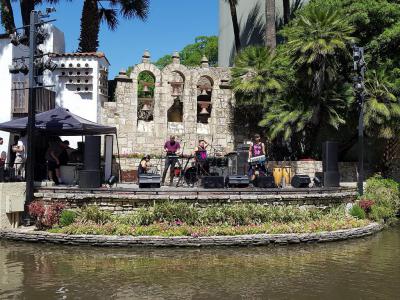
Nestled along the picturesque San Antonio River Walk, the Arneson River Theater is a celebrated outdoor performance venue with a rich history and vibrant present. Built between 1939 and 1941 by the Works Progress Administration, its creation was overseen by architect Robert H.H. Hugman, often hailed as the "Father of the River Walk." The theater honors Edwin P. Arneson, the WPA engineer who secured project funding but passed away before construction. Years later, bells added to the stage’s arches were named for Hugman, who rang them two years before his death.
This unique amphitheater features a stage on the river's north side, with the audience seated across the water on grass-covered steps that can accommodate over 800 people in 13 rows. A charming stone bridge, now called Rosita's Bridge in honor of Tejano music pioneer Rosita Fernández, often becomes an integral part of performances. Fernández captivated audiences here for 25 years as the star of the summer-long Fiesta Noche del Rio.
The Arneson River Theater remains a lively hub of cultural activity, hosting over 200 performances annually. Its open-air charm attracts everything from folkloric groups, music concerts, plays, and dance shows to opera performances and even weddings. Many of San Antonio’s famous river parades are televised from this iconic spot, adding to its enduring appeal.
Towering above the seating area is La Villita Historic Arts Village, a beautifully restored district showcasing artisan shops, galleries, and restaurants. This proximity to one of San Antonio's oldest neighborhoods enhances the theater’s cultural significance.
The Arneson River Theater also gained cinematic fame as a filming location for the 2000 comedy Miss Congeniality, starring Sandra Bullock and Michael Caine. Its blend of historical charm and modern vitality makes it a cornerstone of San Antonio's artistic and community life.
This unique amphitheater features a stage on the river's north side, with the audience seated across the water on grass-covered steps that can accommodate over 800 people in 13 rows. A charming stone bridge, now called Rosita's Bridge in honor of Tejano music pioneer Rosita Fernández, often becomes an integral part of performances. Fernández captivated audiences here for 25 years as the star of the summer-long Fiesta Noche del Rio.
The Arneson River Theater remains a lively hub of cultural activity, hosting over 200 performances annually. Its open-air charm attracts everything from folkloric groups, music concerts, plays, and dance shows to opera performances and even weddings. Many of San Antonio’s famous river parades are televised from this iconic spot, adding to its enduring appeal.
Towering above the seating area is La Villita Historic Arts Village, a beautifully restored district showcasing artisan shops, galleries, and restaurants. This proximity to one of San Antonio's oldest neighborhoods enhances the theater’s cultural significance.
The Arneson River Theater also gained cinematic fame as a filming location for the 2000 comedy Miss Congeniality, starring Sandra Bullock and Michael Caine. Its blend of historical charm and modern vitality makes it a cornerstone of San Antonio's artistic and community life.
11) Little Church of La Villita
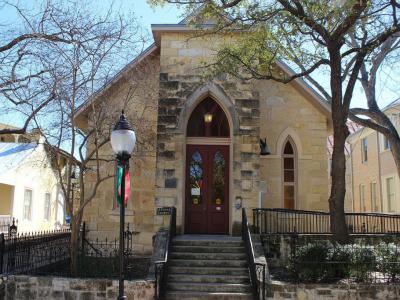
Nestled in the heart of San Antonio's historic La Villita Village, the Little Church of La Villita is a non-denominational gem with a rich history and vibrant community presence. Established on March 2, 1879, with its Neo-Gothic cornerstone laid by European settlers, the church quickly became a focal point for worship, weddings, and baptisms in what was San Antonio's first settlement. Its charming limestone walls and original stained glass windows continue to captivate visitors today.
Despite its quaint appearance, the church comfortably seats up to 75 guests, making it a popular choice for intimate weddings and religious ceremonies. With modern amenities such as air conditioning, it offers both historical charm and contemporary comfort. Located steps from the bustling San Antonio River Walk and just blocks from the Alamo and Hemisfair Park, the church is perfectly positioned for visitors to explore the city's vibrant culture.
The Little Church of La Villita is more than a historic landmark; it’s an active community hub. Its ongoing initiatives include a food pantry, clothing distribution, and the annual Thanksgiving Basket project. The church also hosts the Annual Starving Artist Show every April, celebrating local creativity and craftsmanship. For art enthusiasts, its retail counterpart, the Starving Artist Art Gallery, is a must-visit in La Villita.
This picturesque venue welcomes all lifestyles and faiths, making it a top choice for intimate wedding ceremonies, often planned with Everlasting Elopements. Nearby, La Villita Village offers dining, art galleries, and shops, while visitors can enjoy a River Boat tour, the Tower of the Americas, or the King William Historic District. Convenient accommodations like the Grand Hyatt and Embassy Suites enhance the downtown San Antonio experience.
Despite its quaint appearance, the church comfortably seats up to 75 guests, making it a popular choice for intimate weddings and religious ceremonies. With modern amenities such as air conditioning, it offers both historical charm and contemporary comfort. Located steps from the bustling San Antonio River Walk and just blocks from the Alamo and Hemisfair Park, the church is perfectly positioned for visitors to explore the city's vibrant culture.
The Little Church of La Villita is more than a historic landmark; it’s an active community hub. Its ongoing initiatives include a food pantry, clothing distribution, and the annual Thanksgiving Basket project. The church also hosts the Annual Starving Artist Show every April, celebrating local creativity and craftsmanship. For art enthusiasts, its retail counterpart, the Starving Artist Art Gallery, is a must-visit in La Villita.
This picturesque venue welcomes all lifestyles and faiths, making it a top choice for intimate wedding ceremonies, often planned with Everlasting Elopements. Nearby, La Villita Village offers dining, art galleries, and shops, while visitors can enjoy a River Boat tour, the Tower of the Americas, or the King William Historic District. Convenient accommodations like the Grand Hyatt and Embassy Suites enhance the downtown San Antonio experience.
12) Torch of Friendship
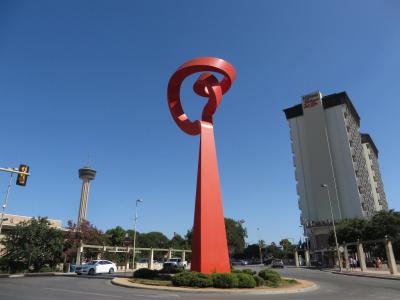
The Torch of Friendship, or La Antorcha de la Amistad, stands as a striking symbol of cultural cooperation and unity between Mexico and the United States. Located in the heart of downtown San Antonio, the monumental sculpture occupies a prominent spot in a traffic rotary at the intersection of Losoya, Commerce, Market, and Alamo Streets. This area is a major hub for international tourists, being home to the famed San Antonio River Walk and the historic Alamo.
The abstract sculpture, unveiled on June 27, 2002, is the work of renowned Mexican sculptor Sebastián. A gift from the Mexican government to the City of San Antonio, it was commissioned by a group of Mexican businessmen and friends of Mexico residing in the United States. At nearly 65 feet tall (20 meters) and weighing over 45 tons (40,800 kilograms), the sculpture’s two red posts rise at dynamic, non-parallel angles before twisting and merging at the top. The interplay of angles and curves creates a visually unique appearance from every viewpoint, with the upper portion illuminated in changing colors and patterns throughout the year.
While the Torch of Friendship has become a defining landmark, its location initially sparked debate. Positioned on a busy rotary island in a high-traffic intersection, some residents felt the sculpture clashed with its surroundings. However, the controversy waned as the artwork gained positive attention, aided by the revelation that its maintenance costs, at only $5,000 annually, were minimal. Over time, the sculpture has been embraced as a vibrant addition to the cityscape, celebrated as a testament to the enduring relationship between San Antonio and Mexico.
The abstract sculpture, unveiled on June 27, 2002, is the work of renowned Mexican sculptor Sebastián. A gift from the Mexican government to the City of San Antonio, it was commissioned by a group of Mexican businessmen and friends of Mexico residing in the United States. At nearly 65 feet tall (20 meters) and weighing over 45 tons (40,800 kilograms), the sculpture’s two red posts rise at dynamic, non-parallel angles before twisting and merging at the top. The interplay of angles and curves creates a visually unique appearance from every viewpoint, with the upper portion illuminated in changing colors and patterns throughout the year.
While the Torch of Friendship has become a defining landmark, its location initially sparked debate. Positioned on a busy rotary island in a high-traffic intersection, some residents felt the sculpture clashed with its surroundings. However, the controversy waned as the artwork gained positive attention, aided by the revelation that its maintenance costs, at only $5,000 annually, were minimal. Over time, the sculpture has been embraced as a vibrant addition to the cityscape, celebrated as a testament to the enduring relationship between San Antonio and Mexico.
13) Shops at Rivercentre
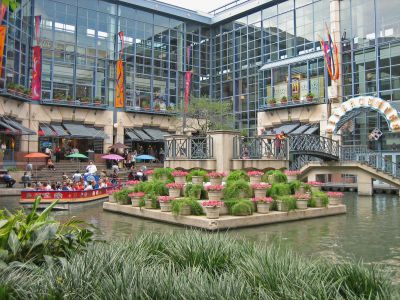
The Shops at Rivercenter, formerly known as Rivercenter Mall, is a vibrant shopping and entertainment destination located in downtown San Antonio. Positioned along the iconic River Walk, this four-story mall-with an additional river-level floor-offers a mix of retail, dining, and entertainment options. Its centerpiece is a lagoon extension of the River Walk, providing a seamless blend of shopping and scenic leisure.
Anchored by H&M and AMC Theatres, The Shops at Rivercenter also houses a 38-story Marriott hotel with over 1,000 rooms, catering to tourists and business travelers alike. Originally opened in 1988, the mall has undergone significant transformations over the decades, evolving into a modern shopping hub while preserving its historical roots.
Rivercenter Mall blends local history with modernity. Saint Joseph's Catholic Church, built in 1871, famously resisted selling to Joske's Department Store in 1945, leading the store to be built around it. The mall once housed San Antonio’s first Lord & Taylor, an IMAX theater, and Dillard’s, which closed in 2008. The 1887 Joske's building, originally a 551,000-square-foot flagship store, was later redeveloped into retail and entertainment spaces, including an AMC theater.
Under the ownership of Ashkenazy Acquisition Corporation since 2005, The Shops at Rivercenter has seen continuous revitalization. In 2016, the historic Joske’s building was reimagined as a modern wing featuring tenants like Dave & Buster’s, H&M, Starbucks, and Johnny Rockets. The same year, the mall was renamed to its current title, reflecting its updated identity.
The Shops at Rivercenter bridges San Antonio’s rich history and contemporary urban culture. With its strategic location, historical charm, and modern amenities, it continues to be a key destination for locals and visitors exploring the heart of the city.
Anchored by H&M and AMC Theatres, The Shops at Rivercenter also houses a 38-story Marriott hotel with over 1,000 rooms, catering to tourists and business travelers alike. Originally opened in 1988, the mall has undergone significant transformations over the decades, evolving into a modern shopping hub while preserving its historical roots.
Rivercenter Mall blends local history with modernity. Saint Joseph's Catholic Church, built in 1871, famously resisted selling to Joske's Department Store in 1945, leading the store to be built around it. The mall once housed San Antonio’s first Lord & Taylor, an IMAX theater, and Dillard’s, which closed in 2008. The 1887 Joske's building, originally a 551,000-square-foot flagship store, was later redeveloped into retail and entertainment spaces, including an AMC theater.
Under the ownership of Ashkenazy Acquisition Corporation since 2005, The Shops at Rivercenter has seen continuous revitalization. In 2016, the historic Joske’s building was reimagined as a modern wing featuring tenants like Dave & Buster’s, H&M, Starbucks, and Johnny Rockets. The same year, the mall was renamed to its current title, reflecting its updated identity.
The Shops at Rivercenter bridges San Antonio’s rich history and contemporary urban culture. With its strategic location, historical charm, and modern amenities, it continues to be a key destination for locals and visitors exploring the heart of the city.
