Custom Walk in Seville, Spain by ms_sarbsandhu6355 created on 2022-05-03
Guide Location: Spain » Seville
Guide Type: Custom Walk
# of Sights: 11
Tour Duration: 4 Hour(s)
Travel Distance: 8.5 Km or 5.3 Miles
Share Key: ZSMHB
Guide Type: Custom Walk
# of Sights: 11
Tour Duration: 4 Hour(s)
Travel Distance: 8.5 Km or 5.3 Miles
Share Key: ZSMHB
How It Works
Please retrieve this walk in the GPSmyCity app. Once done, the app will guide you from one tour stop to the next as if you had a personal tour guide. If you created the walk on this website or come to the page via a link, please follow the instructions below to retrieve the walk in the app.
Retrieve This Walk in App
Step 1. Download the app "GPSmyCity: Walks in 1K+ Cities" on Apple App Store or Google Play Store.



Step 2. In the GPSmyCity app, download(or launch) the guide "Seville Map and Walking Tours".
Step 3. Tap the menu button located at upper right corner of the "Walks" screen and select "Retrieve custom walk". Enter the share key: ZSMHB
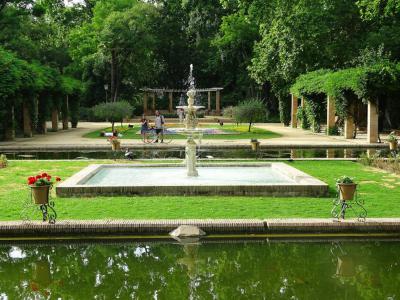
1) Parque de María Luisa (María Luisa Park) (must see)
You shouldn't miss a visit to María Luisa Park before leaving Seville. It's a stunning location that stretches along the Guadalquivir River and serves as the city's main green space. Most of the park used to be the gardens of the Palace of San Telmo. In 1893, Infanta Luisa Fernanda, Duchess of Montpensier, generously donated these grounds to the city of Seville to create a public park. The gardens, as we see them today, were redesigned by Jean-Claude Nicolas Forestier, starting in 1911. Subsequently, the park played a crucial role in the Ibero-American Exposition of 1929, contributing to its impressive architectural setting.
To prepare for the exhibition, the entire southern part of the city underwent redevelopment, transforming into an expansive area filled with gardens and grand boulevards. At its heart lies the Parque de María Luisa, designed in a "Moorish paradise style" and featuring a half-mile of tiled fountains, pavilions, walls, ponds, benches, and exedras. You'll find abundant plantings of palms, orange trees, Mediterranean pines, and carefully designed flower beds, some of which are hidden by vines.
María Luisa Park also serves as a botanical garden, showcasing a wide variety of plant species, both native and exotic, with informative panels to educate visitors. The park is home to numerous bird species, particularly doves (so much so that a part of Plaza de América is known as "Parque de las Palomas" or Dove Park). Additionally, you'll spot green parrots living in the park's center, as well as ducks and swans in the fountains and lakes.
Why You Should Visit:
The historic buildings, sculptures, and water features make this a unique work of garden landscaping and leafy beauty. There is always something new to explore or do!
At various points, you can join different experiences, such as feeding the birds (Plaza de America), riding a bike (including family cycles), or entertaining yourself taking photos of the incomparable Plaza de España.
Tip:
Make sure you visit during the "golden hour" when the light is the most beautiful in Sevilla (in July it would be around 8-9pm)!
To prepare for the exhibition, the entire southern part of the city underwent redevelopment, transforming into an expansive area filled with gardens and grand boulevards. At its heart lies the Parque de María Luisa, designed in a "Moorish paradise style" and featuring a half-mile of tiled fountains, pavilions, walls, ponds, benches, and exedras. You'll find abundant plantings of palms, orange trees, Mediterranean pines, and carefully designed flower beds, some of which are hidden by vines.
María Luisa Park also serves as a botanical garden, showcasing a wide variety of plant species, both native and exotic, with informative panels to educate visitors. The park is home to numerous bird species, particularly doves (so much so that a part of Plaza de América is known as "Parque de las Palomas" or Dove Park). Additionally, you'll spot green parrots living in the park's center, as well as ducks and swans in the fountains and lakes.
Why You Should Visit:
The historic buildings, sculptures, and water features make this a unique work of garden landscaping and leafy beauty. There is always something new to explore or do!
At various points, you can join different experiences, such as feeding the birds (Plaza de America), riding a bike (including family cycles), or entertaining yourself taking photos of the incomparable Plaza de España.
Tip:
Make sure you visit during the "golden hour" when the light is the most beautiful in Sevilla (in July it would be around 8-9pm)!
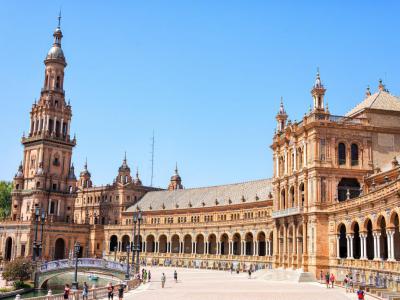
2) Plaza de Espana (Spain Square) (must see)
Spain Square is one of Seville’s most recognisable landmarks and a bold expression of the city’s early 20th-century ambitions. Local tradition likes to claim that Seville was founded by Hercules—though, as often noted, he could not be reached for verification. Since then, waves of Carthaginians, Romans, Goths, Vandals, and Moors have passed through the city. None of them, however, ever saw the square. Its story begins much later, in 1914, when architect Aníbal González began work on the site in preparation for the Ibero-American Exposition of 1929, an event intended to highlight Spain’s cultural links with Latin America.
González conceived the square as a grand architectural statement, blending Art Deco, Spanish Renaissance Revival, Spanish Baroque Revival, and Neo-Mudéjar styles. The result is a vast semi-circular complex of buildings and towers that seems to embrace the open space in front of it. A wide moat-like canal borders the plaza, enclosing a broad central expanse anchored by the Vicente Traver fountain. Four elegant bridges cross the canal, representing the historic kingdoms of Castile, León, Aragon, and Navarre.
One of the plaza’s most distinctive features lies along the curved buildings that frame the square. Here, 52 colourful alcoves or niches line the walls, each dedicated to a Spanish province. Decorated with intricate azulejo tiles, they display painted maps and historical scenes, with benches inviting visitors to pause. Originally, the shelves within these alcoves functioned as small lending libraries, offering books related to each province.
Walking beneath the arcades reveals shifting perspectives of tile, brick, and water, while hiring a small boat to glide along the canal offers a dreamlike view of the square from below. Musicians, photographers, and passers-by animate the open space, making the square one of Seville’s most memorable places to linger.
González conceived the square as a grand architectural statement, blending Art Deco, Spanish Renaissance Revival, Spanish Baroque Revival, and Neo-Mudéjar styles. The result is a vast semi-circular complex of buildings and towers that seems to embrace the open space in front of it. A wide moat-like canal borders the plaza, enclosing a broad central expanse anchored by the Vicente Traver fountain. Four elegant bridges cross the canal, representing the historic kingdoms of Castile, León, Aragon, and Navarre.
One of the plaza’s most distinctive features lies along the curved buildings that frame the square. Here, 52 colourful alcoves or niches line the walls, each dedicated to a Spanish province. Decorated with intricate azulejo tiles, they display painted maps and historical scenes, with benches inviting visitors to pause. Originally, the shelves within these alcoves functioned as small lending libraries, offering books related to each province.
Walking beneath the arcades reveals shifting perspectives of tile, brick, and water, while hiring a small boat to glide along the canal offers a dreamlike view of the square from below. Musicians, photographers, and passers-by animate the open space, making the square one of Seville’s most memorable places to linger.
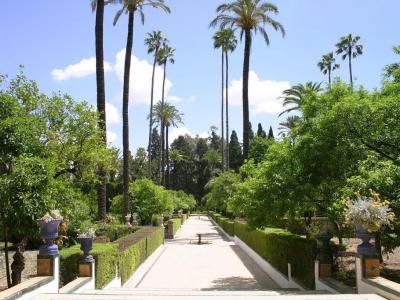
3) Jardines de los Reales Alcazares (Royal Palace Gardens) (must see)
The gardens of the Royal Palace of Seville are the grandest late- medieval gardens anywhere in Europe and possibly, the world. After 1248, the year of the Christian Reconquista of Andalusia, the craftsmen and artisans of Seville developed the style known as Mudejar. "Mudejar" means "allowed to stay." The Moorish styles remained.
During the 16th century Seville was the richest city in Spain. The designers of Charles V focused on Renaissance styles when creating follies and gardens. The old garden spaces remained but the pavilions, gazebos and labyrinths were another matter. The alcazar gardens of Peter I enclosed pools, fountains, and niches of glazed tiles.
The plantings of the gardens include palms, cypress, myrtle, berries, magnolia and citrus trees. When the orange trees drop their oranges, the air is filled with the scent of jasmine and oranges. The Alcazar gardens are a cluster of mazes, pools and intimate paths, palm trees and fountains. It is almost too much sweetness to bear.
During the 16th century Seville was the richest city in Spain. The designers of Charles V focused on Renaissance styles when creating follies and gardens. The old garden spaces remained but the pavilions, gazebos and labyrinths were another matter. The alcazar gardens of Peter I enclosed pools, fountains, and niches of glazed tiles.
The plantings of the gardens include palms, cypress, myrtle, berries, magnolia and citrus trees. When the orange trees drop their oranges, the air is filled with the scent of jasmine and oranges. The Alcazar gardens are a cluster of mazes, pools and intimate paths, palm trees and fountains. It is almost too much sweetness to bear.
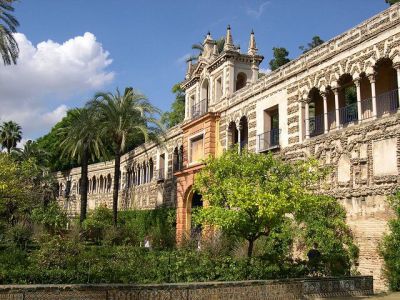
4) Real Alcazar de Sevilla (Royal Palace of Seville) (must see)
The Royal Palace of Seville is one of the city’s most important historical monuments and a rare example of a palace that has remained in continuous use for more than a thousand years. Its story begins in 712, when Seville was conquered by the Umayyad Caliphate, ushering in nearly seven centuries of Arab rule in Andalusia. In 913, Abd al-Rahman III ordered the construction of a fort on this site, built over a former Visigothic church. This early complex was expanded in the 11th century with an addition known as Al Mubarak, meaning “The Blessed,” as Seville grew into a major political centre of Muslim Spain .
Over time, the palace underwent repeated cycles of demolition and rebuilding. By the later medieval period, as many as twelve palaces had been constructed one atop another, each reflecting the tastes and priorities of its rulers. Its most decisive transformation came in the 14th century, when King Pedro I commissioned the Mudéjar Palace, blending Islamic craftsmanship with Christian symbolism. Muslim artisans created interiors rich in carved stucco, wooden ceilings, Arabic inscriptions, and an extraordinary abundance of ceramic tiles—majolica and arista—so characteristic of Seville.
The main entrance, the Lion Gate, takes its name from the tiled panel above the doorway showing a lion holding a cross beneath a Latin motto meaning “ready for anything.” Once you pass through security, you enter the Lion Courtyard. To your left is the Justice Hall, known for its remarkable Mudéjar plasterwork and square floor plan. While in the Lion Courtyard, continue straight ahead to reach the Hunting Courtyard. From there, head toward the richly decorated main façade of the palace and enter through the central doorway. After passing through several corridors, you arrive at one of the most famous spaces in the complex—the Courtyard of the Maidens. Here you will see a long reflecting pool surrounded by sunken gardens and a gallery of intricate multifoil arches. The delicate, lace-like stucco decoration is a masterpiece of the Mudéjar style.
Another highlight is the Hall of Ambassadors, once the throne room. Looking up, visitors see the spectacular gilded wooden dome from 1427, often described as a half-orange dome because of its segmented shape. The walls are covered in vibrant ceramic tiles and portraits of Spanish monarchs, making it one of the most lavish rooms in the entire palace. To reach it, stand in the Courtyard of the Maidens and look for the most richly decorated triple-arched entrance along the side of the courtyard.
The gardens are equally essential to the experience. Like many Andalusian palaces, the complex was designed with gardens combining fruit trees, vegetables, flowers, and abundant water in fountains and ponds. Expanded and reshaped over the centuries, they now include more than a dozen gardens, creating a peaceful landscape that contrasts with the ornate palace interiors.
Over time, the palace underwent repeated cycles of demolition and rebuilding. By the later medieval period, as many as twelve palaces had been constructed one atop another, each reflecting the tastes and priorities of its rulers. Its most decisive transformation came in the 14th century, when King Pedro I commissioned the Mudéjar Palace, blending Islamic craftsmanship with Christian symbolism. Muslim artisans created interiors rich in carved stucco, wooden ceilings, Arabic inscriptions, and an extraordinary abundance of ceramic tiles—majolica and arista—so characteristic of Seville.
The main entrance, the Lion Gate, takes its name from the tiled panel above the doorway showing a lion holding a cross beneath a Latin motto meaning “ready for anything.” Once you pass through security, you enter the Lion Courtyard. To your left is the Justice Hall, known for its remarkable Mudéjar plasterwork and square floor plan. While in the Lion Courtyard, continue straight ahead to reach the Hunting Courtyard. From there, head toward the richly decorated main façade of the palace and enter through the central doorway. After passing through several corridors, you arrive at one of the most famous spaces in the complex—the Courtyard of the Maidens. Here you will see a long reflecting pool surrounded by sunken gardens and a gallery of intricate multifoil arches. The delicate, lace-like stucco decoration is a masterpiece of the Mudéjar style.
Another highlight is the Hall of Ambassadors, once the throne room. Looking up, visitors see the spectacular gilded wooden dome from 1427, often described as a half-orange dome because of its segmented shape. The walls are covered in vibrant ceramic tiles and portraits of Spanish monarchs, making it one of the most lavish rooms in the entire palace. To reach it, stand in the Courtyard of the Maidens and look for the most richly decorated triple-arched entrance along the side of the courtyard.
The gardens are equally essential to the experience. Like many Andalusian palaces, the complex was designed with gardens combining fruit trees, vegetables, flowers, and abundant water in fountains and ponds. Expanded and reshaped over the centuries, they now include more than a dozen gardens, creating a peaceful landscape that contrasts with the ornate palace interiors.
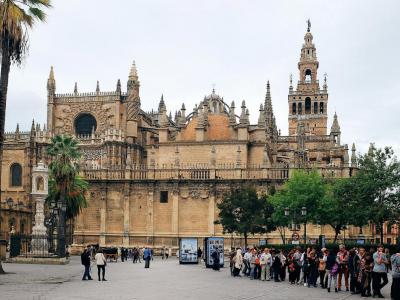
5) Seville Cathedral & Giralda Tower (must see)
Seville Cathedral and the Giralda Tower form one of Spain’s most powerful architectural ensembles and a defining symbol of the city. The cathedral stands on the site of Seville’s former Great Mosque. After the city was conquered by Ferdinand III in 1248, the mosque remained in use for some time before being replaced in the 14th century by a new Christian cathedral. When plans for the church were presented, it is said that the elders declared: “Let us build a church so beautiful and so grand that those who see it finished will think we were mad.” The result is the largest Gothic cathedral in the world and a UNESCO World Heritage Site since 1987. When Hagia Sophia in Istanbul was converted into a mosque in the 15th century, Seville Cathedral became the tallest cathedral in the Christian world.
The entrance is located on the south side of the building. This entrance is easily identified by the Giraldillo statue—a large bronze figure standing on a pedestal in front of the door. This statue is an exact replica of the weather vane that sits at the very top of the Giralda Tower.
Inside, the cathedral’s immense scale reflects Seville’s wealth during its rise as Spain’s main gateway to the Americas. In the Central Nave sits the largest and most expensive altarpiece in the world. The Great Altar consists of 45 separate panels, which tell the story of the Bible in chronological order from bottom to top. It was designed so that even those who couldn’t read could understand the life of Christ through these intricate carvings. Covered in nearly two tons of gold, it took almost a century to complete, from 1482 to 1564. To find the altar, look for the massive gilded iron grille that separates it from the rest of the space.
The cathedral is also where the remains of Christopher Columbus are preserved. Walk along the south transept and look for four larger-than-life bronze figures carrying the casket on their shoulders. The bronze casket holds bone fragments of the famous explorer, as confirmed by DNA testing in 2006 and more recently in 2024. The figures represent the four kingdoms of Spain: Castile, Aragon, León, and Navarre. Notice that the kingdom of Castile—the figure in front with a castle engraved on its garment—is stepping forward and holding a ship's oar, symbolizing overseas discovery.
A visit to Seville wouldn’t be complete without climbing its iconic symbol. The Giralda Tower was originally built in the late 12th century as the mosque’s minaret during the Almohad period. Constructed from local brick and recycled marble from earlier Umayyad buildings, its design was inspired by the Koutoubia Mosque in Marrakesh. The tower is located in the northeast corner of the building. To reach the top, you do not climb stairs; instead, you walk up 35 wide ramps. This allowed the muezzin—and, according to tradition, even the sultan on horseback—to ascend to the top. Once at the bell level, you will enjoy a 360° panoramic view of the entire city.
The entrance is located on the south side of the building. This entrance is easily identified by the Giraldillo statue—a large bronze figure standing on a pedestal in front of the door. This statue is an exact replica of the weather vane that sits at the very top of the Giralda Tower.
Inside, the cathedral’s immense scale reflects Seville’s wealth during its rise as Spain’s main gateway to the Americas. In the Central Nave sits the largest and most expensive altarpiece in the world. The Great Altar consists of 45 separate panels, which tell the story of the Bible in chronological order from bottom to top. It was designed so that even those who couldn’t read could understand the life of Christ through these intricate carvings. Covered in nearly two tons of gold, it took almost a century to complete, from 1482 to 1564. To find the altar, look for the massive gilded iron grille that separates it from the rest of the space.
The cathedral is also where the remains of Christopher Columbus are preserved. Walk along the south transept and look for four larger-than-life bronze figures carrying the casket on their shoulders. The bronze casket holds bone fragments of the famous explorer, as confirmed by DNA testing in 2006 and more recently in 2024. The figures represent the four kingdoms of Spain: Castile, Aragon, León, and Navarre. Notice that the kingdom of Castile—the figure in front with a castle engraved on its garment—is stepping forward and holding a ship's oar, symbolizing overseas discovery.
A visit to Seville wouldn’t be complete without climbing its iconic symbol. The Giralda Tower was originally built in the late 12th century as the mosque’s minaret during the Almohad period. Constructed from local brick and recycled marble from earlier Umayyad buildings, its design was inspired by the Koutoubia Mosque in Marrakesh. The tower is located in the northeast corner of the building. To reach the top, you do not climb stairs; instead, you walk up 35 wide ramps. This allowed the muezzin—and, according to tradition, even the sultan on horseback—to ascend to the top. Once at the bell level, you will enjoy a 360° panoramic view of the entire city.
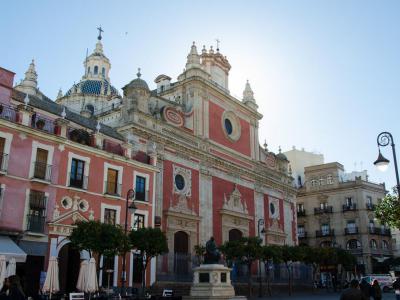
6) Iglesia Colegial del Salvador (Church of the Divine Savior) (must see)
Located in the Plaza del Salvador in Seville, the Church of the Divine Savior is the largest church in the city after the Cathedral. The church was built over the remains Ibn Adabba, the Great Mosque, and an early Christian chapel. It fell into disrepair over the centuries between 1340 and 2008 when it was fully restored to its former glory.
The church is baroque. The facade however, has a mannerist influence. Mannerist architecture developed after the end of the renaissance style and the first signs of the Baroque, about 1610. The building is rectangular and it has three naves. The vaults are a barrel type. Pillars with columns support the vaults. The drum is octagonal.
The main altarpiece was by Cayetano de Acosta in Baroque style. The immaculate Mary appears over the tabernacle. In the center is the Transfiguration of Jesus, surrounded by Archangels. In the central nave the columns have a tracery of eucharistic symbols. There are lions and castles. The church is about the moment Jesus reveals his divinity.
Tip:
Purchase the "combined" ticket here and you'll be able to skip the long line at the Cathedral and Giralda.
The church is baroque. The facade however, has a mannerist influence. Mannerist architecture developed after the end of the renaissance style and the first signs of the Baroque, about 1610. The building is rectangular and it has three naves. The vaults are a barrel type. Pillars with columns support the vaults. The drum is octagonal.
The main altarpiece was by Cayetano de Acosta in Baroque style. The immaculate Mary appears over the tabernacle. In the center is the Transfiguration of Jesus, surrounded by Archangels. In the central nave the columns have a tracery of eucharistic symbols. There are lions and castles. The church is about the moment Jesus reveals his divinity.
Tip:
Purchase the "combined" ticket here and you'll be able to skip the long line at the Cathedral and Giralda.
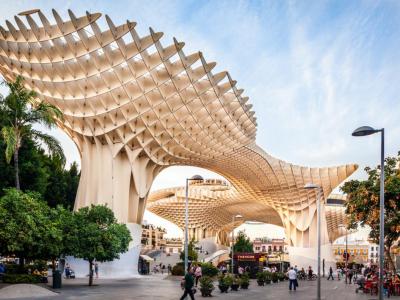
7) Setas de Sevilla (Metropol Parasol) (must see)
The Metropol Parasol, often called the “Mushrooms of Seville” because of its distinctive shape, is one of the city’s most impressive modern landmarks. Located in Incarnation Square, the structure was completed in 2011 as part of a major urban redevelopment project. The area had long hosted a market building that dated back to the 19th century.
Covering about 113,000 square feet and rising roughly 85 feet, the structure is considered the largest wooden structure of its kind in the world. It consists of six giant parasol-shaped forms made from laminated timber, creating a honeycomb-like canopy that shades the square below. The design was inspired by the vaulted ceilings of Seville Cathedral and the spreading branches of the ficus trees in nearby Christ of Burgos Square.
The complex is arranged across four levels. Underground, Level 0 houses the Antiquarium, an archaeological museum displaying Roman houses, mosaics, and artifacts discovered during the excavations. Level 1 is the open-air public plaza and market area, shaded by the wooden canopy above and used for shops, cafés, and public gatherings. Levels 2 and 3 contain elevated walkways, panoramic terraces, and a restaurant.
The highlight is the rooftop walkway that curves across the tops of the parasols, offering sweeping views over Seville’s rooftops, church towers, and historic skyline. The experience is particularly memorable at sunset, when the city’s warm light spreads across the old town.
Covering about 113,000 square feet and rising roughly 85 feet, the structure is considered the largest wooden structure of its kind in the world. It consists of six giant parasol-shaped forms made from laminated timber, creating a honeycomb-like canopy that shades the square below. The design was inspired by the vaulted ceilings of Seville Cathedral and the spreading branches of the ficus trees in nearby Christ of Burgos Square.
The complex is arranged across four levels. Underground, Level 0 houses the Antiquarium, an archaeological museum displaying Roman houses, mosaics, and artifacts discovered during the excavations. Level 1 is the open-air public plaza and market area, shaded by the wooden canopy above and used for shops, cafés, and public gatherings. Levels 2 and 3 contain elevated walkways, panoramic terraces, and a restaurant.
The highlight is the rooftop walkway that curves across the tops of the parasols, offering sweeping views over Seville’s rooftops, church towers, and historic skyline. The experience is particularly memorable at sunset, when the city’s warm light spreads across the old town.
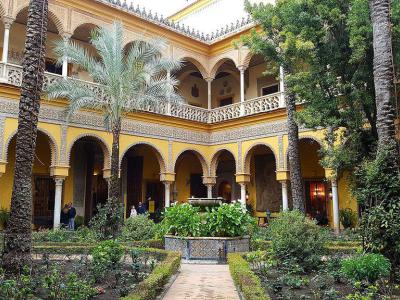
8) Palacio de las Duenas (Palace of Duenas) (must see)
The Palace of Duenas is one of Seville’s most atmospheric historic residences and a key example of the city’s aristocratic heritage. Built in the 15th century, the palace belongs to the powerful House of Alba, which has owned it for generations. Its name derives from the nearby Monastery of Saint Mary of Duenas, once home to nuns and servants of Saint Ferdinand and Alfonso X “the Wise.” The monastery stood on the edge of the palace grounds until its demolition in 1866.
Architecturally, the palace reflects a rich blend of Renaissance design with Gothic and Moorish accents, a combination typical of Seville’s late medieval and early modern architecture. Although the palace originally featured eleven courtyards, only one remains today, enclosed by an elegant gallery that preserves the intimate rhythm of noble domestic life. Inside, visitors encounter a grand staircase beneath a vaulted roof, ceilings with gilded alfarje woodwork, and rooms filled with refined decorative detail.
The palace has long been associated with literature and the arts. Several notable poets and artists were born or lived here, most famously Antonio Machado, who was born in the palace in 1875. At one point, the residence also housed Lord Holland, a passionate admirer of Spanish literature and author of a memoir on playwrights Lope de Vega and Guillén de Castro.
Today, the interiors display an impressive collection of Italian and Spanish paintings, antiques, ceramics, sculptures, tapestries, and mosaics.
Architecturally, the palace reflects a rich blend of Renaissance design with Gothic and Moorish accents, a combination typical of Seville’s late medieval and early modern architecture. Although the palace originally featured eleven courtyards, only one remains today, enclosed by an elegant gallery that preserves the intimate rhythm of noble domestic life. Inside, visitors encounter a grand staircase beneath a vaulted roof, ceilings with gilded alfarje woodwork, and rooms filled with refined decorative detail.
The palace has long been associated with literature and the arts. Several notable poets and artists were born or lived here, most famously Antonio Machado, who was born in the palace in 1875. At one point, the residence also housed Lord Holland, a passionate admirer of Spanish literature and author of a memoir on playwrights Lope de Vega and Guillén de Castro.
Today, the interiors display an impressive collection of Italian and Spanish paintings, antiques, ceramics, sculptures, tapestries, and mosaics.
9) Casa de Pilatos (Pilate's House) (must see)
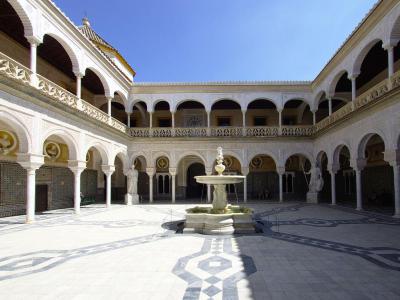
Pilate’s House is one of Seville’s most distinctive historic residences. Construction began in the late 15th century under the nobleman Pedro Enríquez de Quiñones and his wife, Catalina de Ribera, and was later expanded by their son, Don Fadrique Enríquez de Ribera. In October 1520, Fadrique returned from a journey to the Holy Land deeply influenced by Jerusalem. Soon after, he inaugurated in Seville the Holy Way of the Cross, tracing the path of Christ from Pontius Pilate’s praetorium to Calvary—symbolically marked here by a pillar in a field outside the city walls.
At the time, Fadrique’s residence was still under construction, and it came to be associated with Pilate’s house itself. Over time, the palace adopted the name Pilate’s House, as many believed it echoed the layout or spirit of the Roman governor’s residence in Jerusalem.
Architecturally, Pilate’s House is celebrated for its refined fusion of Italian Renaissance and Mudéjar styles. The marble Renaissance entrance gate opens onto a simple courtyard. As soon as you enter, look to your right at the slender white columns with red arches. Among the columns, there is a black door that leads to the heart of the palace – the Main Courtyard. Once you step into th e courtyard look into the corners of the gallery for four larger-than-life statues. The most impressive of them all is specifically the Athena, an original Greek sculpture from the 5th century BC, placed in the northeast corner of the gallery. Moreover, the courtyard's walls are covered in over 150 different patterns of Azulejo vibrant ceramic tiles from the 16th century. Last but not least, the arches are lined with 24 marble busts of Roman emperors.
Apart from the Main Courtyard, the Large Garden features manicured hedges and orange trees. The garden's focal point is the Loggia, an open-air gallery at the far end decorated with classical niches and frescoes, creating a peaceful space that feels more like a Renaissance Italy than southern Spain. To reach the garden, head toward the southwestern arched gallery of the Main Courtyard. Look for a large, ornate wooden door in the middle of this right-hand gallery. This leads to The Praetor’s Room. Just past the entrance to that room, you will see a large open gateway. Walk through this gate, and you will step directly into the sunlight of the Large Garden.
One of the artistic highlights is found in a room in the left wing of the tower, where a ceiling fresco by the Spanish painter Francisco Pacheco depicts the apotheosis of Hercules, celebrated in legend as the founder of Seville and Cádiz.
At the time, Fadrique’s residence was still under construction, and it came to be associated with Pilate’s house itself. Over time, the palace adopted the name Pilate’s House, as many believed it echoed the layout or spirit of the Roman governor’s residence in Jerusalem.
Architecturally, Pilate’s House is celebrated for its refined fusion of Italian Renaissance and Mudéjar styles. The marble Renaissance entrance gate opens onto a simple courtyard. As soon as you enter, look to your right at the slender white columns with red arches. Among the columns, there is a black door that leads to the heart of the palace – the Main Courtyard. Once you step into th e courtyard look into the corners of the gallery for four larger-than-life statues. The most impressive of them all is specifically the Athena, an original Greek sculpture from the 5th century BC, placed in the northeast corner of the gallery. Moreover, the courtyard's walls are covered in over 150 different patterns of Azulejo vibrant ceramic tiles from the 16th century. Last but not least, the arches are lined with 24 marble busts of Roman emperors.
Apart from the Main Courtyard, the Large Garden features manicured hedges and orange trees. The garden's focal point is the Loggia, an open-air gallery at the far end decorated with classical niches and frescoes, creating a peaceful space that feels more like a Renaissance Italy than southern Spain. To reach the garden, head toward the southwestern arched gallery of the Main Courtyard. Look for a large, ornate wooden door in the middle of this right-hand gallery. This leads to The Praetor’s Room. Just past the entrance to that room, you will see a large open gateway. Walk through this gate, and you will step directly into the sunlight of the Large Garden.
One of the artistic highlights is found in a room in the left wing of the tower, where a ceiling fresco by the Spanish painter Francisco Pacheco depicts the apotheosis of Hercules, celebrated in legend as the founder of Seville and Cádiz.

10) Plaza de toros de la Maestranza (Maestranza Bullring) (must see)
The Maestranza Bullring is one of Seville’s most famous landmarks and one of the oldest and most prestigious bullrings in Spain. Construction began in 1749 under the patronage of the Royal Cavalry Brotherhood of Seville, an aristocratic institution originally devoted to military training and horsemanship. Unlike many bullrings built later in the 19th century, the Maestranza developed gradually over decades, which explains its distinctive slightly oval shape rather than a perfect circle. The elegant Baroque-style entrance gate and the bright white and yellow exterior walls have become instantly recognizable symbols of Seville.
The arena can seat roughly 12,000 spectators and is considered one of the most demanding venues in the bullfighting world. Its long history, distinctive layout, and highly knowledgeable audience give it a reputation as a particularly challenging arena for matadors. In Seville, bullfights held during the April Fair represent the highlight of the city’s bullfighting calendar. The regular season usually runs from March or April—depending on the dates of Holy Week—until late September. Each year, the Real Maestranza commissions an artist to design the official poster announcing the upcoming season at the Royal Bullring.
Today the Maestranza is also one of the city’s most visited tourist attractions. Even for visitors who do not attend a bullfight, the site offers insight into a long-standing Andalusian tradition. Guided tours allow access to areas normally hidden from the public, including the chapel where matadors pray before entering the arena, the royal box, and the bullfighters’ gate through which the toreros make their entrance.
The complex also houses the Bullfighting Museum, which displays historic costumes, paintings, posters, and memorabilia tracing the evolution of bullfighting in Seville.
The arena can seat roughly 12,000 spectators and is considered one of the most demanding venues in the bullfighting world. Its long history, distinctive layout, and highly knowledgeable audience give it a reputation as a particularly challenging arena for matadors. In Seville, bullfights held during the April Fair represent the highlight of the city’s bullfighting calendar. The regular season usually runs from March or April—depending on the dates of Holy Week—until late September. Each year, the Real Maestranza commissions an artist to design the official poster announcing the upcoming season at the Royal Bullring.
Today the Maestranza is also one of the city’s most visited tourist attractions. Even for visitors who do not attend a bullfight, the site offers insight into a long-standing Andalusian tradition. Guided tours allow access to areas normally hidden from the public, including the chapel where matadors pray before entering the arena, the royal box, and the bullfighters’ gate through which the toreros make their entrance.
The complex also houses the Bullfighting Museum, which displays historic costumes, paintings, posters, and memorabilia tracing the evolution of bullfighting in Seville.
11) Basílica de la Macarena (Macarena Church) (must see)
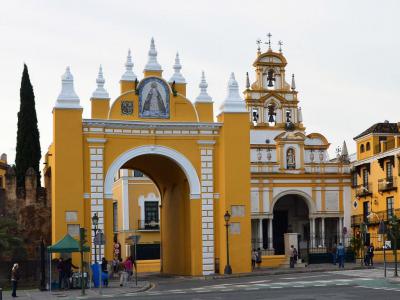
La Macarena neighborhood is known for housing the Basilica of Nuestra Señora de la Esperanza Macarena ("Our Lady of Hope of Macarena"), seat of the homonymous Holy Week brotherhood. The procession in the early morning of Good Friday is one of the largest, most popular, and fervent in the whole of Spain. The wooden statue of Our Lady of Hope Macarena (or Our Lady of Tears) dates from the 17th century and is widely considered as a national treasure by the Spanish people, primarily because of its religious grandeur during Lenten celebrations. The Neobaroque basilica was built by Aurelio Gómez Millán in the 20th century.
Next to the church is placed the Museum and Treasure of La Macarena, where the huge artistic and sentimental patrimony of the brotherhood is exposed, working as a complete explanation about the famous Holy Week processions of Seville. The museum also has some interesting artifacts related to bullfighting as the Virgin of Macarena is the patron saint of bullfighters.
Why You Should Visit:
Aside for housing the famous "Weeping Virgin", this basilica sits in a lovely area, close to the finest section of the remaining old walls.
To the sides and around the back there are plenty of authentic shops, cafes and tapas bars well worth exploring (most are very affordable).
Tip:
The front of the building faces the main road, so from the church, if you walk towards the road and then go right, you will see the old wall, and across the main road is an old gov't building – both nice photo ops.
Next to the church is placed the Museum and Treasure of La Macarena, where the huge artistic and sentimental patrimony of the brotherhood is exposed, working as a complete explanation about the famous Holy Week processions of Seville. The museum also has some interesting artifacts related to bullfighting as the Virgin of Macarena is the patron saint of bullfighters.
Why You Should Visit:
Aside for housing the famous "Weeping Virgin", this basilica sits in a lovely area, close to the finest section of the remaining old walls.
To the sides and around the back there are plenty of authentic shops, cafes and tapas bars well worth exploring (most are very affordable).
Tip:
The front of the building faces the main road, so from the church, if you walk towards the road and then go right, you will see the old wall, and across the main road is an old gov't building – both nice photo ops.
