Custom Walk in Florence, Italy by twall64654688 created on 2022-09-12
Guide Location: Italy » Florence
Guide Type: Custom Walk
# of Sights: 10
Tour Duration: 3 Hour(s)
Travel Distance: 7.7 Km or 4.8 Miles
Share Key: WG8M4
Guide Type: Custom Walk
# of Sights: 10
Tour Duration: 3 Hour(s)
Travel Distance: 7.7 Km or 4.8 Miles
Share Key: WG8M4
How It Works
Please retrieve this walk in the GPSmyCity app. Once done, the app will guide you from one tour stop to the next as if you had a personal tour guide. If you created the walk on this website or come to the page via a link, please follow the instructions below to retrieve the walk in the app.
Retrieve This Walk in App
Step 1. Download the app "GPSmyCity: Walks in 1K+ Cities" on Apple App Store or Google Play Store.



Step 2. In the GPSmyCity app, download(or launch) the guide "Florence Map and Walking Tours".
Step 3. Tap the menu button located at upper right corner of the "Walks" screen and select "Retrieve custom walk". Enter the share key: WG8M4

1) Firenze SMN
This custom location is created on gpsmycity.com website.
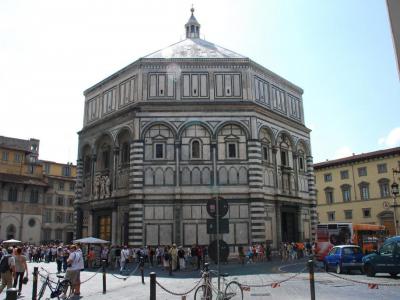
2) Battistero di San Giovanni (Baptistery of St. John)
The beautiful Florence Baptistery, dedicated to Saint John the Baptist-patron saint of the city-stands prominently on Cathedral Square, opposite the Duomo. Raised in the 7th century over an ancient Roman structure thought to be a temple honoring Mars, the building features a distinctive octagonal shape. Early Christians frequently chose this eight-sided design for baptisteries, symbolizing renewal-the six days of creation, one day of rest, and the day of rebirth through baptism.
During its renovation in 1059, artisans covered the baptistery in alternating bands of white and dark green marble, giving the exterior its striking striped appearance. Yet, the baptistery is perhaps most famous for the three remarkable sets of bronze doors. The south doors depict moments from Saint John's life, combined with beautiful representations of the eight Christian virtues. The north doors, crafted by Lorenzo Ghiberti over 21 long years, illustrate scenes from the life of Christ. Ghiberti later devoted another 27 years to the spectacular east doors, famously described by Michelangelo as the “Gates of Paradise.” This extraordinary artwork features ten elaborate panels portraying the story of Joseph.
Inside, visitors can gaze upward at magnificent mosaics decorating the ceiling and view the baptismal font, in use since 1576. Francesco de’ Medici, Florence’s powerful ruler, had his son baptized here-just one among numerous notable figures who have shared this honor, including generations of the influential Medici family. Indeed, nearly every Catholic Florentine, up until the 19th century, received baptism within these very walls, making the Baptistery a core component of the city's religious heritage.
Florence's beloved poet Dante references this cherished building in his masterpiece, the “Divine Comedy.” Born in May 1265, the poet was originally named Durante, meaning “enduring,” after his maternal grandfather-though eventually, his family shortened the name to Dante.
Tip: Your standard ticket for the Duomo attractions includes access to the Baptistery, valid for 72 hours. Note that there's a strict dress code: shoulders and knees must be covered for both men and women, so please dress appropriately. To attend the daily mass, arrive around 10:30 AM at the door opposite the main entrance and mention “mass” or “messa” to the attendant.
During its renovation in 1059, artisans covered the baptistery in alternating bands of white and dark green marble, giving the exterior its striking striped appearance. Yet, the baptistery is perhaps most famous for the three remarkable sets of bronze doors. The south doors depict moments from Saint John's life, combined with beautiful representations of the eight Christian virtues. The north doors, crafted by Lorenzo Ghiberti over 21 long years, illustrate scenes from the life of Christ. Ghiberti later devoted another 27 years to the spectacular east doors, famously described by Michelangelo as the “Gates of Paradise.” This extraordinary artwork features ten elaborate panels portraying the story of Joseph.
Inside, visitors can gaze upward at magnificent mosaics decorating the ceiling and view the baptismal font, in use since 1576. Francesco de’ Medici, Florence’s powerful ruler, had his son baptized here-just one among numerous notable figures who have shared this honor, including generations of the influential Medici family. Indeed, nearly every Catholic Florentine, up until the 19th century, received baptism within these very walls, making the Baptistery a core component of the city's religious heritage.
Florence's beloved poet Dante references this cherished building in his masterpiece, the “Divine Comedy.” Born in May 1265, the poet was originally named Durante, meaning “enduring,” after his maternal grandfather-though eventually, his family shortened the name to Dante.
Tip: Your standard ticket for the Duomo attractions includes access to the Baptistery, valid for 72 hours. Note that there's a strict dress code: shoulders and knees must be covered for both men and women, so please dress appropriately. To attend the daily mass, arrive around 10:30 AM at the door opposite the main entrance and mention “mass” or “messa” to the attendant.
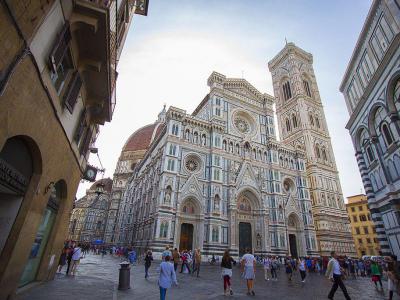
3) Cattedrale di Santa Maria del Fiore (Florence Cathedral) (must see)
Towering over the city of Florence, the Florence Cathedral is a true Renaissance masterpiece-best known for its massive masonry dome, the largest of its kind in the world. Completed in 1465, this remarkable double-shell structure is entirely self-supporting and remains one of the greatest engineering marvels of its time.
The cathedral’s story begins in 1296, when construction of its Gothic design first got underway. The real breakthrough, however, came nearly 150 years later, when architect Filippo Brunelleschi stepped in to solve what many thought was an impossible challenge-building the dome. Inspired by the ancient Pantheon in Rome, Brunelleschi ran countless experiments using large-scale models and even invented custom machinery to get the job done.
Among his most remarkable inventions were lifting devices and pulley systems capable of raising over 37,000 tons of materials-including more than four million bricks. His work impressed a young apprentice named Leonardo da Vinci, who sketched the machines-drawings that were later mistakenly credited to him. But history has remembered the true innovator. Today, Brunelleschi’s statue stands in the piazza outside the Cathedral as a tribute to his genius.
Step inside, and you’ll find more treasures-like the fresco “Dante and the Divine Comedy” by Domenico di Michelino, painted in 1465. It shows the poet holding his famous book, surrounded by vivid imagery of Hell, Purgatory, and Heaven, along with a detailed view of Florence as it looked in the 15th century-ironically, a version of the city Dante himself never saw. To see it up close, be prepared to climb about 450 steps up a narrow staircase that spirals inside the dome.
And then there's the exterior-a stunning patchwork of colorful marbles so intricate it almost looks painted. The craftsmanship is nothing short of extraordinary.
Tip: When booking online, you’ll get free access to the top of the dome-but you’ll need to reserve a time slot separately. The reward is a 360-degree view of Florence, the Tuscan countryside, and the mountains beyond. Totally worth the climb.
The cathedral’s story begins in 1296, when construction of its Gothic design first got underway. The real breakthrough, however, came nearly 150 years later, when architect Filippo Brunelleschi stepped in to solve what many thought was an impossible challenge-building the dome. Inspired by the ancient Pantheon in Rome, Brunelleschi ran countless experiments using large-scale models and even invented custom machinery to get the job done.
Among his most remarkable inventions were lifting devices and pulley systems capable of raising over 37,000 tons of materials-including more than four million bricks. His work impressed a young apprentice named Leonardo da Vinci, who sketched the machines-drawings that were later mistakenly credited to him. But history has remembered the true innovator. Today, Brunelleschi’s statue stands in the piazza outside the Cathedral as a tribute to his genius.
Step inside, and you’ll find more treasures-like the fresco “Dante and the Divine Comedy” by Domenico di Michelino, painted in 1465. It shows the poet holding his famous book, surrounded by vivid imagery of Hell, Purgatory, and Heaven, along with a detailed view of Florence as it looked in the 15th century-ironically, a version of the city Dante himself never saw. To see it up close, be prepared to climb about 450 steps up a narrow staircase that spirals inside the dome.
And then there's the exterior-a stunning patchwork of colorful marbles so intricate it almost looks painted. The craftsmanship is nothing short of extraordinary.
Tip: When booking online, you’ll get free access to the top of the dome-but you’ll need to reserve a time slot separately. The reward is a 360-degree view of Florence, the Tuscan countryside, and the mountains beyond. Totally worth the climb.
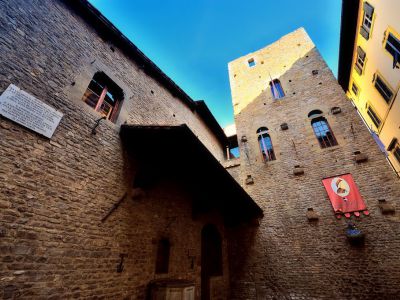
4) Casa di Dante (Dante House-Museum)
Florence underwent dramatic changes during the Renaissance, but in the city’s eastern quarter, you can still feel the spirit of the Middle Ages. Winding your way through its narrow alleys and tucked-away corners, you’ll find yourself stepping into scenes that Florence’s most famous poet, Dante Alighieri, would recognize even today. Not far from the parish church where he first laid eyes on Beatrice Portinari, his lifelong muse, stands Casa di Dante, the house believed to be his childhood home.
Now a three-story museum, the space offers a thoughtful look at the life and legacy of the man behind the “Divine Comedy”. On the ground floor, you’ll explore his early years in Florence. The second level focuses on the turning point of his life-the exile-and the time he spent in Ravenna, where he eventually died. Climb to the top floor, and you’ll find a collection of the poet’s personal items, along with replicas carefully recreated to reflect his world. One standout piece is a miniature edition of the “Divina Comedia”-the smallest printed version of the famous text, and a testament to its enduring legacy.
Dante’s epic poem takes the reader on a journey through the afterlife-guided first by the Roman poet Virgil through Hell and Purgatory, then by Beatrice through the realms of Paradise. Though Dante himself called the work simply "The Comedy," it gained popularity over the centuries, and in 1555, a lavish edition published in Venice gave us the name we know today.
Tip: The museum’s staircase is quite steep, but there is an elevator-just note that it’s a bit tucked away and might not be obvious when you first walk in. Keep an eye out, especially if you're hoping to skip the stairs.
Now a three-story museum, the space offers a thoughtful look at the life and legacy of the man behind the “Divine Comedy”. On the ground floor, you’ll explore his early years in Florence. The second level focuses on the turning point of his life-the exile-and the time he spent in Ravenna, where he eventually died. Climb to the top floor, and you’ll find a collection of the poet’s personal items, along with replicas carefully recreated to reflect his world. One standout piece is a miniature edition of the “Divina Comedia”-the smallest printed version of the famous text, and a testament to its enduring legacy.
Dante’s epic poem takes the reader on a journey through the afterlife-guided first by the Roman poet Virgil through Hell and Purgatory, then by Beatrice through the realms of Paradise. Though Dante himself called the work simply "The Comedy," it gained popularity over the centuries, and in 1555, a lavish edition published in Venice gave us the name we know today.
Tip: The museum’s staircase is quite steep, but there is an elevator-just note that it’s a bit tucked away and might not be obvious when you first walk in. Keep an eye out, especially if you're hoping to skip the stairs.
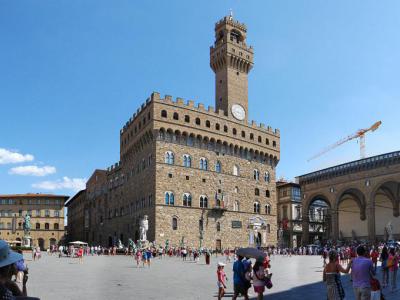
5) Piazza della Signoria (Signoria Square) (must see)
Alongside the Cathedral Square-the religious heart of Florence-you’ll find Signoria Square, the city’s historic civic center and a living museum under the open sky. Framed by elegant buildings and top-tier museums, this spot holds a special place in the hearts of locals. It was here that the Florentine Republic took shape, and to this day, the area remains a cherished gathering place. Michelangelo’s original “David” once stood proudly in the square, and while that statue now resides in a museum, a faithful replica now stands in its place, keeping the legacy alive.
Long before the Renaissance, back in Roman times, this was the town center of Florentia, surrounded by a theater, public baths, and a textile workshop. Centuries later, a church, a loggia, and a vast 5th-century basilica rose here, traces of which came to light during excavations in the 1980s.
What makes the square truly captivating is its irregular shape and the wealth of artwork-both monumental and subtle-that surrounds you. It’s a dream for photographers, with striking visuals from every angle. But even without a camera, just standing at the center and slowly turning to take it all in is a moment worth savoring.
Presiding over everything is the medieval Old Palace, still the seat of city government. Nearby, you’ll find the Lanterns’ Lodge-an open-air sculpture gallery that’s free to enter and always open. Here you’ll see dramatic masterpieces like “The Rape of the Sabine Women”, “Hercules and the Centaur”, and “Perseus with the Head of Medusa”, which seems locked in a timeless stare with Michelangelo’s “David”.
There are a few shaded benches for a break, but if you're visiting in summer, take it slow and stay hydrated. The crowds can be thick, so when crossing the square, don’t aim straight-zigzag gently, like a sailboat tacking through the wind. A few graceful steps to the right, a few to the left, and before you know it, you’re there. Simple, smooth, and very Florentine.
Long before the Renaissance, back in Roman times, this was the town center of Florentia, surrounded by a theater, public baths, and a textile workshop. Centuries later, a church, a loggia, and a vast 5th-century basilica rose here, traces of which came to light during excavations in the 1980s.
What makes the square truly captivating is its irregular shape and the wealth of artwork-both monumental and subtle-that surrounds you. It’s a dream for photographers, with striking visuals from every angle. But even without a camera, just standing at the center and slowly turning to take it all in is a moment worth savoring.
Presiding over everything is the medieval Old Palace, still the seat of city government. Nearby, you’ll find the Lanterns’ Lodge-an open-air sculpture gallery that’s free to enter and always open. Here you’ll see dramatic masterpieces like “The Rape of the Sabine Women”, “Hercules and the Centaur”, and “Perseus with the Head of Medusa”, which seems locked in a timeless stare with Michelangelo’s “David”.
There are a few shaded benches for a break, but if you're visiting in summer, take it slow and stay hydrated. The crowds can be thick, so when crossing the square, don’t aim straight-zigzag gently, like a sailboat tacking through the wind. A few graceful steps to the right, a few to the left, and before you know it, you’re there. Simple, smooth, and very Florentine.
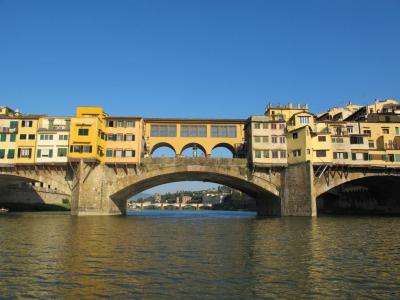
6) Ponte Vecchio (Old Bridge) (must see)
Ponte Vecchio, or The Old Bridge, first appeared in written records all the way back in 996. Of the six bridges that span the Arno River in Florence, it’s the only one that survived World War II intact-spared by retreating German forces. Today, this medieval stone arch structure stands as a powerful reminder of how a ruler’s vision can shape a city’s legacy.
As in the Middle Ages, the bridge is still lined with shops-but what’s sold here has changed quite a bit over time. Originally, it was occupied by butchers, who were know for tossing animal waste directly into the river-hardly ideal for anyone strolling by. That all changed in the 16th century, when Grand Duke Ferdinando de’ Medici had the meat merchants removed and replaced with goldsmiths. Not only did this improve the smell, but it also turned the bridge into one of the most glittering, upscale corners of Florence.
Take a look from a distance, and you might spot something unusual-a raised corridor running above the shops. This hidden passage is part of the Vasari Corridor, a nearly kilometer-long tunnel that connects the Pitti Palace with the Old Palace. It was built so that the Grand Duke could move between his residence and government offices without mingling with the crowds. Although closed since 2016 for safety reasons, there are plans to reopen it for visitors.
There’s even a bit of financial folklore tied to this spot, which is said to be the birthplace of the term “bankruptcy.” When a moneylender couldn’t pay his debts, soldiers smashed his trading bench-called a banco-to pieces, a symbolic act that left him unable to operate. Hence the term “bancorotto”, or “broken bench”, was born.
These days, the Old Bridge is a lovely place for a walk-especially at sunset, when the light casts a golden glow over the Arno. Early mornings are just as magical, with soft reflections on the water and, if you’re lucky, the bridge nearly all to yourself.
As in the Middle Ages, the bridge is still lined with shops-but what’s sold here has changed quite a bit over time. Originally, it was occupied by butchers, who were know for tossing animal waste directly into the river-hardly ideal for anyone strolling by. That all changed in the 16th century, when Grand Duke Ferdinando de’ Medici had the meat merchants removed and replaced with goldsmiths. Not only did this improve the smell, but it also turned the bridge into one of the most glittering, upscale corners of Florence.
Take a look from a distance, and you might spot something unusual-a raised corridor running above the shops. This hidden passage is part of the Vasari Corridor, a nearly kilometer-long tunnel that connects the Pitti Palace with the Old Palace. It was built so that the Grand Duke could move between his residence and government offices without mingling with the crowds. Although closed since 2016 for safety reasons, there are plans to reopen it for visitors.
There’s even a bit of financial folklore tied to this spot, which is said to be the birthplace of the term “bankruptcy.” When a moneylender couldn’t pay his debts, soldiers smashed his trading bench-called a banco-to pieces, a symbolic act that left him unable to operate. Hence the term “bancorotto”, or “broken bench”, was born.
These days, the Old Bridge is a lovely place for a walk-especially at sunset, when the light casts a golden glow over the Arno. Early mornings are just as magical, with soft reflections on the water and, if you’re lucky, the bridge nearly all to yourself.
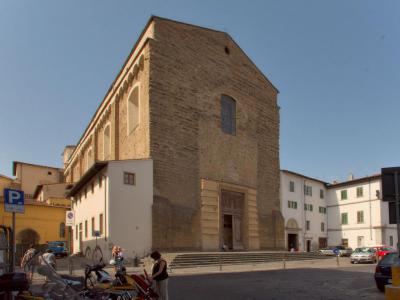
7) Basilica di Santa Maria del Carmine (Basilica of Our Lady of Mount Carmel)
This is a place of devotion dedicated to Our Lady of Mount Carmel, a revered title for the Virgin Mary. First built in the late 13th century, the building’s surviving Romanesque-Gothic exterior offers a glimpse into its medieval origins. But the church’s story took a dramatic turn in the 1700s when a fire ravaged through, sparing only one section: the now-famous Brancacci Chapel.
That chapel is one of the cornerstones of early Renaissance art. Work began in 1425, when Masolino da Panicale was commissioned to paint its walls. He soon brought in a young apprentice, Masaccio, just 21 years old at the time. Masaccio’s contributions turned out to be groundbreaking-his naturalistic figures and bold use of perspective would shape the future of Western painting. Sadly, he died just three years later, leaving the work incomplete. The frescoes remained unfinished until decades later, when Filippino Lippi added his own touch, completing the chapel in harmony with Masaccio’s vision.
Another notable part of the church is the Corsini Chapel, created for one of Florence’s most prominent families during the 17th and 18th centuries. It was built in 1675 to house the remains of Andrea Corsini, a nobleman-turned-Carmelite friar and Bishop of Fiesole, who was later canonized. The chapel is a textbook example of Florentine Baroque, and features a lovely dome frescoed in 1682. Look up, and you’ll see the ceiling brought to life by Giovanni Domenico Ferretti-his Rococo style adds a dramatic flair that still stands out centuries later.
That chapel is one of the cornerstones of early Renaissance art. Work began in 1425, when Masolino da Panicale was commissioned to paint its walls. He soon brought in a young apprentice, Masaccio, just 21 years old at the time. Masaccio’s contributions turned out to be groundbreaking-his naturalistic figures and bold use of perspective would shape the future of Western painting. Sadly, he died just three years later, leaving the work incomplete. The frescoes remained unfinished until decades later, when Filippino Lippi added his own touch, completing the chapel in harmony with Masaccio’s vision.
Another notable part of the church is the Corsini Chapel, created for one of Florence’s most prominent families during the 17th and 18th centuries. It was built in 1675 to house the remains of Andrea Corsini, a nobleman-turned-Carmelite friar and Bishop of Fiesole, who was later canonized. The chapel is a textbook example of Florentine Baroque, and features a lovely dome frescoed in 1682. Look up, and you’ll see the ceiling brought to life by Giovanni Domenico Ferretti-his Rococo style adds a dramatic flair that still stands out centuries later.
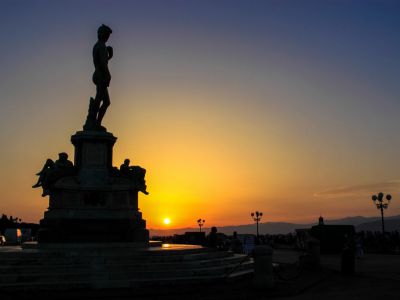
8) Piazzale Michelangelo (Michelangelo Square) (must see)
Florence is undebiably a stunning city, and this hilltop terrace proves it beyond question. Perched just south of the Arno River, the spacious overlook is lined with souvenir stalls and draws crowds for its panoramas of the city’s red-tiled rooftops. From here, you’ll spot the majestic Cathedral and its dome, along with the Giotto Bell Tower and Old Palace-a postcard-perfect scene has been captured thousands of times. But there’s more to take in. Scan the horizon and you’ll also spot Fort Belvedere, the Holy Cross Basilica, and the timelessly charming Old Bridge.
The square was laid out in 1869, during a period of major urban development known as the “Risanamento,” when Florence briefly served as Italy’s capital. As the name suggests, it was meant to honor Michelangelo, and features bronze copies of his most famous works-“David”, along with the four allegorical figures from the Medici Chapel. While the originals are in marble, these replicas were hauled up the hill by nine pairs of oxen-no small feat, especially on a warm Tuscan day.
As evening sets in, the square becomes a magnet for sunset seekers. Find a comfortable spot, sip a glass of wine, and watch the sun paint the city in golden tones. You can bring your own bottle or choose one of the nearby cafés and restaurants. The most famous one here is housed in a lovely Neoclassical building, and surprisingly, the prices are pretty fair for such a prime location.
Halfway up the main staircase, you’ll also find the charming rose garden-a peaceful hideaway filled with greenery and floral scents, with views of the city peeking through the trees.
Tip: Sunny days can get quite hot up here, so be sure to pack a hat or something to shield yourself from the sun.
The square was laid out in 1869, during a period of major urban development known as the “Risanamento,” when Florence briefly served as Italy’s capital. As the name suggests, it was meant to honor Michelangelo, and features bronze copies of his most famous works-“David”, along with the four allegorical figures from the Medici Chapel. While the originals are in marble, these replicas were hauled up the hill by nine pairs of oxen-no small feat, especially on a warm Tuscan day.
As evening sets in, the square becomes a magnet for sunset seekers. Find a comfortable spot, sip a glass of wine, and watch the sun paint the city in golden tones. You can bring your own bottle or choose one of the nearby cafés and restaurants. The most famous one here is housed in a lovely Neoclassical building, and surprisingly, the prices are pretty fair for such a prime location.
Halfway up the main staircase, you’ll also find the charming rose garden-a peaceful hideaway filled with greenery and floral scents, with views of the city peeking through the trees.
Tip: Sunny days can get quite hot up here, so be sure to pack a hat or something to shield yourself from the sun.
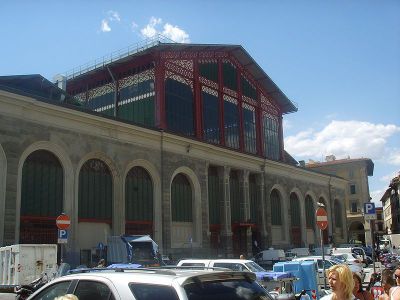
10) Mercato Centrale (Central Market) (must see)
Florence's 19th-century Central Market, dating back to the 19th century, is divided into two distinct areas. The covered section is dedicated to all things food, while the outdoor area extends onto the surrounding streets, offering a variety of leather goods, clothing, and affordable souvenirs, including leather coats, jackets, and purses at great prices.
For those seeking Tuscan cuisine, the indoor area is the place to be. On the ground floor, you'll find a vibrant assortment of butchers, fishmongers, fruits, vegetables, and specialty shops. These specialty shops offer an array of local products such as olive oils, truffle honey, cured meats, cheeses, and sauces. Many of them even provide free samples, allowing visitors to taste before purchasing.
Upstairs, the food court awaits, featuring a host of delicious local culinary delights. Here, you not only have the opportunity to savor delicious food but also to observe the skilled artisans in action through glass windows. Watch as bread is freshly baked, bufala cheese is carefully crafted, and artisanal gelato is made from scratch. To fully enjoy your dining experience, it is recommended to visit outside of peak dining hours when the crowds are less overwhelming.
Some of the highlights include:
~ Il Pane e la Pasticceria: Witness the expertise of French baker and Bakery World Cup champion David Bedu as he creates a variety of bread, from baguettes to traditional loaves, and exquisite French pastries like choux and éclairs.
~ Martino Bellincampi's Shop: Indulge in buffalo mozzarella served in a classic Roman-style salad or enjoy the ultimate guilty pleasure of a Neapolitan "mozzarella in carrozza," a fried mozzarella sandwich.
~ ARÀ: Delight in Sicilian delicacies such as arancini (deep-fried rice balls with various fillings), cannoli, cassatini, and refreshing granita.
~ Il Tartufo: Experience the excellence of seasonal black & white truffles in dishes such as pasta, salads, sandwiches, spreads... even beer.
~ La Pizzeria: Savor Marco Fierro's perfectly crispy, fresh, wood oven-baked pizzas made with the finest Italian ingredients.
~ Pasta Fresca: Sample both classic and creative pasta dishes while attending cooking shows.
~ Il Vegeteriano e il Vegano: A haven for vegetarians and vegans, offering a wide selection of delectable options.
While the outdoor market closes in the afternoon, the food court stays open until midnight, offering an ideal spot for late-night cravings.
For those seeking Tuscan cuisine, the indoor area is the place to be. On the ground floor, you'll find a vibrant assortment of butchers, fishmongers, fruits, vegetables, and specialty shops. These specialty shops offer an array of local products such as olive oils, truffle honey, cured meats, cheeses, and sauces. Many of them even provide free samples, allowing visitors to taste before purchasing.
Upstairs, the food court awaits, featuring a host of delicious local culinary delights. Here, you not only have the opportunity to savor delicious food but also to observe the skilled artisans in action through glass windows. Watch as bread is freshly baked, bufala cheese is carefully crafted, and artisanal gelato is made from scratch. To fully enjoy your dining experience, it is recommended to visit outside of peak dining hours when the crowds are less overwhelming.
Some of the highlights include:
~ Il Pane e la Pasticceria: Witness the expertise of French baker and Bakery World Cup champion David Bedu as he creates a variety of bread, from baguettes to traditional loaves, and exquisite French pastries like choux and éclairs.
~ Martino Bellincampi's Shop: Indulge in buffalo mozzarella served in a classic Roman-style salad or enjoy the ultimate guilty pleasure of a Neapolitan "mozzarella in carrozza," a fried mozzarella sandwich.
~ ARÀ: Delight in Sicilian delicacies such as arancini (deep-fried rice balls with various fillings), cannoli, cassatini, and refreshing granita.
~ Il Tartufo: Experience the excellence of seasonal black & white truffles in dishes such as pasta, salads, sandwiches, spreads... even beer.
~ La Pizzeria: Savor Marco Fierro's perfectly crispy, fresh, wood oven-baked pizzas made with the finest Italian ingredients.
~ Pasta Fresca: Sample both classic and creative pasta dishes while attending cooking shows.
~ Il Vegeteriano e il Vegano: A haven for vegetarians and vegans, offering a wide selection of delectable options.
While the outdoor market closes in the afternoon, the food court stays open until midnight, offering an ideal spot for late-night cravings.
