Custom Walk in Naples, Italy by jlrodriguez132_f447e created on 2025-04-17
Guide Location: Italy » Naples
Guide Type: Custom Walk
# of Sights: 7
Tour Duration: 3 Hour(s)
Travel Distance: 6 Km or 3.7 Miles
Share Key: QV3FQ
Guide Type: Custom Walk
# of Sights: 7
Tour Duration: 3 Hour(s)
Travel Distance: 6 Km or 3.7 Miles
Share Key: QV3FQ
How It Works
Please retrieve this walk in the GPSmyCity app. Once done, the app will guide you from one tour stop to the next as if you had a personal tour guide. If you created the walk on this website or come to the page via a link, please follow the instructions below to retrieve the walk in the app.
Retrieve This Walk in App
Step 1. Download the app "GPSmyCity: Walks in 1K+ Cities" on Apple App Store or Google Play Store.



Step 2. In the GPSmyCity app, download(or launch) the guide "Naples Map and Walking Tours".
Step 3. Tap the menu button located at upper right corner of the "Walks" screen and select "Retrieve custom walk". Enter the share key: QV3FQ
1) Castel Nuovo (New Castle) (must see)
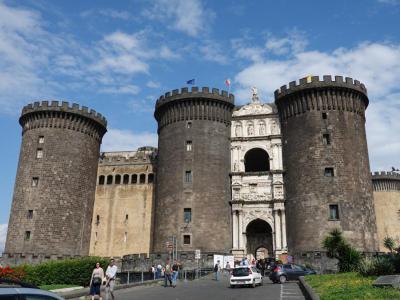
The New Castle is not new, it is a large medieval castle first built in 1279. Its scenic location and imposing size make the castle one of the main architectural landmarks of the city. It was a royal seat for kings of Naples, Aragon and Spain until 1815.
Commissioned by Charles I of Anjou and built between 1279-82 as the royal residence after the capital of the Sicily Kingdom shifted from Palermo to Naples, it became the venue for all important events during the rule of the Angevin dynasty. The Spanish Aragon dynasty that ruled Naples after the Angevins improved the structure and used it both as a royal residence and a military fortress. The marble entrance arch was created by sculptors from Catalonia in Spain to celebrate the beginning of the Aragonese rule of Naples.
The New Castle has housed the Neapolitan Society of National History since 1875 and the Civic Museum that contains works of art from churches around Naples. It is open for public viewing and managed by the Naples Ministry of Culture. Among the things to see are a display of weapons in the armory hall and the Palatine or Saint Barbara chapel located within the castle. Cultural events and exhibitions are held at the two levels of the southern courtyard and at the Charles V Hall and the Salla della Loggia inside the castle.
The castle is truly breathtaking when observing it from outside. Massive and beautiful, it can really impress. Make sure to visit the excavations underground and also take the elevator/stairs to the top, where the city view is extensive.
Tip:
If you go, it is highly recommended that you join a guided tour, if you want to make most of your visit - the small extra fee is worth it.
Commissioned by Charles I of Anjou and built between 1279-82 as the royal residence after the capital of the Sicily Kingdom shifted from Palermo to Naples, it became the venue for all important events during the rule of the Angevin dynasty. The Spanish Aragon dynasty that ruled Naples after the Angevins improved the structure and used it both as a royal residence and a military fortress. The marble entrance arch was created by sculptors from Catalonia in Spain to celebrate the beginning of the Aragonese rule of Naples.
The New Castle has housed the Neapolitan Society of National History since 1875 and the Civic Museum that contains works of art from churches around Naples. It is open for public viewing and managed by the Naples Ministry of Culture. Among the things to see are a display of weapons in the armory hall and the Palatine or Saint Barbara chapel located within the castle. Cultural events and exhibitions are held at the two levels of the southern courtyard and at the Charles V Hall and the Salla della Loggia inside the castle.
The castle is truly breathtaking when observing it from outside. Massive and beautiful, it can really impress. Make sure to visit the excavations underground and also take the elevator/stairs to the top, where the city view is extensive.
Tip:
If you go, it is highly recommended that you join a guided tour, if you want to make most of your visit - the small extra fee is worth it.
2) Galleria Borbonica (Bourbon Tunnel) (must see)
Visitors can find the Bourbon Tunnel 100 feet below the city of Naples. The tunnel was originally built in 1853 as an escape route for the Bourbon royal family.
King Ferdinand II of Bourbon commissioned the tunnel during a time of turmoil. Sicily and Naples were experiencing uprisings and riots, and the royal family wanted a way to escape the Royal Palace if needed.
The tunnel was connected to the 17th-century aqueduct system. Workers carved out the tunnel using hand tools such as picks, hammers, and wedges and used candlelight as illumination. Unfortunately, King Ferdinand II died before the tunnel was finished, and the underground space went unused until World War II.
During World War II, the space was used as an air-raid shelter and housed up to 10,000 Neapolitans.
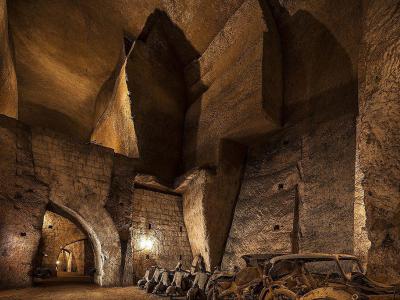
After the war, the tunnel was used as a dump for wartime debris and impounded cars.
Today's visitors can see items left by wartime visitors, such as toys, hairbrushes, and beds. The impounded cars of the 1950s and 1960s are now classics and are an interesting addition to the underground tour.
King Ferdinand II of Bourbon commissioned the tunnel during a time of turmoil. Sicily and Naples were experiencing uprisings and riots, and the royal family wanted a way to escape the Royal Palace if needed.
The tunnel was connected to the 17th-century aqueduct system. Workers carved out the tunnel using hand tools such as picks, hammers, and wedges and used candlelight as illumination. Unfortunately, King Ferdinand II died before the tunnel was finished, and the underground space went unused until World War II.
During World War II, the space was used as an air-raid shelter and housed up to 10,000 Neapolitans.
After the war, the tunnel was used as a dump for wartime debris and impounded cars.
Today's visitors can see items left by wartime visitors, such as toys, hairbrushes, and beds. The impounded cars of the 1950s and 1960s are now classics and are an interesting addition to the underground tour.
3) Museo Cappella Sansevero (Sansevero Chapel Museum) (must see)
The Sansevero Chapel Museum is also known as the Chapel of Santa Maria della Pietà, named for a painting of the Virgin Mary.
The painting has a unique backstory. In the late 16th century, an innocent man was sent to prison. He was released thanks to the miraculous appearance of the Virgin Mary. The innocent man commissioned a painting, The Pietà. Soon, pilgrims flocked to view the painting. One of the pilgrims was John Francesco di Sangro, who was cured of an illness after viewing the painting.
He was so inspired by this miracle that, in 1590, he built a private chapel, which would later be used as a family burial chapel. Raimondo di Sangro, Prince of Sansevero, was responsible for renovating the chapel and commissioning the famous artwork that visitors see today.
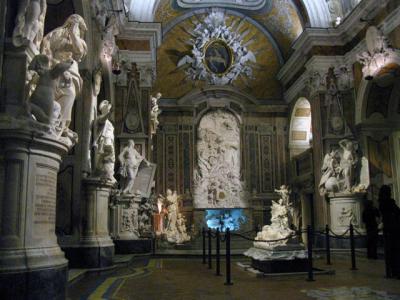
The chapel is home to nearly thirty important artworks. Artist Antonio Corradini created The Veiled Truth in 1752 as a monument to Cecilia Gaetani dell'Aquila d'Aragona, Raimondo's mother.
Giuseppe Sanmartino created The Veiled Christ in 1753. This stunning masterpiece was chiseled from marble and shows Christ's suffering body lying under a transparent shroud.
Francesco Queirolo's 1754 The Release from Deception was created as a monument to Raimondo's father. This statue shows a man wrestling a net that entangles him.
Surrounding The Veiled Christ are statues representing different virtues such as modesty, liberality, marital sweetness, education, and self-control.
Francesco Maria Russo painted The Glory of Paradise on the ceiling in 1749. The floor was originally in a black and white labyrinth design.
The chapel also has two unusual displays of preserved skeletons with silk and wax blood vessels and arteries.
Why You Should Visit:
The Sansevero Chapel Museum holds artwork by the most prominent 18th-century Italian artists. The chapel is unassuming on the outside but has a hauntingly beautiful and captivating interior.
Tips:
Make sure you use the audio guide to get the most out of your visit.
The painting has a unique backstory. In the late 16th century, an innocent man was sent to prison. He was released thanks to the miraculous appearance of the Virgin Mary. The innocent man commissioned a painting, The Pietà. Soon, pilgrims flocked to view the painting. One of the pilgrims was John Francesco di Sangro, who was cured of an illness after viewing the painting.
He was so inspired by this miracle that, in 1590, he built a private chapel, which would later be used as a family burial chapel. Raimondo di Sangro, Prince of Sansevero, was responsible for renovating the chapel and commissioning the famous artwork that visitors see today.
The chapel is home to nearly thirty important artworks. Artist Antonio Corradini created The Veiled Truth in 1752 as a monument to Cecilia Gaetani dell'Aquila d'Aragona, Raimondo's mother.
Giuseppe Sanmartino created The Veiled Christ in 1753. This stunning masterpiece was chiseled from marble and shows Christ's suffering body lying under a transparent shroud.
Francesco Queirolo's 1754 The Release from Deception was created as a monument to Raimondo's father. This statue shows a man wrestling a net that entangles him.
Surrounding The Veiled Christ are statues representing different virtues such as modesty, liberality, marital sweetness, education, and self-control.
Francesco Maria Russo painted The Glory of Paradise on the ceiling in 1749. The floor was originally in a black and white labyrinth design.
The chapel also has two unusual displays of preserved skeletons with silk and wax blood vessels and arteries.
Why You Should Visit:
The Sansevero Chapel Museum holds artwork by the most prominent 18th-century Italian artists. The chapel is unassuming on the outside but has a hauntingly beautiful and captivating interior.
Tips:
Make sure you use the audio guide to get the most out of your visit.
4) Spaccanapoli Street (must see)
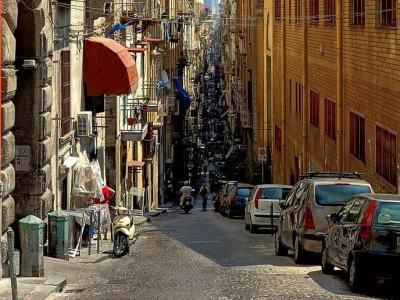
Spaccanapoli Street can be translated to "Naples splitter." This long street is popular with locals and visitors alike as it provides access to the most popular landmarks and sights in Naples. The ancient street is actually several different streets, such as Via San Biagio and Via Benedetto Croce.
Along Spaccanapoli Street, visitors will find artist's workshops, overhanging balconies, and narrow through-ways. This is the perfect place to immerse yourself in the daily life of Naples.
At the intersection with Via Duomo, visitors will find sweet local stores, bars, restaurants, shopping boutiques, and vegetable stands.
One of the more unique shops is the L'Ospedale delle Bambole, which specializes in restoring statues and antique dolls. Kids enjoy checking out the doll hospital, complete with doll hospital beds. There's also a museum with antique dolls and toys.
While walking, don't miss the opportunity for a distinctive Naples pizza. Stroll along Spaccanapoli to find several important churches and landmarks. Visitors will find the Church of Gesu Nuovo, the Church of Santa Chiara, the Cappella Sansevero, and the Cathedral of San Gennaro.
Along Spaccanapoli Street, visitors will find artist's workshops, overhanging balconies, and narrow through-ways. This is the perfect place to immerse yourself in the daily life of Naples.
At the intersection with Via Duomo, visitors will find sweet local stores, bars, restaurants, shopping boutiques, and vegetable stands.
One of the more unique shops is the L'Ospedale delle Bambole, which specializes in restoring statues and antique dolls. Kids enjoy checking out the doll hospital, complete with doll hospital beds. There's also a museum with antique dolls and toys.
While walking, don't miss the opportunity for a distinctive Naples pizza. Stroll along Spaccanapoli to find several important churches and landmarks. Visitors will find the Church of Gesu Nuovo, the Church of Santa Chiara, the Cappella Sansevero, and the Cathedral of San Gennaro.
5) Via San Gregorio Armeno (St. Gregory of Armenia Street) (must see)
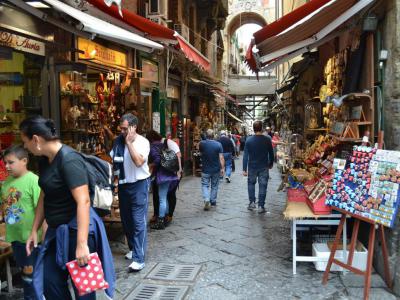
This ancient street was once home to a temple dedicated to Ceres, a Roman Goddess. The faithful would bring small figurines made in nearby shops to the temple. The tradition continues today as this street became famous for artists that create figurines for Nativity scenes.
Nativity scene creations include different size houses, terracotta shepherds, fruit vendors, or even a pizza vendor. In addition, shoppers can find mechanical items to complete the perfect scene, including windmills and waterfalls.
Today, workshops continue to create religious figures and more modern figures such as famous football players, celebrities, and politicians.
This beautiful, narrow alley is the perfect place to shop for a unique souvenir. Visitors might see the artists at work carving out the next figurine. Via San Gregorio Armeno is busy year-round but absolutely packed with locals and tourists during the Christmas season.
Nativity scene creations include different size houses, terracotta shepherds, fruit vendors, or even a pizza vendor. In addition, shoppers can find mechanical items to complete the perfect scene, including windmills and waterfalls.
Today, workshops continue to create religious figures and more modern figures such as famous football players, celebrities, and politicians.
This beautiful, narrow alley is the perfect place to shop for a unique souvenir. Visitors might see the artists at work carving out the next figurine. Via San Gregorio Armeno is busy year-round but absolutely packed with locals and tourists during the Christmas season.
6) Naples Underground (must see)
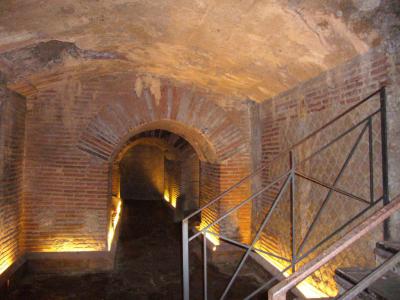
An ancient subterranean network lies beneath the city of Naples. Tunnels and caves have been carved from the volcanic rock over the last two and a half thousand years. The Greeks built the 280 mile long network in the fourth century BC to form Neapolis or New City.
The Romans then used the underground area to build aqueducts for water.
Today, visitors can explore this underground network exiting some 120 feet below Naples. Visitors descend a long stairway to view the impressive infrastructure. Naples Underground includes cisterns, catacombs, caverns, roadways, and rail tunnels.
One of the most impressive sights is the Greco-Roman theatre of Neapolis. Roman Emperor Nero had a private dressing room here.
During WWII, the underground was used as an air-raid shelter. Visitors can still see weapons and tanks left over from WWII.
The first Hypogeum Gardens are located in the underground. This experimental garden attempts to grow plants away from light and pollution.
Why You Should Visit:
Naples Underground provides a fascinating and unusual look at Naples' extensive history.
Tips:
Some tunnels are narrow and require a candle or flashlight. If you feel claustrophobic, skip these tunnels.
The Romans then used the underground area to build aqueducts for water.
Today, visitors can explore this underground network exiting some 120 feet below Naples. Visitors descend a long stairway to view the impressive infrastructure. Naples Underground includes cisterns, catacombs, caverns, roadways, and rail tunnels.
One of the most impressive sights is the Greco-Roman theatre of Neapolis. Roman Emperor Nero had a private dressing room here.
During WWII, the underground was used as an air-raid shelter. Visitors can still see weapons and tanks left over from WWII.
The first Hypogeum Gardens are located in the underground. This experimental garden attempts to grow plants away from light and pollution.
Why You Should Visit:
Naples Underground provides a fascinating and unusual look at Naples' extensive history.
Tips:
Some tunnels are narrow and require a candle or flashlight. If you feel claustrophobic, skip these tunnels.
7) Catacombe di San Gennaro (Catacombs of San Gennaro) (must see)
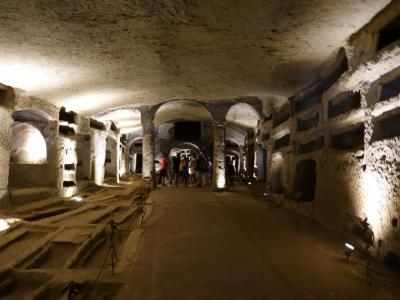
The Catacombs of San Gennaro, located in Naples, Italy, are subterranean sites used for Christian burials and religious activities during the paleo-Christian era. These catacombs were carved into tuff, a porous stone, and are situated in the northern part of Naples, on the slope leading up to Capodimonte. They consist of two levels known as San Gennaro Superiore and San Gennaro Inferiore. These catacombs are situated beneath the Rione Sanità neighborhood of Naples, which is sometimes referred to as the "Valley of the Dead." The site is now easily recognizable due to the presence of the large church of Madre del Buon Consiglio.
The tombs found in these catacombs come in various forms, including loculi, arcosoli, pits dug into the ground, and, less commonly, sarcophagi made of tuff or reused marble and stone from older graves. Loculi are simple, vertically aligned burial sites and represent the most basic style of burial discovered in the catacombs. However, they do not necessarily indicate the status of the deceased. On the other hand, arcosoli, designed for family burial areas, are incorporated into the walls of the galleries and cubicles and exhibit a more sophisticated design compared to loculi. Some of these arcosoli are adorned with mosaics or frescoes, and burials may be stacked horizontally. This type of burial is also found in Sicilian catacombs and is sometimes referred to as a "Siracusa" burial, commonly found in Greek catacombs. Occasionally, child burials are located in the lower part of the lunette, showcasing the efficient use of space in the catacombs.
The catacombs have yielded approximately 200 oil lamps dating from late antiquity to the Middle Ages. Among these lamps, 54 are of the African red slip variety. A comprehensive study of all the lamps will eventually provide insights into trade routes during the historical period, as well as the demographics of people who used the catacombs for burial and religious rituals. The oldest oil lamps discovered in these catacombs date back to the latter half of the third century and were produced in Naples itself.
The tombs found in these catacombs come in various forms, including loculi, arcosoli, pits dug into the ground, and, less commonly, sarcophagi made of tuff or reused marble and stone from older graves. Loculi are simple, vertically aligned burial sites and represent the most basic style of burial discovered in the catacombs. However, they do not necessarily indicate the status of the deceased. On the other hand, arcosoli, designed for family burial areas, are incorporated into the walls of the galleries and cubicles and exhibit a more sophisticated design compared to loculi. Some of these arcosoli are adorned with mosaics or frescoes, and burials may be stacked horizontally. This type of burial is also found in Sicilian catacombs and is sometimes referred to as a "Siracusa" burial, commonly found in Greek catacombs. Occasionally, child burials are located in the lower part of the lunette, showcasing the efficient use of space in the catacombs.
The catacombs have yielded approximately 200 oil lamps dating from late antiquity to the Middle Ages. Among these lamps, 54 are of the African red slip variety. A comprehensive study of all the lamps will eventually provide insights into trade routes during the historical period, as well as the demographics of people who used the catacombs for burial and religious rituals. The oldest oil lamps discovered in these catacombs date back to the latter half of the third century and were produced in Naples itself.
