Custom Walk in Havana, Cuba by fluffy0926_bc5e5 created on 2025-04-24
Guide Location: Cuba » Havana
Guide Type: Custom Walk
# of Sights: 6
Tour Duration: 1 Hour(s)
Travel Distance: 1.7 Km or 1.1 Miles
Share Key: CZUUK
Guide Type: Custom Walk
# of Sights: 6
Tour Duration: 1 Hour(s)
Travel Distance: 1.7 Km or 1.1 Miles
Share Key: CZUUK
How It Works
Please retrieve this walk in the GPSmyCity app. Once done, the app will guide you from one tour stop to the next as if you had a personal tour guide. If you created the walk on this website or come to the page via a link, please follow the instructions below to retrieve the walk in the app.
Retrieve This Walk in App
Step 1. Download the app "GPSmyCity: Walks in 1K+ Cities" on Apple App Store or Google Play Store.



Step 2. In the GPSmyCity app, download(or launch) the guide "Havana Map and Walking Tours".
Step 3. Tap the menu button located at upper right corner of the "Walks" screen and select "Retrieve custom walk". Enter the share key: CZUUK
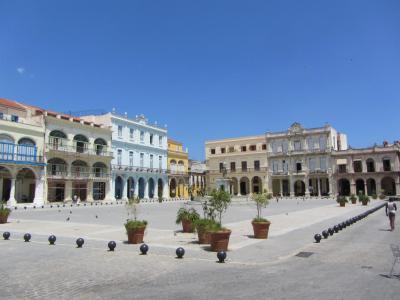
1) Plaza Vieja (Old Square) (must see)
The Old Square was founded in 1559 and originally known as New Square. It's the most architecturally interesting of the old squares in Havana; you'll find baroque-style mansions and art nouveau structures. Many of the buildings have arches and ornate stained-glass windows.
Today, the Old Square has a microbrewery, cafes, restaurants, and bars. A beautiful fountain was designed by Italian sculptor Giorgio Massari in the 18th century. Unfortunately, the original was destroyed, but a replica has been created.
The restored 17th century Santo Angel mansion is now a restaurant and an excellent spot to watch the action in the plaza.
The 1738 Palacio de Los Condes de Jaruco was built with local limestone. This baroque-style mansion houses an art gallery, the Galería La Casona. The second floor features three gorgeous stained glass windows.
The 1752 Casa de Juan Rico de Mat now houses the Fototeca de Cuba, which features both Cuban and international photographers.
The Casa del Conde de Lombillo is decorated with gorgeous murals and houses the Café Bohemia. For a look at Cuba's art nouveau architecture, don't miss the stunning 1906 Palacio Viena Hotel.
Why You Should Visit:
Old Square is the only square in Havana without a religious institution. Its gorgeous, eclectic architecture spans centuries of Havana's history. Watch the square from one of the many cafes and restaurants and explore the art galleries.
Tips:
Visit the Camera Obscura in the 20th-century Edificio Gómez Vila in the corner of Plaza Vieja. Edificio Gómez Vila is the plaza’s tallest building at 35 meters (115 feet). The Camera Obscura is a device invented by Leonardo da Vinci which projects a live 360-degree view into a darkened room. The Camera Obscura gives guests a fascinating look at the square and Old Havana through the periscope. You can also take photos from the rooftop of the Edificio Gómez Vila.
Today, the Old Square has a microbrewery, cafes, restaurants, and bars. A beautiful fountain was designed by Italian sculptor Giorgio Massari in the 18th century. Unfortunately, the original was destroyed, but a replica has been created.
The restored 17th century Santo Angel mansion is now a restaurant and an excellent spot to watch the action in the plaza.
The 1738 Palacio de Los Condes de Jaruco was built with local limestone. This baroque-style mansion houses an art gallery, the Galería La Casona. The second floor features three gorgeous stained glass windows.
The 1752 Casa de Juan Rico de Mat now houses the Fototeca de Cuba, which features both Cuban and international photographers.
The Casa del Conde de Lombillo is decorated with gorgeous murals and houses the Café Bohemia. For a look at Cuba's art nouveau architecture, don't miss the stunning 1906 Palacio Viena Hotel.
Why You Should Visit:
Old Square is the only square in Havana without a religious institution. Its gorgeous, eclectic architecture spans centuries of Havana's history. Watch the square from one of the many cafes and restaurants and explore the art galleries.
Tips:
Visit the Camera Obscura in the 20th-century Edificio Gómez Vila in the corner of Plaza Vieja. Edificio Gómez Vila is the plaza’s tallest building at 35 meters (115 feet). The Camera Obscura is a device invented by Leonardo da Vinci which projects a live 360-degree view into a darkened room. The Camera Obscura gives guests a fascinating look at the square and Old Havana through the periscope. You can also take photos from the rooftop of the Edificio Gómez Vila.
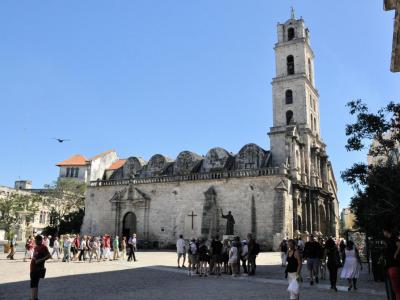
2) Plaza de San Francisco de Asís (Saint Francis of Assisi Square) (must see)
Plaza de San Francisco de Asís (Saint Francis of Assisi Square) was founded in the 16th century. This square overlooks the port, which originally welcomed Spanish galleons, and is now a cruise ship terminal.
The Plaza de San Francisco de Asís was named after the Convento de San Francisco de Asís. The baroque style convent was built in 1591 features a 42-meter (140-foot) tall tower.
Other notable buildings include the domed 1909 Lonja del Comercio (Market Hall) and the 1914 Aduana (Customs House).
Don't miss the beautiful fountain, Fuente de Los Leones. Italian Giuseppe Gaggini carved the white marble fountain in 1836. The fountain features four lions with water flowing from the lion's mouths. This is a popular site for quinceañeras to take pictures on their 15th birthday.
The Caballero de París Statue commemorates a Parisian who would entertain and converse with locals on a wide range of topics in the 1950s. You'll also find a bronze statue of Polish composer Chopin and a garden dedicated to Mother Teresa.
Horse-drawn carriages are on standby to give tours of Old Havana.
The Plaza de San Francisco de Asís was named after the Convento de San Francisco de Asís. The baroque style convent was built in 1591 features a 42-meter (140-foot) tall tower.
Other notable buildings include the domed 1909 Lonja del Comercio (Market Hall) and the 1914 Aduana (Customs House).
Don't miss the beautiful fountain, Fuente de Los Leones. Italian Giuseppe Gaggini carved the white marble fountain in 1836. The fountain features four lions with water flowing from the lion's mouths. This is a popular site for quinceañeras to take pictures on their 15th birthday.
The Caballero de París Statue commemorates a Parisian who would entertain and converse with locals on a wide range of topics in the 1950s. You'll also find a bronze statue of Polish composer Chopin and a garden dedicated to Mother Teresa.
Horse-drawn carriages are on standby to give tours of Old Havana.
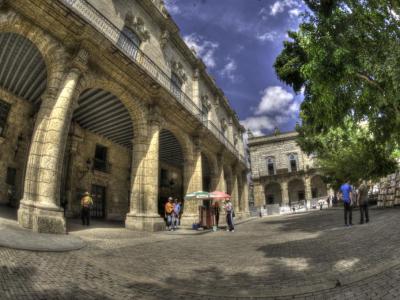
3) Plaza de Armas (Square of Arms) (must see)
The Plaza de Armas is Havana's oldest square and was originally laid out in the 1520s. Most of the architecture seen here today is from the 1700s. All of old Havana's streets, Obispo, San Ignacio, Mercaderes, Oficios connect to the Plaza de Armas.
The 18th-century Palacio de los Capitanes Generales dominates the square. Interestingly, the street in front of the Palacio is lined with wooden tiles instead of the usual cobblestones. The Governor's home was once located here, and being fond of afternoon siestas, the Governor had them repave the road with wood to dull the noise from passing horses and carriages.
The center of the square is lined with magnificent royal palms. Don't miss the impressive marble statue of Carlos Manuel de Céspedes, who was instrumental in Cuba's path to independence.
The 19th-century Greek-style Neoclassical temple, El Templete marks the spot where Havana was founded in 1519. Another notable building is the five-star Hotel Santa Isabel, operating in the former 18th-century Palacio de Los Condes de Santovenia. The Museo Nacional de Historia Natural is located in the old U.S. Embassy.
On the north side of the square, you'll find the Renaissance-style Castillo de la Real Fuerza, built in the 16th century. The Castillo de la Real Fuerza was the first New World fortress to use triangular bulwarks.
Keep a lookout for a hidden treasure at the old book sale, held on the perimeter of the plaza six days a week.
The 18th-century Palacio de los Capitanes Generales dominates the square. Interestingly, the street in front of the Palacio is lined with wooden tiles instead of the usual cobblestones. The Governor's home was once located here, and being fond of afternoon siestas, the Governor had them repave the road with wood to dull the noise from passing horses and carriages.
The center of the square is lined with magnificent royal palms. Don't miss the impressive marble statue of Carlos Manuel de Céspedes, who was instrumental in Cuba's path to independence.
The 19th-century Greek-style Neoclassical temple, El Templete marks the spot where Havana was founded in 1519. Another notable building is the five-star Hotel Santa Isabel, operating in the former 18th-century Palacio de Los Condes de Santovenia. The Museo Nacional de Historia Natural is located in the old U.S. Embassy.
On the north side of the square, you'll find the Renaissance-style Castillo de la Real Fuerza, built in the 16th century. The Castillo de la Real Fuerza was the first New World fortress to use triangular bulwarks.
Keep a lookout for a hidden treasure at the old book sale, held on the perimeter of the plaza six days a week.
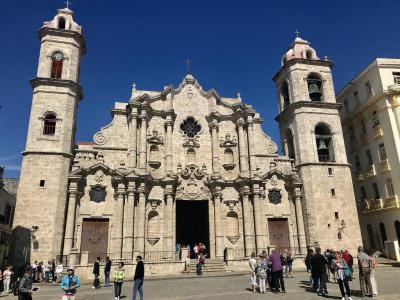
4) Havana Cathedral (must see)
Constructed by the Jesuits (1748–77) on the site of an earlier church, Havana Cathedral is one of eleven Catholic cathedrals on the island. It is sometimes dubbed as Christopher Cathedral for being the place where Christopher Columbus’ remains were kept between 1796 and 1898 before they were returned to Spain after the Cuban War of Independence.
The Cathedral is said to be the only example of a baroque facade that was designed with asymmetrical features – one of the towers is wider than the other. This particular feature was conceived in order to allow the water that tended to accumulate on the plaza to freely flow through the streets during the colonial period when it was built.
Cuban writer Alejo Carpentier famously described the Cathedral as "music set in stone". In fact, its structure is notable for being built with stones which are very different from what are used to in Europe. The stones lend the cathedral a particular color and it is really beautiful. Nearby there are terraces, music, and people all around offering drinks, food, cigars, and many more – the essence of the city.
Tip:
Note that despite the official opening times, the Cathedral is often locked, though you can sometimes gain access just before mass. Admission is free, although there is a small charge if you wish to go up the bell tower. Cover-ups for those with short shorts or bare shoulders are available for free
The Cathedral is said to be the only example of a baroque facade that was designed with asymmetrical features – one of the towers is wider than the other. This particular feature was conceived in order to allow the water that tended to accumulate on the plaza to freely flow through the streets during the colonial period when it was built.
Cuban writer Alejo Carpentier famously described the Cathedral as "music set in stone". In fact, its structure is notable for being built with stones which are very different from what are used to in Europe. The stones lend the cathedral a particular color and it is really beautiful. Nearby there are terraces, music, and people all around offering drinks, food, cigars, and many more – the essence of the city.
Tip:
Note that despite the official opening times, the Cathedral is often locked, though you can sometimes gain access just before mass. Admission is free, although there is a small charge if you wish to go up the bell tower. Cover-ups for those with short shorts or bare shoulders are available for free
5) Plaza de la Catedral (Cathedral Square) (must see)
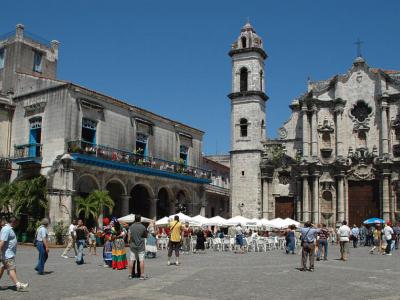
Plaza de la Catedral is one of five main squares in old Havana. The Catedral de San Cristobal (Havana Cathedral) dominates the plaza. The construction of this cathedral was completed in 1777. The Catedral de San Cristobal held the remains of Christopher Columbus from 1796 to 1898.
The Catedral de San Cristobal was built in the Baroque style and features two asymmetrical bell towers. The Catedral was constructed from blocks of coral; you can see fossilized marine life in the blocks. Inside The Catedral, you will find many interesting sculptures and paintings, such as a 1632 sculpture of Saint Christopher, Patron Saint of Havana.
Admire the magnificent mansions built by Cuba's elite, which surround the square. These mansions have since become landmarks and museums.
Don't miss the Casa de Lombillo. The Casa de Lombillo housed the first Cuban post office and is now a museum. The Casa del Conde de Casa Bayona is now the Museo de Arte Colonial. The Casa de Los Condes de Peñalver which now functions as one of Cuba's premier art galleries.
Why You Should Visit:
Visiting the Plaza de la Catedral is like stepping back in time. The Catedral de San Cristobal and mansions built here are absolutely beautiful. This area of Old Havana has been designated as a UNESCO World Heritage Site, and it's easy to see why.
Plaza de la Catedral is also a social center for locals. You might see kids engaging in an impromptu soccer game, entertainers on stilts, or fortune-tellers ready to tell your fortune.
Tips:
To take in the square like a local, stop by El Patio Colonial for a meal. Sit inside, under the portico, or enjoy the sunshine on the plaza. This popular restaurant is located inside Casa de Los Marqueses de Aguas Claras, which was once owned by a descendent of Ponce de Leon.
The Catedral de San Cristobal was built in the Baroque style and features two asymmetrical bell towers. The Catedral was constructed from blocks of coral; you can see fossilized marine life in the blocks. Inside The Catedral, you will find many interesting sculptures and paintings, such as a 1632 sculpture of Saint Christopher, Patron Saint of Havana.
Admire the magnificent mansions built by Cuba's elite, which surround the square. These mansions have since become landmarks and museums.
Don't miss the Casa de Lombillo. The Casa de Lombillo housed the first Cuban post office and is now a museum. The Casa del Conde de Casa Bayona is now the Museo de Arte Colonial. The Casa de Los Condes de Peñalver which now functions as one of Cuba's premier art galleries.
Why You Should Visit:
Visiting the Plaza de la Catedral is like stepping back in time. The Catedral de San Cristobal and mansions built here are absolutely beautiful. This area of Old Havana has been designated as a UNESCO World Heritage Site, and it's easy to see why.
Plaza de la Catedral is also a social center for locals. You might see kids engaging in an impromptu soccer game, entertainers on stilts, or fortune-tellers ready to tell your fortune.
Tips:
To take in the square like a local, stop by El Patio Colonial for a meal. Sit inside, under the portico, or enjoy the sunshine on the plaza. This popular restaurant is located inside Casa de Los Marqueses de Aguas Claras, which was once owned by a descendent of Ponce de Leon.
6) Calle Obispo (Bishop Street) (must see)
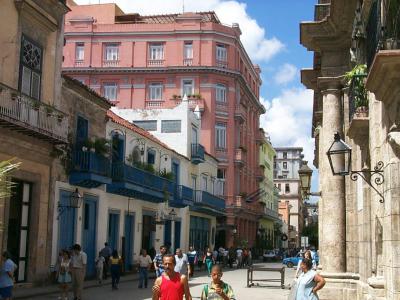
Widely regarding as one of the busiest streets in Old Havana, Bishop's Street is part of the historic city center, filled to the brim with plethora of shops, art galleries, hotels, restaurants, live music bars and a regular crowd of people. The street is lined with four- and five-story buildings which block out most of the sunlight and altogether give the place a great deal of character.
It is called Bishop Street after two famous bishops lived here. Bishop Fray Jeronimo de Lara lived here in 1641 and another bishop Pedro Agustin Morell de Santa Cruz, used to traverse the street regularly from his nearby home.
One of the most notable sights here, from both aesthetic and architectonic standpoints, is the Ministry of Finances and Prices, formerly center of the banking triangle, back in the early 20th century colloquially referred to as the Havana Wall Street.
Among other attractions is the Florida Hotel and Ambos Mundos Hotel. Hotel Ambos Mundos sits on the corner of Calle Obispo and Mercaderes. This hotel is famous for hosting renowned author Ernest Hemingway. Hemingway lived in the hotel from 1932 to 1939 and began his novel For Whom the Bell Tolls while staying at Hotel Ambros Mundos. Today, Hemingway's room, Number 511, is set up as a small Hemingway museum. The room is decorated and laid out as it was when Hemingway lived there and is available for tours.
It is called Bishop Street after two famous bishops lived here. Bishop Fray Jeronimo de Lara lived here in 1641 and another bishop Pedro Agustin Morell de Santa Cruz, used to traverse the street regularly from his nearby home.
One of the most notable sights here, from both aesthetic and architectonic standpoints, is the Ministry of Finances and Prices, formerly center of the banking triangle, back in the early 20th century colloquially referred to as the Havana Wall Street.
Among other attractions is the Florida Hotel and Ambos Mundos Hotel. Hotel Ambos Mundos sits on the corner of Calle Obispo and Mercaderes. This hotel is famous for hosting renowned author Ernest Hemingway. Hemingway lived in the hotel from 1932 to 1939 and began his novel For Whom the Bell Tolls while staying at Hotel Ambros Mundos. Today, Hemingway's room, Number 511, is set up as a small Hemingway museum. The room is decorated and laid out as it was when Hemingway lived there and is available for tours.
