Custom Walk in Liverpool, England by dean_mcdaniel_9f3b4 created on 2025-04-25
Guide Location: England » Liverpool
Guide Type: Custom Walk
# of Sights: 8
Tour Duration: 3 Hour(s)
Travel Distance: 7.1 Km or 4.4 Miles
Share Key: 7E7FD
Guide Type: Custom Walk
# of Sights: 8
Tour Duration: 3 Hour(s)
Travel Distance: 7.1 Km or 4.4 Miles
Share Key: 7E7FD
How It Works
Please retrieve this walk in the GPSmyCity app. Once done, the app will guide you from one tour stop to the next as if you had a personal tour guide. If you created the walk on this website or come to the page via a link, please follow the instructions below to retrieve the walk in the app.
Retrieve This Walk in App
Step 1. Download the app "GPSmyCity: Walks in 1K+ Cities" on Apple App Store or Google Play Store.



Step 2. In the GPSmyCity app, download(or launch) the guide "Liverpool Map and Walking Tours".
Step 3. Tap the menu button located at upper right corner of the "Walks" screen and select "Retrieve custom walk". Enter the share key: 7E7FD
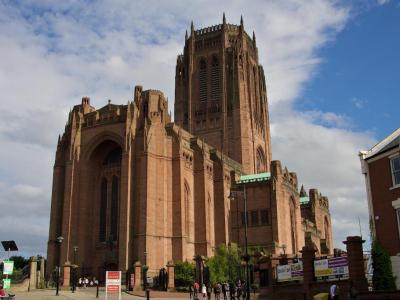
1) Liverpool Cathedral (must see)
Liverpool Cathedral, formally known as the Cathedral Church of Christ in Liverpool, stands as a monumental testament to architectural and spiritual grandeur in the heart of Liverpool. Serving as the seat of the Bishop of Liverpool and the mother church of the Diocese of Liverpool, this Church of England cathedral is not only the largest religious building in Britain but also ranks as the eighth-largest church in the world.
Designed by Giles Gilbert Scott, the cathedral was constructed over an impressive timeline, spanning from 1904 to 1978. It holds the distinction of being the longest cathedral in the world, with a total external length of 207 yards (189 meters), including the Lady Chapel, which is dedicated to the Blessed Virgin. Internally, its length measures 160 yards (150 meters). Liverpool Cathedral is the fifth-largest cathedral globally by volume and competes with New York's unfinished Cathedral of Saint John the Divine as the largest Anglican church. At 331 feet (101 meters), it ranks among the world's tallest non-spired churches and is Liverpool's fourth-tallest structure.
Built with striking red sandstone, the cathedral’s exterior exudes a warm, dramatic hue, especially under the glow of the setting sun. Perched atop Saint James' Mount, it dominates the city's skyline and is a Grade I listed building, recognized in the National Heritage List for England.
The cathedral boasts several record-breaking features, including its bell tower, which houses the highest and heaviest ringing peal of bells globally. The organ, crafted by Henry Willis & Sons, is the largest pipe organ in the UK, comprising 10,268 pipes, two five-manual consoles, and a trompette militaire. Additionally, its stained glass windows honor the artisans who designed and constructed this masterpiece, depicting figures such as Bodley and Scott.
Liverpool Cathedral, one of two major cathedrals in the city alongside the nearby Metropolitan Cathedral, is linked by Hope Street, named after local merchant William Hope. Beyond being a place of worship, it stands as a cultural and architectural icon, attracting visitors worldwide.
Designed by Giles Gilbert Scott, the cathedral was constructed over an impressive timeline, spanning from 1904 to 1978. It holds the distinction of being the longest cathedral in the world, with a total external length of 207 yards (189 meters), including the Lady Chapel, which is dedicated to the Blessed Virgin. Internally, its length measures 160 yards (150 meters). Liverpool Cathedral is the fifth-largest cathedral globally by volume and competes with New York's unfinished Cathedral of Saint John the Divine as the largest Anglican church. At 331 feet (101 meters), it ranks among the world's tallest non-spired churches and is Liverpool's fourth-tallest structure.
Built with striking red sandstone, the cathedral’s exterior exudes a warm, dramatic hue, especially under the glow of the setting sun. Perched atop Saint James' Mount, it dominates the city's skyline and is a Grade I listed building, recognized in the National Heritage List for England.
The cathedral boasts several record-breaking features, including its bell tower, which houses the highest and heaviest ringing peal of bells globally. The organ, crafted by Henry Willis & Sons, is the largest pipe organ in the UK, comprising 10,268 pipes, two five-manual consoles, and a trompette militaire. Additionally, its stained glass windows honor the artisans who designed and constructed this masterpiece, depicting figures such as Bodley and Scott.
Liverpool Cathedral, one of two major cathedrals in the city alongside the nearby Metropolitan Cathedral, is linked by Hope Street, named after local merchant William Hope. Beyond being a place of worship, it stands as a cultural and architectural icon, attracting visitors worldwide.
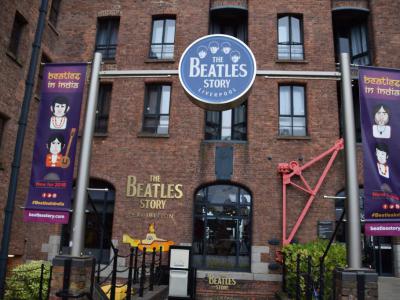
2) The Beatles Story (must see)
The Beatles Story is a world-renowned museum located at the historic Royal Albert Dock in Liverpool, the birthplace of the Fab Four. Opened on May 1, 1990, the museum was conceived by husband-and-wife team Mike and Bernadette Byrne, whose deep personal connections to The Beatles helped shape an attraction that has welcomed millions of visitors worldwide. Now owned by Mersey Ferries, part of Merseytravel, this award-winning museum celebrates the legacy of ‘the world’s greatest band’ through immersive experiences and rare memorabilia.
The Beatles Story invites visitors to embark on a journey through key moments of the band's history. Walk through meticulous recreations of iconic locations like The Casbah Coffee Club, The Cavern Club, and Abbey Road Studios. Highlights include personal artifacts like John Lennon’s iconic spectacles, George Harrison’s first guitar, and Ringo Starr’s drum kit. Exhibits also delve into the British Invasion, the band members’ solo careers, and their cultural impact.
Visitors can enjoy an audio guide, narrated by Julia Baird, John Lennon’s sister, available in 12 languages. This multimedia experience includes rare insights, video interviews with Paul McCartney and Ringo Starr, and interactive displays like the White Room and replica Cavern Club, making the journey unforgettable.
The Beatles Story offers more than just a nostalgic trip for music fans-it’s a vital part of Liverpool’s cultural and economic landscape, having contributed over £300 million to the local economy since its inception. The museum also boasts educational initiatives like the Discovery Zone, as well as Beatles-themed Fab4 Cafes and Fab4 Stores.
A must-see attraction, The Beatles Story continues to evolve, celebrating milestones such as Ringo Starr’s 80th birthday and adding exciting exhibits for its 30th anniversary in 2020. Whether you’re a lifelong fan or new to Beatlemania, this immersive experience promises to captivate visitors of all ages.
Why You Should Visit:
However expensive, the place is tastefully laid out and very well organized, and the admission fee does include a multi-lingual headset which adds quality to the visit.
Tip:
It can be difficult to get tickets on the day, so if you are planning to go then it would really be worthwhile booking online (that way, you also avoid queueing). Cheaper tickets are available if you search the web for discounts/vouchers.
The Beatles Story invites visitors to embark on a journey through key moments of the band's history. Walk through meticulous recreations of iconic locations like The Casbah Coffee Club, The Cavern Club, and Abbey Road Studios. Highlights include personal artifacts like John Lennon’s iconic spectacles, George Harrison’s first guitar, and Ringo Starr’s drum kit. Exhibits also delve into the British Invasion, the band members’ solo careers, and their cultural impact.
Visitors can enjoy an audio guide, narrated by Julia Baird, John Lennon’s sister, available in 12 languages. This multimedia experience includes rare insights, video interviews with Paul McCartney and Ringo Starr, and interactive displays like the White Room and replica Cavern Club, making the journey unforgettable.
The Beatles Story offers more than just a nostalgic trip for music fans-it’s a vital part of Liverpool’s cultural and economic landscape, having contributed over £300 million to the local economy since its inception. The museum also boasts educational initiatives like the Discovery Zone, as well as Beatles-themed Fab4 Cafes and Fab4 Stores.
A must-see attraction, The Beatles Story continues to evolve, celebrating milestones such as Ringo Starr’s 80th birthday and adding exciting exhibits for its 30th anniversary in 2020. Whether you’re a lifelong fan or new to Beatlemania, this immersive experience promises to captivate visitors of all ages.
Why You Should Visit:
However expensive, the place is tastefully laid out and very well organized, and the admission fee does include a multi-lingual headset which adds quality to the visit.
Tip:
It can be difficult to get tickets on the day, so if you are planning to go then it would really be worthwhile booking online (that way, you also avoid queueing). Cheaper tickets are available if you search the web for discounts/vouchers.
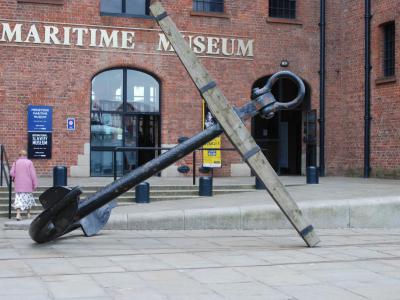
3) Merseyside Maritime Museum (must see)
The city of Liverpool, and the surrounding county of Merseyside, both have a proud maritime museum. The region’s name comes from the River Mersey, a wide inlet from the Irish Sea which adjoins Liverpool. Access to the sea along the river allowed the city to become one of the world’s great trading ports during the Industrial Revolution. The Merseyside Maritime Museum is a celebration of Liverpool’s shipping history. It is located on Albert Dock, at the heart of Liverpool’s Mercantile Maritime City, an area of historic docklands that have been made a UNESCO World Heritage site.
The ground floor of the museum houses an exhibition on the shipping lines and companies that made Liverpool a global maritime trade centre. Other exhibitions show life in a port city in the modern day, including an interactive feature on Customs and Border Control, as well as a poignant tribute to the Titanic, the ocean liner which bore the city’s name on her doomed maiden voyage.
The museum also offers a range of child-friendly, nautically themed events throughout the year, as well as a guided tour of Liverpool’s Old Dock, which lies close to the building.
Why You Should Visit:
Engaging for both kids and adults with lots of interactive exhibits; a fantastic place to learn about Liverpool's maritime history.
Even if you view the ocean as little more than a scary, jellyfish-packed beach-separator, a visit to this nautical relic-fest is advised.
Tip:
On the ground floor, there are lockers to put belongings in to save you carrying bags and coats about.
If you find you have a spare hour, get booked in for an entertaining and informative guided tour.
Afterward, you can go to the top floor café (opens around noon), grab a drink or a bite and look out at the fantastic views of the docks and liver birds.
The ground floor of the museum houses an exhibition on the shipping lines and companies that made Liverpool a global maritime trade centre. Other exhibitions show life in a port city in the modern day, including an interactive feature on Customs and Border Control, as well as a poignant tribute to the Titanic, the ocean liner which bore the city’s name on her doomed maiden voyage.
The museum also offers a range of child-friendly, nautically themed events throughout the year, as well as a guided tour of Liverpool’s Old Dock, which lies close to the building.
Why You Should Visit:
Engaging for both kids and adults with lots of interactive exhibits; a fantastic place to learn about Liverpool's maritime history.
Even if you view the ocean as little more than a scary, jellyfish-packed beach-separator, a visit to this nautical relic-fest is advised.
Tip:
On the ground floor, there are lockers to put belongings in to save you carrying bags and coats about.
If you find you have a spare hour, get booked in for an entertaining and informative guided tour.
Afterward, you can go to the top floor café (opens around noon), grab a drink or a bite and look out at the fantastic views of the docks and liver birds.
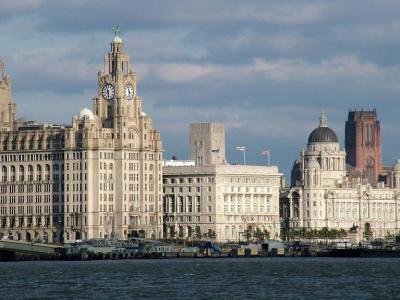
4) Pier Head (must see)
The Pier Head, officially known as George’s Pier Head, is a prominent riverside location in Liverpool’s city center. Formerly part of the Liverpool Maritime Mercantile City UNESCO World Heritage Site (2004–2021), the Pier Head is celebrated for its iconic architecture, public spaces, and historical significance as a landing site for passenger ships.
Originally the site of George’s Dock, constructed in 1771, the area became obsolete by the 1890s due to its inadequate size for modern commercial vessels. After prolonged negotiations between the Mersey Docks and Harbour Board and Liverpool Corporation, the dock was purchased in 1898 for redevelopment. This paved the way for the construction of landmark buildings and new public spaces, transforming the area into the architectural centerpiece it is today.
The Pier Head features the iconic "Three Graces": the Royal Liver Building (1911), England’s first skyscraper; the Cunard Building (1917), inspired by Italian palaces; and the Port of Liverpool Building (1907), a neo-baroque symbol of the city’s maritime legacy.
In 2002, the Pier Head was the focus of the controversial "Fourth Grace" project, which aimed to add a bold architectural statement to the waterfront. The winning design, “The Cloud” by Will Alsop, was abandoned in 2004 but plans for redevelopment continued.
In 2011, the Museum of Liverpool opened at the Pier Head, housing a rich collection that celebrates the city’s history and culture. Additionally, a canal link connecting the Leeds and Liverpool Canal to the South Docks was completed in 2009, enhancing the area’s accessibility and recreational appeal.
Although the Pier Head lost its UNESCO World Heritage status in 2021 due to modern developments that altered its historic landscape, it remains a testament to Liverpool’s evolution as a maritime and cultural hub. With its blend of historic grandeur and contemporary vibrancy, the Pier Head continues to draw locals and visitors alike to its storied waterfront.
Originally the site of George’s Dock, constructed in 1771, the area became obsolete by the 1890s due to its inadequate size for modern commercial vessels. After prolonged negotiations between the Mersey Docks and Harbour Board and Liverpool Corporation, the dock was purchased in 1898 for redevelopment. This paved the way for the construction of landmark buildings and new public spaces, transforming the area into the architectural centerpiece it is today.
The Pier Head features the iconic "Three Graces": the Royal Liver Building (1911), England’s first skyscraper; the Cunard Building (1917), inspired by Italian palaces; and the Port of Liverpool Building (1907), a neo-baroque symbol of the city’s maritime legacy.
In 2002, the Pier Head was the focus of the controversial "Fourth Grace" project, which aimed to add a bold architectural statement to the waterfront. The winning design, “The Cloud” by Will Alsop, was abandoned in 2004 but plans for redevelopment continued.
In 2011, the Museum of Liverpool opened at the Pier Head, housing a rich collection that celebrates the city’s history and culture. Additionally, a canal link connecting the Leeds and Liverpool Canal to the South Docks was completed in 2009, enhancing the area’s accessibility and recreational appeal.
Although the Pier Head lost its UNESCO World Heritage status in 2021 due to modern developments that altered its historic landscape, it remains a testament to Liverpool’s evolution as a maritime and cultural hub. With its blend of historic grandeur and contemporary vibrancy, the Pier Head continues to draw locals and visitors alike to its storied waterfront.
5) Beatles Statues (must see)
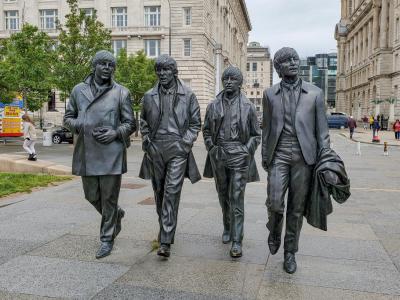
The Beatles Statue is an iconic monument located at Liverpool's Pier Head, near the intersection of Brunswick Street and Canada Boulevard. Designed by sculptor Andy Edwards, this striking bronze tribute to Paul McCartney, George Harrison, Ringo Starr, and John Lennon was unveiled on December 4, 2015. The ceremony, coinciding with the 50th anniversary of the Beatles' last Liverpool concert, was attended by Ann O'Byrne, the city’s deputy mayor, and Julia Baird, John Lennon's sister. The statue was generously donated to the city by The Cavern Club, the legendary music venue closely linked to the band’s early days.
The monument depicts the four Beatles walking together in a larger-than-life composition based on a 1963 photograph taken in Liverpool. Each figure features personal and symbolic details that celebrate the individuality of the band members. McCartney is seen holding a camera close to his chest, a nod to his late wife Linda McCartney, a photographer. Harrison's belt bears a Sanskrit inscription, symbolizing his spiritual interests. Starr’s right shoe has a card with the postal code "L8," referencing his childhood neighborhood in the Welsh Streets. He is positioned slightly behind the others, reflecting his placement as the drummer on stage. Lennon carries two acorns in his hand, referencing his and Yoko Ono’s 1968 acorn-planting gesture for world peace.
Standing prominently in front of the Liver Building, the statue has become a favorite photo stop for visitors and Beatles fans worldwide. Each small, thoughtful detail in the sculpture enriches the narrative of the Beatles' legacy, making it one of Liverpool’s most cherished attractions.
The monument depicts the four Beatles walking together in a larger-than-life composition based on a 1963 photograph taken in Liverpool. Each figure features personal and symbolic details that celebrate the individuality of the band members. McCartney is seen holding a camera close to his chest, a nod to his late wife Linda McCartney, a photographer. Harrison's belt bears a Sanskrit inscription, symbolizing his spiritual interests. Starr’s right shoe has a card with the postal code "L8," referencing his childhood neighborhood in the Welsh Streets. He is positioned slightly behind the others, reflecting his placement as the drummer on stage. Lennon carries two acorns in his hand, referencing his and Yoko Ono’s 1968 acorn-planting gesture for world peace.
Standing prominently in front of the Liver Building, the statue has become a favorite photo stop for visitors and Beatles fans worldwide. Each small, thoughtful detail in the sculpture enriches the narrative of the Beatles' legacy, making it one of Liverpool’s most cherished attractions.
6) Mathew Street (must see)
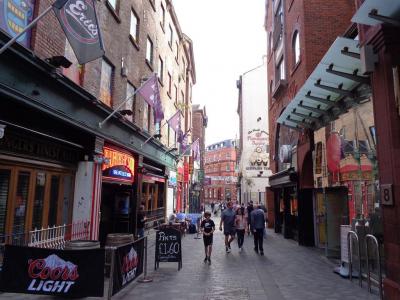
Mathew Street is an unassuming side road in Liverpool city centre that houses a world famous musical attraction – the Cavern Club, the city’s most famous music venue and a place forever associated with the Beatles. The Liverpudlian four piece, considered by many to be the world’s greatest ever band, played at the venue several times in their early years. As a result, the street is visited by thousands of tourists each year, and is the centre of the Cavern Quarter, a bohemian area of arcades filled with must see attractions for Beatles fans.
In addition to the Cavern Club, which is still a hugely popular night-time venue, the street hosts a music festival each August. The largest free festival in Europe, the Mathew Street Festival plays host to dozens of tribute bands – with a Beatles act usually headlining. The street is also notable for the Grapes pub, often frequented by the Fab Four, and an unusual statue by Arthur Dooley, depicting the four band members in a religious pose. The statue, built into the wall on Mathew Street, bears the inscription ‘Four Lads who Shook the World’. The street was also believed to be visited by renowned philosopher Carl Jung; a plaster statue of the great Swiss thinker also stands on the street.
In addition to the Cavern Club, which is still a hugely popular night-time venue, the street hosts a music festival each August. The largest free festival in Europe, the Mathew Street Festival plays host to dozens of tribute bands – with a Beatles act usually headlining. The street is also notable for the Grapes pub, often frequented by the Fab Four, and an unusual statue by Arthur Dooley, depicting the four band members in a religious pose. The statue, built into the wall on Mathew Street, bears the inscription ‘Four Lads who Shook the World’. The street was also believed to be visited by renowned philosopher Carl Jung; a plaster statue of the great Swiss thinker also stands on the street.
7) St. George's Hall (must see)
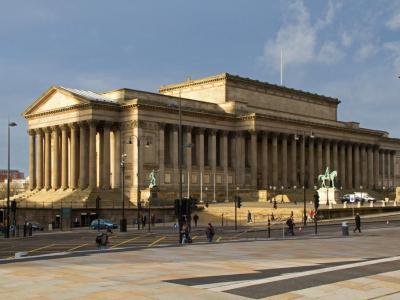
Saint George's Hall is a masterpiece of neoclassical architecture and stands proudly in the heart of Liverpool. Widely regarded as one of the finest examples of neo-Grecian design worldwide, this Grade I listed building showcases a majestic Greek-columned façade that commands attention. The hall serves as a hub for cultural and social events, including live music performances, and remains open for visitors free of charge.
The main entrance, located at the center of the east façade, is accessible via an elegant flight of steps. A portico featuring 16 Corinthian columns dominates the front, flanked by a series of square pillars adorned with reliefs, which were added between 1882 and 1901. Inside, the roof’s tunnel vault is supported by polished red granite columns and decorated with intricate plasterwork depicting allegorical figures representing Virtues, Science, and Arts. Statues placed in wall niches further accentuate the grandeur of the interior.
One of the hall's most striking features is its exquisite floor, composed of 30,000 Minton tiles. These tiles, often covered to preserve their beauty, occasionally make public appearances, much to the delight of visitors. Other notable elements include bronze doors with openwork panels featuring the letters "SPQL" (a nod to ancient Rome's "Senate and People"), an impressive organ positioned at the north end, and a round arch at the south end that leads directly into the Crown Court.
Saint George's Hall also holds a fascinating claim to innovation: it houses the world’s first Victorian-era air-conditioning system. Combining artistic excellence with engineering ingenuity, the hall remains a testament to Liverpool’s rich cultural and architectural heritage. Whether marveling at its neoclassical details or enjoying a musical performance, visitors will find their time at Saint George's Hall truly memorable.
Why You Should Visit:
Wonderful architecture from a time when bureaucracy knew that, if they were going to keep you waiting half an hour to fill in a form, then it may as well be somewhere nice!
Tip:
Try and find out when the original tile flooring is on show, as that is a perfect time to go (doesn't happen very often).
Don't miss the coffee shop on the ground floor – superb value and quite reasonably priced and atmospheric.
The main entrance, located at the center of the east façade, is accessible via an elegant flight of steps. A portico featuring 16 Corinthian columns dominates the front, flanked by a series of square pillars adorned with reliefs, which were added between 1882 and 1901. Inside, the roof’s tunnel vault is supported by polished red granite columns and decorated with intricate plasterwork depicting allegorical figures representing Virtues, Science, and Arts. Statues placed in wall niches further accentuate the grandeur of the interior.
One of the hall's most striking features is its exquisite floor, composed of 30,000 Minton tiles. These tiles, often covered to preserve their beauty, occasionally make public appearances, much to the delight of visitors. Other notable elements include bronze doors with openwork panels featuring the letters "SPQL" (a nod to ancient Rome's "Senate and People"), an impressive organ positioned at the north end, and a round arch at the south end that leads directly into the Crown Court.
Saint George's Hall also holds a fascinating claim to innovation: it houses the world’s first Victorian-era air-conditioning system. Combining artistic excellence with engineering ingenuity, the hall remains a testament to Liverpool’s rich cultural and architectural heritage. Whether marveling at its neoclassical details or enjoying a musical performance, visitors will find their time at Saint George's Hall truly memorable.
Why You Should Visit:
Wonderful architecture from a time when bureaucracy knew that, if they were going to keep you waiting half an hour to fill in a form, then it may as well be somewhere nice!
Tip:
Try and find out when the original tile flooring is on show, as that is a perfect time to go (doesn't happen very often).
Don't miss the coffee shop on the ground floor – superb value and quite reasonably priced and atmospheric.
8) Liverpool Metropolitan Cathedral (must see)
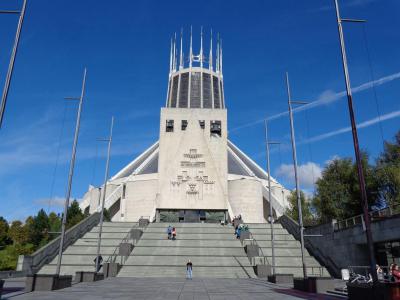
The Liverpool Metropolitan Cathedral, officially named the Metropolitan Cathedral of Christ the King and affectionately called Paddy's Wigwam by locals, serves as the seat of the Archbishop of Liverpool and is the mother church of the Roman Catholic Archdiocese of Liverpool. A Grade II* listed building, it is a landmark among Liverpool’s architectural treasures.
Designed by Frederick Gibberd, who won a worldwide design competition in 1959, the cathedral was constructed between 1962 and 1967. Earlier designs, proposed in 1933 and 1953, were abandoned due to financial and practical challenges. Gibberd’s innovative design met two key criteria: seating for 2,000 congregants with clear sightlines to the altar and integration of the pre-existing Lutyens crypt.
The cathedral’s striking circular design spans a diameter of 195 feet (59 meters). Its conical shape is supported by 16 boomerang-shaped concrete trusses, joined by two ring beams and reinforced by flying buttresses, creating its distinctive tent-like appearance. At the top, the lantern tower, adorned with vibrant stained glass windows, culminates in a crown of pinnacles, forming a dramatic focal point. Clad in Portland stone with an aluminum roof, the structure seamlessly combines modern materials with spiritual symbolism.
A flight of steps from Hope Street leads to the entrance, topped by a wedge-shaped bell tower with four bells. Relief sculptures by William Mitchell depict three crosses and Evangelist symbols. At the heart of the cathedral, the Macedonian white marble altar is crowned by an aluminum baldachino with integrated lights and speakers, designed by Gibberd.
Concentric benches by Frank Knight provide clear views for the congregation. The lantern tower’s vibrant glasswork, by John Piper and Patrick Reyntiens, symbolizes the Trinity. Stained glass by artists like Margaret Traherne and Ceri Richards complements interior highlights, including a bronze crucifix by Elisabeth Frink, Sean Rice's Stations of the Cross, and Georg Mayer-Marton's Pentecost mosaic.
In addition to the main cathedral, a smaller version designed by Gibberd was built in 1965 at the former De La Salle College in Lancashire, now part of Hopwood Hall College.
The Liverpool Metropolitan Cathedral stands as a masterpiece of modern ecclesiastical architecture, reflecting both the bold vision of its designer and the enduring faith of its community.
Tip:
Make sure to visit before the crypt closes for the day (3:30 pm); also, try and go on a sunny day when the sunshine lights up the modern stained glass.
With luck maybe come in times of an art exhibition, or in times of organ concerts and/or classical music!
Designed by Frederick Gibberd, who won a worldwide design competition in 1959, the cathedral was constructed between 1962 and 1967. Earlier designs, proposed in 1933 and 1953, were abandoned due to financial and practical challenges. Gibberd’s innovative design met two key criteria: seating for 2,000 congregants with clear sightlines to the altar and integration of the pre-existing Lutyens crypt.
The cathedral’s striking circular design spans a diameter of 195 feet (59 meters). Its conical shape is supported by 16 boomerang-shaped concrete trusses, joined by two ring beams and reinforced by flying buttresses, creating its distinctive tent-like appearance. At the top, the lantern tower, adorned with vibrant stained glass windows, culminates in a crown of pinnacles, forming a dramatic focal point. Clad in Portland stone with an aluminum roof, the structure seamlessly combines modern materials with spiritual symbolism.
A flight of steps from Hope Street leads to the entrance, topped by a wedge-shaped bell tower with four bells. Relief sculptures by William Mitchell depict three crosses and Evangelist symbols. At the heart of the cathedral, the Macedonian white marble altar is crowned by an aluminum baldachino with integrated lights and speakers, designed by Gibberd.
Concentric benches by Frank Knight provide clear views for the congregation. The lantern tower’s vibrant glasswork, by John Piper and Patrick Reyntiens, symbolizes the Trinity. Stained glass by artists like Margaret Traherne and Ceri Richards complements interior highlights, including a bronze crucifix by Elisabeth Frink, Sean Rice's Stations of the Cross, and Georg Mayer-Marton's Pentecost mosaic.
In addition to the main cathedral, a smaller version designed by Gibberd was built in 1965 at the former De La Salle College in Lancashire, now part of Hopwood Hall College.
The Liverpool Metropolitan Cathedral stands as a masterpiece of modern ecclesiastical architecture, reflecting both the bold vision of its designer and the enduring faith of its community.
Tip:
Make sure to visit before the crypt closes for the day (3:30 pm); also, try and go on a sunny day when the sunshine lights up the modern stained glass.
With luck maybe come in times of an art exhibition, or in times of organ concerts and/or classical music!
