Custom Walk in Amsterdam, Netherlands by dawn_74ef5 created on 2025-05-02
Guide Location: Netherlands » Amsterdam
Guide Type: Custom Walk
# of Sights: 5
Tour Duration: 2 Hour(s)
Travel Distance: 5.7 Km or 3.5 Miles
Share Key: R52LJ
Guide Type: Custom Walk
# of Sights: 5
Tour Duration: 2 Hour(s)
Travel Distance: 5.7 Km or 3.5 Miles
Share Key: R52LJ
How It Works
Please retrieve this walk in the GPSmyCity app. Once done, the app will guide you from one tour stop to the next as if you had a personal tour guide. If you created the walk on this website or come to the page via a link, please follow the instructions below to retrieve the walk in the app.
Retrieve This Walk in App
Step 1. Download the app "GPSmyCity: Walks in 1K+ Cities" on Apple App Store or Google Play Store.



Step 2. In the GPSmyCity app, download(or launch) the guide "Amsterdam Map and Walking Tours".
Step 3. Tap the menu button located at upper right corner of the "Walks" screen and select "Retrieve custom walk". Enter the share key: R52LJ
1) Dam Square (must see)
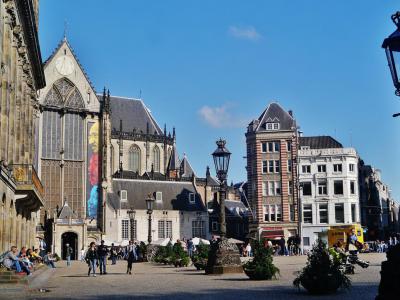
Dam Square, or the Dam, is a central town square in Amsterdam, known for its significant buildings and frequent events. Positioned in the historical heart of Amsterdam, it sits on the site of the original dam on the Amstel River. The square extends some 200 meters from west to east and 100 meters from north to south, connecting Damrak and Rokin streets that trace the Amstel's original course.
The square is also the termination point for other notable streets like New Dike, Calf Street, and Dam Street, with the main red-light district, De Wallen, just beyond its northeast corner. Prominent features on Dam Square include the neoclassical Royal Palace, the 15th-century Gothic New Church, the Madame Tussauds Wax Museum, and the National Monument which honors World War II victims, all of which collectively turn the Dam into a major tourist hub.
The name "Amsterdam" originates from a dam built on the Amstel River around 1270. This dam, integral to the city's development, included a discharge sluice and later locks to facilitate navigation and control water levels. By 1275, the settlement was significant enough to be recorded in connection with a road toll granted by the count of Holland, Floris V. Over time, the dam expanded to accommodate a town square, now known as Dam Square. Eventually, the area became a hub for commercial and governmental activities, featuring a large fish market and a town hall.
Significant changes occurred over the centuries, including the demolition of a weigh house in 1808 to clear the view for Louis Bonaparte’s Royal Palace and the infilling of Damrak Avenue in the 19th century. The square also hosted the Beurs van Zocher stock exchange until 1903. Today, the De Bijenkorf department store has been in its place since 1914. Dam Square has also been a site for national events – such as the National Memorial Day commemorations at the National Monument unveiled in 1956, and public demonstrations, – maintaining its status as a national and cultural gathering spot for the Dutch.
Tip:
For those in need of a restroom, free and well-maintained toilets are available at the De Bijenkorf shop on the 5th floor.
The square is also the termination point for other notable streets like New Dike, Calf Street, and Dam Street, with the main red-light district, De Wallen, just beyond its northeast corner. Prominent features on Dam Square include the neoclassical Royal Palace, the 15th-century Gothic New Church, the Madame Tussauds Wax Museum, and the National Monument which honors World War II victims, all of which collectively turn the Dam into a major tourist hub.
The name "Amsterdam" originates from a dam built on the Amstel River around 1270. This dam, integral to the city's development, included a discharge sluice and later locks to facilitate navigation and control water levels. By 1275, the settlement was significant enough to be recorded in connection with a road toll granted by the count of Holland, Floris V. Over time, the dam expanded to accommodate a town square, now known as Dam Square. Eventually, the area became a hub for commercial and governmental activities, featuring a large fish market and a town hall.
Significant changes occurred over the centuries, including the demolition of a weigh house in 1808 to clear the view for Louis Bonaparte’s Royal Palace and the infilling of Damrak Avenue in the 19th century. The square also hosted the Beurs van Zocher stock exchange until 1903. Today, the De Bijenkorf department store has been in its place since 1914. Dam Square has also been a site for national events – such as the National Memorial Day commemorations at the National Monument unveiled in 1956, and public demonstrations, – maintaining its status as a national and cultural gathering spot for the Dutch.
Tip:
For those in need of a restroom, free and well-maintained toilets are available at the De Bijenkorf shop on the 5th floor.
2) Anne Frank House (must see)
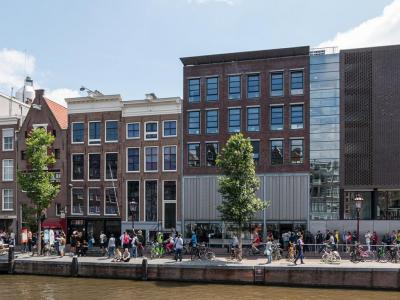
Anne Frank once found comfort in the gentle chimes of the Western Church’s bells-a reassuring hint of life outside her secret refuge-until those very bells were melted down for the German war effort. The church’s 85-meter-tall tower still stands as Amsterdam’s most dazzling spire. Rising gracefully above the city, it offers balconies with stunning panoramic views of the center and a carillon that strikes every quarter-hour, plus occasional full musical interludes. At its tip, you’ll find Emperor Maximilian’s crown, a proud emblem of Amsterdam and a glittering highlight of this Protestant landmark. Built by Hendrick de Keyser and completed in 1631, a decade after his passing, the church was a vital piece of the city’s early expansion.
Outwardly, the Western Church projects an air of restrained elegance; inside, however, it embraces Calvinist simplicity. Apart from the ample plain-glass windows that flood the space with natural light, the main attractions are the grand Baroque organ and the ornate wooden pulpit, topped by an oversized sounding board that once lent authority to lengthy sermons. While the Protestant elite shunned opulent decorations, they did indulge in a little exclusivity: boxed-in benches at the base of the nave’s stone columns, rented out by the well-to-do to signal their status.
Feeling adventurous? From April to October, you can climb the tower for a firsthand look at the bells and unbeatable views from a platform near the top. The stairs are steep enough to be interesting, but not so tough as to keep you from reaching one of the best vantage points in Amsterdam.
Outwardly, the Western Church projects an air of restrained elegance; inside, however, it embraces Calvinist simplicity. Apart from the ample plain-glass windows that flood the space with natural light, the main attractions are the grand Baroque organ and the ornate wooden pulpit, topped by an oversized sounding board that once lent authority to lengthy sermons. While the Protestant elite shunned opulent decorations, they did indulge in a little exclusivity: boxed-in benches at the base of the nave’s stone columns, rented out by the well-to-do to signal their status.
Feeling adventurous? From April to October, you can climb the tower for a firsthand look at the bells and unbeatable views from a platform near the top. The stairs are steep enough to be interesting, but not so tough as to keep you from reaching one of the best vantage points in Amsterdam.
3) Café 't Smalle
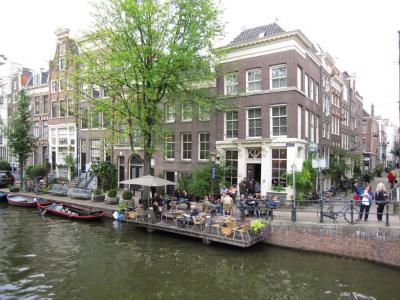
Egelantiersgracht, a serene canal adorned with charming 17th- and 18th-century residences, is where you'll discover Café ’t Smalle. Originally a liquor distillery, it has transformed into a relaxed neighborhood café that warmly welcomes both tourists and locals alike. The café boasts a canalside terrace, creating a perfect setting for leisurely summer afternoons and offering one of the most picturesque sunset vistas in Amsterdam.
This historic establishment, dating back to 1786, maintains a tranquil atmosphere, making it an ideal location for unhurried conversations over a beverage. During the winter months, don't miss the opportunity to savor their mulled wine, known as glühwein. You can enjoy your drink on wooden tables positioned beside elegant stained glass windows. Additionally, they serve uncomplicated meals like soups, salads, and sandwiches from 11am to 5pm. As the sun sets, you can indulge in bar snacks while sampling a variety of exquisite Dutch beers on tap and intriguing wines available by the glass.
Tip:
As you stroll along the canal, take note of three splendid bell gables, with one of them showcasing an intricately carved falcon (#61–#65).
This historic establishment, dating back to 1786, maintains a tranquil atmosphere, making it an ideal location for unhurried conversations over a beverage. During the winter months, don't miss the opportunity to savor their mulled wine, known as glühwein. You can enjoy your drink on wooden tables positioned beside elegant stained glass windows. Additionally, they serve uncomplicated meals like soups, salads, and sandwiches from 11am to 5pm. As the sun sets, you can indulge in bar snacks while sampling a variety of exquisite Dutch beers on tap and intriguing wines available by the glass.
Tip:
As you stroll along the canal, take note of three splendid bell gables, with one of them showcasing an intricately carved falcon (#61–#65).
4) Centraal Station (must see)
When in Amsterdam, a visit to the Central Station is practically inevitable. Nearly every traveler to the city encounters it at least once.
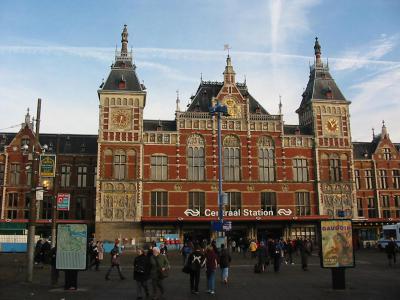
Amsterdam Centraal is the largest railway station in the city and has the second longest railway platform in the country, with a length of 695 meters, and a cast-iron platform roof spanning approximately 40 meters. A major international railway hub, it is used daily by almost 200,000 passengers, making it the Netherlands' most visited national heritage object.
Amsterdam Centraal was designed by Dutch architect Pierre Cuypers, featuring a blend of Gothic and Renaissance Revival elements.
The station was constructed on three artificial islands, between 1882 and 1889. Controversially located at the city's waterfront, it took a precise total of 8,687 wooden piles to anchor such a monumental structure on the marshy ground. The station spurred significant urban redevelopment and shifted Amsterdam’s focus from a waterfront to an inland city, influencing both transportation and city planning.
Its design celebrates Dutch economic and colonial prowess through various decorative elements. Initially, the entire project seemed like a huge blunder and was swiftly criticized by numerous experts. However, the architects persevered and ultimately vindicated themselves, defying skeptics.
Through the decades, Amsterdam Centraal has undergone multiple renovations and expansions to meet modern demands. Significant developments included the creation of a pedestrian tunnel in the 1950s, expansion of metro facilities in the late 1970s, and a major overhaul in the 1980s and 1990s that introduced new signaling systems, expanded tracks, and additional roofing. Recent upgrades focus on enhancing capacity and accessibility, including extended platforms for international trains, a new bus station, and upgraded retail spaces, marking it as a central hub in Amsterdam’s urban landscape.
Tip:
Take advantage of the several free ferry trips navigating the canals, departing every 5 to 15 minutes from this location; they offer a rewarding experience. You can even cruise back to the station via boat if you wish, rounding out your visit with a picturesque waterborne journey.
Amsterdam Centraal is the largest railway station in the city and has the second longest railway platform in the country, with a length of 695 meters, and a cast-iron platform roof spanning approximately 40 meters. A major international railway hub, it is used daily by almost 200,000 passengers, making it the Netherlands' most visited national heritage object.
Amsterdam Centraal was designed by Dutch architect Pierre Cuypers, featuring a blend of Gothic and Renaissance Revival elements.
The station was constructed on three artificial islands, between 1882 and 1889. Controversially located at the city's waterfront, it took a precise total of 8,687 wooden piles to anchor such a monumental structure on the marshy ground. The station spurred significant urban redevelopment and shifted Amsterdam’s focus from a waterfront to an inland city, influencing both transportation and city planning.
Its design celebrates Dutch economic and colonial prowess through various decorative elements. Initially, the entire project seemed like a huge blunder and was swiftly criticized by numerous experts. However, the architects persevered and ultimately vindicated themselves, defying skeptics.
Through the decades, Amsterdam Centraal has undergone multiple renovations and expansions to meet modern demands. Significant developments included the creation of a pedestrian tunnel in the 1950s, expansion of metro facilities in the late 1970s, and a major overhaul in the 1980s and 1990s that introduced new signaling systems, expanded tracks, and additional roofing. Recent upgrades focus on enhancing capacity and accessibility, including extended platforms for international trains, a new bus station, and upgraded retail spaces, marking it as a central hub in Amsterdam’s urban landscape.
Tip:
Take advantage of the several free ferry trips navigating the canals, departing every 5 to 15 minutes from this location; they offer a rewarding experience. You can even cruise back to the station via boat if you wish, rounding out your visit with a picturesque waterborne journey.
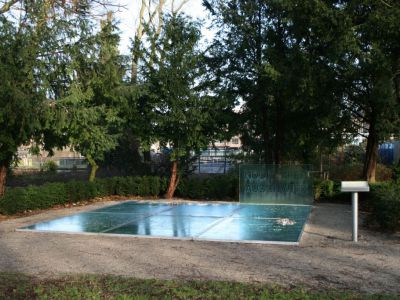
5) Auschwitzmonument (Mirror Memorial for Auschwitz)
In striking contrast to the serene surroundings of Wertheimpark, Jan Wolkers' 1977 Auschwitz memorial, titled "Never More," incorporates a shattered glass slab. These fragmented pieces reflect a distorted view of the sky, symbolizing the profound damage inflicted upon humanity by the Holocaust.
During the Second World War and the Nazi occupation, a significant number of Jews were systematically transported to concentration camps in Poland. Among these camps, Auschwitz gained a notorious reputation. Out of the approximately 140,000 Jews residing in the Netherlands before the war, a staggering 107,000 had been deported to concentration camps by 1944. Among them, over 95,000 were sent to Auschwitz, with only 500 surviving until the war's end.
The monument, commissioned by the Dutch Auschwitz Comité, was initially located in a municipal cemetery. Every year, on January 27th, Memorial Day is observed to commemorate the countless lives lost in Auschwitz during the Holocaust.
During the Second World War and the Nazi occupation, a significant number of Jews were systematically transported to concentration camps in Poland. Among these camps, Auschwitz gained a notorious reputation. Out of the approximately 140,000 Jews residing in the Netherlands before the war, a staggering 107,000 had been deported to concentration camps by 1944. Among them, over 95,000 were sent to Auschwitz, with only 500 surviving until the war's end.
The monument, commissioned by the Dutch Auschwitz Comité, was initially located in a municipal cemetery. Every year, on January 27th, Memorial Day is observed to commemorate the countless lives lost in Auschwitz during the Holocaust.
