Custom Walk in Funchal, Portugal by cbaldwin150_c9f66 created on 2025-05-04
Guide Location: Portugal » Funchal
Guide Type: Custom Walk
# of Sights: 8
Tour Duration: 4 Hour(s)
Travel Distance: 9.7 Km or 6 Miles
Share Key: WS2H3
Guide Type: Custom Walk
# of Sights: 8
Tour Duration: 4 Hour(s)
Travel Distance: 9.7 Km or 6 Miles
Share Key: WS2H3
How It Works
Please retrieve this walk in the GPSmyCity app. Once done, the app will guide you from one tour stop to the next as if you had a personal tour guide. If you created the walk on this website or come to the page via a link, please follow the instructions below to retrieve the walk in the app.
Retrieve This Walk in App
Step 1. Download the app "GPSmyCity: Walks in 1K+ Cities" on Apple App Store or Google Play Store.



Step 2. In the GPSmyCity app, download(or launch) the guide "Funchal Map and Walking Tours".
Step 3. Tap the menu button located at upper right corner of the "Walks" screen and select "Retrieve custom walk". Enter the share key: WS2H3
1) Cais da Cidade (City Pier)
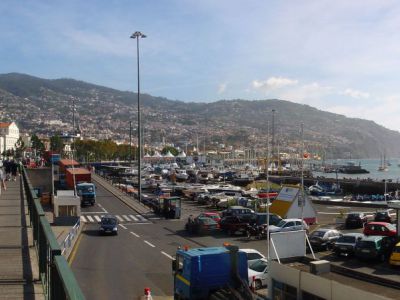
Located in the heart of Funchal, Cais da Cidade (City Pier) is a bustling harbor that was constructed in 1889 to replace an outdated pier from the second half of the 18th century. It serves as a popular destination for tourists and locals, offering stunning views of the Atlantic Ocean and a variety of activities and attractions.
Originally built to serve as a hub for trade and transportation, the harbor has undergone a transformation in recent years and is now a lively promenade filled with cafes, bars, restaurants, and shops. Visitors can take a leisurely stroll along the waterfront, basking in the warm sunshine and sea breeze while taking in the sights and sounds of the bustling harbor.
Cais da Cidade is a must-visit destination for anyone traveling to Funchal. Its stunning views, vibrant atmosphere, and diverse range of attractions provide a unique and unforgettable experience for all visitors.
Originally built to serve as a hub for trade and transportation, the harbor has undergone a transformation in recent years and is now a lively promenade filled with cafes, bars, restaurants, and shops. Visitors can take a leisurely stroll along the waterfront, basking in the warm sunshine and sea breeze while taking in the sights and sounds of the bustling harbor.
Cais da Cidade is a must-visit destination for anyone traveling to Funchal. Its stunning views, vibrant atmosphere, and diverse range of attractions provide a unique and unforgettable experience for all visitors.
2) Jardim Municipal (Municipal Garden)
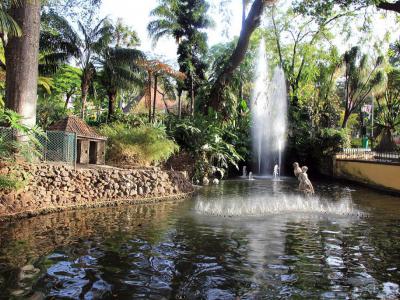
The Funchal Municipal Garden, also known as Dona Amélia Garden, is situated in a prime location, enhancing the beauty of this distinguished area with its lush and vibrant flora. This natural haven in the heart of the city attracts both locals and tourists, providing a serene escape.
Spanning across 8,300 square meters, the garden is located on the north side of Arriaga Avenue (Avenida Arriaga), opposite the Municipal Theatre, on the site where the Convent of São Francisco once stood. The Coat of Arms of the convent can still be admired on one of the lawns.
The garden boasts a vast collection of botanical species, including plants indigenous to Madeira and other regions of the world, making it a fascinating destination for nature enthusiasts. Visitors can explore a variety of captivating species during their visit.
Established in 1880, the Funchal Municipal Garden offers ample space for relaxation and entertainment. Its leisure area features shaded trees, a lake, and a stream inhabited by fish, ducks, and swans. The garden also houses an amphitheater, hosting numerous cultural events, and an esplanade.
Spanning across 8,300 square meters, the garden is located on the north side of Arriaga Avenue (Avenida Arriaga), opposite the Municipal Theatre, on the site where the Convent of São Francisco once stood. The Coat of Arms of the convent can still be admired on one of the lawns.
The garden boasts a vast collection of botanical species, including plants indigenous to Madeira and other regions of the world, making it a fascinating destination for nature enthusiasts. Visitors can explore a variety of captivating species during their visit.
Established in 1880, the Funchal Municipal Garden offers ample space for relaxation and entertainment. Its leisure area features shaded trees, a lake, and a stream inhabited by fish, ducks, and swans. The garden also houses an amphitheater, hosting numerous cultural events, and an esplanade.
3) Blandy's Wine Lodge (must see)
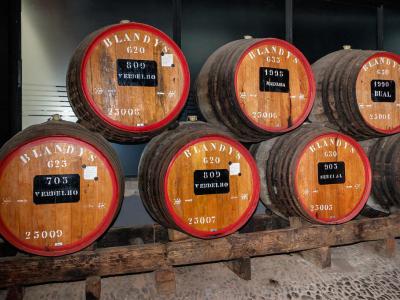
Blandy's Wine Lodge should not be missed when visiting Funchal. This old winery is situated right in the heart of the city. It offers a large spectrum of services, including wine tours, tasting rooms, winemaking techniques and of course a specialty shop where you can purchase the truly original Madeiran wine.
4) Sé Catedral do Funchal (Funchal Cathedral) (must see)
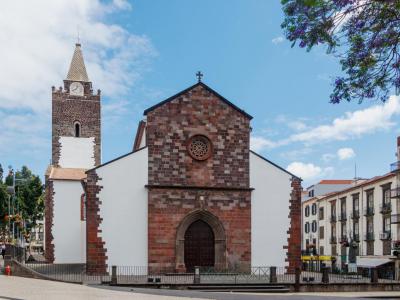
Dedicated in 1514, the Funchal Cathedral is one of the few buildings that have survived largely intact since the early colonization of Madeira. Its design follows the late Gothic style, with three naves supported by robust stone pillars. The structure was built using massive blocks of volcanic rock, giving the building its characteristic solidity. The facades are white, framed with dark stone corners, typical of Madeiran ecclesiastical architecture.
Inside, as you walk down the central nave toward the high altar, continue straight into the raised choir area. On both your right and left, you’ll see the 16th-century wooden choir stalls set against the walls, carved with prophets, disciples, and cherubs carrying fruit and wine. Another highlight is the large silver processional cross donated by King Manuel I kept in the Cathedral Treasury. To see it, turn to your right before leaving the church and follow the signs for the “Cathedral Treasury" or “Tesouro da Sé”, where the cross is displayed among the cathedral’s liturgical treasures.”
The cathedral itself was designed in the 1490s by architects Pêro Anes and Gil Enes. Construction progressed quickly: the main structure was completed by 1514, and the bell tower with its distinctive spire was finished by 1517. In its past, the cathedral had not fared well. The exterior volcanic tuff masonry suffered severe moisture damage, and the roof tiles leaked. Interior woodwork needed cleaning and repair. A comprehensive restoration began in 2000, and the cathedral was fully reopened to the public by 2014.
Outside, on the square directly in front of the cathedral’s main facade, stands a bronze statue of Pope John Paul II. As you exit the church, you’ll see it slightly to your left, raised on a stone pedestal overlooking the plaza. The statue commemorates the Pope’s visit to Madeira in 1991, when he celebrated Mass in Funchal and spoke about the island’s long Catholic heritage.
Inside, as you walk down the central nave toward the high altar, continue straight into the raised choir area. On both your right and left, you’ll see the 16th-century wooden choir stalls set against the walls, carved with prophets, disciples, and cherubs carrying fruit and wine. Another highlight is the large silver processional cross donated by King Manuel I kept in the Cathedral Treasury. To see it, turn to your right before leaving the church and follow the signs for the “Cathedral Treasury" or “Tesouro da Sé”, where the cross is displayed among the cathedral’s liturgical treasures.”
The cathedral itself was designed in the 1490s by architects Pêro Anes and Gil Enes. Construction progressed quickly: the main structure was completed by 1514, and the bell tower with its distinctive spire was finished by 1517. In its past, the cathedral had not fared well. The exterior volcanic tuff masonry suffered severe moisture damage, and the roof tiles leaked. Interior woodwork needed cleaning and repair. A comprehensive restoration began in 2000, and the cathedral was fully reopened to the public by 2014.
Outside, on the square directly in front of the cathedral’s main facade, stands a bronze statue of Pope John Paul II. As you exit the church, you’ll see it slightly to your left, raised on a stone pedestal overlooking the plaza. The statue commemorates the Pope’s visit to Madeira in 1991, when he celebrated Mass in Funchal and spoke about the island’s long Catholic heritage.
5) Museu Monte Palace (Monte Palace Museum)
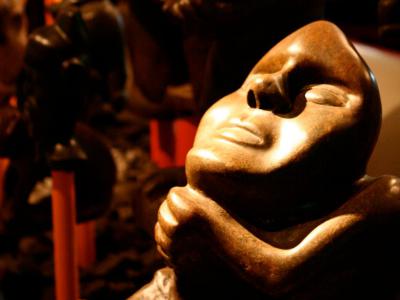
Nestled within the Monte Palace Madeira Gardens, the Monte Palace Museum is an absolute treasure trove of fascinating artifacts and exhibits that leave visitors feeling captivated and inspired. As soon as you step inside this museum, you will be surrounded by an incredible collection of artifacts that have been sourced from a variety of different geographic locations and cultures.
The Monte Palace Museum is divided into three galleries, each with its own unique charm and character. The 'African Passion' collection is one of the highlights of the museum, showcasing a mesmerizing collection of over 1000 contemporary Zimbabwean sculptures dating back to the years 1966 to 1969.
The 'Mother Nature Secrets' collection is equally impressive, featuring hundreds of minerals that have been sourced from some of the world's most fascinating locations, including Brazil, Portugal, South Africa, Zambia, Peru, Argentina, and North America. Visitors to this gallery can marvel at around 700 different samples of minerals, each one more striking and beautiful than the last.
Of course, the beauty of the Monte Palace Museum is not limited to its collections and exhibits alone. The museum is set amidst one of the most incredible tropical gardens in the archipelago, with over 100,000 different plant species spread out over an area of 70,000 m². Visitors can stroll through this lush garden, surrounded by exotic flora and fauna, and enjoy the sights, sounds, and scents of nature at its most stunning.
The Monte Palace Museum is divided into three galleries, each with its own unique charm and character. The 'African Passion' collection is one of the highlights of the museum, showcasing a mesmerizing collection of over 1000 contemporary Zimbabwean sculptures dating back to the years 1966 to 1969.
The 'Mother Nature Secrets' collection is equally impressive, featuring hundreds of minerals that have been sourced from some of the world's most fascinating locations, including Brazil, Portugal, South Africa, Zambia, Peru, Argentina, and North America. Visitors to this gallery can marvel at around 700 different samples of minerals, each one more striking and beautiful than the last.
Of course, the beauty of the Monte Palace Museum is not limited to its collections and exhibits alone. The museum is set amidst one of the most incredible tropical gardens in the archipelago, with over 100,000 different plant species spread out over an area of 70,000 m². Visitors can stroll through this lush garden, surrounded by exotic flora and fauna, and enjoy the sights, sounds, and scents of nature at its most stunning.
6) Tropical Gardens of Monte Palace (must see)
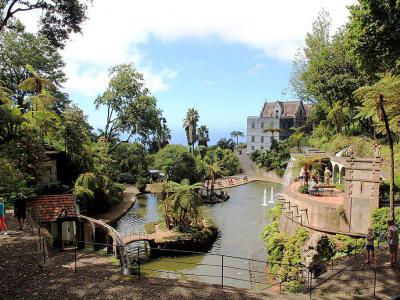
Monte Palace was once the 18th century private residence of the British Consul Charles Murray. Later it was a hotel and then, in the late 1980s, it was purchased by Jose Bernardo, a retired tobacco magnate. Jose had dreams and fantasies of a magical palace in a place of fountains, grottos, follies, sculptures and mysterious exotic plants.
There are two oriental gardens, one Japanese and one Chinese. The theme of these gardens is the role of Portugal in the Age of Discovery of these nations. Bernardo had visited both these countries. The gardens contain stone lanterns and Buddhas, Shinto gates, pagodas and tiles telling the story of the Portuguese impact in Japan.
Recent tiles, 40 in number, are by Argentinian artist Alberto Cedron. They depict Portuguese history from the early monarchies to the 1974 Revolution. Garden flora include South African cycads and native plants of Madeira: Laurel, dragon trees, mahogany, and Pride of Madeira. There are carps in the ponds, black and white swans, and peacocks.
The museum is on three floors. Two floors are devoted to mostly African sculptures. The third floor holds minerals and precious stones from all over the world. The gardens are open every day from 9:30 am to 6 pm. The Monte Palace can be reached via the exciting Teleferico cable car, which stops in front of the entrance.
There are two oriental gardens, one Japanese and one Chinese. The theme of these gardens is the role of Portugal in the Age of Discovery of these nations. Bernardo had visited both these countries. The gardens contain stone lanterns and Buddhas, Shinto gates, pagodas and tiles telling the story of the Portuguese impact in Japan.
Recent tiles, 40 in number, are by Argentinian artist Alberto Cedron. They depict Portuguese history from the early monarchies to the 1974 Revolution. Garden flora include South African cycads and native plants of Madeira: Laurel, dragon trees, mahogany, and Pride of Madeira. There are carps in the ponds, black and white swans, and peacocks.
The museum is on three floors. Two floors are devoted to mostly African sculptures. The third floor holds minerals and precious stones from all over the world. The gardens are open every day from 9:30 am to 6 pm. The Monte Palace can be reached via the exciting Teleferico cable car, which stops in front of the entrance.
7) Mercado dos Lavradores (The Workers Market) (must see)
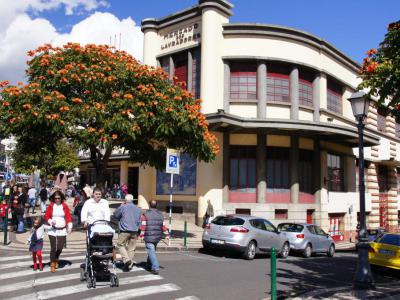
At the far end of Fernão Ornelas Street stands the Workers’ Market of Funchal, created in the late 1930s as part of a citywide modernization plan aimed at organizing food commerce and improving sanitary conditions. Designed by architect Edmundo Tavares and opened in 1940, the building reflects the Estado Novo political regime’s preference for strong geometric forms and practical public architecture. Its facade is lined with blue-and-white azulejo panels, illustrating scenes of Madeiran life and celebrating the island’s agricultural and fishing traditions.
As soon as you enter through the main Art Deco doorway, the flower hall is immediately on your left. This is where you’ll see rows of flower vendors, along with stalls selling seeds and bulbs—some in operation for more than fifty years. To continue into the market, walk straight ahead from the entrance and you will step into the central patio, where fruit and vegetable stands fill the open space. Small cafes, wine shops, and souvenir stalls line the perimeter on your right-hand side.
From the central patio, head straight across to the far end of the square. The Fish Hall is through the large doorway directly opposite the entrance. As you walk in, fishmongers line both the left and right sides, with long marble counters displaying black scabbardfish, tuna, octopus, and other local catches. The walls around you are decorated with tile illustrations of regional sea life.
To reach the upper level, turn right as you exit the Fish Hall and you’ll find the staircase leading to the second floor. Once upstairs, vendors selling exotic fruits, dried berries, spices, teas, and cork goods stretch out to your left and right along the balcony walkway. Keep walking to the far corner and you’ll reach the terrace, where two large cafes overlook the market. From here, you can look down into the central patio and even catch views of the surrounding rooftops.
The market neighborhood is always busy, but nothing compares to the night before Christmas Eve. This is when Market Night transforms the Workers’ Market into one of Funchal’s biggest street celebrations. Stalls spill into the streets, live music fills the air, people sing carols, and food and drink flow freely. It is one of Madeira’s most beloved traditions and a festive way to experience the island’s community spirit.
As soon as you enter through the main Art Deco doorway, the flower hall is immediately on your left. This is where you’ll see rows of flower vendors, along with stalls selling seeds and bulbs—some in operation for more than fifty years. To continue into the market, walk straight ahead from the entrance and you will step into the central patio, where fruit and vegetable stands fill the open space. Small cafes, wine shops, and souvenir stalls line the perimeter on your right-hand side.
From the central patio, head straight across to the far end of the square. The Fish Hall is through the large doorway directly opposite the entrance. As you walk in, fishmongers line both the left and right sides, with long marble counters displaying black scabbardfish, tuna, octopus, and other local catches. The walls around you are decorated with tile illustrations of regional sea life.
To reach the upper level, turn right as you exit the Fish Hall and you’ll find the staircase leading to the second floor. Once upstairs, vendors selling exotic fruits, dried berries, spices, teas, and cork goods stretch out to your left and right along the balcony walkway. Keep walking to the far corner and you’ll reach the terrace, where two large cafes overlook the market. From here, you can look down into the central patio and even catch views of the surrounding rooftops.
The market neighborhood is always busy, but nothing compares to the night before Christmas Eve. This is when Market Night transforms the Workers’ Market into one of Funchal’s biggest street celebrations. Stalls spill into the streets, live music fills the air, people sing carols, and food and drink flow freely. It is one of Madeira’s most beloved traditions and a festive way to experience the island’s community spirit.
8) Teleférico Funchal-Monte (Funchal-Monte Cable Car) (must see)
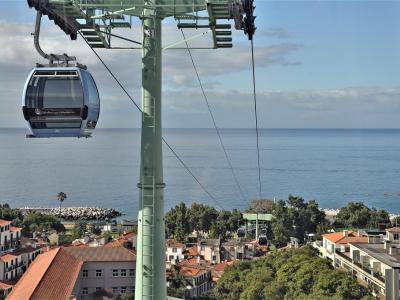
The Funchal–Monte Cable Car offers one of Madeira’s most memorable experiences, gliding from the edge of Funchal’s old town up to the hillside village of Monte. Inaugurated in 2000, this modern gondola lift travels along a 3,200-meter cable line with a vertical rise of around 560 meters. The ride takes about fifteen minutes each way, carrying up to six passengers per cabin. The views unfold dramatically—the harbor, the city’s red rooftops, and the blue Atlantic opening out beneath you.
The cabins are comfortable and fitted with large, clear windows that offer panoramas over gardens, ravines, homes, and terraced hillsides. The ascent feels smooth rather than frightening, making it appealing even to those unsure about heights. Midway along the route, the landscape becomes greener and more rural until the line reaches its upper station, positioned between Babosas Village and the Mount Garden.
Stepping out at the top, visitors find themselves in Monte, a quieter, cooler village first established in 1565 as the parish of Our Lady of the Mount. Its leafy gardens, narrow lanes, small cafes, and scenic viewpoints offer a gentler pace compared to downtown Funchal. From here, travelers can explore nearby gardens, enjoy refreshments in Babosas Village or continue their visit to the Church of Our Lady of the Monte.
When it is time to return, there are two options. One is simply to board the cable car for a glide back down to the city. The other is the island’s famous traditional wicker-basket toboggan ride: a hand-guided descent on wooden runners, steered by two drivers who expertly guide passengers down the winding streets toward Funchal. Safe, lively, and entirely unique to Madeira, it provides a playful contrast to the calm, scenic ascent by cable car.
The cabins are comfortable and fitted with large, clear windows that offer panoramas over gardens, ravines, homes, and terraced hillsides. The ascent feels smooth rather than frightening, making it appealing even to those unsure about heights. Midway along the route, the landscape becomes greener and more rural until the line reaches its upper station, positioned between Babosas Village and the Mount Garden.
Stepping out at the top, visitors find themselves in Monte, a quieter, cooler village first established in 1565 as the parish of Our Lady of the Mount. Its leafy gardens, narrow lanes, small cafes, and scenic viewpoints offer a gentler pace compared to downtown Funchal. From here, travelers can explore nearby gardens, enjoy refreshments in Babosas Village or continue their visit to the Church of Our Lady of the Monte.
When it is time to return, there are two options. One is simply to board the cable car for a glide back down to the city. The other is the island’s famous traditional wicker-basket toboggan ride: a hand-guided descent on wooden runners, steered by two drivers who expertly guide passengers down the winding streets toward Funchal. Safe, lively, and entirely unique to Madeira, it provides a playful contrast to the calm, scenic ascent by cable car.
