Custom Walk in Kiev, Ukraine by emurphy_74f69 created on 2025-05-09
Guide Location: Ukraine » Kiev
Guide Type: Custom Walk
# of Sights: 5
Tour Duration: 3 Hour(s)
Travel Distance: 8 Km or 5 Miles
Share Key: 4HULZ
Guide Type: Custom Walk
# of Sights: 5
Tour Duration: 3 Hour(s)
Travel Distance: 8 Km or 5 Miles
Share Key: 4HULZ
How It Works
Please retrieve this walk in the GPSmyCity app. Once done, the app will guide you from one tour stop to the next as if you had a personal tour guide. If you created the walk on this website or come to the page via a link, please follow the instructions below to retrieve the walk in the app.
Retrieve This Walk in App
Step 1. Download the app "GPSmyCity: Walks in 1K+ Cities" on Apple App Store or Google Play Store.



Step 2. In the GPSmyCity app, download(or launch) the guide "Kiev Map and Walking Tours".
Step 3. Tap the menu button located at upper right corner of the "Walks" screen and select "Retrieve custom walk". Enter the share key: 4HULZ
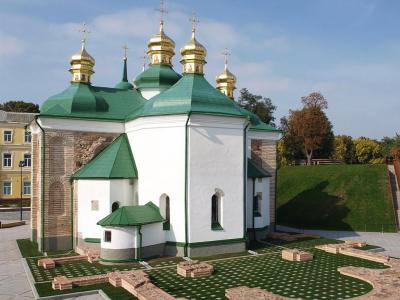
1) Church of the Saviour at Berestove
The Church of the Saviour at Berestove is one of the oldest surviving churches in the region, located just outside the walls of the Kyiv-Pechersk Lavra complex. Its origins date back to the early 12th century, during the reign of Prince Volodymyr Monomakh.
The original structure was part of a princely estate and served as a burial place for members of the ruling dynasty. Over the centuries, the church has undergone numerous reconstructions, reflecting the architectural and historical changes that have shaped the city.
The current appearance of the church combines elements from several periods. After suffering damage during invasions and neglect, it was rebuilt in the 17th century under the patronage of the Lavra monks in a style that merged early Rus’ architecture with Ukrainian Baroque influences.
Inside, visitors can see fragments of ancient frescoes from the 12th century, uncovered during restoration work, alongside later decorative additions.
In 1640, the Church of the Saviour at Berestove became part of the Kyiv-Pechersk Lavra, contributing to the complex’s religious and historical importance. Its modest size contrasts with the grandeur of other Lavra buildings, yet it holds significant value for understanding the early development of local ecclesiastical architecture.
The original structure was part of a princely estate and served as a burial place for members of the ruling dynasty. Over the centuries, the church has undergone numerous reconstructions, reflecting the architectural and historical changes that have shaped the city.
The current appearance of the church combines elements from several periods. After suffering damage during invasions and neglect, it was rebuilt in the 17th century under the patronage of the Lavra monks in a style that merged early Rus’ architecture with Ukrainian Baroque influences.
Inside, visitors can see fragments of ancient frescoes from the 12th century, uncovered during restoration work, alongside later decorative additions.
In 1640, the Church of the Saviour at Berestove became part of the Kyiv-Pechersk Lavra, contributing to the complex’s religious and historical importance. Its modest size contrasts with the grandeur of other Lavra buildings, yet it holds significant value for understanding the early development of local ecclesiastical architecture.
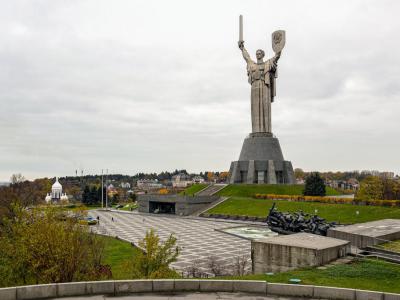
2) Mother Homeland Monument (must see)
The Mother Ukraine Monument is one of the most recognizable and awe-inspiring landmarks in the country. Situated within the expansive grounds of the National Museum of the History of Ukraine in the Second World War, this colossal stainless-steel statue rises an impressive 102 meters (or 335 feet) into the sky, symbolizing the strength, resilience, and enduring spirit of the Ukrainian people.
The monument was unveiled in 1981 during the Soviet era as a tribute to the millions who perished and the countless others who fought bravely during World War II. It was originally designed by the famed Soviet sculptor Yevgeny Vuchetich, known for his monumental works celebrating heroism, and later completed by Ukrainian sculptor Vasyl Borodai after Vuchetich’s death. Constructed from more than 450 tons of stainless steel, it was engineered to withstand powerful winds and earthquakes.
The statue portrays a formidable female warrior holding a sword in her right hand and a shield in her left—an image meant to embody protection and strength. For decades, the shield bore the Soviet hammer and sickle.
In 2023, the emblem was replaced with Ukraine’s trident, the national coat of arms, symbolizing a powerful shift toward independence and national identity. In August of that same year, following this transformation, the monument was officially renamed the Mother Ukraine Monument, or "Ukraina-Maty" in Ukrainian.
Surrounding the statue is a vast memorial complex filled with wartime relics, military equipment, and memorial halls honoring the fallen. Inside, visitors can take an elevator to observation decks within the statue, where sweeping views of the Dnipro River and Kyiv’s skyline stretch into the distance.
The monument was unveiled in 1981 during the Soviet era as a tribute to the millions who perished and the countless others who fought bravely during World War II. It was originally designed by the famed Soviet sculptor Yevgeny Vuchetich, known for his monumental works celebrating heroism, and later completed by Ukrainian sculptor Vasyl Borodai after Vuchetich’s death. Constructed from more than 450 tons of stainless steel, it was engineered to withstand powerful winds and earthquakes.
The statue portrays a formidable female warrior holding a sword in her right hand and a shield in her left—an image meant to embody protection and strength. For decades, the shield bore the Soviet hammer and sickle.
In 2023, the emblem was replaced with Ukraine’s trident, the national coat of arms, symbolizing a powerful shift toward independence and national identity. In August of that same year, following this transformation, the monument was officially renamed the Mother Ukraine Monument, or "Ukraina-Maty" in Ukrainian.
Surrounding the statue is a vast memorial complex filled with wartime relics, military equipment, and memorial halls honoring the fallen. Inside, visitors can take an elevator to observation decks within the statue, where sweeping views of the Dnipro River and Kyiv’s skyline stretch into the distance.
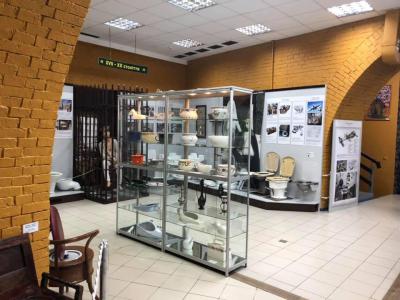
3) Museum of the Toilet History
The Museum of the Toilet History is a quirky and unexpectedly fascinating attraction that offers a humorous yet informative look at the evolution of human hygiene.
This museum is the first of its kind in Eastern Europe and holds a Guinness World Record for the largest collection of toilet-related items.
Inside, visitors will find a diverse collection of artifacts, including ancient chamber pots, royal thrones, medieval waste systems, and even humorous modern-day toilet designs.
The exhibits trace the development of sanitation and hygiene practices from ancient civilizations like Egypt, Rome, and China to the innovations of the modern age. Interactive displays and well-crafted replicas allow guests to engage with history in an unexpected and lighthearted way.
Despite its playful subject matter, the museum also highlights the serious importance of hygiene and sanitation in the development of civilizations, public health, and technology. The exhibits are well-researched and presented with a blend of wit and academic rigor, making it suitable for both adults and children.
This museum is the first of its kind in Eastern Europe and holds a Guinness World Record for the largest collection of toilet-related items.
Inside, visitors will find a diverse collection of artifacts, including ancient chamber pots, royal thrones, medieval waste systems, and even humorous modern-day toilet designs.
The exhibits trace the development of sanitation and hygiene practices from ancient civilizations like Egypt, Rome, and China to the innovations of the modern age. Interactive displays and well-crafted replicas allow guests to engage with history in an unexpected and lighthearted way.
Despite its playful subject matter, the museum also highlights the serious importance of hygiene and sanitation in the development of civilizations, public health, and technology. The exhibits are well-researched and presented with a blend of wit and academic rigor, making it suitable for both adults and children.
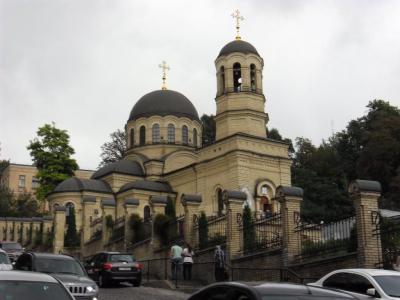
4) Cathedral of Prelate Metropolitan Michael of Kiev
Saint Michael’s Church, located on the grounds of the historic Alexander Hospital, is a restored Orthodox church with deep spiritual and historical significance.
Constructed in 1895 as a chapel for the Alexander Hospital—an institution founded in 1874 through public donations to assist the city’s poor—the church was made possible thanks to the support of philanthropist Mikhail Degterev, who also served as its warden and was later buried in its crypt.
The church’s main altar was dedicated to Metropolitan Michael of Kyiv, the first Orthodox metropolitan in Ukraine, while two side chapels honored Saints Zechariah and Elizabeth.
Following the 1917 Revolution, the church was closed, and the hospital was nationalized and renamed after the Great October Socialist Revolution. In 1930, the church was completely demolished, with only its foundations and crypt surviving the Soviet era.
For many decades, the site remained in ruins, until restoration work began in 2000. The fully rebuilt church was consecrated in 2002, and from 2012 to 2017, it also served as a metochion of the Athonite Panteleimon Monastery.
Constructed in 1895 as a chapel for the Alexander Hospital—an institution founded in 1874 through public donations to assist the city’s poor—the church was made possible thanks to the support of philanthropist Mikhail Degterev, who also served as its warden and was later buried in its crypt.
The church’s main altar was dedicated to Metropolitan Michael of Kyiv, the first Orthodox metropolitan in Ukraine, while two side chapels honored Saints Zechariah and Elizabeth.
Following the 1917 Revolution, the church was closed, and the hospital was nationalized and renamed after the Great October Socialist Revolution. In 1930, the church was completely demolished, with only its foundations and crypt surviving the Soviet era.
For many decades, the site remained in ruins, until restoration work began in 2000. The fully rebuilt church was consecrated in 2002, and from 2012 to 2017, it also served as a metochion of the Athonite Panteleimon Monastery.
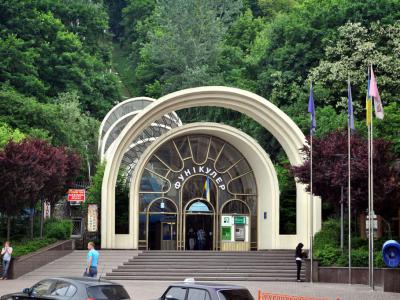
5) Funicular
The Funicular is a quick and scenic ride that connects the historic Podil district with the Upper Town. This charming cable railway travels 238 meters up a steep hill in just about three minutes, making it one of the easiest ways to navigate the city’s hilly terrain.
With two tram cars running frequently, the funicular provides both locals and tourists with stunning views of the city and the Dnieper River, all for the price of a regular public transport ticket.
First opened in 1905, the funicular was built to help overcome the capital's steep hills, which were difficult for traditional trams to climb. It quickly became an important part of the city’s transport network and has since become a beloved historic landmark.
Despite undergoing several restorations, including major renovations in the 1980s and 2000s, the Funicular has preserved much of its original charm and continues to serve thousands of passengers daily, making it one of city's most enduring urban icons.
With two tram cars running frequently, the funicular provides both locals and tourists with stunning views of the city and the Dnieper River, all for the price of a regular public transport ticket.
First opened in 1905, the funicular was built to help overcome the capital's steep hills, which were difficult for traditional trams to climb. It quickly became an important part of the city’s transport network and has since become a beloved historic landmark.
Despite undergoing several restorations, including major renovations in the 1980s and 2000s, the Funicular has preserved much of its original charm and continues to serve thousands of passengers daily, making it one of city's most enduring urban icons.
