Custom Walk in Los Angeles, California by lesley8968 created on 2025-05-13
Guide Location: USA » Los Angeles
Guide Type: Custom Walk
# of Sights: 5
Tour Duration: 9 Hour(s)
Travel Distance: 26.7 Km or 16.6 Miles
Share Key: 6QSLC
Guide Type: Custom Walk
# of Sights: 5
Tour Duration: 9 Hour(s)
Travel Distance: 26.7 Km or 16.6 Miles
Share Key: 6QSLC
How It Works
Please retrieve this walk in the GPSmyCity app. Once done, the app will guide you from one tour stop to the next as if you had a personal tour guide. If you created the walk on this website or come to the page via a link, please follow the instructions below to retrieve the walk in the app.
Retrieve This Walk in App
Step 1. Download the app "GPSmyCity: Walks in 1K+ Cities" on Apple App Store or Google Play Store.



Step 2. In the GPSmyCity app, download(or launch) the guide "Los Angeles Map and Walking Tours".
Step 3. Tap the menu button located at upper right corner of the "Walks" screen and select "Retrieve custom walk". Enter the share key: 6QSLC
1) Paramount Pictures
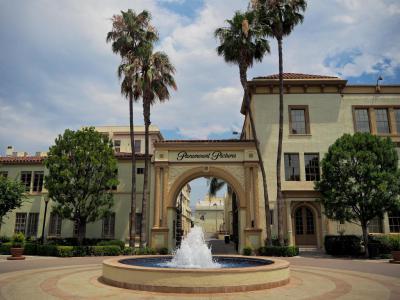
Paramount Pictures Corporation stands as a prominent American company in the realm of film and television production and distribution. It serves as the flagship division of Paramount Global. Remarkably, it ranks as the sixth-oldest film studio worldwide, the second-oldest within the United States, and holds the unique distinction of being the sole member of the "Big Five" film studios situated within the city limits of Los Angeles.
In 1916, the notable film producer Adolph Zukor entered into contracts with 24 actors and actresses, bestowing each with the honor of having their names grace the studio's logo alongside a star. However, in 1967, the number of stars on the logo was trimmed down to 22, and their underlying symbolism was abandoned. A significant milestone occurred in 2014 when Paramount Pictures became the initial major Hollywood studio to exclusively distribute its films in digital format.
Paramount Pictures enjoys the distinction of being one of the largest and most prosperous studios globally. The studio boasts a roster of illustrious stars, including luminaries such as Marlene Dietrich, Clara Bow, Gary Cooper, and a multitude of other renowned figures. Paramount has been responsible for the creation of numerous top-grossing films throughout history, including blockbuster hits like Titanic, Forrest Gump, Transformers: Revenge of the Fallen, Iron Man, Star Trek, Raiders of the Lost Ark, and many others.
For those interested in gaining insights into the inner workings of the film industry, Paramount Pictures offers guided tours. These tours provide visitors with the opportunity to observe the behind-the-scenes processes of movie production. Paramount studio tours are both educational and entertaining, making them a standout attraction for visitors and often a highlight of trips to Los Angeles.
Why You Should Visit:
To see behind the scenes of how film and TV shows are made. Tours are conducted in small groups of about 20-25 people. You go through the back lot and some of the sound stages. Good explanation by knowledgeable tour guides. Interesting interactive museum to end the tour.
In 1916, the notable film producer Adolph Zukor entered into contracts with 24 actors and actresses, bestowing each with the honor of having their names grace the studio's logo alongside a star. However, in 1967, the number of stars on the logo was trimmed down to 22, and their underlying symbolism was abandoned. A significant milestone occurred in 2014 when Paramount Pictures became the initial major Hollywood studio to exclusively distribute its films in digital format.
Paramount Pictures enjoys the distinction of being one of the largest and most prosperous studios globally. The studio boasts a roster of illustrious stars, including luminaries such as Marlene Dietrich, Clara Bow, Gary Cooper, and a multitude of other renowned figures. Paramount has been responsible for the creation of numerous top-grossing films throughout history, including blockbuster hits like Titanic, Forrest Gump, Transformers: Revenge of the Fallen, Iron Man, Star Trek, Raiders of the Lost Ark, and many others.
For those interested in gaining insights into the inner workings of the film industry, Paramount Pictures offers guided tours. These tours provide visitors with the opportunity to observe the behind-the-scenes processes of movie production. Paramount studio tours are both educational and entertaining, making them a standout attraction for visitors and often a highlight of trips to Los Angeles.
Why You Should Visit:
To see behind the scenes of how film and TV shows are made. Tours are conducted in small groups of about 20-25 people. You go through the back lot and some of the sound stages. Good explanation by knowledgeable tour guides. Interesting interactive museum to end the tour.
2) Charlie Chaplin Historic Studios
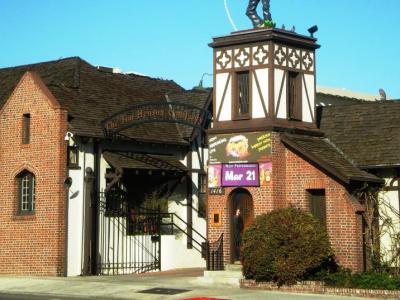
When you pass the Jim Henson Studios (former Charlie Chaplin Studios) on La Brea Avenue, you would be excused if you thought that you were on the film-set of an English village.
Charlie Chaplin bought the vast tract of land that had once been an orange grove, in 1917, and built there his studios. The screening rooms, offices and film laboratory were housed in charming English-style cottages. The studios themselves included the back lot with its outdoor sets, twin open-air stages, carpenter’s shed, garages, film vault and dressing rooms.
On the north end of the land Charlie Chaplin built a lovely house which he intended for his own use, although he never lived there in the end and rented it out to various friends. The house had adjoining stables, a swimming pool and tennis courts. He eventually sold the house and surrounding land, and the buildings were demolished in 1942 to give way to a new shopping centre.
Before selling the studios in 1953, Charlie Chaplin turned some of his best films here, including “The Kid”, “The Gold Rush”, “The Great Dictator” and “Modern Times”. Sadly, America was soon to be deprived of its beloved “little Tramp with a Heart of Gold”: during the dark years of the McCarthy Era many Hollywood stars suffered greatly for their mild communist leanings. Charlie Chaplin was considered to be a “Pinko” for his left wing views and when he went to England in 1952 for a short holiday, Hoover, the director of the FBI, had his right to re-enter the United States revoked, and Chaplin settled in Switzerland.
He sold the studios in 1953 to a television company. In 1959, Red Skelton bought the studios and sold them to CBS in 1962. Since 2000 the studios have been the home of the Jim Henson Company and his delightful Muppets.
Charlie Chaplin returned once to the United States. In 1972, he came back with his wife to receive an Honorary Oscar, but he refused to visit his old studios, saying the memory was “too painful”.
Charlie Chaplin bought the vast tract of land that had once been an orange grove, in 1917, and built there his studios. The screening rooms, offices and film laboratory were housed in charming English-style cottages. The studios themselves included the back lot with its outdoor sets, twin open-air stages, carpenter’s shed, garages, film vault and dressing rooms.
On the north end of the land Charlie Chaplin built a lovely house which he intended for his own use, although he never lived there in the end and rented it out to various friends. The house had adjoining stables, a swimming pool and tennis courts. He eventually sold the house and surrounding land, and the buildings were demolished in 1942 to give way to a new shopping centre.
Before selling the studios in 1953, Charlie Chaplin turned some of his best films here, including “The Kid”, “The Gold Rush”, “The Great Dictator” and “Modern Times”. Sadly, America was soon to be deprived of its beloved “little Tramp with a Heart of Gold”: during the dark years of the McCarthy Era many Hollywood stars suffered greatly for their mild communist leanings. Charlie Chaplin was considered to be a “Pinko” for his left wing views and when he went to England in 1952 for a short holiday, Hoover, the director of the FBI, had his right to re-enter the United States revoked, and Chaplin settled in Switzerland.
He sold the studios in 1953 to a television company. In 1959, Red Skelton bought the studios and sold them to CBS in 1962. Since 2000 the studios have been the home of the Jim Henson Company and his delightful Muppets.
Charlie Chaplin returned once to the United States. In 1972, he came back with his wife to receive an Honorary Oscar, but he refused to visit his old studios, saying the memory was “too painful”.
3) Beverly Gardens Park
Beverly Gardens Park, spanning a length of 22 city blocks, runs alongside Santa Monica Boulevard in Beverly Hills, covering a distance of 1.9 miles (3.1 kilometers). This beautiful park was designed by the renowned landscape architect, Ralph D. Cornell.
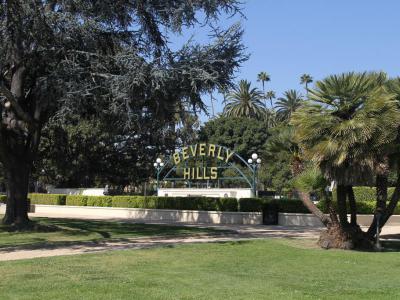
The park serves as a lush green buffer zone between the residential neighborhoods to the north and the commercial districts of the city. It offers a two-mile jogging trail, features numerous centuries-old cypress and ficus trees, boasts various gardens and sculptures, and is home to the iconic Beverly Hills Sign – a recreation of the original historic sign that once graced the city's center.
Within the park, you'll find a permanent collection of public art, including the Electric Fountain situated at the far western end where Santa Monica and Wilshire Boulevards intersect. Close to Rodeo Drive, there's a sculpture titled "Hymn to Life," crafted by Yayoi Kusama, featuring psychedelic tulips. This piece was sculpted and produced by Mat McKim and Nick Petronzio in the art department at Ironwood.
In addition to these contemporary artworks, the park showcases public art by notable sculptors such as Barry Flanagan, Tony Smith, and Magdalena Abramovicz, strategically placed around the grounds near Beverly Hills City Hall. Furthermore, historical fountains, arbors, and specialty gardens dedicated to roses, cacti, succulents, and palms adorn the north side of Santa Monica Boulevard, extending from Doheny Drive to Whittier Drive, visible to both motorists and pedestrians.
The park serves as a lush green buffer zone between the residential neighborhoods to the north and the commercial districts of the city. It offers a two-mile jogging trail, features numerous centuries-old cypress and ficus trees, boasts various gardens and sculptures, and is home to the iconic Beverly Hills Sign – a recreation of the original historic sign that once graced the city's center.
Within the park, you'll find a permanent collection of public art, including the Electric Fountain situated at the far western end where Santa Monica and Wilshire Boulevards intersect. Close to Rodeo Drive, there's a sculpture titled "Hymn to Life," crafted by Yayoi Kusama, featuring psychedelic tulips. This piece was sculpted and produced by Mat McKim and Nick Petronzio in the art department at Ironwood.
In addition to these contemporary artworks, the park showcases public art by notable sculptors such as Barry Flanagan, Tony Smith, and Magdalena Abramovicz, strategically placed around the grounds near Beverly Hills City Hall. Furthermore, historical fountains, arbors, and specialty gardens dedicated to roses, cacti, succulents, and palms adorn the north side of Santa Monica Boulevard, extending from Doheny Drive to Whittier Drive, visible to both motorists and pedestrians.
4) Spadena House (The Witch’s House)
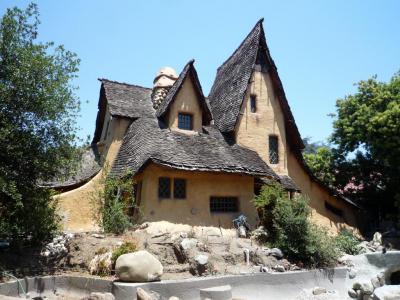
The Spadena House, also referred to as The Witch's House, stands as a distinctive storybook-style residence located in Beverly Hills. Its notable feature is its deliberately whimsical and aged design, making it a prominent landmark featured on local tours. Originally, the Spadena family, who were the initial occupants of this 3,500-square-foot (330 square meters) home, gave it their name.
The house's design can be attributed to Hollywood art director Harry Oliver, who had a prolific career spanning over 30 films from 1919 to 1938, serving as an art director and set decorator. He later played a significant role in the development of Storybook architecture. Initially constructed in 1921, the house served as offices and dressing rooms for Irvin Willat's film studio in Culver City. It was later relocated to its present site in 1926. This converted private residence boasts a distinctive look, featuring a sharply pitched, asymmetric roof, small windows, and stucco with a deliberately distressed paint finish, all surrounded by a meticulously overgrown English-style garden and a pond resembling a moat.
Architect Charles Willard Moore once described this building as the quintessential Hansel and Gretel house, evoking a fairytale charm. Additionally, the house has made appearances in several films, including the 1995 movie "Clueless."
The house's design can be attributed to Hollywood art director Harry Oliver, who had a prolific career spanning over 30 films from 1919 to 1938, serving as an art director and set decorator. He later played a significant role in the development of Storybook architecture. Initially constructed in 1921, the house served as offices and dressing rooms for Irvin Willat's film studio in Culver City. It was later relocated to its present site in 1926. This converted private residence boasts a distinctive look, featuring a sharply pitched, asymmetric roof, small windows, and stucco with a deliberately distressed paint finish, all surrounded by a meticulously overgrown English-style garden and a pond resembling a moat.
Architect Charles Willard Moore once described this building as the quintessential Hansel and Gretel house, evoking a fairytale charm. Additionally, the house has made appearances in several films, including the 1995 movie "Clueless."
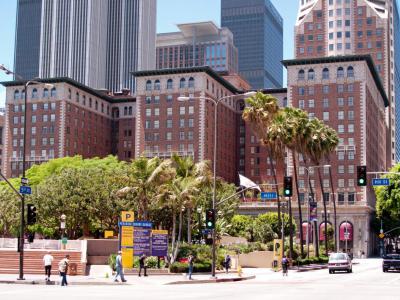
5) Millennium Biltmore Hotel
The Millennium Biltmore Hotel stands as a luxurious establishment situated across from Pershing Square in Downtown Los Angeles. Its historical significance is evident as it was designated a Los Angeles Historic-Cultural Monument in 1969 by the city.
Opening its doors on October 1, 1923, the Los Angeles Biltmore was a project brought to life by the nationwide Bowman-Biltmore Hotels chain. Notably, during that era, it held the distinction of being the largest hotel in the United States west of Chicago.
The hotel's exterior was skillfully crafted by the architectural firm Schultze & Weaver, blending elements of Spanish-Italian Renaissance Revival, Mediterranean Revival, and Beaux Arts styles. This design was a deliberate nod to the Castilian heritage of Los Angeles, prominently featuring the "Biltmore Angel" as a symbol of both the city and the hotel. The building itself boasts a substantial steel and concrete framework, occupying half a city block and soaring to over 11 stories.
Inside the Biltmore Hotel, guests are greeted with an opulent ambiance. The decor includes frescos and murals, intricately carved marble fountains and columns, grand wood-beamed ceilings, travertine and oak paneled walls, elegant lead crystal chandeliers, ornate cast bronze stairwells and doorways, exquisite artisan marquetry and millwork, and lavishly embroidered imported tapestries and draperies. Of particular note are the frescoed mural ceilings in the main Galleria and the Crystal Ballroom, which were meticulously hand-painted in 1922 by the renowned Italian artist John B. Smeraldi, known for his work in prestigious locations such as the Vatican and the White House.
Opening its doors on October 1, 1923, the Los Angeles Biltmore was a project brought to life by the nationwide Bowman-Biltmore Hotels chain. Notably, during that era, it held the distinction of being the largest hotel in the United States west of Chicago.
The hotel's exterior was skillfully crafted by the architectural firm Schultze & Weaver, blending elements of Spanish-Italian Renaissance Revival, Mediterranean Revival, and Beaux Arts styles. This design was a deliberate nod to the Castilian heritage of Los Angeles, prominently featuring the "Biltmore Angel" as a symbol of both the city and the hotel. The building itself boasts a substantial steel and concrete framework, occupying half a city block and soaring to over 11 stories.
Inside the Biltmore Hotel, guests are greeted with an opulent ambiance. The decor includes frescos and murals, intricately carved marble fountains and columns, grand wood-beamed ceilings, travertine and oak paneled walls, elegant lead crystal chandeliers, ornate cast bronze stairwells and doorways, exquisite artisan marquetry and millwork, and lavishly embroidered imported tapestries and draperies. Of particular note are the frescoed mural ceilings in the main Galleria and the Crystal Ballroom, which were meticulously hand-painted in 1922 by the renowned Italian artist John B. Smeraldi, known for his work in prestigious locations such as the Vatican and the White House.
