Custom Walk in Melbourne, Australia by nousheentaj2461_2dbb7 created on 2025-05-13
Guide Location: Australia » Melbourne
Guide Type: Custom Walk
# of Sights: 11
Tour Duration: 8 Hour(s)
Travel Distance: 21 Km or 13 Miles
Share Key: K8DRD
Guide Type: Custom Walk
# of Sights: 11
Tour Duration: 8 Hour(s)
Travel Distance: 21 Km or 13 Miles
Share Key: K8DRD
How It Works
Please retrieve this walk in the GPSmyCity app. Once done, the app will guide you from one tour stop to the next as if you had a personal tour guide. If you created the walk on this website or come to the page via a link, please follow the instructions below to retrieve the walk in the app.
Retrieve This Walk in App
Step 1. Download the app "GPSmyCity: Walks in 1K+ Cities" on Apple App Store or Google Play Store.



Step 2. In the GPSmyCity app, download(or launch) the guide "Melbourne Map and Walking Tours".
Step 3. Tap the menu button located at upper right corner of the "Walks" screen and select "Retrieve custom walk". Enter the share key: K8DRD
1) Flinders Street Station
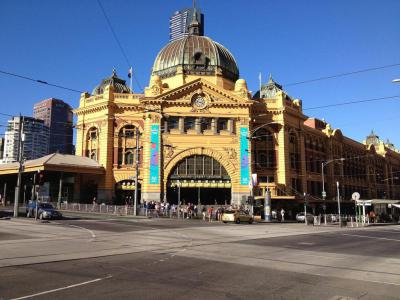
If you’re standing at the corner of Flinders and Swanston Streets and wondering why everyone else is looking up-congrats, you’ve found Flinders Street Station! It opened in 1854 as the terminus of Australia’s very first railway, back when “catching a train” meant something closer to “braving an experiment.” Today, it’s still one of Melbourne’s busiest transport hubs, funneling commuters across the suburbs and deep into the city’s daily rhythm.
The building you see now arrived later, finished in 1909. It’s an Edwardian creation that doesn’t believe in subtlety-domes, arches, towers, and enough ornamentation to fuel a century of urban legends. The curious fact associated with this building is that its design was mistakenly swapped with plans for Victoria Terminus in Bombay. No proof, however, but the rumour is almost as iconic as the station itself. Heritage-listed and instantly recognisable, it remains one of Melbourne’s most photographed faces.
And then there are the clocks. If someone in Melbourne tells you to meet them “under the clocks,” they’re not being poetic-that’s the row of indicator clocks above the main entrance. Another classic rendezvous point here is “On the steps.” Basically, this station doubles as both a transit hub and the city’s unofficial meeting app...
Its location doesn’t hurt either. Step outside and you’re right beside Federation Square, the Yarra River, and the maze of laneways, cafés, and arcades that make up the Central Business District. A truly perfect launchpad for whatever you’re doing next...
Indeed, whenever you're in Melbourne, even if you’re not catching a train, this building is always a delight to look at. The food inside is tempting, and-bonus-the station turns into a glowing postcard at night. So, make sure to have a camera handy; it likes the attention...
The building you see now arrived later, finished in 1909. It’s an Edwardian creation that doesn’t believe in subtlety-domes, arches, towers, and enough ornamentation to fuel a century of urban legends. The curious fact associated with this building is that its design was mistakenly swapped with plans for Victoria Terminus in Bombay. No proof, however, but the rumour is almost as iconic as the station itself. Heritage-listed and instantly recognisable, it remains one of Melbourne’s most photographed faces.
And then there are the clocks. If someone in Melbourne tells you to meet them “under the clocks,” they’re not being poetic-that’s the row of indicator clocks above the main entrance. Another classic rendezvous point here is “On the steps.” Basically, this station doubles as both a transit hub and the city’s unofficial meeting app...
Its location doesn’t hurt either. Step outside and you’re right beside Federation Square, the Yarra River, and the maze of laneways, cafés, and arcades that make up the Central Business District. A truly perfect launchpad for whatever you’re doing next...
Indeed, whenever you're in Melbourne, even if you’re not catching a train, this building is always a delight to look at. The food inside is tempting, and-bonus-the station turns into a glowing postcard at night. So, make sure to have a camera handy; it likes the attention...
2) Princes Bridge
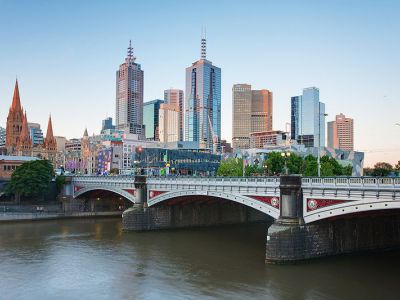
Princes Bridge, originally known as Prince's Bridge, is a prominent structure in the heart of Melbourne, spanning the Yarra River. It occupies a historical location as one of the city's earliest river crossings and serves as a prominent entrance into the city center from the southern side. This bridge connects Swanston Street on the northern bank of the Yarra River to Saint Kilda Road on the southern bank, accommodating both vehicular and pedestrian traffic, as well as trams.
Construction of the present bridge began with the laying of its foundation stone on September 7, 1886. A memorial stone featuring a suitable inscription was placed at the west end of the southern abutment. The bridge was officially inaugurated on October 4, 1888, just in time for the second International Exhibition hosted in Melbourne.
Princes Bridge spans a width of 30 meters (approximately 99 feet) and stretches over a length of 120 meters (around 400 feet). It is supported by bluestone piers adorned with Harcourt granite squat half columns, which in turn carry three iron girder arch spans. The coat of arms displayed on the bridge represent the municipal councils that contributed to the construction costs.
Due to its strategic location, Princes Bridge often serves as a central focal point for various celebratory events in Melbourne, including the Moomba Festival, New Year's Eve festivities, and numerous gatherings along the Yarra River as it flows through the city.
Construction of the present bridge began with the laying of its foundation stone on September 7, 1886. A memorial stone featuring a suitable inscription was placed at the west end of the southern abutment. The bridge was officially inaugurated on October 4, 1888, just in time for the second International Exhibition hosted in Melbourne.
Princes Bridge spans a width of 30 meters (approximately 99 feet) and stretches over a length of 120 meters (around 400 feet). It is supported by bluestone piers adorned with Harcourt granite squat half columns, which in turn carry three iron girder arch spans. The coat of arms displayed on the bridge represent the municipal councils that contributed to the construction costs.
Due to its strategic location, Princes Bridge often serves as a central focal point for various celebratory events in Melbourne, including the Moomba Festival, New Year's Eve festivities, and numerous gatherings along the Yarra River as it flows through the city.
3) Federation Square
Fed Square - yes, everyone calls it that - finally opened in 2001, after decades of Melbourne wondering why a major city had managed to function without an actual public square since the 1800s. The solution was delightfully bold: just build it right on top of the old railway yards. Prime location, close to the river, no extra land needed - problem solved.
Since then, the place has turned into Melbourne’s cultural magnet. With more than eight million visitors and around two thousand events each year, the square rarely has a quiet moment. One day it’s a food festival, the next it’s a film screening, and by the weekend you might stumble into a live performance you didn’t know was on.
Two anchors define the square’s artistic energy: the Australian Centre for the Moving Image, which is the country’s home for all things film and digital culture, and the Ian Potter Centre, the National Gallery of Victoria’s base for Australian art, both old and new. Together, they do a fine job of filling the square with ideas, stories, and the occasional burst of creative chaos.
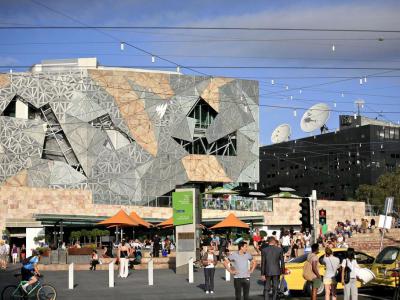
And then there’s the architecture - a patchwork of sharp angles, cranked lines, and deconstructivist drama. The buildings look like they’ve been assembled from giant geometric puzzle pieces, with glass corridors splitting them apart like modern takes on Melbourne’s historic laneways. Those tall “shards” hiding staircases and lifts are all part of the fun. And if you notice pinwheel-patterned tiles under your feet, yes, they’re meant to catch your eye.
Down toward the Yarra, the square softens into leafy paths leading to Federation Wharf, where cafés and a small marina share a calmer slice of the riverfront.
Indeed, sitting right in the middle of Melbourne’s heartbeat, Fed Square is a safe bet you'll catch something happening here all the time. Just pick up some takeaway, find a seat, and let the city’s atmosphere do the rest. The events calendar on Fed Square’s website will help you keep up - if you can...
Since then, the place has turned into Melbourne’s cultural magnet. With more than eight million visitors and around two thousand events each year, the square rarely has a quiet moment. One day it’s a food festival, the next it’s a film screening, and by the weekend you might stumble into a live performance you didn’t know was on.
Two anchors define the square’s artistic energy: the Australian Centre for the Moving Image, which is the country’s home for all things film and digital culture, and the Ian Potter Centre, the National Gallery of Victoria’s base for Australian art, both old and new. Together, they do a fine job of filling the square with ideas, stories, and the occasional burst of creative chaos.
And then there’s the architecture - a patchwork of sharp angles, cranked lines, and deconstructivist drama. The buildings look like they’ve been assembled from giant geometric puzzle pieces, with glass corridors splitting them apart like modern takes on Melbourne’s historic laneways. Those tall “shards” hiding staircases and lifts are all part of the fun. And if you notice pinwheel-patterned tiles under your feet, yes, they’re meant to catch your eye.
Down toward the Yarra, the square softens into leafy paths leading to Federation Wharf, where cafés and a small marina share a calmer slice of the riverfront.
Indeed, sitting right in the middle of Melbourne’s heartbeat, Fed Square is a safe bet you'll catch something happening here all the time. Just pick up some takeaway, find a seat, and let the city’s atmosphere do the rest. The events calendar on Fed Square’s website will help you keep up - if you can...
4) Hosier Lane
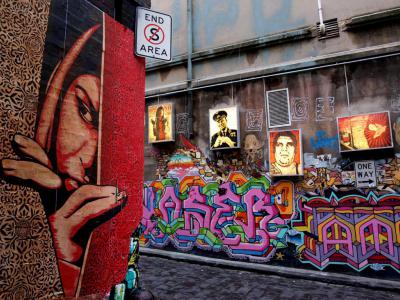
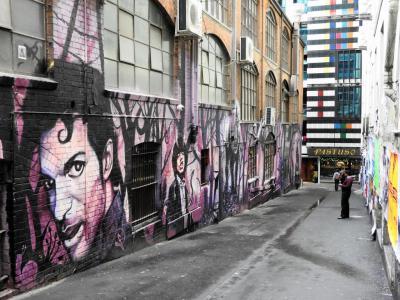
Hosier Lane is a cobblestone street situated on the southern border of the central city layout, renowned for its cultural importance and role as a hub for urban art. It was designated as a Street Art Gallery in 1998, thanks to the City Lights Initiative's endeavors. This lane is conveniently located opposite the entrance to the Atrium at Federation Square on Flinders Street, making it a prominent spot in the city.
This lane has gained recognition for the high quality and often politically-themed nature of its art. It has been featured in the state-sponsored publication, "The Melbourne Design Guide," as well as in Tourism Victoria's "Lose Yourself in Melbourne" advertising campaign. These appearances have raised questions about Victoria's contrasting approach to graffiti. The walls covered in graffiti and various art installations have become a popular backdrop for fashion and wedding photography.
Furthermore, Hosier Lane is famous for its upscale cocktail lounges, including the well-known Misty and MoVida. The lane's prominence was further highlighted when Chef Frank Camorra from MoVida conducted an open-air cooking session on Masterchef Australia season 2, showcasing it as a major attraction in Melbourne.
This lane has gained recognition for the high quality and often politically-themed nature of its art. It has been featured in the state-sponsored publication, "The Melbourne Design Guide," as well as in Tourism Victoria's "Lose Yourself in Melbourne" advertising campaign. These appearances have raised questions about Victoria's contrasting approach to graffiti. The walls covered in graffiti and various art installations have become a popular backdrop for fashion and wedding photography.
Furthermore, Hosier Lane is famous for its upscale cocktail lounges, including the well-known Misty and MoVida. The lane's prominence was further highlighted when Chef Frank Camorra from MoVida conducted an open-air cooking session on Masterchef Australia season 2, showcasing it as a major attraction in Melbourne.
5) ACDC Lane
ACDC Lane is a brief, narrow alleyway situated to the south of Flinders Lane, running between Exhibition Street and Russell Street.
Originally, this street bore the name Corporation Lane, but on October 1, 2004, it underwent a name change to honor the iconic Australian rock band AC/DC. The decision to rename the street received unanimous approval from the Melbourne City Council. The adjustment was necessitated by the trademark lightning bolt or slash ("/") used to separate the AC and DC in the band's name, which violated the naming guidelines of the Office of the Registrar of Geographic Names. Consequently, the street sign omitted this punctuation.
The inauguration of ACDC Lane was led by Melbourne's Lord Mayor, John So, who expressed, "As the song suggests, there may be a highway to hell, but this alleyway is a pathway to heaven. Let us embrace the rock." Following his remarks, bagpipers performed "It's a Long Way to the Top (If You Wanna Rock 'n' Roll)." Approximately one month after the renaming, a lightning bolt was installed above and below the street sign.
The choice of renaming Corporation Lane was influenced by several factors, including the fact that AC/DC had filmed the music video for "It's a Long Way to the Top (If You Wanna Rock 'n' Roll)" on Swanston Street in Melbourne, which is close to ACDC Lane. Other considerations included AC/DC's role as cultural ambassadors for Australia, their strong ties to Melbourne, and the lane's location in the city's bustling bar district.
Originally, this street bore the name Corporation Lane, but on October 1, 2004, it underwent a name change to honor the iconic Australian rock band AC/DC. The decision to rename the street received unanimous approval from the Melbourne City Council. The adjustment was necessitated by the trademark lightning bolt or slash ("/") used to separate the AC and DC in the band's name, which violated the naming guidelines of the Office of the Registrar of Geographic Names. Consequently, the street sign omitted this punctuation.
The inauguration of ACDC Lane was led by Melbourne's Lord Mayor, John So, who expressed, "As the song suggests, there may be a highway to hell, but this alleyway is a pathway to heaven. Let us embrace the rock." Following his remarks, bagpipers performed "It's a Long Way to the Top (If You Wanna Rock 'n' Roll)." Approximately one month after the renaming, a lightning bolt was installed above and below the street sign.
The choice of renaming Corporation Lane was influenced by several factors, including the fact that AC/DC had filmed the music video for "It's a Long Way to the Top (If You Wanna Rock 'n' Roll)" on Swanston Street in Melbourne, which is close to ACDC Lane. Other considerations included AC/DC's role as cultural ambassadors for Australia, their strong ties to Melbourne, and the lane's location in the city's bustling bar district.
6) Little Bourke Street
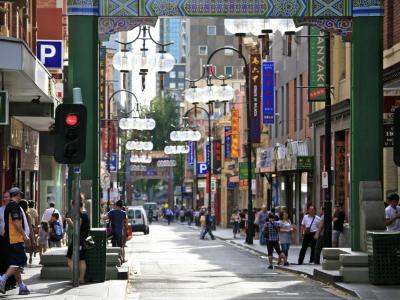
Little Bourke Street may sound modest, but don’t be fooled by its name-this is one of Melbourne’s original east-to-west thoroughfares and the heartbeat of the city’s Chinatown. Heading toward its eastern end, the street suddenly turns into a maze of neon signs, narrow laneways, and arcades that have been buzzing with life since the 1850s, when Chinese immigrants first made this neighbourhood their Australian home.
Today, Chinatown still delivers the classics-dumplings, herbal shops, and sizzling woks-but the menu has expanded far beyond China’s borders. Within a few steps, you can wander from Thai curries to Japanese noodles, Malaysian sweets, Vietnamese grills, Indian spices, and Korean barbecue. Add in annual celebrations like Lunar New Year, and you’ll understand why the area feels like a festival even on a slow afternoon. And if the aromas don’t catch your attention, the architecture will: Victorian-era buildings dressed up with colourful Chinese motifs create a quirky fusion that’s unmistakably Melbourne.
For anyone curious about how Chinese communities shaped the city, pop into the Museum of Chinese Australian History on Cohen Place. It’s compact, engaging, and full of stories that bring the neighbourhood to life. Nearby, the MidCity Arcade offers its own sheltered world of fusion eateries, quirky shops, and splashes of street art-perfect for a wander when the weather can’t make up its mind.
And before you leave, look for the Facing Heaven Archway on Cohen Street. With imperial lions guarding its base and a design inspired by a Ming-dynasty gateway, it’s the kind of landmark that practically insists on being photographed.
Melbourne’s Chinatown may sit on Little Bourke Street-but there’s nothing little about its personality.
Today, Chinatown still delivers the classics-dumplings, herbal shops, and sizzling woks-but the menu has expanded far beyond China’s borders. Within a few steps, you can wander from Thai curries to Japanese noodles, Malaysian sweets, Vietnamese grills, Indian spices, and Korean barbecue. Add in annual celebrations like Lunar New Year, and you’ll understand why the area feels like a festival even on a slow afternoon. And if the aromas don’t catch your attention, the architecture will: Victorian-era buildings dressed up with colourful Chinese motifs create a quirky fusion that’s unmistakably Melbourne.
For anyone curious about how Chinese communities shaped the city, pop into the Museum of Chinese Australian History on Cohen Place. It’s compact, engaging, and full of stories that bring the neighbourhood to life. Nearby, the MidCity Arcade offers its own sheltered world of fusion eateries, quirky shops, and splashes of street art-perfect for a wander when the weather can’t make up its mind.
And before you leave, look for the Facing Heaven Archway on Cohen Street. With imperial lions guarding its base and a design inspired by a Ming-dynasty gateway, it’s the kind of landmark that practically insists on being photographed.
Melbourne’s Chinatown may sit on Little Bourke Street-but there’s nothing little about its personality.
7) MidCity Arcade
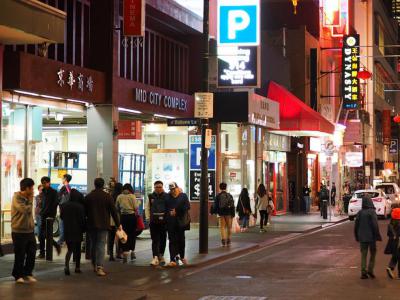
From the outside, MidCity Arcade may appear just like another slender corridor, threading between Bourke Street and Little Bourke Street-one you could easily breeze past without noticing. But doing so would mean missing one of the Central Business District’s most reliable shortcuts to a good meal. Sitting right on the edge of Chinatown and smack in the middle of Melbourne’s busiest shopping zone, it’s essentially the city’s culinary express lane: step in, and you’re already halfway to lunch.
Once inside, the arcade wastes no time announcing its loyalties. The place leans firmly toward Asian flavours, and proudly so. In the space of a short stroll, you’ll pass Japanese ramen bars, Korean barbecue grills, Chinese dumpling shops, bubble-tea counters, and Southeast Asian lunch spots all vying for your attention. It’s the kind of setup where your dinner plans change three times before you reach the escalator. Prices stay friendly, dishes arrive quickly, and portions are built with the hungry wanderer in mind-perfect for anyone darting between museums, retail therapy, or Melbourne’s addictive laneways.
Food may be the arcade’s heartbeat, but it doesn’t stop there. More than 30 retailers squeeze into the mix, including fashion boutiques, tech stores, beauty shops, travel services, and even a cinema for when you need a breather. Sit-down favourites like Kaneda and King’s No. 1 Café add a calmer option amid the bustle, though the overall feel remains brisk and canteen-like. There’s even a parking garage tucked beneath the complex, accessible from Chinatown, for those who prefer to roll straight in.
Most visitors pair MidCity Arcade with two obvious neighbours: Chinatown and the Bourke Street Mall. Together, they form Melbourne’s trifecta of eating, browsing, and people-watching. The arcade simply distills that spirit into one compact, easy-to-navigate slice of the city-no reservations required, no big budget needed, just an appetite and a willingness to follow your nose...
Once inside, the arcade wastes no time announcing its loyalties. The place leans firmly toward Asian flavours, and proudly so. In the space of a short stroll, you’ll pass Japanese ramen bars, Korean barbecue grills, Chinese dumpling shops, bubble-tea counters, and Southeast Asian lunch spots all vying for your attention. It’s the kind of setup where your dinner plans change three times before you reach the escalator. Prices stay friendly, dishes arrive quickly, and portions are built with the hungry wanderer in mind-perfect for anyone darting between museums, retail therapy, or Melbourne’s addictive laneways.
Food may be the arcade’s heartbeat, but it doesn’t stop there. More than 30 retailers squeeze into the mix, including fashion boutiques, tech stores, beauty shops, travel services, and even a cinema for when you need a breather. Sit-down favourites like Kaneda and King’s No. 1 Café add a calmer option amid the bustle, though the overall feel remains brisk and canteen-like. There’s even a parking garage tucked beneath the complex, accessible from Chinatown, for those who prefer to roll straight in.
Most visitors pair MidCity Arcade with two obvious neighbours: Chinatown and the Bourke Street Mall. Together, they form Melbourne’s trifecta of eating, browsing, and people-watching. The arcade simply distills that spirit into one compact, easy-to-navigate slice of the city-no reservations required, no big budget needed, just an appetite and a willingness to follow your nose...
8) Hardware Lane
Hardware Lane is one of those Melbourne spots where you stroll in for a coffee and accidentally stay long enough to consider ordering dinner… and maybe dessert. Stretching north to south between Bourke and Little Lonsdale Streets, it even switches names halfway through-because in Melbourne, even the laneways like a costume change. North of Lonsdale, it becomes Hardware Street, as if preparing for its next act...
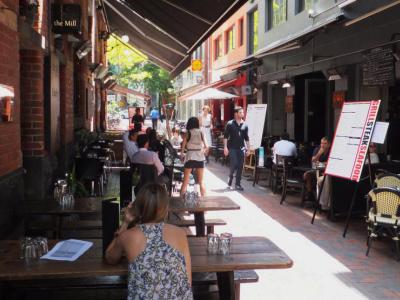
By daylight, the lane buzzes with cafés, restaurants, hairdressers, and the occasional fast-food joint for those feeling less “culinary adventure” and more “quick rescue mission.” Come evening, the red brick pavement glows under warm lights, the traffic barriers go up from 11 a.m. to 11 p.m., and you might even catch a live jazz set drifting through the tables like the soundtrack to a European holiday you forgot you booked.
Its past is just as colorful. Back in 1857, it was Wrights Lane, and even earlier, it played host to Kirk’s Horse Bazaar-a bustling 1840s marketplace where traders haggled over horses instead of brunch menus. It later became home to Melbourne’s Tattersall’s Club, where bookmakers and punters settled their bets, proving that lively negotiation has always been part of the lane’s DNA.
By the late 1800s, Wrights Lane was lined with hotels: Kirks Bazaar Hotel on one corner, the Governor Arthur Hotel on the other, and the Shamrock Hotel holding court at the Lonsdale end. Today, not a single hotel remains, but the lane has kept the flair for hospitality-just with better coffee and fewer horses...
Keep an eye out for Dynon’s Building at numbers 63–73. Designed by William Pitt-renowned for his work on some of the city's finest Gothic revival buildings, including the Princess Theatre-its four handsome warehouses give the lane a touch of historical swagger.
By daylight, the lane buzzes with cafés, restaurants, hairdressers, and the occasional fast-food joint for those feeling less “culinary adventure” and more “quick rescue mission.” Come evening, the red brick pavement glows under warm lights, the traffic barriers go up from 11 a.m. to 11 p.m., and you might even catch a live jazz set drifting through the tables like the soundtrack to a European holiday you forgot you booked.
Its past is just as colorful. Back in 1857, it was Wrights Lane, and even earlier, it played host to Kirk’s Horse Bazaar-a bustling 1840s marketplace where traders haggled over horses instead of brunch menus. It later became home to Melbourne’s Tattersall’s Club, where bookmakers and punters settled their bets, proving that lively negotiation has always been part of the lane’s DNA.
By the late 1800s, Wrights Lane was lined with hotels: Kirks Bazaar Hotel on one corner, the Governor Arthur Hotel on the other, and the Shamrock Hotel holding court at the Lonsdale end. Today, not a single hotel remains, but the lane has kept the flair for hospitality-just with better coffee and fewer horses...
Keep an eye out for Dynon’s Building at numbers 63–73. Designed by William Pitt-renowned for his work on some of the city's finest Gothic revival buildings, including the Princess Theatre-its four handsome warehouses give the lane a touch of historical swagger.
9) Centre Place
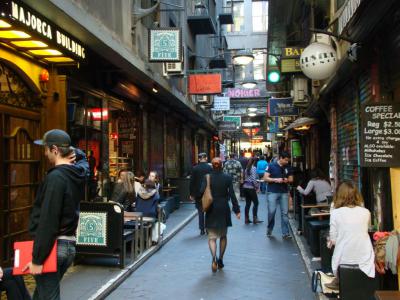
If your ideal afternoon involves good food, a little shopping, and a healthy splash of street art, Centre Place is ready to check every box. Picture a narrow, bustling laneway that feels like Melbourne’s own version of Harry Potter's Diagon Alley-minus the owls, plus a lot more caffeine... Its blue cobblestones are framed by tiny boutiques, hole-in-the-wall cafés, and bars that seem to squeeze into every available corner, all wrapped in layers of graffiti that change with the seasons-and sometimes overnight...
This little artery sits along the pedestrian path linking Flinders Street Station to the Collins Street shopping area. Anyone making that journey inevitably slips through a greatest-hits lineup of Melbourne laneways: Campbell Arcade, Degraves Street, Centre Place, and Centreway Arcade. It’s like a walking sampler of the city’s personality, and Centre Place tends to be the loudest voice in the chorus.
The laneway didn’t always have this magnetic pull, though. Back in the 1980s, it received a full makeover aimed at drawing in more restaurants and small businesses. The plan worked a little too well-today it’s one of the Central Business District’s most beloved pockets, buzzing from breakfast to late afternoon with locals, office workers, and camera-wielding visitors discovering just how much life can fit into one very tight alley.
This little artery sits along the pedestrian path linking Flinders Street Station to the Collins Street shopping area. Anyone making that journey inevitably slips through a greatest-hits lineup of Melbourne laneways: Campbell Arcade, Degraves Street, Centre Place, and Centreway Arcade. It’s like a walking sampler of the city’s personality, and Centre Place tends to be the loudest voice in the chorus.
The laneway didn’t always have this magnetic pull, though. Back in the 1980s, it received a full makeover aimed at drawing in more restaurants and small businesses. The plan worked a little too well-today it’s one of the Central Business District’s most beloved pockets, buzzing from breakfast to late afternoon with locals, office workers, and camera-wielding visitors discovering just how much life can fit into one very tight alley.
10) Degraves Street
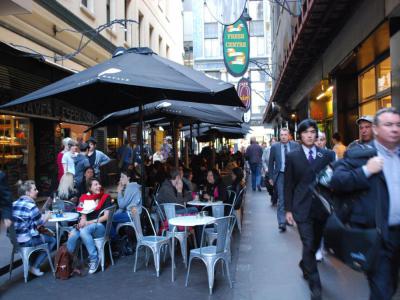
Slip off Flinders Street and onto Degraves, and suddenly Melbourne feels like it’s trying on a little Parisian flair. This narrow cobbled lane is strictly for pedestrians-no cars, just the steady hum of coffee machines, clinking glasses, and people debating which café has the best flat white. If you’re hunting for a sunny table to enjoy lunch outdoors, Degraves practically waves you over. Just don’t mix it up with Centre Place, its equally charming but often confused neighbour.
Look up, and you’ll spot the taller buildings that have been reborn as loft-style apartments, adding residents-and energy-to the laneway below. Down at street level, the soundtrack is classic Melbourne: buskers setting the mood, street art bursting from every corner, and the occasional splash of graffiti reminding you that creativity here comes in all forms.
The name “Degraves” goes back to Charles and William Degraves, merchants from Hobart who arrived here with flour-mill ambitions in 1849. William later dabbled in local politics, proving that even back then, Degraves attracted people who liked to stay busy...
Today, the lane acts as a lively connector between Flinders Street Station and the shopping streets to the north. If you need a shortcut underground, Campbell Arcade-better known to locals as the Degraves Underpass-whisks you beneath the traffic. Keep an eye out for the Platform Artists Group, who regularly turn the space into an ever-changing mini-gallery.
Step in, slow down, and enjoy the show-Degraves is Melbourne’s laneway culture at its most irresistible.
Look up, and you’ll spot the taller buildings that have been reborn as loft-style apartments, adding residents-and energy-to the laneway below. Down at street level, the soundtrack is classic Melbourne: buskers setting the mood, street art bursting from every corner, and the occasional splash of graffiti reminding you that creativity here comes in all forms.
The name “Degraves” goes back to Charles and William Degraves, merchants from Hobart who arrived here with flour-mill ambitions in 1849. William later dabbled in local politics, proving that even back then, Degraves attracted people who liked to stay busy...
Today, the lane acts as a lively connector between Flinders Street Station and the shopping streets to the north. If you need a shortcut underground, Campbell Arcade-better known to locals as the Degraves Underpass-whisks you beneath the traffic. Keep an eye out for the Platform Artists Group, who regularly turn the space into an ever-changing mini-gallery.
Step in, slow down, and enjoy the show-Degraves is Melbourne’s laneway culture at its most irresistible.
11) Acland Street
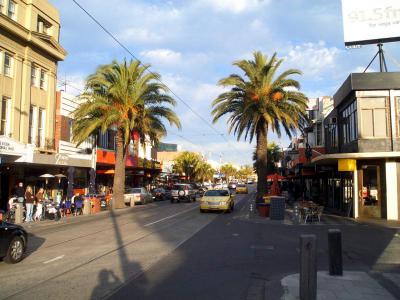
Melbourne is well known as Australia’s gastronomic capital, and one of the best loved dining precincts of the city is at Acland Street. The street is particularly well known for its cakes, sweets and bakeries, so make sure you have packed your sweet tooth on a visit here. Many of the patisseries, delicatessens, restaurants and cafes have been here for decades, before café culture was cool and back when Saint Kilda was considered a has-been of a suburb. Monarch Cakes is the oldest patisserie on the street having notched up more than a century serving sweets and cakes to customers, with some of the items on sale making use of 100 year old recipes.
Today, just a block back from Saint Kilda Beach, elderly continental European immigrants mix with backpackers, the hip set and moms and dads pushing prams. Acland Street was one of the very first streets in Saint Kilda to be surveyed and was named after Sir Thomas Acland, who had owned the schooner Lady of Saint Kilda between 1834 and 1840. It is close to other Saint Kilda landmarks such as the Palais Theatre and Luna Park. The Sunday market on the Esplanade nearby makes Acland Street a hugely popular place to while away the hours on a lazy weekend morning.
Today, just a block back from Saint Kilda Beach, elderly continental European immigrants mix with backpackers, the hip set and moms and dads pushing prams. Acland Street was one of the very first streets in Saint Kilda to be surveyed and was named after Sir Thomas Acland, who had owned the schooner Lady of Saint Kilda between 1834 and 1840. It is close to other Saint Kilda landmarks such as the Palais Theatre and Luna Park. The Sunday market on the Esplanade nearby makes Acland Street a hugely popular place to while away the hours on a lazy weekend morning.
