Custom Walk in Montreal, Canada by lunnaslima_d572e created on 2025-05-17
Guide Location: Canada » Montreal
Guide Type: Custom Walk
# of Sights: 12
Tour Duration: 8 Hour(s)
Travel Distance: 21.1 Km or 13.1 Miles
Share Key: N22RD
Guide Type: Custom Walk
# of Sights: 12
Tour Duration: 8 Hour(s)
Travel Distance: 21.1 Km or 13.1 Miles
Share Key: N22RD
How It Works
Please retrieve this walk in the GPSmyCity app. Once done, the app will guide you from one tour stop to the next as if you had a personal tour guide. If you created the walk on this website or come to the page via a link, please follow the instructions below to retrieve the walk in the app.
Retrieve This Walk in App
Step 1. Download the app "GPSmyCity: Walks in 1K+ Cities" on Apple App Store or Google Play Store.



Step 2. In the GPSmyCity app, download(or launch) the guide "Montreal Map and Walking Tours".
Step 3. Tap the menu button located at upper right corner of the "Walks" screen and select "Retrieve custom walk". Enter the share key: N22RD
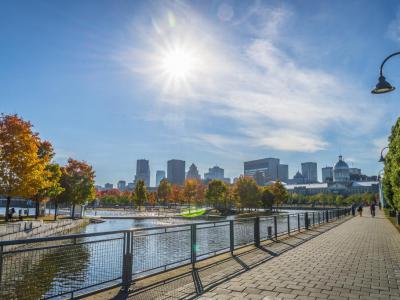
1) Old Port (Vieux-Port) (must see)
Located on the north bank of the Saint Lawrence River, the historic Old Port of Montreal (Vieux-Port de Montréal) stretches for over two kilometers (1.2 miles) south of Old Montreal, in a natural harbor that was once frequented by Amerindian canoes and then by barges and ships of French fur traders and others.
In service from as early as 1611, the port bore witness to the economic and cultural development of Montreal and remained in use until 1976, when the present Port of Montreal was launched further east. In the early 1990s, the territory was redeveloped and in 2005 changed its name to The Quays of the Old Port of Montreal. Today, it serves as a recreational and historical area, attracting annually over six million visitors.
A place for all seasons, there's always something happening here! Summer is great for all sorts of riverfront activities such as rollerblading, cycling, quadricycling, and pleasure boating. Taking a boat cruise on the Saint Lawrence river, or renting a pedal boat for a trip around Bonsecours Basin is also available. A thin park, running the entire length of the Old Port Promenade, offers tourists and locals an ideal spot to relax and catch a cool breeze off the water.
Winter is ideal for skating on the outdoor rink or just playing in the snow. At all times of the year, the Saint Lawrence river is awe-inspiring and powerful.
The on-site attractions include a "labyrinth" in Shed 16 (which is a maze of alleys and obstacles built inside an old waterfront warehouse), the Montreal Science Centre (complete with an IMAX Theatre) on King Edward Pier, and the Montreal Clock Tower.
One of the Port's gems is the Montreal-based Cirque du Soleil which approximately every two years, in spring, launches a new show from the Jacques Cartier Quay by setting up its signature blue-and-yellow-striped tents. In June 2012, an urban beach, called the Clock Tower Beach (Plage de l'Horloge), was opened adjacent to the Clock Tower.
Cultural events in the area include the Montreal High Lights Festival (Festival Montréal en lumière), Igloofest, and the Matsuri Japon festival.
If you have a couple of hours to kill in Montreal, wandering around the Old Port is worth considering.
In service from as early as 1611, the port bore witness to the economic and cultural development of Montreal and remained in use until 1976, when the present Port of Montreal was launched further east. In the early 1990s, the territory was redeveloped and in 2005 changed its name to The Quays of the Old Port of Montreal. Today, it serves as a recreational and historical area, attracting annually over six million visitors.
A place for all seasons, there's always something happening here! Summer is great for all sorts of riverfront activities such as rollerblading, cycling, quadricycling, and pleasure boating. Taking a boat cruise on the Saint Lawrence river, or renting a pedal boat for a trip around Bonsecours Basin is also available. A thin park, running the entire length of the Old Port Promenade, offers tourists and locals an ideal spot to relax and catch a cool breeze off the water.
Winter is ideal for skating on the outdoor rink or just playing in the snow. At all times of the year, the Saint Lawrence river is awe-inspiring and powerful.
The on-site attractions include a "labyrinth" in Shed 16 (which is a maze of alleys and obstacles built inside an old waterfront warehouse), the Montreal Science Centre (complete with an IMAX Theatre) on King Edward Pier, and the Montreal Clock Tower.
One of the Port's gems is the Montreal-based Cirque du Soleil which approximately every two years, in spring, launches a new show from the Jacques Cartier Quay by setting up its signature blue-and-yellow-striped tents. In June 2012, an urban beach, called the Clock Tower Beach (Plage de l'Horloge), was opened adjacent to the Clock Tower.
Cultural events in the area include the Montreal High Lights Festival (Festival Montréal en lumière), Igloofest, and the Matsuri Japon festival.
If you have a couple of hours to kill in Montreal, wandering around the Old Port is worth considering.
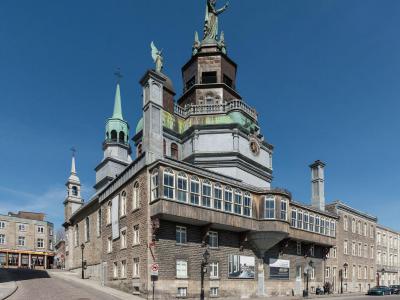
2) Chapel of Our Lady of Good Help (Chapelle Notre-Dame-de-Bon-Secours)
The Chapel of Our Lady of Good Help (Notre-Dame-de-Bon-Secours) was built in 1771 as the first pilgrimage site in the Old Port of Montreal for the arrived sailors who wished to make offerings to the Virgin in gratitude for her "good help" in a safe voyage across the Atlantic. It is also the oldest surviving chapel in the Old City.
The church sits directly on top of an older temple – of 1675 – that was destroyed by fire. The foundations of the first church, uncovered recently during excavations in the crypt underneath the chapel, provide insight into the times long gone. Among other things, this archaeological site contains artifacts from the First Nations and French colonial periods, including fragments of the colony's early fortifications. Those interested in history can take a guided audio tour of the underground crypt and learn more about the early days of Montreal and the chapel site.
Emphasizing its connection with the maritime theme, the chapel is also often referred to as the Sailors' Church. In line with its nautical flair, the interior décor – simple yet elegant – is definitely worth a peek, if only to observe the gorgeous ship replicas hanging from the ceiling.
Visitors to the church can also climb the wooden stairs and explore the building's prominent spire. From up there opens a spectacular view of the harbour, the Saint Lawrence River, the Old Port, the remnants of Expo 67, and Our Lady of the Harbour statue – immortalized in the Leonard Cohen song 'Suzanne' ("And the sun pours down like honey / On our lady of the harbour"). And, of course, you can see up close the angels on the chapel roof, too.
The church also houses the Marguerite Bourgeoys Museum, dedicated to the life of Saint Marguerite Bourgeoys, founder of the Notre-Dame congregation. In 2005, her mortal remains were brought back to the temple and interred in the sanctuary.
The church sits directly on top of an older temple – of 1675 – that was destroyed by fire. The foundations of the first church, uncovered recently during excavations in the crypt underneath the chapel, provide insight into the times long gone. Among other things, this archaeological site contains artifacts from the First Nations and French colonial periods, including fragments of the colony's early fortifications. Those interested in history can take a guided audio tour of the underground crypt and learn more about the early days of Montreal and the chapel site.
Emphasizing its connection with the maritime theme, the chapel is also often referred to as the Sailors' Church. In line with its nautical flair, the interior décor – simple yet elegant – is definitely worth a peek, if only to observe the gorgeous ship replicas hanging from the ceiling.
Visitors to the church can also climb the wooden stairs and explore the building's prominent spire. From up there opens a spectacular view of the harbour, the Saint Lawrence River, the Old Port, the remnants of Expo 67, and Our Lady of the Harbour statue – immortalized in the Leonard Cohen song 'Suzanne' ("And the sun pours down like honey / On our lady of the harbour"). And, of course, you can see up close the angels on the chapel roof, too.
The church also houses the Marguerite Bourgeoys Museum, dedicated to the life of Saint Marguerite Bourgeoys, founder of the Notre-Dame congregation. In 2005, her mortal remains were brought back to the temple and interred in the sanctuary.
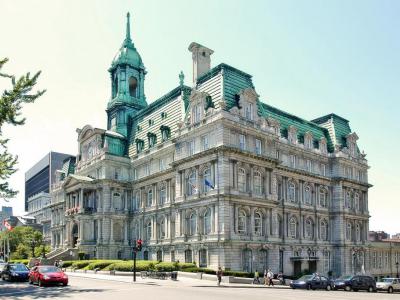
3) City Hall (Hotel de Ville)
The Montreal City Hall (Hôtel de Ville de Montréal) is the very first seat of municipal administration purposely constructed in Canada. Presently, it houses the offices of the Mayor and the City Council, as well as several other administrative departments.
The five-story edifice was originally built between 1872 and 1878 to a design by architects Henri-Maurice Perrault and Alexander Cowper Hutchison and is considered one of the best examples of the Second Empire style of architecture in the country.
The building's facade is made of gray limestone and its front and sides are beautifully decorated with turrets, balconies, and mansard roofs. The grand clock tower, rising 45 meters above the ground, is topped by a statue of the city's founder, Paul Chomedey de Maisonneuve.
Sadly, the original building was gutted by fire in March 1922, leaving only the outer wall and destroying many of the city's historical records. The replacement building, featuring a self-supporting steel structure (inside the shell of the ruins), was modelled after the city hall of the French city of Tours. It opened in February 1926.
The building's interior is equally impressive. Inside, the Hall of Honour is an open space full of marble and gold embellishments that houses Art Deco lamps from Paris and a bronze-and-glass chandelier, also from France, weighing a metric ton. In the council room, the five stained-glass windows, installed in the 1920s, depict the fundamental aspects of the city, such as Religion, Agriculture, Sea Port, Commerce, and Finance. In 1984, the building was designated a National Historic Site of Canada.
Unlike many government sites with restricted public entry, the Montreal City Hall permits visitors to take a quick guided tour – in both, English and French – free of charge. The tour schedules are displayed at the entrance.
Behind the building is a pocket of green, known as the Field of Mars (Champ-de-Mars), which used to serve as a military parade ground and a parking lot before being converted into a park in the 1980s. During the conversion, workers unearthed the remains of the city's old fortifications; parts of the restored city walls were later incorporated into the site.
The five-story edifice was originally built between 1872 and 1878 to a design by architects Henri-Maurice Perrault and Alexander Cowper Hutchison and is considered one of the best examples of the Second Empire style of architecture in the country.
The building's facade is made of gray limestone and its front and sides are beautifully decorated with turrets, balconies, and mansard roofs. The grand clock tower, rising 45 meters above the ground, is topped by a statue of the city's founder, Paul Chomedey de Maisonneuve.
Sadly, the original building was gutted by fire in March 1922, leaving only the outer wall and destroying many of the city's historical records. The replacement building, featuring a self-supporting steel structure (inside the shell of the ruins), was modelled after the city hall of the French city of Tours. It opened in February 1926.
The building's interior is equally impressive. Inside, the Hall of Honour is an open space full of marble and gold embellishments that houses Art Deco lamps from Paris and a bronze-and-glass chandelier, also from France, weighing a metric ton. In the council room, the five stained-glass windows, installed in the 1920s, depict the fundamental aspects of the city, such as Religion, Agriculture, Sea Port, Commerce, and Finance. In 1984, the building was designated a National Historic Site of Canada.
Unlike many government sites with restricted public entry, the Montreal City Hall permits visitors to take a quick guided tour – in both, English and French – free of charge. The tour schedules are displayed at the entrance.
Behind the building is a pocket of green, known as the Field of Mars (Champ-de-Mars), which used to serve as a military parade ground and a parking lot before being converted into a park in the 1980s. During the conversion, workers unearthed the remains of the city's old fortifications; parts of the restored city walls were later incorporated into the site.
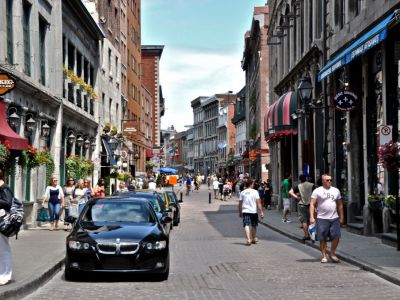
4) Old Montreal (must see)
Transporting you back to the era of New France, Old Montreal stands as one of the most ancient districts frequented by tourists. Positioned ideally within Ville-Marie's borough, this neighborhood is bordered by Ruelle des Fortifications to the north, McGill Street to the west, the majestic Saint Lawrence River to the south, and Berri Street to the east.
Ville-Marie borough remains vibrant and dynamic, fueled by its perpetually lively neighborhoods, including the bustling downtown core, McGill Ghetto, Latin Quarter, Chinatown, Gay Village, and Old Montreal. Visitors revel in exploring this area using public transportation, indulging in shopping, dining at exquisite restaurants, and exploring renowned museums within Ville-Marie.
Should you find yourself in Old Montreal between July and October, an enthralling experience awaits you-the renowned Montreal Ghost Walks. Led by a local storyteller, this captivating journey uncovers the darker aspects of the area's history, guiding you through haunted locations that will send chills down your spine. You have the option to embark on either the west or east side walking tour. Undoubtedly, Old Montreal offers an unparalleled visitor experience, leaving a lasting impression.
Why You Should Visit:
A stroll through Old Montreal will give you a feel of European charm in North America. The cobblestone streets, the architecture, the restaurants and art galleries – all make an irresistible combination.
Tip:
You can walk from one end to the other of what is Old Montreal in 15-20 minutes, but there is a lot packed into that small section so you can easily spend 2 to 3 days exploring it.
Ville-Marie borough remains vibrant and dynamic, fueled by its perpetually lively neighborhoods, including the bustling downtown core, McGill Ghetto, Latin Quarter, Chinatown, Gay Village, and Old Montreal. Visitors revel in exploring this area using public transportation, indulging in shopping, dining at exquisite restaurants, and exploring renowned museums within Ville-Marie.
Should you find yourself in Old Montreal between July and October, an enthralling experience awaits you-the renowned Montreal Ghost Walks. Led by a local storyteller, this captivating journey uncovers the darker aspects of the area's history, guiding you through haunted locations that will send chills down your spine. You have the option to embark on either the west or east side walking tour. Undoubtedly, Old Montreal offers an unparalleled visitor experience, leaving a lasting impression.
Why You Should Visit:
A stroll through Old Montreal will give you a feel of European charm in North America. The cobblestone streets, the architecture, the restaurants and art galleries – all make an irresistible combination.
Tip:
You can walk from one end to the other of what is Old Montreal in 15-20 minutes, but there is a lot packed into that small section so you can easily spend 2 to 3 days exploring it.
5) Notre-Dame Basilica (must see)
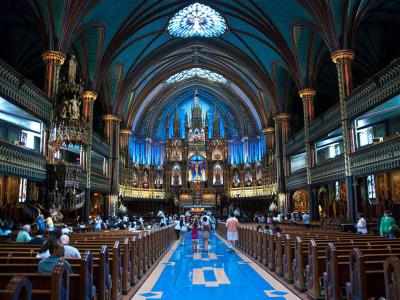
The Notre Dame Basilica of Montreal (Basilique Notre-Dame de Montréal) is a stunning piece of Gothic Revival architecture. Designed by the Irish-American architect James O'Donnell, it was completed, for the most part, in 1829.
The sanctuary was constructed a year later, while the first and second towers were added in 1841 and 1843, respectively. Both towers have bells: the West Tower (La Persévérance), has a bourdon bell nicknamed Jean-Baptiste. It was cast in John Dod Ward’s Eagle Foundry in 1848 and weighs 10,900 kg. Jean-Baptiste tolls only on special occasions, such as funerals, great religious festivals, and Christmas Eve. The East Tower (La Temperance), houses a ten-bell carillon from the same foundry, made in 1842.
The facade of the church was completed in 1865 and includes, among other features, three statues by the French sculptor Henri Bouriché, namely: the Virgin Mary (representing Montreal), Saint John the Baptist (representing Quebec), and Saint Joseph (representing Canada).
The interior – colorful and lavish – took much longer to complete and is quite impressive with its richly decorated columns, intricate wood carvings, statues, and elaborate stained glass windows. Quite unusual for a church, the stained glass windows here depict scenes from the history of Montreal rather than biblical scenes. Another spectacular highlight of the basilica is the Casavant Frères pipe organ, created in 1891, which is one of the largest organs in North America, comprising four keyboards and 7,000 individual pipes.
The Notre-Dame church was raised to the status of a minor basilica, by Pope John Paul II, in 1982 and was designated a National Historic Site of Canada in 1989.
Today, the Notre Dame of Montreal is a popular landmark, attracting yearly more than 11 million tourists from around the globe, making it one of the most visited sites in North America. Even the $10 admission fee doesn't turn visitors away.
Over the years, the basilica has hosted a number of important events, such as Céline Dion's wedding in 1994 and the funeral of the former Canadian Prime Minister, Pierre Trudeau, in 2000.
If you're interested in classical and religious music, the basilica offers musical programming of choral and organ performances, including Handel's Messiah every Christmas.
Tip:
The provided on-site brochure is very informative and can be used as a self-guide. Additionally, there's a free 20-minute English/French tour available at entry.
The 'AURA' light show (starting usually at 7 and 9 pm) is exceptional but often sold out, so plan your visit in advance: you can book a ticket online or come early to get a place. Try sitting somewhere in the middle to get the best music & light experience.
The sanctuary was constructed a year later, while the first and second towers were added in 1841 and 1843, respectively. Both towers have bells: the West Tower (La Persévérance), has a bourdon bell nicknamed Jean-Baptiste. It was cast in John Dod Ward’s Eagle Foundry in 1848 and weighs 10,900 kg. Jean-Baptiste tolls only on special occasions, such as funerals, great religious festivals, and Christmas Eve. The East Tower (La Temperance), houses a ten-bell carillon from the same foundry, made in 1842.
The facade of the church was completed in 1865 and includes, among other features, three statues by the French sculptor Henri Bouriché, namely: the Virgin Mary (representing Montreal), Saint John the Baptist (representing Quebec), and Saint Joseph (representing Canada).
The interior – colorful and lavish – took much longer to complete and is quite impressive with its richly decorated columns, intricate wood carvings, statues, and elaborate stained glass windows. Quite unusual for a church, the stained glass windows here depict scenes from the history of Montreal rather than biblical scenes. Another spectacular highlight of the basilica is the Casavant Frères pipe organ, created in 1891, which is one of the largest organs in North America, comprising four keyboards and 7,000 individual pipes.
The Notre-Dame church was raised to the status of a minor basilica, by Pope John Paul II, in 1982 and was designated a National Historic Site of Canada in 1989.
Today, the Notre Dame of Montreal is a popular landmark, attracting yearly more than 11 million tourists from around the globe, making it one of the most visited sites in North America. Even the $10 admission fee doesn't turn visitors away.
Over the years, the basilica has hosted a number of important events, such as Céline Dion's wedding in 1994 and the funeral of the former Canadian Prime Minister, Pierre Trudeau, in 2000.
If you're interested in classical and religious music, the basilica offers musical programming of choral and organ performances, including Handel's Messiah every Christmas.
Tip:
The provided on-site brochure is very informative and can be used as a self-guide. Additionally, there's a free 20-minute English/French tour available at entry.
The 'AURA' light show (starting usually at 7 and 9 pm) is exceptional but often sold out, so plan your visit in advance: you can book a ticket online or come early to get a place. Try sitting somewhere in the middle to get the best music & light experience.
6) Arms' Square (Place d'Armes)
One of the oldest public sites in Montreal, Arms' Square (Place d'Armes) has a rather epic history to it, dating back over 300 years. This is the third location in Montreal to bear such a name, which is a French term long used to denote an assembly point for city defenders. In line with this, the square is anchored by a monument of Paul de Chomedey de Maisonneuve, the French officer and founder of Montreal. Erected in 1895, the statue commemorates Chomedey's defense of the young Ville-Marie settlement against the Iroquois Indians.
Originally, when first built in 1693, the place was called Factory Square (Place de la Fabrique) and was renamed Arms' Square only in 1721 when it became a stage for military drills, parades, and suchlike events. From 1781 to 1813, the site was used as a hay and wood market and later developed as a Victorian garden, after being acquired by the city in 1836. The square took its current shape in 1850 when Notre Dame Street was completed.
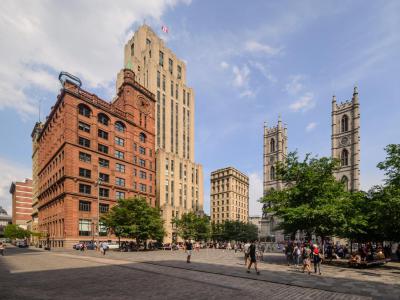
However, its real significance comes not so much from the spot itself as from what surrounds it. The structures bordering Arms' Square on all sides define Montreal's diverse heritage and represent major periods of the city's development. Primarily, these are the Notre Dame Basilica and the Saint Sulpice Seminary, Montréal's oldest building, constructed in the 1680s.
Other structures of note include the Bank of Montreal head office – Canada's first bank – opened in 1859, and the New York Life Building – Montreal's first skyscraper – constructed in 1887 and furnished with an elevator that was quite a novelty at that time. Across the way, the Royal Trust and the Duluth Building (to the left of the basilica) are the two early-20th-century high-risers that mark a distinct architectural shift, cemented with the arrival, in 1931, of the Art-Deco-style Aldred Building, designed to ensure maximum natural lighting for the streets below. Another landmark, a post-war glass and steel structure, the only one of its kind in the city, now known as the National Bank Tower, completed the square's architectural timeline in 1968.
Directly in front of it, you will find two sculptures: a caricature of a haughty Englishman with a pug, and one of a French woman with a poodle. While the dogs eye each other with eagerness to play, the lady gives an evident look of disdain towards the symbol of English power (that is the old Bank of Montreal), while the gentleman looks down his nose at the Notre Dame Basilica, symbolizing historical French influence in the region.
The pedestrian-friendly square is also a departure point for horse-drawn tours of Old Montreal. Fitted with sprawling benches which offer relief from the surrounding concrete, it is a beautiful place to stop, have a coffee or snack and marvel at the historical surroundings.
Originally, when first built in 1693, the place was called Factory Square (Place de la Fabrique) and was renamed Arms' Square only in 1721 when it became a stage for military drills, parades, and suchlike events. From 1781 to 1813, the site was used as a hay and wood market and later developed as a Victorian garden, after being acquired by the city in 1836. The square took its current shape in 1850 when Notre Dame Street was completed.
However, its real significance comes not so much from the spot itself as from what surrounds it. The structures bordering Arms' Square on all sides define Montreal's diverse heritage and represent major periods of the city's development. Primarily, these are the Notre Dame Basilica and the Saint Sulpice Seminary, Montréal's oldest building, constructed in the 1680s.
Other structures of note include the Bank of Montreal head office – Canada's first bank – opened in 1859, and the New York Life Building – Montreal's first skyscraper – constructed in 1887 and furnished with an elevator that was quite a novelty at that time. Across the way, the Royal Trust and the Duluth Building (to the left of the basilica) are the two early-20th-century high-risers that mark a distinct architectural shift, cemented with the arrival, in 1931, of the Art-Deco-style Aldred Building, designed to ensure maximum natural lighting for the streets below. Another landmark, a post-war glass and steel structure, the only one of its kind in the city, now known as the National Bank Tower, completed the square's architectural timeline in 1968.
Directly in front of it, you will find two sculptures: a caricature of a haughty Englishman with a pug, and one of a French woman with a poodle. While the dogs eye each other with eagerness to play, the lady gives an evident look of disdain towards the symbol of English power (that is the old Bank of Montreal), while the gentleman looks down his nose at the Notre Dame Basilica, symbolizing historical French influence in the region.
The pedestrian-friendly square is also a departure point for horse-drawn tours of Old Montreal. Fitted with sprawling benches which offer relief from the surrounding concrete, it is a beautiful place to stop, have a coffee or snack and marvel at the historical surroundings.
7) Caserne Centrale de Pompiers (Central Fire Station)
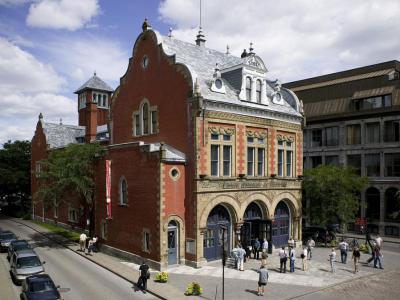
Standing prominently on Place d’Youville, the former Central Fire Station in Montreal is a distinctive landmark that blends architectural charm with deep historical roots. Built between 1903 and 1904 by architects Joseph Perrault and Simon Lesage, the building was originally designed as the headquarters for the Montreal Fire Department. Its Flemish-inspired architecture-uncommon in the city at the time-features buff sandstone, red brick, a mansard roof with a skylight, and a striking square tower capped by a hipped roof. This stylistic choice set it apart from surrounding structures and continues to draw the eye today.
When the station opened in 1904, it operated with horse-drawn steam pumps, symbolizing the era’s firefighting technology. By 1908, it had transitioned to a district station, and the gradual modernization of equipment saw motor vehicles replace horses by 1931. The building remained in active service until 1972, faithfully serving Montreal’s growing urban population. Following its decommissioning, the structure stood unused until its revival in the early 1980s.
In 1983, the fire station was reborn as the Montreal History Centre, a museum dedicated to preserving and presenting the city’s heritage. This new function not only ensured the building’s preservation but also allowed visitors to engage with Montreal’s past in a setting rich with historical resonance. The unique combination of civic architecture and cultural programming made it a meaningful stop for both locals and tourists.
Though the museum has since moved to a new location, the former Central Fire Station remains a symbol of Montreal’s adaptive reuse of heritage buildings. Its story reflects the city’s ongoing dialogue between preservation and progress-a place where bricks and mortar continue to speak of lives, labor, and transformation across generations.
When the station opened in 1904, it operated with horse-drawn steam pumps, symbolizing the era’s firefighting technology. By 1908, it had transitioned to a district station, and the gradual modernization of equipment saw motor vehicles replace horses by 1931. The building remained in active service until 1972, faithfully serving Montreal’s growing urban population. Following its decommissioning, the structure stood unused until its revival in the early 1980s.
In 1983, the fire station was reborn as the Montreal History Centre, a museum dedicated to preserving and presenting the city’s heritage. This new function not only ensured the building’s preservation but also allowed visitors to engage with Montreal’s past in a setting rich with historical resonance. The unique combination of civic architecture and cultural programming made it a meaningful stop for both locals and tourists.
Though the museum has since moved to a new location, the former Central Fire Station remains a symbol of Montreal’s adaptive reuse of heritage buildings. Its story reflects the city’s ongoing dialogue between preservation and progress-a place where bricks and mortar continue to speak of lives, labor, and transformation across generations.
8) Mary, Queen of the World Cathedral (Cathedrale Marie-Reine-du-Monde) (must see)
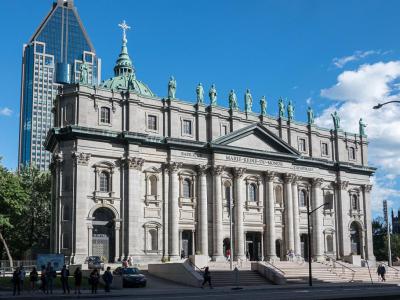
Montréal has many beautiful churches and this is one of those that you should see when visiting downtown. Despite being nestled among many high-rise structures, its dome is unmistakable, modeled on Saint Peter's in Rome. Though somewhat “scaled-down”, the church is a perfect replica of the same, right down to the red copper baldachin over the altar that was fully hand-carved in Rome.
Dating back to in the 1890s, the cathedral appears older than its years, while at the same time feeling relatively modern as compared to Notre-Dame across town or even other cathedrals in other major cities – mostly due to the cleaner, simpler design. While not particularly ornate, the interior is still pretty, marked by soft hues that lend a gentle and slightly feminine touch. On a sunny day, the brilliant colors of the stained glass windows make it easy to observe the details – from the vibrant ceiling to the altar and the beautiful organ pipes at the back. You may also notice the baptismal font is surmounted by an impressive stucco crucifix – one of the most important pieces of religious sculpture in Quebec.
While the floor and walls are covered in Italian marble the main works of art are dedicated to the city's devout Catholics, including depictions of Marguerite Bourgeoys and Grey Nuns founder Marguerite d'Youville. Like Saint Peter's, the cathedral also has 13 statues that adorn the facade, but breaking with tradition they do not represent Jesus and the 12 apostles. Instead, they represent the patron saints of parishes that offered them to the diocese and include Saint Hyacinthe, Saint Francis of Assisi, and Saint John the Baptist.
Why You Should Visit:
Peaceful and ornate, this Cathedral will make you feel as if you are in an old basilica in Europe.
Tip:
Don't forget to check the gift shop that has many unique gift and jewelry items.
Dating back to in the 1890s, the cathedral appears older than its years, while at the same time feeling relatively modern as compared to Notre-Dame across town or even other cathedrals in other major cities – mostly due to the cleaner, simpler design. While not particularly ornate, the interior is still pretty, marked by soft hues that lend a gentle and slightly feminine touch. On a sunny day, the brilliant colors of the stained glass windows make it easy to observe the details – from the vibrant ceiling to the altar and the beautiful organ pipes at the back. You may also notice the baptismal font is surmounted by an impressive stucco crucifix – one of the most important pieces of religious sculpture in Quebec.
While the floor and walls are covered in Italian marble the main works of art are dedicated to the city's devout Catholics, including depictions of Marguerite Bourgeoys and Grey Nuns founder Marguerite d'Youville. Like Saint Peter's, the cathedral also has 13 statues that adorn the facade, but breaking with tradition they do not represent Jesus and the 12 apostles. Instead, they represent the patron saints of parishes that offered them to the diocese and include Saint Hyacinthe, Saint Francis of Assisi, and Saint John the Baptist.
Why You Should Visit:
Peaceful and ornate, this Cathedral will make you feel as if you are in an old basilica in Europe.
Tip:
Don't forget to check the gift shop that has many unique gift and jewelry items.
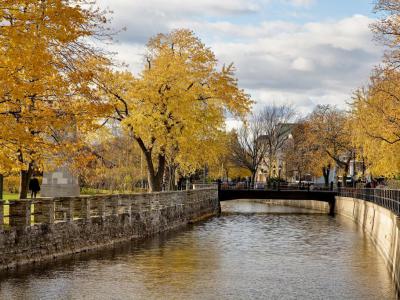
9) Lachine Canal
The Lachine Canal traverses the southwestern part of the Island of Montreal, covering a distance of 14.5 kilometers. Prior to the canal's construction, there existed a body of water called "Lac Saint Pierre," which was depicted on Montreal maps from 1700, 1744, and the 1761 map titled "The isles of Montreal. As they have been surveyed by the French engineers."
The name of the canal, Lachine, originates from the French word for China, "La Chine." European explorers aimed to discover a passage from New France to the Western Sea and, subsequently, to China. Consequently, the region where the canal was built was named Lachine.
Recognized as a National Historic Site of Canada, the canal holds the official designation of the Lachine Canal National Historic Site of Canada. The Fur Trade at Lachine National Historic Site is situated near the western terminus of the canal.
With the opening of the Saint Lawrence Seaway, the Lachine Canal lost its industrial significance. However, the canal was revitalized as a leisure and recreational space. In 2002, leisure boats were permitted to dock along the canal, and in 1977, a bike path spanning the entire canal was established.
The name of the canal, Lachine, originates from the French word for China, "La Chine." European explorers aimed to discover a passage from New France to the Western Sea and, subsequently, to China. Consequently, the region where the canal was built was named Lachine.
Recognized as a National Historic Site of Canada, the canal holds the official designation of the Lachine Canal National Historic Site of Canada. The Fur Trade at Lachine National Historic Site is situated near the western terminus of the canal.
With the opening of the Saint Lawrence Seaway, the Lachine Canal lost its industrial significance. However, the canal was revitalized as a leisure and recreational space. In 2002, leisure boats were permitted to dock along the canal, and in 1977, a bike path spanning the entire canal was established.
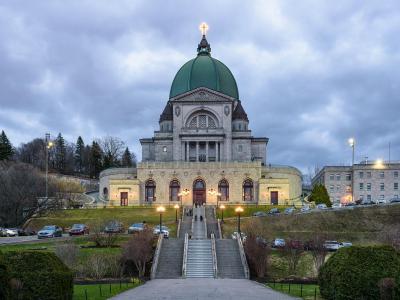
10) Saint Joseph's Oratory of Mount-Royal (must see)
Saint Joseph's Oratory of Mount Royal is a Roman Catholic minor basilica and national shrine situated on Queen Mary Road in Montreal, Quebec's Côte-des-Neiges neighborhood. It holds the distinction of being Canada's largest church and is designated as a National Historic Site of Canada. The oratory's location on Mount Royal's Westmount Summit grants it prominence, with its towering height and one of the world's largest church domes.
Saint André Bessette established the Oratory in 1904 as a tribute to his patron saint, Saint Joseph. Over the course of six decades, countless architects and workers contributed to its creation. The Oratory's grandeur, featuring a Renaissance Revival facade and an Art Deco interior, has made it an iconic landmark globally, drawing more than 2 million visitors and pilgrims annually.
Remarkably, the Oratory is Montreal's tallest structure, rising over 30 meters above the summit of Mount Royal, making it visible from several kilometers away. It stands out for its defiance of the height restrictions outlined in the municipal building code of Montreal, which generally prohibits structures, including skyscrapers, from surpassing the mountain's elevation.
Since 2018, extensive renovations have been underway on the Oratory's dome and lantern, with completion expected in 2024. The esteemed architecture firms Atelier TAG and Architecture49 have undertaken this project. Once finished, it will provide secure access to the lantern, affording an unparalleled 360-degree view of the city and the mountain.
Why You Should Visit:
Enormous upper church and lower crypt church. Accessible by either stairs or escalators/elevators. Terraces have outstanding views looking down on Montreal. Awe-inspiring.
Tip:
Free pipe organ concerts with organists from around the world on Sunday afternoons!
Saint André Bessette established the Oratory in 1904 as a tribute to his patron saint, Saint Joseph. Over the course of six decades, countless architects and workers contributed to its creation. The Oratory's grandeur, featuring a Renaissance Revival facade and an Art Deco interior, has made it an iconic landmark globally, drawing more than 2 million visitors and pilgrims annually.
Remarkably, the Oratory is Montreal's tallest structure, rising over 30 meters above the summit of Mount Royal, making it visible from several kilometers away. It stands out for its defiance of the height restrictions outlined in the municipal building code of Montreal, which generally prohibits structures, including skyscrapers, from surpassing the mountain's elevation.
Since 2018, extensive renovations have been underway on the Oratory's dome and lantern, with completion expected in 2024. The esteemed architecture firms Atelier TAG and Architecture49 have undertaken this project. Once finished, it will provide secure access to the lantern, affording an unparalleled 360-degree view of the city and the mountain.
Why You Should Visit:
Enormous upper church and lower crypt church. Accessible by either stairs or escalators/elevators. Terraces have outstanding views looking down on Montreal. Awe-inspiring.
Tip:
Free pipe organ concerts with organists from around the world on Sunday afternoons!
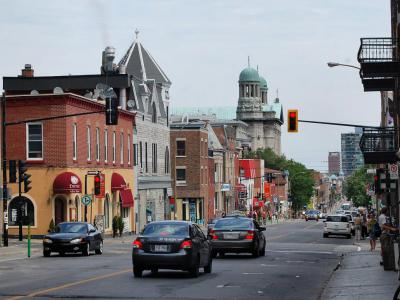
11) Plateau Mont-Royal (must see)
Situated east of Mont-Royal and north of downtown, Plateau Mont-Royal is a must-see destination when visiting Montreal. Its name stems from its location on the flat terrain of Sherbrooke Street.
Historically, the western part of the Plateau was inhabited by Jews, while the eastern part was predominantly occupied by Quebecois. It was primarily a working-class neighborhood and served as the residence for renowned Quebec writers like Mordecai Richler and Michel Tremblay. Their literary works often featured the Plateau during the 1950s and 1960s.
Prepare to be pleasantly enchanted by the lively ambiance of Plateau Mont-Royal, characterized by vibrant, colorful houses, cozy bookstores, delightful cafes, and a friendly demeanor. Don't miss the chance to explore popular attractions along Saint Laurent Boulevard.
A visit to Schwartz's Deli is a must to experience the origins of the delectable Montreal smoked meat. If you're there in the summer, you can immerse yourself in the bustling street fair that takes place on weekends. This neighborhood emanates a bohemian atmosphere and benefits from its proximity to the esteemed McGill University, which has attracted many residents to settle here.
Presently, the Saint-Denis and Saint-Laurent strip is lined with an array of nightclubs, upscale restaurants, and exclusive fashion stores, offering a diverse range of entertainment options.
Why You Should Visit:
This part of town has a unique architecture with many wrought iron staircases outside the homes. Really elegant area and a great place to walk.
It's worth a trip just to visit Parc de La Fontaine during the summer or fall.
Tip:
Nightlife is good: make sure you go by Saint Denis or Saint Laurent streets.
Historically, the western part of the Plateau was inhabited by Jews, while the eastern part was predominantly occupied by Quebecois. It was primarily a working-class neighborhood and served as the residence for renowned Quebec writers like Mordecai Richler and Michel Tremblay. Their literary works often featured the Plateau during the 1950s and 1960s.
Prepare to be pleasantly enchanted by the lively ambiance of Plateau Mont-Royal, characterized by vibrant, colorful houses, cozy bookstores, delightful cafes, and a friendly demeanor. Don't miss the chance to explore popular attractions along Saint Laurent Boulevard.
A visit to Schwartz's Deli is a must to experience the origins of the delectable Montreal smoked meat. If you're there in the summer, you can immerse yourself in the bustling street fair that takes place on weekends. This neighborhood emanates a bohemian atmosphere and benefits from its proximity to the esteemed McGill University, which has attracted many residents to settle here.
Presently, the Saint-Denis and Saint-Laurent strip is lined with an array of nightclubs, upscale restaurants, and exclusive fashion stores, offering a diverse range of entertainment options.
Why You Should Visit:
This part of town has a unique architecture with many wrought iron staircases outside the homes. Really elegant area and a great place to walk.
It's worth a trip just to visit Parc de La Fontaine during the summer or fall.
Tip:
Nightlife is good: make sure you go by Saint Denis or Saint Laurent streets.
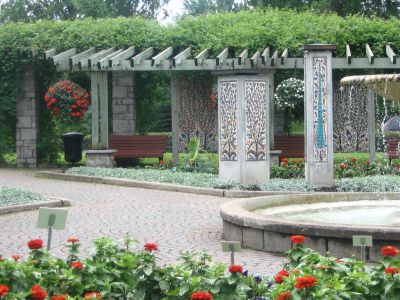
12) Montreal Botanical Garden (must see)
The Montreal Botanical Garden is a vast botanical garden located in Montreal. Encompassing 75 hectares (190 acres) of beautifully curated thematic gardens and greenhouses, it holds great significance as one of the world's most prominent botanical gardens. Recognized as a National Historic Site of Canada in 2008, its extensive collections and top-notch facilities contribute to its esteemed status.
Established in 1931 during the challenging times of the Great Depression, the garden was brought to life through the efforts of Mayor Camillien Houde and Brother Marie-Victorin, who tirelessly campaigned for its creation. The visionary design of the grounds was executed by Henry Teuscher, while the architect Lucien F. Kéroack skillfully crafted the Art Deco style administration building. Today, the garden nurtures around 20,000 plant species, showcasing a diverse range of alpine plants, ferns, bonsai, commercially important plants, medicinal herbs, woodland plants, cacti, succulents, begonias, aroids, bromeliads, and gesneriads. Additionally, it houses a herbarium with nearly 100,000 reference specimens.
The Montreal Botanical Garden serves as an educational hub, enlightening both the general public and horticulture students. It plays a crucial role in conserving endangered plant species. Moreover, within its grounds, you'll find a botanical research institution, the Société d'astronomie de Montréal, and the Montreal Insectarium. The Garden's dedicated staff also manages the Ferme Angrignon educational farm and petting zoo, even though it's located offsite.
While there is an admission fee, city residents have the privilege of obtaining a pass that grants them free access to the outdoor gardens. Consequently, many people visit regularly, drawn to the tranquil atmosphere and the chance to relax beneath the shade of the trees. Notably, during the summer season (May to September), the outdoor areas are open to everyone free of charge from 6 pm until nightfall.
Why You Should Visit:
An all-season place to go.
In the Winter you can stick to the glass house; in the Spring you start with the butterflies in the glass house then a quick tour of the gardens and Insectarium;
In Summer you also go to the gardens (Chinese & Japanese); in the Fall you go to see the pumpkins and the lanterns in the Chinese garden and the colors in the arboretum part.
Tip:
Leave time for a drink on the large patio outside the restaurant which features excellent local beers and ciders.
Established in 1931 during the challenging times of the Great Depression, the garden was brought to life through the efforts of Mayor Camillien Houde and Brother Marie-Victorin, who tirelessly campaigned for its creation. The visionary design of the grounds was executed by Henry Teuscher, while the architect Lucien F. Kéroack skillfully crafted the Art Deco style administration building. Today, the garden nurtures around 20,000 plant species, showcasing a diverse range of alpine plants, ferns, bonsai, commercially important plants, medicinal herbs, woodland plants, cacti, succulents, begonias, aroids, bromeliads, and gesneriads. Additionally, it houses a herbarium with nearly 100,000 reference specimens.
The Montreal Botanical Garden serves as an educational hub, enlightening both the general public and horticulture students. It plays a crucial role in conserving endangered plant species. Moreover, within its grounds, you'll find a botanical research institution, the Société d'astronomie de Montréal, and the Montreal Insectarium. The Garden's dedicated staff also manages the Ferme Angrignon educational farm and petting zoo, even though it's located offsite.
While there is an admission fee, city residents have the privilege of obtaining a pass that grants them free access to the outdoor gardens. Consequently, many people visit regularly, drawn to the tranquil atmosphere and the chance to relax beneath the shade of the trees. Notably, during the summer season (May to September), the outdoor areas are open to everyone free of charge from 6 pm until nightfall.
Why You Should Visit:
An all-season place to go.
In the Winter you can stick to the glass house; in the Spring you start with the butterflies in the glass house then a quick tour of the gardens and Insectarium;
In Summer you also go to the gardens (Chinese & Japanese); in the Fall you go to see the pumpkins and the lanterns in the Chinese garden and the colors in the arboretum part.
Tip:
Leave time for a drink on the large patio outside the restaurant which features excellent local beers and ciders.
