Custom Walk in New York, New York by jananisuresh_8b286 created on 2025-05-18
Guide Location: USA » New York
Guide Type: Custom Walk
# of Sights: 5
Tour Duration: 5 Hour(s)
Travel Distance: 12.6 Km or 7.8 Miles
Share Key: 2G2H2
Guide Type: Custom Walk
# of Sights: 5
Tour Duration: 5 Hour(s)
Travel Distance: 12.6 Km or 7.8 Miles
Share Key: 2G2H2
How It Works
Please retrieve this walk in the GPSmyCity app. Once done, the app will guide you from one tour stop to the next as if you had a personal tour guide. If you created the walk on this website or come to the page via a link, please follow the instructions below to retrieve the walk in the app.
Retrieve This Walk in App
Step 1. Download the app "GPSmyCity: Walks in 1K+ Cities" on Apple App Store or Google Play Store.



Step 2. In the GPSmyCity app, download(or launch) the guide "New York Map and Walking Tours".
Step 3. Tap the menu button located at upper right corner of the "Walks" screen and select "Retrieve custom walk". Enter the share key: 2G2H2
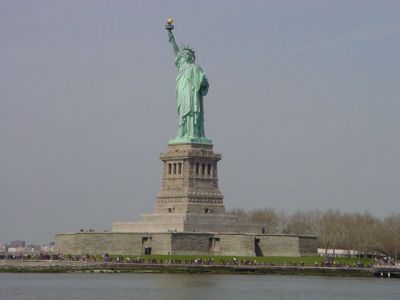
1) Statue of Liberty (must see)
In modern times, few are aware that the world-renowned Statue of Liberty in New York Harbor bears the full title of "Liberty Enlightening the World" (or "La Liberté éclairant le monde" in French). The reason for its French designation lies in the fact that this colossal copper figure was a gift from France.
Frédéric Auguste Bartholdi, the French sculptor, created the statue, drawing inspiration from the words of his compatriot, Édouard René de Laboulaye, a law professor and politician who believed that a monument celebrating American independence should be a joint endeavor between the French and American people. True to this vision, France financed the statue while the United States provided the site and constructed the pedestal.
Every element of the statue was crafted in France. The metal framework, in particular, was fashioned by Gustave Eiffel, renowned for his iconic creation, the Eiffel Tower in Paris (which was completed three years later in 1889). The statue's components were shipped in crates across the Atlantic and assembled atop the finished pedestal on what was then known as Bedloe's Island (now Liberty Island). Bartholdi deliberately chose this location, as he envisioned that passing vessels would sail by, and passengers, particularly those visiting the U.S. for the first time, would perceive the statue as a welcoming symbol.
On October 28, 1886, the statue was dedicated in a ceremony that coincided with the centennial anniversary of the signing of the U.S. Declaration of Independence. President Grover Cleveland presided over the momentous occasion.
The robed female figure represents Libertas, the Roman goddess of freedom. She holds a torch aloft in one hand and carries a tabula ansata, a tablet evoking the concept of law, inscribed with the date of the U.S. Declaration of Independence, July 4, 1776, in the other. At her feet lie a broken shackle and a chain, symbolizing the nation's abolition of slavery.
Popular accounts, though unverified, claim that the sculptor modeled the woman's face after his own mother, Charlotte Beysser Bartholdi. He intentionally designed the figure with a strong, uncomplicated silhouette, which would be accentuated by its prominent position in the harbor, allowing viewers sailing toward Manhattan to perceive the statue from varying perspectives.
Presently, visitors can explore the interior of the statue through a glass ceiling, enhanced lighting, and a surrounding video system. They are free to roam Liberty Island at their leisure, appreciating the serene surroundings, visiting the museum, and perusing nearby gift shops.
Frédéric Auguste Bartholdi, the French sculptor, created the statue, drawing inspiration from the words of his compatriot, Édouard René de Laboulaye, a law professor and politician who believed that a monument celebrating American independence should be a joint endeavor between the French and American people. True to this vision, France financed the statue while the United States provided the site and constructed the pedestal.
Every element of the statue was crafted in France. The metal framework, in particular, was fashioned by Gustave Eiffel, renowned for his iconic creation, the Eiffel Tower in Paris (which was completed three years later in 1889). The statue's components were shipped in crates across the Atlantic and assembled atop the finished pedestal on what was then known as Bedloe's Island (now Liberty Island). Bartholdi deliberately chose this location, as he envisioned that passing vessels would sail by, and passengers, particularly those visiting the U.S. for the first time, would perceive the statue as a welcoming symbol.
On October 28, 1886, the statue was dedicated in a ceremony that coincided with the centennial anniversary of the signing of the U.S. Declaration of Independence. President Grover Cleveland presided over the momentous occasion.
The robed female figure represents Libertas, the Roman goddess of freedom. She holds a torch aloft in one hand and carries a tabula ansata, a tablet evoking the concept of law, inscribed with the date of the U.S. Declaration of Independence, July 4, 1776, in the other. At her feet lie a broken shackle and a chain, symbolizing the nation's abolition of slavery.
Popular accounts, though unverified, claim that the sculptor modeled the woman's face after his own mother, Charlotte Beysser Bartholdi. He intentionally designed the figure with a strong, uncomplicated silhouette, which would be accentuated by its prominent position in the harbor, allowing viewers sailing toward Manhattan to perceive the statue from varying perspectives.
Presently, visitors can explore the interior of the statue through a glass ceiling, enhanced lighting, and a surrounding video system. They are free to roam Liberty Island at their leisure, appreciating the serene surroundings, visiting the museum, and perusing nearby gift shops.
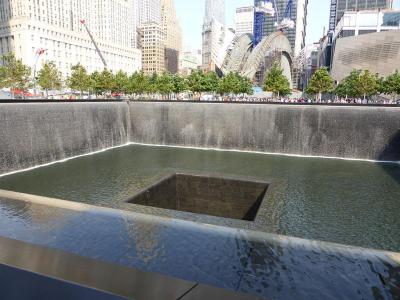
2) National September 11 Memorial & Museum (must see)
September 11, 2001, Tuesday morning, 7 am. Flights were bound from New York to points west. By 8:45 am an American Airlines Boeing 767 slammed into the north tower of the World Trade Center. Less than 20 minutes later, another 767 hit the south tower. The Twin Towers collapsed in flames and 2,977 people died. This day would never be forgotten.
The National September 11 Memorial & Museum is a memorial and museum in New York City commemorating the September 11, 2001, and the 1993 World Trade Center bombing attacks. By November 2003, the memorial design project had been awarded to architect Michael Arad and landscape architect Peter Walker. Their memorial is called "Reflecting Absence." It is a forest of white oak trees surrounding two recessed pools formed by the footprints of the Twin Towers.
The park is level with the street. The names of victims who died from the attacks, including the 1993 bombing, are inscribed on parapets around the waterfalls. The waterfalls are intended to mute outside noises and create a meditative atmosphere at the site.
A callery pear tree that survived, called the "Survivor Tree," was replanted at the World Trade Center. It is thriving. Six other "survivor" pear trees and linden trees have been planted at other sites.
The "Memorial Glade" is a path that follows a temporary ramp used by first responders. It has six enormous stones that jut up through the ground as if violently pushed. The stones simply "strength and resistance."
The September 11 Museum at the site opened in May 2014. It has a collection of over 40,000 images, 14,000 artifacts, and about 3,500 recordings, including 500 hours of videos. There are steel items from the towers, such as the "Last Column." The museum is designed by the architectural firm Davis Brody Bond. It is 70 feet underground, accessible through a pavilion.
The pavilion follows a deconstructivist design, resembling collapsed buildings. Two "tridents" from the towers are inside. One of the museum walls is the old "slurry" wall holding back the Hudson River. The bodies of 1,115 victims were moved to a bedrock crypt space as part of the museum.
The National September 11 Memorial & Museum is a memorial and museum in New York City commemorating the September 11, 2001, and the 1993 World Trade Center bombing attacks. By November 2003, the memorial design project had been awarded to architect Michael Arad and landscape architect Peter Walker. Their memorial is called "Reflecting Absence." It is a forest of white oak trees surrounding two recessed pools formed by the footprints of the Twin Towers.
The park is level with the street. The names of victims who died from the attacks, including the 1993 bombing, are inscribed on parapets around the waterfalls. The waterfalls are intended to mute outside noises and create a meditative atmosphere at the site.
A callery pear tree that survived, called the "Survivor Tree," was replanted at the World Trade Center. It is thriving. Six other "survivor" pear trees and linden trees have been planted at other sites.
The "Memorial Glade" is a path that follows a temporary ramp used by first responders. It has six enormous stones that jut up through the ground as if violently pushed. The stones simply "strength and resistance."
The September 11 Museum at the site opened in May 2014. It has a collection of over 40,000 images, 14,000 artifacts, and about 3,500 recordings, including 500 hours of videos. There are steel items from the towers, such as the "Last Column." The museum is designed by the architectural firm Davis Brody Bond. It is 70 feet underground, accessible through a pavilion.
The pavilion follows a deconstructivist design, resembling collapsed buildings. Two "tridents" from the towers are inside. One of the museum walls is the old "slurry" wall holding back the Hudson River. The bodies of 1,115 victims were moved to a bedrock crypt space as part of the museum.
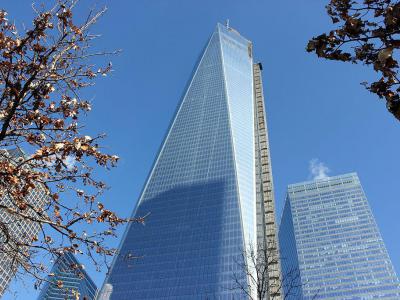
3) One World Observatory (must see)
One World Trade Center in lower Manhattan is a highly reflective, elegant steel and glass wedge tapering skyward for 1,776 feet which is a reminder of the year of U.S. Independence. Designed by architect David Childs, One World Trade Center replaces the Towers lost in the attack of September 9, 2001. It is presently the tallest tower in North America.
The Observatory is located on the 100th, 101st, and 102nd floors of One World Trade Center. It is a three-story observation deck perched 1,268 feet above street level, offering views of New York City's iconic sights, surrounding waters, and skyline. Visitors and tenants each have their entrances to the building. The viewing deck of the center is on the 100th floor. The 101st floor houses a food court. The 102nd floor is an events venue.
Visitors can explore the various levels of the observatory, filled with interactive and inspirational displays. City Pulse, an interactive tool provided by Tour Ambassadors, gives visitors information about New York, its facts, and its legends. There is an admission charge with discounts for children and seniors. Admission is free for 9/11 responders and victims' families.
One World Observatory features a restaurant, a cafe, and a bar with sprawling views of the New York City skyline. The cafe is called "One Cafe," the bar and "small plates" grill are called "One Mix," and for more ambitious diners is a restaurant "One Dining." One is the name for all three places. To enter the restaurant, purchase a full Observatory ticket is required.
The Observatory is located on the 100th, 101st, and 102nd floors of One World Trade Center. It is a three-story observation deck perched 1,268 feet above street level, offering views of New York City's iconic sights, surrounding waters, and skyline. Visitors and tenants each have their entrances to the building. The viewing deck of the center is on the 100th floor. The 101st floor houses a food court. The 102nd floor is an events venue.
Visitors can explore the various levels of the observatory, filled with interactive and inspirational displays. City Pulse, an interactive tool provided by Tour Ambassadors, gives visitors information about New York, its facts, and its legends. There is an admission charge with discounts for children and seniors. Admission is free for 9/11 responders and victims' families.
One World Observatory features a restaurant, a cafe, and a bar with sprawling views of the New York City skyline. The cafe is called "One Cafe," the bar and "small plates" grill are called "One Mix," and for more ambitious diners is a restaurant "One Dining." One is the name for all three places. To enter the restaurant, purchase a full Observatory ticket is required.
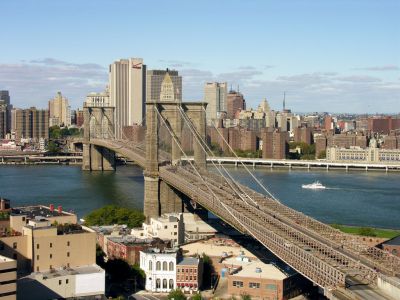
4) Brooklyn Bridge (must see)
Seeking the most dramatic entrance into Manhattan?—The Brooklyn Bridge is the one. Stretching across the East River like a steel-wire tightrope for giants, this is one of New York’s most recognizable silhouettes since 1883—equal parts engineering flex and architectural poetry. The country took notice of it rather early, awarding the bridge the National Historic Landmark status in 1964, following which, civil engineers gave it their own stamp of admiration (as a National Historic Civil Engineering Landmark) in 1972.
The idea of linking Brooklyn and Manhattan had been floating around since the early 1800s, but it took the engineering duo—of John Augustus Roebling with the design, and his son Washington with the execution—to actually make it happen. Construction kicked off in 1869, and after fourteen ambitious, chaotic, and occasionally hazardous years, the bridge finally opened on May 24, 1883. President Chester A. Arthur even showed up for the ceremony, thus proving that ribbon-cuttings were the hot ticket long before Instagram...
Architecturally, the bridge is a hybrid marvel: part suspension bridge, part cable-stayed experiment, all held together by an orchestra of vertical and diagonal cables. Its stone towers, crowned with Neo-Gothic arches, rise from the river like a pair of cathedral doorways, guiding a roadway that stays well above passing ships thanks to long, raised viaducts.
The structure's numbers are just as solid. The main span clocks in at nearly 2,000 feet, the bridge itself expands and contracts by up to 16 inches, depending on the weather’s mood swings, and ships can glide under it with 127 feet of clearance to spare. Six trusses run beneath the roadway, while four enormous cables hold everything aloft—convincing evidence that 19th-century engineering was not messing around...
But the bridge saves its finest touch for people on foot. Eighteen feet above the cars is the elevated promenade, a wooden boardwalk divided down the middle, so cyclists and pedestrians can coexist in relative peace. Step onto it, and the city opens around you—skyline ahead, river below, and the gentle hum of New York all around. Indeed, it’s more than just a crossing, but a small, unforgettable performance...
The idea of linking Brooklyn and Manhattan had been floating around since the early 1800s, but it took the engineering duo—of John Augustus Roebling with the design, and his son Washington with the execution—to actually make it happen. Construction kicked off in 1869, and after fourteen ambitious, chaotic, and occasionally hazardous years, the bridge finally opened on May 24, 1883. President Chester A. Arthur even showed up for the ceremony, thus proving that ribbon-cuttings were the hot ticket long before Instagram...
Architecturally, the bridge is a hybrid marvel: part suspension bridge, part cable-stayed experiment, all held together by an orchestra of vertical and diagonal cables. Its stone towers, crowned with Neo-Gothic arches, rise from the river like a pair of cathedral doorways, guiding a roadway that stays well above passing ships thanks to long, raised viaducts.
The structure's numbers are just as solid. The main span clocks in at nearly 2,000 feet, the bridge itself expands and contracts by up to 16 inches, depending on the weather’s mood swings, and ships can glide under it with 127 feet of clearance to spare. Six trusses run beneath the roadway, while four enormous cables hold everything aloft—convincing evidence that 19th-century engineering was not messing around...
But the bridge saves its finest touch for people on foot. Eighteen feet above the cars is the elevated promenade, a wooden boardwalk divided down the middle, so cyclists and pedestrians can coexist in relative peace. Step onto it, and the city opens around you—skyline ahead, river below, and the gentle hum of New York all around. Indeed, it’s more than just a crossing, but a small, unforgettable performance...
5) Chelsea Market (must see)
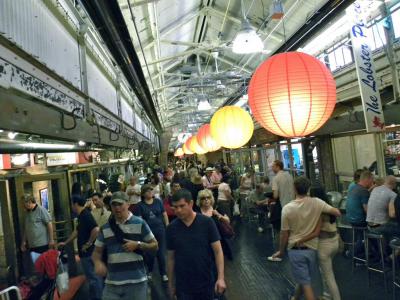
The Chelsea Market stands as a remarkable testament to both redevelopment and preservation, as it has revitalized a former Nabisco factory (where the iconic Oreo cookie was originally crafted), into a bustling shopping destination, appealing to both culinary enthusiasts and fashion aficionados. With over two dozen food vendors to choose from, foodies can revel in a myriad of delectable options. Experience the fusion of Korean flavors with ramen at MOKBAR, savor delectable crepes at BAR SUZETTE, relish in Cambodian sandwiches at NUM PANG, or indulge in piping hot mini-doughnuts at DOUGHNUTTERY. For a more indulgent treat, savor the impeccable seafood and raw bar at CULL & PISTOL, or enjoy upscale American comfort food at Friedman's Lunch.
Those seeking non-food delights may peruse the curated collection of Moroccan art and design at IMPORTS FROM MARRAKESH, explore the latest literary gems at POSMAN BOOKS, find a fashionable outfit at ANTHROPOLOGIE, or browse the expertly-staffed CHELSEA WINE VAULT for a bottle of fine wine. At the Tenth Ave entrance, you'll discover ARTISTS AND FLEAS, a permanent market showcasing the creations of local designers and craftspeople. This vibrant marketplace is the perfect spot to uncover a unique wallet, trendy sunglasses, or a striking statement piece of jewelry.
Those seeking non-food delights may peruse the curated collection of Moroccan art and design at IMPORTS FROM MARRAKESH, explore the latest literary gems at POSMAN BOOKS, find a fashionable outfit at ANTHROPOLOGIE, or browse the expertly-staffed CHELSEA WINE VAULT for a bottle of fine wine. At the Tenth Ave entrance, you'll discover ARTISTS AND FLEAS, a permanent market showcasing the creations of local designers and craftspeople. This vibrant marketplace is the perfect spot to uncover a unique wallet, trendy sunglasses, or a striking statement piece of jewelry.
