Custom Walk in San Juan, Puerto Rico by brittsarge227_df393 created on 2025-05-18
Guide Location: Puerto Rico » San Juan
Guide Type: Custom Walk
# of Sights: 7
Tour Duration: 1 Hour(s)
Travel Distance: 2 Km or 1.2 Miles
Share Key: MERD7
Guide Type: Custom Walk
# of Sights: 7
Tour Duration: 1 Hour(s)
Travel Distance: 2 Km or 1.2 Miles
Share Key: MERD7
How It Works
Please retrieve this walk in the GPSmyCity app. Once done, the app will guide you from one tour stop to the next as if you had a personal tour guide. If you created the walk on this website or come to the page via a link, please follow the instructions below to retrieve the walk in the app.
Retrieve This Walk in App
Step 1. Download the app "GPSmyCity: Walks in 1K+ Cities" on Apple App Store or Google Play Store.



Step 2. In the GPSmyCity app, download(or launch) the guide "San Juan Map and Walking Tours".
Step 3. Tap the menu button located at upper right corner of the "Walks" screen and select "Retrieve custom walk". Enter the share key: MERD7
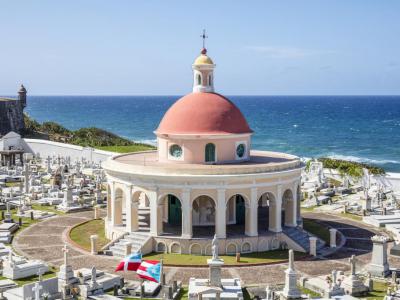
1) Santa María Magdalena de Pazzis Cemetery (must see)
Santa María Magdalena de Pazzis Cemetery is a colonial-era cemetery located in Old San Juan, Puerto Rico. It is the final resting place of many of Puerto Rico's most prominent natives and residents. Construction began in 1863 under the auspices of Ignacio Mascaro. The cemetery is located outside the walls of Fort San Felipe del Morro fortress, one of the island's most famous landmarks.
It was named in honor of Saint Maria Magdalena de Pazzi. The location of the cemetery is central to the Puerto Rican belief in the separation of death and life. The colonial Spanish government at the time the construction of the cemetery commenced, viewed death with fear because it was a mystery. Therefore, they decided to build the cemetery to overlook the Atlantic Ocean to symbolize the spirit's journey to cross over to the afterlife.
It was named in honor of Saint Maria Magdalena de Pazzi. The location of the cemetery is central to the Puerto Rican belief in the separation of death and life. The colonial Spanish government at the time the construction of the cemetery commenced, viewed death with fear because it was a mystery. Therefore, they decided to build the cemetery to overlook the Atlantic Ocean to symbolize the spirit's journey to cross over to the afterlife.
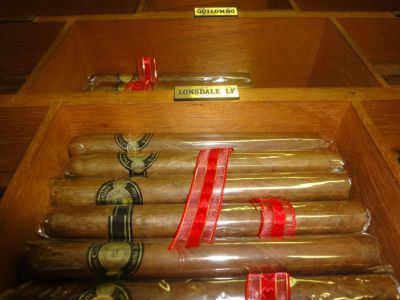
2) Don Collins Cigars
The Spanish brought them back to Spain from Puerto Rico and called them “cigarillos.” Cigar making is still considered an art form in Puerto Rico. Until the late 1950’s, Puerto Rico was among the world’s largest tobacco exporters but the industry has since declined.
There is a variety of Puerto Rican made cigars, but one of the oldest and most well-known brands from the island is Don Collins. Don Collins cigars are handmade in the oldest surviving cigar factory in the Caribbean. The factory, which dates back to 1506, is available for tours. But you don’t have to go to the factory to take in the aroma of the famed tobacco, just walk into any one of the tobacco shops in San Juan or you can head straight to the Don Collins shop.
Don Collins cigars use 13 different kinds of Puerto Rican grown tobacco produced by independent farmers on the island. A Lonsdale bundle will run you about $140.00 while a bundle of Puros Indios costs $225.00. But if you want to try a few different ones, sample packs are available ranging in price from about $40 - $70 depending on how many cigars per pack. Price: $2-$17 per cigar.
What to buy here: Puerto Rican Cigars.
There is a variety of Puerto Rican made cigars, but one of the oldest and most well-known brands from the island is Don Collins. Don Collins cigars are handmade in the oldest surviving cigar factory in the Caribbean. The factory, which dates back to 1506, is available for tours. But you don’t have to go to the factory to take in the aroma of the famed tobacco, just walk into any one of the tobacco shops in San Juan or you can head straight to the Don Collins shop.
Don Collins cigars use 13 different kinds of Puerto Rican grown tobacco produced by independent farmers on the island. A Lonsdale bundle will run you about $140.00 while a bundle of Puros Indios costs $225.00. But if you want to try a few different ones, sample packs are available ranging in price from about $40 - $70 depending on how many cigars per pack. Price: $2-$17 per cigar.
What to buy here: Puerto Rican Cigars.
Image Courtesy of Stacey Hocheiser.
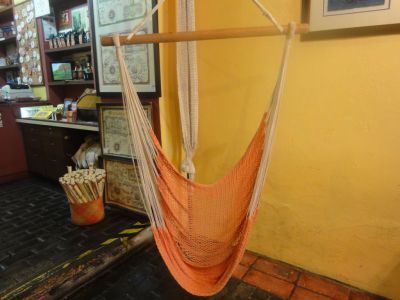
3) La Calle Shopping Mall
Hammock weaving has long been a specialty in the Puerto Rican town of San Sebastian, located in northwest corner of the island. The town even hosts a hammock festival in July. Legend has it that hammock weaving, like so many of the arts and craft making in Puerto Rico, has been handed down from the Taino Indians. Even the word “hammock” was most likely derived from the Taino word for this comfortable lounging chair, “hamaca.”
While most hammocks are designed and made in small towns across the island by individual craftspeople, you can find these authentic and durable hammocks being sold in a handful of places in the city of San Juan. The hammocks are made from cotton and cord and are sometimes dyed in bright colors. They come in a variety of sizes, like a chair for one person, or a double for two people. Some hammocks can even hold up to 450 pounds. Price: $50-$200.
What to buy here: Puerto Rican Hammocks.
While most hammocks are designed and made in small towns across the island by individual craftspeople, you can find these authentic and durable hammocks being sold in a handful of places in the city of San Juan. The hammocks are made from cotton and cord and are sometimes dyed in bright colors. They come in a variety of sizes, like a chair for one person, or a double for two people. Some hammocks can even hold up to 450 pounds. Price: $50-$200.
What to buy here: Puerto Rican Hammocks.
Image Courtesy of Stacey Hocheiser.
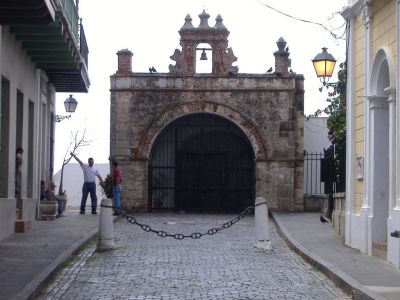
4) Capilla del Cristo (Chapel of Christ) (must see)
Capilla del Cristo (Chapel of Christ), is a small chapel located in the Old San Juan Historic District of Puerto Rico. Built in the 18th century, the structure has become a cultural icon of Puerto Rico and was saved from demolition in the 20th century. Most of the articles located at its altar are from 1753.
The chapel with its belfry is located in the Old San Juan Historic District in the western section of San Juan Islet, at the end of Cristo Street, now a pedestrian walkway. It sits on top of the old city walk. The chapel is a major tourist attraction in San Juan. Inside the chapel there is a famous painting called El Milagro ("The Miracle").
According to the legend, during a horse race that was taking place on the street where the chapel is located, a young rider and his horse took a bad fall and the rider went over the city wall but was miraculously saved. In a famous book about Puerto Rican legends, it says that the horse was killed but the rider lived. Afterwards, permission was granted to build the Catholic chapel and many festivals have been held, over the years, at the location to celebrate the miracle.
The chapel is open to publish on Saturday and Sunday from 12:00 to 18:00.
The chapel with its belfry is located in the Old San Juan Historic District in the western section of San Juan Islet, at the end of Cristo Street, now a pedestrian walkway. It sits on top of the old city walk. The chapel is a major tourist attraction in San Juan. Inside the chapel there is a famous painting called El Milagro ("The Miracle").
According to the legend, during a horse race that was taking place on the street where the chapel is located, a young rider and his horse took a bad fall and the rider went over the city wall but was miraculously saved. In a famous book about Puerto Rican legends, it says that the horse was killed but the rider lived. Afterwards, permission was granted to build the Catholic chapel and many festivals have been held, over the years, at the location to celebrate the miracle.
The chapel is open to publish on Saturday and Sunday from 12:00 to 18:00.
5) Parque de las Palomas (Pigeon Park)
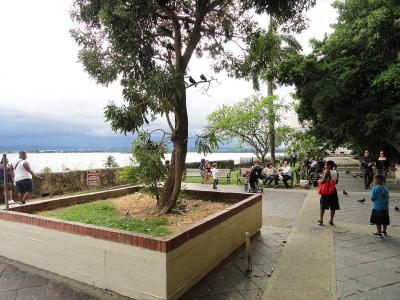
Pigeon Park offers a unique experience for visitors. A small kiosk sells pigeon feed, but these friendly birds are so accustomed to human presence that they may land on you even if you don't have food. The park is adorned with bird toys and decorations, lovingly put up and maintained by the adjacent Café del Niño. Adding to its charm, the park boasts a gorgeous overlook of San Juan and the San Juan Bay.
In the 18th century, the heavily fortified city of San Juan erected a wall for cannon placement, overlooking the southeastern coast of Puerto Rico. When the cannons were eventually removed or ceased to be used, pigeons found a new home in the sockets left behind. Over the years, families have delighted in bringing their children to feed the bustling pigeon population that settled in these historic remnants
In the 18th century, the heavily fortified city of San Juan erected a wall for cannon placement, overlooking the southeastern coast of Puerto Rico. When the cannons were eventually removed or ceased to be used, pigeons found a new home in the sockets left behind. Over the years, families have delighted in bringing their children to feed the bustling pigeon population that settled in these historic remnants
6) Paseo de la Princesa (Princess Promenade) (must see)
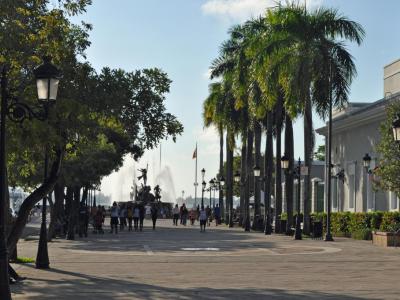
No trip to San Juan is complete without a stroll along the beautiful Princess Promenade, a carefully restored historic landmark, one of the most visited in the capital. Built in 1853, this esplanade skirts the curved city walls on the southern side of Old San Juan and is quite picture-perfect, with the San Juan Bay on the one side and the impressive fortification walls on the other.
The Promenade is equally suited for both walking and people-watching. It is also a great place to visit for families with children – easily accessible and traffic-free. The abundance of trees here provides plenty of shade, and there are lots of artisan stalls and street vendors selling local food. The area also often hosts festivals and fairs on weekends.
From here, you can make a slight detour to the narrow path, known as Paseo El Morro, leading to the historic El Morro Fort and the nearby San Juan Gate, which is the only city gate remaining from the colonial period.
Princess Promenade gets its name from an old 1837 building, located here, known as La Princesa. Originally, this building served as a municipal prison, although presently it houses the headquarters of the Puerto Rico Tourism Company and an art gallery.
The Promenade is equally suited for both walking and people-watching. It is also a great place to visit for families with children – easily accessible and traffic-free. The abundance of trees here provides plenty of shade, and there are lots of artisan stalls and street vendors selling local food. The area also often hosts festivals and fairs on weekends.
From here, you can make a slight detour to the narrow path, known as Paseo El Morro, leading to the historic El Morro Fort and the nearby San Juan Gate, which is the only city gate remaining from the colonial period.
Princess Promenade gets its name from an old 1837 building, located here, known as La Princesa. Originally, this building served as a municipal prison, although presently it houses the headquarters of the Puerto Rico Tourism Company and an art gallery.
7) Calle de la Fortaleza (Fortaleza Street) (must see)
Proudly presiding over the bay of San Juan is the imposing La Fortaleza (Fortress), formally known as the Palace of Santa Catalina, the official residence of the Governor of Puerto Rico. The narrow road leading to the building, called Fortaleza Street, is the main artery of San Juan's historic quarter, cutting through most of it, and is also the oldest street in the area. It starts from Columbus Square and for the whole of its duration is lined with governmental buildings, hotels, perfumeries, craft shops, jewelry stores, and restaurants, gradually transforming into Avenue Juan Ponce de León in the east.
Just like many other colorful cobblestone streets in Old San Juan, each one more photogenic than the other, this thoroughfare is an important tourist attraction, in large part due to its historical and cultural significance. Visiting Fortaleza Street should be an integral part of every Old San Juan itinerary.
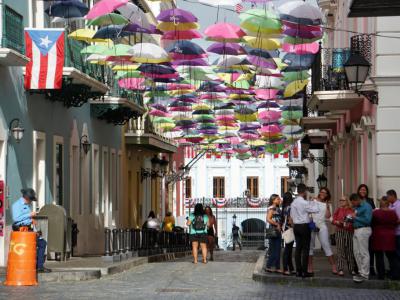
While the walled-in Old City has no shortage of vibrant photo spots, Fortaleza Street stands out above the rest due to the display of umbrellas – at the end of the street, near La Fortaleza itself – creating an overhead canopy that makes it particularly recognizable. These umbrellas tend to change colors during the year, from rainbow to all pink. Before the umbrellas, La Fortaleza Street was adorned with colorful kites.
Just like many other colorful cobblestone streets in Old San Juan, each one more photogenic than the other, this thoroughfare is an important tourist attraction, in large part due to its historical and cultural significance. Visiting Fortaleza Street should be an integral part of every Old San Juan itinerary.
While the walled-in Old City has no shortage of vibrant photo spots, Fortaleza Street stands out above the rest due to the display of umbrellas – at the end of the street, near La Fortaleza itself – creating an overhead canopy that makes it particularly recognizable. These umbrellas tend to change colors during the year, from rainbow to all pink. Before the umbrellas, La Fortaleza Street was adorned with colorful kites.
Sight description based on Wikipedia.
