Custom Walk in Stratford-upon-Avon, England by sales_982fb created on 2025-05-24
Guide Location: England » Stratford-upon-Avon
Guide Type: Custom Walk
# of Sights: 8
Tour Duration: 3 Hour(s)
Travel Distance: 5.9 Km or 3.7 Miles
Share Key: NKHJU
Guide Type: Custom Walk
# of Sights: 8
Tour Duration: 3 Hour(s)
Travel Distance: 5.9 Km or 3.7 Miles
Share Key: NKHJU
How It Works
Please retrieve this walk in the GPSmyCity app. Once done, the app will guide you from one tour stop to the next as if you had a personal tour guide. If you created the walk on this website or come to the page via a link, please follow the instructions below to retrieve the walk in the app.
Retrieve This Walk in App
Step 1. Download the app "GPSmyCity: Walks in 1K+ Cities" on Apple App Store or Google Play Store.



Step 2. In the GPSmyCity app, download(or launch) the guide "Stratford-upon-Avon Map and Walking Tours".
Step 3. Tap the menu button located at upper right corner of the "Walks" screen and select "Retrieve custom walk". Enter the share key: NKHJU
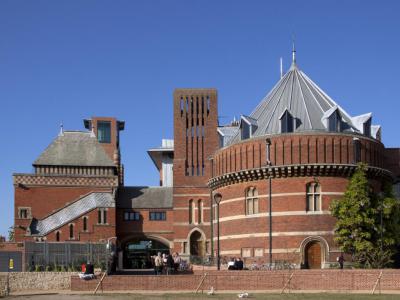
1) Royal Shakespeare Theatre (must see)
"O for a Muse of fire, that would ascend the brightest heaven of invention...." That comes to mind upon seeing the house and stage of the Royal Shakespeare Theatre (RSC) after its transformation of 2010. The Royal Shakespeare Theatre and the Swan Theatres reopened in 2010 after the extensive changes wrought by the Transformation Project.
This was a redo of the Shakespeare Memorial Theatre (SMT) which had been opened in 1932. The original theatre had been destroyed by fire six years earlier. The new SMT was designed by Elisabeth Scott. Ms Scott's theatre was renamed to Royal Shakespeare Theatre in 1961 after the creation of the Royal Shakespeare Company the previous year.
The RST is a 1,040 seat theatre with a thrust stage, bounded by the audience on three sides. The theatre is owned by the Royal Shakespeare Company (RSC). The new theatre is referred to as a "one room" theatre. Actors and audience are close together in the same room, as in Shakespeare's time. The play is an intimate experience for all.
The Theatre has a Rooftop Restaurant and bar offering views of the river Avon. There are also a Riverside Cafe and Terrace. There is a colonnade linking the RSC and the Swan Theatre. There is a tower, 118 feet in height with dramatic perspectives of the town and countryside. A riverside walk reaches from Bancroft Gardens past the Theatre.
Queen Elizabeth II and Prince Philip officially opened the Theatre in March 2011. An urn with the ashes of Actor Ian Richardson was placed in the foundation by his widow and son in 2007.
This was a redo of the Shakespeare Memorial Theatre (SMT) which had been opened in 1932. The original theatre had been destroyed by fire six years earlier. The new SMT was designed by Elisabeth Scott. Ms Scott's theatre was renamed to Royal Shakespeare Theatre in 1961 after the creation of the Royal Shakespeare Company the previous year.
The RST is a 1,040 seat theatre with a thrust stage, bounded by the audience on three sides. The theatre is owned by the Royal Shakespeare Company (RSC). The new theatre is referred to as a "one room" theatre. Actors and audience are close together in the same room, as in Shakespeare's time. The play is an intimate experience for all.
The Theatre has a Rooftop Restaurant and bar offering views of the river Avon. There are also a Riverside Cafe and Terrace. There is a colonnade linking the RSC and the Swan Theatre. There is a tower, 118 feet in height with dramatic perspectives of the town and countryside. A riverside walk reaches from Bancroft Gardens past the Theatre.
Queen Elizabeth II and Prince Philip officially opened the Theatre in March 2011. An urn with the ashes of Actor Ian Richardson was placed in the foundation by his widow and son in 2007.
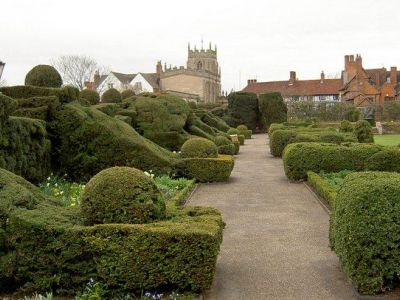
2) Shakespeare's New Place (must see)
In 1597 William Shakespeare was founder of the Lord Chamberlain's Men and a successful playwright. He had left his Birthplace House. He had moved to his newer, larger house, which he had bought for 129 pounds. The New Place (for so it was called) was located on Chapel Street, but a short walk from the Birthplace House on Henley Street.
New Place had been built in the 15th century by Hugh Clopton. The terms "New" or "Newer" as used in Britain are relative and not to be taken literally. One might say, "newer than the pyramids", for example. The New Place had a five gabled, three bayed, half-timbered frontage. Shakespeare rebuilt the frontage and added a gallery.
New Place was pulled down in the late 17th century by the Clopton family who had reacquired the property. The Clopton's newer New Place itself was demolished in 1759. Now New Place is occupied by a garden designed to memorialize Shakespeare's life and work and to allow visitors to develop their own connections with his legacy.
The Great Garden is behind the site where the house once stood. The garden shows sculptures based on Shakespeare's writings. The Knot Garden has been restored using designs which would have been familiar to Shakespeare himself.
New Place had been built in the 15th century by Hugh Clopton. The terms "New" or "Newer" as used in Britain are relative and not to be taken literally. One might say, "newer than the pyramids", for example. The New Place had a five gabled, three bayed, half-timbered frontage. Shakespeare rebuilt the frontage and added a gallery.
New Place was pulled down in the late 17th century by the Clopton family who had reacquired the property. The Clopton's newer New Place itself was demolished in 1759. Now New Place is occupied by a garden designed to memorialize Shakespeare's life and work and to allow visitors to develop their own connections with his legacy.
The Great Garden is behind the site where the house once stood. The garden shows sculptures based on Shakespeare's writings. The Knot Garden has been restored using designs which would have been familiar to Shakespeare himself.
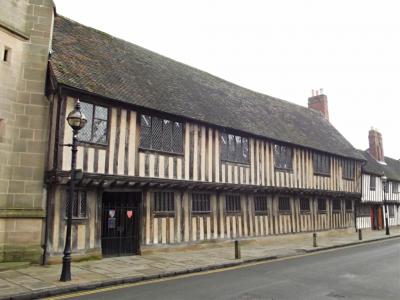
3) Shakespeare's Schoolroom and Guildhall (must see)
Here is an interactive peek into William Shakespeare's childhood and schooling in the 16th century. The Guild of the Holy Cross built the Guildhall in 1420. Over the years more buildings were added, including a schoolhouse, a Chapel and Almshouses. The Guildhall was the headquarter of the Stratford Borough Council from 1553 and 1848.
When the Borough Council left for new digs at the Town Hall, they left the building to the school. The school, known as The King's New school, had been in the Guildhall since 1568. It later became the King Edward VI School (K.E.S.). Three years later seven-year-old William Shakespeare attended his first class. One may assume it was writing.
The school has been in continuous use by the local people since it first opened. The Guildhall has always been used and looked after and never neglected. Not only local students may study here, the school is also open to tourists. They may take an interactive class with William Shakespeare's teacher, Master Thomas Jenkins.
Adjoining the Guildhall is the Armoury. It was originally used a store place for arms, but after 1553 it became an administration center for the school. It also served as courtroom. On the first floor is the Master's chamber. In the center of the chamber is the prefect's table, bearing the names and initials of schoolboys through the years.
Students were mostly the children of wealthy middle class people. Williams' father, for instance, was the bailiff for the town. It was a public school and an entrance exam was required. Students did not pay fees, but they did have to provide their own firewood and candles. Classes frequently went from 6 am to 6 pm. There was a brief midday break.
Why You Should Visit:
to experience a bit how education used to be.
Tips:
When using the feather quill, be wary of ink blots.
When the Borough Council left for new digs at the Town Hall, they left the building to the school. The school, known as The King's New school, had been in the Guildhall since 1568. It later became the King Edward VI School (K.E.S.). Three years later seven-year-old William Shakespeare attended his first class. One may assume it was writing.
The school has been in continuous use by the local people since it first opened. The Guildhall has always been used and looked after and never neglected. Not only local students may study here, the school is also open to tourists. They may take an interactive class with William Shakespeare's teacher, Master Thomas Jenkins.
Adjoining the Guildhall is the Armoury. It was originally used a store place for arms, but after 1553 it became an administration center for the school. It also served as courtroom. On the first floor is the Master's chamber. In the center of the chamber is the prefect's table, bearing the names and initials of schoolboys through the years.
Students were mostly the children of wealthy middle class people. Williams' father, for instance, was the bailiff for the town. It was a public school and an entrance exam was required. Students did not pay fees, but they did have to provide their own firewood and candles. Classes frequently went from 6 am to 6 pm. There was a brief midday break.
Why You Should Visit:
to experience a bit how education used to be.
Tips:
When using the feather quill, be wary of ink blots.
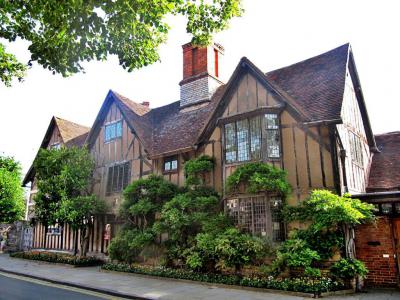
4) Hall's Croft (must see)
Nearby to New Place was the house that William Shakespeare never lived in. Hall's Croft was the home of Susanna Shakespeare, William Shakespeare's daughter, and her husband, Doctor John Hall. Like New Place, Susanna's house had a flagstone floor. A stone floor was a sign of status. Most houses had earthen floors. The Halls were wealthy and they didn't mind showing it.
They owned fine furniture, heavy and strong, hand made from oak and very expensive. When Patients and other visitors entered the house, they understood the homeowner was someone to be respected. An enormous amount of work has been done on the house. The furniture appears authentic. But none of the original furniture remains.
The home contains a fine collection of 16th and 17th paintings. Doctor Hall is represented by his medical paraphernalia. Interesting to compare Jacobean medical practices to modern science. In the back of the house is a walled garden. The garden is maintained and it holds herbs and plants Doctor Hall might have used in his practice.
They owned fine furniture, heavy and strong, hand made from oak and very expensive. When Patients and other visitors entered the house, they understood the homeowner was someone to be respected. An enormous amount of work has been done on the house. The furniture appears authentic. But none of the original furniture remains.
The home contains a fine collection of 16th and 17th paintings. Doctor Hall is represented by his medical paraphernalia. Interesting to compare Jacobean medical practices to modern science. In the back of the house is a walled garden. The garden is maintained and it holds herbs and plants Doctor Hall might have used in his practice.
5) Anne Hathaway's Cottage (must see)
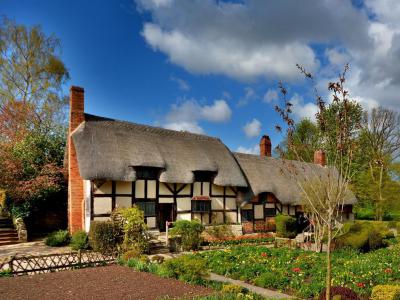
Anne Hathaway's Cottage is a farmhouse with twelve rooms situated in the village of Shottery, Warwickshire. It was the childhood home of Anne Hathaway, the wife of William Shakespeare, located approximately 1 mile (1.6 kilometers) west of Stratford-upon-Avon. The property boasts spacious interiors and multiple bedrooms, now surrounded by expansive gardens.
Constructed before the 15th century, the oldest section of the house contrasts with the 17th-century additions. Originally known as Hewlands Farm during Shakespeare's time, the property encompassed over 90 acres (36 hectares) of land, making the term "cottage" somewhat of a misnomer due to its considerable size. Like many homes from that era, it features numerous chimneys to evenly distribute heat throughout the premises in winter, with the largest chimney designated for cooking. The visible timber framing reflects the traditional Tudor architectural style prevalent in vernacular constructions of the period.
Following Hathaway's father's passing, ownership of the cottage transferred to her brother Bartholomew, remaining in the Hathaway family until financial difficulties compelled its sale in 1846. Despite this, the family continued to reside there as tenants until the Shakespeare Birthplace Trust acquired the property in 1892. The Trust undertook the removal of subsequent modifications and extensions. In 1969, a fire severely damaged the cottage, prompting its restoration by the Trust. Today, it operates as a museum open to the public.
Constructed before the 15th century, the oldest section of the house contrasts with the 17th-century additions. Originally known as Hewlands Farm during Shakespeare's time, the property encompassed over 90 acres (36 hectares) of land, making the term "cottage" somewhat of a misnomer due to its considerable size. Like many homes from that era, it features numerous chimneys to evenly distribute heat throughout the premises in winter, with the largest chimney designated for cooking. The visible timber framing reflects the traditional Tudor architectural style prevalent in vernacular constructions of the period.
Following Hathaway's father's passing, ownership of the cottage transferred to her brother Bartholomew, remaining in the Hathaway family until financial difficulties compelled its sale in 1846. Despite this, the family continued to reside there as tenants until the Shakespeare Birthplace Trust acquired the property in 1892. The Trust undertook the removal of subsequent modifications and extensions. In 1969, a fire severely damaged the cottage, prompting its restoration by the Trust. Today, it operates as a museum open to the public.
6) Stratford-upon-Avon Canal (must see)
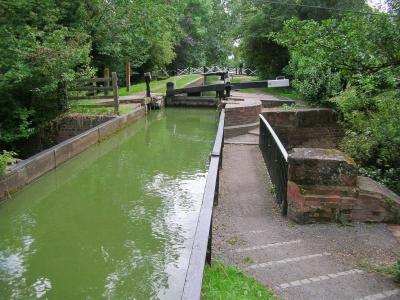
The Stratford-upon-Avon Canal is a historic waterway located in the south Midlands of England, stretching for 25.5 miles (41.0 kilometers) and connecting the region through two distinct sections. Constructed between 1793 and 1816, this canal has played a significant role in the area's industrial and recreational life. The canal's course is divided at Kingswood Junction, which serves as a critical link to the Grand Union Canal, marking a pivotal point in its navigational route.
In its early years, the Stratford-upon-Avon Canal thrived; however, after its acquisition by a railway company in 1856, it faced a gradual decline. By 1945, the southern section had become un-navigable, and the northern section was in a similar state of neglect. The canal's fortune began to turn in 1947 when the northern section became the focus of a landmark campaign by the Inland Waterways Association. The campaign notably included a dispute over the right of navigation under Tunnel Lane bridge, leading to a requirement for the Great Western Railway to adjust the bridge to allow for boat passage. This event was instrumental in saving the northern section from closure.
The southern section's revival was spearheaded by the National Trust in 1959, with significant restoration efforts led by David Hutchings and the Stratford Canal Society between 1961 and 1964. These efforts came after successfully preventing an attempt to close the canal, leading to its rejuvenation. The canal's restoration was honored by a reopening ceremony conducted by Queen Elizabeth the Queen Mother, symbolizing its return to prominence.
In 1988, the stewardship of the Stratford-upon-Avon Canal was transferred to British Waterways, marking a new chapter in its history. Today, the canal stands as a testament to the enduring appeal and importance of Britain's waterways, serving both as a vital link in the nation's navigable canal network and as a cherished recreational resource, reflecting the successful preservation and restoration of an essential part of England's industrial heritage.
In its early years, the Stratford-upon-Avon Canal thrived; however, after its acquisition by a railway company in 1856, it faced a gradual decline. By 1945, the southern section had become un-navigable, and the northern section was in a similar state of neglect. The canal's fortune began to turn in 1947 when the northern section became the focus of a landmark campaign by the Inland Waterways Association. The campaign notably included a dispute over the right of navigation under Tunnel Lane bridge, leading to a requirement for the Great Western Railway to adjust the bridge to allow for boat passage. This event was instrumental in saving the northern section from closure.
The southern section's revival was spearheaded by the National Trust in 1959, with significant restoration efforts led by David Hutchings and the Stratford Canal Society between 1961 and 1964. These efforts came after successfully preventing an attempt to close the canal, leading to its rejuvenation. The canal's restoration was honored by a reopening ceremony conducted by Queen Elizabeth the Queen Mother, symbolizing its return to prominence.
In 1988, the stewardship of the Stratford-upon-Avon Canal was transferred to British Waterways, marking a new chapter in its history. Today, the canal stands as a testament to the enduring appeal and importance of Britain's waterways, serving both as a vital link in the nation's navigable canal network and as a cherished recreational resource, reflecting the successful preservation and restoration of an essential part of England's industrial heritage.
7) Shakespeare's Birthplace (must see)
"A Mecca for all lovers of literature." That must be true, judging by all the "lovers of literature" signatures etched into the windows of the house on Henley Street. Years after William Shakespeare left the planet, his admirers came to say hello.
Charles Dickens, Sir Walter Scott, Thomas Carlyle, Lord Byron, Lord Tennyson, John Keats and last but not least, William Thackeray left their names. Here lived the Master of the English Language. What was it like, the house he grew up in? Was it rich, poor, middle class?
It is a very simple house today, but in Shakespeare's time it would have been thought a large dwelling. People were shorter, doors were lower, rooms were smaller. The house was effectively divided in two parts. One was for business and the other for living. Shakespeare's father, John, was a glove maker and a dealer in leather and wool.
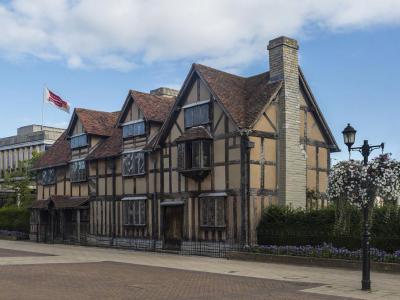
It is a restored 16th century half-timbered house in Stratford-upon-Avon, Warwickshire, England. It is a museum now, but in 1564 it was where William Shakespeare was born. The house was constructed of wattle and daub around a timber frame. The fireplaces are of brick and stone and the ground floor is of flagstone.
William Shakespeare inherited the house but by then he had moved with his family to New Place on Chapel Street. Eventually the Henley Street house passed to other owners and by the 1800s it had fallen into a distressed state. In 1846 it was put up for sale. P.T. Barnum of circus fame tried to buy it and ship it "brick by brick" to the USA.
Not having any of that, the Shakespeare Birthplace Committee became the Shakespeare Birthplace Trust by an act of Parliament and stepped in to save the day. The Trust bought the property and restored it to its original state.
Next to the Birthplace is the Shakespeare Centre, a modern building which houses the Shakespeare Birthplace Trust. The Centre contains a library, and a collection of Shakespeare paraphernalia. The Centre also provides admission to the Birthplace.
Why You Should Visit:
William Shakespeare is the heart of this town.
Tips:
Don't worry about driving, parking, etc. There is a tram (good one) and most places to be seen are within walking distance of each other.
Charles Dickens, Sir Walter Scott, Thomas Carlyle, Lord Byron, Lord Tennyson, John Keats and last but not least, William Thackeray left their names. Here lived the Master of the English Language. What was it like, the house he grew up in? Was it rich, poor, middle class?
It is a very simple house today, but in Shakespeare's time it would have been thought a large dwelling. People were shorter, doors were lower, rooms were smaller. The house was effectively divided in two parts. One was for business and the other for living. Shakespeare's father, John, was a glove maker and a dealer in leather and wool.
It is a restored 16th century half-timbered house in Stratford-upon-Avon, Warwickshire, England. It is a museum now, but in 1564 it was where William Shakespeare was born. The house was constructed of wattle and daub around a timber frame. The fireplaces are of brick and stone and the ground floor is of flagstone.
William Shakespeare inherited the house but by then he had moved with his family to New Place on Chapel Street. Eventually the Henley Street house passed to other owners and by the 1800s it had fallen into a distressed state. In 1846 it was put up for sale. P.T. Barnum of circus fame tried to buy it and ship it "brick by brick" to the USA.
Not having any of that, the Shakespeare Birthplace Committee became the Shakespeare Birthplace Trust by an act of Parliament and stepped in to save the day. The Trust bought the property and restored it to its original state.
Next to the Birthplace is the Shakespeare Centre, a modern building which houses the Shakespeare Birthplace Trust. The Centre contains a library, and a collection of Shakespeare paraphernalia. The Centre also provides admission to the Birthplace.
Why You Should Visit:
William Shakespeare is the heart of this town.
Tips:
Don't worry about driving, parking, etc. There is a tram (good one) and most places to be seen are within walking distance of each other.
8) Tudor World (must see)
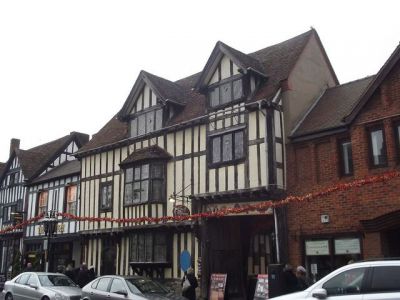
Tudor World is a Museum of everyday life in the time of the Tudors. It is located on Sheep Street, Stratford-upon-Avon, almost exactly in the center of town. The museum operates several different tours including the Walking tour with William Shakespeare himself. William answers questions, tells stories and even poses for pictures.
And best of all for some people, is the Ghost tour. The Ghost tour takes place in the evenings, entirely within the confines of the haunted 12th century edifice. It is not recommended for children under 14. It is spooky and that's the best part. It is so spooky William Shakespeare will not take the tour himself (he said so).
Ghostly visions have been reported by some visitors but the management assures us there has never been an attack by a ghost. The management also guarantees there will not be an attack by anyone living. (Anyone LIVING, that is.) The tour relates the history of ghostly visitations in the building and around the town.
Visitors are taken through the Ghost tour by a guide with a lantern. In each room he/she will talk of the ghostly history of the place. The museum is over 400 years old. The rooms have low ceilings and beams and floors slightly warped. This type of thing is not recommended for those who are nervous or who have physical limitations.
For those who are not overly impressed with the Ghost tour, there will be a Halloween "Terror" tour. Be sure to come at Halloween. For the psychic fans there is a Victorian seance. A seance in a haunted house! Will William be there? He does not answer calls. Well, there's always fortune telling. That's even approved for kids.
Tips:
Take the virtual tour first.
And best of all for some people, is the Ghost tour. The Ghost tour takes place in the evenings, entirely within the confines of the haunted 12th century edifice. It is not recommended for children under 14. It is spooky and that's the best part. It is so spooky William Shakespeare will not take the tour himself (he said so).
Ghostly visions have been reported by some visitors but the management assures us there has never been an attack by a ghost. The management also guarantees there will not be an attack by anyone living. (Anyone LIVING, that is.) The tour relates the history of ghostly visitations in the building and around the town.
Visitors are taken through the Ghost tour by a guide with a lantern. In each room he/she will talk of the ghostly history of the place. The museum is over 400 years old. The rooms have low ceilings and beams and floors slightly warped. This type of thing is not recommended for those who are nervous or who have physical limitations.
For those who are not overly impressed with the Ghost tour, there will be a Halloween "Terror" tour. Be sure to come at Halloween. For the psychic fans there is a Victorian seance. A seance in a haunted house! Will William be there? He does not answer calls. Well, there's always fortune telling. That's even approved for kids.
Tips:
Take the virtual tour first.
