Custom Walk in Belfast, Ireland by jennyking246_c4dc4 created on 2025-05-25
Guide Location: Ireland » Belfast
Guide Type: Custom Walk
# of Sights: 9
Tour Duration: 4 Hour(s)
Travel Distance: 10.7 Km or 6.6 Miles
Share Key: 8CSLF
Guide Type: Custom Walk
# of Sights: 9
Tour Duration: 4 Hour(s)
Travel Distance: 10.7 Km or 6.6 Miles
Share Key: 8CSLF
How It Works
Please retrieve this walk in the GPSmyCity app. Once done, the app will guide you from one tour stop to the next as if you had a personal tour guide. If you created the walk on this website or come to the page via a link, please follow the instructions below to retrieve the walk in the app.
Retrieve This Walk in App
Step 1. Download the app "GPSmyCity: Walks in 1K+ Cities" on Apple App Store or Google Play Store.



Step 2. In the GPSmyCity app, download(or launch) the guide "Belfast Map and Walking Tours".
Step 3. Tap the menu button located at upper right corner of the "Walks" screen and select "Retrieve custom walk". Enter the share key: 8CSLF
1) St. George's Market (must see)
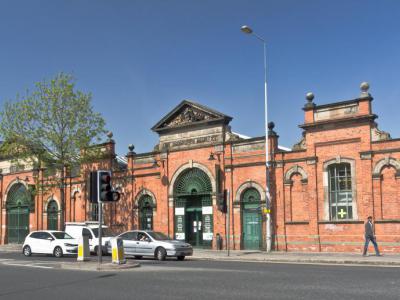
Saint George's Market is the last surviving Victorian covered market in Belfast. It was built in three phases between 1890 and 1896. Before 1890, Saint George's Market was an open market and most likely contained a slaughterhouse and a meat market.
The original (pre 1890) market was smaller than the new structure. It was built in red brick with sandstone dressing. Externally it features Roman styled arches with Latin and Irish inscriptions - the City’s Latin motto "what shall we give in return for so much?" and the Irish phrase "Red Hand of Ireland".
The main entrance arch displays the Belfast Coat of Arms. This newly covered market opened to the public on 20 June 1890. By the 1980s, Saint George’s Market had developed into a general market and it became the last of Belfast’s thriving Victorian markets.
Today Saint George’s Market is primarily used as a food market, however a number of other events are held at the site. These range from food festivals, art initiatives, exhibitions, charity launches, fashion shoots and live music events. The market also regularly holds music concerts. Acts including Duffy, Newton Faulkner, Deep Purple, Biffy Clyro and Mark Ronson have played the venue.
The original (pre 1890) market was smaller than the new structure. It was built in red brick with sandstone dressing. Externally it features Roman styled arches with Latin and Irish inscriptions - the City’s Latin motto "what shall we give in return for so much?" and the Irish phrase "Red Hand of Ireland".
The main entrance arch displays the Belfast Coat of Arms. This newly covered market opened to the public on 20 June 1890. By the 1980s, Saint George’s Market had developed into a general market and it became the last of Belfast’s thriving Victorian markets.
Today Saint George’s Market is primarily used as a food market, however a number of other events are held at the site. These range from food festivals, art initiatives, exhibitions, charity launches, fashion shoots and live music events. The market also regularly holds music concerts. Acts including Duffy, Newton Faulkner, Deep Purple, Biffy Clyro and Mark Ronson have played the venue.
2) Belfast City Hall (must see)
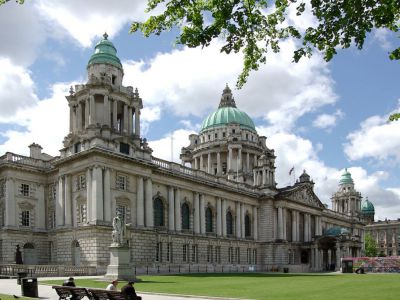
Belfast City Hall is a grand Edwardian Baroque masterpiece that dominates Donegall Square in the heart of Belfast’s city centre. Designed by Sir Alfred Brumwell Thomas and completed in 1906, this iconic building features gleaming Portland stone, a striking copper-domed roof rising 173 ft, and ornate detailing that reflects Belfast’s civic pride. It was built on the former site of the White Linen Hall to mark the city’s growing importance-thanks to its booming linen, shipbuilding, and engineering industries-and to cement its new city status granted in 1888.
Step inside and you’ll be greeted by splendid interiors such as the grand marble staircase, mosaic floors, and exquisitely carved oak and marble-clad spaces like the Council Chamber and Banquet Hall-noting the latter was rebuilt after damage during the Belfast Blitz in 1941. The stained-glass windows are spectacular, showcasing the Belfast coat of arms, portraits of British monarchs, and emblems of the city’s historical provinces. Guided tours last about 45 minutes and offer access to areas normally closed to the public, alongside a 16-room Visitor Exhibition that brings Belfast’s past to life via multilingual audio guides.
Outside, the beautifully landscaped grounds are home to significant memorials and statues, including the impressive Titanic Memorial Garden, the Cenotaph and Garden of Remembrance for war victims, and notable figures such as Queen Victoria, Edward Harland, Mary Ann McCracken, Winifred Carney, and James Magennis VC. These serene lawns offer a peaceful counterpoint to the bustling city around them.
For visitors, City Hall is much more than a civic landmark-it’s a hub of culture and community. Drop into the Bobbin Coffee Shop inside, peruse the gift shop for local keepsakes, or join a free tour (first-come, first-served) at scheduled times. Evening illuminations beautifully accent the exterior, making it a particularly atmospheric spot after dark. Whether you're fascinated by architecture, history, or simply looking for a picturesque gathering place, Belfast City Hall is an essential stop on your journey through Belfast.
Step inside and you’ll be greeted by splendid interiors such as the grand marble staircase, mosaic floors, and exquisitely carved oak and marble-clad spaces like the Council Chamber and Banquet Hall-noting the latter was rebuilt after damage during the Belfast Blitz in 1941. The stained-glass windows are spectacular, showcasing the Belfast coat of arms, portraits of British monarchs, and emblems of the city’s historical provinces. Guided tours last about 45 minutes and offer access to areas normally closed to the public, alongside a 16-room Visitor Exhibition that brings Belfast’s past to life via multilingual audio guides.
Outside, the beautifully landscaped grounds are home to significant memorials and statues, including the impressive Titanic Memorial Garden, the Cenotaph and Garden of Remembrance for war victims, and notable figures such as Queen Victoria, Edward Harland, Mary Ann McCracken, Winifred Carney, and James Magennis VC. These serene lawns offer a peaceful counterpoint to the bustling city around them.
For visitors, City Hall is much more than a civic landmark-it’s a hub of culture and community. Drop into the Bobbin Coffee Shop inside, peruse the gift shop for local keepsakes, or join a free tour (first-come, first-served) at scheduled times. Evening illuminations beautifully accent the exterior, making it a particularly atmospheric spot after dark. Whether you're fascinated by architecture, history, or simply looking for a picturesque gathering place, Belfast City Hall is an essential stop on your journey through Belfast.
3) Botanic Gardens (must see)
Belfast’s Botanic Gardens is a lush 28-acre oasis tucked into the vibrant Queen’s Quarter, right by Queen’s University and the Ulster Museum. First established in 1828 by the Belfast Botanic and Horticultural Society, it opened its gates as a public park in 1895. Over time, it has earned annual Green Flag recognition for its excellent maintenance and community value. Locals and visitors alike flock here for peaceful walks, picnics on manicured lawns, and lively events-from summer concerts to the Belfast Mela festival.
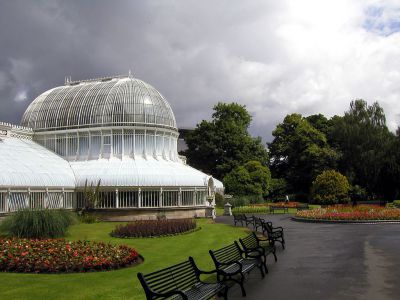
The gardens’ architectural centrepiece is the iconic Palm House-a beautifully restored Victorian glasshouse designed by Sir Charles Lanyon and completed in 1840, with Turner’s cast-iron curved structure added soon after. Divided into cool and tropical zones, it shelters an exotic collection including bird-of-paradise blooms, ancient Xanthorrhoea, and rare lilies that bloom after decades. Just steps away is the lesser-known Tropical Ravine House, a two-level “jungle glen” dating from 1889, now beautifully refurbished with interactive displays and sensory features.
Beyond these glasshouses, visitors can stroll through colourful rose and herbaceous gardens, discover a serene alpine garden and mature trees-some planted as far back as the 1880s, including hornbeam-leafed oaks. Sculptures, a children’s playground, bowling green, and giant bird feeders offer charm and variety, while occasional live recitals or opera performances bring a festive atmosphere.
Open daily with free admission, Botanic Gardens is easy to reach via Metro 7 or 8 (stop at Queen’s University or College Park). It’s a must‑see for nature lovers, history enthusiasts, and anyone seeking a peaceful yet culturally rich slice of Belfast life. Whether you’re admiring Victorian engineering under glass or wandering through fragrant pathways, the Botanic Gardens is a timeless green haven in the heart of Northern Ireland’s capital.
The gardens’ architectural centrepiece is the iconic Palm House-a beautifully restored Victorian glasshouse designed by Sir Charles Lanyon and completed in 1840, with Turner’s cast-iron curved structure added soon after. Divided into cool and tropical zones, it shelters an exotic collection including bird-of-paradise blooms, ancient Xanthorrhoea, and rare lilies that bloom after decades. Just steps away is the lesser-known Tropical Ravine House, a two-level “jungle glen” dating from 1889, now beautifully refurbished with interactive displays and sensory features.
Beyond these glasshouses, visitors can stroll through colourful rose and herbaceous gardens, discover a serene alpine garden and mature trees-some planted as far back as the 1880s, including hornbeam-leafed oaks. Sculptures, a children’s playground, bowling green, and giant bird feeders offer charm and variety, while occasional live recitals or opera performances bring a festive atmosphere.
Open daily with free admission, Botanic Gardens is easy to reach via Metro 7 or 8 (stop at Queen’s University or College Park). It’s a must‑see for nature lovers, history enthusiasts, and anyone seeking a peaceful yet culturally rich slice of Belfast life. Whether you’re admiring Victorian engineering under glass or wandering through fragrant pathways, the Botanic Gardens is a timeless green haven in the heart of Northern Ireland’s capital.
4) Ulster Museum (must see)
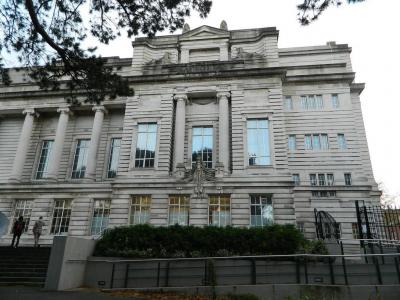
The Ulster Museum, nestled within Belfast’s charming Botanic Gardens, is Northern Ireland’s largest museum and a national cultural landmark. Founded in 1821 as the Belfast Natural History Society and opened to the public in 1833, it moved to its current spot along Stranmillis Road in 1929. A striking Brutalist extension in the 1960s expanded its exhibition space, though a major renovation brought the museum into the 21st century when it reopened in October 2009. Today, its light-filled atrium showcases a seamless blend of old and new architecture.
Inside, visitors are treated to a sweeping journey through natural history, art, and heritage. The museum boasts an extensive collection of Irish fauna, minerals, rocks, and fossils-and hosts Ireland’s only known dinosaur fossil bones. You’ll discover ancient treasures like the Malone and Moss-side hoards-stone tools and Bronze Age gold artifacts-alongside global ethnographic pieces and even a mummified Egyptian body. For art lovers, permanent galleries feature modern and contemporary works, including pieces by Francis Bacon and local Ulster voices, while the fashion and textile collection spans gorgeous couture from Chanel to Alexander McQueen.
The museum’s “Troubles and Beyond” gallery offers a powerful reflection on Northern Ireland’s recent past, examining the decades of conflict and resilience through compelling personal narratives, memorabilia, and visual storytelling. Interactive spaces like the Discovery Zone make it an engaging visit for families, and rotating exhibitions-everything from wildlife art to contemporary photography-ensure there's always something new to explore.
Best of all? Entry is completely free. Pop next door to the Tropical Hothouse in Botanic Gardens, enjoy coffee in the museum café, and perhaps stroll through Queen’s University grounds afterward.
Inside, visitors are treated to a sweeping journey through natural history, art, and heritage. The museum boasts an extensive collection of Irish fauna, minerals, rocks, and fossils-and hosts Ireland’s only known dinosaur fossil bones. You’ll discover ancient treasures like the Malone and Moss-side hoards-stone tools and Bronze Age gold artifacts-alongside global ethnographic pieces and even a mummified Egyptian body. For art lovers, permanent galleries feature modern and contemporary works, including pieces by Francis Bacon and local Ulster voices, while the fashion and textile collection spans gorgeous couture from Chanel to Alexander McQueen.
The museum’s “Troubles and Beyond” gallery offers a powerful reflection on Northern Ireland’s recent past, examining the decades of conflict and resilience through compelling personal narratives, memorabilia, and visual storytelling. Interactive spaces like the Discovery Zone make it an engaging visit for families, and rotating exhibitions-everything from wildlife art to contemporary photography-ensure there's always something new to explore.
Best of all? Entry is completely free. Pop next door to the Tropical Hothouse in Botanic Gardens, enjoy coffee in the museum café, and perhaps stroll through Queen’s University grounds afterward.
5) Grand Opera House (must see)
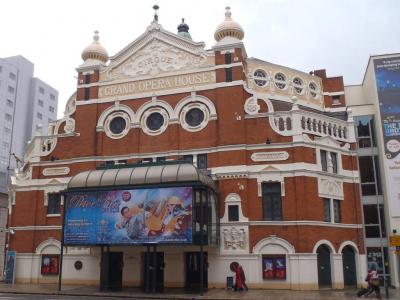
Nestled in the vibrant heart of Belfast, the Grand Opera House is an architectural gem and cultural linchpin. Designed by famed theatre architect Frank Matcham, it opened in December 1895 as the “New Grand Opera House and Cirque”. A striking example of Victorian “oriental style” theatre architecture, its main auditorium is widely regarded as the best preserved in the UK.
For over a century, the Grand Opera House has been a pulsating centre for the arts. It has survived tumultuous times, including wartime repurposing, bomb damage during the Troubles, and even a brush with demolition-but was rescued and listed as Northern Ireland’s first protected building in the 1970s. After extensive renovations in 1980, 2006, and a major £12.2 million restoration in 2020–21, both its ornate auditorium and modern foyers shine brighter than ever.
Today, the venue boasts a 1,058‑seat main auditorium, the intimate Baby Grand studio, and stylish bars on multiple floors. Its annual pantomime tradition continues unabated, delighting families since the very first season featured “Bluebeard” in 1895. Beyond entertainment, the Opera House offers behind‑the‑scenes tours and a compelling heritage exhibition, ideal for history lovers.
A visit here offers more than a show-it’s a journey through Belfast’s cultural soul. Whether you're drawn to grand musicals, drama, opera, dance, or comedy-or simply wish to admire its ornate mouldings and historic atmosphere-the Grand Opera House presents an unforgettable experience at the crossroads of past and present.
For over a century, the Grand Opera House has been a pulsating centre for the arts. It has survived tumultuous times, including wartime repurposing, bomb damage during the Troubles, and even a brush with demolition-but was rescued and listed as Northern Ireland’s first protected building in the 1970s. After extensive renovations in 1980, 2006, and a major £12.2 million restoration in 2020–21, both its ornate auditorium and modern foyers shine brighter than ever.
Today, the venue boasts a 1,058‑seat main auditorium, the intimate Baby Grand studio, and stylish bars on multiple floors. Its annual pantomime tradition continues unabated, delighting families since the very first season featured “Bluebeard” in 1895. Beyond entertainment, the Opera House offers behind‑the‑scenes tours and a compelling heritage exhibition, ideal for history lovers.
A visit here offers more than a show-it’s a journey through Belfast’s cultural soul. Whether you're drawn to grand musicals, drama, opera, dance, or comedy-or simply wish to admire its ornate mouldings and historic atmosphere-the Grand Opera House presents an unforgettable experience at the crossroads of past and present.
6) Peace Wall (must see)
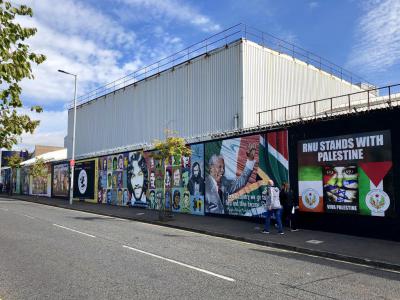
The Belfast Peace Walls are barriers that separate Protestant and Catholic neighborhoods through the city. They were originally built in 1969 to establish peace by separating sectarian groups. Today, they are popular tourist attractions.
Arguably, the most famous Peace Wall is located between Shankill Road and Falls Road. There is also a large Peace Wall along Cupar Way, which has become a canvas for local artists. Graffiti and street art intermingle on the Peace Walls to provide color to the city while also reminding citizens and tourists of the strife of the country.
The walls were originally meant to be temporary structures. Ironically, the structures have not only stayed in place, but have increased in number. The most recent Peace Wall was constructed in 2017. There are now 59 in the city.
The Belfast City Council began a plan to remove the Peace Walls, but the vast majority of residents believe they continue to help quell violence. Still, the plan is for all Peace Walls to be removed in the future.
Arguably, the most famous Peace Wall is located between Shankill Road and Falls Road. There is also a large Peace Wall along Cupar Way, which has become a canvas for local artists. Graffiti and street art intermingle on the Peace Walls to provide color to the city while also reminding citizens and tourists of the strife of the country.
The walls were originally meant to be temporary structures. Ironically, the structures have not only stayed in place, but have increased in number. The most recent Peace Wall was constructed in 2017. There are now 59 in the city.
The Belfast City Council began a plan to remove the Peace Walls, but the vast majority of residents believe they continue to help quell violence. Still, the plan is for all Peace Walls to be removed in the future.
7) Crumlin Road Gaol (must see)
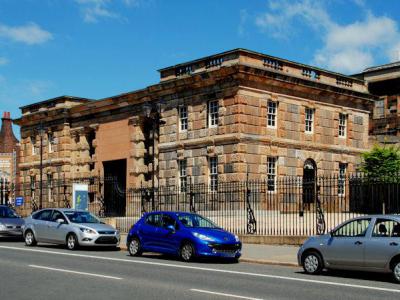
Crumlin Road Gaol, located in north Belfast, is one of the city's most compelling historical landmarks. Built between 1843 and 1845, the prison was operational for over 150 years and once held men, women, and children. Designed by Sir Charles Lanyon, the Victorian-era building was modeled on the radial prison design popular at the time, intended to improve surveillance and control. Now preserved as a museum and visitor attraction, it offers a stark insight into Northern Ireland’s troubled past and evolving justice system.
During its working years, Crumlin Road Gaol witnessed significant chapters of Irish history-from housing suffragettes and political prisoners during the Irish War of Independence to detaining individuals during the period known as The Troubles. The prison also held public executions, with the last hanging taking place in 1961. Visitors today can walk through restored cells, explore the underground tunnel that once connected the gaol to the nearby courthouse, and view the execution chamber that remains chillingly intact.
Guided tours and exhibitions detail the daily routines of prisoners, the harsh conditions they endured, and the broader political and social context that shaped the prison’s legacy. The preserved architecture, including its imposing facade and central hub layout, adds to the sense of immersion. Special events, evening ghost tours, and temporary exhibitions also offer unique ways to engage with the site.
Crumlin Road Gaol stands as a somber yet important reminder of Belfast’s complex history, inviting visitors to reflect on the intersections of punishment, politics, and human rights.
During its working years, Crumlin Road Gaol witnessed significant chapters of Irish history-from housing suffragettes and political prisoners during the Irish War of Independence to detaining individuals during the period known as The Troubles. The prison also held public executions, with the last hanging taking place in 1961. Visitors today can walk through restored cells, explore the underground tunnel that once connected the gaol to the nearby courthouse, and view the execution chamber that remains chillingly intact.
Guided tours and exhibitions detail the daily routines of prisoners, the harsh conditions they endured, and the broader political and social context that shaped the prison’s legacy. The preserved architecture, including its imposing facade and central hub layout, adds to the sense of immersion. Special events, evening ghost tours, and temporary exhibitions also offer unique ways to engage with the site.
Crumlin Road Gaol stands as a somber yet important reminder of Belfast’s complex history, inviting visitors to reflect on the intersections of punishment, politics, and human rights.
8) Belfast Cathedral (must see)
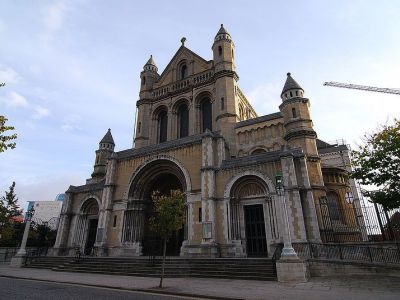
Belfast Cathedral, also known as Saint Anne’s Cathedral, stands as one of the city’s most striking landmarks, blending spiritual significance with architectural beauty. Located in the Cathedral Quarter-the historic heart of Belfast-this Anglican cathedral was founded in 1899 and has since become both a place of worship and a cultural hub. With its grand Romanesque Revival design, intricate mosaics, and commanding presence, the cathedral offers visitors a serene yet awe-inspiring atmosphere that reflects the city’s rich history and enduring spirit.
The building itself tells a story of resilience and ambition. Constructed over many decades, it combines late Victorian foundations with additions made throughout the 20th century, including the striking Spire of Hope, a modern stainless-steel spire added in 2007 that soars 40 meters into the sky. This striking feature, visible from across the city, symbolizes both faith and renewal. Inside, light streams through a kaleidoscope of stained glass, illuminating exquisite stonework and creating a setting that feels at once majestic and contemplative.
Visitors can explore remarkable artistic treasures, such as the elaborate mosaics designed by Sir Charles Nicholson and the stunning Chapel of the Holy Spirit, dedicated to those who lost their lives in the First World War. Another highlight is the “Spire of Hope” piercing through the cathedral roof, representing the city’s resilience and looking toward a brighter future. The cathedral also hosts concerts, exhibitions, and community events, extending its role beyond a sacred space to a vibrant gathering point for locals and visitors.
For travelers exploring Belfast, a stop at Saint Anne’s Cathedral provides not just a glimpse into the city’s religious heritage but also a chance to admire centuries of craftsmanship. Whether you’re drawn by its artistry, its peaceful atmosphere, or its role as a beacon of Belfast’s cultural life, the cathedral offers a moment of reflection and connection in the heart of Northern Ireland’s capital.
The building itself tells a story of resilience and ambition. Constructed over many decades, it combines late Victorian foundations with additions made throughout the 20th century, including the striking Spire of Hope, a modern stainless-steel spire added in 2007 that soars 40 meters into the sky. This striking feature, visible from across the city, symbolizes both faith and renewal. Inside, light streams through a kaleidoscope of stained glass, illuminating exquisite stonework and creating a setting that feels at once majestic and contemplative.
Visitors can explore remarkable artistic treasures, such as the elaborate mosaics designed by Sir Charles Nicholson and the stunning Chapel of the Holy Spirit, dedicated to those who lost their lives in the First World War. Another highlight is the “Spire of Hope” piercing through the cathedral roof, representing the city’s resilience and looking toward a brighter future. The cathedral also hosts concerts, exhibitions, and community events, extending its role beyond a sacred space to a vibrant gathering point for locals and visitors.
For travelers exploring Belfast, a stop at Saint Anne’s Cathedral provides not just a glimpse into the city’s religious heritage but also a chance to admire centuries of craftsmanship. Whether you’re drawn by its artistry, its peaceful atmosphere, or its role as a beacon of Belfast’s cultural life, the cathedral offers a moment of reflection and connection in the heart of Northern Ireland’s capital.

9) The Big Fish
The Big Fish-also known locally and lovingly as the Big Blue Fish-is one of Belfast’s most eye-catching and cherished public art pieces. Created by artist John Kindness in 1999, this 10-meter-long ceramic mosaic sculpture was installed at Donegall Quay, near the Lagan Lookout and Customs House, to mark the regeneration of the River Lagan. Officially a salmon (yes, the signs confirm it!), it stands right where the River Farset, from which Belfast gets its name (Béal Feirste meaning "mouth of the Farset"), meets the Lagan. The sculpture is hard to miss-not just because of its size, but because it sits at the very heart of the city’s history.
What makes The Big Fish truly special is its skin. Each shimmering blue ceramic tile is printed with texts, illustrations, and images that collectively tell the story of Belfast. From Tudor-era maps to 20th-century headlines, it’s like a visual time capsule. There are even drawings by schoolchildren and community members, adding a personal and playful layer to the piece-including an Ulster Fry and a cheerful soldier. Contributions came from local schools and day centres, while historic imagery was provided by the Ulster Museum. Inside the fish, there’s a literal time capsule too, containing images, poetry, and documents about the city.
More than just a quirky photo spot, the Big Fish is a symbol of Belfast’s cultural rebirth and deep connection to the water that shaped it. Locals might chuckle at its playful nicknames, but there’s no denying that this gleaming salmon has swum its way into the city’s heart-and become one of its most iconic landmarks.
What makes The Big Fish truly special is its skin. Each shimmering blue ceramic tile is printed with texts, illustrations, and images that collectively tell the story of Belfast. From Tudor-era maps to 20th-century headlines, it’s like a visual time capsule. There are even drawings by schoolchildren and community members, adding a personal and playful layer to the piece-including an Ulster Fry and a cheerful soldier. Contributions came from local schools and day centres, while historic imagery was provided by the Ulster Museum. Inside the fish, there’s a literal time capsule too, containing images, poetry, and documents about the city.
More than just a quirky photo spot, the Big Fish is a symbol of Belfast’s cultural rebirth and deep connection to the water that shaped it. Locals might chuckle at its playful nicknames, but there’s no denying that this gleaming salmon has swum its way into the city’s heart-and become one of its most iconic landmarks.
