Custom Walk in Stratford-upon-Avon, England by gsgpz11_8f8c5 created on 2025-05-27
Guide Location: England » Stratford-upon-Avon
Guide Type: Custom Walk
# of Sights: 7
Tour Duration: 1 Hour(s)
Travel Distance: 1.9 Km or 1.2 Miles
Share Key: MZV7Z
Guide Type: Custom Walk
# of Sights: 7
Tour Duration: 1 Hour(s)
Travel Distance: 1.9 Km or 1.2 Miles
Share Key: MZV7Z
How It Works
Please retrieve this walk in the GPSmyCity app. Once done, the app will guide you from one tour stop to the next as if you had a personal tour guide. If you created the walk on this website or come to the page via a link, please follow the instructions below to retrieve the walk in the app.
Retrieve This Walk in App
Step 1. Download the app "GPSmyCity: Walks in 1K+ Cities" on Apple App Store or Google Play Store.



Step 2. In the GPSmyCity app, download(or launch) the guide "Stratford-upon-Avon Map and Walking Tours".
Step 3. Tap the menu button located at upper right corner of the "Walks" screen and select "Retrieve custom walk". Enter the share key: MZV7Z
1) Shakespeare Memorial
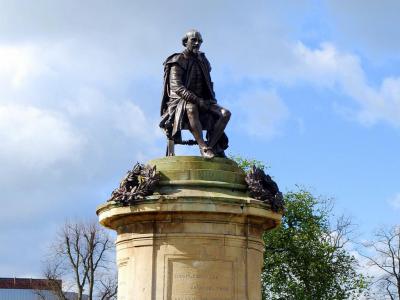
The Shakespeare Memorial in Stratford-upon-Avon is a tribute to the legacy of William Shakespeare, celebrating his unparalleled contribution to literature. The initiative to erect a memorial in his honor began in 1877 when a committee was formed with the vision of commemorating the bard in the town of his birth. The memorial complex, envisioned to celebrate Shakespeare's genius, includes a theatre and statues, situated on land by the Avon River, within view of the church where Shakespeare is interred.
The centerpiece of the memorial, created in 1888 by Lord Ronald Gower, is located in Stratford’s Bancroft Gardens. This striking statue of Shakespeare depicts him seated on a pedestal, exuding a contemplative poise. Surrounding him at ground level are figures of some of his most memorable characters: Hamlet, Lady Macbeth, Prince Hal, and Falstaff. These characters were chosen for their symbolic representation of the broad spectrum of human experience that Shakespeare explored in his works-Philosophy, Tragedy, History, and Comedy. This arrangement showcases the bard's creative versatility and the depth of his understanding of the human condition.
Together, these elements of the Shakespeare Memorial in Stratford-upon-Avon not only honor the memory of William Shakespeare but also serve as a lasting testament to his enduring impact on literature and the arts. Through the thoughtful incorporation of symbolic statuary and the strategic placement of the memorial in a location imbued with historical significance, Stratford-upon-Avon pays homage to its most famous son, ensuring that the legacy of Shakespeare's genius continues to inspire and captivate for generations to come.
The centerpiece of the memorial, created in 1888 by Lord Ronald Gower, is located in Stratford’s Bancroft Gardens. This striking statue of Shakespeare depicts him seated on a pedestal, exuding a contemplative poise. Surrounding him at ground level are figures of some of his most memorable characters: Hamlet, Lady Macbeth, Prince Hal, and Falstaff. These characters were chosen for their symbolic representation of the broad spectrum of human experience that Shakespeare explored in his works-Philosophy, Tragedy, History, and Comedy. This arrangement showcases the bard's creative versatility and the depth of his understanding of the human condition.
Together, these elements of the Shakespeare Memorial in Stratford-upon-Avon not only honor the memory of William Shakespeare but also serve as a lasting testament to his enduring impact on literature and the arts. Through the thoughtful incorporation of symbolic statuary and the strategic placement of the memorial in a location imbued with historical significance, Stratford-upon-Avon pays homage to its most famous son, ensuring that the legacy of Shakespeare's genius continues to inspire and captivate for generations to come.
2) Shakespeare's Birthplace (must see)
"A Mecca for all lovers of literature." That must be true, judging by all the "lovers of literature" signatures etched into the windows of the house on Henley Street. Years after William Shakespeare left the planet, his admirers came to say hello.
Charles Dickens, Sir Walter Scott, Thomas Carlyle, Lord Byron, Lord Tennyson, John Keats and last but not least, William Thackeray left their names. Here lived the Master of the English Language. What was it like, the house he grew up in? Was it rich, poor, middle class?
It is a very simple house today, but in Shakespeare's time it would have been thought a large dwelling. People were shorter, doors were lower, rooms were smaller. The house was effectively divided in two parts. One was for business and the other for living. Shakespeare's father, John, was a glove maker and a dealer in leather and wool.
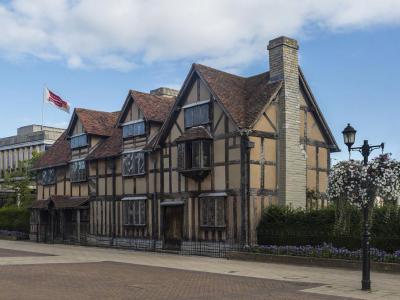
It is a restored 16th century half-timbered house in Stratford-upon-Avon, Warwickshire, England. It is a museum now, but in 1564 it was where William Shakespeare was born. The house was constructed of wattle and daub around a timber frame. The fireplaces are of brick and stone and the ground floor is of flagstone.
William Shakespeare inherited the house but by then he had moved with his family to New Place on Chapel Street. Eventually the Henley Street house passed to other owners and by the 1800s it had fallen into a distressed state. In 1846 it was put up for sale. P.T. Barnum of circus fame tried to buy it and ship it "brick by brick" to the USA.
Not having any of that, the Shakespeare Birthplace Committee became the Shakespeare Birthplace Trust by an act of Parliament and stepped in to save the day. The Trust bought the property and restored it to its original state.
Next to the Birthplace is the Shakespeare Centre, a modern building which houses the Shakespeare Birthplace Trust. The Centre contains a library, and a collection of Shakespeare paraphernalia. The Centre also provides admission to the Birthplace.
Why You Should Visit:
William Shakespeare is the heart of this town.
Tips:
Don't worry about driving, parking, etc. There is a tram (good one) and most places to be seen are within walking distance of each other.
Charles Dickens, Sir Walter Scott, Thomas Carlyle, Lord Byron, Lord Tennyson, John Keats and last but not least, William Thackeray left their names. Here lived the Master of the English Language. What was it like, the house he grew up in? Was it rich, poor, middle class?
It is a very simple house today, but in Shakespeare's time it would have been thought a large dwelling. People were shorter, doors were lower, rooms were smaller. The house was effectively divided in two parts. One was for business and the other for living. Shakespeare's father, John, was a glove maker and a dealer in leather and wool.
It is a restored 16th century half-timbered house in Stratford-upon-Avon, Warwickshire, England. It is a museum now, but in 1564 it was where William Shakespeare was born. The house was constructed of wattle and daub around a timber frame. The fireplaces are of brick and stone and the ground floor is of flagstone.
William Shakespeare inherited the house but by then he had moved with his family to New Place on Chapel Street. Eventually the Henley Street house passed to other owners and by the 1800s it had fallen into a distressed state. In 1846 it was put up for sale. P.T. Barnum of circus fame tried to buy it and ship it "brick by brick" to the USA.
Not having any of that, the Shakespeare Birthplace Committee became the Shakespeare Birthplace Trust by an act of Parliament and stepped in to save the day. The Trust bought the property and restored it to its original state.
Next to the Birthplace is the Shakespeare Centre, a modern building which houses the Shakespeare Birthplace Trust. The Centre contains a library, and a collection of Shakespeare paraphernalia. The Centre also provides admission to the Birthplace.
Why You Should Visit:
William Shakespeare is the heart of this town.
Tips:
Don't worry about driving, parking, etc. There is a tram (good one) and most places to be seen are within walking distance of each other.
3) Congregational Church
The United Reformed Church in Stratford-upon-Avon, originating from the Congregational Church tradition, traces its roots back to a pivotal moment in 1662. This was the year Alexander Beane, the Vicar of Holy Trinity Church in Stratford, faced ejectment for his refusal to sign the Act of Uniformity. This act initiated the presence of congregationalism in the town, following a period of silence regarding Presbyterian practices until 1689, when licensed religious meetings, known as conventicles, started in private homes in Stratford.
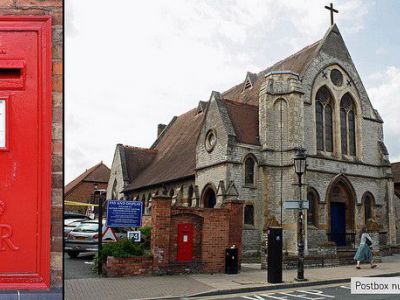
By 1698, the movement had gained enough momentum to ordain John Letherland, and by 1714, a dedicated Meeting House was established on Rother Street, signifying a permanent home for the congregation. This site was notably chosen again in 1880 for the construction of a new church building, reflecting the congregation's enduring presence and growth in Stratford. The building that stands today, a small Gothic-style structure, is not just a place of worship but a family chapel that has witnessed the ebb and flow of community life since its inception. Located prominently at the junction of Rother Street and Ely Street, it serves as a local landmark, steeped in centuries of congregational records that chronicle the life events of its members.
The narrative of the church took a significant turn in 1972 with the amalgamation of the Congregational Church and the English Presbyterian Church, birthing the United Reformed Church as it is known today. This merger symbolizes a coming together of traditions and communities, fostering a unified Protestant congregation in the heart of Stratford-upon-Avon.
By 1698, the movement had gained enough momentum to ordain John Letherland, and by 1714, a dedicated Meeting House was established on Rother Street, signifying a permanent home for the congregation. This site was notably chosen again in 1880 for the construction of a new church building, reflecting the congregation's enduring presence and growth in Stratford. The building that stands today, a small Gothic-style structure, is not just a place of worship but a family chapel that has witnessed the ebb and flow of community life since its inception. Located prominently at the junction of Rother Street and Ely Street, it serves as a local landmark, steeped in centuries of congregational records that chronicle the life events of its members.
The narrative of the church took a significant turn in 1972 with the amalgamation of the Congregational Church and the English Presbyterian Church, birthing the United Reformed Church as it is known today. This merger symbolizes a coming together of traditions and communities, fostering a unified Protestant congregation in the heart of Stratford-upon-Avon.
4) Guild Chapel
"defasyng images in ye chapel". For defacing paintings on the Guild Chapel walls, John Shakespeare, Willam Shakespeare's father, was paid two shillings. Its not a lot, considering the time he put in. Elizabeth I was in office, and she issued an injunction in 1559 to "remove all signs of superstition and idolatry from places of worship."
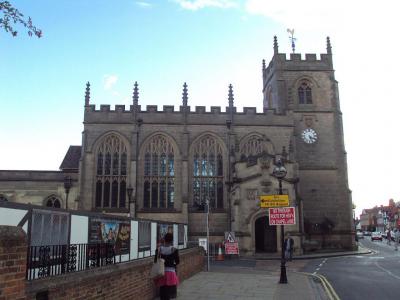
The Guild Chapel was founded by the Guild of the Holy Cross in 1269. The Chapel stands today on Church Street, across from William Shakespeare's New Place. Hugh Clopton, a former owner of New Place, had presented murals to the Chapel. It is ironic that John Shakespeare made money whitewashing the murals that were funded by Clopton.
The Guild was suppressed during the Reformation. Its property was turned over to the Corporation of Stratford. The murals were uncovered in the 1950s. A major restoration is in progress to restore the mural of Doom over the chancel arch together with the Death Poem. Seen from the outside the Chapel is a plain building with a high tower.
Restored in 1983 by Stephen Dykes Bower, The Chapel has a Grade I listing. It is owned and operated by The Stratford-upon-Avon Town Trust. The Chapel is in use as a chapel, providing services for King Edward VI School.
The Guild Chapel was founded by the Guild of the Holy Cross in 1269. The Chapel stands today on Church Street, across from William Shakespeare's New Place. Hugh Clopton, a former owner of New Place, had presented murals to the Chapel. It is ironic that John Shakespeare made money whitewashing the murals that were funded by Clopton.
The Guild was suppressed during the Reformation. Its property was turned over to the Corporation of Stratford. The murals were uncovered in the 1950s. A major restoration is in progress to restore the mural of Doom over the chancel arch together with the Death Poem. Seen from the outside the Chapel is a plain building with a high tower.
Restored in 1983 by Stephen Dykes Bower, The Chapel has a Grade I listing. It is owned and operated by The Stratford-upon-Avon Town Trust. The Chapel is in use as a chapel, providing services for King Edward VI School.
5) Shakespeare's New Place (must see)
In 1597 William Shakespeare was founder of the Lord Chamberlain's Men and a successful playwright. He had left his Birthplace House. He had moved to his newer, larger house, which he had bought for 129 pounds. The New Place (for so it was called) was located on Chapel Street, but a short walk from the Birthplace House on Henley Street.
New Place had been built in the 15th century by Hugh Clopton. The terms "New" or "Newer" as used in Britain are relative and not to be taken literally. One might say, "newer than the pyramids", for example. The New Place had a five gabled, three bayed, half-timbered frontage. Shakespeare rebuilt the frontage and added a gallery.
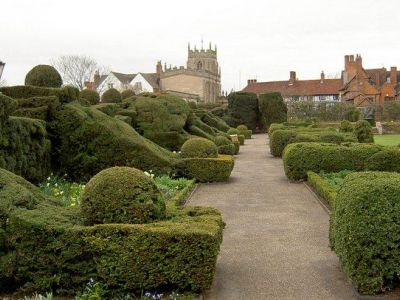
New Place was pulled down in the late 17th century by the Clopton family who had reacquired the property. The Clopton's newer New Place itself was demolished in 1759. Now New Place is occupied by a garden designed to memorialize Shakespeare's life and work and to allow visitors to develop their own connections with his legacy.
The Great Garden is behind the site where the house once stood. The garden shows sculptures based on Shakespeare's writings. The Knot Garden has been restored using designs which would have been familiar to Shakespeare himself.
New Place had been built in the 15th century by Hugh Clopton. The terms "New" or "Newer" as used in Britain are relative and not to be taken literally. One might say, "newer than the pyramids", for example. The New Place had a five gabled, three bayed, half-timbered frontage. Shakespeare rebuilt the frontage and added a gallery.
New Place was pulled down in the late 17th century by the Clopton family who had reacquired the property. The Clopton's newer New Place itself was demolished in 1759. Now New Place is occupied by a garden designed to memorialize Shakespeare's life and work and to allow visitors to develop their own connections with his legacy.
The Great Garden is behind the site where the house once stood. The garden shows sculptures based on Shakespeare's writings. The Knot Garden has been restored using designs which would have been familiar to Shakespeare himself.
6) Royal Shakespeare Theatre (must see)
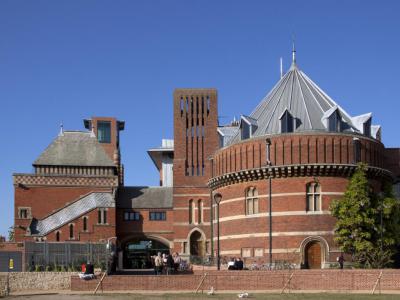
"O for a Muse of fire, that would ascend the brightest heaven of invention...." That comes to mind upon seeing the house and stage of the Royal Shakespeare Theatre (RSC) after its transformation of 2010. The Royal Shakespeare Theatre and the Swan Theatres reopened in 2010 after the extensive changes wrought by the Transformation Project.
This was a redo of the Shakespeare Memorial Theatre (SMT) which had been opened in 1932. The original theatre had been destroyed by fire six years earlier. The new SMT was designed by Elisabeth Scott. Ms Scott's theatre was renamed to Royal Shakespeare Theatre in 1961 after the creation of the Royal Shakespeare Company the previous year.
The RST is a 1,040 seat theatre with a thrust stage, bounded by the audience on three sides. The theatre is owned by the Royal Shakespeare Company (RSC). The new theatre is referred to as a "one room" theatre. Actors and audience are close together in the same room, as in Shakespeare's time. The play is an intimate experience for all.
The Theatre has a Rooftop Restaurant and bar offering views of the river Avon. There are also a Riverside Cafe and Terrace. There is a colonnade linking the RSC and the Swan Theatre. There is a tower, 118 feet in height with dramatic perspectives of the town and countryside. A riverside walk reaches from Bancroft Gardens past the Theatre.
Queen Elizabeth II and Prince Philip officially opened the Theatre in March 2011. An urn with the ashes of Actor Ian Richardson was placed in the foundation by his widow and son in 2007.
This was a redo of the Shakespeare Memorial Theatre (SMT) which had been opened in 1932. The original theatre had been destroyed by fire six years earlier. The new SMT was designed by Elisabeth Scott. Ms Scott's theatre was renamed to Royal Shakespeare Theatre in 1961 after the creation of the Royal Shakespeare Company the previous year.
The RST is a 1,040 seat theatre with a thrust stage, bounded by the audience on three sides. The theatre is owned by the Royal Shakespeare Company (RSC). The new theatre is referred to as a "one room" theatre. Actors and audience are close together in the same room, as in Shakespeare's time. The play is an intimate experience for all.
The Theatre has a Rooftop Restaurant and bar offering views of the river Avon. There are also a Riverside Cafe and Terrace. There is a colonnade linking the RSC and the Swan Theatre. There is a tower, 118 feet in height with dramatic perspectives of the town and countryside. A riverside walk reaches from Bancroft Gardens past the Theatre.
Queen Elizabeth II and Prince Philip officially opened the Theatre in March 2011. An urn with the ashes of Actor Ian Richardson was placed in the foundation by his widow and son in 2007.
7) Bancroft Gardens
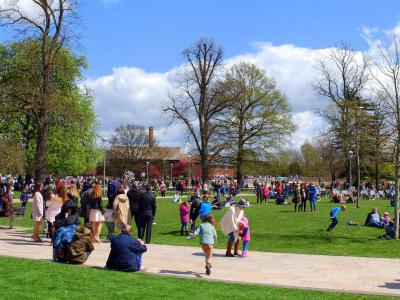
Bancroft Gardens in Stratford-upon-Avon is a picturesque and historically rich public space situated on the banks of the River Avon, adjacent to the iconic Royal Shakespeare Theatre. This location is a favorite among locals and visitors alike, especially on sunny days when the wide grass lawns and meticulously maintained gardens serve as a serene backdrop against the flowing river.
The Gardens boast a variety of features that celebrate both the local heritage and the universal legacy of William Shakespeare. Notable among these is a unique human sundial that honors the Warwickshire Fire and Rescue Service, highlighting the community's respect for its local heroes. A newly established performance area provides a stage for live events, enhancing the cultural vibrancy of the area.
Central to the Gardens is the magnificent swan fountain and the Gower memorial, which pays tribute to Shakespeare and four of his most memorable characters: Hamlet, Lady Macbeth, Falstaff, and Prince Hal. These figures represent the breadth of Shakespeare's work-philosophy, tragedy, comedy, and history. The memorial, created by Lord Ronald Sutherland Gower and presented to the town in 1888, is a testament to Stratford-upon-Avon's enduring connection to the Bard.
Another highlight is the Country Artists Fountain, sculpted by Christine Lee from stainless steel and brass for the 800th anniversary of the Charter for Market Rights granted by King Richard I in 1196. Unveiled by the Queen in 1996, this fountain adds a modern touch to the Gardens, marrying history with contemporary artistry.
The Bancroft area itself has a long history, initially serving as grazing land for the townspeople's animals. The Canal Basin, which marks the terminus of the Stratford-to-Birmingham canal completed in 1816, and a second canal basin built in 1826 and refilled in 1902, point to the area's industrial past. These elements underscore the transformation of Bancroft Gardens from a functional space into a place of leisure and cultural celebration.
The Gardens boast a variety of features that celebrate both the local heritage and the universal legacy of William Shakespeare. Notable among these is a unique human sundial that honors the Warwickshire Fire and Rescue Service, highlighting the community's respect for its local heroes. A newly established performance area provides a stage for live events, enhancing the cultural vibrancy of the area.
Central to the Gardens is the magnificent swan fountain and the Gower memorial, which pays tribute to Shakespeare and four of his most memorable characters: Hamlet, Lady Macbeth, Falstaff, and Prince Hal. These figures represent the breadth of Shakespeare's work-philosophy, tragedy, comedy, and history. The memorial, created by Lord Ronald Sutherland Gower and presented to the town in 1888, is a testament to Stratford-upon-Avon's enduring connection to the Bard.
Another highlight is the Country Artists Fountain, sculpted by Christine Lee from stainless steel and brass for the 800th anniversary of the Charter for Market Rights granted by King Richard I in 1196. Unveiled by the Queen in 1996, this fountain adds a modern touch to the Gardens, marrying history with contemporary artistry.
The Bancroft area itself has a long history, initially serving as grazing land for the townspeople's animals. The Canal Basin, which marks the terminus of the Stratford-to-Birmingham canal completed in 1816, and a second canal basin built in 1826 and refilled in 1902, point to the area's industrial past. These elements underscore the transformation of Bancroft Gardens from a functional space into a place of leisure and cultural celebration.
