Custom Walk in Nuremberg, Germany by harshdev_dcd4b created on 2025-05-30
Guide Location: Germany » Nuremberg
Guide Type: Custom Walk
# of Sights: 6
Tour Duration: 2 Hour(s)
Travel Distance: 4.1 Km or 2.5 Miles
Share Key: 2C6NJ
Guide Type: Custom Walk
# of Sights: 6
Tour Duration: 2 Hour(s)
Travel Distance: 4.1 Km or 2.5 Miles
Share Key: 2C6NJ
How It Works
Please retrieve this walk in the GPSmyCity app. Once done, the app will guide you from one tour stop to the next as if you had a personal tour guide. If you created the walk on this website or come to the page via a link, please follow the instructions below to retrieve the walk in the app.
Retrieve This Walk in App
Step 1. Download the app "GPSmyCity: Walks in 1K+ Cities" on Apple App Store or Google Play Store.



Step 2. In the GPSmyCity app, download(or launch) the guide "Nuremberg Map and Walking Tours".
Step 3. Tap the menu button located at upper right corner of the "Walks" screen and select "Retrieve custom walk". Enter the share key: 2C6NJ
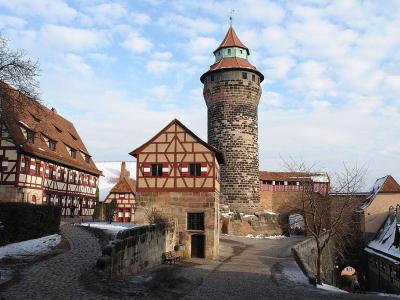
1) Nuremberg Castle (must see)
Nuremberg Castle is one of the most famous and magnificent castles in Germany. Every Holy Roman Emperor between 1050 and 1571 resided part-time at the castle. Essential administrative functions were carried out at the castle. Charles IV enacted the Golden Bull at the castle in 1356. This decree required that newly elected German kings would hold their first general assembly at Nuremberg.
The Sinwell Tower was built for defensive purposes in the 13th century. Sinwell means extremely round in Middle High German. Visitors can climb the tower's wooden spiral staircase to an observation platform. Photos of Nuremberg immediately after WWII are displayed at the top of the tower. You can see how much damage Nuremberg had and how meticulous the rebuild has been.
Visitors must be accompanied by a guide to see the Deep Well. This site is one of the highlights of the castle. The well is nearly 50 meters (164 feet) deep and was an essential water supply for the castle. The house covering the well was built in 1563.
The Double Chapel is another exquisite site. This Romanesque Imperial Chapel dates to the 13th century. The chapel features an emperor's gallery, which allowed the emperor to remain separate from the other worshippers.
The Imperial Hall was used as a dining hall and for festivities. Today, visitors can find Holy Roman Empire exhibits. The Emperor's Living Room features colorfully painted ceiling squares. The wall panels are decored with gold and date back to the 15th century.
The Corner Chamber features gorgeous art and gifts given to the Imperial Crown. Visitors will also find an impressive wooden model of the city, as well as the jeweled Imperial Crown. Visitors will find weapons from the 13th to 19th centuries in the Imperial Castle Museum.
After touring the castle, don't miss the Castle Garden with its beautiful flower beds.
Why You Should Visit:
Nuremberg Castle is steeped in history and has been beautifully restored. Visitors can walk the cobblestone paths, immerse themselves in the castle's history, and admire the stunning architecture and art displays.
Tips:
A combination ticket provides access to Nuremberg Castle, the Double Chapel, the Imperial Castle Museum, the Deep Well, and the Sinwell Tower. Guests can only visit the Deep Well with a guide. Audio guides for the castle are available in several languages.
The Sinwell Tower was built for defensive purposes in the 13th century. Sinwell means extremely round in Middle High German. Visitors can climb the tower's wooden spiral staircase to an observation platform. Photos of Nuremberg immediately after WWII are displayed at the top of the tower. You can see how much damage Nuremberg had and how meticulous the rebuild has been.
Visitors must be accompanied by a guide to see the Deep Well. This site is one of the highlights of the castle. The well is nearly 50 meters (164 feet) deep and was an essential water supply for the castle. The house covering the well was built in 1563.
The Double Chapel is another exquisite site. This Romanesque Imperial Chapel dates to the 13th century. The chapel features an emperor's gallery, which allowed the emperor to remain separate from the other worshippers.
The Imperial Hall was used as a dining hall and for festivities. Today, visitors can find Holy Roman Empire exhibits. The Emperor's Living Room features colorfully painted ceiling squares. The wall panels are decored with gold and date back to the 15th century.
The Corner Chamber features gorgeous art and gifts given to the Imperial Crown. Visitors will also find an impressive wooden model of the city, as well as the jeweled Imperial Crown. Visitors will find weapons from the 13th to 19th centuries in the Imperial Castle Museum.
After touring the castle, don't miss the Castle Garden with its beautiful flower beds.
Why You Should Visit:
Nuremberg Castle is steeped in history and has been beautifully restored. Visitors can walk the cobblestone paths, immerse themselves in the castle's history, and admire the stunning architecture and art displays.
Tips:
A combination ticket provides access to Nuremberg Castle, the Double Chapel, the Imperial Castle Museum, the Deep Well, and the Sinwell Tower. Guests can only visit the Deep Well with a guide. Audio guides for the castle are available in several languages.
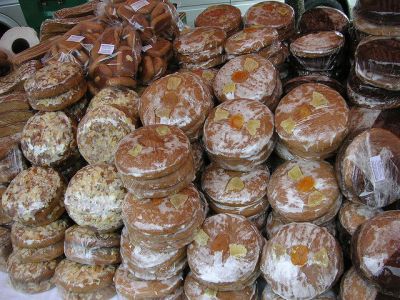
2) Lebkuchen Frauenholz (Mrs. Wood Gingerbread)
Mrs. Wood Gingerbread (Lebkuchen Frauenholz) in Nuremberg is a bakery specializing in the artisanal production of Nuremberg Elisen gingerbread, a tradition upheld for over a century. This prestigious gingerbread variety is celebrated for its rich inclusion of hazelnuts and almonds, making up 45% of the dough, and its unique, mild spice blend derived from a closely guarded family recipe.
The bakery offers a delightful assortment of Elisen gingerbread, including classic chocolate-coated, glazed, and unglazed versions, along with special variants featuring roasted hazelnuts or topped with almonds. Additionally, the bakery has expanded its range to include moist and fluffy gingerbread confections that complement the traditional offerings.
Embracing modern dietary needs, Mrs. Wood Gingerbread has also developed gluten-free, organic, and vegan versions of its famed gingerbread, ensuring that more customers can enjoy these treats regardless of dietary restrictions.
The production process at Mrs. Wood Gingerbread remains deeply rooted in traditional craftsmanship. All ingredients are manually combined in large cauldrons to form the perfect dough, and each gingerbread cookie is individually placed and iced by hand. This meticulous attention to detail ensures that each piece of gingerbread not only meets the high standards expected of a luxury product but also retains the authentic taste and quality that Mrs. Wood Gingerbread is known for.
What began as a local confectionery in Nuremberg has evolved into a specialist company renowned for its dedication to creating the finest Elisen gingerbread. As a family-owned business, Mrs. Wood Gingerbread continues to bake year-round, consistently delivering freshly made, high-quality gingerbread to its patrons both locally and internationally.
The bakery offers a delightful assortment of Elisen gingerbread, including classic chocolate-coated, glazed, and unglazed versions, along with special variants featuring roasted hazelnuts or topped with almonds. Additionally, the bakery has expanded its range to include moist and fluffy gingerbread confections that complement the traditional offerings.
Embracing modern dietary needs, Mrs. Wood Gingerbread has also developed gluten-free, organic, and vegan versions of its famed gingerbread, ensuring that more customers can enjoy these treats regardless of dietary restrictions.
The production process at Mrs. Wood Gingerbread remains deeply rooted in traditional craftsmanship. All ingredients are manually combined in large cauldrons to form the perfect dough, and each gingerbread cookie is individually placed and iced by hand. This meticulous attention to detail ensures that each piece of gingerbread not only meets the high standards expected of a luxury product but also retains the authentic taste and quality that Mrs. Wood Gingerbread is known for.
What began as a local confectionery in Nuremberg has evolved into a specialist company renowned for its dedication to creating the finest Elisen gingerbread. As a family-owned business, Mrs. Wood Gingerbread continues to bake year-round, consistently delivering freshly made, high-quality gingerbread to its patrons both locally and internationally.
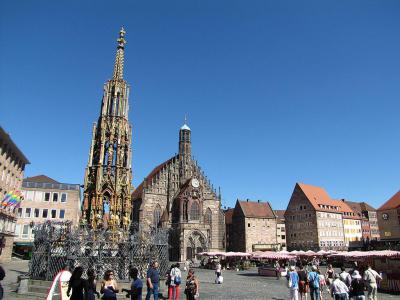
3) Hauptmarkt (Main Market Square) (must see)
The Main Market Square has been the center of activity and commerce in Nuremberg since ancient times. The celebrated marketplace runs Monday through Saturday. Visitors and locals love to shop the plentiful fruits and vegetables, fresh bread, treats, ready-to-eat meals, and fresh flowers.
The Main Market Square features several iconic landmarks. The Beautiful Fountain was completed in 1396 and is a Gothic masterpiece. It stands an impressive 19 meters (62 feet) tall.
Forty ornate figures decorate the fountain. The figures represent important icons in the Holy Roman Empire such as philosophy, liberal arts, the four Church Fathers, the four Evangelists, the seven Prince-electors, the Nine Worthies, Moses, and the seven Prophets. Legend tells of good luck brought to visitors who spin the two brass rings on the fence.
Another impressive landmark on the square is The Church of Our Lady. This Gothic church was built in the 14th century and features a beautiful facade.
The Main Market Square hosts various festivals and events throughout the year. Popular events include the Nuremberg Flea Market, the Nuremberg Old Town Festival, and the Christmas market.
The Main Market Square features several iconic landmarks. The Beautiful Fountain was completed in 1396 and is a Gothic masterpiece. It stands an impressive 19 meters (62 feet) tall.
Forty ornate figures decorate the fountain. The figures represent important icons in the Holy Roman Empire such as philosophy, liberal arts, the four Church Fathers, the four Evangelists, the seven Prince-electors, the Nine Worthies, Moses, and the seven Prophets. Legend tells of good luck brought to visitors who spin the two brass rings on the fence.
Another impressive landmark on the square is The Church of Our Lady. This Gothic church was built in the 14th century and features a beautiful facade.
The Main Market Square hosts various festivals and events throughout the year. Popular events include the Nuremberg Flea Market, the Nuremberg Old Town Festival, and the Christmas market.
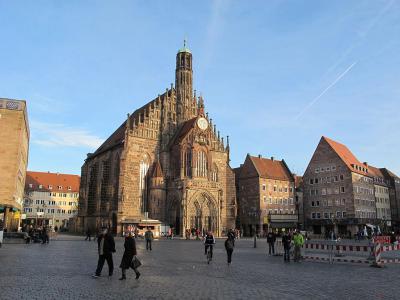
4) Frauenkirche (Church of Our Lady) (must see)
The Church of Our Lady (Frauenkirche) is a landmark of Nuremberg, located on the eastern side of the city's main market. This church, exemplifying brick Gothic architecture, was constructed between 1352 and 1362 under the direction of Charles IV, Holy Roman Emperor. It was built on the site of a former Jewish synagogue, tragically razed during the pogroms that followed the 1349 outbreak of the Black Death.
Designed to serve as a ceremonial place for imperial events, the church features a distinctive porch with a balcony. The architectural design is relatively modest, focusing on functionality and symbolic decorations, including the coats of arms of the Holy Roman Empire, the seven Electors, the town of Nuremberg, and the city of Rome-significant as the coronation site for Holy Roman Emperors.
Inside, the church houses a rich collection of medieval artworks. Notable among these is the Tucher Altar, circa 1440, which originally served as the high altar in the Augustinian Church of Saint Vitus. Additionally, the church contains two monuments crafted by Adam Kraft around 1498, showcasing the artistic heritage of the era. Many of the sculptures within the church have undergone extensive restoration, preserving their historical and artistic value.
A prominent feature of the Church of Our Lady is the mechanical clock (Männleinlaufen) installed between 1506 and 1509. This clock not only tells time but also commemorates the Golden Bull of 1356, featuring a mechanized display of the Holy Roman Emperor seated with his prince-electors. The clock stands as a symbol of the church's historical and cultural significance, bridging Nuremberg's past with the present.
Why You Should Visit:
Photogenic, easy to find, with some lovely stained glass windows and a late Gothic altarpiece from 1445 inside. On a very cold, rainy day it also provides a place of refuge, warmth and peace.
At its front door are the open-air stalls, selling lots of fresh fruit, vegetables, and gingerbread. Going up the steep steps to the viewing area overlooking the market is quite an experience.
Tip:
Try to visit at noontime when the clock mechanism is activated. After the bell tolls the hour, you can watch an animated procession with figures depicting the electors of the Holy Roman Empire paying homage to the Emperor. It's a brief but entertaining show if in the area.
Designed to serve as a ceremonial place for imperial events, the church features a distinctive porch with a balcony. The architectural design is relatively modest, focusing on functionality and symbolic decorations, including the coats of arms of the Holy Roman Empire, the seven Electors, the town of Nuremberg, and the city of Rome-significant as the coronation site for Holy Roman Emperors.
Inside, the church houses a rich collection of medieval artworks. Notable among these is the Tucher Altar, circa 1440, which originally served as the high altar in the Augustinian Church of Saint Vitus. Additionally, the church contains two monuments crafted by Adam Kraft around 1498, showcasing the artistic heritage of the era. Many of the sculptures within the church have undergone extensive restoration, preserving their historical and artistic value.
A prominent feature of the Church of Our Lady is the mechanical clock (Männleinlaufen) installed between 1506 and 1509. This clock not only tells time but also commemorates the Golden Bull of 1356, featuring a mechanized display of the Holy Roman Emperor seated with his prince-electors. The clock stands as a symbol of the church's historical and cultural significance, bridging Nuremberg's past with the present.
Why You Should Visit:
Photogenic, easy to find, with some lovely stained glass windows and a late Gothic altarpiece from 1445 inside. On a very cold, rainy day it also provides a place of refuge, warmth and peace.
At its front door are the open-air stalls, selling lots of fresh fruit, vegetables, and gingerbread. Going up the steep steps to the viewing area overlooking the market is quite an experience.
Tip:
Try to visit at noontime when the clock mechanism is activated. After the bell tolls the hour, you can watch an animated procession with figures depicting the electors of the Holy Roman Empire paying homage to the Emperor. It's a brief but entertaining show if in the area.
5) German National Museum (must see)
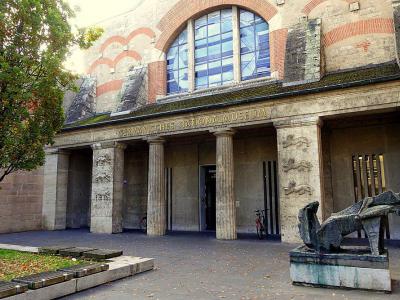
The German National Museum, located in Nuremberg, stands as the largest museum of cultural history in the country. Founded in 1852, the museum was established with the vision of creating a comprehensive archive of German history, literature, and art. Initially named the Germanic National Museum, its foundation was influenced by significant 19th-century scholars such as the Brothers Grimm and Leopold Ranke, aligning with efforts to document the cultural unity of German-speaking regions during a period marked by national aspirations and cultural renaissance.
This museum is home to a vast collection that includes over 1.3 million objects, of which about 25,000 are on display, encompassing a timeline from prehistoric times to the present day. The museum's scope includes not only artistic and historical artifacts but also extends to educational and research activities, presenting an international and interdisciplinary view of German-speaking cultures.
Architecturally, the museum is a historical artifact, incorporating structures from various periods including the remnants of the Nuremberg Charterhouse, which dates back to 1525. Over the centuries, the building has undergone significant transformations, including Neo-Gothic extensions in the late 19th century and reconstruction efforts post-World War II, reflecting a blend of historical and modern architectural styles.
A significant feature of the museum is the entrance hall on Kartäusergasse, transformed by Israeli sculptor Dani Karavan into the "Way of Human Rights," symbolizing the museum's commitment to cultural respect and human dignity.
The German National Museum serves as a crucial repository and exhibition space that not only preserves but also interprets the rich tapestry of German cultural history for both the national and international community.
Tip:
The museum is open late on a Wednesday and free of charge after 6 pm, though you would still need a few more hours to see everything.
Study the map you get at the start and try to plan your visit, as the museum areas don't flow into each other and you could spend much time backtracking.
This museum is home to a vast collection that includes over 1.3 million objects, of which about 25,000 are on display, encompassing a timeline from prehistoric times to the present day. The museum's scope includes not only artistic and historical artifacts but also extends to educational and research activities, presenting an international and interdisciplinary view of German-speaking cultures.
Architecturally, the museum is a historical artifact, incorporating structures from various periods including the remnants of the Nuremberg Charterhouse, which dates back to 1525. Over the centuries, the building has undergone significant transformations, including Neo-Gothic extensions in the late 19th century and reconstruction efforts post-World War II, reflecting a blend of historical and modern architectural styles.
A significant feature of the museum is the entrance hall on Kartäusergasse, transformed by Israeli sculptor Dani Karavan into the "Way of Human Rights," symbolizing the museum's commitment to cultural respect and human dignity.
The German National Museum serves as a crucial repository and exhibition space that not only preserves but also interprets the rich tapestry of German cultural history for both the national and international community.
Tip:
The museum is open late on a Wednesday and free of charge after 6 pm, though you would still need a few more hours to see everything.
Study the map you get at the start and try to plan your visit, as the museum areas don't flow into each other and you could spend much time backtracking.
6) Nuremberg Palace of Justice (must see)
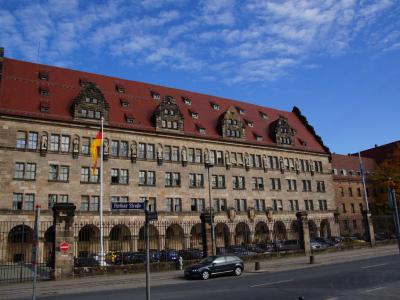
The Palace of Justice in Nuremberg is a significant building complex constructed between 1909 and 1916. It encompasses various judicial bodies including the appellate court (Oberlandesgericht), the regional court (Landgericht), the local court (Amtsgericht), and the public prosecutor's office (Staatsanwaltschaft). The complex is notably home to the Nuremberg Trials Memorial (Memorium Nürnberger Prozesse) situated on the top floor of the courthouse.
This building was selected for the Nuremberg trials, held between 1945 and 1949, where major surviving German war criminals of World War II were prosecuted. The choice of the Nuremberg Palace of Justice was strategic due to its almost untouched state post-war, ample space, and an adjoining large prison complex. Nuremberg itself was a symbolic location given its history with the Nazi Party's large rallies.
The trials primarily took place in Courtroom 600, located in the building's eastern wing. This courtroom, which is still operational today and often used for murder trials, underwent modifications after the trials. A previously removed wall was reinstalled to decrease the space, and the judges’ bench was rotated 90 degrees from its original position.
Starting in the year 2000, tourists were able to visit Courtroom 600 on weekends. The Nuremberg Trials Memorial, managed by the Nuremberg Municipal Museums, was inaugurated in November 2010. Since 2022, a media installation has been providing visitors with a virtual representation of the courtroom as it appeared during the Nuremberg Trials.
This building was selected for the Nuremberg trials, held between 1945 and 1949, where major surviving German war criminals of World War II were prosecuted. The choice of the Nuremberg Palace of Justice was strategic due to its almost untouched state post-war, ample space, and an adjoining large prison complex. Nuremberg itself was a symbolic location given its history with the Nazi Party's large rallies.
The trials primarily took place in Courtroom 600, located in the building's eastern wing. This courtroom, which is still operational today and often used for murder trials, underwent modifications after the trials. A previously removed wall was reinstalled to decrease the space, and the judges’ bench was rotated 90 degrees from its original position.
Starting in the year 2000, tourists were able to visit Courtroom 600 on weekends. The Nuremberg Trials Memorial, managed by the Nuremberg Municipal Museums, was inaugurated in November 2010. Since 2022, a media installation has been providing visitors with a virtual representation of the courtroom as it appeared during the Nuremberg Trials.
