Custom Walk in San Francisco, California by ajaibhatnagar_65999 created on 2025-06-01
Guide Location: USA » San Francisco
Guide Type: Custom Walk
# of Sights: 6
Tour Duration: 3 Hour(s)
Travel Distance: 7.7 Km or 4.8 Miles
Share Key: WPJAJ
Guide Type: Custom Walk
# of Sights: 6
Tour Duration: 3 Hour(s)
Travel Distance: 7.7 Km or 4.8 Miles
Share Key: WPJAJ
How It Works
Please retrieve this walk in the GPSmyCity app. Once done, the app will guide you from one tour stop to the next as if you had a personal tour guide. If you created the walk on this website or come to the page via a link, please follow the instructions below to retrieve the walk in the app.
Retrieve This Walk in App
Step 1. Download the app "GPSmyCity: Walks in 1K+ Cities" on Apple App Store or Google Play Store.



Step 2. In the GPSmyCity app, download(or launch) the guide "San Francisco Map and Walking Tours".
Step 3. Tap the menu button located at upper right corner of the "Walks" screen and select "Retrieve custom walk". Enter the share key: WPJAJ
1) Pier 39 (must see)
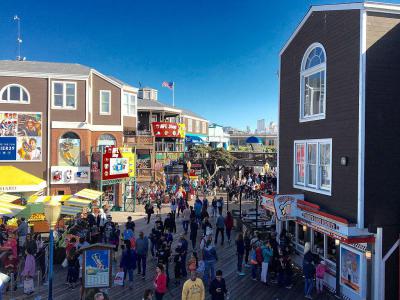
Pier 39—the beating, barking heart of Fisherman’s Wharf—isn’t much of a fisherman’s pier anymore. The old fleet has long since sailed off into history, but in its place rose something entirely different: a carnival by the sea. Imagine a boardwalk that decided to go full extrovert—complete with a glittering carousel (hidden toward the end of the pier like a shy performer), neon amusements, and the constant hum of tourists chasing their next photo op. Revamped in the 1970s to resemble a quaint wooden fishing village, it now welcomes thousands daily—none of whom are catching fish, though, but plenty of those catching Instagram stories...
It’s essentially an open-air shopping mall in a sailor’s disguise. Between the street performers, the Aquarium of the Bay, and enough snack stands to feed a small ship’s crew, there’s no shortage of things to distract you from the ocean view. If you need a recharge, the visitor center has you covered—literally—with phone-charging stations and a place to stash your bags while you explore.
Then there’s the food—because let’s be honest, half the crowd here comes for the chowder. Fourteen restaurants dish out everything from cioppino (which is the Italian-American shellfish and tomato stew) to locally-sourced oysters, with Fog Harbor Fish House leading the pack in both flavor and sustainability. If you’re feeling adventurous, there’s even a floating restaurant—Forbes Island—where the catch of the day comes with a side of gentle rocking.
But the true stars of Pier 39 aren’t human at all. The sea lions, self-appointed landlords since 1989, lounge across the docks like sunbathing celebrities—loud, lazy, and utterly unbothered by their audience. Slightly stinky, yes, but undeniably charming...
From the pier, you’ll spot Angel Island, Alcatraz, and both the Golden Gate and Bay Bridges stretching across the horizon. Boat tickets and ferry rides await those itching to head out on the water. Just remember: San Francisco’s sea breeze doesn’t care about your vacation outfit—so bring a jacket, or risk looking windswept in every photo...
It’s essentially an open-air shopping mall in a sailor’s disguise. Between the street performers, the Aquarium of the Bay, and enough snack stands to feed a small ship’s crew, there’s no shortage of things to distract you from the ocean view. If you need a recharge, the visitor center has you covered—literally—with phone-charging stations and a place to stash your bags while you explore.
Then there’s the food—because let’s be honest, half the crowd here comes for the chowder. Fourteen restaurants dish out everything from cioppino (which is the Italian-American shellfish and tomato stew) to locally-sourced oysters, with Fog Harbor Fish House leading the pack in both flavor and sustainability. If you’re feeling adventurous, there’s even a floating restaurant—Forbes Island—where the catch of the day comes with a side of gentle rocking.
But the true stars of Pier 39 aren’t human at all. The sea lions, self-appointed landlords since 1989, lounge across the docks like sunbathing celebrities—loud, lazy, and utterly unbothered by their audience. Slightly stinky, yes, but undeniably charming...
From the pier, you’ll spot Angel Island, Alcatraz, and both the Golden Gate and Bay Bridges stretching across the horizon. Boat tickets and ferry rides await those itching to head out on the water. Just remember: San Francisco’s sea breeze doesn’t care about your vacation outfit—so bring a jacket, or risk looking windswept in every photo...
2) Ghirardelli Square
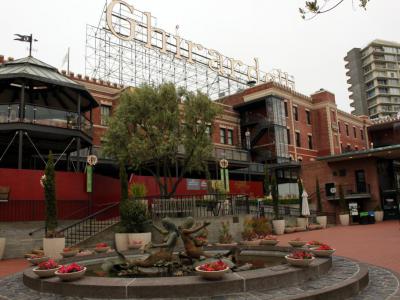
Once a chocolate factory and a wool mill, this is the most attractive of San Fran's refurbished industrial facilities. Looming above the Maritime National Historical Park with its mix of old red-brick buildings and modern stores and restaurants, this shopping center retains the famous Ghirardelli trademark clock tower and original electric roof sign.
The Ghirardelli Chocolate Manufactory on the plaza beneath the tower still houses vintage chocolate-making machinery and sells the confection. These days, you can find pretty much everything under the sun here (if you know where to look), from succulents to small souvenirs and mementos to coffee, cheese, and ice cream sundaes.
At the square, there is always some live music playing. Its centerpiece, Andrea's Fountain, is decorated with bronze sculptures of mermaids and turtles and is the most popular gathering point for shoppers, day and night, much as the top location for all Instagram-ers looking for a perfect backdrop.
The views at night, opening from the end of Van Ness Pier, are even better. You can frame the quaint square (with high rises looming up behind it), the Coit Tower on the left, and a quiet cove full of sailboats immediately in front. And the whole image is reflected in the water.
Tip:
The chocolate shop gives out free samples every day, so stop in and give yourself a treat.
The Ghirardelli Chocolate Manufactory on the plaza beneath the tower still houses vintage chocolate-making machinery and sells the confection. These days, you can find pretty much everything under the sun here (if you know where to look), from succulents to small souvenirs and mementos to coffee, cheese, and ice cream sundaes.
At the square, there is always some live music playing. Its centerpiece, Andrea's Fountain, is decorated with bronze sculptures of mermaids and turtles and is the most popular gathering point for shoppers, day and night, much as the top location for all Instagram-ers looking for a perfect backdrop.
The views at night, opening from the end of Van Ness Pier, are even better. You can frame the quaint square (with high rises looming up behind it), the Coit Tower on the left, and a quiet cove full of sailboats immediately in front. And the whole image is reflected in the water.
Tip:
The chocolate shop gives out free samples every day, so stop in and give yourself a treat.
3) Nob Hill
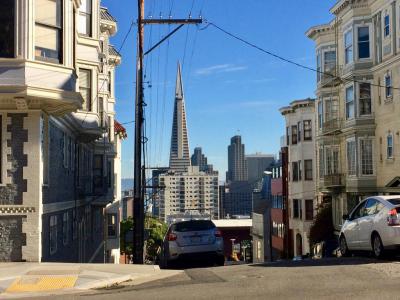
The embodiment of "swank" in San Francisco's history, Nob Hill is perched on a hilltop above Union Square and Chinatown. The neighborhood elegantly preserves some of the character brought to it by the early railroad and financial barons who built their mansions here.
One of the prime reasons why Nob Hill attracted (and still does) affluent classes is its centralized location. Over the years, it was once home to some of the most prominent names in America's political and business history, including Leyland Stanford (governor of California and US Senator in the late 1800s), Collins Huntington (19th-century industrialist and railway magnate), as well as Mark Hopkins and Charles Crocker, founders of the Central Pacific Railroad. Strolling the area, you can get a glimpse of their grand mansions poised with majestic galore atop the Hill.
After the 1906 earthquake and ensuing fire, some mansions were revamped into luxury hotels. The most expensive of them, such as Fairmont, Hopkins, Stanford Court, or Huntington, stand literally on the ruins of the 1906 disaster.
Presently, the neighborhood attracts thousands of visitors each year, who either walk all the way up (if fit) or drive or take a cable car to wander around, see the architecture, and, perhaps, stroll occasionally into the Fairmont Hotel lobby for a drink. You can also admire the scenery at the Top of the Mark in the Mark Hopkins Hotel, have lunch or dinner at one of the several local restaurants, or enjoy a peaceful interlude in the beautiful Grace Cathedral. There is also pleasant Huntington Park with the Tortoise Fountain worth checking out, where you can sit, stretch your weary feet and relax.
One of the prime reasons why Nob Hill attracted (and still does) affluent classes is its centralized location. Over the years, it was once home to some of the most prominent names in America's political and business history, including Leyland Stanford (governor of California and US Senator in the late 1800s), Collins Huntington (19th-century industrialist and railway magnate), as well as Mark Hopkins and Charles Crocker, founders of the Central Pacific Railroad. Strolling the area, you can get a glimpse of their grand mansions poised with majestic galore atop the Hill.
After the 1906 earthquake and ensuing fire, some mansions were revamped into luxury hotels. The most expensive of them, such as Fairmont, Hopkins, Stanford Court, or Huntington, stand literally on the ruins of the 1906 disaster.
Presently, the neighborhood attracts thousands of visitors each year, who either walk all the way up (if fit) or drive or take a cable car to wander around, see the architecture, and, perhaps, stroll occasionally into the Fairmont Hotel lobby for a drink. You can also admire the scenery at the Top of the Mark in the Mark Hopkins Hotel, have lunch or dinner at one of the several local restaurants, or enjoy a peaceful interlude in the beautiful Grace Cathedral. There is also pleasant Huntington Park with the Tortoise Fountain worth checking out, where you can sit, stretch your weary feet and relax.
4) Chinatown Gate (Dragon's Gate)
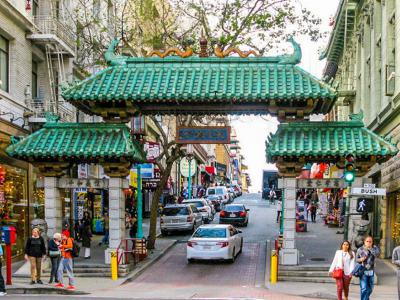
In keeping with Feng Shui principles, the southern edge of San Francisco’s Chinatown is marked by a towering gateway that straddles the bustle of Grant Avenue. This is the Dragon Gate, a flamboyant arch dressed in curling green dragons and traditional tiles. It might look timeless, but it’s actually a relative newcomer-unveiled only in 1970. Its materials were a gift from Taiwan, while the elegant design came from Chinese-American architect Clayton Lee, who modeled it after the ceremonial village gates of old China. Across the top, four carved Chinese characters proclaim a message of welcome: “All under heaven is for the good of the people.”
Guarding the arch are a pair of stone lions, known as fu dogs. On the west side, the male lion steadies a ball beneath his paw, symbolizing protection of the outside world. On the east, the lioness rests her paw on a playful cub, representing the nurturing of family. Together, they embody the balance of strength and care, ensuring that any evil spirits think twice before crossing the threshold.
Pass beneath the gate, and the character of the neighborhood unfolds in full color. In the 1920s, local merchants reinvented Chinatown’s appearance by adding pagoda-roofed façades and bright ornamental details-a pioneering initiative which created an identity that has drawn visitors ever since. The once-notorious red-light district gave way to lantern-strung streets. As evening sets in, the dragon-shaped streetlights flicker on, casting a warm glow across the lively thoroughfare, bustling with herbal shops, bakeries, tea houses, and jewelry stores.
Guarding the arch are a pair of stone lions, known as fu dogs. On the west side, the male lion steadies a ball beneath his paw, symbolizing protection of the outside world. On the east, the lioness rests her paw on a playful cub, representing the nurturing of family. Together, they embody the balance of strength and care, ensuring that any evil spirits think twice before crossing the threshold.
Pass beneath the gate, and the character of the neighborhood unfolds in full color. In the 1920s, local merchants reinvented Chinatown’s appearance by adding pagoda-roofed façades and bright ornamental details-a pioneering initiative which created an identity that has drawn visitors ever since. The once-notorious red-light district gave way to lantern-strung streets. As evening sets in, the dragon-shaped streetlights flicker on, casting a warm glow across the lively thoroughfare, bustling with herbal shops, bakeries, tea houses, and jewelry stores.
5) City Hall (must see)
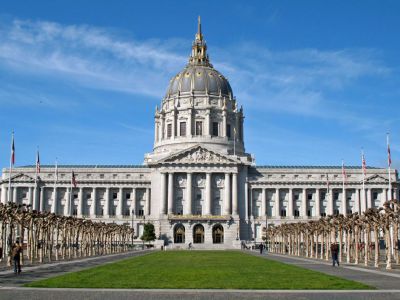
San Francisco's City Hall is a remarkable edifice that exudes magnificence and splendor within the city. It stands proudly as one of the most exceptional structures in the area, boasting the captivating beauty of a Beaux-Arts masterpiece. Renowned architect and designer Arthur Brown drew inspiration from Paris' iconic Dôme des Invalides ("House of Invalids") when creating this architectural gem.
Beyond its captivating design, City Hall holds a special place in history, having weathered numerous challenges and natural calamities. Its journey began in 1899, when the original City Hall, constructed over 27 years, finally opened its doors to the public. Tragically, a mere seven years later, the devastating earthquake of 1906 reduced the building to rubble. The current City Hall stands as a replacement for its predecessor.
This magnificent structure encountered another significant trial in 1989 when it suffered severe damage from a powerful seismic tremor. As a result, it became structurally unstable. In response, City Hall underwent an extensive ten-year renovation, not only restoring it to its former glory but also fortifying it against earthquakes. Today, it proudly holds the distinction of being the largest base-isolated building in the world.
Why You Should Visit:
Compared to other city halls across the country, this one is very classy!
As well, there's always something going in Civic Center Plaza.
Tip:
Be sure to take the free 1h tour led by a knowledgeable docent. Learn about the building's history and architecture.
Beyond its captivating design, City Hall holds a special place in history, having weathered numerous challenges and natural calamities. Its journey began in 1899, when the original City Hall, constructed over 27 years, finally opened its doors to the public. Tragically, a mere seven years later, the devastating earthquake of 1906 reduced the building to rubble. The current City Hall stands as a replacement for its predecessor.
This magnificent structure encountered another significant trial in 1989 when it suffered severe damage from a powerful seismic tremor. As a result, it became structurally unstable. In response, City Hall underwent an extensive ten-year renovation, not only restoring it to its former glory but also fortifying it against earthquakes. Today, it proudly holds the distinction of being the largest base-isolated building in the world.
Why You Should Visit:
Compared to other city halls across the country, this one is very classy!
As well, there's always something going in Civic Center Plaza.
Tip:
Be sure to take the free 1h tour led by a knowledgeable docent. Learn about the building's history and architecture.
6) Japantown Peace Plaza
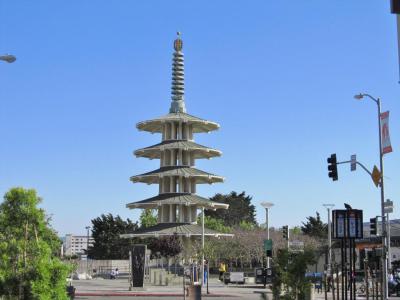
In San Francisco, the famous Japantown is distinguished by its iconic Peace Plaza, an outdoor court nestled between the Miyako and Kintetsu Malls. This tranquil space was created in the 1960s as a complementary addition to the Japan Center Mall, providing visitors a serene spot to relax their feet after shopping or dining. Moreover, it serves as a vibrant venue for various Japantown celebrations, such as the Obon Festival, Aki Matsuri, Children’s Day, and the Cherry Blossom Festival.
Originally, the plaza's design showcased a 17th Century eternal flame, a granite reflecting pool, and a grand drum tower. However, over time, it has been transformed into an inviting area with benches for relaxation, pleasant greenery, and the famous Peace Pagoda.
The Peace Pagoda itself was constructed during the 1960s and was dedicated on March 28th, 1968. Positioned in the northeastern corner of the Peace Plaza, it lies between the Japan Center Mall and the Nihonmachi Mall. A symbol of peace, the Peace Pagoda follows the Buddhist tradition and aims to inspire harmony among all people. Its design was entrusted to Yoshiro Taniguchi, a Japanese modernist architect.
This significant monument holds historical significance as it was a gift from the people of Osaka, Japan, to San Francisco, a gesture of sisterhood between the two cities dating back to 1957. With its rich history and serene ambiance, the Peace Plaza and its magnificent Peace Pagoda continue to be cherished landmarks in San Francisco's vibrant Japantown.
Originally, the plaza's design showcased a 17th Century eternal flame, a granite reflecting pool, and a grand drum tower. However, over time, it has been transformed into an inviting area with benches for relaxation, pleasant greenery, and the famous Peace Pagoda.
The Peace Pagoda itself was constructed during the 1960s and was dedicated on March 28th, 1968. Positioned in the northeastern corner of the Peace Plaza, it lies between the Japan Center Mall and the Nihonmachi Mall. A symbol of peace, the Peace Pagoda follows the Buddhist tradition and aims to inspire harmony among all people. Its design was entrusted to Yoshiro Taniguchi, a Japanese modernist architect.
This significant monument holds historical significance as it was a gift from the people of Osaka, Japan, to San Francisco, a gesture of sisterhood between the two cities dating back to 1957. With its rich history and serene ambiance, the Peace Plaza and its magnificent Peace Pagoda continue to be cherished landmarks in San Francisco's vibrant Japantown.
