Custom Walk in Athens, Greece by rmielke_eb646 created on 2025-06-02
Guide Location: Greece » Athens
Guide Type: Custom Walk
# of Sights: 5
Tour Duration: 2 Hour(s)
Travel Distance: 3.7 Km or 2.3 Miles
Share Key: LXM3B
Guide Type: Custom Walk
# of Sights: 5
Tour Duration: 2 Hour(s)
Travel Distance: 3.7 Km or 2.3 Miles
Share Key: LXM3B
How It Works
Please retrieve this walk in the GPSmyCity app. Once done, the app will guide you from one tour stop to the next as if you had a personal tour guide. If you created the walk on this website or come to the page via a link, please follow the instructions below to retrieve the walk in the app.
Retrieve This Walk in App
Step 1. Download the app "GPSmyCity: Walks in 1K+ Cities" on Apple App Store or Google Play Store.



Step 2. In the GPSmyCity app, download(or launch) the guide "Athens Map and Walking Tours".
Step 3. Tap the menu button located at upper right corner of the "Walks" screen and select "Retrieve custom walk". Enter the share key: LXM3B
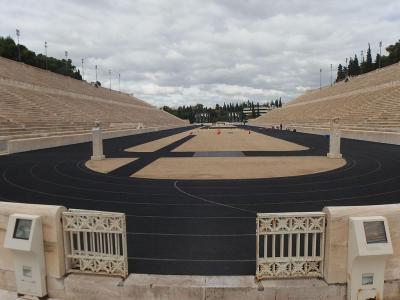
1) Panathenaic Stadium (must see)
The Panathenaic is truly a remarkable historical site, being the only major stadium in the world constructed entirely of white marble. Its origins trace back to ancient times when it served as the venue for the athletic competitions of the Panathenaic Games, dedicated to the Goddess Athena and held every four years. The stadium underwent significant transformations, with a marble reconstruction in 329 BC and later expansion and renovation in 140 AD, accommodating up to 50,000 spectators.
Having fallen into disuse and disrepair after the 4th century AD, it was rediscovered and revitalized for the modern era, playing a pivotal role in the revival of the Olympic Games in the late 19th century. Despite its smaller scale compared to contemporary Olympic venues, the Panathenaic's elegant simplicity and iconic five Olympic rings continue to inspire awe. At the entrance, you'll encounter four stones engraved with the interesting history of the Olympics from the late 19th century to the present day.
The inaugural international Olympic Games in modern history were held here in 1896, with King George I of Greece opening the ceremony. Among participants were 241 male athletes from 14 countries, competing in 9 sports and 43 events. These early modern Olympic sports included athletics, cycling, fencing, gymnastics, tennis, shooting, swimming, weightlifting, and wrestling. Since then, athletes from across the globe have convened every four years, with the tradition enduring through the tumultuous 20th century wars.
Why You Should Visit:
A captivating place to explore, and you can enhance your visit with the free audio guide provided.
The on-site museum provides an engaging exhibition on the fascinating history of the Olympics.
Tip:
Don't miss the opportunity to climb to the upper tier for stunning views of the stadium.
Having fallen into disuse and disrepair after the 4th century AD, it was rediscovered and revitalized for the modern era, playing a pivotal role in the revival of the Olympic Games in the late 19th century. Despite its smaller scale compared to contemporary Olympic venues, the Panathenaic's elegant simplicity and iconic five Olympic rings continue to inspire awe. At the entrance, you'll encounter four stones engraved with the interesting history of the Olympics from the late 19th century to the present day.
The inaugural international Olympic Games in modern history were held here in 1896, with King George I of Greece opening the ceremony. Among participants were 241 male athletes from 14 countries, competing in 9 sports and 43 events. These early modern Olympic sports included athletics, cycling, fencing, gymnastics, tennis, shooting, swimming, weightlifting, and wrestling. Since then, athletes from across the globe have convened every four years, with the tradition enduring through the tumultuous 20th century wars.
Why You Should Visit:
A captivating place to explore, and you can enhance your visit with the free audio guide provided.
The on-site museum provides an engaging exhibition on the fascinating history of the Olympics.
Tip:
Don't miss the opportunity to climb to the upper tier for stunning views of the stadium.
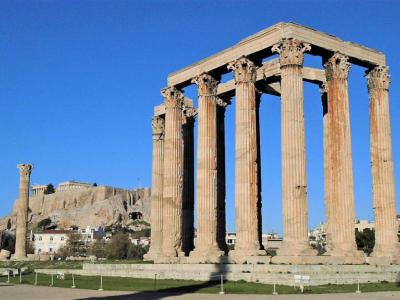
2) Temple of Olympian Zeus (must see)
Even in its ruined state, the Athenian temple of Olympian Zeus remains a monument of awe-inspiring proportions, surpassing even the Parthenon in size. This colossal edifice saw its construction commence in the 6th century BC during the rule of the tyrant Peisistratos, who allegedly initiated the ambitious project to garner public favor. However, despite numerous attempts spanning many years to complete what would have been the greatest temple in the ancient world, it remained unfinished for over six and a half centuries.
In AD 132, the Roman emperor Hadrian, renowned for his admiration of classical Greek culture, dedicated the temple to Zeus Olympios during the Panhellenic festival, a competition of music and poetry held the year before the Olympics. This act took place during his second visit to Athens, and Hadrian also placed a gold and ivory inlaid statue of the god Zeus inside the temple. Regrettably, both the statue of Zeus and a colossal statue of the emperor himself have since been lost to history.
Today, only 15 of the original 104 Corinthian columns remain standing, each at a height of 17 meters (56 feet) – but enough to provide a sense of the temple's immense scale, which would have spanned about 96 meters (315 feet) in length and 40 meters (130 feet) in width. Nearby, there lies a 16th column that toppled during a storm in 1852, bearing witness to the passage of time. The temple's ruins extend beyond the towering columns, although entry into the temple may be restricted at times due to ongoing archaeological excavations.
Adjacent stands Hadrian's Arch, constructed in AD 131 and intentionally positioned to demarcate the boundary between the ancient city and the new Athens envisioned by Emperor Hadrian.
Tip:
For visitors who have acquired the Acropolis multi-site ticket, access to this historical site is automatically granted.
In AD 132, the Roman emperor Hadrian, renowned for his admiration of classical Greek culture, dedicated the temple to Zeus Olympios during the Panhellenic festival, a competition of music and poetry held the year before the Olympics. This act took place during his second visit to Athens, and Hadrian also placed a gold and ivory inlaid statue of the god Zeus inside the temple. Regrettably, both the statue of Zeus and a colossal statue of the emperor himself have since been lost to history.
Today, only 15 of the original 104 Corinthian columns remain standing, each at a height of 17 meters (56 feet) – but enough to provide a sense of the temple's immense scale, which would have spanned about 96 meters (315 feet) in length and 40 meters (130 feet) in width. Nearby, there lies a 16th column that toppled during a storm in 1852, bearing witness to the passage of time. The temple's ruins extend beyond the towering columns, although entry into the temple may be restricted at times due to ongoing archaeological excavations.
Adjacent stands Hadrian's Arch, constructed in AD 131 and intentionally positioned to demarcate the boundary between the ancient city and the new Athens envisioned by Emperor Hadrian.
Tip:
For visitors who have acquired the Acropolis multi-site ticket, access to this historical site is automatically granted.
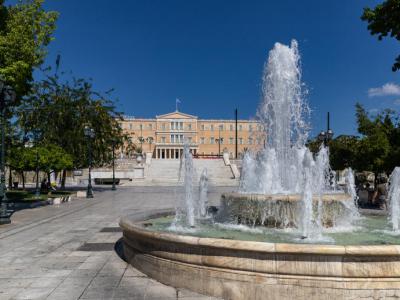
3) Syntagma Square (Constitution Square)
Constitution Square in Athens is where history, politics, and a good cup of coffee collide. This spacious landmark sits right in front of the 19th-century Royal Palace, which has been home to the Greek Parliament since 1935. And no, the square wasn’t just randomly named so-King Otto, Greece’s first monarch, was practically strong-armed into granting the country a Constitution here in 1843, thanks to a rather persuasive public and military uprising.
Nowadays, Constitution Square is still at the heart of the action. It’s not just a tourist hotspot-this is also Athens’ nerve center, linking visitors to top attractions by road, tram, bus, and subway. Political rallies, public gatherings, and plenty of people simply waiting for their Uber-this square sees it all on a regular basis.
Speaking of layout, Constitution Square has two levels-a bit like a giant marble stage set for both relaxation and spectacle. The central fountain, surrounded by benches, is perfect for a break, preferably with a Greek coffee in hand. Need WiFi? – No problem. Need a shade? – The pine and orange trees have you covered. And if caffeine calls, there are plenty of cafés ready to oblige. Oh, and in case you missed it, the whole square is clad in gleaming white marble, now with brand-new lampposts for that extra sparkle.
But the real showstopper is The Tomb of the Unknown Soldier. Guarded around the clock by the Evzones, Greece’s elite ceremonial soldiers, it’s a must-see. Their high-stepping routine, complete with kilts and pom-pom clogs, is as precise as it is fascinating. The tomb itself, unveiled on March 25, 1932, features a moving relief of a fallen Greek warrior (hoplite), forever frozen in time.
Tip:
If you fancy some retail therapy, just head to the lower end of the square-that’s where Ermou Street begins, Athens' ultimate shopping avenue. Happy strolling!
Nowadays, Constitution Square is still at the heart of the action. It’s not just a tourist hotspot-this is also Athens’ nerve center, linking visitors to top attractions by road, tram, bus, and subway. Political rallies, public gatherings, and plenty of people simply waiting for their Uber-this square sees it all on a regular basis.
Speaking of layout, Constitution Square has two levels-a bit like a giant marble stage set for both relaxation and spectacle. The central fountain, surrounded by benches, is perfect for a break, preferably with a Greek coffee in hand. Need WiFi? – No problem. Need a shade? – The pine and orange trees have you covered. And if caffeine calls, there are plenty of cafés ready to oblige. Oh, and in case you missed it, the whole square is clad in gleaming white marble, now with brand-new lampposts for that extra sparkle.
But the real showstopper is The Tomb of the Unknown Soldier. Guarded around the clock by the Evzones, Greece’s elite ceremonial soldiers, it’s a must-see. Their high-stepping routine, complete with kilts and pom-pom clogs, is as precise as it is fascinating. The tomb itself, unveiled on March 25, 1932, features a moving relief of a fallen Greek warrior (hoplite), forever frozen in time.
Tip:
If you fancy some retail therapy, just head to the lower end of the square-that’s where Ermou Street begins, Athens' ultimate shopping avenue. Happy strolling!
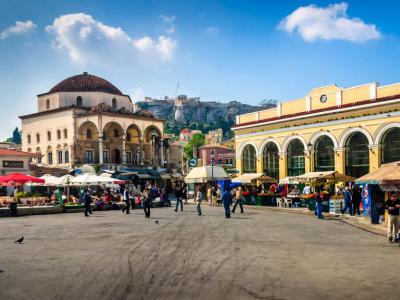
4) Monastiraki Square (must see)
Monastiraki Square is a major gathering spot for locals and tourists in Athens. As such, it is well worth a visit, if only for a few minutes, just to soak up the lively and often festive atmosphere, which is as Greek as it gets. You can also indulge in some local street snacks like "koulouri", a bagel-like roll sprinkled with sesame seeds.
Monastiraki Square is renowned for its striking juxtaposition of architectural styles. Visitors are greeted by the iconic clock tower of the Ottoman-era Tzistarakis Mosque, which stands alongside the remnants of the ancient Agora and the ruins of the Hadrian’s Library. This eclectic mix of historical landmarks reflects the square’s evolution through various periods, from ancient Greece to Roman, Byzantine, and Ottoman times.
The vibrant flea market offers everything from antiques and souvenirs to contemporary fashion. On weekends, the square comes alive with an energetic atmosphere, showcasing traditional Greek music, street performances, and a lively exchange of local culture. And if that's not enough, the surrounding streets are dotted with shops, taverns, bistros, cafes, and tea houses, luring visitors with a chance for a pleasant break.
Monastiraki Square is renowned for its striking juxtaposition of architectural styles. Visitors are greeted by the iconic clock tower of the Ottoman-era Tzistarakis Mosque, which stands alongside the remnants of the ancient Agora and the ruins of the Hadrian’s Library. This eclectic mix of historical landmarks reflects the square’s evolution through various periods, from ancient Greece to Roman, Byzantine, and Ottoman times.
The vibrant flea market offers everything from antiques and souvenirs to contemporary fashion. On weekends, the square comes alive with an energetic atmosphere, showcasing traditional Greek music, street performances, and a lively exchange of local culture. And if that's not enough, the surrounding streets are dotted with shops, taverns, bistros, cafes, and tea houses, luring visitors with a chance for a pleasant break.
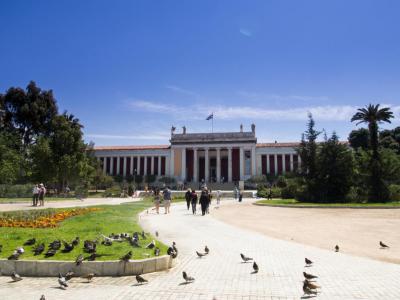
5) National Archaeological Museum (must see)
With an extraordinary exhibits that include stunning Mycenaean gold and an unparalleled quantity of sculpture, pottery, and jewelry, this museum stands as one of the world's most remarkable. Originally opened in 1891, it consolidated a collection that had been scattered throughout the city, only to be dispersed again and buried during World War II to protect it from potential damage. The museum reopened in 1946, but it took an additional 65 years of renovation and reorganization to truly showcase its treasures.
The ground floor features Mycenaean, Neolithic, and Cycladic artifacts, followed by Geometric, Archaic, Classical, Roman, and Hellenistic sculpture. You'll also find Egyptian artifacts, a significant jewelry collection, and the Karapános collection on this level. Meanwhile, the first floor houses pottery, glassware, jewelry, and items from ancient Thera (on Santorini).
Highlights include a gold death mask discovered at Mycenae by Heinrich Schliemann, initially believed to have belonged to the legendary king Agamemnon, dating from the mid-1600s BC. The immense 'Dípylon Amphora', a geometric vase found in the Kerameikos cemetery, was used to mark the burial of an 8th-century BC woman and depicts the deceased surrounded by mourning women. Cycladic sculpture, such as the 'Harp Player', flourished in the 3rd millennium BC; its simple lines and bold forms influenced many early 20th-century artists, including the British sculptor Henry Moore. The 'Ephebe of Antikythera' is a splendid Hellenistic bronze statue discovered in 1900; standing at around 2 meters (7 feet) tall, it is larger than life. Another notable piece is a marble sculpture of Aphrodite, Eros, and the goat-footed Pan, dating from around 100 BC.
The museum's building has a neoclassical design and features an adjacent neoclassical-style garden studded with many ancient statues. There is also a café and a gift shop that sells reproductions of many of the objects displayed inside.
Why You Should Visit:
While not entirely off the beaten path, this place tends to have fewer tourists compared to other central locations, making it easier to examine the impressive exhibits and read the informational descriptions. If needed, you can also request an English-speaking guide for an even deeper understanding of the history behind the artifacts.
Tip:
Visit during the heat of the day to enjoy the air-conditioning, and don't forget your camera – photography is allowed.
The ground floor features Mycenaean, Neolithic, and Cycladic artifacts, followed by Geometric, Archaic, Classical, Roman, and Hellenistic sculpture. You'll also find Egyptian artifacts, a significant jewelry collection, and the Karapános collection on this level. Meanwhile, the first floor houses pottery, glassware, jewelry, and items from ancient Thera (on Santorini).
Highlights include a gold death mask discovered at Mycenae by Heinrich Schliemann, initially believed to have belonged to the legendary king Agamemnon, dating from the mid-1600s BC. The immense 'Dípylon Amphora', a geometric vase found in the Kerameikos cemetery, was used to mark the burial of an 8th-century BC woman and depicts the deceased surrounded by mourning women. Cycladic sculpture, such as the 'Harp Player', flourished in the 3rd millennium BC; its simple lines and bold forms influenced many early 20th-century artists, including the British sculptor Henry Moore. The 'Ephebe of Antikythera' is a splendid Hellenistic bronze statue discovered in 1900; standing at around 2 meters (7 feet) tall, it is larger than life. Another notable piece is a marble sculpture of Aphrodite, Eros, and the goat-footed Pan, dating from around 100 BC.
The museum's building has a neoclassical design and features an adjacent neoclassical-style garden studded with many ancient statues. There is also a café and a gift shop that sells reproductions of many of the objects displayed inside.
Why You Should Visit:
While not entirely off the beaten path, this place tends to have fewer tourists compared to other central locations, making it easier to examine the impressive exhibits and read the informational descriptions. If needed, you can also request an English-speaking guide for an even deeper understanding of the history behind the artifacts.
Tip:
Visit during the heat of the day to enjoy the air-conditioning, and don't forget your camera – photography is allowed.
