Custom Walk in Rome, Italy by lynn9753 created on 2025-06-03
Guide Location: Italy » Rome
Guide Type: Custom Walk
# of Sights: 8
Tour Duration: 3 Hour(s)
Travel Distance: 7.6 Km or 4.7 Miles
Share Key: 29WJK
Guide Type: Custom Walk
# of Sights: 8
Tour Duration: 3 Hour(s)
Travel Distance: 7.6 Km or 4.7 Miles
Share Key: 29WJK
How It Works
Please retrieve this walk in the GPSmyCity app. Once done, the app will guide you from one tour stop to the next as if you had a personal tour guide. If you created the walk on this website or come to the page via a link, please follow the instructions below to retrieve the walk in the app.
Retrieve This Walk in App
Step 1. Download the app "GPSmyCity: Walks in 1K+ Cities" on Apple App Store or Google Play Store.



Step 2. In the GPSmyCity app, download(or launch) the guide "Rome Map and Walking Tours".
Step 3. Tap the menu button located at upper right corner of the "Walks" screen and select "Retrieve custom walk". Enter the share key: 29WJK
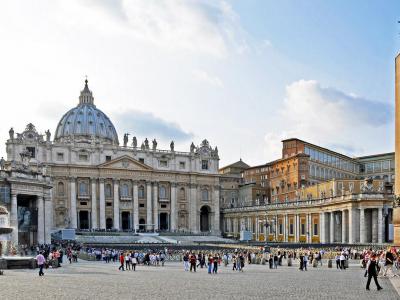
1) Basilica Papale di San Pietro in Vaticano (Saint Peter's Basilica) (must see)
Despite not being the mother church of Catholicism or Rome's cathedral, Saint Peter's Basilica in the Vatican is one of Christianity's holiest sites. Tradition holds that Saint Peter, the first Bishop of Rome, is buried inside, beneath the high altar, known as the Altar of the Confession.
Built to replace the aging original basilica, the new construction began in 1506, under Pope Julius II, and was completed in 1626. Designed by Renaissance masters such as Donato Bramante, Michelangelo, and Carlo Maderno, the structure embodies the grandeur of Italian High Renaissance architecture. Its vast interior makes it the largest church in the world by space.
The Latin cross layout features a vast dome, spanning 42 meters in diameter and towering 120 meters high. Meanwhile, the imposing façade adorned with statues of Saints Peter and Paul is complemented by a narthex housing the Holy Door. The latter, walled up with bricks, is opened only during jubilee years. Inside, the immense nave, wide aisles, and chapels are decorated with elaborate sculptures and artwork. Among these are Michelangelo’s Pietà and Bernini’s Baldachin, a monumental canopy over the Papal Altar. Other notable artworks include Giotto’s Navicella mosaic and equestrian statues of Constantine and Charlemagne.
Michelangelo played a crucial role in shaping the place, refining its design into a more unified and monumental form. His dome, completed in 1590, has profoundly influenced Western church architecture. Slightly more pointed than Michelangelo's original plan, the dome's design blends Renaissance ideals with Baroque dynamism. Encircling the interior is an inscription that reads: "You are Peter, and on this rock I will build my church... and I will give you the keys of the kingdom of heaven."
The basilica also has six bells. The largest of them, "Campanone," weighs 9 tons and is used for ringing for papal blessings. Up on the roof are the sculptures of Christ the Redeemer, Saint John the Baptist, and 11 Apostles. Meanwhile, inside, there are over 100 tombs. Among those laid to rest are many popes, including Pope Jean Paul II, royals, and other historical figures, such as Holy Roman Emperor Otto II and Italian composer Giovanni Pierluigi da Palestrina.
Tips:
Arrive early in the morning to avoid long queues. Admission is free (until 5 PM when the gates close), but expect to undergo a security check before entering. Remember to dress modestly, with knees and shoulders covered (affordable scarves for ladies are available from nearby vendors). If you're feeling adventurous, ascend to the top of the dome. An elevator ride can save you from climbing more than 300 stairs.
Built to replace the aging original basilica, the new construction began in 1506, under Pope Julius II, and was completed in 1626. Designed by Renaissance masters such as Donato Bramante, Michelangelo, and Carlo Maderno, the structure embodies the grandeur of Italian High Renaissance architecture. Its vast interior makes it the largest church in the world by space.
The Latin cross layout features a vast dome, spanning 42 meters in diameter and towering 120 meters high. Meanwhile, the imposing façade adorned with statues of Saints Peter and Paul is complemented by a narthex housing the Holy Door. The latter, walled up with bricks, is opened only during jubilee years. Inside, the immense nave, wide aisles, and chapels are decorated with elaborate sculptures and artwork. Among these are Michelangelo’s Pietà and Bernini’s Baldachin, a monumental canopy over the Papal Altar. Other notable artworks include Giotto’s Navicella mosaic and equestrian statues of Constantine and Charlemagne.
Michelangelo played a crucial role in shaping the place, refining its design into a more unified and monumental form. His dome, completed in 1590, has profoundly influenced Western church architecture. Slightly more pointed than Michelangelo's original plan, the dome's design blends Renaissance ideals with Baroque dynamism. Encircling the interior is an inscription that reads: "You are Peter, and on this rock I will build my church... and I will give you the keys of the kingdom of heaven."
The basilica also has six bells. The largest of them, "Campanone," weighs 9 tons and is used for ringing for papal blessings. Up on the roof are the sculptures of Christ the Redeemer, Saint John the Baptist, and 11 Apostles. Meanwhile, inside, there are over 100 tombs. Among those laid to rest are many popes, including Pope Jean Paul II, royals, and other historical figures, such as Holy Roman Emperor Otto II and Italian composer Giovanni Pierluigi da Palestrina.
Tips:
Arrive early in the morning to avoid long queues. Admission is free (until 5 PM when the gates close), but expect to undergo a security check before entering. Remember to dress modestly, with knees and shoulders covered (affordable scarves for ladies are available from nearby vendors). If you're feeling adventurous, ascend to the top of the dome. An elevator ride can save you from climbing more than 300 stairs.
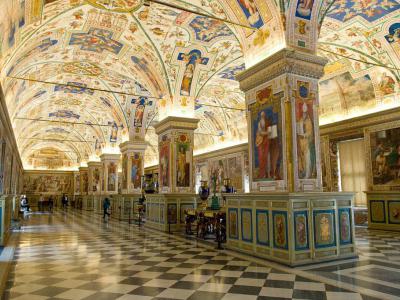
2) Musei Vaticani (Vatican Museums) (must see)
The Vatican Museums house an extensive collection of art and historical artifacts amassed by the Catholic Church over centuries. With approximately 70,000 works, of which 20,000 are on display, they rank among the most significant museums in the world and are the second most-visited art museum after the Louvre.
The museums trace their origins to Pope Julius II in the early 16th century. Their foundation is closely linked to the discovery of the famous Roman sculpture "Laocoon and His Sons" in 1506. Following expert advice from Michelangelo and Giuliano da Sangallo, who was an Italian sculptor, architect, and military engineer, the Pope acquired the piece and put it on display. Over time, the collection expanded, with Pope Pius IX establishing the Museum Christianum and Lateran Museum in 1854. In 2006, the museums celebrated their 500th anniversary by opening the Vatican Hill necropolis to the public.
The museums include 24 galleries, culminating in the Sistine Chapel, famous for Michelangelo’s frescoed ceiling and The Last Judgment. Other highlights include the Raphael Rooms, featuring masterpieces like The School of Athens, and the Vatican Art Gallery, showcasing works by Giotto, Leonardo da Vinci, Raphael, Titian, Caravaggio, and Veronese.
Several museums surrounding the Belvedere Courtyard specialize in sculpture. The Pio-Clementino Museum is the most prominent, housing Greek and Roman sculptures, such as Apollo Belvedere and Laocoön and His Sons. The Chiaramonti Museum displays statues, friezes, and sarcophagi, while the Gregoriano Etrusco and Gregoriano Egiziano museums feature Etruscan and Egyptian antiquities, respectively.
The Vatican Historical Museum (established in 1973) displays papal artifacts, including a red marble papal throne. The Gallery of Maps, commissioned by Pope Gregory XIII, remains the largest geographical pictorial study ever created. The Borgia Apartment, once home to Pope Alexander VI, contains Renaissance frescoes. Another highlight is the Bramante Staircase, a stunning double-helix design from 1932.
Tip:
Before embarking on a visit, ensure you have a satisfying breakfast and wear comfortable walking shoes. It can be helpful to prioritize a few key pieces of art that you don't want to miss and focus on experiencing those. Alternatively, if you wish to explore the entire collection, plan for multiple visits.
It is highly recommended to book tickets in advance online, particularly for an afternoon visit during the middle of the week. Saturdays and Mondays tend to be the busiest days, so opting for other times can enhance your experience.
The museums trace their origins to Pope Julius II in the early 16th century. Their foundation is closely linked to the discovery of the famous Roman sculpture "Laocoon and His Sons" in 1506. Following expert advice from Michelangelo and Giuliano da Sangallo, who was an Italian sculptor, architect, and military engineer, the Pope acquired the piece and put it on display. Over time, the collection expanded, with Pope Pius IX establishing the Museum Christianum and Lateran Museum in 1854. In 2006, the museums celebrated their 500th anniversary by opening the Vatican Hill necropolis to the public.
The museums include 24 galleries, culminating in the Sistine Chapel, famous for Michelangelo’s frescoed ceiling and The Last Judgment. Other highlights include the Raphael Rooms, featuring masterpieces like The School of Athens, and the Vatican Art Gallery, showcasing works by Giotto, Leonardo da Vinci, Raphael, Titian, Caravaggio, and Veronese.
Several museums surrounding the Belvedere Courtyard specialize in sculpture. The Pio-Clementino Museum is the most prominent, housing Greek and Roman sculptures, such as Apollo Belvedere and Laocoön and His Sons. The Chiaramonti Museum displays statues, friezes, and sarcophagi, while the Gregoriano Etrusco and Gregoriano Egiziano museums feature Etruscan and Egyptian antiquities, respectively.
The Vatican Historical Museum (established in 1973) displays papal artifacts, including a red marble papal throne. The Gallery of Maps, commissioned by Pope Gregory XIII, remains the largest geographical pictorial study ever created. The Borgia Apartment, once home to Pope Alexander VI, contains Renaissance frescoes. Another highlight is the Bramante Staircase, a stunning double-helix design from 1932.
Tip:
Before embarking on a visit, ensure you have a satisfying breakfast and wear comfortable walking shoes. It can be helpful to prioritize a few key pieces of art that you don't want to miss and focus on experiencing those. Alternatively, if you wish to explore the entire collection, plan for multiple visits.
It is highly recommended to book tickets in advance online, particularly for an afternoon visit during the middle of the week. Saturdays and Mondays tend to be the busiest days, so opting for other times can enhance your experience.
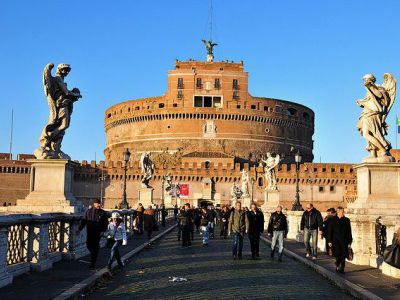
3) Museo Nazionale di Castel Sant'Angelo (National Museum of the Holy Angel Castle) (must see)
The Mausoleum of Hadrian, commonly known as the Castle of the Holy Angel, is a cylindrical tower in Rome’s Adriano Park. Commissioned by Emperor Hadrian between 134 and 139 AD as a family mausoleum, it was once the tallest building in Rome.
Initially, the mausoleum housed the ashes of Hadrian, his wife Sabina, and subsequent emperors, ending with Caracalla in 217. The structure was adorned with a garden-topped cylinder and a golden quadriga. Hadrian also built the nearby Pons Aelius bridge, which still offers a scenic route adorned with Baroque angel statues.
In 401, the mausoleum was converted into a fortress and incorporated into Rome's Aurelian Walls. Over centuries, its treasures and urns were scattered, including during the Visigoth sack of Rome in 410. The building also served as a defense during the Gothic siege in 537, with statues thrown down on attackers. Some remnants, like a capstone from Hadrian's urn, found their way into significant structures such as Saint Peter’s Basilica.
Legend holds that Archangel Michael appeared over the building in 590, signaling the end of a plague and inspiring the castle's current name. The statue of Michael atop the castle, first sculpted in 1536 and replaced by a bronze version in 1753, commemorates this event.
The popes transformed the structure into a fortress and residence. Pope Nicholas III linked it to Saint Peter's Basilica with the fortified Borgo Passage, while Clement VII used it as a refuge during the 1527 Sack of Rome (by the mutinous troops of the Holy Roman Emperor, Charles V). The castle also became a prison, housing figures like the Italian philosopher and astrologer Giordano Bruno. Executions occurred in its courtyard, and the structure was immortalized in Puccini’s opera Tosca.
Decommissioned as a fortress in 1901, the castle now operates as a museum, attracting over a million visitors per year. It offers a fascinating display, featuring cannons, armor, and ornately decorated papal apartments. A highlight is the hidden passageway connecting the Vatican to the castle.
Visitors can enjoy coffee with incredible views of Saint Peter's Basilica at the on-site café. For breathtaking panoramas of Rome and Vatican City, head to the rooftop terrace, ideal on clear days or evenings to experience the city's vibrant nighttime charm. While there is some walking involved, the museum is easily navigable and offers a memorable blend of history, architecture, and stunning vistas.
Initially, the mausoleum housed the ashes of Hadrian, his wife Sabina, and subsequent emperors, ending with Caracalla in 217. The structure was adorned with a garden-topped cylinder and a golden quadriga. Hadrian also built the nearby Pons Aelius bridge, which still offers a scenic route adorned with Baroque angel statues.
In 401, the mausoleum was converted into a fortress and incorporated into Rome's Aurelian Walls. Over centuries, its treasures and urns were scattered, including during the Visigoth sack of Rome in 410. The building also served as a defense during the Gothic siege in 537, with statues thrown down on attackers. Some remnants, like a capstone from Hadrian's urn, found their way into significant structures such as Saint Peter’s Basilica.
Legend holds that Archangel Michael appeared over the building in 590, signaling the end of a plague and inspiring the castle's current name. The statue of Michael atop the castle, first sculpted in 1536 and replaced by a bronze version in 1753, commemorates this event.
The popes transformed the structure into a fortress and residence. Pope Nicholas III linked it to Saint Peter's Basilica with the fortified Borgo Passage, while Clement VII used it as a refuge during the 1527 Sack of Rome (by the mutinous troops of the Holy Roman Emperor, Charles V). The castle also became a prison, housing figures like the Italian philosopher and astrologer Giordano Bruno. Executions occurred in its courtyard, and the structure was immortalized in Puccini’s opera Tosca.
Decommissioned as a fortress in 1901, the castle now operates as a museum, attracting over a million visitors per year. It offers a fascinating display, featuring cannons, armor, and ornately decorated papal apartments. A highlight is the hidden passageway connecting the Vatican to the castle.
Visitors can enjoy coffee with incredible views of Saint Peter's Basilica at the on-site café. For breathtaking panoramas of Rome and Vatican City, head to the rooftop terrace, ideal on clear days or evenings to experience the city's vibrant nighttime charm. While there is some walking involved, the museum is easily navigable and offers a memorable blend of history, architecture, and stunning vistas.
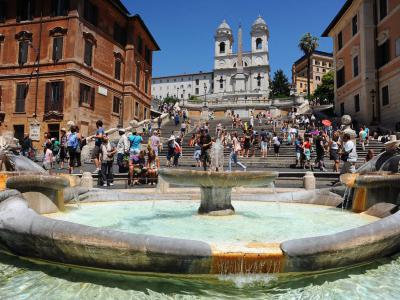
4) Scalinata di Trinita dei Monti (Spanish Steps) (must see)
The Spanish Steps, a monumental stairway of 135 steps, holds the distinction of being the longest and widest in Europe. The steps link Spanish Square, at the base, with the Trinity of the Mountains Square at the top.
The stairway was completed under Pope Clement XI in 1717, deriving its name from the nearby Spanish Embassy to the Holy See. Financed in part by a French diplomat, it features Baroque elements, inspired by garden stairs, and incorporates symbolic decorations such as the Bourbon heraldic lily flowers and papal eagles.
As a cultural and seasonal hub hosting public events such as Christmas cribs, spring azalea displays, and a flower market, the Spanish Steps have captivated artists and people of letters since the 18th century. Among them was the renowned English poet, John Keats, who lived and died practically next door. His house, at the base of the steps (located to the right, if you face the stairs), is now a museum.
Other nearby landmarks include the Ferrari di Valbona Palace, redesigned in 1936, and Babington's tea room, a resilient establishment that has withstood two world wars and numerous adversities, ultimately becoming a beloved tourist attraction.
The steps' cinematic appeal also made them a backdrop for numerous films, including the Hollywood blockbuster “Roman Holiday” made in 1953, starring Audrey Hepburn and Gregory Peck. In the scene where Joe Bradley, played by Peck, meets Princess Ann, played by Hepburn, she sits on the steps, enjoying the view and eating ice cream. Fresh after the haircut, the princess takes compliments for her new look and makes up a story that she has run away from school. She accepts his proposal to spend the day together before she returns, and thus the Roman Holiday story begins!
Other filmmakers also made a mark on the steps, such as “The Talented Mr. Ripley” movie with Matt Damon, shot in 1999, and “Mission: Impossible – Dead Reckoning Part One,” featuring Tom Cruise, which premiered at the steps on June 19, 2023.
Consequently, the Spanish Steps became a magnet for aspiring models, affluent Romans, international travelers, and people from all walks of life. The tradition of gathering here is deeply ingrained in the locals and visitors alike. Today, the steps are protected by strict regulations against loitering, eating, or damaging, with heavy fines introduced to maintain decorum.
Tip:
The staircase offers picturesque views of Rome from its pinnacle, particularly at sunset-a truly unbeatable sight!
The afternoon and late hours are the best for visiting, so to avoid the heat of the day.
Alongside tourist activities such as carriage rides, you'll find nearby an array of shops and bars worth exploring.
The stairway was completed under Pope Clement XI in 1717, deriving its name from the nearby Spanish Embassy to the Holy See. Financed in part by a French diplomat, it features Baroque elements, inspired by garden stairs, and incorporates symbolic decorations such as the Bourbon heraldic lily flowers and papal eagles.
As a cultural and seasonal hub hosting public events such as Christmas cribs, spring azalea displays, and a flower market, the Spanish Steps have captivated artists and people of letters since the 18th century. Among them was the renowned English poet, John Keats, who lived and died practically next door. His house, at the base of the steps (located to the right, if you face the stairs), is now a museum.
Other nearby landmarks include the Ferrari di Valbona Palace, redesigned in 1936, and Babington's tea room, a resilient establishment that has withstood two world wars and numerous adversities, ultimately becoming a beloved tourist attraction.
The steps' cinematic appeal also made them a backdrop for numerous films, including the Hollywood blockbuster “Roman Holiday” made in 1953, starring Audrey Hepburn and Gregory Peck. In the scene where Joe Bradley, played by Peck, meets Princess Ann, played by Hepburn, she sits on the steps, enjoying the view and eating ice cream. Fresh after the haircut, the princess takes compliments for her new look and makes up a story that she has run away from school. She accepts his proposal to spend the day together before she returns, and thus the Roman Holiday story begins!
Other filmmakers also made a mark on the steps, such as “The Talented Mr. Ripley” movie with Matt Damon, shot in 1999, and “Mission: Impossible – Dead Reckoning Part One,” featuring Tom Cruise, which premiered at the steps on June 19, 2023.
Consequently, the Spanish Steps became a magnet for aspiring models, affluent Romans, international travelers, and people from all walks of life. The tradition of gathering here is deeply ingrained in the locals and visitors alike. Today, the steps are protected by strict regulations against loitering, eating, or damaging, with heavy fines introduced to maintain decorum.
Tip:
The staircase offers picturesque views of Rome from its pinnacle, particularly at sunset-a truly unbeatable sight!
The afternoon and late hours are the best for visiting, so to avoid the heat of the day.
Alongside tourist activities such as carriage rides, you'll find nearby an array of shops and bars worth exploring.
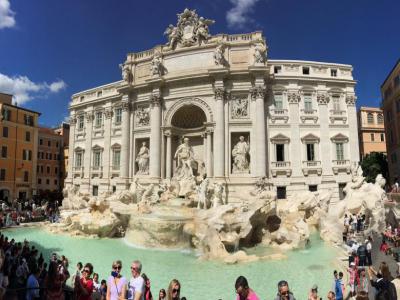
5) Piazza di Trevi & Fontana di Trevi (Trevi Square & Trevi Fountain) (must see)
The Trevi Fountain is one of Rome’s most iconic landmarks, drawing visitors to the eponymous Trevi Square all day long. Surprisingly, the fountain was not initially built in the heart of the city; instead, the city grew around it. Its name derives from the Latin word "trivium," which means “three streets,” as it sits at the junction of three streets: De Crocicchi, Poli, and Delle Muratte.
The fountain’s history dates back to 1629 when Pope Urban VIII commissioned Gian Lorenzo Bernini to redesign it, though his plans were never realized. Later, Pope Clement XII organized a competition in 1730, leading to Nicola Salvi's selection for the project, who incorporated the fountain into the rear of the Poli Palace. Salvi passed away before its completion. Giuseppe Pannini and other artists finalized the work in 1762.
Measuring over 26 meters in height and 49 meters in width, it is the largest Baroque fountain in Rome.
The Trevi Fountain features a Corinthian façade and bas-reliefs depicting the origins of the Acqua Vergine aqueduct, constructed in 19 BC. According to legend, a virgin guided Roman engineers to the aqueduct’s source, an event depicted in the fountain’s bas-reliefs. The aqueduct, which survived the Gothic invasions and was restored during the Middle Ages, still supplies water to the fountain today.
At the heart of the fountain is Oceanus, depicted riding a shell-shaped chariot drawn by two horses and guided by Tritons. The horses symbolize the sea’s contrasting moods-calm and turbulent. Flanking Oceanus are the statues of Abundance and Salubrity, representing prosperity and health. The symmetrical Rococo design combines dynamic artistry with Baroque grandeur, reflecting 18th-century European trends.
The Trevi Fountain is also known for the tradition of tossing coins, which promises a return to Rome. Popularized by the 1954 Hollywood film "Three Coins in the Fountain," visitors toss coins over their left shoulder with their right hand, generating daily about €3,000. This money, collected by municipal authorities, is donated to charity.
Celebrated in films like Roman Holiday and La Dolce Vita, the Trevi Fountain’s global fame is further evidenced by replicas worldwide. Access to the fountain is now limited to 400 visitors at a time, ensuring a more enjoyable visit to this timeless masterpiece. Surrounding the fountain are charming shops, restaurants, and gelaterias, making it a delightful spot to soak in Rome’s vibrant atmosphere.
Tip:
The fountain holds particular allure at night, especially after 10 pm when it is beautifully illuminated and the crowds dissipate, allowing you to enjoy the site almost exclusively.
The fountain’s history dates back to 1629 when Pope Urban VIII commissioned Gian Lorenzo Bernini to redesign it, though his plans were never realized. Later, Pope Clement XII organized a competition in 1730, leading to Nicola Salvi's selection for the project, who incorporated the fountain into the rear of the Poli Palace. Salvi passed away before its completion. Giuseppe Pannini and other artists finalized the work in 1762.
Measuring over 26 meters in height and 49 meters in width, it is the largest Baroque fountain in Rome.
The Trevi Fountain features a Corinthian façade and bas-reliefs depicting the origins of the Acqua Vergine aqueduct, constructed in 19 BC. According to legend, a virgin guided Roman engineers to the aqueduct’s source, an event depicted in the fountain’s bas-reliefs. The aqueduct, which survived the Gothic invasions and was restored during the Middle Ages, still supplies water to the fountain today.
At the heart of the fountain is Oceanus, depicted riding a shell-shaped chariot drawn by two horses and guided by Tritons. The horses symbolize the sea’s contrasting moods-calm and turbulent. Flanking Oceanus are the statues of Abundance and Salubrity, representing prosperity and health. The symmetrical Rococo design combines dynamic artistry with Baroque grandeur, reflecting 18th-century European trends.
The Trevi Fountain is also known for the tradition of tossing coins, which promises a return to Rome. Popularized by the 1954 Hollywood film "Three Coins in the Fountain," visitors toss coins over their left shoulder with their right hand, generating daily about €3,000. This money, collected by municipal authorities, is donated to charity.
Celebrated in films like Roman Holiday and La Dolce Vita, the Trevi Fountain’s global fame is further evidenced by replicas worldwide. Access to the fountain is now limited to 400 visitors at a time, ensuring a more enjoyable visit to this timeless masterpiece. Surrounding the fountain are charming shops, restaurants, and gelaterias, making it a delightful spot to soak in Rome’s vibrant atmosphere.
Tip:
The fountain holds particular allure at night, especially after 10 pm when it is beautifully illuminated and the crowds dissipate, allowing you to enjoy the site almost exclusively.
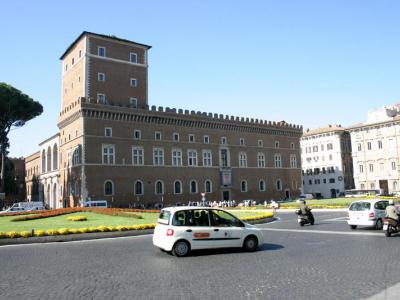
6) Museo Nazionale del Palazzo di Venezia (National Museum of the Venice Palace)
Dominating the western side of Piazza Venezia, Palazzo Venezia was originally constructed in the mid-fifteenth century for Pope Paul II, hailing from Venice. Serving as the embassy of the Venetian Republic for an extended period, this palatial structure has witnessed significant historical events. During Mussolini's tenure, he claimed the palazzo as his residence, utilizing the expansive Sala del Mappamondo to deliver impassioned speeches from the balcony to the gathered crowds below. In 2010, a remarkable discovery was made during maintenance work on the building's foundations-an underground war bunker used by Mussolini. Although currently inaccessible to the public, there is a possibility that it may be opened for visitation in the future.
The majority of Palazzo Venezia now houses the Museo Nazionale del Palazzo di Venezia. Inside, visitors can immerse themselves in a captivating collection of early Christian and Renaissance artifacts. Marvel at the beautifully displayed bronzes, explore the weaponry exhibits, and admire the ceramic jars originating from an ancient monastic pharmacy. For a delightful interlude, venture to the upper loggia of the palace and relish the breathtaking views of the palm-filled courtyard-a truly picturesque oasis and one of Rome's most alluring gardens.
The majority of Palazzo Venezia now houses the Museo Nazionale del Palazzo di Venezia. Inside, visitors can immerse themselves in a captivating collection of early Christian and Renaissance artifacts. Marvel at the beautifully displayed bronzes, explore the weaponry exhibits, and admire the ceramic jars originating from an ancient monastic pharmacy. For a delightful interlude, venture to the upper loggia of the palace and relish the breathtaking views of the palm-filled courtyard-a truly picturesque oasis and one of Rome's most alluring gardens.
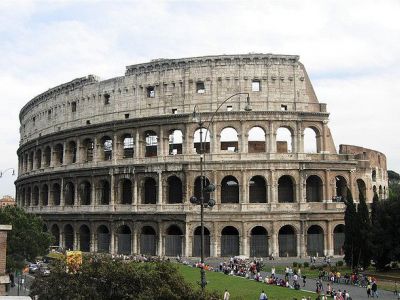
7) Colosseo (Colosseum) (must see)
The Colosseum, Rome’s iconic elliptical amphitheater, is the largest ancient amphitheater ever built, covering 24,000 square meters. Constructed between 69 and 80 AD by the Flavian dynasty, it was initially called the Flavian Amphitheater. Its modern name stems from the Colossus of Nero statue that once stood nearby, with the term "Colosseum" emerging during the medieval period.
Built on the land reclaimed from Emperor Nero’s landscaped Domus Aurea complex after the Great Fire of 64 AD, the Colosseum represented a gift to the Roman people under Emperor Vespasian. It was constructed using travertine, tuff, and concrete and was funded by spoils from the Jewish War. The latter, fought in 70 AD, led to the Siege of Jerusalem and brought back numerous prisoners who largely contributed to the massive workforce needed for the construction. The amphitheater comprised four tiers that could hold between 50,000 and 80,000 spectators at a time. Its free-standing structure features three architectural orders – Doric, Ionic, and Corinthian.
The lowest tier was for the emperor and the royal family, the two middle ones were for the noble Romans and members of government, while the highest tier was for the ordinary citizens. The elaborate system included 80 entrances, passageways for crowd control, and numbered pottery tickets for seating. Admission was free and the main sponsor was the emperor himself.
The Colosseum hosted gladiatorial contests, animal hunts, and mythological reenactments. Events often featured exotic animals imported from Africa and the Middle East. Emperor Trajan's games, for example, involved over 11,000 animals and 10,000 gladiators over 123 days! The below-ground passages were used to bring men and animals into the arena, which was separated from the audience by a ditch. Occasionally, it was reportedly even flooded for naval battles. Executions were common during intervals, with the condemned facing wild beasts or acting out tragic myths.
During the medieval period, the Colosseum served as a fortress and even a stone quarry. Passers-by habitually chipped off pieces of it for souvenirs which, together with some natural causes like earthquakes, led to its partial destruction.
Despite popular belief that the early Christians were martyred here in numbers, evidence suggests that most executions occurred elsewhere. By the 17th century, the Colosseum became recognized as a sacred site. Today, it hosts the Pope’s Good Friday “Way of the Cross” procession.
Only the north side of the building, as well as the underground passages, have survived intact. The arena floor is totally gone. Inside the Colosseum, there's a historical exhibition with both permanent and changing displays.
Tips:
Visit early in the morning or late in the evening to avoid long queues and heat. The ground and first floors are open to visitors without a special ticket, while the subterranean part and the third floor are accessed on pre-booked tours only. Opt for a guided tour to skip lines and access the Forum area. Alternatively, buy tickets in advance or at the Roman Forum. Enhance your experience with an audio guide for detailed historical insights.
Built on the land reclaimed from Emperor Nero’s landscaped Domus Aurea complex after the Great Fire of 64 AD, the Colosseum represented a gift to the Roman people under Emperor Vespasian. It was constructed using travertine, tuff, and concrete and was funded by spoils from the Jewish War. The latter, fought in 70 AD, led to the Siege of Jerusalem and brought back numerous prisoners who largely contributed to the massive workforce needed for the construction. The amphitheater comprised four tiers that could hold between 50,000 and 80,000 spectators at a time. Its free-standing structure features three architectural orders – Doric, Ionic, and Corinthian.
The lowest tier was for the emperor and the royal family, the two middle ones were for the noble Romans and members of government, while the highest tier was for the ordinary citizens. The elaborate system included 80 entrances, passageways for crowd control, and numbered pottery tickets for seating. Admission was free and the main sponsor was the emperor himself.
The Colosseum hosted gladiatorial contests, animal hunts, and mythological reenactments. Events often featured exotic animals imported from Africa and the Middle East. Emperor Trajan's games, for example, involved over 11,000 animals and 10,000 gladiators over 123 days! The below-ground passages were used to bring men and animals into the arena, which was separated from the audience by a ditch. Occasionally, it was reportedly even flooded for naval battles. Executions were common during intervals, with the condemned facing wild beasts or acting out tragic myths.
During the medieval period, the Colosseum served as a fortress and even a stone quarry. Passers-by habitually chipped off pieces of it for souvenirs which, together with some natural causes like earthquakes, led to its partial destruction.
Despite popular belief that the early Christians were martyred here in numbers, evidence suggests that most executions occurred elsewhere. By the 17th century, the Colosseum became recognized as a sacred site. Today, it hosts the Pope’s Good Friday “Way of the Cross” procession.
Only the north side of the building, as well as the underground passages, have survived intact. The arena floor is totally gone. Inside the Colosseum, there's a historical exhibition with both permanent and changing displays.
Tips:
Visit early in the morning or late in the evening to avoid long queues and heat. The ground and first floors are open to visitors without a special ticket, while the subterranean part and the third floor are accessed on pre-booked tours only. Opt for a guided tour to skip lines and access the Forum area. Alternatively, buy tickets in advance or at the Roman Forum. Enhance your experience with an audio guide for detailed historical insights.
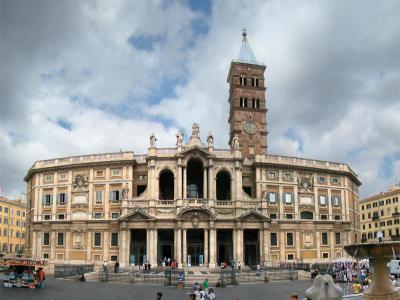
8) Basilica di Santa Maria Maggiore (Basilica of Saint Mary Major) (must see)
As the largest among the 26 churches in Rome dedicated to the Virgin Mary, the Basilica of Saint Mary Major holds a significant place in history. Originally constructed by Pope Liberius in the 4th century, the grandiose church has undergone renovations and enhancements by successive popes while still retaining its early medieval structure. The colonnaded nave, an integral part of the original 5th-century building, offers a glimpse into its ancient origins. The medieval era contributed the captivating Cosmatesque marble floor and the delightful Romanesque bell tower adorned with intricate blue ceramic roundels. During the Renaissance, a new coffered ceiling was introduced, while the Baroque period left its imprint with twin domes and grand facades at the front and rear. All in all, it’s a most successful blend of different architectural styles.
However, the true splendor of Saint Mary Major lies in its mosaics, which are among the oldest in Rome. The biblical scenes adorning the aisles date back to the 5th century, captivating visitors with their artistic depiction. The mosaics on the triumphal arch are particularly breathtaking, showcasing the skill and craftsmanship of the time. Among other medieval highlights is a magnificent 13th-century mosaic featuring an enthroned Christ in the loggia, adding to the artistic treasures within.
In 2001, Pope John Paul II inaugurated the Basilica Museum, dedicated to the church's history and the spread of Catholicism throughout the world. Here you will see ecclesiastical paintings, ritual vestments, scores from the choir and various manuscripts.
Tips: When visiting, be sure to take advantage of the small tours available to explore the church's hidden treasures. Additionally, don't miss the opportunity to visit the balcony loggia, which offers a unique perspective and allows you to admire more of the church's architecture. As evening sets in, find a serene spot by the fountain and marvel at the illuminated beauty of the building.
However, the true splendor of Saint Mary Major lies in its mosaics, which are among the oldest in Rome. The biblical scenes adorning the aisles date back to the 5th century, captivating visitors with their artistic depiction. The mosaics on the triumphal arch are particularly breathtaking, showcasing the skill and craftsmanship of the time. Among other medieval highlights is a magnificent 13th-century mosaic featuring an enthroned Christ in the loggia, adding to the artistic treasures within.
In 2001, Pope John Paul II inaugurated the Basilica Museum, dedicated to the church's history and the spread of Catholicism throughout the world. Here you will see ecclesiastical paintings, ritual vestments, scores from the choir and various manuscripts.
Tips: When visiting, be sure to take advantage of the small tours available to explore the church's hidden treasures. Additionally, don't miss the opportunity to visit the balcony loggia, which offers a unique perspective and allows you to admire more of the church's architecture. As evening sets in, find a serene spot by the fountain and marvel at the illuminated beauty of the building.
