Custom Walk in Split, Croatia by mariogalteri6362 created on 2025-06-05
Guide Location: Croatia » Split
Guide Type: Custom Walk
# of Sights: 8
Tour Duration: 1 Hour(s)
Travel Distance: 1 Km or 0.6 Miles
Share Key: 2RFHY
Guide Type: Custom Walk
# of Sights: 8
Tour Duration: 1 Hour(s)
Travel Distance: 1 Km or 0.6 Miles
Share Key: 2RFHY
How It Works
Please retrieve this walk in the GPSmyCity app. Once done, the app will guide you from one tour stop to the next as if you had a personal tour guide. If you created the walk on this website or come to the page via a link, please follow the instructions below to retrieve the walk in the app.
Retrieve This Walk in App
Step 1. Download the app "GPSmyCity: Walks in 1K+ Cities" on Apple App Store or Google Play Store.



Step 2. In the GPSmyCity app, download(or launch) the guide "Split Map and Walking Tours".
Step 3. Tap the menu button located at upper right corner of the "Walks" screen and select "Retrieve custom walk". Enter the share key: 2RFHY
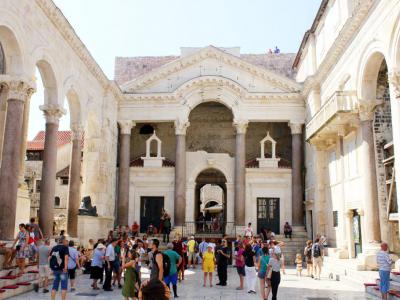
1) Diocletian's Palace (must see)
The "Palace" of Diocletian is more than a palace. It is really a fortress. It provided not only a private retirement home for the ex-emperor, but quarters for an armed garrison. It was a "key" community like no other. The palace, built at the turn of the fourth century, today forms most of the old town of Split, Croatia.
The palace complex was built on a peninsula about 18 miles from Salona, then the capital of Dalmatia and the birthplace of the retired Roman emperor. When Diocletian died in 312, the palace complex remained a property of the Roman imperium. It was used as a residence and refuge for members of imperial family who were out of favor.
In the seventh century the country was invaded by Avars and Slavs and the city of Salona was destroyed. The people found security within the formidable walls of the palace. Safe behind the walls they formed a new city community. From that time the palace has been continually occupied and today it is the heart of the city of Split.
The mausoleum of Diocletian became the cathedral of Saint Domnius. In time the remains of the fortress home of the emperor dropped out of the consciousness of Europe. Then the Scottish architect Robert Adam surveyed the ruins and published his findings. The palace formed the inspiration for Adam's style of Neoclassical architecture.
The plan of the palace has been found to be an irregular rectangle with 16 towers from the facades and corners. Only the southern facade was unfortified. It provided easy access to the sea and vessels could unload cargo directly through the Sea Gate.
There are three other gates that grant entrance and egress. The North Gate guarded the road towards Salona. The Church of Saint Martin is above the gate. The East Gate faced the town of Epetia, now Stobrec.
The West Gate, was used as the military gate. It remains in use today. The South Gate faces the sea.
Why You Should Visit:
The long history and diverse cultures of Split are distilled and contained in this remarkable Palace.
Tips: Be prepared to do a lot of walking.
The palace complex was built on a peninsula about 18 miles from Salona, then the capital of Dalmatia and the birthplace of the retired Roman emperor. When Diocletian died in 312, the palace complex remained a property of the Roman imperium. It was used as a residence and refuge for members of imperial family who were out of favor.
In the seventh century the country was invaded by Avars and Slavs and the city of Salona was destroyed. The people found security within the formidable walls of the palace. Safe behind the walls they formed a new city community. From that time the palace has been continually occupied and today it is the heart of the city of Split.
The mausoleum of Diocletian became the cathedral of Saint Domnius. In time the remains of the fortress home of the emperor dropped out of the consciousness of Europe. Then the Scottish architect Robert Adam surveyed the ruins and published his findings. The palace formed the inspiration for Adam's style of Neoclassical architecture.
The plan of the palace has been found to be an irregular rectangle with 16 towers from the facades and corners. Only the southern facade was unfortified. It provided easy access to the sea and vessels could unload cargo directly through the Sea Gate.
There are three other gates that grant entrance and egress. The North Gate guarded the road towards Salona. The Church of Saint Martin is above the gate. The East Gate faced the town of Epetia, now Stobrec.
The West Gate, was used as the military gate. It remains in use today. The South Gate faces the sea.
Why You Should Visit:
The long history and diverse cultures of Split are distilled and contained in this remarkable Palace.
Tips: Be prepared to do a lot of walking.
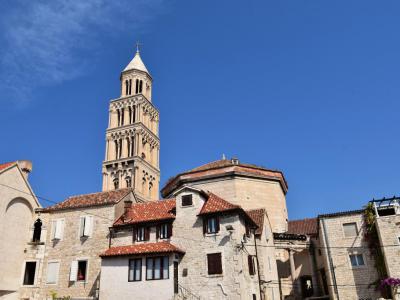
2) Cathedral of St. Domnius (must see)
It was the year 305. Roman emperor Diocletian had persecuted a lot of Christians and like-minded dissidents in his Imperial tour of duty. Now it was time to retire to his native land of Dalmatia and raise vegetables. As the vegetables were growing, he built a mausoleum. His final resting place was in the center of Split. But he would not rest there forever.
By the seventh century the Cathedral of Saint Domnius was consecrated. The Cathedral was in fact the Mausoleum of Diocletian. Those darn Christians finally got him. The Cathedral is a cluster of ad-ons that have changed little over the years. The former Mausoleum is dedicated to the Virgin Mary. The bell tower, added in 1100, is dedicated to Saint Domnius.
Saint Domnius is the patron saint of Split. He was the Bishop of Salona, a Roman city and capital of Dalmatia. He was born in Antioch and he was beheaded, along with seven other Christians, in 304. Ironically, he died one year before Diocletian retired.
Diocletian was a soldier. Naturally his retirement home was a Roman army camp. There was an East-West road (decumanus) and a North-South road (cardo maximus). Those roads remain in Split today. At the intersection of the roads is a great peristyle which grants access from the east to the Cathedral of Saint Domnius.
The Cathedral evolved through three stages. Diocletian's Mausolem, the central part of the cathedral, dates from the end of the third century. It is composed of white marble, limestone, and brick. In the seventh century a choir was added to the mausoleum. Finally the bell tower was erected in 1100. There was further rebuilding in 1908.
Within the Church there are relics and art treasures. Found here is the 13th century panel Painting, Madonna and Child. There are reliquaries, chalices and vestments from the 13th to the 19th centuries. The library includes the Book of gospels (6th century), Kartularium from Sumpetar (11th century) and the Historia Salanitana (13th century).
Why You Should Visit:
To take in the ancient, medieval and modern Split all in one place.
By the seventh century the Cathedral of Saint Domnius was consecrated. The Cathedral was in fact the Mausoleum of Diocletian. Those darn Christians finally got him. The Cathedral is a cluster of ad-ons that have changed little over the years. The former Mausoleum is dedicated to the Virgin Mary. The bell tower, added in 1100, is dedicated to Saint Domnius.
Saint Domnius is the patron saint of Split. He was the Bishop of Salona, a Roman city and capital of Dalmatia. He was born in Antioch and he was beheaded, along with seven other Christians, in 304. Ironically, he died one year before Diocletian retired.
Diocletian was a soldier. Naturally his retirement home was a Roman army camp. There was an East-West road (decumanus) and a North-South road (cardo maximus). Those roads remain in Split today. At the intersection of the roads is a great peristyle which grants access from the east to the Cathedral of Saint Domnius.
The Cathedral evolved through three stages. Diocletian's Mausolem, the central part of the cathedral, dates from the end of the third century. It is composed of white marble, limestone, and brick. In the seventh century a choir was added to the mausoleum. Finally the bell tower was erected in 1100. There was further rebuilding in 1908.
Within the Church there are relics and art treasures. Found here is the 13th century panel Painting, Madonna and Child. There are reliquaries, chalices and vestments from the 13th to the 19th centuries. The library includes the Book of gospels (6th century), Kartularium from Sumpetar (11th century) and the Historia Salanitana (13th century).
Why You Should Visit:
To take in the ancient, medieval and modern Split all in one place.
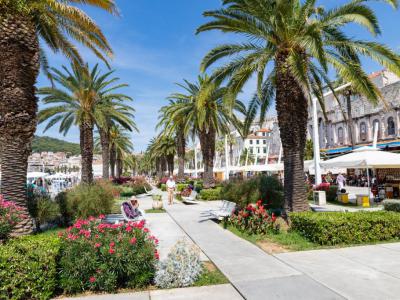
3) Riva Harbor (must see)
The promenade is an easy walk along the waterfront. Light breezes, sunshine, the clear deep blue the harbor. What a pleasure. Close your eyes. It could be juan-le-Pins, or even Monaco, porto Fino? No. It's Split.
Lots of benches here. One could sit and enjoy the view. It's a real break from shopping, tours, crowds. Need a snack? There are restaurants and cafes all along the way. The Emperor Diocletian got all his take out delivered directly from from ships at the south side of his great villa. Now one can get refreshments all along the waterfront.
Cruise ships dock at Split Riva Pier. They arrive every day to visit the exotic islands along the coast. Split is essentially a port city. A vital part of its existence is tied to the Adriatic Sea.
Still need a break? Pick a bench. Watch the sea change colors. Feed the pigeons. Wait for the sunset. You won't forget it.
Lots of benches here. One could sit and enjoy the view. It's a real break from shopping, tours, crowds. Need a snack? There are restaurants and cafes all along the way. The Emperor Diocletian got all his take out delivered directly from from ships at the south side of his great villa. Now one can get refreshments all along the waterfront.
Cruise ships dock at Split Riva Pier. They arrive every day to visit the exotic islands along the coast. Split is essentially a port city. A vital part of its existence is tied to the Adriatic Sea.
Still need a break? Pick a bench. Watch the sea change colors. Feed the pigeons. Wait for the sunset. You won't forget it.
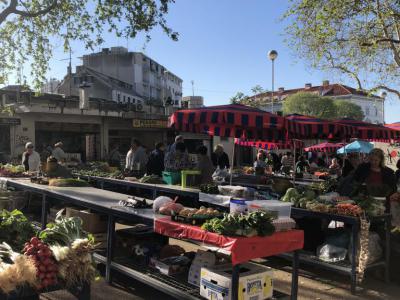
4) Green Market (Pazar)
Nestled beside the east wall of the UNESCO-listed World Heritage site of Diocletian's Palace, Split's vibrant green market, affectionately known as Pazar, immerses you in the essence of everyday life in the city. Here, you can seamlessly blend in with the locals and truly embrace the authentic atmosphere of Croatia. Tourists seeking a genuine Croatian experience are increasingly drawn to this lively outdoor market.
Previously situated at Fruit Square, the market's relocation became a necessity due to the city's rapid growth and development. Now, in its new central location, it has become the beating heart and soul of Split. It serves as a gathering place for both residents and visitors, all eager to indulge in the array of colors, flavors, aromas, and sounds that encapsulate the vibrant essence of life in Split.
Previously situated at Fruit Square, the market's relocation became a necessity due to the city's rapid growth and development. Now, in its new central location, it has become the beating heart and soul of Split. It serves as a gathering place for both residents and visitors, all eager to indulge in the array of colors, flavors, aromas, and sounds that encapsulate the vibrant essence of life in Split.
5) Temple of Jupiter
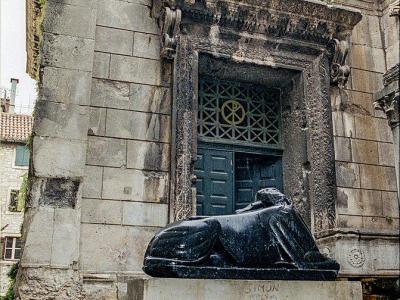
In the western part of Diocletian's Palace, near the peristyle, is the Temple of Jupiter. It was built around the year 300 and became a baptistery of Saint John the Baptist in the sixth century. Before the entrance there is one of the twelve sphinxes brought from Egypt by the Emperor Diocletian.
The Temple of Jupiter was dedicated to Jupiter, the Roman Zeus, who was considered to be the emperor's "divine father." Parts of the Palace remained unfinished when Son of Zeus arrived unexpectedly after his hasty abdication. Reliefs of heroes and lesser gods are above the entrance. They are Victoria, Triton, Helios, Hercules, and Apollo.
The gods are followed by the saints. Sarcophagi of Ivan of Ravenna and Lovre, two early archbishops of Split, are inside the Temple. Saint John the Baptist makes his appearance in the form of a large bronze statue by Ivan Mestrovic. In the 11th century a Romanesque bell tower was installed over the vault.
In 1907 a few houses that were impinging on the sides of the Temple were demolished, freeing the Temple of attachments.
The Temple of Jupiter was dedicated to Jupiter, the Roman Zeus, who was considered to be the emperor's "divine father." Parts of the Palace remained unfinished when Son of Zeus arrived unexpectedly after his hasty abdication. Reliefs of heroes and lesser gods are above the entrance. They are Victoria, Triton, Helios, Hercules, and Apollo.
The gods are followed by the saints. Sarcophagi of Ivan of Ravenna and Lovre, two early archbishops of Split, are inside the Temple. Saint John the Baptist makes his appearance in the form of a large bronze statue by Ivan Mestrovic. In the 11th century a Romanesque bell tower was installed over the vault.
In 1907 a few houses that were impinging on the sides of the Temple were demolished, freeing the Temple of attachments.
6) Game of Thrones Museum (must see)
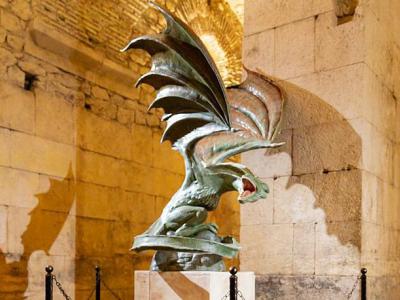
Split figured large in the filming of Game of Thrones (GOT). So it is only natural that Split should have an awesome Game of Thrones museum. The museum's address is 9 Bosanska Street. This is very close to the places where the series was actually filmed. Take Diocletian's Cellars, where a dragon's head once smashed through the ancient brick walls.
Luka Galik, the brain behind the Museum swears that everything is "just like" the series. "Split deserved the Game of Thrones Museum." He says. The museum has exhibits of photographs taken during the filming, and weapons and costumes that were worn. There are theme rooms of leading characters like, Khaleesi, Thyron, Hodor, Jack Sow, and others.
The Game of Thrones Museum has dark walls that help the grim atmosphere of the series. Aroma therapy is not neglected. The inside of the museum is filled with the aromas of cedar, Jasmine, lavender and ether oils. Smell a mystery, anyone? Yes, this is the place.
Luka Galik, the brain behind the Museum swears that everything is "just like" the series. "Split deserved the Game of Thrones Museum." He says. The museum has exhibits of photographs taken during the filming, and weapons and costumes that were worn. There are theme rooms of leading characters like, Khaleesi, Thyron, Hodor, Jack Sow, and others.
The Game of Thrones Museum has dark walls that help the grim atmosphere of the series. Aroma therapy is not neglected. The inside of the museum is filled with the aromas of cedar, Jasmine, lavender and ether oils. Smell a mystery, anyone? Yes, this is the place.

7) People's Square (Pjaca) (must see)
Like so many other squares in Split, People's Square is not the official name of the square. It was first called Saint Lawrence's Square in the 13th century. It has the distinction of being the first inhabited part of the City outside of Diocletian's Palace. For centuries the square has been the very center of City life.
The city clock has 24 numerals, not twelve. Life never pauses in the Square. One may rest, eat, drink, meet, see and be seen. The square is joined to the peristyle of old Diocletian's palace. As the city grew, the citizens started living outside the protection of the Roman walls and the square has been the People's Square ever since.
Renaissance, Venetian, and Gothic styles appear in the buildings around the square. The north side is occupied by the Old Town Hall, a 15th century building that sometimes hosts exhibitions of Art and history. It is said every building in Split has a story.
The attractions that might be seen in the square beside the Old Town Hall include: The ornate palaces of the nobility, the Church of Our Lady of the Bell Tower, The Old Town Clock. the Old Town Cafe, and the Morpurgo Bookstore (since 1860).
In the base of the flagpole of the Square one finds the words of the poet Tonci Petrasov:
"One doesn't need to travel anywhere,
nor does one have to search elsewhere,
what you are looking for is precisely here."
Here, in People's Square.
The city clock has 24 numerals, not twelve. Life never pauses in the Square. One may rest, eat, drink, meet, see and be seen. The square is joined to the peristyle of old Diocletian's palace. As the city grew, the citizens started living outside the protection of the Roman walls and the square has been the People's Square ever since.
Renaissance, Venetian, and Gothic styles appear in the buildings around the square. The north side is occupied by the Old Town Hall, a 15th century building that sometimes hosts exhibitions of Art and history. It is said every building in Split has a story.
The attractions that might be seen in the square beside the Old Town Hall include: The ornate palaces of the nobility, the Church of Our Lady of the Bell Tower, The Old Town Clock. the Old Town Cafe, and the Morpurgo Bookstore (since 1860).
In the base of the flagpole of the Square one finds the words of the poet Tonci Petrasov:
"One doesn't need to travel anywhere,
nor does one have to search elsewhere,
what you are looking for is precisely here."
Here, in People's Square.
8) Prokurative (Republic Square)
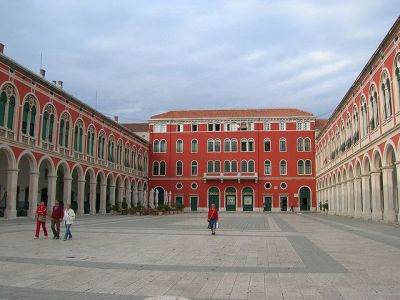
Antonio Bajamonti, world famous Mayor of Split, Transformed the city from a simple coastal town to a cultural watering hole. He initiated the creation of Republic Square. An Italianate theatre, Teatro Bajamonti, opened in 1859. The theatre was paid for by His honor himself before he was His Honor.
Buildings line the square on three sides with the open side facing the sea. A Venetian style colonnade and neo Renaissance bas-reliefs below the windows were added. This is on the left side. On the right side there are no carvings or reliefs. The story is, the Venetian architect was so homesick he went back to Venice before the sides were finished.
The square has become a tourist magnet, especially in fine weather. It is also a popular venue for events, most notably the Split Music Festival.
Buildings line the square on three sides with the open side facing the sea. A Venetian style colonnade and neo Renaissance bas-reliefs below the windows were added. This is on the left side. On the right side there are no carvings or reliefs. The story is, the Venetian architect was so homesick he went back to Venice before the sides were finished.
The square has become a tourist magnet, especially in fine weather. It is also a popular venue for events, most notably the Split Music Festival.
