Custom Walk in Leipzig, Germany by iisern019923 created on 2025-06-05
Guide Location: Germany » Leipzig
Guide Type: Custom Walk
# of Sights: 16
Tour Duration: 3 Hour(s)
Travel Distance: 6.1 Km or 3.8 Miles
Share Key: CFSHQ
Guide Type: Custom Walk
# of Sights: 16
Tour Duration: 3 Hour(s)
Travel Distance: 6.1 Km or 3.8 Miles
Share Key: CFSHQ
How It Works
Please retrieve this walk in the GPSmyCity app. Once done, the app will guide you from one tour stop to the next as if you had a personal tour guide. If you created the walk on this website or come to the page via a link, please follow the instructions below to retrieve the walk in the app.
Retrieve This Walk in App
Step 1. Download the app "GPSmyCity: Walks in 1K+ Cities" on Apple App Store or Google Play Store.



Step 2. In the GPSmyCity app, download(or launch) the guide "Leipzig Map and Walking Tours".
Step 3. Tap the menu button located at upper right corner of the "Walks" screen and select "Retrieve custom walk". Enter the share key: CFSHQ
1) Clara Zetkin Park
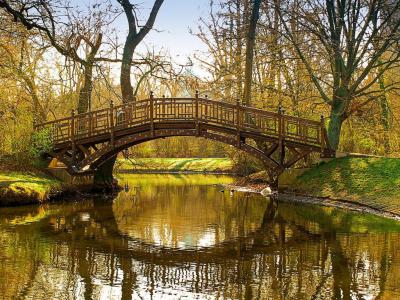
Clara Zetkin Park, known locally as Clara Park, is a prominent green space in Leipzig. Originally established as Leipzig's largest park in 1955, it spanned 125 hectares (309 acres). However, in 2011, the park was redefined, with Johannapark and Palmengarten becoming independent parks, leaving only the former Scheibenholz Park and König-Albert-Park (named after Albert of Saxony) under the Clara-Zetkin-Park designation.
Named after the politician and women’s rights activist Clara Zetkin (1857-1933), the park is situated on the southwestern edge of the Stadtbezirk Mitte, approximately two kilometers southwest of Leipzig’s city center. It serves as a vital link between the northern and southern sections of the Leipzig Riverside Forest. The Elsterflutbett (the flood channel of the Elster River) divides the park into eastern and western parts, connected by The Saxons' Bridge.
From 1950 to 1958, Clara Zetkin Park hosted city park races for motorcycles and racing cars, attracting up to 200,000 spectators, including GDR motor racing championships. After 2000, cultural activities were revived, with the Park Stage offering concerts and cinema in summer, and serving as a venue for the Wave-Gotik-Treffen festival. The park also features a large playground, the Glashaus Restaurant in the former café, and a beer and café garden at the restored music pavilion for public events.
The park's facilities cater to a variety of recreational activities. Runners frequent the park paths, and Anton-Bruckner-Allee, with its bituminized surface, is popular among inline skaters. The western part of the park is home to the sports club BSV AOK Leipzig, which provides a center for health sports, including rehabilitation, fitness, and prophylactic health activities. A modern miniature golf course is also available on the premises.
Every January, the Leipzig Winter Marathon takes place in Clara-Zetkin-Park and the adjacent Die Nonne forest area, adding to the park's vibrant role in the city's community life.
Named after the politician and women’s rights activist Clara Zetkin (1857-1933), the park is situated on the southwestern edge of the Stadtbezirk Mitte, approximately two kilometers southwest of Leipzig’s city center. It serves as a vital link between the northern and southern sections of the Leipzig Riverside Forest. The Elsterflutbett (the flood channel of the Elster River) divides the park into eastern and western parts, connected by The Saxons' Bridge.
From 1950 to 1958, Clara Zetkin Park hosted city park races for motorcycles and racing cars, attracting up to 200,000 spectators, including GDR motor racing championships. After 2000, cultural activities were revived, with the Park Stage offering concerts and cinema in summer, and serving as a venue for the Wave-Gotik-Treffen festival. The park also features a large playground, the Glashaus Restaurant in the former café, and a beer and café garden at the restored music pavilion for public events.
The park's facilities cater to a variety of recreational activities. Runners frequent the park paths, and Anton-Bruckner-Allee, with its bituminized surface, is popular among inline skaters. The western part of the park is home to the sports club BSV AOK Leipzig, which provides a center for health sports, including rehabilitation, fitness, and prophylactic health activities. A modern miniature golf course is also available on the premises.
Every January, the Leipzig Winter Marathon takes place in Clara-Zetkin-Park and the adjacent Die Nonne forest area, adding to the park's vibrant role in the city's community life.
2) University of Music and Theater
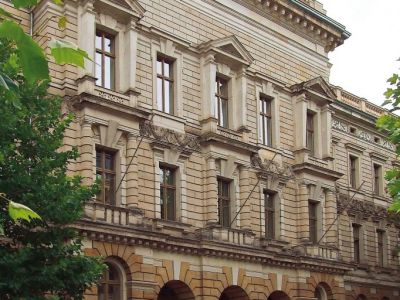
The University of Music and Theatre "Felix Mendelssohn Bartholdy", a public institution in Leipzig, is the country's oldest university-level music school. Founded in 1843 by composer Felix Mendelssohn as the Conservatory of Music, the university has a rich history closely tied to Leipzig’s vibrant musical and theatrical culture.
Over the years, the university underwent several name changes, reflecting the political and cultural shifts of the times. In 1876, it became the Royal Conservatory of Music of Leipzig and moved to a new building on Grassistraße in 1887. After the fall of the Kingdom of Saxony, it was renamed the State Conservatory of Music in 1924.
The university experienced further changes during the 20th century, including a period under the direction of Austrian composer Johann Nepomuk David from 1939 to 1945. Following the disruptions of World War II, it reopened as the Mendelssohn Academy in 1946 and was later named Felix Mendelssohn Bartholdy University of Music in 1972 in honor of its founder.
Throughout its history, the university has maintained strong connections with prominent cultural institutions such as the Gewandhaus, the Opera Leipzig, and various theaters in Chemnitz, Dresden, Halle, and Weimar. Recognized as a place of cultural significance, it was selected in 2009 as one of 365 locations in the "Germany – Land of Ideas" campaign by the Cabinet of Germany and the Office of the Representative of German Industry and Trade.
Modern developments include the inauguration of a new Great Hall in 2001, recognized by the Association of German Architects, and the opening of additional premises in 2002. Since 2004, the university has hosted an orchestra academy in cooperation with the Gewandhaus Orchestra, aimed at nurturing top musical talent. Today, the University of Music and Theatre "Felix Mendelssohn Bartholdy" continues to be a cornerstone of artistic education and cultural heritage in Germany.
Over the years, the university underwent several name changes, reflecting the political and cultural shifts of the times. In 1876, it became the Royal Conservatory of Music of Leipzig and moved to a new building on Grassistraße in 1887. After the fall of the Kingdom of Saxony, it was renamed the State Conservatory of Music in 1924.
The university experienced further changes during the 20th century, including a period under the direction of Austrian composer Johann Nepomuk David from 1939 to 1945. Following the disruptions of World War II, it reopened as the Mendelssohn Academy in 1946 and was later named Felix Mendelssohn Bartholdy University of Music in 1972 in honor of its founder.
Throughout its history, the university has maintained strong connections with prominent cultural institutions such as the Gewandhaus, the Opera Leipzig, and various theaters in Chemnitz, Dresden, Halle, and Weimar. Recognized as a place of cultural significance, it was selected in 2009 as one of 365 locations in the "Germany – Land of Ideas" campaign by the Cabinet of Germany and the Office of the Representative of German Industry and Trade.
Modern developments include the inauguration of a new Great Hall in 2001, recognized by the Association of German Architects, and the opening of additional premises in 2002. Since 2004, the university has hosted an orchestra academy in cooperation with the Gewandhaus Orchestra, aimed at nurturing top musical talent. Today, the University of Music and Theatre "Felix Mendelssohn Bartholdy" continues to be a cornerstone of artistic education and cultural heritage in Germany.
3) Neues Rathaus (New City Hall)
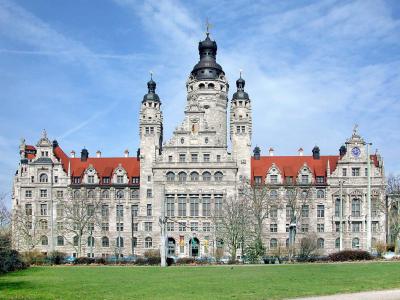
In the 1870s, Leipzig was outgrowing its Town Hall. It was fast becoming a big city. Several expansion plans for a new Town Hall had been discarded when the city acquired the gargantuan Pleissenburg Castle from the Kingdom of Saxony. A competition was held for architectural designs with a specification that the tower of Pleissenburg Castle is retained. Architect Hugo Licht and sculptor Georg Wrba worked on the design and construction.
The New City Hall is located on the southwest edge of the inner city ring road, not far from the Palace of Justice (Reichsgericht). The central tower of the new City Hall is 377 feet high. It is the tallest city hall tower in Germany and one of Leipzig's most important landmarks.
The cornerstone was laid in October 1899. The Hall opened officially in October 1905. An annex to the new City Hall designed by Hugo Licht opened in 1912. It sits across the Lotter Street (Lotterstrasse), named after Mayor Hieronymus Lotter. The two buildings are connected by a two-story bridge called the "civil service path."
The entire complex of buildings was made using Franconian shell limestone. On the southwest facade stands the statues Crafts, Justice, Book Art, Science, and Music. The town hall clock bears the inscription in Latin, "Death is certain, the hour is uncertain."
In the basement is located the Ratskeller Leipzig, a restaurant, and a public canteen. The paternoster lifts, non-stop elevators are used throughout. Guided tours of the tower are available.
The New City Hall is located on the southwest edge of the inner city ring road, not far from the Palace of Justice (Reichsgericht). The central tower of the new City Hall is 377 feet high. It is the tallest city hall tower in Germany and one of Leipzig's most important landmarks.
The cornerstone was laid in October 1899. The Hall opened officially in October 1905. An annex to the new City Hall designed by Hugo Licht opened in 1912. It sits across the Lotter Street (Lotterstrasse), named after Mayor Hieronymus Lotter. The two buildings are connected by a two-story bridge called the "civil service path."
The entire complex of buildings was made using Franconian shell limestone. On the southwest facade stands the statues Crafts, Justice, Book Art, Science, and Music. The town hall clock bears the inscription in Latin, "Death is certain, the hour is uncertain."
In the basement is located the Ratskeller Leipzig, a restaurant, and a public canteen. The paternoster lifts, non-stop elevators are used throughout. Guided tours of the tower are available.
4) Bach Museum
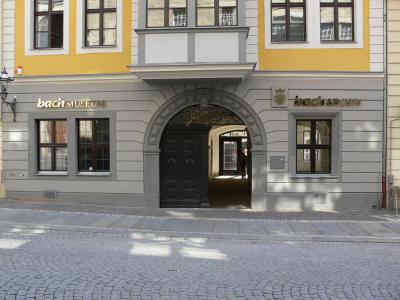
Housed in the historic Bose House, the Bach Archive and Museum in Leipzig features a permanent interactive multimedia exhibition dedicated to the life and work of Johann Sebastian Bach. The renowned 18th-century German composer, who made a name for himself internationally as the cantor of the nearby Saint Thomas's Church, used to live just across the street – in the old Saint Thomas’s School (now demolished).
The museum location is the former residence of the Bose family, affluent merchants and close friends of the Bachs. This is one of the oldest buildings in the area, dating back to 1711.
A true testament to modern museum culture, the venue contains numerous exhibits, spread across 12 rooms (750 square meters), allowing visitors to engage themselves in a variety of exciting things such as, for instance, a chance to compare modern-day Leipzig with its erstwhile version, to date Bach's works in a research lab, to explore the sound of Baroque-era instruments including an organ console at which Bach himself played in 1743, and even to arrange a Bach chorale to your own taste.
One of its highlights is the treasure room, featuring original Bach manuscripts and other precious items, such as a casket containing relics from Bach’s tomb, a recently discovered iron cash box that was once owned by the Bach family, and more.
The tunes floating from the organ pipes immerse visitors into the fascinating world of Bach's music and ensure by no means a passive experience. For additional enjoyment, there's a small pleasure garden, an audio studio and Café Gloria offering ample opportunity to sit back and relax after a busy time exploring the museum.
The museum location is the former residence of the Bose family, affluent merchants and close friends of the Bachs. This is one of the oldest buildings in the area, dating back to 1711.
A true testament to modern museum culture, the venue contains numerous exhibits, spread across 12 rooms (750 square meters), allowing visitors to engage themselves in a variety of exciting things such as, for instance, a chance to compare modern-day Leipzig with its erstwhile version, to date Bach's works in a research lab, to explore the sound of Baroque-era instruments including an organ console at which Bach himself played in 1743, and even to arrange a Bach chorale to your own taste.
One of its highlights is the treasure room, featuring original Bach manuscripts and other precious items, such as a casket containing relics from Bach’s tomb, a recently discovered iron cash box that was once owned by the Bach family, and more.
The tunes floating from the organ pipes immerse visitors into the fascinating world of Bach's music and ensure by no means a passive experience. For additional enjoyment, there's a small pleasure garden, an audio studio and Café Gloria offering ample opportunity to sit back and relax after a busy time exploring the museum.
5) Mendelssohn Monument
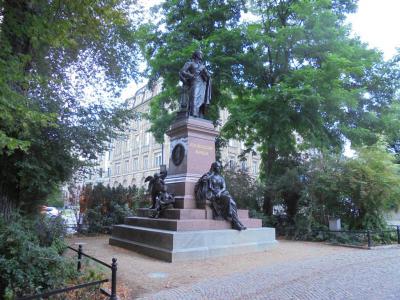
The Mendelssohn Monument in Leipzig is located in front of the western portal of Saint Thomas's Church, a spot often referred to as the Mendelssohn Portal due to the monument's presence. This monument honors Felix Mendelssohn Bartholdy, the renowned composer, former Leipzig Gewandhaus Kapellmeister, and founder of the local Conservatorium of Music. The current statue is a detailed replica of the original, which stood outside the second Gewandhaus, also known as the New Concert Hall (Neues Concerthaus), from 1892 until it was destroyed by the Nazis in 1936 due to Mendelssohn's Jewish heritage.
Erected in 2008, the 2.8-meter bronze statue stands on a stepped granite base. The upper part of the base is made from red Meissner granite, and the lower two steps are crafted from gray granite, making the total height of the monument 6.8 meters. Mendelssohn is depicted with a piano roll in his left hand and a baton in his right, standing in front of a music desk, reflecting his role as the first modern musical conductor.
At Mendelssohn's feet, the muse of music, Euterpe, sits on the steps, leaning on a lyre, accompanied by two pairs of angels: one pair singing and the other playing the flute and violin. The front of the pedestal bears Mendelssohn's name, while the back is inscribed with the phrase, "Nobleness can only be expressed through the language of music." The sides of the pedestal feature symbols of music: a bronze medallion with an organ on the left symbolizes sacred music, and on the right, masks, a vase with a dance scene, flutes, and a sword represent secular music.
The monument's location in the garden outside Saint Thomas's Church is particularly symbolic, as Mendelssohn conducted and played organ concerts there.
Erected in 2008, the 2.8-meter bronze statue stands on a stepped granite base. The upper part of the base is made from red Meissner granite, and the lower two steps are crafted from gray granite, making the total height of the monument 6.8 meters. Mendelssohn is depicted with a piano roll in his left hand and a baton in his right, standing in front of a music desk, reflecting his role as the first modern musical conductor.
At Mendelssohn's feet, the muse of music, Euterpe, sits on the steps, leaning on a lyre, accompanied by two pairs of angels: one pair singing and the other playing the flute and violin. The front of the pedestal bears Mendelssohn's name, while the back is inscribed with the phrase, "Nobleness can only be expressed through the language of music." The sides of the pedestal feature symbols of music: a bronze medallion with an organ on the left symbolizes sacred music, and on the right, masks, a vase with a dance scene, flutes, and a sword represent secular music.
The monument's location in the garden outside Saint Thomas's Church is particularly symbolic, as Mendelssohn conducted and played organ concerts there.
6) Thomaskirche (St. Thomas Church) (must see)
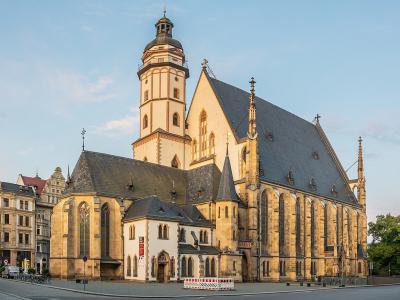
Since the 1100s, at least, there has been a church at the Saint Thomas Church site in Leipzig. Under the crossing and choir of the current Gothic hall church, there are the Romanesque foundations of a yet earlier church. In the 13th century, the earlier building became the Augustinian monastery and core of the University of Leipzig, founded in 1409.
Troubadour Heinrich von Morungen gifted a relic of Saint Thomas to the church in 1217. Martin Luther preached here in 1538. The current tower was built in 1537. Johann Sebastian Bach directed the choir at Saint Thomas and taught at Saint Thomas School until he died in 1750. Carl Seffner's statue of Bach next to the church was dedicated in 1906.
While on tour, Wolfgang Amadeus Mozart played the organ at the church in 1789. Richard Wagner was baptized here in 1813. He later studied piano with the cantor Christian Weinlig. A bronze statue of Felix Mendelssohn designed by sculptor Werner Stein was erected opposite the church in 1909.
Saint Thomas Church is 250 feet long with a nave of 164 feet. The roof is extraordinarily steep. The crown is 148 feet high, and the tower is 223 feet. At the end of the 19th century, the interior of the church was transformed from Baroque to Neo-Gothic.
The church is home to a variety of works of art. The baptismal font was made in 1615 by sculptor Franz Doteber. A Baroque crucifix by artist Caspar Freidrich Löbel remains from the times of Bach. The colored windows date from 1889. They show King Gustavus Adolphus of Sweden, Johann Sebastian Bach, Martin Luther, Elector Friedrich der Weise and Emperor Wilhelm I.
Saint Thomas Church has two pipe organs. The older, Romantic organ by Wilhelm Sauer was built in 1889. This organ was considered inadequate for Bach's music. The newest organ to replace the original was built in 2000. It was designed to look identical to the organ Bach played in the Saint Paul Church, where he was music director for holiday services in 1723−1725.
Troubadour Heinrich von Morungen gifted a relic of Saint Thomas to the church in 1217. Martin Luther preached here in 1538. The current tower was built in 1537. Johann Sebastian Bach directed the choir at Saint Thomas and taught at Saint Thomas School until he died in 1750. Carl Seffner's statue of Bach next to the church was dedicated in 1906.
While on tour, Wolfgang Amadeus Mozart played the organ at the church in 1789. Richard Wagner was baptized here in 1813. He later studied piano with the cantor Christian Weinlig. A bronze statue of Felix Mendelssohn designed by sculptor Werner Stein was erected opposite the church in 1909.
Saint Thomas Church is 250 feet long with a nave of 164 feet. The roof is extraordinarily steep. The crown is 148 feet high, and the tower is 223 feet. At the end of the 19th century, the interior of the church was transformed from Baroque to Neo-Gothic.
The church is home to a variety of works of art. The baptismal font was made in 1615 by sculptor Franz Doteber. A Baroque crucifix by artist Caspar Freidrich Löbel remains from the times of Bach. The colored windows date from 1889. They show King Gustavus Adolphus of Sweden, Johann Sebastian Bach, Martin Luther, Elector Friedrich der Weise and Emperor Wilhelm I.
Saint Thomas Church has two pipe organs. The older, Romantic organ by Wilhelm Sauer was built in 1889. This organ was considered inadequate for Bach's music. The newest organ to replace the original was built in 2000. It was designed to look identical to the organ Bach played in the Saint Paul Church, where he was music director for holiday services in 1723−1725.
7) Market Square and Old Town Hall (must see)
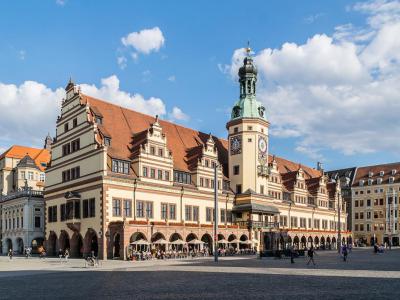
The Market Square of Leipzig is the central place of Leigzip's city center. There are arcades and courtyards well worth a visit, and the Old Town Hall housing the City History Museum is the central attraction. Saint Nicholas and Saint Thomas Churches are easily reached from here.
Throughout the year, the square is the venue of a diversity of Markets and events. There is the Easter Market, the Wine Festival, Leipzig Market Music, and the fabulous Christmas Market. Since the 13th century, Leipzig and its Markets have been the most vital centers of trade in Germany.
In 1341, Frederick II, Son of Frederick the Peaceful and Margrave of Meissen, offered the cloth merchants of Leipzig a Romanesque building of their own at the south end of the Leipzig Market Square. This building, called the Cloth Hall (Tuchhaus), shared extensions and spaces with the City Council.
The building complex grew. Two structures were added in the 15th century. A council chamber was completed in 1467. A stair tower emerged in 1476. In 1498, after all the growth and extensions, it was decided to rebuild the Town Hall.
The Old Town Hall was rebuilt in its current Saxon Renaissance style in 1557. It housed the Upper Court and the Court of Aldermen, the city magistrate, council archives, and prison cells. In 1905, it was decided to use the Old Town Hall as the Leipzig City History Museum.
The two-story building is over 300 feet long. It has a steep roof with 13 connecting row dormers and staggered gables. A stone arcade faces the square. An octagonal stair tower is next to the main entrance. The entrance is flanked by two ionic columns topped with the gaff heads of the master builders. Stone box oriels are on the gable ends.
In the large ceremonial hall is a portrait of Johann Sebastian Bach by German painter Elias Gottlob Haussmann. Haussmann also signed Bach's employment certificate as a cantor at Saint Thomas' Church. There is also a scale model of the city in 1832 made by Leipzig upholsterer and furniture maker Johann Christoph Merzdorf.
Throughout the year, the square is the venue of a diversity of Markets and events. There is the Easter Market, the Wine Festival, Leipzig Market Music, and the fabulous Christmas Market. Since the 13th century, Leipzig and its Markets have been the most vital centers of trade in Germany.
In 1341, Frederick II, Son of Frederick the Peaceful and Margrave of Meissen, offered the cloth merchants of Leipzig a Romanesque building of their own at the south end of the Leipzig Market Square. This building, called the Cloth Hall (Tuchhaus), shared extensions and spaces with the City Council.
The building complex grew. Two structures were added in the 15th century. A council chamber was completed in 1467. A stair tower emerged in 1476. In 1498, after all the growth and extensions, it was decided to rebuild the Town Hall.
The Old Town Hall was rebuilt in its current Saxon Renaissance style in 1557. It housed the Upper Court and the Court of Aldermen, the city magistrate, council archives, and prison cells. In 1905, it was decided to use the Old Town Hall as the Leipzig City History Museum.
The two-story building is over 300 feet long. It has a steep roof with 13 connecting row dormers and staggered gables. A stone arcade faces the square. An octagonal stair tower is next to the main entrance. The entrance is flanked by two ionic columns topped with the gaff heads of the master builders. Stone box oriels are on the gable ends.
In the large ceremonial hall is a portrait of Johann Sebastian Bach by German painter Elias Gottlob Haussmann. Haussmann also signed Bach's employment certificate as a cantor at Saint Thomas' Church. There is also a scale model of the city in 1832 made by Leipzig upholsterer and furniture maker Johann Christoph Merzdorf.
8) Nikolaikirche (St. Nicholas Church) (must see)
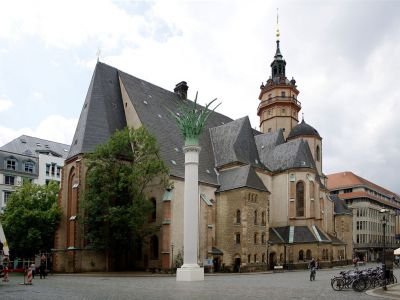
One of the most important churches of Leipzig is named for Saint Nicholas, the patron saint of travelers and merchants. The church started in 1185 as a Romanesque-style edifice with two look-alike towers. It was enlarged and redone in the 16th century in the Gothic "hall church" style, which features a nave and aisles of approximately equal height, united under a single immense roof. The Baroque-style central tower was added in 1730.
The interior was remodeled in 1797, in a Neoclassical style, by architect Johann Carl Friedrich Dauthe. Inside, the apse is semicircular with a barrel vault roof. The narrow nave is supported by graceful Egyptian-style columns, with palm-shaped capitals. The interior colors are in two pastel shades of pale green and dusty rose.
The church hosted four of the five premier performances of Johann Sebastian Bach's Passion of Saint John in 1724, 1728, 1732, and 1749. Several of his cantatas and oratorios were performed by the Saint Thomas Choir of Leipzig (Thomanerchor), a boy's choir with a tradition of more than 800 years in music and city history.
From 1989 to 1991, people would gather at Saint Nicholas every Monday evening. The meetings were not formal. They led to ad hoc protests against the Communist East German Government. Cabaret artist Bernd-Lutz Lange declared of the revolution: "The head was the Saint Nicholas Church and the body the center of the city."
The authorities were thrown off balance, as they were expecting violence. But that never occurred, violance were not in the playbook. A monumental column stands outside the church today. Close to the Neoclassical column, colored panels in the pavement light up after dark, telling the story of the Monday night marchers.
The interior was remodeled in 1797, in a Neoclassical style, by architect Johann Carl Friedrich Dauthe. Inside, the apse is semicircular with a barrel vault roof. The narrow nave is supported by graceful Egyptian-style columns, with palm-shaped capitals. The interior colors are in two pastel shades of pale green and dusty rose.
The church hosted four of the five premier performances of Johann Sebastian Bach's Passion of Saint John in 1724, 1728, 1732, and 1749. Several of his cantatas and oratorios were performed by the Saint Thomas Choir of Leipzig (Thomanerchor), a boy's choir with a tradition of more than 800 years in music and city history.
From 1989 to 1991, people would gather at Saint Nicholas every Monday evening. The meetings were not formal. They led to ad hoc protests against the Communist East German Government. Cabaret artist Bernd-Lutz Lange declared of the revolution: "The head was the Saint Nicholas Church and the body the center of the city."
The authorities were thrown off balance, as they were expecting violence. But that never occurred, violance were not in the playbook. A monumental column stands outside the church today. Close to the Neoclassical column, colored panels in the pavement light up after dark, telling the story of the Monday night marchers.
9) Leipzig Opera House
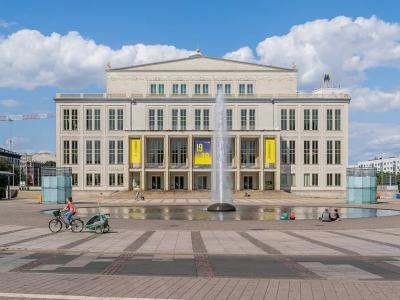
Leipzig Opera House, located on Augustusplatz in Leipzig, is a historic institution with roots dating back to the late 17th century. Leipzig's operatic tradition began in 1693, making it the third oldest opera city in Europe, following Venice and Hamburg. The early performances were held at the Opera at Brühl (Oper am Brühl), where Georg Philipp Telemann, a renowned self-taught German Baroque composer, served as director from 1703 to 1705, contributing significantly to the city's musical landscape.
The first opera house on the current site, known as the New Theater (Neues Theater), was inaugurated in 1868. Notably, Gustav Mahler, a prominent Austro-Bohemian composer and conductor, served as the second conductor at the New Theater from 1886 to 1888. Mahler is recognized as a pivotal figure who bridged the 19th-century Austro-German musical tradition with the emerging modernism of the early 20th century.
Tragically, the New Theater, along with other theaters in Leipzig, was destroyed during an Allied air raid on December 3-4, 1943, during World War II. Post-war performances were temporarily moved to Dreilinden House, now known as the Musical Comedy (Musikalische Komödie). In 1950, the decision was made by the Council of Ministers of the GDR to demolish the remains of the New Theater and construct a new opera house on its site. After several competitions and deliberations, architects Kunz Nierade and Kurt Hemmerling were commissioned in 1954 to design the new building.
Construction of the modern Leipzig Opera House began in 1956, and the new theater opened its doors on October 8, 1960, with a performance of Richard Wagner's "Die Meistersinger von Nürnberg." At the time of its inauguration, the Oper Leipzig boasted some of the most advanced stage equipment in Europe. The opera house expanded its offerings in the 1970s with the addition of a basement theater for chamber productions, although this space is now closed. In 1990, a small art gallery was also integrated into the building, enhancing its cultural footprint in Leipzig.
The first opera house on the current site, known as the New Theater (Neues Theater), was inaugurated in 1868. Notably, Gustav Mahler, a prominent Austro-Bohemian composer and conductor, served as the second conductor at the New Theater from 1886 to 1888. Mahler is recognized as a pivotal figure who bridged the 19th-century Austro-German musical tradition with the emerging modernism of the early 20th century.
Tragically, the New Theater, along with other theaters in Leipzig, was destroyed during an Allied air raid on December 3-4, 1943, during World War II. Post-war performances were temporarily moved to Dreilinden House, now known as the Musical Comedy (Musikalische Komödie). In 1950, the decision was made by the Council of Ministers of the GDR to demolish the remains of the New Theater and construct a new opera house on its site. After several competitions and deliberations, architects Kunz Nierade and Kurt Hemmerling were commissioned in 1954 to design the new building.
Construction of the modern Leipzig Opera House began in 1956, and the new theater opened its doors on October 8, 1960, with a performance of Richard Wagner's "Die Meistersinger von Nürnberg." At the time of its inauguration, the Oper Leipzig boasted some of the most advanced stage equipment in Europe. The opera house expanded its offerings in the 1970s with the addition of a basement theater for chamber productions, although this space is now closed. In 1990, a small art gallery was also integrated into the building, enhancing its cultural footprint in Leipzig.
10) University of Leipzig
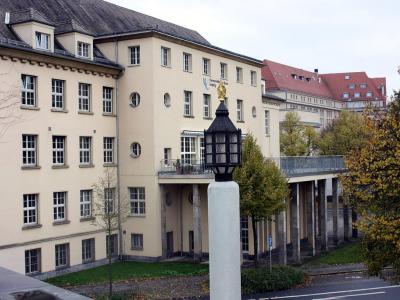
Leipzig University is one of the oldest universities in the world and the second-oldest in Germany, maintaining continuous operation since its founding on December 2, 1409. Established by Frederick I, Elector of Saxony, and his brother William II, Margrave of Meissen, the university originally comprised the four traditional scholastic faculties and was modeled after the University of Prague. This historic institution has been a center of teaching and research for over 600 years, with a legacy that includes ten Nobel laureates, such as Svante Pääbo, who won the Nobel Prize in Medicine in 2022.
Leipzig University has a rich history of notable alumni, including prominent figures such as Angela Merkel, Gottfried Wilhelm von Leibniz, Johann Wolfgang von Goethe, Leopold von Ranke, Friedrich Nietzsche, Robert Schumann, Richard Wagner, Tycho Brahe, and Georgius Agricola. The university has been an influential center of learning since its inception, with its first rector being Johannes Otto von Münsterberg.
Leipzig University has a history of progressive academic policies. It was among the first German universities to admit women as guest students, a milestone recognized by the General German Women's Association in 1873, the same year Johanna von Evreinov became Germany's first woman to earn a JD. In the late 19th and early 20th centuries, the university also became a key educational center for state administrators and elites from newly independent Balkan states, hosting over 5,500 students from Romania, Greece, Bulgaria, and Serbia between 1859 and 1909.
Leipzig University’s urban campus includes 38 locations throughout Leipzig, with its main buildings in the city center on original land from 1409. Reconstructed in 2005 with designs by Dutch architect Erick van Egeraat, the campus houses the University Library, archives, museums, and the university hospital. Notable sites include the Leipzig Botanical Garden, established in 1542 as Europe’s second-oldest, and the Musical Instrument Museum, which features one of only three surviving pianos by Bartolomeo Cristofori, the piano's inventor. The university remains a prominent academic landmark with a rich legacy.
Leipzig University has a rich history of notable alumni, including prominent figures such as Angela Merkel, Gottfried Wilhelm von Leibniz, Johann Wolfgang von Goethe, Leopold von Ranke, Friedrich Nietzsche, Robert Schumann, Richard Wagner, Tycho Brahe, and Georgius Agricola. The university has been an influential center of learning since its inception, with its first rector being Johannes Otto von Münsterberg.
Leipzig University has a history of progressive academic policies. It was among the first German universities to admit women as guest students, a milestone recognized by the General German Women's Association in 1873, the same year Johanna von Evreinov became Germany's first woman to earn a JD. In the late 19th and early 20th centuries, the university also became a key educational center for state administrators and elites from newly independent Balkan states, hosting over 5,500 students from Romania, Greece, Bulgaria, and Serbia between 1859 and 1909.
Leipzig University’s urban campus includes 38 locations throughout Leipzig, with its main buildings in the city center on original land from 1409. Reconstructed in 2005 with designs by Dutch architect Erick van Egeraat, the campus houses the University Library, archives, museums, and the university hospital. Notable sites include the Leipzig Botanical Garden, established in 1542 as Europe’s second-oldest, and the Musical Instrument Museum, which features one of only three surviving pianos by Bartolomeo Cristofori, the piano's inventor. The university remains a prominent academic landmark with a rich legacy.
11) Mendelssohn Haus (Mendelssohn House)
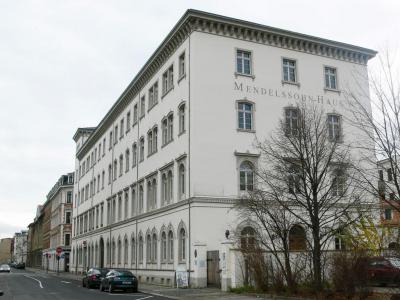
The Mendelssohn House in Leipzig is a museum dedicated to the life and work of composer Felix Mendelssohn, who lived there from 1845 until he died in 1847. Originally from Hamburg, Mendelssohn moved to Leipzig in 1835 when he became the director of the Gewandhaus Orchestra. His family joined him in 1845, settling in an apartment on the bel etage (second floor) of this building. This house witnessed both personal and professional milestones for Mendelssohn, including the birth of his daughter Elisabeth, and it was also the place where he passed away on November 4, 1847.
In 1991, the International Mendelssohn Foundation was established to preserve Mendelssohn's last home in Leipzig, and by 1997, the museum was opened to the public. The property has been meticulously restored to reflect its appearance during Mendelssohn's lifetime, complete with furnishings in the late Biedermeier style. Visitors can explore Mendelssohn’s former apartment, which showcases original furniture, personal documents, musical sheets with autographs, first prints of his works, and some of his watercolors. A highlight of the museum is the composer’s study, which preserves the ambiance in which he created pieces like the oratorio "Elias."
The museum also features a music salon used for matinee concerts every Sunday and a large chamber music hall located on the first floor of the former coach house. In 2014, the museum expanded to include an interactive installation on the ground floor, where visitors can virtually conduct an orchestra, arrange instruments, and switch between modern and historical versions during playback. Additionally, the garden house within the historical garden now hosts a "world for children," further enriching the museum's offerings.
Recognized for its cultural significance, the Mendelssohn House is listed in the Blaubuch (Blue Book) of the German Federal Government as an important cultural site, continuing to celebrate the legacy of Felix Mendelssohn in Leipzig.
In 1991, the International Mendelssohn Foundation was established to preserve Mendelssohn's last home in Leipzig, and by 1997, the museum was opened to the public. The property has been meticulously restored to reflect its appearance during Mendelssohn's lifetime, complete with furnishings in the late Biedermeier style. Visitors can explore Mendelssohn’s former apartment, which showcases original furniture, personal documents, musical sheets with autographs, first prints of his works, and some of his watercolors. A highlight of the museum is the composer’s study, which preserves the ambiance in which he created pieces like the oratorio "Elias."
The museum also features a music salon used for matinee concerts every Sunday and a large chamber music hall located on the first floor of the former coach house. In 2014, the museum expanded to include an interactive installation on the ground floor, where visitors can virtually conduct an orchestra, arrange instruments, and switch between modern and historical versions during playback. Additionally, the garden house within the historical garden now hosts a "world for children," further enriching the museum's offerings.
Recognized for its cultural significance, the Mendelssohn House is listed in the Blaubuch (Blue Book) of the German Federal Government as an important cultural site, continuing to celebrate the legacy of Felix Mendelssohn in Leipzig.
12) Edvard Grieg Memorial and Social Centre
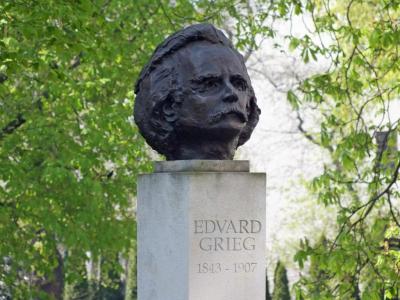
The Norwegian composer Edvard Grieg got his formal musical education in Leipzig. He arrived in the city, for the first time, in September 1858, aged fifteen.
The musical life in Leipzig of that period was vibrant and exciting: the Gewandhaus orchestra was a magnet for Europe’s best virtuosi as a chance to play new stuff. Opera was another source of inspiration and the young Grieg, surely inspired, attended every performance of Wagner’s Tannhȁuser during his first year in Leipzig. There and then he also heard Clara Schumann play her husband’s piano concerto, and met Tchaikovsky and Brahms.
Grieg completed his studies in 1862. Afterwards, he kept in touch with his publisher, Carl Friedrich Peters, at Talstrasse 10, and visited Leipzig several times as a guest of publishers M. Abraham and H. Hinrichsen. On each of those occasions, the flat ‘above the shop’ in the C.F. Peters building was made available to him. It was also here that he composed Peer Gynt Suite n1, in 1888.
After many years of disrepair, this property has finally undergone extensive restoration, courtesy of the memorial and social center which documents the life of Edvard Grieg, and today boasts a permanent extensive exhibition. Here, apart from learning about the life and work of Grieg in Leipzig, visitors can attend concerts in the same room where the Norwegian composer himself once played excerpts from his new compositions to a limited audience.
The musical life in Leipzig of that period was vibrant and exciting: the Gewandhaus orchestra was a magnet for Europe’s best virtuosi as a chance to play new stuff. Opera was another source of inspiration and the young Grieg, surely inspired, attended every performance of Wagner’s Tannhȁuser during his first year in Leipzig. There and then he also heard Clara Schumann play her husband’s piano concerto, and met Tchaikovsky and Brahms.
Grieg completed his studies in 1862. Afterwards, he kept in touch with his publisher, Carl Friedrich Peters, at Talstrasse 10, and visited Leipzig several times as a guest of publishers M. Abraham and H. Hinrichsen. On each of those occasions, the flat ‘above the shop’ in the C.F. Peters building was made available to him. It was also here that he composed Peer Gynt Suite n1, in 1888.
After many years of disrepair, this property has finally undergone extensive restoration, courtesy of the memorial and social center which documents the life of Edvard Grieg, and today boasts a permanent extensive exhibition. Here, apart from learning about the life and work of Grieg in Leipzig, visitors can attend concerts in the same room where the Norwegian composer himself once played excerpts from his new compositions to a limited audience.
13) Museum of Musical Instruments
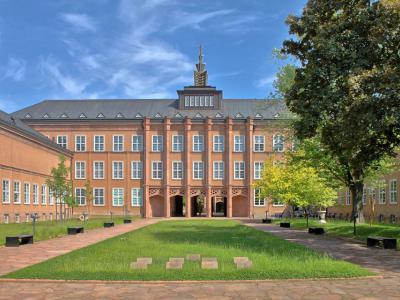
The Museum of Musical Instruments of the University of Leipzig is a prominent part of the Grassi Museum complex, which also houses the Museum of Ethnography and the Museum of Applied Arts. Renowned as one of the largest musical instrument museums in Europe, it boasts a collection of nearly 10,000 items, including instruments and related artifacts from Europe and beyond, with pieces dating back to the Renaissance, Baroque, and the period of Bach's Leipzig.
The museum's origins trace back to 1886 when Dutchman Paul de Wit established a museum dedicated to historic musical instruments in Leipzig. In 1905, he sold the collection to Wilhelm Heyer, a paper merchant, who expanded it further. By 1926, the University of Leipzig acquired the entire Heyer collection with financial support from the State of Saxony and the music publisher Carl Friedrich Peters. The collection found a permanent home in the New Grassi Museum, officially opening its doors in 1929.
However, the museum's journey was not without setbacks. During World War II, despite efforts to protect the collection, a significant number of items were destroyed in a bombing raid in 1943 or were damaged and lost due to inadequate storage and theft.
In the 1950s, the museum began a slow process of rebuilding and eventually reopened to the public. Over the decades, the collection was replenished through acquisitions and donations, ensuring the preservation of its most valuable pieces, including instruments from the De Wit, Heyer, Kraus, Friedrich von Amerling, and Ibach collections.
Today, the museum's exhibits are organized chronologically into 13 sections, showcasing categories such as bowed, wind, and percussion instruments, with the oldest dating from the 16th century. It also features a sound laboratory where visitors can interact with and test out musical instruments, offering a dynamic experience that brings the history of music to life.
The museum's origins trace back to 1886 when Dutchman Paul de Wit established a museum dedicated to historic musical instruments in Leipzig. In 1905, he sold the collection to Wilhelm Heyer, a paper merchant, who expanded it further. By 1926, the University of Leipzig acquired the entire Heyer collection with financial support from the State of Saxony and the music publisher Carl Friedrich Peters. The collection found a permanent home in the New Grassi Museum, officially opening its doors in 1929.
However, the museum's journey was not without setbacks. During World War II, despite efforts to protect the collection, a significant number of items were destroyed in a bombing raid in 1943 or were damaged and lost due to inadequate storage and theft.
In the 1950s, the museum began a slow process of rebuilding and eventually reopened to the public. Over the decades, the collection was replenished through acquisitions and donations, ensuring the preservation of its most valuable pieces, including instruments from the De Wit, Heyer, Kraus, Friedrich von Amerling, and Ibach collections.
Today, the museum's exhibits are organized chronologically into 13 sections, showcasing categories such as bowed, wind, and percussion instruments, with the oldest dating from the 16th century. It also features a sound laboratory where visitors can interact with and test out musical instruments, offering a dynamic experience that brings the history of music to life.
14) Alter Johannisfriedhof (Old St. John's Cemetery)
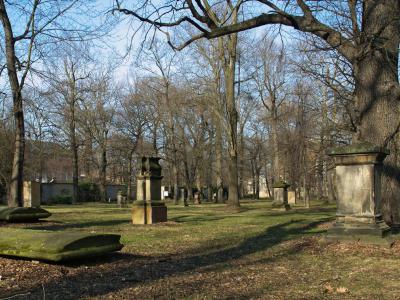
Old Saint John's Cemetery in Leipzig is the city's oldest burial ground, with roots tracing back to 1278. Initially established as part of Saint John's Hospital for lepers, it later became attached to Saint John's Church, built in the 14th century but destroyed during World War II. In 1536, under the directive of George, Duke of Saxony, the cemetery transitioned into a common graveyard, undergoing several expansions over the centuries in 1680, 1805, and finally from 1827 to 1863. It was also redesigned in the style of the Camposanto Monumentale in Pisa, blending its historic legacy with a touch of Italian monumental cemetery architecture.
This cemetery served as the final resting place for many of Leipzig's prominent figures, including musicians, composers, and music publishers. A notable discovery occurred in 1894 during the reconstruction of the Johanniskirche nave when the remains of Johann Sebastian Bach, who had been buried there in 1750, were unearthed. His remains, along with those of Christian Fürchtegott Gellert, a celebrated German poet, were reinterred beneath the church altar in 1900. Despite the church's destruction in 1943 due to Allied bombing, the coffins of Bach and Gellert were miraculously preserved. Bach's remains were subsequently moved to the Thomaskirche in 1949, while Gellert's were relocated to the Paulinerkirche.
By the early 20th century, Old Saint John's Cemetery had evolved into a memorial park. It was temporarily closed in 1981 and underwent a comprehensive clearance. After extensive renovations, it reopened in 1995 and remains a protected monument, reflecting Leipzig’s rich historical and cultural heritage.
This cemetery served as the final resting place for many of Leipzig's prominent figures, including musicians, composers, and music publishers. A notable discovery occurred in 1894 during the reconstruction of the Johanniskirche nave when the remains of Johann Sebastian Bach, who had been buried there in 1750, were unearthed. His remains, along with those of Christian Fürchtegott Gellert, a celebrated German poet, were reinterred beneath the church altar in 1900. Despite the church's destruction in 1943 due to Allied bombing, the coffins of Bach and Gellert were miraculously preserved. Bach's remains were subsequently moved to the Thomaskirche in 1949, while Gellert's were relocated to the Paulinerkirche.
By the early 20th century, Old Saint John's Cemetery had evolved into a memorial park. It was temporarily closed in 1981 and underwent a comprehensive clearance. After extensive renovations, it reopened in 1995 and remains a protected monument, reflecting Leipzig’s rich historical and cultural heritage.
15) Robert Schumann House
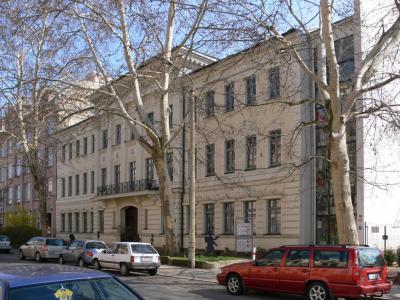
The Robert Schumann House in Leipzig is a historical site that once served as the home of the renowned German composer Robert Schumann and his wife, the celebrated pianist Clara Schumann. The couple resided here for the first four years of their marriage, from 1840 to 1844. Built in 1838 by Friedrich August Scheidel, the house is a strictly symmetrical Neoclassical building with three stories; the Schumanns occupied the first-floor apartment.
Their home quickly became a vibrant cultural hub, attracting prominent guests such as Felix Mendelssohn Bartholdy, Franz Liszt, Richard Wagner, Hector Berlioz, and Hans Christian Andersen. During their time here, Robert Schumann composed some of his significant works, including the Spring Symphony, the three String Quartets, and the Piano Quintet.
Although the house survived World War II with minimal damage, it fell into disrepair during the 1970s, despite being recognized as a historical monument in the GDR. In 1999, the Rahn Dittrich Group acquired and renovated the building, aided by the Robert and Clara Schumann Association, established in 1995. Today, the Schumann Museum is housed within the former apartment and includes various themed rooms: the Schumann Salon, where the couple entertained guests; the Travel Room, dedicated to their concert tours in Denmark and Russia; and the Sound Room (Klangraum), designed in the Biedermeier style and featuring an interactive sound installation by artist Erwin Stache.
Beyond the museum, the building also accommodates a small concert hall and the Clara Schumann primary school, which has an artistic and musical focus. The concert hall hosts regular musical performances, readings, and discussions, and the venue is part of the UNESCO Leipzig Music Trail. In 2019, to commemorate Clara Schumann's 200th anniversary, the Schumann House unveiled a renewed and expanded permanent exhibition, enhancing its role as a center for musical heritage and cultural engagement in Leipzig.
Their home quickly became a vibrant cultural hub, attracting prominent guests such as Felix Mendelssohn Bartholdy, Franz Liszt, Richard Wagner, Hector Berlioz, and Hans Christian Andersen. During their time here, Robert Schumann composed some of his significant works, including the Spring Symphony, the three String Quartets, and the Piano Quintet.
Although the house survived World War II with minimal damage, it fell into disrepair during the 1970s, despite being recognized as a historical monument in the GDR. In 1999, the Rahn Dittrich Group acquired and renovated the building, aided by the Robert and Clara Schumann Association, established in 1995. Today, the Schumann Museum is housed within the former apartment and includes various themed rooms: the Schumann Salon, where the couple entertained guests; the Travel Room, dedicated to their concert tours in Denmark and Russia; and the Sound Room (Klangraum), designed in the Biedermeier style and featuring an interactive sound installation by artist Erwin Stache.
Beyond the museum, the building also accommodates a small concert hall and the Clara Schumann primary school, which has an artistic and musical focus. The concert hall hosts regular musical performances, readings, and discussions, and the venue is part of the UNESCO Leipzig Music Trail. In 2019, to commemorate Clara Schumann's 200th anniversary, the Schumann House unveiled a renewed and expanded permanent exhibition, enhancing its role as a center for musical heritage and cultural engagement in Leipzig.
16) Hauptbahnhof (Central Railway Station) (must see)
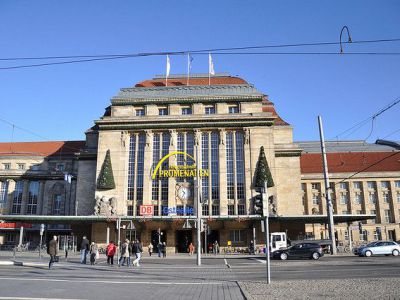
The Central Station (Hauptbahnhof) is the major railway terminal in Leipzig and Europe's largest railway station measured by floor area. It covers 898,000 square feet and has 19 above-ground platforms, six train sheds, and a multi-level concourse of tall stone arches. The facade is almost 1,000 feet long. The station also operates as a vast shopping venue. The complex has over 150,000 travelers a day.
One of Germany's busiest railway stations in 1939, it was devastated during World War II. On July 1944, during an air raid by the US Eighth Air Force, the concourse roof collapsed, and the west hall was destroyed. After the war, reconstruction was a top priority. The Council of Ministers managed a complete restoration by 1955.
After the German Reunification, the Central Station was renovated and modernized. The concourse floor was removed, and two basement levels were dug out to build a shopping mall. The new station was inaugurated in November 1997. The Leipzig City tunnel from south Leipzig to Market Station opened in December 2013.
Currently, work is being done for the high-speed connection of Berlin-Palermo. On the site of track 24, there is a display of five historic East German locomotives. The Central Station has served as a film location for films such as Shining Through, Obsession, and Mr. Nobody.
One of Germany's busiest railway stations in 1939, it was devastated during World War II. On July 1944, during an air raid by the US Eighth Air Force, the concourse roof collapsed, and the west hall was destroyed. After the war, reconstruction was a top priority. The Council of Ministers managed a complete restoration by 1955.
After the German Reunification, the Central Station was renovated and modernized. The concourse floor was removed, and two basement levels were dug out to build a shopping mall. The new station was inaugurated in November 1997. The Leipzig City tunnel from south Leipzig to Market Station opened in December 2013.
Currently, work is being done for the high-speed connection of Berlin-Palermo. On the site of track 24, there is a display of five historic East German locomotives. The Central Station has served as a film location for films such as Shining Through, Obsession, and Mr. Nobody.
