Custom Walk in Prague, Czech Republic by maartenrietberg_675b6 created on 2025-06-16
Guide Location: Czech Republic » Prague
Guide Type: Custom Walk
# of Sights: 12
Tour Duration: 2 Hour(s)
Travel Distance: 2.5 Km or 1.6 Miles
Share Key: NJE8L
Guide Type: Custom Walk
# of Sights: 12
Tour Duration: 2 Hour(s)
Travel Distance: 2.5 Km or 1.6 Miles
Share Key: NJE8L
How It Works
Please retrieve this walk in the GPSmyCity app. Once done, the app will guide you from one tour stop to the next as if you had a personal tour guide. If you created the walk on this website or come to the page via a link, please follow the instructions below to retrieve the walk in the app.
Retrieve This Walk in App
Step 1. Download the app "GPSmyCity: Walks in 1K+ Cities" on Apple App Store or Google Play Store.



Step 2. In the GPSmyCity app, download(or launch) the guide "Prague Map and Walking Tours".
Step 3. Tap the menu button located at upper right corner of the "Walks" screen and select "Retrieve custom walk". Enter the share key: NJE8L
1) Prague Castle (must see)
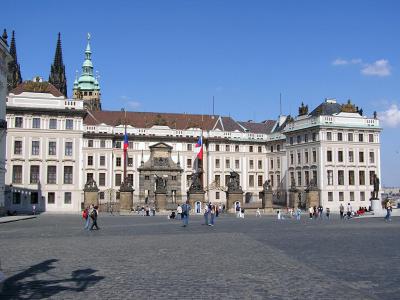
When you hear “Prague Castle,” you might picture one grandiose palace with spires and regal chambers-but in reality, it’s even more than that. What you're looking at is a vast, fortified complex filled with government buildings, centuries-old churches, art-filled museums, stunning gardens, and the famously charming Golden Lane-where Franz Kafka once lived in a tiny cottage. Covering over 17 acres, or 70,000 square meters, it holds the Guinness World Record as the largest castle complex in existence, and its roots stretch all the way back to the 9th century.
This place has seen centuries of rulers come and go-from medieval kings and Habsburg monarchs to Tomáš Masaryk, the first president of Czechoslovakia. Today, it’s still the official residence of the Czech president, and you can tell when they’re in town by the national flag flying above the entrance. Just outside the main gates, the stoic castle guards carry out the ceremonial changing of the guard every day at noon, with smaller routines each hour starting at 7 a.m.
The architecture here is a timeline in stone-Saint Vitus Cathedral blends Gothic drama with Renaissance and Baroque flourishes, while nearby Saint George’s Basilica keeps things somewhat simpler with a Romanesque interior hidden behind a Baroque facade. You’ll even notice touches from the 20th century scattered across the grounds, making the Castle feel like a living archive of Czech history.
If you’re planning to explore the whole complex, set aside at least 3 to 5 hours-it’s worth taking your time. The castle gardens are open to the public for free, perfect for wandering or simply sitting and soaking up the atmosphere. If the ticket line at the main entrance seems long, try one of the booths deeper in the courtyard-they’re often quicker and easier to access.
This place has seen centuries of rulers come and go-from medieval kings and Habsburg monarchs to Tomáš Masaryk, the first president of Czechoslovakia. Today, it’s still the official residence of the Czech president, and you can tell when they’re in town by the national flag flying above the entrance. Just outside the main gates, the stoic castle guards carry out the ceremonial changing of the guard every day at noon, with smaller routines each hour starting at 7 a.m.
The architecture here is a timeline in stone-Saint Vitus Cathedral blends Gothic drama with Renaissance and Baroque flourishes, while nearby Saint George’s Basilica keeps things somewhat simpler with a Romanesque interior hidden behind a Baroque facade. You’ll even notice touches from the 20th century scattered across the grounds, making the Castle feel like a living archive of Czech history.
If you’re planning to explore the whole complex, set aside at least 3 to 5 hours-it’s worth taking your time. The castle gardens are open to the public for free, perfect for wandering or simply sitting and soaking up the atmosphere. If the ticket line at the main entrance seems long, try one of the booths deeper in the courtyard-they’re often quicker and easier to access.
2) New Royal Palace
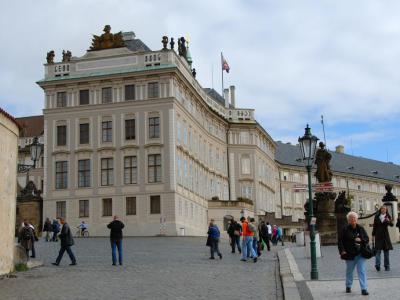
Situated within the sprawling grounds of Prague Castle, the New Royal Palace occupies a prominent position in the castle's 3rd courtyard. Construction on this edifice commenced in the 17th century, culminating in its completion in the 18th century. Comprising four distinct wings-north, west, south, and central-the palace exudes grandeur and historical significance.
The southern wing houses the opulent Throne Hall, adorned with lavish decorations including three magnificent crystal chandeliers, Persian carpets, and a portrait of Ferdinand V captured on his coronation day. Meanwhile, the Rudolf Gallery, stretching an impressive 47 meters, features intricate reliefs depicting significant 19th-century Czech historical events. The Spanish Hall, adorned with resplendent golden chandeliers and expansive mirrors, exudes an aura of luminosity and spaciousness.
Once the regal abode of monarchs, the palace now serves as the administrative headquarters for the President of the Republic and their staff; a prestigious venue for diplomatic receptions and official meetings with foreign dignitaries visiting Prague.
While typically closed to the public, the palace opens its doors twice a year: on Liberation from Fascism Day in May and Foundation of the Czech Republic Day in October. Though interior access is restricted, visitors to Prague Castle still have the opportunity to admire the palace's exterior as part of their tour.
The southern wing houses the opulent Throne Hall, adorned with lavish decorations including three magnificent crystal chandeliers, Persian carpets, and a portrait of Ferdinand V captured on his coronation day. Meanwhile, the Rudolf Gallery, stretching an impressive 47 meters, features intricate reliefs depicting significant 19th-century Czech historical events. The Spanish Hall, adorned with resplendent golden chandeliers and expansive mirrors, exudes an aura of luminosity and spaciousness.
Once the regal abode of monarchs, the palace now serves as the administrative headquarters for the President of the Republic and their staff; a prestigious venue for diplomatic receptions and official meetings with foreign dignitaries visiting Prague.
While typically closed to the public, the palace opens its doors twice a year: on Liberation from Fascism Day in May and Foundation of the Czech Republic Day in October. Though interior access is restricted, visitors to Prague Castle still have the opportunity to admire the palace's exterior as part of their tour.
3) Prague Castle Picture Gallery
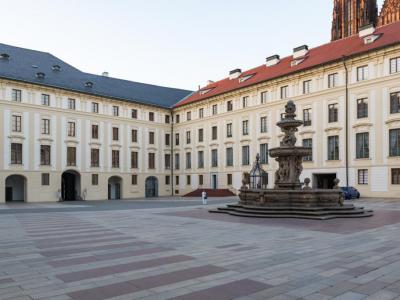
Located in the northern wing of the New Palace within the 2nd courtyard, this modest gallery might easily escape notice, yet it offers a treasure trove of artistic delights well worth discovering.
The gallery hosts a permanent exhibition featuring over 100 paintings from the esteemed collection of Rudolf II, a renowned art aficionado who possessed one of the largest private art collections in the 16th century. While some paintings were lost during the turmoil of the Thirty Years' War and others found their way to Vienna and England, Prague Castle still boasts over 4000 fine paintings, with the cream of the crop showcased here.
Among the highlights is Rubens' vibrant masterpiece, "Assembly of the Gods at Olympus", a mesmerizing triple portrait featuring Rudolf II and his Habsburg predecessors, exemplifying the intricate and beguiling style favored by the emperor. Other notable works include Titian's exquisite "Young Woman at Her Toilet" and Tintoretto's gripping "Flagellation of Christ", showcasing the artist's mastery of light and drama.
In addition to paintings, visitors can admire a statuette by the esteemed 16th-century sculptor Hans Mont and marvel at fine jewelry crafted by Italian, German, and Flemish artisans from Rudolf's era.
The gallery's history adds another layer of intrigue, once serving as stables for Rudolf's prized Spanish horses. During renovations in the early 1960s, workers unearthed the remains of a 9th-century church, meticulously preserved for posterity.
The gallery hosts a permanent exhibition featuring over 100 paintings from the esteemed collection of Rudolf II, a renowned art aficionado who possessed one of the largest private art collections in the 16th century. While some paintings were lost during the turmoil of the Thirty Years' War and others found their way to Vienna and England, Prague Castle still boasts over 4000 fine paintings, with the cream of the crop showcased here.
Among the highlights is Rubens' vibrant masterpiece, "Assembly of the Gods at Olympus", a mesmerizing triple portrait featuring Rudolf II and his Habsburg predecessors, exemplifying the intricate and beguiling style favored by the emperor. Other notable works include Titian's exquisite "Young Woman at Her Toilet" and Tintoretto's gripping "Flagellation of Christ", showcasing the artist's mastery of light and drama.
In addition to paintings, visitors can admire a statuette by the esteemed 16th-century sculptor Hans Mont and marvel at fine jewelry crafted by Italian, German, and Flemish artisans from Rudolf's era.
The gallery's history adds another layer of intrigue, once serving as stables for Rudolf's prized Spanish horses. During renovations in the early 1960s, workers unearthed the remains of a 9th-century church, meticulously preserved for posterity.
4) St. Vitus Cathedral (must see)
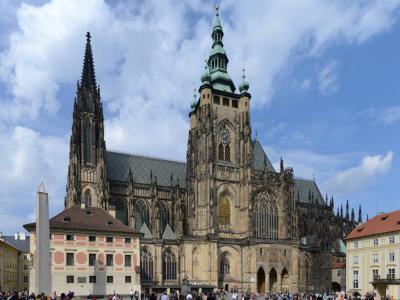
Rising above the Vltava River from within the grounds of Prague Castle, Saint Vitus Cathedral is hailed as a pinnacle of Gothic architectire and a powerful emblem of Bohemian identity. For generations, it has been the final resting place of kings and emperors, and its very presence resonates with centuries of history. But even if you're not drawn in by royal lineages or historic timelines, the striking façade, sweeping nave, and exquisite stained glass stir something deeper-a quiet sense of awe and reverence that transcends time.
The first thing you'll likely notice is the imposing Great Tower, topped with a Baroque dome and housing Sigismund-the largest bell in Bohemia, cast in the 1500s and weighing in at over 33,000 pounds. Just beside it is the cathedral’s southern entrance-the Golden Gate-famed for its gleaming mosaic of the Last Judgment, crafted from Venetian glass.
Inside, you’re instantly struck by the vertical grandeur of the nave. On the left, the stained-glass windows impart a transcendent aura; particularly the third one-a vivid Art Nouveau piece by Alfons Mucha, which tells the story of Christianity in the Czech lands through a kaleidoscope of color and symbolism. Other highlights include a wooden panorama of old Prague, the extravagant silver tomb of Saint John of Nepomuk, and a fascinating mix of sculptural details that range from sacred to surreal.
A few tips before your visit: entry to the main area and some interior sections is free, but a full tour requires a ticket bundled with Prague Castle access. There’s also an option to climb the tower-for a separate fee-rewarding the ambitious with sweeping views, assuming you're up for the tight staircase.
The first thing you'll likely notice is the imposing Great Tower, topped with a Baroque dome and housing Sigismund-the largest bell in Bohemia, cast in the 1500s and weighing in at over 33,000 pounds. Just beside it is the cathedral’s southern entrance-the Golden Gate-famed for its gleaming mosaic of the Last Judgment, crafted from Venetian glass.
Inside, you’re instantly struck by the vertical grandeur of the nave. On the left, the stained-glass windows impart a transcendent aura; particularly the third one-a vivid Art Nouveau piece by Alfons Mucha, which tells the story of Christianity in the Czech lands through a kaleidoscope of color and symbolism. Other highlights include a wooden panorama of old Prague, the extravagant silver tomb of Saint John of Nepomuk, and a fascinating mix of sculptural details that range from sacred to surreal.
A few tips before your visit: entry to the main area and some interior sections is free, but a full tour requires a ticket bundled with Prague Castle access. There’s also an option to climb the tower-for a separate fee-rewarding the ambitious with sweeping views, assuming you're up for the tight staircase.
5) Old Royal Palace
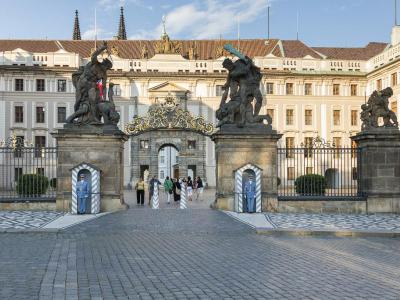
One of the oldest buildings within Prague Castle, this palace dates all the way back to the 12th century and makes a rewarding stop for anyone with a love of history. Once the seat of Bohemian kings, it now offers a vivid journey into the past-complete with painted coats of arms scattered across its walls and ceilings, and a clever medieval heating system powered by tiled stoves built into the towers.
The palace is most famous for one rather dramatic moment in 1618, when tensions between Catholic and Protestant factions erupted in the Defenestration of Prague. Two Imperial Governors were thrown from a window of the Bohemian Chancellery by rebellious nobles, sparking the bloody Thirty Years’ War. Remarkably, the unlucky officials survived the fall-thanks to a less-than-dignified landing in a manure pile from the nearby Royal Stables.
Setting that infamous moment aside, the centerpiece here is Vladislav Hall, built at the end of the 15th century. Stretching an impressive 60 meters in length, the hall is a masterpiece of late Gothic architecture, featuring a ribbed vaulted ceiling that seems to float above the space like an intricate stone canopy. In centuries past, it was used for everything from banquets and coronations to indoor jousting tournaments, with knights riding up the wide, spiral Rider’s Staircase straight into the hall. These days, it serves as the ceremonial site where Czech presidents are sworn into office-including Václav Havel, who took the oath here in 1990 after the fall of communism.
Don’t miss the small balcony at the eastern end, where you can peek into the neighboring Church of All Saints. Originally built in the 14th century and rebuilt after a devastating fire in 1541, the church is open to the public only during services or special concerts.
Otherwise, keep your eyes on the ceilings. Some of the most spectacular details are high above, waiting to be noticed.
The palace is most famous for one rather dramatic moment in 1618, when tensions between Catholic and Protestant factions erupted in the Defenestration of Prague. Two Imperial Governors were thrown from a window of the Bohemian Chancellery by rebellious nobles, sparking the bloody Thirty Years’ War. Remarkably, the unlucky officials survived the fall-thanks to a less-than-dignified landing in a manure pile from the nearby Royal Stables.
Setting that infamous moment aside, the centerpiece here is Vladislav Hall, built at the end of the 15th century. Stretching an impressive 60 meters in length, the hall is a masterpiece of late Gothic architecture, featuring a ribbed vaulted ceiling that seems to float above the space like an intricate stone canopy. In centuries past, it was used for everything from banquets and coronations to indoor jousting tournaments, with knights riding up the wide, spiral Rider’s Staircase straight into the hall. These days, it serves as the ceremonial site where Czech presidents are sworn into office-including Václav Havel, who took the oath here in 1990 after the fall of communism.
Don’t miss the small balcony at the eastern end, where you can peek into the neighboring Church of All Saints. Originally built in the 14th century and rebuilt after a devastating fire in 1541, the church is open to the public only during services or special concerts.
Otherwise, keep your eyes on the ceilings. Some of the most spectacular details are high above, waiting to be noticed.
6) St. George's Basilica at Prague Castle
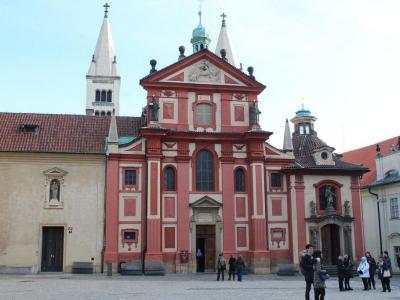
Set within Prague Castle’s historic grounds, George Square is home to one of the city’s most remarkable landmarks-Saint George's Basilica, the oldest surviving church building in all of Prague. Founded by Prince Vratislav way back in 921, the church is a study in contrasts. Its vivid red-and-cream Baroque façade, added centuries later, gives little hint of the austere Romanesque design waiting inside. Step through the entrance, and you’re met with a space that feels both solemn and monumental. A double staircase rises toward the high altar, where you'll find beautiful painted decorations on the apse and ceiling.
The basilica’s main nave houses the tombs of several members of the Přemyslid dynasty, the first ruling family of Bohemia.. A large stone coffin contains Boleslav I, remembered in Czech history as Boleslav the Cruel. Just to the right of the central stairs is the Chapel of Saint Ludmila, grandmother to both Boleslav and the much-revered Wenceslas. Ludmila’s legacy looms large-she was instrumental in raising Wenceslas as a Christian, while her daughter-in-law, Drahomíra, remained loyal to the region’s older pagan traditions. That conflict turned deadly, at least according to legend: Ludmila was reportedly strangled with her own scarf on Drahomíra’s orders, a detail often depicted in paintings and statues through the presence of a veil around her neck. The story echoes a recurring Czech theme-spiritual tension between old gods and new faiths, local identity and foreign influence.
Thanks to the basilica’s exceptional acoustics, the space also doubles as a concert venue. Classical performances are held year-round, drawing both seasoned fans and curious newcomers alike. Nearby, you’ll find the former Convent of Saint George, established in 973 by Boleslav II. Today, the quiet building houses part of the National Gallery’s collection, featuring Renaissance and Baroque works in an atmosphere that blends artistic beauty with centuries of monastic calm.
The basilica’s main nave houses the tombs of several members of the Přemyslid dynasty, the first ruling family of Bohemia.. A large stone coffin contains Boleslav I, remembered in Czech history as Boleslav the Cruel. Just to the right of the central stairs is the Chapel of Saint Ludmila, grandmother to both Boleslav and the much-revered Wenceslas. Ludmila’s legacy looms large-she was instrumental in raising Wenceslas as a Christian, while her daughter-in-law, Drahomíra, remained loyal to the region’s older pagan traditions. That conflict turned deadly, at least according to legend: Ludmila was reportedly strangled with her own scarf on Drahomíra’s orders, a detail often depicted in paintings and statues through the presence of a veil around her neck. The story echoes a recurring Czech theme-spiritual tension between old gods and new faiths, local identity and foreign influence.
Thanks to the basilica’s exceptional acoustics, the space also doubles as a concert venue. Classical performances are held year-round, drawing both seasoned fans and curious newcomers alike. Nearby, you’ll find the former Convent of Saint George, established in 973 by Boleslav II. Today, the quiet building houses part of the National Gallery’s collection, featuring Renaissance and Baroque works in an atmosphere that blends artistic beauty with centuries of monastic calm.
7) Golden Lane
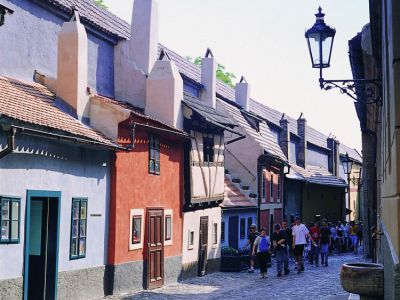
One of the most fascinating corners within Prague Castle, Golden Lane is a narrow street lined with brightly colored, pint-sized cottages that feel plucked from a fairy tale. Walking along the cobblestones, past vivid facades and tiny windows, you’re stepping into the last surviving example of the Castle’s more humble, small-scale architecture.
The lane dates back to the 16th century, originally built to house castle guards. It later took its name from the goldsmiths who moved in a hundred years later. By the 1800s, it had evolved into a sort of artistic enclave, drawing in poets and craftsmen. Franz Kafka spent time here in 1916, writing in a small cottage during long winter evenings, and Jaroslav Seifert, a future Nobel Prize laureate, also called the lane home.
Although people lived in these tiny houses up until World War II, they’ve since been carefully restored, keeping their original charm intact. Inside, you’ll find exhibits of medieval armor and weapons, alongside displays of period textiles-and yes, a few cozy souvenir shops and snack bars. The lane ends at Daliborka Tower, once a prison, where you can view historical torture devices-a darker but compelling window into the past.
Tip: If you have a castle ticket, entry is included. But if you’re looking to stroll through just for the atmosphere, come after 5 p.m. when the path is freely open-though most interiors will be closed by then.
The lane dates back to the 16th century, originally built to house castle guards. It later took its name from the goldsmiths who moved in a hundred years later. By the 1800s, it had evolved into a sort of artistic enclave, drawing in poets and craftsmen. Franz Kafka spent time here in 1916, writing in a small cottage during long winter evenings, and Jaroslav Seifert, a future Nobel Prize laureate, also called the lane home.
Although people lived in these tiny houses up until World War II, they’ve since been carefully restored, keeping their original charm intact. Inside, you’ll find exhibits of medieval armor and weapons, alongside displays of period textiles-and yes, a few cozy souvenir shops and snack bars. The lane ends at Daliborka Tower, once a prison, where you can view historical torture devices-a darker but compelling window into the past.
Tip: If you have a castle ticket, entry is included. But if you’re looking to stroll through just for the atmosphere, come after 5 p.m. when the path is freely open-though most interiors will be closed by then.
8) Lobkowicz Palace
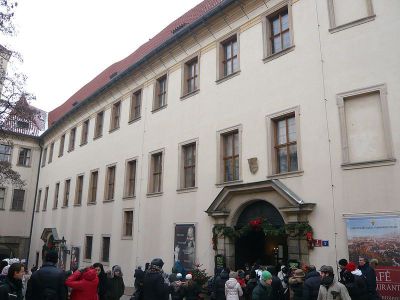
Tucked inside the sprawling grounds of Prague Castle, there's one building that doesn’t belong to the state-and almost never did. This 16th-century palace, still in the hands of the Lobkowicz family, made its way back into aristocratic ownership after the fall of communism. These days, it's not just a relic of the past, but very much alive with purpose. Part museum, part event venue, part midday concert escape, it's got culture and character to spare. And yes, the terrace view here is a full 180 degrees of cityscape-best enjoyed with the 30-minute “Prague Inspires Panorama Tour” offered with each audio guide.
The guide is voiced by the Lobkowicz family themselves, walking you through centuries of history and art. Expect an all-star lineup, including Canaletto, Brueghel the Elder, and Velázquez. There’s also a treasure trove of arms, armor, and ceramics-including the world’s largest surviving Delft dinner service. And for music lovers-original manuscripts by Beethoven, Mozart, and Haydn are on display, including pieces Beethoven composed specifically for the Lobkowicz family.
The palace’s reception halls, balconies, and the concert space are all decked out with lavish mythological frescoes, while the Imperial Hall tricks the eye with Roman statues that aren’t statues at all. Otherwise, don’t miss the 17th-century chapel dedicated to Saint Wenceslas, where medallions on the walls retell the saga of the Czech Republic’s patron saint.
Tip: Once your museum journey winds down-and your head’s buzzing with beauty and history-swing by the museum shop for a keepsake, then recharge at the café. It caters to all cravings, and rumor has it their burgers might just be the best in town.
The guide is voiced by the Lobkowicz family themselves, walking you through centuries of history and art. Expect an all-star lineup, including Canaletto, Brueghel the Elder, and Velázquez. There’s also a treasure trove of arms, armor, and ceramics-including the world’s largest surviving Delft dinner service. And for music lovers-original manuscripts by Beethoven, Mozart, and Haydn are on display, including pieces Beethoven composed specifically for the Lobkowicz family.
The palace’s reception halls, balconies, and the concert space are all decked out with lavish mythological frescoes, while the Imperial Hall tricks the eye with Roman statues that aren’t statues at all. Otherwise, don’t miss the 17th-century chapel dedicated to Saint Wenceslas, where medallions on the walls retell the saga of the Czech Republic’s patron saint.
Tip: Once your museum journey winds down-and your head’s buzzing with beauty and history-swing by the museum shop for a keepsake, then recharge at the café. It caters to all cravings, and rumor has it their burgers might just be the best in town.
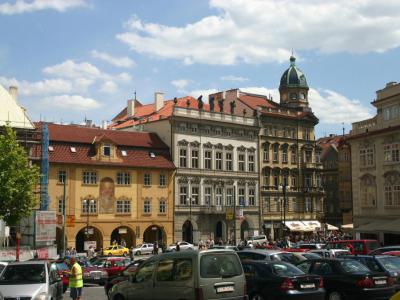
9) Lesser Town Square
Since the 10th century, this arcaded square has been a center of activity on the left bank of the river-a place where merchants once gathered and locals exchanged more than just goods. These days, the rhythm continues with cafés, restaurants, and shops drawing in visitors, while weekend markets add extra color and energy.
Among the square’s most compelling landmarks is the 14th-century Old Town Hall, once the site where non-Catholic nobles drafted the “Czech Confession” in 1575-a bold call for religious tolerance addressed to the Habsburg emperor, later enshrined into Czech law. Today, that historic building has a new life as a nightclub and bar. But it’s the magnificient 18th-century Saint Nicholas Church that truly steals the show. Built over the remains of a Gothic chapel, its interior dazzles with exquisite statuary and a ceiling fresco that stretches across an astonishing 1,500 square meters.
If you’re sipping coffee at the local Starbucks, you’re actually seated in what used to be the Grömling Palace-a prime example of Prague’s Rococo flair. Across the square at number 18, look for the pistachio-and-vanilla-toned Smiřický Palace, easily recognized by its twin turrets. It was here, in 1618, that Protestant leaders convened before launching what would become the infamous Defenestration of Prague-an act that ignited the Thirty Years' War. Not far from there, the High Baroque Sternberg Palace now houses treasures from the National Gallery.
Commanding a significant portion of the square’s northern side is the Czech Parliament. So don’t be surprised to see suited officials weaving through the crowd-just another reminder that this historic space remains very much alive.
Among the square’s most compelling landmarks is the 14th-century Old Town Hall, once the site where non-Catholic nobles drafted the “Czech Confession” in 1575-a bold call for religious tolerance addressed to the Habsburg emperor, later enshrined into Czech law. Today, that historic building has a new life as a nightclub and bar. But it’s the magnificient 18th-century Saint Nicholas Church that truly steals the show. Built over the remains of a Gothic chapel, its interior dazzles with exquisite statuary and a ceiling fresco that stretches across an astonishing 1,500 square meters.
If you’re sipping coffee at the local Starbucks, you’re actually seated in what used to be the Grömling Palace-a prime example of Prague’s Rococo flair. Across the square at number 18, look for the pistachio-and-vanilla-toned Smiřický Palace, easily recognized by its twin turrets. It was here, in 1618, that Protestant leaders convened before launching what would become the infamous Defenestration of Prague-an act that ignited the Thirty Years' War. Not far from there, the High Baroque Sternberg Palace now houses treasures from the National Gallery.
Commanding a significant portion of the square’s northern side is the Czech Parliament. So don’t be surprised to see suited officials weaving through the crowd-just another reminder that this historic space remains very much alive.
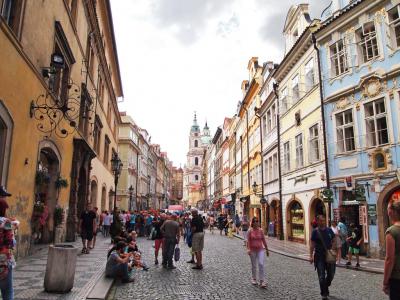
10) Bridge Street (Mostecka)
Passing through the arch beneath the Lesser Town Bridge Towers, you’ll find yourself on Bridge Street-a narrow cobblestone lane that has connected Charles Bridge to the Lesser Town Square for over 750 years. Framed by a mix of Renaissance, Baroque, and Rococo facades dating between the 14th and 18th centuries, the street feels like a vivid time capsule. Some of the buildings still carry their original decorative touches: a chained bear at No. 4, a striking bronze door at No. 17, three goats at No. 18, and even a bust of cellist Zelenka. With all its character and charm, it’s no surprise this was once part of the royal coronation route.
Just beyond the towers, on the right side of the street, look for a house marked by three painted ostriches. Once home to Jan Fux, a feather merchant with a flair for fashion, the Renaissance-style building served as both residence and storefront. In 1606, Fux commissioned the bold ostrich design to advertise his trade in luxurious plumes-ostrich feathers were all the rage for hats, uniforms, horse trappings, fans, and finery of every sort.
As you continue your stroll, pause to admire the Gothic tower hidden in the courtyard of “At the Three Golden Bells,” the intricate ironwork and sculptural details on the “At the Black Eagle” house, and the candy-colored, pink-and-yellow Rococo facade of the Kounic Palace.
Toward street’s lower end, you’ll find a mix of boutique shops, inviting restaurants and bars catering to the stream of passersby. When it’s time for a break, stop in at ROESEL café-a warm, family-run spot inside a historic building. Enjoy their daily specials, try a slice of homemade cake with craft beer, and take a moment to explore the mini-exhibition and the charming courtyard.
Just beyond the towers, on the right side of the street, look for a house marked by three painted ostriches. Once home to Jan Fux, a feather merchant with a flair for fashion, the Renaissance-style building served as both residence and storefront. In 1606, Fux commissioned the bold ostrich design to advertise his trade in luxurious plumes-ostrich feathers were all the rage for hats, uniforms, horse trappings, fans, and finery of every sort.
As you continue your stroll, pause to admire the Gothic tower hidden in the courtyard of “At the Three Golden Bells,” the intricate ironwork and sculptural details on the “At the Black Eagle” house, and the candy-colored, pink-and-yellow Rococo facade of the Kounic Palace.
Toward street’s lower end, you’ll find a mix of boutique shops, inviting restaurants and bars catering to the stream of passersby. When it’s time for a break, stop in at ROESEL café-a warm, family-run spot inside a historic building. Enjoy their daily specials, try a slice of homemade cake with craft beer, and take a moment to explore the mini-exhibition and the charming courtyard.
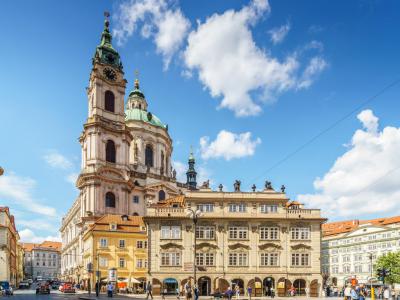
11) Church of St. Nicholas (Lesser Town) (must see)
Towering over Lesser Town is a Baroque masterpiece-one of the most recognizable landmarks along Prague’s left bank. With its colossal green dome and soaring tower, this church was the grandest project of the Jesuits in Bohemia, a bold statement of their significant influence over the region in the 18th century. The contrast between the dome’s solid breadth and the tower’s slender elegance adds a distinctive flair to the city’s silhouette.
Step inside, and you’re met with a riot of pinks and greens that almost overwhelm the senses. The space is alive with movement-from the dynamic statues and vibrant frescoes to the polished, faux-marble columns. At the center, a sweeping ceiling painting brings to life the miracles of Saint Nicholas in true Baroque drama. But it’s the towering dome that steals the spotlight. Look up, and you’ll find four stern-faced Church Fathers circling the space-one of them even clutching a golden thunderbolt as if daring you to question the weight of their message.
The organ alone is worth the visit. Installed in the 1740s and fitted with more than 4,000 pipes, it once echoed with the music of Mozart himself, who played here during his time in Prague. After his death, this is where his Requiem was performed. With such acoustics, it's no wonder the church still hosts classical concerts to this day.
During the communist era, the bell tower wasn’t just a place of worship-it also served as a surveillance outpost for State Security, keeping a close eye on the embassies below. Now, you can climb the 299 steps to the gallery, perched 65 meters above the square, and enjoy a fine perspective over Lesser Town and the Charles Bridge beyond.
Step inside, and you’re met with a riot of pinks and greens that almost overwhelm the senses. The space is alive with movement-from the dynamic statues and vibrant frescoes to the polished, faux-marble columns. At the center, a sweeping ceiling painting brings to life the miracles of Saint Nicholas in true Baroque drama. But it’s the towering dome that steals the spotlight. Look up, and you’ll find four stern-faced Church Fathers circling the space-one of them even clutching a golden thunderbolt as if daring you to question the weight of their message.
The organ alone is worth the visit. Installed in the 1740s and fitted with more than 4,000 pipes, it once echoed with the music of Mozart himself, who played here during his time in Prague. After his death, this is where his Requiem was performed. With such acoustics, it's no wonder the church still hosts classical concerts to this day.
During the communist era, the bell tower wasn’t just a place of worship-it also served as a surveillance outpost for State Security, keeping a close eye on the embassies below. Now, you can climb the 299 steps to the gallery, perched 65 meters above the square, and enjoy a fine perspective over Lesser Town and the Charles Bridge beyond.
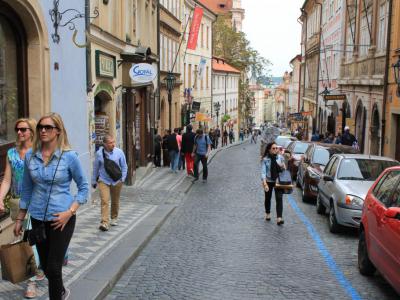
12) Nerudova Street
Tucked into the Lesser Town area, Nerudova Street offers more than just a picturesque uphill stroll-it’s a step back into Prague’s past, especially if you’ve got an eye for quirky details. Once the final leg of ceremonial route used for coronation processions, the street more recently earned its name from Czech writer Jan Neruda, who drew rich inspiration from the neighborhood's characters and corners.
Before Prague adopted house numbers in the 18th century, buildings were identified by unique pictorial signs-and Nerudova is a goldmine of them. Look for No. 12, “At the Three Fiddles,” once home to a family of violin makers. Or “At the Golden Cup,” marked with the emblem of goldsmiths, dating back to 1660. At No. 34, a painted horse still stands over a real horseshoe mounted on the wall, placed there in 1559.
Architecture buffs should pause at Morzin Palace, No. 5, designed by Giovanni Santini and with an allegorical “Night and Day” façade by Ferdinand Brokoff, the same artist behind many of Charles Bridge’s iconic figures. Directly across, at No. 20, Thun-Hohenstein Palace has a gateway flanked by eagles, created by another Charles Bridge sculptor-Mathias Braun. Keep an eye out for No. 13’s passage archway, a classic Lesser Town detail, and No. 33, the Bretfeld Palace, where Mozart and Casanova stayed during the 1787 premiere of “Don Giovanni”.
For lighter diversions, swing by the Gingerbread Museum at No. 9 or pop into Czech Marionettes at No. 51, where carved linden puppets range from classic characters to eerily reptilian wizards and princesses in pink-plus a few modern politicians!
Before Prague adopted house numbers in the 18th century, buildings were identified by unique pictorial signs-and Nerudova is a goldmine of them. Look for No. 12, “At the Three Fiddles,” once home to a family of violin makers. Or “At the Golden Cup,” marked with the emblem of goldsmiths, dating back to 1660. At No. 34, a painted horse still stands over a real horseshoe mounted on the wall, placed there in 1559.
Architecture buffs should pause at Morzin Palace, No. 5, designed by Giovanni Santini and with an allegorical “Night and Day” façade by Ferdinand Brokoff, the same artist behind many of Charles Bridge’s iconic figures. Directly across, at No. 20, Thun-Hohenstein Palace has a gateway flanked by eagles, created by another Charles Bridge sculptor-Mathias Braun. Keep an eye out for No. 13’s passage archway, a classic Lesser Town detail, and No. 33, the Bretfeld Palace, where Mozart and Casanova stayed during the 1787 premiere of “Don Giovanni”.
For lighter diversions, swing by the Gingerbread Museum at No. 9 or pop into Czech Marionettes at No. 51, where carved linden puppets range from classic characters to eerily reptilian wizards and princesses in pink-plus a few modern politicians!
