Custom Walk in Paris, France by yxy_ec9fd created on 2025-06-23
Guide Location: France » Paris
Guide Type: Custom Walk
# of Sights: 11
Tour Duration: 6 Hour(s)
Travel Distance: 13.6 Km or 8.5 Miles
Share Key: AU2J4
Guide Type: Custom Walk
# of Sights: 11
Tour Duration: 6 Hour(s)
Travel Distance: 13.6 Km or 8.5 Miles
Share Key: AU2J4
How It Works
Please retrieve this walk in the GPSmyCity app. Once done, the app will guide you from one tour stop to the next as if you had a personal tour guide. If you created the walk on this website or come to the page via a link, please follow the instructions below to retrieve the walk in the app.
Retrieve This Walk in App
Step 1. Download the app "GPSmyCity: Walks in 1K+ Cities" on Apple App Store or Google Play Store.



Step 2. In the GPSmyCity app, download(or launch) the guide "Paris Map and Walking Tours".
Step 3. Tap the menu button located at upper right corner of the "Walks" screen and select "Retrieve custom walk". Enter the share key: AU2J4
1) La Conciergerie (The Lodge)
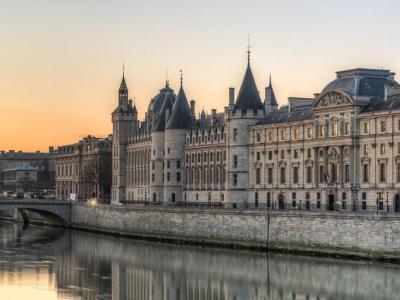
The Conciergerie, or The Lodge, is a historic courthouse and prison on the City Island in Paris, originally part of the royal City Palace, which also includes the Holy Chapel and Paris's first public clock, installed around 1370. Once a royal residence and judicial hub, this part of the City Palace became known as the Conciergerie after the “concierge” who was appointed by the king to uphold order.
By 1391, the Conciergerie was designated as a jail for both common criminals and political prisoners, in which living conditions reflected the prisoners' wealth and social status. Affluent inmates could secure private cells with basic comforts, while the poorest were confined to dark, cramped dungeons. Executions were routine, with many prisoners sentenced by the Revolutionary Tribunal and taken to the nearby guillotine at Concorde Square.
The Conciergerie gained notoriety during the French Revolution’s Reign of Terror, when it held over 2,700 prisoners, including prominent figures like Marie Antoinette, the last queen consort of France, and Georges Danton, a leading figure in the French Revolution. Both of them were tried and executed by guillotine. The prison’s influence continued beyond the Revolution, with various regimes utilizing its facilities, including the trial of Napoleon III.
The Conciergerie’s architectural significance lies in its four medieval towers, such as the Clock Tower, home to the first public clock in Paris, and the grand Hall of the Men-at-Arms.
Today, the Conciergerie is a national monument and museum, offering visitors an immersive look at its turbulent history. Marie Antoinette’s cell has been transformed into a Memorial Chapel, and the Women’s courtyard offers a glimpse into the site’s somber past. For a more detailed experience, visitors can use the "Histopad" gadget, combining audio and visual elements, to learn more about life inside the prison during its most infamous periods.
Tip:
Visiting the Conciergerie is possible on a combined ticket granting access to the neighboring Holy Chapel as well.
By 1391, the Conciergerie was designated as a jail for both common criminals and political prisoners, in which living conditions reflected the prisoners' wealth and social status. Affluent inmates could secure private cells with basic comforts, while the poorest were confined to dark, cramped dungeons. Executions were routine, with many prisoners sentenced by the Revolutionary Tribunal and taken to the nearby guillotine at Concorde Square.
The Conciergerie gained notoriety during the French Revolution’s Reign of Terror, when it held over 2,700 prisoners, including prominent figures like Marie Antoinette, the last queen consort of France, and Georges Danton, a leading figure in the French Revolution. Both of them were tried and executed by guillotine. The prison’s influence continued beyond the Revolution, with various regimes utilizing its facilities, including the trial of Napoleon III.
The Conciergerie’s architectural significance lies in its four medieval towers, such as the Clock Tower, home to the first public clock in Paris, and the grand Hall of the Men-at-Arms.
Today, the Conciergerie is a national monument and museum, offering visitors an immersive look at its turbulent history. Marie Antoinette’s cell has been transformed into a Memorial Chapel, and the Women’s courtyard offers a glimpse into the site’s somber past. For a more detailed experience, visitors can use the "Histopad" gadget, combining audio and visual elements, to learn more about life inside the prison during its most infamous periods.
Tip:
Visiting the Conciergerie is possible on a combined ticket granting access to the neighboring Holy Chapel as well.
2) Sainte-Chapelle (Holy Chapel) (must see)
The Holy Chapel on the City Island in Paris is a stunning 13th-century example of Rayonnant Gothic architecture. Commissioned by King Louis IX who led the 7th and 8th Crusades to the Holy Land, it was designed as a grand reliquary to house sacred relics, such as the Crown of Thorns purportedly worn by Jesus himself, which Louis acquired in Constantinople.
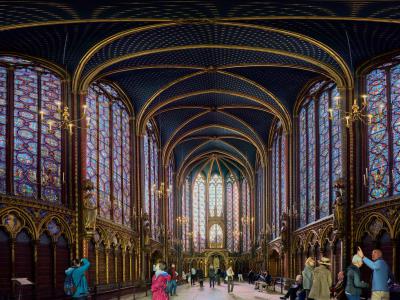
This two-story chapel has an upper level with remarkable stained-glass windows, reserved for the royal family, while its lower level, adorned with floral designs, served palace courtiers and staff. The Holy Chapel was once part of the medieval City Palace, the former residence of French kings until the 14th century, alongside the neighboring Conciergerie, which later became a prison.
The chapel faced considerable damage over the centuries, particularly during the French Revolution when its sculptures were destroyed, royal emblems defaced, and interiors looted. By the 19th century, extensive restoration efforts were undertaken to revive its medieval charm. Skilled craftsmanship was applied to restore the chapel, making it a blend of medieval and 19th-century artistry. Miraculously, around two-thirds of the original stained glass survived, creating a captivating effect, especially when sunlight illuminates the intricate biblical scenes depicted in the windows.
Architecturally, the Holy Chapel is distinguished by its simplicity and harmony. Unlike many Gothic churches, it lacks flying buttresses, relying instead on deep buttresses and metal supports for stability. A rose window on the west front, added in the 15th century, features scenes of the Apocalypse, while a cedarwood spire captures the essence of Gothic style. The chapel was intended to symbolize Jerusalem, a vision of paradise for the saved at the Last Judgment.
Today, Holy Chapel remains a marvel of medieval design and an enduring symbol of King Louis IX’s devotion and legacy.
This two-story chapel has an upper level with remarkable stained-glass windows, reserved for the royal family, while its lower level, adorned with floral designs, served palace courtiers and staff. The Holy Chapel was once part of the medieval City Palace, the former residence of French kings until the 14th century, alongside the neighboring Conciergerie, which later became a prison.
The chapel faced considerable damage over the centuries, particularly during the French Revolution when its sculptures were destroyed, royal emblems defaced, and interiors looted. By the 19th century, extensive restoration efforts were undertaken to revive its medieval charm. Skilled craftsmanship was applied to restore the chapel, making it a blend of medieval and 19th-century artistry. Miraculously, around two-thirds of the original stained glass survived, creating a captivating effect, especially when sunlight illuminates the intricate biblical scenes depicted in the windows.
Architecturally, the Holy Chapel is distinguished by its simplicity and harmony. Unlike many Gothic churches, it lacks flying buttresses, relying instead on deep buttresses and metal supports for stability. A rose window on the west front, added in the 15th century, features scenes of the Apocalypse, while a cedarwood spire captures the essence of Gothic style. The chapel was intended to symbolize Jerusalem, a vision of paradise for the saved at the Last Judgment.
Today, Holy Chapel remains a marvel of medieval design and an enduring symbol of King Louis IX’s devotion and legacy.
3) Bouquinistes de Paris (Parisian booksellers)
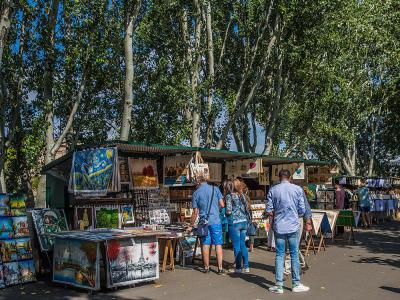
The Seine is known as "the only river in the world that runs between two bookshelves", as evidenced by the large green boxes set along the river banks, hitched tight to the sidewalk walls. These bookstalls have contributed to the romantic image of bohemian Paris since the 16th century; remarkably though, their owners, the "bouquinistes", obtained official recognition themselves only in the 1970s.
For the most part, the contemporary Paris bouquinistes sell posters, stamps, maps, magnets, and whatever else the tourists might love. According to some, they have the best deals on souvenirs in Paris. However, their true specialty lies in books, which include high-quality French prints and more. Unless you are limited by luggage space, you can purchase a few books, both new and used, at reasonable prices. In fact, you can find all of the classic French literature here for just a few euros.
Regulated by municipal authorities, the bouquinistes are generally open from around 11 AM until sunset, although their hours may vary depending on the weather. During snowstorms or heavy rain, they are unlikely to work at all. However, on sunny days, the bouquinistes eagerly display their merchandise and welcome passersby to stop by, browse, and perhaps even engage in a friendly chat.
For the most part, the contemporary Paris bouquinistes sell posters, stamps, maps, magnets, and whatever else the tourists might love. According to some, they have the best deals on souvenirs in Paris. However, their true specialty lies in books, which include high-quality French prints and more. Unless you are limited by luggage space, you can purchase a few books, both new and used, at reasonable prices. In fact, you can find all of the classic French literature here for just a few euros.
Regulated by municipal authorities, the bouquinistes are generally open from around 11 AM until sunset, although their hours may vary depending on the weather. During snowstorms or heavy rain, they are unlikely to work at all. However, on sunny days, the bouquinistes eagerly display their merchandise and welcome passersby to stop by, browse, and perhaps even engage in a friendly chat.
4) Pont des Arts (Bridge of Arts)
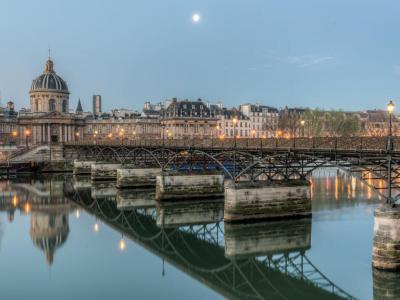
Paris's very first iron bridge, the Pont des Arts (or Passerelle des Arts) crosses the River Seine, linking the Institut de France and the central square of the Palais du Louvre. The bridge has sometimes served as a place for art exhibitions and is today a popular open-air studio for painters, artists and photographers who are drawn to its views. To the right, you are overwhelmed with the beautiful Île de la Cité and Pont-Neuf, while to the left, you can see the Eiffel Tower and the Louvre, all against the backdrop of the city's stunning architecture and the River Seine.
In the summertime, the Pont des Arts is frequently utilized for picnics. In recent times, numerous couples visiting as tourists have started attaching padlocks, known as "love locks", to the railings or grates on the side of the bridge, with their names inscribed or engraved on them, then tossing the key into the Seine below, as a romantic gesture. This practice is believed to symbolize a couple's unwavering love. There was a period when thousands of padlocks were attached to the bridge's side.
In 2015, most of the locks were removed from the bridge due to concerns about permanent damage caused by their accumulated weight, which reached 45 tons from over a million locks. However, the romantic atmosphere remains, and visitors are now encouraged to take "love selfies" on the bridge. The Pont des Arts is also an excellent location to admire the beautiful sunset views during summer.
In the summertime, the Pont des Arts is frequently utilized for picnics. In recent times, numerous couples visiting as tourists have started attaching padlocks, known as "love locks", to the railings or grates on the side of the bridge, with their names inscribed or engraved on them, then tossing the key into the Seine below, as a romantic gesture. This practice is believed to symbolize a couple's unwavering love. There was a period when thousands of padlocks were attached to the bridge's side.
In 2015, most of the locks were removed from the bridge due to concerns about permanent damage caused by their accumulated weight, which reached 45 tons from over a million locks. However, the romantic atmosphere remains, and visitors are now encouraged to take "love selfies" on the bridge. The Pont des Arts is also an excellent location to admire the beautiful sunset views during summer.
5) Musee d'Orsay (Orsay Museum) (must see)
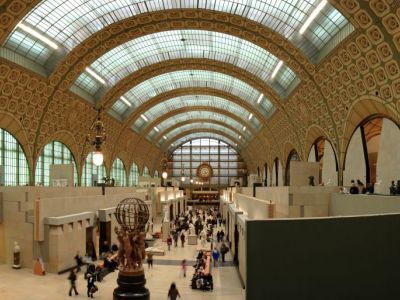
One of the world's most renowned art museums, the Orsay is housed in a former railway station, showcasing an exceptional collection of artworks primarily from the 19th and early 20th centuries – from Impressionist and Post-Impressionist to opulent Art Nouveau pieces.
With its prime location on the Left Bank of the Seine River, the Orsay also offers breathtaking panoramic views of Paris, including stunning vistas of famous landmarks such as the Louvre Museum, Notre-Dame Cathedral, and the Eiffel Tower from its upper floors.
The museum building itself is an architectural marvel, blending historic charm with modern elements. Originally built as the Gare d'Orsay in the late 19th century, the station was transformed into a museum in 1986. Its grandeur and unique layout provide an ideal setting for the remarkable artworks on display.
The permanent collection features an extensive array of masterpieces by celebrated artists, such as Vincent van Gogh's "Starry Night Over the Rhône", Édouard Manet's "Olympia", Pierre-Auguste Renoir's "Bal du moulin de la Galette", and Paul Cézanne's "Apples and Oranges". These, along with countless others, offer an immersive journey through the revolutionary movements that shaped the art world during the 19th and early 20th centuries.
In addition to its renowned painting collection, the museum also boasts an impressive assortment of sculptures, decorative arts, and photography. Visitors can appreciate the exquisite craftsmanship of Art Nouveau furniture, delicate sculptures by Auguste Rodin, and the innovative photographic works of pioneers such as Eugène Atget.
Beyond the artistic treasures, the Musée d'Orsay offers a variety of amenities to enhance the experience, from the several cafes and restaurants to the museum shop, which provides an opportunity to bring home a piece of art through a wide selection of books, prints, and unique souvenirs.
Whether you are an art enthusiast, a history lover, or simply seeking an enriching cultural experience, a visit to the Orsay is essential.
Why You Should Visit:
For a smaller, more intimate venue and beautiful artwork by the masters, this is the perfect destination!
Not only houses paintings and sculpture but also displays decorative furnishings that would have only graced a palace!
Tip:
The secret pleasure here is the gorgeous 5th-floor restaurant under the huge clock and with one of the best views of Paris. Excellent value for money.
With its prime location on the Left Bank of the Seine River, the Orsay also offers breathtaking panoramic views of Paris, including stunning vistas of famous landmarks such as the Louvre Museum, Notre-Dame Cathedral, and the Eiffel Tower from its upper floors.
The museum building itself is an architectural marvel, blending historic charm with modern elements. Originally built as the Gare d'Orsay in the late 19th century, the station was transformed into a museum in 1986. Its grandeur and unique layout provide an ideal setting for the remarkable artworks on display.
The permanent collection features an extensive array of masterpieces by celebrated artists, such as Vincent van Gogh's "Starry Night Over the Rhône", Édouard Manet's "Olympia", Pierre-Auguste Renoir's "Bal du moulin de la Galette", and Paul Cézanne's "Apples and Oranges". These, along with countless others, offer an immersive journey through the revolutionary movements that shaped the art world during the 19th and early 20th centuries.
In addition to its renowned painting collection, the museum also boasts an impressive assortment of sculptures, decorative arts, and photography. Visitors can appreciate the exquisite craftsmanship of Art Nouveau furniture, delicate sculptures by Auguste Rodin, and the innovative photographic works of pioneers such as Eugène Atget.
Beyond the artistic treasures, the Musée d'Orsay offers a variety of amenities to enhance the experience, from the several cafes and restaurants to the museum shop, which provides an opportunity to bring home a piece of art through a wide selection of books, prints, and unique souvenirs.
Whether you are an art enthusiast, a history lover, or simply seeking an enriching cultural experience, a visit to the Orsay is essential.
Why You Should Visit:
For a smaller, more intimate venue and beautiful artwork by the masters, this is the perfect destination!
Not only houses paintings and sculpture but also displays decorative furnishings that would have only graced a palace!
Tip:
The secret pleasure here is the gorgeous 5th-floor restaurant under the huge clock and with one of the best views of Paris. Excellent value for money.
6) Grand Palais (Grand Palace)
The Great Palace of the Champs-Élysées, or more commonly the Grand Palace, is a historic Parisian site, recognized as a monument by the French Ministry of Culture. Built between 1897 and 1900 for the Universal Exposition, it replaced the Palace of Industry demolished shortly before that. Its creation coincided with the construction of the Small Palace, another key attraction of the 1900 World Fair.
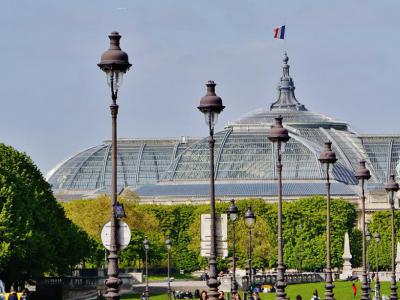
Designed to celebrate French art, the Grand Palace showcases a unique blend of Classical and Art Nouveau architecture. Creating its iconic 8-ton glass roof - the largest in Europe - reportedly took more steel than the entire Eiffel Tower! The Beaux-Arts façade, intricate stonework, and cutting-edge use of iron, light steel, and reinforced concrete together reflect the architectural ambitions of the era.
Four architects collaborated on the palace's design, creating a glass-and-iron pavilion ideal for art exhibitions, featuring paintings and sculptures. Over time, the structure also hosted innovative shows on aviation and automotive technology.
The palace has a storied past. Having served as a military hospital in World War I, it then housed Nazi forces and later the French resistance during World War II, which ultimately resulted in fire damage. While postwar plans envisioned replacing it with a modern museum, the Grand Palace was saved and declared a historic monument in 1975.
The building comprises three main areas: the Main Hall, the National Galleries, and the science-focused Palace of Discovery. Seasonal attractions include a cinema, restaurant, and even a skating rink. Curiously enough, the facility also suits for and, in fact, regularly hosts... horse shows!
At night, when brightly illuminated, the Grand Palace becomes a stunning sight, showcasing its architectural beauty in a play of lights and shadows.
Tip:
Should you decide to visit, don't miss the Small Palace too, just across the street, while you're there!
Designed to celebrate French art, the Grand Palace showcases a unique blend of Classical and Art Nouveau architecture. Creating its iconic 8-ton glass roof - the largest in Europe - reportedly took more steel than the entire Eiffel Tower! The Beaux-Arts façade, intricate stonework, and cutting-edge use of iron, light steel, and reinforced concrete together reflect the architectural ambitions of the era.
Four architects collaborated on the palace's design, creating a glass-and-iron pavilion ideal for art exhibitions, featuring paintings and sculptures. Over time, the structure also hosted innovative shows on aviation and automotive technology.
The palace has a storied past. Having served as a military hospital in World War I, it then housed Nazi forces and later the French resistance during World War II, which ultimately resulted in fire damage. While postwar plans envisioned replacing it with a modern museum, the Grand Palace was saved and declared a historic monument in 1975.
The building comprises three main areas: the Main Hall, the National Galleries, and the science-focused Palace of Discovery. Seasonal attractions include a cinema, restaurant, and even a skating rink. Curiously enough, the facility also suits for and, in fact, regularly hosts... horse shows!
At night, when brightly illuminated, the Grand Palace becomes a stunning sight, showcasing its architectural beauty in a play of lights and shadows.
Tip:
Should you decide to visit, don't miss the Small Palace too, just across the street, while you're there!
7) Moulin Rouge (The Red Mill) (must see)
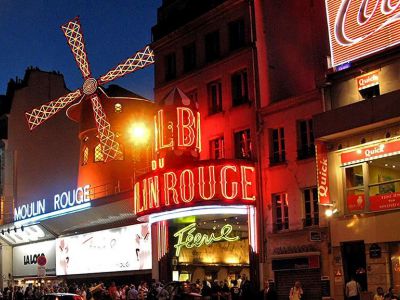
Moulin Rouge in Montmartre opened in 1889, the same year as the Eiffel Tower was built. Aimed primarily at wealthy patrons, it was designed as a lavish garden café-concert where diverse social groups could mingle. Since its opening, the venue offered world-class entertainment, becoming a meeting place for Parisians and visitors from all walks of life. The elegant cabaret attracted the uber-rich, socialites, middle class, artists, and foreign visitors who rubbed shoulders and enjoyed themselves.
Over the years, Moulin Rouge has hosted numerous celebrities and royal guests. In 1890, the Prince of Wales, the future King Edward VII, visited here to witness the new and riveting Can-can dance. A year later, artist Toulouse-Lautrec created his first poster for Moulin Rouge. Sadly, in 1915, the place burned down and had to be rebuilt in 1921. Another intensive renovation, in 1951, produced its current decor.
In 1979, Ginger Rogers graced the cabaret's stage for its 90th anniversary, while Queen Elizabeth II attended a private show in 1981. Other members of the British royal family who have visited Moulin Rouge include Prince Charles (now King Charles III) and Princess Diana, Prince Edward, and Princess Anne. World-known celebrities such as Liza Minnelli, Dean Martin, and Frank Sinatra also took part in special events here. Its centenary celebration featured a star-studded gala with Lauren Bacall, Ella Fitzgerald, and Jerry Lewis.
Over the years, Moulin Rouge has been featured in countless books, plays, and films. The 2001 movie "Moulin Rouge!", directed by Baz Luhrmann, re-popularized this vibrant and one-of-a-kind venue.
Today, visitors can book a table, savor dinner and champagne, and experience firsthand the magic of what has been the center of Parisian nightlife for over 130 years.
Tip:
Visit at sunset for photos of Moulin Rouge's iconic windmill and neon signs lit up against the backdrop of a darkening sky.
Over the years, Moulin Rouge has hosted numerous celebrities and royal guests. In 1890, the Prince of Wales, the future King Edward VII, visited here to witness the new and riveting Can-can dance. A year later, artist Toulouse-Lautrec created his first poster for Moulin Rouge. Sadly, in 1915, the place burned down and had to be rebuilt in 1921. Another intensive renovation, in 1951, produced its current decor.
In 1979, Ginger Rogers graced the cabaret's stage for its 90th anniversary, while Queen Elizabeth II attended a private show in 1981. Other members of the British royal family who have visited Moulin Rouge include Prince Charles (now King Charles III) and Princess Diana, Prince Edward, and Princess Anne. World-known celebrities such as Liza Minnelli, Dean Martin, and Frank Sinatra also took part in special events here. Its centenary celebration featured a star-studded gala with Lauren Bacall, Ella Fitzgerald, and Jerry Lewis.
Over the years, Moulin Rouge has been featured in countless books, plays, and films. The 2001 movie "Moulin Rouge!", directed by Baz Luhrmann, re-popularized this vibrant and one-of-a-kind venue.
Today, visitors can book a table, savor dinner and champagne, and experience firsthand the magic of what has been the center of Parisian nightlife for over 130 years.
Tip:
Visit at sunset for photos of Moulin Rouge's iconic windmill and neon signs lit up against the backdrop of a darkening sky.
8) Place du Tertre (Tetre Square)
Tertre Square is more than just a square but a living museum of Montmartre's artistic soul. Perched at an altitude of 130 meters, close to the iconic Sacred Heart Basilica and the ancient Church of Saint-Pierre de Montmartre, it marks the historic center of Paris.
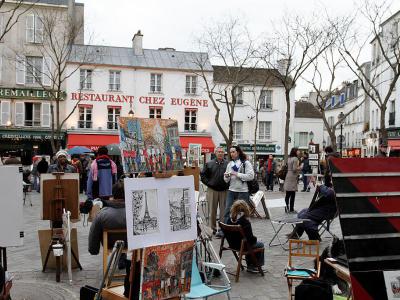
Famed worldwide, the square is a hub for artists who, much like their illustrious predecessors – Toulouse-Lautrec, Van Gogh, Modigliani, and Picasso, drawn by the affordable rent and tax-free wine in the late 19th and early 20th centuries, – set up their easels here daily to capture the essence of Montmartre for the throngs of tourists. Today, the artistic spirit continues to thrive, and visitors flock to the square to purchase local art and have their portraits painted.
The square itself houses significant sites such as the original town hall of Montmartre, established in 1790, and the restaurant À la Mère Catherine, dating back to 1793, adding layers to its rich historical narrative.
Its French name 'du Tertre,' sometimes translated as "Grave Hill", or more accurately as "square on a mound", is derived either from its high geographical position or ties to the Dutertre family, dating back to 1503. The area's history is marked by significant events, such as a conflict over cannons stored in the square during the Paris Commune in 1871. Another landmark event associated with the square is when Louis Renault's petroleum-powered car reached it on December 24, 1898, thus heralding the birth of the French automobile industry.
Competition for space in Tertre Square is intense, with artists enduring a ten-year wait for a tiny shared spot. Restrictions limit creations to specific forms of art, namely: paintings, portraits, silhouettes, and caricatures only. Since the 1990s, Tertre Square has also been a battleground for artists' rights amid escalated conflicts with restaurant terraces encroaching on their space.
As a cornerstone of Montmartre's cultural and historical identity, the square features notable buildings and commemorations, including the former town hall, the pioneering restaurant À la Mère Catherine, and commemorative plaques. A popular legend claims that the term "bistro" was coined in this square in 1814, courtesy of the Russian troops stationed here. Soldiers would shout "bystro," which means "quickly" in Russian, urging their comrades to finish their drinks and return to their duties.
Famed worldwide, the square is a hub for artists who, much like their illustrious predecessors – Toulouse-Lautrec, Van Gogh, Modigliani, and Picasso, drawn by the affordable rent and tax-free wine in the late 19th and early 20th centuries, – set up their easels here daily to capture the essence of Montmartre for the throngs of tourists. Today, the artistic spirit continues to thrive, and visitors flock to the square to purchase local art and have their portraits painted.
The square itself houses significant sites such as the original town hall of Montmartre, established in 1790, and the restaurant À la Mère Catherine, dating back to 1793, adding layers to its rich historical narrative.
Its French name 'du Tertre,' sometimes translated as "Grave Hill", or more accurately as "square on a mound", is derived either from its high geographical position or ties to the Dutertre family, dating back to 1503. The area's history is marked by significant events, such as a conflict over cannons stored in the square during the Paris Commune in 1871. Another landmark event associated with the square is when Louis Renault's petroleum-powered car reached it on December 24, 1898, thus heralding the birth of the French automobile industry.
Competition for space in Tertre Square is intense, with artists enduring a ten-year wait for a tiny shared spot. Restrictions limit creations to specific forms of art, namely: paintings, portraits, silhouettes, and caricatures only. Since the 1990s, Tertre Square has also been a battleground for artists' rights amid escalated conflicts with restaurant terraces encroaching on their space.
As a cornerstone of Montmartre's cultural and historical identity, the square features notable buildings and commemorations, including the former town hall, the pioneering restaurant À la Mère Catherine, and commemorative plaques. A popular legend claims that the term "bistro" was coined in this square in 1814, courtesy of the Russian troops stationed here. Soldiers would shout "bystro," which means "quickly" in Russian, urging their comrades to finish their drinks and return to their duties.
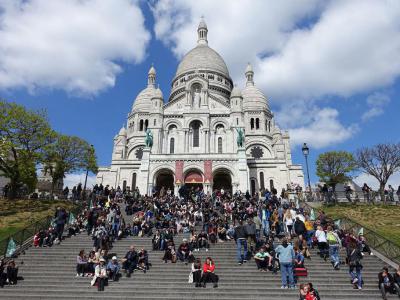
9) Basilique du Sacre-Coeur (Basilica of the Sacred Heart of Jesus) (must see)
The Basilica of the Sacred Heart of Montmartre is a Catholic church and a national historic monument since 2022. The imposing structure sits atop the Montmartre summit – the highest point in Paris (some 200 meters above the Seine). It offers a breathtaking panorama of the city from its dome, which makes it the second most-visited tourist site in the capital after the Eiffel Tower.
The idea to build the basilica came in the aftermath of the Franco-Prussian War of 1870-1871 (resulting in a humiliating defeat for France), followed by the brief and bloody Paris Commune period. Many in France, particularly conservative Catholics, viewed these events as moral failures of the nation. They believed it was a divine punishment for what they saw as the growing secularization and moral decay of French society in the decades following the French Revolution.
The new church was thus to symbolize national repentance. Its location at the highest point in Paris, however, made it a subject of controversy among left-wing politicians, as it overlooks the area where the Paris Commune erupted and was seen by some as a monument to conservative reactionism.
The construction spanned from 1875 to 1914 under the supervision of various architects. The basilica's consecration was delayed until the end of World War I, in 1919.
The building showcases a blend of Neo-Byzantine and Romanesque styles with a central rotunda, a nave, and transepts. The main dome rises 83 meters, flanked by four smaller cupolas and a bell tower that houses France’s largest bell, the Savoyarde. The rectangular base beneath the high dome is supported by massive columns as if bridging the celestial and terrestrial realms. The design incorporates a Greek cross layout centralizing the altar, surrounded by a Latin-influenced choir and ambulatory.
Artistic elements within the basilica include the grand 475-square-meter mosaic of The Triumph of the Sacred Heart of Jesus and various chapels adorned by specific professional groups, enhancing the spiritual ambiance with their thematic decorations. The crypt, unlike typical underground crypts, features stained glass windows that allow light to filter in, enriching the spiritual atmosphere. Also noteworthy is the basilica’s historic organ, recognized as a national landmark.
As a pilgrimage site, the basilica requires visitors to observe modest dress and silence out of respect for its sacredness and historical significance.
Tip:
You will need a level of fitness to climb the stairs from the base of Montmartre to the Sacred Heart Basilica. Alternatively, you can hop on the free mini-train which starts from opposite the Windmill Theater and stops behind the basilica.
The idea to build the basilica came in the aftermath of the Franco-Prussian War of 1870-1871 (resulting in a humiliating defeat for France), followed by the brief and bloody Paris Commune period. Many in France, particularly conservative Catholics, viewed these events as moral failures of the nation. They believed it was a divine punishment for what they saw as the growing secularization and moral decay of French society in the decades following the French Revolution.
The new church was thus to symbolize national repentance. Its location at the highest point in Paris, however, made it a subject of controversy among left-wing politicians, as it overlooks the area where the Paris Commune erupted and was seen by some as a monument to conservative reactionism.
The construction spanned from 1875 to 1914 under the supervision of various architects. The basilica's consecration was delayed until the end of World War I, in 1919.
The building showcases a blend of Neo-Byzantine and Romanesque styles with a central rotunda, a nave, and transepts. The main dome rises 83 meters, flanked by four smaller cupolas and a bell tower that houses France’s largest bell, the Savoyarde. The rectangular base beneath the high dome is supported by massive columns as if bridging the celestial and terrestrial realms. The design incorporates a Greek cross layout centralizing the altar, surrounded by a Latin-influenced choir and ambulatory.
Artistic elements within the basilica include the grand 475-square-meter mosaic of The Triumph of the Sacred Heart of Jesus and various chapels adorned by specific professional groups, enhancing the spiritual ambiance with their thematic decorations. The crypt, unlike typical underground crypts, features stained glass windows that allow light to filter in, enriching the spiritual atmosphere. Also noteworthy is the basilica’s historic organ, recognized as a national landmark.
As a pilgrimage site, the basilica requires visitors to observe modest dress and silence out of respect for its sacredness and historical significance.
Tip:
You will need a level of fitness to climb the stairs from the base of Montmartre to the Sacred Heart Basilica. Alternatively, you can hop on the free mini-train which starts from opposite the Windmill Theater and stops behind the basilica.
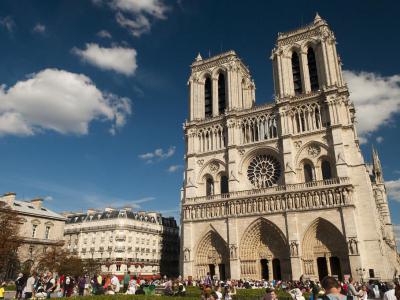
10) Cathedrale Notre-Dame (Notre-Dame Cathedral) (must see)
While the Eiffel Tower is an instantly recognizable symbol of France, the Notre-Dame Cathedral is an unmistakable symbol of Paris. Notre-Dame de Paris, or "Our Lady of Paris," is a medieval Catholic church renowned for its French Gothic appearance. Among other features, this cathedral showcases period architectural innovations such as the rib vault and flying buttress, as well as large rose windows and rich sculptural decoration. Notre-Dame’s architectural and historical significance is underscored by its vast pipe organs, iconic bells, and its role in hosting significant ceremonies like Napoleon’s coronation, the celebration of the Liberation of Paris in 1944, and the funerals of presidents Charles de Gaulle and François Mitterrand.
Before Notre-Dame, a temple to Jupiter and later a cathedral dedicated to Saint Étienne occupied the site. Construction of Notre-Dame began in 1163 and concluded in 1260, incorporating architectural advancements in four major stages, with additions in the 13th century enhancing stability and light. At the time of its construction, it was the most ambitious cathedral project ever undertaken in France, its vaults rising over 33 meters and holding a national height record for several decades.
In 1431, Notre-Dame saw the coronation of King Henry VI, and during the French Revolution, suffered vandalism when it was repurposed as a warehouse. In the 19th century, Victor Hugo’s novel, The Hunchback of Notre-Dame, spurred its restoration, largely preserving Notre-Dame’s legacy.
Amid the Second World War, upon the Fall of France, there were fears that the German invaders might destroy the freshly renovated stained glass of the rose window. As a result, the lion's portion of it was hidden and re-installed only after the war.
In 2019, a fire severely damaged the cathedral's oak roof and spire. Firefighters saved much of the building, including the world's biggest 13th-century glass window and other artifacts and relics which were temporarily removed for safety. Though many decorations have been removed over time, the cathedral retains Gothic, Baroque, and 19th-century sculptures, altarpieces, and revered relics, including the Crown of Thorns and fragments from the True Cross.
As a symbol of Paris and France, Notre-Dame is renowned for its traditional Lent sermons since the 1830s and attracts annually around 12 million visitors.
Before Notre-Dame, a temple to Jupiter and later a cathedral dedicated to Saint Étienne occupied the site. Construction of Notre-Dame began in 1163 and concluded in 1260, incorporating architectural advancements in four major stages, with additions in the 13th century enhancing stability and light. At the time of its construction, it was the most ambitious cathedral project ever undertaken in France, its vaults rising over 33 meters and holding a national height record for several decades.
In 1431, Notre-Dame saw the coronation of King Henry VI, and during the French Revolution, suffered vandalism when it was repurposed as a warehouse. In the 19th century, Victor Hugo’s novel, The Hunchback of Notre-Dame, spurred its restoration, largely preserving Notre-Dame’s legacy.
Amid the Second World War, upon the Fall of France, there were fears that the German invaders might destroy the freshly renovated stained glass of the rose window. As a result, the lion's portion of it was hidden and re-installed only after the war.
In 2019, a fire severely damaged the cathedral's oak roof and spire. Firefighters saved much of the building, including the world's biggest 13th-century glass window and other artifacts and relics which were temporarily removed for safety. Though many decorations have been removed over time, the cathedral retains Gothic, Baroque, and 19th-century sculptures, altarpieces, and revered relics, including the Crown of Thorns and fragments from the True Cross.
As a symbol of Paris and France, Notre-Dame is renowned for its traditional Lent sermons since the 1830s and attracts annually around 12 million visitors.
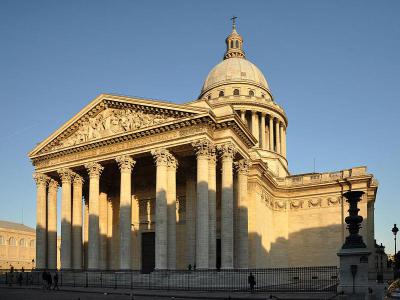
11) Pantheon (must see)
The Panthéon of Paris, originally conceived as a church dedicated to Saint Genevieve, has evolved significantly since its inception. Constructed between 1758 and 1790, it was intended by King Louis XV to house the relics of Paris's patron saint. The structure stands on a historically rich site, previously home to Roman monuments, and underwent numerous transformations, most notably during the French Revolution when it was repurposed as a secular mausoleum.
The Panthéon was designed to combine the lightness of Gothic cathedrals with the classical grandeur admired in Italian architecture. The architecture of the Panthéon is a striking example of early Neoclassicism, dominated by a triple dome, each layer serving both aesthetic and structural purposes. The middle dome features a painted ceiling, while the outer stone-built dome, completed in 1790, was designed to rival the domes of major basilicas in Rome and London. Initially topped with a cross, the dome has seen various symbols over the years, reflective of France's turbulent history.
Inside, the Panthéon hosts the Apotheosis of Saint Genevieve, surrounded by important figures from French royal history and Christianity. Its peristyle and façade mimic a Greek temple, adorned with Corinthian columns and a pediment that celebrates national gratitude towards illustrious figures, reinstated post-Revolution to honor France's great men and women.
The Panthéon also served as the site for Léon Foucault's famous demonstration of the Earth's rotation in 1851, using a pendulum suspended from the central dome-a copy of which remains on display today.
Throughout its history, the Panthéon's role has shifted between religious and national significance. During its time as the revolutionary "Temple of the Nation", it housed the remains of prominent French figures such as Voltaire and Rousseau. Declared a mausoleum for "National Heroes" in the 19th century, other notables like Victor Hugo and Marie Curie found their final resting place here. More recent additions included French resistance heroes, recognizing their roles in World War II.
Today, the Panthéon is a monument to France's past but also a symbol of its enduring values, reflecting the nation's historical journey and its commitment to honoring those who have shaped its cultural and political landscape.
The Panthéon was designed to combine the lightness of Gothic cathedrals with the classical grandeur admired in Italian architecture. The architecture of the Panthéon is a striking example of early Neoclassicism, dominated by a triple dome, each layer serving both aesthetic and structural purposes. The middle dome features a painted ceiling, while the outer stone-built dome, completed in 1790, was designed to rival the domes of major basilicas in Rome and London. Initially topped with a cross, the dome has seen various symbols over the years, reflective of France's turbulent history.
Inside, the Panthéon hosts the Apotheosis of Saint Genevieve, surrounded by important figures from French royal history and Christianity. Its peristyle and façade mimic a Greek temple, adorned with Corinthian columns and a pediment that celebrates national gratitude towards illustrious figures, reinstated post-Revolution to honor France's great men and women.
The Panthéon also served as the site for Léon Foucault's famous demonstration of the Earth's rotation in 1851, using a pendulum suspended from the central dome-a copy of which remains on display today.
Throughout its history, the Panthéon's role has shifted between religious and national significance. During its time as the revolutionary "Temple of the Nation", it housed the remains of prominent French figures such as Voltaire and Rousseau. Declared a mausoleum for "National Heroes" in the 19th century, other notables like Victor Hugo and Marie Curie found their final resting place here. More recent additions included French resistance heroes, recognizing their roles in World War II.
Today, the Panthéon is a monument to France's past but also a symbol of its enduring values, reflecting the nation's historical journey and its commitment to honoring those who have shaped its cultural and political landscape.
