Custom Walk in Berlin, Germany by destinationrunner9796 created on 2025-06-24
Guide Location: Germany » Berlin
Guide Type: Custom Walk
# of Sights: 5
Tour Duration: 2 Hour(s)
Travel Distance: 5 Km or 3.1 Miles
Share Key: XMZZP
Guide Type: Custom Walk
# of Sights: 5
Tour Duration: 2 Hour(s)
Travel Distance: 5 Km or 3.1 Miles
Share Key: XMZZP
How It Works
Please retrieve this walk in the GPSmyCity app. Once done, the app will guide you from one tour stop to the next as if you had a personal tour guide. If you created the walk on this website or come to the page via a link, please follow the instructions below to retrieve the walk in the app.
Retrieve This Walk in App
Step 1. Download the app "GPSmyCity: Walks in 1K+ Cities" on Apple App Store or Google Play Store.



Step 2. In the GPSmyCity app, download(or launch) the guide "Berlin Map and Walking Tours".
Step 3. Tap the menu button located at upper right corner of the "Walks" screen and select "Retrieve custom walk". Enter the share key: XMZZP
1) Berliner Dom (Berlin Cathedral) (must see)
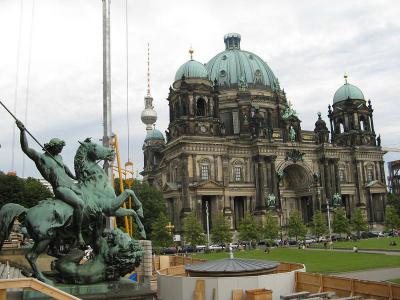
Despite what its lofty name suggests, the Berlin Cathedral is... not a cathedral. Yep, never was. Because Berlin never had a Catholic bishop in the house.
Now, rewind to 1451, when Prince-Elector Frederick II-nicknamed "Iron-tooth" because, well, medieval PR was wild-built a castle chapel right here. It started out Catholic, then switched to Lutheran in 1539, and just to keep things spicy, went Calvinist by 1608.
The version we see today is a Neo-Renaissance stunner, built between 1894 and 1905 by order of Emperor Wilhelm II, who basically wanted his very own Protestant answer to the Vatican’s Saint Peter’s Basilica. And what a power move it was: 114 meters long, 73 wide, and 116 tall-this place made everything else in Berlin look like dollhouse furniture.
And it wasn’t just for show, either. The Hohenzollerns-Germany’s royal family-worshipped here and even used the crypt as their final resting place. That lasted until 1918, when Wilhelm II peaced out to the Netherlands after abdicating the throne.
Then came World War II, and let’s just say the cathedral did not come out looking its best. East Germany did some repairs-thanks, GDR-but also tore down the Memorial Church in 1975, which wasn’t their finest hour.
Fast forward to 1993, and voilà: the place got a full glow-up. It now has the majestic pipe organ, pristine acoustics, priceless art, and vibes so divine they practically echo. Today, it’s home to choirs galore, including the English Choir Berlin, which hosts monthly Choral Evensong in true Anglican style.
If you're feeling brave, you can climb the dome! There’s a roomy stairwell, plenty of landings to catch your breath-and yes, actual chairs if you need a moment. At the bottom, history buffs rejoice: the crypt holds 94 royal sarcophagi. It's like Prussian Netflix, but... quieter.
Tip:
Snag the audio guide-it’s a small fee for a big info boost. Or grab a printed guide if you're old school. And in the summer, feel free to stretch out on the lawn across the street, near the fountain. It's the perfect picnic spot, and the cathedral makes a dramatic lunch backdrop.
Now, rewind to 1451, when Prince-Elector Frederick II-nicknamed "Iron-tooth" because, well, medieval PR was wild-built a castle chapel right here. It started out Catholic, then switched to Lutheran in 1539, and just to keep things spicy, went Calvinist by 1608.
The version we see today is a Neo-Renaissance stunner, built between 1894 and 1905 by order of Emperor Wilhelm II, who basically wanted his very own Protestant answer to the Vatican’s Saint Peter’s Basilica. And what a power move it was: 114 meters long, 73 wide, and 116 tall-this place made everything else in Berlin look like dollhouse furniture.
And it wasn’t just for show, either. The Hohenzollerns-Germany’s royal family-worshipped here and even used the crypt as their final resting place. That lasted until 1918, when Wilhelm II peaced out to the Netherlands after abdicating the throne.
Then came World War II, and let’s just say the cathedral did not come out looking its best. East Germany did some repairs-thanks, GDR-but also tore down the Memorial Church in 1975, which wasn’t their finest hour.
Fast forward to 1993, and voilà: the place got a full glow-up. It now has the majestic pipe organ, pristine acoustics, priceless art, and vibes so divine they practically echo. Today, it’s home to choirs galore, including the English Choir Berlin, which hosts monthly Choral Evensong in true Anglican style.
If you're feeling brave, you can climb the dome! There’s a roomy stairwell, plenty of landings to catch your breath-and yes, actual chairs if you need a moment. At the bottom, history buffs rejoice: the crypt holds 94 royal sarcophagi. It's like Prussian Netflix, but... quieter.
Tip:
Snag the audio guide-it’s a small fee for a big info boost. Or grab a printed guide if you're old school. And in the summer, feel free to stretch out on the lawn across the street, near the fountain. It's the perfect picnic spot, and the cathedral makes a dramatic lunch backdrop.
2) Friedrichstadt-Palast (Friedrichstadt Palace) (must see)
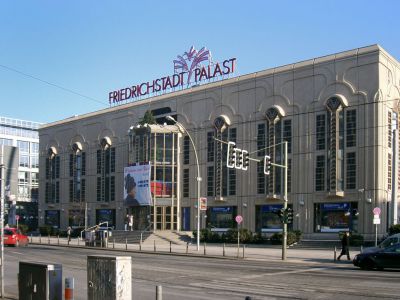
The Friedrichstadt Palace boasts a striking façade adorned with multicolored glass tiles and a distinctive pink, plume-shaped neon sign. This massive theater complex, constructed in the early 1980s, is renowned for its extravagant, Vegas-style shows that feature large casts and elaborate special effects. With nearly 2,000 seats arranged around a vast podium, the venue is versatile, serving as a circus arena, a swimming pool, and an ice rink at different times. Additionally, there is a second large stage equipped with advanced technical capabilities, as well as a smaller cabaret theater accommodating 240 spectators.
The original and beloved palace suffered bomb damage during World War II and was subsequently replaced by the current structure. The previous building, originally a market hall, later served as a circus ring. In 1918, it transformed into the Grand Playhouse ("Grosse Schauspielhaus") and opened in 1919 with a memorable production of Aeschylus's 'The Oresteia,' directed by Max Reinhardt. The former structure was truly extraordinary, featuring a central dome supported by a multitude of columns and adorned with Expressionist, stalactite-like decorations. Its interior was equally fantastical, offering seating for 5,000 spectators.
Why You Should Visit:
Wonderful venue for shows, with absolutely breathtaking interiors: red carpets, crystal chandeliers, and all that jazz! The temperature and seating arrangements are comfortable, and the enormous stage, along with the impressive sound and special effects, ensures a top-notch entertainment experience. The Grand Shows presented here are reminiscent of productions seen in Las Vegas and by Cirque du Soleil.
Tip:
To secure tickets, it's advisable to book online well in advance, as most shows tend to sell out quickly. For the best viewing experience, opt for seats in the middle of the auditorium to fully appreciate the fabulous stage.
The original and beloved palace suffered bomb damage during World War II and was subsequently replaced by the current structure. The previous building, originally a market hall, later served as a circus ring. In 1918, it transformed into the Grand Playhouse ("Grosse Schauspielhaus") and opened in 1919 with a memorable production of Aeschylus's 'The Oresteia,' directed by Max Reinhardt. The former structure was truly extraordinary, featuring a central dome supported by a multitude of columns and adorned with Expressionist, stalactite-like decorations. Its interior was equally fantastical, offering seating for 5,000 spectators.
Why You Should Visit:
Wonderful venue for shows, with absolutely breathtaking interiors: red carpets, crystal chandeliers, and all that jazz! The temperature and seating arrangements are comfortable, and the enormous stage, along with the impressive sound and special effects, ensures a top-notch entertainment experience. The Grand Shows presented here are reminiscent of productions seen in Las Vegas and by Cirque du Soleil.
Tip:
To secure tickets, it's advisable to book online well in advance, as most shows tend to sell out quickly. For the best viewing experience, opt for seats in the middle of the auditorium to fully appreciate the fabulous stage.
3) Checkpoint Charlie (must see)
Immortalized by American movies and spy novels, Checkpoint Charlie is one of the most famous and historically significant spots in Berlin. A symbol of the Cold War, originally it was one of the three designated crossing points – A (Alpha), B (Bravo), and C (Charlie) – for foreigners and members of the Allied forces, established after the construction of the Berlin Wall. Here the documents of visitors and diplomats were checked by East Germans prior to issuing visas.
Checkpoint Charlie became a sole crossing point in 1962. A year earlier, it made history as the venue of a famous stand-off between US and Soviet tanks facing each other across the border, when an American diplomat was refused a visa. The stand-off nearly led to a war but fortunately ended peacefully.
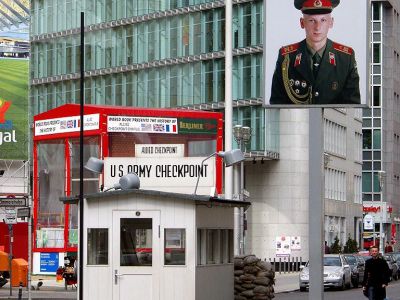
Today, a replica of the original Checkpoint Charlie booth with a "You are now leaving the American Sector" sign serves largely as a photo opportunity in the middle of the street that once marked the border between East and West Berlin. Nearby is the Wall Museum-House dedicated to freedom, featuring, among other exhibits, a piece of the Berlin Wall and historical information relating to the many escape attempts made over the Wall throughout decades. There are also a number of panels and photos that give a useful summary and timeline. Not far away is the Topography of Terror exhibition which also deserves attention.
Lately, to keep the site from turning into a commercial circus, the German authorities have put the kibosh on actors donning military uniforms and cashing in on clueless tourists. Undoubtedly an interesting location, albeit the guard house and other elements are only replicas, Checkpoint Charlie is about an appreciation of how things once were in this great city.
Why You Should Visit:
Bit of a tourist trap, but a good part of the city's history. The surrounding area is also steeped in history and you can walk around the streets to see the Berlin Wall and try the great local cafes.
Tip:
Get here early to avoid crowds, as taking a photo can be quite tricky due to the hustle and bustle of traffic, etc.
Checkpoint Charlie became a sole crossing point in 1962. A year earlier, it made history as the venue of a famous stand-off between US and Soviet tanks facing each other across the border, when an American diplomat was refused a visa. The stand-off nearly led to a war but fortunately ended peacefully.
Today, a replica of the original Checkpoint Charlie booth with a "You are now leaving the American Sector" sign serves largely as a photo opportunity in the middle of the street that once marked the border between East and West Berlin. Nearby is the Wall Museum-House dedicated to freedom, featuring, among other exhibits, a piece of the Berlin Wall and historical information relating to the many escape attempts made over the Wall throughout decades. There are also a number of panels and photos that give a useful summary and timeline. Not far away is the Topography of Terror exhibition which also deserves attention.
Lately, to keep the site from turning into a commercial circus, the German authorities have put the kibosh on actors donning military uniforms and cashing in on clueless tourists. Undoubtedly an interesting location, albeit the guard house and other elements are only replicas, Checkpoint Charlie is about an appreciation of how things once were in this great city.
Why You Should Visit:
Bit of a tourist trap, but a good part of the city's history. The surrounding area is also steeped in history and you can walk around the streets to see the Berlin Wall and try the great local cafes.
Tip:
Get here early to avoid crowds, as taking a photo can be quite tricky due to the hustle and bustle of traffic, etc.
4) Gendarmenmarkt (Gendarmes' Market) (must see)
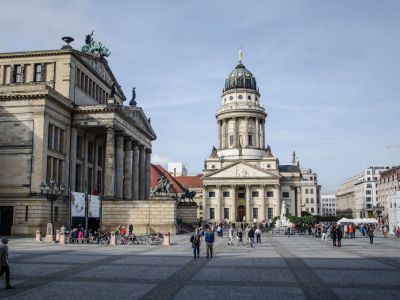
The Gendarmenmarkt is a square in one of the most beautiful parts of Berlin, showcasing the spectacular ensemble of three classical buildings: the so-called Fransözicher Dom (French Cathedral, named after the French Protestant community that sought refuge in Berlin from religious persecution in the late 17th century); the Deutsche Dom (German Cathedral, almost perfectly mirroring the first); and, in between, the Konzerthaus Berlin (Berlin Concert Hall).
Fabulously picturesque, the area looks much like part of the Imperial Capital and may even give Vienna a run for its money. A lovely fountain adorned with a monumental statue of Germany's renowned poet Friedrich Schiller graces the center of the square, often accompanied by musicians playing nearby. While many of the buildings in the area suffered extensive damage during World War II, they have since been meticulously restored, preserving numerous original elements.
Why You Should Visit:
There is quite a bit to take in, so you can wander around at your leisure. Luckily, there is no hard sell of tickets and touristy paraphernalia. While there are shops, bars and restaurants, they are discrete and upmarket, rather than tacky. A lovely place to sit and watch people for a while.
Tip:
Might be worth visiting at night when it's all lit up.
Fabulously picturesque, the area looks much like part of the Imperial Capital and may even give Vienna a run for its money. A lovely fountain adorned with a monumental statue of Germany's renowned poet Friedrich Schiller graces the center of the square, often accompanied by musicians playing nearby. While many of the buildings in the area suffered extensive damage during World War II, they have since been meticulously restored, preserving numerous original elements.
Why You Should Visit:
There is quite a bit to take in, so you can wander around at your leisure. Luckily, there is no hard sell of tickets and touristy paraphernalia. While there are shops, bars and restaurants, they are discrete and upmarket, rather than tacky. A lovely place to sit and watch people for a while.
Tip:
Might be worth visiting at night when it's all lit up.
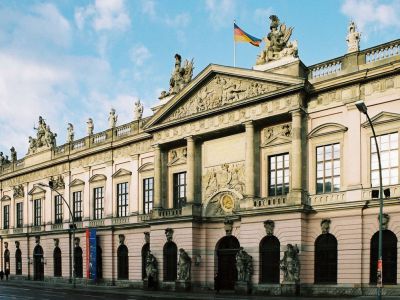
5) Deutsches Historisches Museum (German Historical Museum) (must see)
The German Historical Museum, known by the acronym DHM, describes itself as a place of "enlightenment and understanding of the shared history of Germans and Europeans." Often viewed as one of the most important museums in Berlin, it is also one of its most frequented. The museum is located in the Baroque-style Armory building, the oldest on the Unter den Linden, which was completed in 1706.
The DHM was established on 28 October 1987, to commemorate Berlin’s 750th anniversary, and was inaugurated inside the Reichstag. The idea for the museum was supported by Federal Chancellor Helmut Kohl, who considered it a national priority. A committee of historians developed the museum’s concept, emphasizing a multi-perspective approach to German history in an international context.
The DHM was originally planned to be built near the Reichstag. However, the fall of the Berlin Wall in 1989 changed plans, and the museum was moved to the historic Armory on Unter den Linden. This transition was completed in 1991. The Armory underwent extensive restoration from 1994 to 1998 and saw a new hall – for temporary exhibitions, spanning four floors – designed by Chinese-American architect I M Pei.
In addition to it, the museum also features a specialized research library with over 225,000 volumes, including rare books and museum catalogs, housed in a building that previously served as the Prussian Central Cooperative Bank and later a GDR state-run company. The museum’s cinema offers a program focusing on historical and film-historical themes through exhibitions and retrospectives. Since 2004, it has been a venue for the Berlin International Film Festival’s "Retrospective and Homage" screenings.
Inaugurated by Chancellor Angela Merkel in 2006, the museum's Permanent Exhibition remains a key institution for understanding Germany’s past in a global context. Comprehensive explanations for the exhibits are available in both German and English, making it worth a few hours' investment for those intrigued by in-depth German and European history.
Editor's Note:
The Armory is closed for essential renovations and the renewal of the Permanent Exhibition since June 28, 2021. It is expected to reopen to visitors at the end of 2025.
The DHM was established on 28 October 1987, to commemorate Berlin’s 750th anniversary, and was inaugurated inside the Reichstag. The idea for the museum was supported by Federal Chancellor Helmut Kohl, who considered it a national priority. A committee of historians developed the museum’s concept, emphasizing a multi-perspective approach to German history in an international context.
The DHM was originally planned to be built near the Reichstag. However, the fall of the Berlin Wall in 1989 changed plans, and the museum was moved to the historic Armory on Unter den Linden. This transition was completed in 1991. The Armory underwent extensive restoration from 1994 to 1998 and saw a new hall – for temporary exhibitions, spanning four floors – designed by Chinese-American architect I M Pei.
In addition to it, the museum also features a specialized research library with over 225,000 volumes, including rare books and museum catalogs, housed in a building that previously served as the Prussian Central Cooperative Bank and later a GDR state-run company. The museum’s cinema offers a program focusing on historical and film-historical themes through exhibitions and retrospectives. Since 2004, it has been a venue for the Berlin International Film Festival’s "Retrospective and Homage" screenings.
Inaugurated by Chancellor Angela Merkel in 2006, the museum's Permanent Exhibition remains a key institution for understanding Germany’s past in a global context. Comprehensive explanations for the exhibits are available in both German and English, making it worth a few hours' investment for those intrigued by in-depth German and European history.
Editor's Note:
The Armory is closed for essential renovations and the renewal of the Permanent Exhibition since June 28, 2021. It is expected to reopen to visitors at the end of 2025.
