Custom Walk in Nuremberg, Germany by susanm4572273 created on 2025-06-25
Guide Location: Germany » Nuremberg
Guide Type: Custom Walk
# of Sights: 8
Tour Duration: 5 Hour(s)
Travel Distance: 13.7 Km or 8.5 Miles
Share Key: 47FCY
Guide Type: Custom Walk
# of Sights: 8
Tour Duration: 5 Hour(s)
Travel Distance: 13.7 Km or 8.5 Miles
Share Key: 47FCY
How It Works
Please retrieve this walk in the GPSmyCity app. Once done, the app will guide you from one tour stop to the next as if you had a personal tour guide. If you created the walk on this website or come to the page via a link, please follow the instructions below to retrieve the walk in the app.
Retrieve This Walk in App
Step 1. Download the app "GPSmyCity: Walks in 1K+ Cities" on Apple App Store or Google Play Store.



Step 2. In the GPSmyCity app, download(or launch) the guide "Nuremberg Map and Walking Tours".
Step 3. Tap the menu button located at upper right corner of the "Walks" screen and select "Retrieve custom walk". Enter the share key: 47FCY
1) Nuremberg Castle (must see)
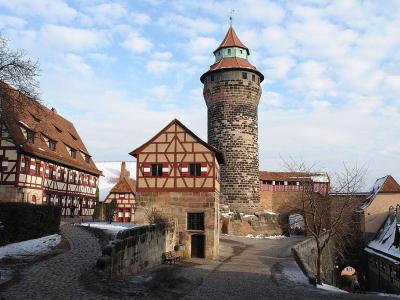
Nuremberg Castle is one of the most famous and magnificent castles in Germany. Every Holy Roman Emperor between 1050 and 1571 resided part-time at the castle. Essential administrative functions were carried out at the castle. Charles IV enacted the Golden Bull at the castle in 1356. This decree required that newly elected German kings would hold their first general assembly at Nuremberg.
The Sinwell Tower was built for defensive purposes in the 13th century. Sinwell means extremely round in Middle High German. Visitors can climb the tower's wooden spiral staircase to an observation platform. Photos of Nuremberg immediately after WWII are displayed at the top of the tower. You can see how much damage Nuremberg had and how meticulous the rebuild has been.
Visitors must be accompanied by a guide to see the Deep Well. This site is one of the highlights of the castle. The well is nearly 50 meters (164 feet) deep and was an essential water supply for the castle. The house covering the well was built in 1563.
The Double Chapel is another exquisite site. This Romanesque Imperial Chapel dates to the 13th century. The chapel features an emperor's gallery, which allowed the emperor to remain separate from the other worshippers.
The Imperial Hall was used as a dining hall and for festivities. Today, visitors can find Holy Roman Empire exhibits. The Emperor's Living Room features colorfully painted ceiling squares. The wall panels are decored with gold and date back to the 15th century.
The Corner Chamber features gorgeous art and gifts given to the Imperial Crown. Visitors will also find an impressive wooden model of the city, as well as the jeweled Imperial Crown. Visitors will find weapons from the 13th to 19th centuries in the Imperial Castle Museum.
After touring the castle, don't miss the Castle Garden with its beautiful flower beds.
Why You Should Visit:
Nuremberg Castle is steeped in history and has been beautifully restored. Visitors can walk the cobblestone paths, immerse themselves in the castle's history, and admire the stunning architecture and art displays.
Tips:
A combination ticket provides access to Nuremberg Castle, the Double Chapel, the Imperial Castle Museum, the Deep Well, and the Sinwell Tower. Guests can only visit the Deep Well with a guide. Audio guides for the castle are available in several languages.
The Sinwell Tower was built for defensive purposes in the 13th century. Sinwell means extremely round in Middle High German. Visitors can climb the tower's wooden spiral staircase to an observation platform. Photos of Nuremberg immediately after WWII are displayed at the top of the tower. You can see how much damage Nuremberg had and how meticulous the rebuild has been.
Visitors must be accompanied by a guide to see the Deep Well. This site is one of the highlights of the castle. The well is nearly 50 meters (164 feet) deep and was an essential water supply for the castle. The house covering the well was built in 1563.
The Double Chapel is another exquisite site. This Romanesque Imperial Chapel dates to the 13th century. The chapel features an emperor's gallery, which allowed the emperor to remain separate from the other worshippers.
The Imperial Hall was used as a dining hall and for festivities. Today, visitors can find Holy Roman Empire exhibits. The Emperor's Living Room features colorfully painted ceiling squares. The wall panels are decored with gold and date back to the 15th century.
The Corner Chamber features gorgeous art and gifts given to the Imperial Crown. Visitors will also find an impressive wooden model of the city, as well as the jeweled Imperial Crown. Visitors will find weapons from the 13th to 19th centuries in the Imperial Castle Museum.
After touring the castle, don't miss the Castle Garden with its beautiful flower beds.
Why You Should Visit:
Nuremberg Castle is steeped in history and has been beautifully restored. Visitors can walk the cobblestone paths, immerse themselves in the castle's history, and admire the stunning architecture and art displays.
Tips:
A combination ticket provides access to Nuremberg Castle, the Double Chapel, the Imperial Castle Museum, the Deep Well, and the Sinwell Tower. Guests can only visit the Deep Well with a guide. Audio guides for the castle are available in several languages.
2) Albrecht-Durer-Haus (Albrecht Durer House Museum)
The home of German Renaissance painter and printmaker Albrecht Durer from 1509 to his death in 1528 lies in the extreme north-west of Nuremberg's Altstadt, near the Kaiserburg section of the Nuremberg Castle and the Tiergärtnertor of Nuremberg's city walls.
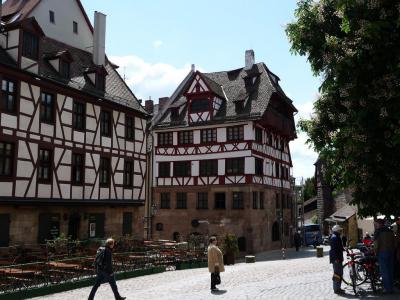
The house was built around 1420. It has five stories; the bottom two have sandstone walls, while the upper stories are timber-framed; the entire structure is topped by a half-hip roof. In 1501, it was purchased by Bernhard Walther, a merchant and prominent astronomer. Walter remodeled the house, adding small windows to the roof so that it could function as an observatory. Walther died in 1504, and Durer purchased the house five years later.
Since 1871 the Albrecht-Durer-Haus has been a museum dedicated to Durer's life and work. It was heavily remodeled sometime in the 1890s, with the large dormer on the north-facing roof being the largest addition. In October 1944, it took significant damage from Allied bombing. It was rebuilt by 1949 but did not reopen as a museum until 1971, Durer's 500th birthday.
The museum features installations of period furnishings, a re-creation of Dürer's workshop in which visitors can view demonstrations of printmaking techniques, and rotating exhibitions of drawings and prints by Dürer from the City of Nuremberg's Graphic Collection. Visitors can also receive a guided tour of the house from an actress playing Agnes Durer, the wife of the printmaker.
Why You Should Visit:
The amazing stories about the building and Durer's life are fascinating (eg. petty bureaucrats and 'facilities').
The house was built around 1420. It has five stories; the bottom two have sandstone walls, while the upper stories are timber-framed; the entire structure is topped by a half-hip roof. In 1501, it was purchased by Bernhard Walther, a merchant and prominent astronomer. Walter remodeled the house, adding small windows to the roof so that it could function as an observatory. Walther died in 1504, and Durer purchased the house five years later.
Since 1871 the Albrecht-Durer-Haus has been a museum dedicated to Durer's life and work. It was heavily remodeled sometime in the 1890s, with the large dormer on the north-facing roof being the largest addition. In October 1944, it took significant damage from Allied bombing. It was rebuilt by 1949 but did not reopen as a museum until 1971, Durer's 500th birthday.
The museum features installations of period furnishings, a re-creation of Dürer's workshop in which visitors can view demonstrations of printmaking techniques, and rotating exhibitions of drawings and prints by Dürer from the City of Nuremberg's Graphic Collection. Visitors can also receive a guided tour of the house from an actress playing Agnes Durer, the wife of the printmaker.
Why You Should Visit:
The amazing stories about the building and Durer's life are fascinating (eg. petty bureaucrats and 'facilities').
3) Nuremberg Palace of Justice (must see)
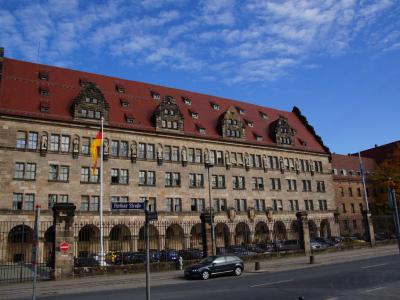
The Palace of Justice in Nuremberg is a significant building complex constructed between 1909 and 1916. It encompasses various judicial bodies including the appellate court (Oberlandesgericht), the regional court (Landgericht), the local court (Amtsgericht), and the public prosecutor's office (Staatsanwaltschaft). The complex is notably home to the Nuremberg Trials Memorial (Memorium Nürnberger Prozesse) situated on the top floor of the courthouse.
This building was selected for the Nuremberg trials, held between 1945 and 1949, where major surviving German war criminals of World War II were prosecuted. The choice of the Nuremberg Palace of Justice was strategic due to its almost untouched state post-war, ample space, and an adjoining large prison complex. Nuremberg itself was a symbolic location given its history with the Nazi Party's large rallies.
The trials primarily took place in Courtroom 600, located in the building's eastern wing. This courtroom, which is still operational today and often used for murder trials, underwent modifications after the trials. A previously removed wall was reinstalled to decrease the space, and the judges’ bench was rotated 90 degrees from its original position.
Starting in the year 2000, tourists were able to visit Courtroom 600 on weekends. The Nuremberg Trials Memorial, managed by the Nuremberg Municipal Museums, was inaugurated in November 2010. Since 2022, a media installation has been providing visitors with a virtual representation of the courtroom as it appeared during the Nuremberg Trials.
This building was selected for the Nuremberg trials, held between 1945 and 1949, where major surviving German war criminals of World War II were prosecuted. The choice of the Nuremberg Palace of Justice was strategic due to its almost untouched state post-war, ample space, and an adjoining large prison complex. Nuremberg itself was a symbolic location given its history with the Nazi Party's large rallies.
The trials primarily took place in Courtroom 600, located in the building's eastern wing. This courtroom, which is still operational today and often used for murder trials, underwent modifications after the trials. A previously removed wall was reinstalled to decrease the space, and the judges’ bench was rotated 90 degrees from its original position.
Starting in the year 2000, tourists were able to visit Courtroom 600 on weekends. The Nuremberg Trials Memorial, managed by the Nuremberg Municipal Museums, was inaugurated in November 2010. Since 2022, a media installation has been providing visitors with a virtual representation of the courtroom as it appeared during the Nuremberg Trials.
4) Congress Hall Nazi Party Rallying Ground
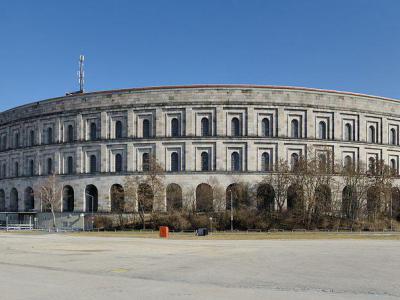
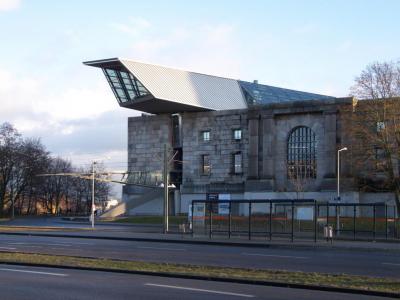
Nuremberg was Hitler's choice location to hold massive rallies and parades. In 1935, construction began on Congress Hall and accompanying assembly grounds. Congress Hall's design was inspired by the Colosseum in Rome, and Hitler had envisioned it as the centerpiece of the Nazi party rally grounds.
Hitler had envisioned the Third Reich lasting for a thousand years and being a triumphant empire. The magnificence of this planned Congress Hall reflected his plans for a lasting empire.
The original plans called for the building to have a self-supporting roof and 50,000 seats. Congress Hall was originally planned to be 70 meters tall; however, it was abandoned when it reached half its intended height. It was designed in a U shape, with two head buildings located in the straight part of the U. Congress Hall features a granite panel facade.
Congress Hall was never completed, but it is the biggest preserved national socialist monumental building still in existence. The northern wing of the Congress Hall is now home to the Documentation Centre. The southern wing houses the Nuremberg Symphony Orchestra.
Hitler had envisioned the Third Reich lasting for a thousand years and being a triumphant empire. The magnificence of this planned Congress Hall reflected his plans for a lasting empire.
The original plans called for the building to have a self-supporting roof and 50,000 seats. Congress Hall was originally planned to be 70 meters tall; however, it was abandoned when it reached half its intended height. It was designed in a U shape, with two head buildings located in the straight part of the U. Congress Hall features a granite panel facade.
Congress Hall was never completed, but it is the biggest preserved national socialist monumental building still in existence. The northern wing of the Congress Hall is now home to the Documentation Centre. The southern wing houses the Nuremberg Symphony Orchestra.
5) Reichsparteigelande (Nazi Party Rally Grounds) (must see)
The Nazi Party Rally Grounds in Nuremberg serve as a somber testament to the architectural ambitions and political machinations of the National Socialist Party during the years leading up to World War II. Covering an expansive 11 square kilometers in what was once the southeastern outskirts of Nuremberg, the grounds were the site of six major Nazi party rallies from 1933 to 1938.
Originally situated on the old Nuremberg Zoo grounds, this area was transformed into a massive complex designed to showcase the power and reach of the Nazi regime. Architect Albert Speer, inspired by the grandeur of ancient Roman architecture, undertook the design of several monumental structures, including a colosseum-like Congress Hall and plans for a gigantic German Stadium. Despite these grand plans, the onset of the war halted construction, leaving many of these projects incomplete.
The Rally Grounds today are located fully within the city limits of Nuremberg, reflecting the city's growth over the decades. Parts of the site were destroyed by Allied forces after the war, others have been reclaimed by nature, and some areas have been repurposed. The entire location now serves as a memorial. Since 1947, it has been the venue for the annual Norisring Speed Weekend motorsport event, and since 2004, it has also hosted the Rock im Park rock music festival.
The Documentation Center opened in 2001 and located in the Congress Hall, is an educational site focusing on the history of the Nazi Party, particularly Nuremberg's role. Instead of traditional artifacts, it features extensive photo galleries and informative displays covering the pre-1933 era, the Nazi period, and post-war history. The center offers a comprehensive understanding of the site’s historical impact through various information stations across the Rally Grounds.
The Nazi Party Rally Grounds now function both as a recreational area and as a historical site dedicated to remembering and understanding the past. Notably, no political activities are currently permitted on the grounds.
Originally situated on the old Nuremberg Zoo grounds, this area was transformed into a massive complex designed to showcase the power and reach of the Nazi regime. Architect Albert Speer, inspired by the grandeur of ancient Roman architecture, undertook the design of several monumental structures, including a colosseum-like Congress Hall and plans for a gigantic German Stadium. Despite these grand plans, the onset of the war halted construction, leaving many of these projects incomplete.
The Rally Grounds today are located fully within the city limits of Nuremberg, reflecting the city's growth over the decades. Parts of the site were destroyed by Allied forces after the war, others have been reclaimed by nature, and some areas have been repurposed. The entire location now serves as a memorial. Since 1947, it has been the venue for the annual Norisring Speed Weekend motorsport event, and since 2004, it has also hosted the Rock im Park rock music festival.
The Documentation Center opened in 2001 and located in the Congress Hall, is an educational site focusing on the history of the Nazi Party, particularly Nuremberg's role. Instead of traditional artifacts, it features extensive photo galleries and informative displays covering the pre-1933 era, the Nazi period, and post-war history. The center offers a comprehensive understanding of the site’s historical impact through various information stations across the Rally Grounds.
The Nazi Party Rally Grounds now function both as a recreational area and as a historical site dedicated to remembering and understanding the past. Notably, no political activities are currently permitted on the grounds.
6) St. Lawrence's Church (must see)
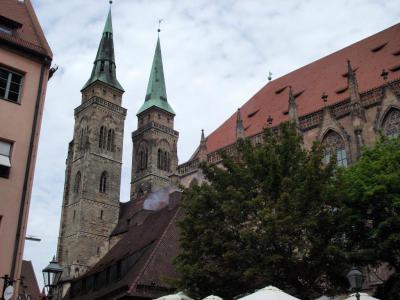
Saint Lawrence's Church in Nuremberg stands as a testament to both the resiliency and rich artistic heritage of the region. Dedicated to Saint Lawrence, a revered Roman Catholic saint, the church is primarily noted for its transformation and significance within the Evangelical Lutheran tradition, particularly after it was one of the first to adopt Lutheranism in 1525. This historic church suffered considerable damage during World War II but was meticulously restored, preserving its status as a prominent landmark in Bavaria.
Architecturally, the church is celebrated for its splendid Gothic elements, particularly the "Saint Laurentius" choir, designed by the medieval master mason Konrad Roriczer in 1445. This choir is a masterpiece of Gothic design and craftsmanship, highlighting the church's architectural significance.
Artistically, Saint Lawrence's Church houses an impressive collection of medieval art, including altarpieces from the 14th and 15th centuries, with the earliest dating back to 1316. Among its notable sculptures is the "beautiful Madonna," an unusually cheerful representation from around 1280. Additionally, the church features a remarkable stone tabernacle created between 1493 and 1496, adorned with carvings that depict the Passion of Christ and capped with a dramatic array of pinnacles that reach up to the vaulting, soaring 20 meters high.
The church also boasts an exceptional collection of medieval stained glass, primarily from the 15th century, adding a vibrant splash of color and artistry to its interior. This collection survived the turbulent times of the Reformation, largely due to the determination of Nuremberg's affluent citizens who, during the Reformation's iconoclasm, chose to preserve these artworks as a tribute to their ancestors.
The west facade of the church is a striking feature, reflecting the opulence of the Nuremberg citizenry. It is distinguished by its two towers and an elaborate West portal that echoes the grandeur of Saint Sebald and Bamberg Cathedral, complete with a commanding rose window that measures 9 meters in diameter.
Architecturally, the church is celebrated for its splendid Gothic elements, particularly the "Saint Laurentius" choir, designed by the medieval master mason Konrad Roriczer in 1445. This choir is a masterpiece of Gothic design and craftsmanship, highlighting the church's architectural significance.
Artistically, Saint Lawrence's Church houses an impressive collection of medieval art, including altarpieces from the 14th and 15th centuries, with the earliest dating back to 1316. Among its notable sculptures is the "beautiful Madonna," an unusually cheerful representation from around 1280. Additionally, the church features a remarkable stone tabernacle created between 1493 and 1496, adorned with carvings that depict the Passion of Christ and capped with a dramatic array of pinnacles that reach up to the vaulting, soaring 20 meters high.
The church also boasts an exceptional collection of medieval stained glass, primarily from the 15th century, adding a vibrant splash of color and artistry to its interior. This collection survived the turbulent times of the Reformation, largely due to the determination of Nuremberg's affluent citizens who, during the Reformation's iconoclasm, chose to preserve these artworks as a tribute to their ancestors.
The west facade of the church is a striking feature, reflecting the opulence of the Nuremberg citizenry. It is distinguished by its two towers and an elaborate West portal that echoes the grandeur of Saint Sebald and Bamberg Cathedral, complete with a commanding rose window that measures 9 meters in diameter.
7) Frauenkirche (Church of Our Lady) (must see)
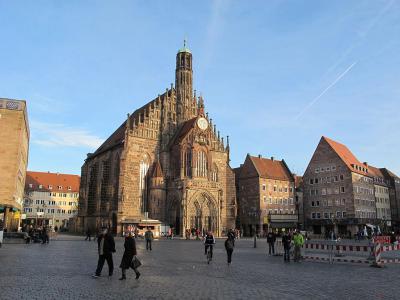
The Church of Our Lady (Frauenkirche) is a landmark of Nuremberg, located on the eastern side of the city's main market. This church, exemplifying brick Gothic architecture, was constructed between 1352 and 1362 under the direction of Charles IV, Holy Roman Emperor. It was built on the site of a former Jewish synagogue, tragically razed during the pogroms that followed the 1349 outbreak of the Black Death.
Designed to serve as a ceremonial place for imperial events, the church features a distinctive porch with a balcony. The architectural design is relatively modest, focusing on functionality and symbolic decorations, including the coats of arms of the Holy Roman Empire, the seven Electors, the town of Nuremberg, and the city of Rome-significant as the coronation site for Holy Roman Emperors.
Inside, the church houses a rich collection of medieval artworks. Notable among these is the Tucher Altar, circa 1440, which originally served as the high altar in the Augustinian Church of Saint Vitus. Additionally, the church contains two monuments crafted by Adam Kraft around 1498, showcasing the artistic heritage of the era. Many of the sculptures within the church have undergone extensive restoration, preserving their historical and artistic value.
A prominent feature of the Church of Our Lady is the mechanical clock (Männleinlaufen) installed between 1506 and 1509. This clock not only tells time but also commemorates the Golden Bull of 1356, featuring a mechanized display of the Holy Roman Emperor seated with his prince-electors. The clock stands as a symbol of the church's historical and cultural significance, bridging Nuremberg's past with the present.
Why You Should Visit:
Photogenic, easy to find, with some lovely stained glass windows and a late Gothic altarpiece from 1445 inside. On a very cold, rainy day it also provides a place of refuge, warmth and peace.
At its front door are the open-air stalls, selling lots of fresh fruit, vegetables, and gingerbread. Going up the steep steps to the viewing area overlooking the market is quite an experience.
Tip:
Try to visit at noontime when the clock mechanism is activated. After the bell tolls the hour, you can watch an animated procession with figures depicting the electors of the Holy Roman Empire paying homage to the Emperor. It's a brief but entertaining show if in the area.
Designed to serve as a ceremonial place for imperial events, the church features a distinctive porch with a balcony. The architectural design is relatively modest, focusing on functionality and symbolic decorations, including the coats of arms of the Holy Roman Empire, the seven Electors, the town of Nuremberg, and the city of Rome-significant as the coronation site for Holy Roman Emperors.
Inside, the church houses a rich collection of medieval artworks. Notable among these is the Tucher Altar, circa 1440, which originally served as the high altar in the Augustinian Church of Saint Vitus. Additionally, the church contains two monuments crafted by Adam Kraft around 1498, showcasing the artistic heritage of the era. Many of the sculptures within the church have undergone extensive restoration, preserving their historical and artistic value.
A prominent feature of the Church of Our Lady is the mechanical clock (Männleinlaufen) installed between 1506 and 1509. This clock not only tells time but also commemorates the Golden Bull of 1356, featuring a mechanized display of the Holy Roman Emperor seated with his prince-electors. The clock stands as a symbol of the church's historical and cultural significance, bridging Nuremberg's past with the present.
Why You Should Visit:
Photogenic, easy to find, with some lovely stained glass windows and a late Gothic altarpiece from 1445 inside. On a very cold, rainy day it also provides a place of refuge, warmth and peace.
At its front door are the open-air stalls, selling lots of fresh fruit, vegetables, and gingerbread. Going up the steep steps to the viewing area overlooking the market is quite an experience.
Tip:
Try to visit at noontime when the clock mechanism is activated. After the bell tolls the hour, you can watch an animated procession with figures depicting the electors of the Holy Roman Empire paying homage to the Emperor. It's a brief but entertaining show if in the area.
8) Hauptmarkt (Main Market Square) (must see)
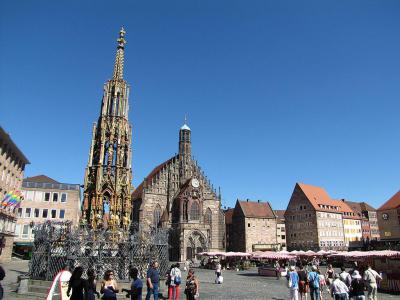
The Main Market Square has been the center of activity and commerce in Nuremberg since ancient times. The celebrated marketplace runs Monday through Saturday. Visitors and locals love to shop the plentiful fruits and vegetables, fresh bread, treats, ready-to-eat meals, and fresh flowers.
The Main Market Square features several iconic landmarks. The Beautiful Fountain was completed in 1396 and is a Gothic masterpiece. It stands an impressive 19 meters (62 feet) tall.
Forty ornate figures decorate the fountain. The figures represent important icons in the Holy Roman Empire such as philosophy, liberal arts, the four Church Fathers, the four Evangelists, the seven Prince-electors, the Nine Worthies, Moses, and the seven Prophets. Legend tells of good luck brought to visitors who spin the two brass rings on the fence.
Another impressive landmark on the square is The Church of Our Lady. This Gothic church was built in the 14th century and features a beautiful facade.
The Main Market Square hosts various festivals and events throughout the year. Popular events include the Nuremberg Flea Market, the Nuremberg Old Town Festival, and the Christmas market.
The Main Market Square features several iconic landmarks. The Beautiful Fountain was completed in 1396 and is a Gothic masterpiece. It stands an impressive 19 meters (62 feet) tall.
Forty ornate figures decorate the fountain. The figures represent important icons in the Holy Roman Empire such as philosophy, liberal arts, the four Church Fathers, the four Evangelists, the seven Prince-electors, the Nine Worthies, Moses, and the seven Prophets. Legend tells of good luck brought to visitors who spin the two brass rings on the fence.
Another impressive landmark on the square is The Church of Our Lady. This Gothic church was built in the 14th century and features a beautiful facade.
The Main Market Square hosts various festivals and events throughout the year. Popular events include the Nuremberg Flea Market, the Nuremberg Old Town Festival, and the Christmas market.
