Custom Walk in Belfast, Ireland by aj_manson55_a588e created on 2025-07-01
Guide Location: Ireland » Belfast
Guide Type: Custom Walk
# of Sights: 8
Tour Duration: 2 Hour(s)
Travel Distance: 4.9 Km or 3 Miles
Share Key: 3RBYS
Guide Type: Custom Walk
# of Sights: 8
Tour Duration: 2 Hour(s)
Travel Distance: 4.9 Km or 3 Miles
Share Key: 3RBYS
How It Works
Please retrieve this walk in the GPSmyCity app. Once done, the app will guide you from one tour stop to the next as if you had a personal tour guide. If you created the walk on this website or come to the page via a link, please follow the instructions below to retrieve the walk in the app.
Retrieve This Walk in App
Step 1. Download the app "GPSmyCity: Walks in 1K+ Cities" on Apple App Store or Google Play Store.



Step 2. In the GPSmyCity app, download(or launch) the guide "Belfast Map and Walking Tours".
Step 3. Tap the menu button located at upper right corner of the "Walks" screen and select "Retrieve custom walk". Enter the share key: 3RBYS
1) Crumlin Road Gaol (must see)
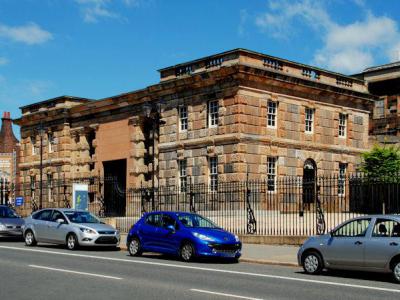
Crumlin Road Gaol, located in north Belfast, is one of the city's most compelling historical landmarks. Built between 1843 and 1845, the prison was operational for over 150 years and once held men, women, and children. Designed by Sir Charles Lanyon, the Victorian-era building was modeled on the radial prison design popular at the time, intended to improve surveillance and control. Now preserved as a museum and visitor attraction, it offers a stark insight into Northern Ireland’s troubled past and evolving justice system.
During its working years, Crumlin Road Gaol witnessed significant chapters of Irish history-from housing suffragettes and political prisoners during the Irish War of Independence to detaining individuals during the period known as The Troubles. The prison also held public executions, with the last hanging taking place in 1961. Visitors today can walk through restored cells, explore the underground tunnel that once connected the gaol to the nearby courthouse, and view the execution chamber that remains chillingly intact.
Guided tours and exhibitions detail the daily routines of prisoners, the harsh conditions they endured, and the broader political and social context that shaped the prison’s legacy. The preserved architecture, including its imposing facade and central hub layout, adds to the sense of immersion. Special events, evening ghost tours, and temporary exhibitions also offer unique ways to engage with the site.
Crumlin Road Gaol stands as a somber yet important reminder of Belfast’s complex history, inviting visitors to reflect on the intersections of punishment, politics, and human rights.
During its working years, Crumlin Road Gaol witnessed significant chapters of Irish history-from housing suffragettes and political prisoners during the Irish War of Independence to detaining individuals during the period known as The Troubles. The prison also held public executions, with the last hanging taking place in 1961. Visitors today can walk through restored cells, explore the underground tunnel that once connected the gaol to the nearby courthouse, and view the execution chamber that remains chillingly intact.
Guided tours and exhibitions detail the daily routines of prisoners, the harsh conditions they endured, and the broader political and social context that shaped the prison’s legacy. The preserved architecture, including its imposing facade and central hub layout, adds to the sense of immersion. Special events, evening ghost tours, and temporary exhibitions also offer unique ways to engage with the site.
Crumlin Road Gaol stands as a somber yet important reminder of Belfast’s complex history, inviting visitors to reflect on the intersections of punishment, politics, and human rights.
2) Belfast Cathedral (must see)
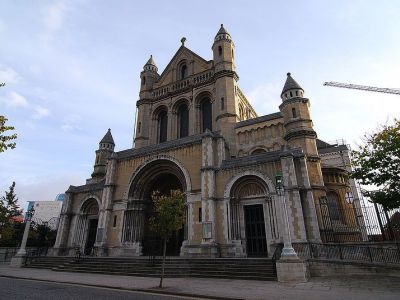
Belfast Cathedral, also known as Saint Anne’s Cathedral, stands as one of the city’s most striking landmarks, blending spiritual significance with architectural beauty. Located in the Cathedral Quarter-the historic heart of Belfast-this Anglican cathedral was founded in 1899 and has since become both a place of worship and a cultural hub. With its grand Romanesque Revival design, intricate mosaics, and commanding presence, the cathedral offers visitors a serene yet awe-inspiring atmosphere that reflects the city’s rich history and enduring spirit.
The building itself tells a story of resilience and ambition. Constructed over many decades, it combines late Victorian foundations with additions made throughout the 20th century, including the striking Spire of Hope, a modern stainless-steel spire added in 2007 that soars 40 meters into the sky. This striking feature, visible from across the city, symbolizes both faith and renewal. Inside, light streams through a kaleidoscope of stained glass, illuminating exquisite stonework and creating a setting that feels at once majestic and contemplative.
Visitors can explore remarkable artistic treasures, such as the elaborate mosaics designed by Sir Charles Nicholson and the stunning Chapel of the Holy Spirit, dedicated to those who lost their lives in the First World War. Another highlight is the “Spire of Hope” piercing through the cathedral roof, representing the city’s resilience and looking toward a brighter future. The cathedral also hosts concerts, exhibitions, and community events, extending its role beyond a sacred space to a vibrant gathering point for locals and visitors.
For travelers exploring Belfast, a stop at Saint Anne’s Cathedral provides not just a glimpse into the city’s religious heritage but also a chance to admire centuries of craftsmanship. Whether you’re drawn by its artistry, its peaceful atmosphere, or its role as a beacon of Belfast’s cultural life, the cathedral offers a moment of reflection and connection in the heart of Northern Ireland’s capital.
The building itself tells a story of resilience and ambition. Constructed over many decades, it combines late Victorian foundations with additions made throughout the 20th century, including the striking Spire of Hope, a modern stainless-steel spire added in 2007 that soars 40 meters into the sky. This striking feature, visible from across the city, symbolizes both faith and renewal. Inside, light streams through a kaleidoscope of stained glass, illuminating exquisite stonework and creating a setting that feels at once majestic and contemplative.
Visitors can explore remarkable artistic treasures, such as the elaborate mosaics designed by Sir Charles Nicholson and the stunning Chapel of the Holy Spirit, dedicated to those who lost their lives in the First World War. Another highlight is the “Spire of Hope” piercing through the cathedral roof, representing the city’s resilience and looking toward a brighter future. The cathedral also hosts concerts, exhibitions, and community events, extending its role beyond a sacred space to a vibrant gathering point for locals and visitors.
For travelers exploring Belfast, a stop at Saint Anne’s Cathedral provides not just a glimpse into the city’s religious heritage but also a chance to admire centuries of craftsmanship. Whether you’re drawn by its artistry, its peaceful atmosphere, or its role as a beacon of Belfast’s cultural life, the cathedral offers a moment of reflection and connection in the heart of Northern Ireland’s capital.
3) Royal Ulster Rifles Museum
Nestled in Belfast’s vibrant Cathedral Quarter, the Royal Ulster Rifles Museum offers visitors a compact yet compelling journey through over 175 years of regimental history. Housed discreetly on the second floor of a building on Bedford Street (with an alternative entrance on Waring Street), the museum is easy to miss but well worth seeking out. With free admission and expert volunteer guides, it’s a hidden gem that provides a rich insight into the lives and battles of soldiers from the local Ulster regiment.
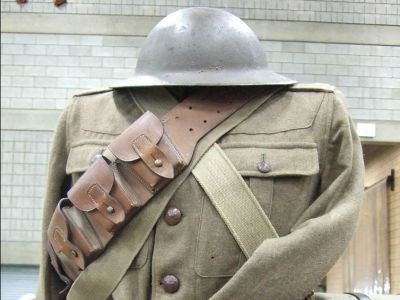
Upon entering, you’ll find a thoughtfully curated collection of uniforms, weapons, medals, photographs, and personal effects tracing the regiment’s evolution from the 83rd and 86th Foot in 1793 to the Royal Ulster Rifles renaming in 1921-and onward through World Wars I & II, Korea, Cyprus, and Borneo. Highlights include World War I trench artifacts, D‑Day and Korean War memorabilia, and interactive displays allowing hands-on exploration.
Despite its modest size, the museum is packed with detail, and feedback from visitors is consistently positive. Patrons appreciate the knowledgeable, welcoming staff and the well‑documented displays, describing the museum as “a small but fascinating” slice of military heritage. Though not large, its intimate setting fosters meaningful encounters with stories of courage, sacrifice, and the indomitable Ulster spirit.
Whether you’re a history buff or curious explorer, the Royal Ulster Rifles Museum offers a memorable and free addition to your Belfast itinerary, bringing to life the local stories behind global conflicts.
Upon entering, you’ll find a thoughtfully curated collection of uniforms, weapons, medals, photographs, and personal effects tracing the regiment’s evolution from the 83rd and 86th Foot in 1793 to the Royal Ulster Rifles renaming in 1921-and onward through World Wars I & II, Korea, Cyprus, and Borneo. Highlights include World War I trench artifacts, D‑Day and Korean War memorabilia, and interactive displays allowing hands-on exploration.
Despite its modest size, the museum is packed with detail, and feedback from visitors is consistently positive. Patrons appreciate the knowledgeable, welcoming staff and the well‑documented displays, describing the museum as “a small but fascinating” slice of military heritage. Though not large, its intimate setting fosters meaningful encounters with stories of courage, sacrifice, and the indomitable Ulster spirit.
Whether you’re a history buff or curious explorer, the Royal Ulster Rifles Museum offers a memorable and free addition to your Belfast itinerary, bringing to life the local stories behind global conflicts.
4) Belfast City Hall (must see)
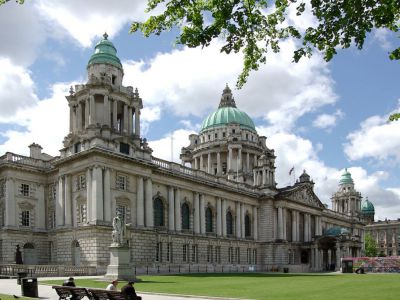
Belfast City Hall is a grand Edwardian Baroque masterpiece that dominates Donegall Square in the heart of Belfast’s city centre. Designed by Sir Alfred Brumwell Thomas and completed in 1906, this iconic building features gleaming Portland stone, a striking copper-domed roof rising 173 ft, and ornate detailing that reflects Belfast’s civic pride. It was built on the former site of the White Linen Hall to mark the city’s growing importance-thanks to its booming linen, shipbuilding, and engineering industries-and to cement its new city status granted in 1888.
Step inside and you’ll be greeted by splendid interiors such as the grand marble staircase, mosaic floors, and exquisitely carved oak and marble-clad spaces like the Council Chamber and Banquet Hall-noting the latter was rebuilt after damage during the Belfast Blitz in 1941. The stained-glass windows are spectacular, showcasing the Belfast coat of arms, portraits of British monarchs, and emblems of the city’s historical provinces. Guided tours last about 45 minutes and offer access to areas normally closed to the public, alongside a 16-room Visitor Exhibition that brings Belfast’s past to life via multilingual audio guides.
Outside, the beautifully landscaped grounds are home to significant memorials and statues, including the impressive Titanic Memorial Garden, the Cenotaph and Garden of Remembrance for war victims, and notable figures such as Queen Victoria, Edward Harland, Mary Ann McCracken, Winifred Carney, and James Magennis VC. These serene lawns offer a peaceful counterpoint to the bustling city around them.
For visitors, City Hall is much more than a civic landmark-it’s a hub of culture and community. Drop into the Bobbin Coffee Shop inside, peruse the gift shop for local keepsakes, or join a free tour (first-come, first-served) at scheduled times. Evening illuminations beautifully accent the exterior, making it a particularly atmospheric spot after dark. Whether you're fascinated by architecture, history, or simply looking for a picturesque gathering place, Belfast City Hall is an essential stop on your journey through Belfast.
Step inside and you’ll be greeted by splendid interiors such as the grand marble staircase, mosaic floors, and exquisitely carved oak and marble-clad spaces like the Council Chamber and Banquet Hall-noting the latter was rebuilt after damage during the Belfast Blitz in 1941. The stained-glass windows are spectacular, showcasing the Belfast coat of arms, portraits of British monarchs, and emblems of the city’s historical provinces. Guided tours last about 45 minutes and offer access to areas normally closed to the public, alongside a 16-room Visitor Exhibition that brings Belfast’s past to life via multilingual audio guides.
Outside, the beautifully landscaped grounds are home to significant memorials and statues, including the impressive Titanic Memorial Garden, the Cenotaph and Garden of Remembrance for war victims, and notable figures such as Queen Victoria, Edward Harland, Mary Ann McCracken, Winifred Carney, and James Magennis VC. These serene lawns offer a peaceful counterpoint to the bustling city around them.
For visitors, City Hall is much more than a civic landmark-it’s a hub of culture and community. Drop into the Bobbin Coffee Shop inside, peruse the gift shop for local keepsakes, or join a free tour (first-come, first-served) at scheduled times. Evening illuminations beautifully accent the exterior, making it a particularly atmospheric spot after dark. Whether you're fascinated by architecture, history, or simply looking for a picturesque gathering place, Belfast City Hall is an essential stop on your journey through Belfast.
5) Albert Memorial Clock
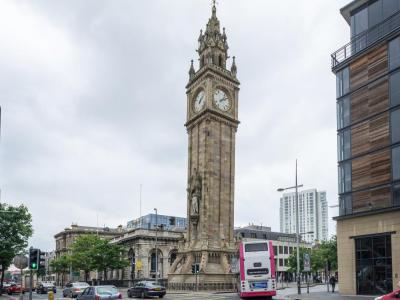
The Albert Memorial Clock, often simply called the Albert Clock, is one of Belfast’s most recognisable landmarks. Perched in Queen’s Square at the east end of High Street, this Gothic Revival clock tower was built between 1865 and 1869 as a memorial to Prince Albert, consort to Queen Victoria. Designed by the accomplished architect W. J. Barre, also famed for Belfast's Ulster Hall, it stands approximately 113 feet (34 meters) tall.
Constructed of pinkish Scrabo sandstone, the tower blends French and Italian Gothic styles, adorned with flying buttresses, heraldic lions, angels, gargoyles, floral motifs, and crowned by an ornate octagonal belfry. A striking life-size statue of Prince Albert in the robes of a Knight of the Garter, sculpted by S. F. Lynn, stands on the west face. Inside, a two-tonne bell cast by Francis Moore could once be heard up to 8 miles away.
One of the tower’s most intriguing quirks is its lean-an eastward tilt of about four feet-earning it the affectionate nickname “Belfast’s Leaning Tower of Pisa.” The tilt resulted from the tower being built on reclaimed, marshy ground near the River Farset, supported on timber piles. Ornamental pinnacles and the statue canopy were removed in 1924 to ease stress, and a substantial restoration between 2000 and 2002 reinforced the foundations and reinstated lost carvings.
Today, the Albert Clock stands as a poetic fusion of Victorian craftsmanship, civic pride, and idiosyncratic charm. It survived damage from an IRA bomb in 1992, and its tilted stance and intricate stonework make it a delightful must-see for architecture buffs, history lovers, and photographers alike. Whether admired by day or illuminated at night, it richly rewards a stroll through Belfast’s Cathedral Quarter.
Constructed of pinkish Scrabo sandstone, the tower blends French and Italian Gothic styles, adorned with flying buttresses, heraldic lions, angels, gargoyles, floral motifs, and crowned by an ornate octagonal belfry. A striking life-size statue of Prince Albert in the robes of a Knight of the Garter, sculpted by S. F. Lynn, stands on the west face. Inside, a two-tonne bell cast by Francis Moore could once be heard up to 8 miles away.
One of the tower’s most intriguing quirks is its lean-an eastward tilt of about four feet-earning it the affectionate nickname “Belfast’s Leaning Tower of Pisa.” The tilt resulted from the tower being built on reclaimed, marshy ground near the River Farset, supported on timber piles. Ornamental pinnacles and the statue canopy were removed in 1924 to ease stress, and a substantial restoration between 2000 and 2002 reinforced the foundations and reinstated lost carvings.
Today, the Albert Clock stands as a poetic fusion of Victorian craftsmanship, civic pride, and idiosyncratic charm. It survived damage from an IRA bomb in 1992, and its tilted stance and intricate stonework make it a delightful must-see for architecture buffs, history lovers, and photographers alike. Whether admired by day or illuminated at night, it richly rewards a stroll through Belfast’s Cathedral Quarter.

6) The Big Fish
The Big Fish-also known locally and lovingly as the Big Blue Fish-is one of Belfast’s most eye-catching and cherished public art pieces. Created by artist John Kindness in 1999, this 10-meter-long ceramic mosaic sculpture was installed at Donegall Quay, near the Lagan Lookout and Customs House, to mark the regeneration of the River Lagan. Officially a salmon (yes, the signs confirm it!), it stands right where the River Farset, from which Belfast gets its name (Béal Feirste meaning "mouth of the Farset"), meets the Lagan. The sculpture is hard to miss-not just because of its size, but because it sits at the very heart of the city’s history.
What makes The Big Fish truly special is its skin. Each shimmering blue ceramic tile is printed with texts, illustrations, and images that collectively tell the story of Belfast. From Tudor-era maps to 20th-century headlines, it’s like a visual time capsule. There are even drawings by schoolchildren and community members, adding a personal and playful layer to the piece-including an Ulster Fry and a cheerful soldier. Contributions came from local schools and day centres, while historic imagery was provided by the Ulster Museum. Inside the fish, there’s a literal time capsule too, containing images, poetry, and documents about the city.
More than just a quirky photo spot, the Big Fish is a symbol of Belfast’s cultural rebirth and deep connection to the water that shaped it. Locals might chuckle at its playful nicknames, but there’s no denying that this gleaming salmon has swum its way into the city’s heart-and become one of its most iconic landmarks.
What makes The Big Fish truly special is its skin. Each shimmering blue ceramic tile is printed with texts, illustrations, and images that collectively tell the story of Belfast. From Tudor-era maps to 20th-century headlines, it’s like a visual time capsule. There are even drawings by schoolchildren and community members, adding a personal and playful layer to the piece-including an Ulster Fry and a cheerful soldier. Contributions came from local schools and day centres, while historic imagery was provided by the Ulster Museum. Inside the fish, there’s a literal time capsule too, containing images, poetry, and documents about the city.
More than just a quirky photo spot, the Big Fish is a symbol of Belfast’s cultural rebirth and deep connection to the water that shaped it. Locals might chuckle at its playful nicknames, but there’s no denying that this gleaming salmon has swum its way into the city’s heart-and become one of its most iconic landmarks.

7) Beacon of Hope
The Beacon of Hope is a public art sculpture located in Thanksgiving Square, created by Scottish artist Andy Scott. Standing 19.5 meters tall, it was completed in 2007 after six years of planning and construction. The sculpture portrays a graceful female figure made of stainless steel and bronze, spiraling upwards with an outstretched arm holding a symbolic "ring of thanksgiving." At her feet rests a bronze globe that represents peace, harmony, and the global connections of Belfast-marking cities to which its people and industries have migrated or contributed. Over time, the sculpture has earned affectionate local nicknames such as "Nuala with the Hula," "The Bell on the Ball," and "The Thing with the Ring."
More than just a beautiful addition to Belfast’s skyline, the Beacon of Hope carries a deep message of reconciliation and gratitude. The idea for the sculpture was originally inspired by Myrtle Smyth, who was moved by her visit to Thanks-Giving Square in Dallas, Texas. Andy Scott brought that vision to life, with the piece becoming a symbol of the city's renewal and its ongoing journey towards peace. Fabrication was carried out by P.F. Copeland in Newtownabbey, and the bronze globe was cast by Beltane Studios in Peebles. The sculpture quickly gained popularity and has since been embraced by the Belfast City Council, local businesses, tourism boards, and even television companies as a symbol of civic pride.
Today, the Beacon of Hope stands not only as one of the tallest sculptures in Belfast but also as one of its most iconic. With its soaring figure, powerful symbolism, and universal message, it has become a beloved landmark-celebrated for both its artistic merit and its representation of Belfast’s resilient and outward-looking spirit.
More than just a beautiful addition to Belfast’s skyline, the Beacon of Hope carries a deep message of reconciliation and gratitude. The idea for the sculpture was originally inspired by Myrtle Smyth, who was moved by her visit to Thanks-Giving Square in Dallas, Texas. Andy Scott brought that vision to life, with the piece becoming a symbol of the city's renewal and its ongoing journey towards peace. Fabrication was carried out by P.F. Copeland in Newtownabbey, and the bronze globe was cast by Beltane Studios in Peebles. The sculpture quickly gained popularity and has since been embraced by the Belfast City Council, local businesses, tourism boards, and even television companies as a symbol of civic pride.
Today, the Beacon of Hope stands not only as one of the tallest sculptures in Belfast but also as one of its most iconic. With its soaring figure, powerful symbolism, and universal message, it has become a beloved landmark-celebrated for both its artistic merit and its representation of Belfast’s resilient and outward-looking spirit.
8) Titanic Belfast (must see)
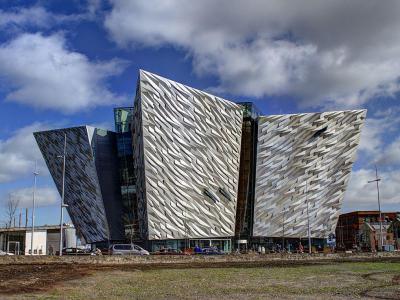
Nestled in the heart of Belfast’s revitalized Titanic Quarter, Titanic Belfast stands as a striking modern monument to one of history’s most famous ocean liners. Opened in 2012 on the very site where RMS Titanic was designed, built, and launched, the building’s jagged silvery exterior-crafted from over 3,000 aluminum shards-evokes the image of ship bows cutting through water and shimmering ice crystals.
Inside, the visitor experience unfolds across nine immersive galleries that chronicle Titanic’s entire journey-from conception and engineering marvels in Belfast’s bustling shipyards, through its tragic maiden voyage in 1912, to the discovery of its wreck and the evolution of modern maritime safety. Interactive displays, atmospheric dark-rides, full-scale cabin recreations and a rotating 7.6 meters scale model bring the narrative to life. A returning visitor on Reddit noted the focus is more on Titanic’s birthplace and industrial heritage, rather than the tragedy itself, which might influence your expectations.
Your ticket also includes access to SS Nomadic, the last surviving White Star Line vessel and Titanic’s original tender, moored nearby in Hamilton Dock. For a deeper dive, the optional Discovery Walking Tour guides you through the original Harland & Wolff drawing offices, historic slipways, and the launch site, with compelling architectural metaphors embedded in the building’s exterior.
Titanic Belfast is more than a museum-it’s the cultural heart of the Titanic Quarter, a regeneration success story and a gateway to Belfast’s evolving maritime narrative. Pair your visit with a stop at the Galley Café or Bistro 401 for locally sourced fare, and don’t miss the gift shop filled with artisan goods.
Inside, the visitor experience unfolds across nine immersive galleries that chronicle Titanic’s entire journey-from conception and engineering marvels in Belfast’s bustling shipyards, through its tragic maiden voyage in 1912, to the discovery of its wreck and the evolution of modern maritime safety. Interactive displays, atmospheric dark-rides, full-scale cabin recreations and a rotating 7.6 meters scale model bring the narrative to life. A returning visitor on Reddit noted the focus is more on Titanic’s birthplace and industrial heritage, rather than the tragedy itself, which might influence your expectations.
Your ticket also includes access to SS Nomadic, the last surviving White Star Line vessel and Titanic’s original tender, moored nearby in Hamilton Dock. For a deeper dive, the optional Discovery Walking Tour guides you through the original Harland & Wolff drawing offices, historic slipways, and the launch site, with compelling architectural metaphors embedded in the building’s exterior.
Titanic Belfast is more than a museum-it’s the cultural heart of the Titanic Quarter, a regeneration success story and a gateway to Belfast’s evolving maritime narrative. Pair your visit with a stop at the Galley Café or Bistro 401 for locally sourced fare, and don’t miss the gift shop filled with artisan goods.
