Custom Walk in Reykjavik, Iceland by cookiechambers7795 created on 2025-07-08
Guide Location: Iceland » Reykjavik
Guide Type: Custom Walk
# of Sights: 12
Tour Duration: 3 Hour(s)
Travel Distance: 5.5 Km or 3.4 Miles
Share Key: XU3H3
Guide Type: Custom Walk
# of Sights: 12
Tour Duration: 3 Hour(s)
Travel Distance: 5.5 Km or 3.4 Miles
Share Key: XU3H3
How It Works
Please retrieve this walk in the GPSmyCity app. Once done, the app will guide you from one tour stop to the next as if you had a personal tour guide. If you created the walk on this website or come to the page via a link, please follow the instructions below to retrieve the walk in the app.
Retrieve This Walk in App
Step 1. Download the app "GPSmyCity: Walks in 1K+ Cities" on Apple App Store or Google Play Store.



Step 2. In the GPSmyCity app, download(or launch) the guide "Reykjavik Map and Walking Tours".
Step 3. Tap the menu button located at upper right corner of the "Walks" screen and select "Retrieve custom walk". Enter the share key: XU3H3
1) Althingishus (The Parliament House)
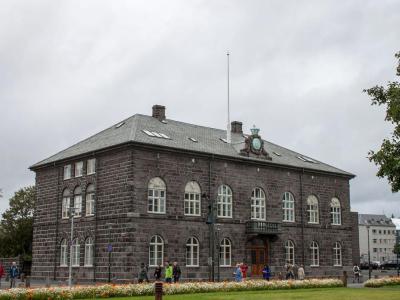
The Parliament House is one of the most historically and politically significant buildings in Reykjavík. Designed by Danish architect Ferdinand Meldahl and completed in 1881, the building was constructed to house the Althingi, an institution first established in 930 AD and among the oldest parliamentary bodies in the world. Over the centuries, as meetings have been held here since 1884, the structure itself has been repurposed at different times—also housing the University of Iceland and the offices of the President—before focusing solely on parliamentary functions.
The building itself is modest in scale, reflecting Iceland’s preference for restraint. Constructed from hewn dolerite, a subvolcanic rock, it is one of the oldest stone buildings in the country. Its symmetrical, classical façade is enriched with the first major highlight: the Land Spirits reliefs. To find these, look specifically at the tympanums above the windows, which reveal Iceland’s four legendary protectors—a dragon, an eagle, a bull, and a giant—drawn from Norse tradition. On the north side, you can also spot the crown and crest of King Christian IX, linking the structure to Iceland’s period under Danish rule.
Inside, the parliament continues to function as the center of Iceland’s political life. The central debating chamber is located on the upper floor of the building, serving as the heart of the nation's legislative work. To find this highlight, visitors usually access the public gallery during sessions; it reveals the semi-circular seating where the Althingi convenes. Once you find yourself inside, look for the historic woodwork and the large windows that face out toward the square.
Beneath the main levels and behind the building lies a small garden, which represents the oldest public garden in Iceland. To find this highlight, walk around the side of the main stone structure to the rear of the property. Once you find yourself in this quiet space, look for the original 19th-century layout and the small pond once used as a peaceful retreat for parliamentarians.
Facing the building's entrance in Austurvöllur Square stands a bronze statue of Jón Sigurðsson, the revered leader of Iceland’s 19th-century independence movement.
Visitors should note that while the exterior is always accessible, interior access for the public is generally limited to scheduled tours or gallery sessions, so checking the session calendar ahead of time is advisable.
The building itself is modest in scale, reflecting Iceland’s preference for restraint. Constructed from hewn dolerite, a subvolcanic rock, it is one of the oldest stone buildings in the country. Its symmetrical, classical façade is enriched with the first major highlight: the Land Spirits reliefs. To find these, look specifically at the tympanums above the windows, which reveal Iceland’s four legendary protectors—a dragon, an eagle, a bull, and a giant—drawn from Norse tradition. On the north side, you can also spot the crown and crest of King Christian IX, linking the structure to Iceland’s period under Danish rule.
Inside, the parliament continues to function as the center of Iceland’s political life. The central debating chamber is located on the upper floor of the building, serving as the heart of the nation's legislative work. To find this highlight, visitors usually access the public gallery during sessions; it reveals the semi-circular seating where the Althingi convenes. Once you find yourself inside, look for the historic woodwork and the large windows that face out toward the square.
Beneath the main levels and behind the building lies a small garden, which represents the oldest public garden in Iceland. To find this highlight, walk around the side of the main stone structure to the rear of the property. Once you find yourself in this quiet space, look for the original 19th-century layout and the small pond once used as a peaceful retreat for parliamentarians.
Facing the building's entrance in Austurvöllur Square stands a bronze statue of Jón Sigurðsson, the revered leader of Iceland’s 19th-century independence movement.
Visitors should note that while the exterior is always accessible, interior access for the public is generally limited to scheduled tours or gallery sessions, so checking the session calendar ahead of time is advisable.
2) Austurvöllur Square
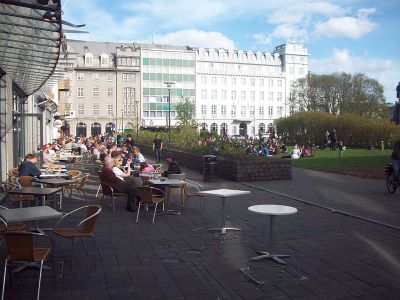
Austurvöllur Square serves as the main public square in Reykjavík and a focal point of both daily life and national identity. The square took shape in the 18th and 19th centuries as Reykjavík developed into an administrative centre. Originally an open field on the eastern side of the early settlement—reflected in its name, meaning “Eastern Field”—it gradually evolved into a structured space framed by key landmarks, including the Parliament House, Reykjavík Cathedral, and Hotel Borg, along with a concentration of cafés, restaurants, and bars.
At the centre of the square stands a statue of Jón Sigurðsson, unveiled in 1911 to mark the centenary of his birth. Nearby, Hotel Borg adds another historical layer: built in 1930 by Jóhannes Jósefsson, who competed in the 1908 Summer Olympics, the Art Deco building was conceived as a luxury hotel ahead of the 1,000th anniversary of Iceland’s parliament and has since hosted politicians, dignitaries, and celebrities.
Today, Austurvöllur functions as both a gathering place and a social hub. In summer, the square fills with locals and visitors enjoying outdoor cafés and open space, while in winter it takes on a quieter atmosphere, often marked by the presence of a large Christmas tree.
At the centre of the square stands a statue of Jón Sigurðsson, unveiled in 1911 to mark the centenary of his birth. Nearby, Hotel Borg adds another historical layer: built in 1930 by Jóhannes Jósefsson, who competed in the 1908 Summer Olympics, the Art Deco building was conceived as a luxury hotel ahead of the 1,000th anniversary of Iceland’s parliament and has since hosted politicians, dignitaries, and celebrities.
Today, Austurvöllur functions as both a gathering place and a social hub. In summer, the square fills with locals and visitors enjoying outdoor cafés and open space, while in winter it takes on a quieter atmosphere, often marked by the presence of a large Christmas tree.
3) Tjornin Lake
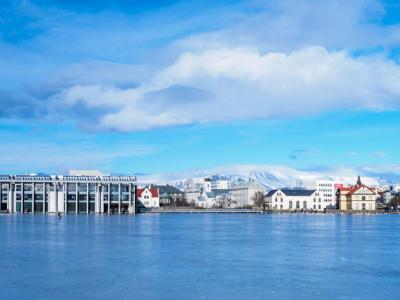
Tjörnin (The Pond) is a small lake located in the heart of Reykjavík. It's a common sight for tourists, being next to Reykjavik City Hall and various museums. Historically, it formed from a lagoon that was once part of a reef where Harbour Street (Hafnarstræti) now is. This street runs along the southern edge of the lake and leads to nearby gardens.
In winter, The Pond freezes at times, becoming a popular spot for ice skating. It's relatively shallow, with an average depth of 0.57 meters (about 1.9 feet) and a maximum depth of 0.8 meters (around 2.4 feet). Paved paths run along both sides of the lake, ending at the Concert Hall Park (Hljómskálagarður), adorned with statues, to its south. These paths are often used by joggers and cyclists, and there are boards displaying daily bird counts on the lake.
The Pond is a haven for birdwatchers, attracting 40 to 50 types of water birds, like the Arctic tern, Eider, Gadwall, Greylag goose, different goose species, Mallard, various seagulls, and the scaup. It's also a great spot to see Whooper swans up close. The arrival of the Arctic tern is a sign of summer's beginning, drawing bird enthusiasts from across the North Atlantic. The lake is a popular place for parents to bring children to watch and feed birds, earning it the playful nickname "the biggest bread soup in the world."
A wooden bridge for pedestrians was built over The Pond in 1920. To better support vehicles, it was replaced with a concrete bridge in 1942, which remains in use today.
In winter, The Pond freezes at times, becoming a popular spot for ice skating. It's relatively shallow, with an average depth of 0.57 meters (about 1.9 feet) and a maximum depth of 0.8 meters (around 2.4 feet). Paved paths run along both sides of the lake, ending at the Concert Hall Park (Hljómskálagarður), adorned with statues, to its south. These paths are often used by joggers and cyclists, and there are boards displaying daily bird counts on the lake.
The Pond is a haven for birdwatchers, attracting 40 to 50 types of water birds, like the Arctic tern, Eider, Gadwall, Greylag goose, different goose species, Mallard, various seagulls, and the scaup. It's also a great spot to see Whooper swans up close. The arrival of the Arctic tern is a sign of summer's beginning, drawing bird enthusiasts from across the North Atlantic. The lake is a popular place for parents to bring children to watch and feed birds, earning it the playful nickname "the biggest bread soup in the world."
A wooden bridge for pedestrians was built over The Pond in 1920. To better support vehicles, it was replaced with a concrete bridge in 1942, which remains in use today.
4) Bæjarins beztu (The Town's Best Hot Dogs)
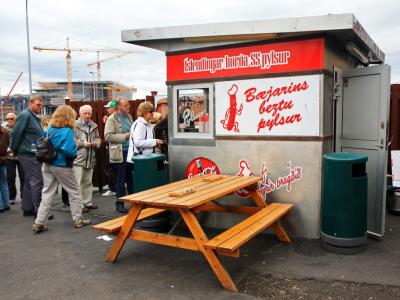
"The Town's Best Hot Dogs" (Bæjarins Beztu Pylsur) is a small chain of hot dog stands in Reykjavík. This chain has been in continuous operation since 1937 when it was originally established on Austurstræti street, right at the heart of the city. It was founded by the grandfather of the current owner, Guðrún Kristmundsdóttir. In the 1960s, the stand relocated a couple of streets north to Tryggvagata, right across from the Harpa Concert Hall, where the main flagship stand still operates today.
In August 2004, the stand gained widespread attention when it was visited by the former President of the United States, Bill Clinton, during his trip to Iceland for a UNICEF conference. This high-profile visit significantly boosted the stand's popularity, leading to its inclusion in various tourist guidebooks about Iceland. Just two years later, in August 2006, the renowned British newspaper, The Guardian, declared Bæjarins Beztu as the best hot dog stand in Europe.
Today, this chain is a favorite among both tourists and local residents alike. There are three more locations within the city, collectively selling over a thousand hot dogs on a bustling day.
The hot dogs offered by Bæjarins Beztu are primarily lamb-based but also contain pork and beef. They are served in a bun and come with a variety of condiment options, including ketchup, sweet mustard, remoulade, crispy fried onions, and raw onions. Customers who wish to have all the available toppings often use the Icelandic phrase "eina með öllu," which translates to "one with everything" in English.
In August 2004, the stand gained widespread attention when it was visited by the former President of the United States, Bill Clinton, during his trip to Iceland for a UNICEF conference. This high-profile visit significantly boosted the stand's popularity, leading to its inclusion in various tourist guidebooks about Iceland. Just two years later, in August 2006, the renowned British newspaper, The Guardian, declared Bæjarins Beztu as the best hot dog stand in Europe.
Today, this chain is a favorite among both tourists and local residents alike. There are three more locations within the city, collectively selling over a thousand hot dogs on a bustling day.
The hot dogs offered by Bæjarins Beztu are primarily lamb-based but also contain pork and beef. They are served in a bun and come with a variety of condiment options, including ketchup, sweet mustard, remoulade, crispy fried onions, and raw onions. Customers who wish to have all the available toppings often use the Icelandic phrase "eina með öllu," which translates to "one with everything" in English.
5) Whales of Iceland Exhibition (must see)
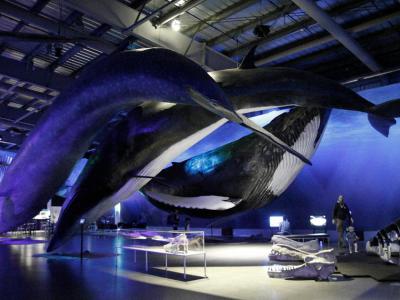
Whales of Iceland Exhibition is a modern museum dedicated to the marine giants that inhabit the waters around Iceland. Opened in 2015 in the Grandi harbour district, the exhibition was created to bring together scientific knowledge, conservation awareness, and visual storytelling in a single indoor space.
The exhibition is best known for its 23 full-scale whale models, representing every whale species found in Icelandic waters. Suspended within a large, dimly lit hall, these life-size replicas include a 25-meter-long blue whale, alongside species such as the humpback whale, sperm whale, orca, and the critically endangered Atlantic right whale.
Unlike traditional displays, the models are designed to be touched, with soft, flexible surfaces that allow visitors to better understand the size and texture of these animals. Informational panels and interactive stands provide clear explanations of anatomy, behavior, migration patterns, and feeding habits, encouraging visitors of all ages to engage more deeply.
Beyond the visual impact, the exhibition incorporates sound and atmosphere to recreate an underwater environment. Gentle ambient lighting, paired with recorded whale calls, creates a calm setting, while the black-and-yellow floor reflects Iceland’s coastal landscape. Interactive elements explore communication, echolocation, and conservation challenges, while also addressing the history of whaling in Iceland.
Visitors can use virtual reality glasses to explore an underwater world, simulating a walk along the seafloor among whales while learning about different species. An audio guide, available in English, German, and Icelandic, and daily guided tours are included at no extra cost.
The exhibition is best known for its 23 full-scale whale models, representing every whale species found in Icelandic waters. Suspended within a large, dimly lit hall, these life-size replicas include a 25-meter-long blue whale, alongside species such as the humpback whale, sperm whale, orca, and the critically endangered Atlantic right whale.
Unlike traditional displays, the models are designed to be touched, with soft, flexible surfaces that allow visitors to better understand the size and texture of these animals. Informational panels and interactive stands provide clear explanations of anatomy, behavior, migration patterns, and feeding habits, encouraging visitors of all ages to engage more deeply.
Beyond the visual impact, the exhibition incorporates sound and atmosphere to recreate an underwater environment. Gentle ambient lighting, paired with recorded whale calls, creates a calm setting, while the black-and-yellow floor reflects Iceland’s coastal landscape. Interactive elements explore communication, echolocation, and conservation challenges, while also addressing the history of whaling in Iceland.
Visitors can use virtual reality glasses to explore an underwater world, simulating a walk along the seafloor among whales while learning about different species. An audio guide, available in English, German, and Icelandic, and daily guided tours are included at no extra cost.
6) Reykjavik Old Harbor
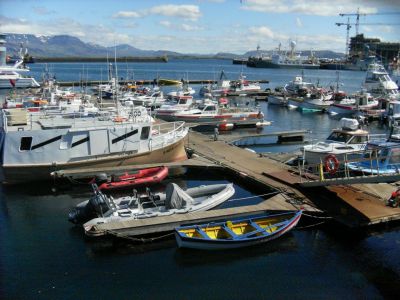
Reykjavík Old Harbor offers a clear view into the city’s maritime past and its ongoing transformation. Built between 1913 and 1917, the harbour was originally developed to support fisheries and trade, becoming a key driver of Reykjavík’s rise as Iceland’s capital. This natural harbour had already attracted early settlers, including Ingólfur Arnarson, who chose the area for its sheltered coastline. By the early 20th century, it had become central to Iceland’s fishing industry and economic growth, a role it still maintains today, although tourism now plays a leading part.
Many excursions depart from here, including whale-watching trips where visitors may spot dolphins, minke and humpback whales, and occasionally orcas or even larger species. Puffin tours are also popular, and in winter, boats head out for Northern Lights cruises.
On land, former warehouses and fishing houses have been converted into cafés, restaurants, galleries, and small museums. A key example of this revitalisation is the Grandi Mathöll, a vibrant food hall located in a former fish-processing plant that showcases the city's modern culinary diversity. Places like Bæjarins Beztu Pylsur, a hot dog stand operating since 1937, and Matur & Drykkur, known for traditional Icelandic cuisine, reflect both everyday and refined dining. The former was visited by former U.S. President Bill Clinton in 2004, who called their hot dogs “the world’s best.” The latter is a fine-dining restaurant that serves traditional Icelandic fare and is mentioned in the Michelin Guide.
Art galleries, museums, and cinemas are other attractions in this scenic location. The Reykjavík Maritime Museum, housed in a former freezing plant, provides insight into the fishing history that shaped the harbour. Gallery i8 is known as one of Iceland's leading modern art galleries.
With views across Faxaflói Bay toward Mount Esja, the harbour remains one of Reykjavík’s most photogenic and active areas.
Many excursions depart from here, including whale-watching trips where visitors may spot dolphins, minke and humpback whales, and occasionally orcas or even larger species. Puffin tours are also popular, and in winter, boats head out for Northern Lights cruises.
On land, former warehouses and fishing houses have been converted into cafés, restaurants, galleries, and small museums. A key example of this revitalisation is the Grandi Mathöll, a vibrant food hall located in a former fish-processing plant that showcases the city's modern culinary diversity. Places like Bæjarins Beztu Pylsur, a hot dog stand operating since 1937, and Matur & Drykkur, known for traditional Icelandic cuisine, reflect both everyday and refined dining. The former was visited by former U.S. President Bill Clinton in 2004, who called their hot dogs “the world’s best.” The latter is a fine-dining restaurant that serves traditional Icelandic fare and is mentioned in the Michelin Guide.
Art galleries, museums, and cinemas are other attractions in this scenic location. The Reykjavík Maritime Museum, housed in a former freezing plant, provides insight into the fishing history that shaped the harbour. Gallery i8 is known as one of Iceland's leading modern art galleries.
With views across Faxaflói Bay toward Mount Esja, the harbour remains one of Reykjavík’s most photogenic and active areas.
7) Harpa Concert Hall and Conference Centre (must see)
Located on the waterfront of Reykjavík, Harpa Concert Hall and Conference Centre stands as one of the city’s most distinctive modern landmarks and a symbol of Iceland’s cultural renewal in the early 21st century. The project was shaped by the 2008 financial crisis, which delayed construction, before being completed as a public initiative and officially opening in 2011.
As the first purpose-built concert hall in Reykjavík, Harpa became a central home for the Iceland Symphony Orchestra and houses the offices of the Icelandic Opera, while also hosting performances by groups such as the Reykjavík Big Band.
Beyond classical concerts and opera, Harpa hosts a wide range of events, from international conferences to themed shows such as How to Become Icelandic in 60 Minutes and Reykjavík Classics. The venue has also appeared in productions like Black Mirror and Sense8.
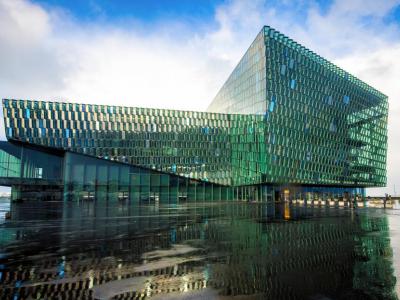
Architecturally, Harpa is defined by its impressive façade of geometric, honeycomb-like glass panels set over a steel framework. The central architectural highlight is the "Quasi-Brick" façade, located primarily on the south side of the building facing the sea. To find the best perspective, stand in the main atrium and look upward; you can see the twelve-sided glass modules. Inspired by Iceland’s basalt formations, the panels shift in colour and reflect changing light conditions, giving the building a dynamic appearance—especially after dark, when it becomes one of the city’s most visually impressive sights. This innovative design earned Harpa the European Union’s Mies van der Rohe Award in 2013, along with recognition as one of Northern Europe’s leading conference venues.
Inside, the building opens into a spacious atrium where light and structure interact throughout the day. The main concert hall, Eldborg, is located within the central core of the building. To find it, follow the main floor corridor from the lobby and ascend the grand staircases toward the "heart" of the structure. Eldborg is known for its warm red interior, designed to evoke a glowing volcanic crater, and its carefully engineered acoustics. Once you find yourself inside, look for the massive adjustable acoustic panels and the deep red walls that give the hall its distinctive "Fire Castle" atmosphere.
A final notable highlight is the Harbor View Walkways located on the upper levels of the sea-facing atrium. To reach this area, take the elevator or stairs to the fourth floor and walk toward the glass perimeter. From here, visitors are offered wide views over the city’s colorful rooftops and the North Atlantic.
Outside, in the water beside the building, stands The Musician, a 1970 sculpture depicting a cellist, relocated here from the orchestra’s former home. Visitors should note that as a functioning venue, certain halls may be closed for rehearsals, so checking the daily schedule at the information desk is advisable.
As the first purpose-built concert hall in Reykjavík, Harpa became a central home for the Iceland Symphony Orchestra and houses the offices of the Icelandic Opera, while also hosting performances by groups such as the Reykjavík Big Band.
Beyond classical concerts and opera, Harpa hosts a wide range of events, from international conferences to themed shows such as How to Become Icelandic in 60 Minutes and Reykjavík Classics. The venue has also appeared in productions like Black Mirror and Sense8.
Architecturally, Harpa is defined by its impressive façade of geometric, honeycomb-like glass panels set over a steel framework. The central architectural highlight is the "Quasi-Brick" façade, located primarily on the south side of the building facing the sea. To find the best perspective, stand in the main atrium and look upward; you can see the twelve-sided glass modules. Inspired by Iceland’s basalt formations, the panels shift in colour and reflect changing light conditions, giving the building a dynamic appearance—especially after dark, when it becomes one of the city’s most visually impressive sights. This innovative design earned Harpa the European Union’s Mies van der Rohe Award in 2013, along with recognition as one of Northern Europe’s leading conference venues.
Inside, the building opens into a spacious atrium where light and structure interact throughout the day. The main concert hall, Eldborg, is located within the central core of the building. To find it, follow the main floor corridor from the lobby and ascend the grand staircases toward the "heart" of the structure. Eldborg is known for its warm red interior, designed to evoke a glowing volcanic crater, and its carefully engineered acoustics. Once you find yourself inside, look for the massive adjustable acoustic panels and the deep red walls that give the hall its distinctive "Fire Castle" atmosphere.
A final notable highlight is the Harbor View Walkways located on the upper levels of the sea-facing atrium. To reach this area, take the elevator or stairs to the fourth floor and walk toward the glass perimeter. From here, visitors are offered wide views over the city’s colorful rooftops and the North Atlantic.
Outside, in the water beside the building, stands The Musician, a 1970 sculpture depicting a cellist, relocated here from the orchestra’s former home. Visitors should note that as a functioning venue, certain halls may be closed for rehearsals, so checking the daily schedule at the information desk is advisable.
8) The Handknitting Association of Iceland
For a long time, sheep have been vital to Icelanders, providing the wool necessary for knitting warm clothes to withstand their harsh winters. Knitting, initially essential for survival, remains a popular hobby and is greatly valued.
Iceland's traditional hand-knitted sweaters, called "lopapeysa," continue to be in demand. These sweaters have transitioned from practical attire to trendy fashion, worn both casually and at social events.
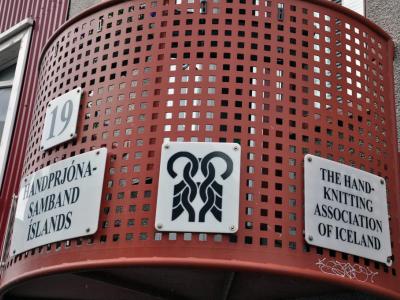
The economic downturn a few years ago led to a renewed interest in Iceland's traditional materials and skills, particularly in hand-knitted items. In 1977, some Icelandic women, who supplemented their income through knitting, collaborated to create an organization for better marketing of their work, leading to the formation of the Handknitting Association. Shortly after its inception, the Association opened a store to sell its members' woolen products.
Their main store, located on Skólavörðustígur in the old part of the city, offers an extensive collection of traditional hand-knitted Icelandic sweaters. This includes unique designs and various woolen items from top Icelandic producers. With numerous knitters contributing, this store is a key destination for Icelandic wool, patterns, and supplies.
Since its beginning, the Association's principle has been to sell directly from the makers, ensuring high-quality standards. Each handcrafted item undergoes quality checks before sale, guaranteeing customers top-notch, uniquely Icelandic products.
Iceland's traditional hand-knitted sweaters, called "lopapeysa," continue to be in demand. These sweaters have transitioned from practical attire to trendy fashion, worn both casually and at social events.
The economic downturn a few years ago led to a renewed interest in Iceland's traditional materials and skills, particularly in hand-knitted items. In 1977, some Icelandic women, who supplemented their income through knitting, collaborated to create an organization for better marketing of their work, leading to the formation of the Handknitting Association. Shortly after its inception, the Association opened a store to sell its members' woolen products.
Their main store, located on Skólavörðustígur in the old part of the city, offers an extensive collection of traditional hand-knitted Icelandic sweaters. This includes unique designs and various woolen items from top Icelandic producers. With numerous knitters contributing, this store is a key destination for Icelandic wool, patterns, and supplies.
Since its beginning, the Association's principle has been to sell directly from the makers, ensuring high-quality standards. Each handcrafted item undergoes quality checks before sale, guaranteeing customers top-notch, uniquely Icelandic products.
9) Hallgrímskirkja (Church of Hallgrímur) (must see)
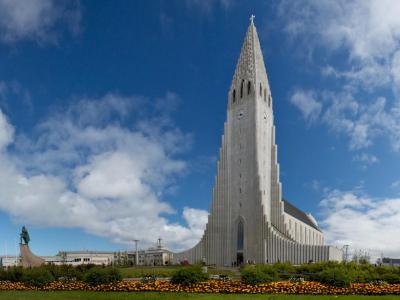
The Church of Hallgrímur is one of the country’s most recognizable landmarks and a symbol of modern Icelandic identity. Designed in 1937, the church was conceived as a reflection of Iceland’s unique geography. Volcanic activity across the island produces lava flows that cool into grey, hexagonal basalt columns, and these dramatic, jagged formations directly inspired the building’s form. Construction began in 1945 and continued for more than four decades, with the church finally consecrated in 1986.
It is named after Hallgrímur Pétursson, a 17th-century figure best known for his devotional work Hymns of the Passion. As a Lutheran place of worship belonging to the Church of Iceland, its imposing height—over 74 meters—was also intended to rival the nearby Catholic cathedral.
The architecture immediately stands out. Its stepped concrete façade resembles cooled lava or a cluster of organ pipes rising upward, giving the church a sculptural, almost geological presence visible from across the city.
Inside, the atmosphere becomes more restrained, with a bright, minimalist interior that emphasizes space and light. The main focal point is the monumental pipe organ, rising about 15 meters tall and composed of 5,275 pipes. Located directly above the main entrance inside the nave, visitors should turn around as they enter the church to see this gargantuan instrument, which weighs over 25 tons. The organ features four manuals and 72 stops; the instrument's sheer power is meant to fill the massive, minimalist hall with sound. Its electronic action system allows the pipes to be operated remotely from the console, and the instrument is frequently used for concerts, especially during summer, when performances are held several times a week.
Visitors are often drawn to the tower, where a lift leads to an observation deck with wide views over the city’s colorful rooftops, the coastline, and surrounding mountains. To reach this highlight at the uppermost level of the 74.5-meter steeple—the highest viewpoint in the city center—take the elevator located in the lobby to the 8th floor, then ascend a final short staircase to the open-air viewing platform. From here, you get a 360-degree view of the colorful corrugated iron roofs of Reykjavík, the Faxaflói Bay, and Mount Esja; on a clear day, you can even spot glaciers.
Outside the entrance stands a statue of Leif Erikson, gifted by the United States in the 1930s to mark the 1,000th anniversary of the Icelandic Parliament, first convened in 930 AD. A small local detail adds character: the large clock on the tower is often inaccurate, as strong Icelandic winds can shift its hands.
It is named after Hallgrímur Pétursson, a 17th-century figure best known for his devotional work Hymns of the Passion. As a Lutheran place of worship belonging to the Church of Iceland, its imposing height—over 74 meters—was also intended to rival the nearby Catholic cathedral.
The architecture immediately stands out. Its stepped concrete façade resembles cooled lava or a cluster of organ pipes rising upward, giving the church a sculptural, almost geological presence visible from across the city.
Inside, the atmosphere becomes more restrained, with a bright, minimalist interior that emphasizes space and light. The main focal point is the monumental pipe organ, rising about 15 meters tall and composed of 5,275 pipes. Located directly above the main entrance inside the nave, visitors should turn around as they enter the church to see this gargantuan instrument, which weighs over 25 tons. The organ features four manuals and 72 stops; the instrument's sheer power is meant to fill the massive, minimalist hall with sound. Its electronic action system allows the pipes to be operated remotely from the console, and the instrument is frequently used for concerts, especially during summer, when performances are held several times a week.
Visitors are often drawn to the tower, where a lift leads to an observation deck with wide views over the city’s colorful rooftops, the coastline, and surrounding mountains. To reach this highlight at the uppermost level of the 74.5-meter steeple—the highest viewpoint in the city center—take the elevator located in the lobby to the 8th floor, then ascend a final short staircase to the open-air viewing platform. From here, you get a 360-degree view of the colorful corrugated iron roofs of Reykjavík, the Faxaflói Bay, and Mount Esja; on a clear day, you can even spot glaciers.
Outside the entrance stands a statue of Leif Erikson, gifted by the United States in the 1930s to mark the 1,000th anniversary of the Icelandic Parliament, first convened in 930 AD. A small local detail adds character: the large clock on the tower is often inaccurate, as strong Icelandic winds can shift its hands.
10) Einar Jónsson Museum and Sculpture Garden
The Einar Jónsson Museum holds a unique place in Iceland’s cultural history as the country’s first public art museum, completed in 1923. It is dedicated to Einar Jónsson, regarded as Iceland’s first sculptor. Born on a farm in southern Iceland in 1874, Jónsson pursued his artistic ambitions abroad, studying in Denmark and later in Rome before returning. In 1909, he reached an agreement with the Icelandic parliament: the state would provide him with a museum and home, and in return, he would donate all his works.
Inside, the museum displays around 300 sculptures, primarily created in plaster—a practical choice in Iceland, where traditional modeling clay was not readily available, and one that allowed him to refine his pieces over long periods. Jónsson rejected classical conventions, developing a personal style shaped by Nordic folklore, Christian symbolism, and figurative themes. His works often explore life, death, and transformation through expressive, symbolic forms. Visitors can also access the artist’s apartment above the museum, where he lived until his death in 1954, offering a glimpse into his daily life.
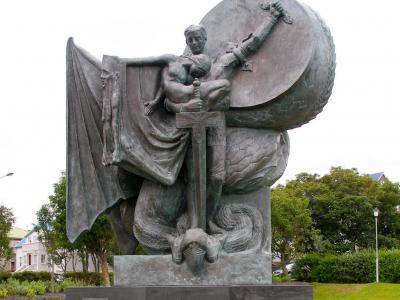
The adjacent sculpture garden presents 26 bronze works, including The Wave of Ages, The King of Atlantis, and Thor Wrestling with Age. Set on a sloping hillside, the garden invites visitors to move freely among the sculptures, where shifting light and weather continuously reshape their appearance.
Inside, the museum displays around 300 sculptures, primarily created in plaster—a practical choice in Iceland, where traditional modeling clay was not readily available, and one that allowed him to refine his pieces over long periods. Jónsson rejected classical conventions, developing a personal style shaped by Nordic folklore, Christian symbolism, and figurative themes. His works often explore life, death, and transformation through expressive, symbolic forms. Visitors can also access the artist’s apartment above the museum, where he lived until his death in 1954, offering a glimpse into his daily life.
The adjacent sculpture garden presents 26 bronze works, including The Wave of Ages, The King of Atlantis, and Thor Wrestling with Age. Set on a sloping hillside, the garden invites visitors to move freely among the sculptures, where shifting light and weather continuously reshape their appearance.
11) Laugavegur Street (must see)
Laugavegur is Reykjavík’s principal commercial street and one of the city’s oldest thoroughfares, stretching just over two kilometers through the heart of the capital. Its name translates to “Wash Road,” a reference to the route once used by local women carrying laundry to the geothermal pools of Laugardalur. Established in the late 19th century, the street gradually developed into a centre of trade and daily life.
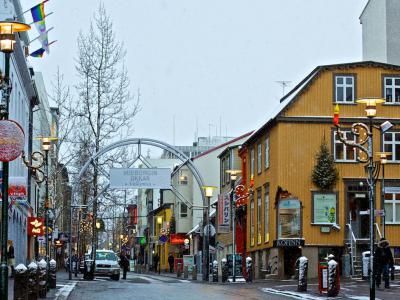
Today, Laugavegur forms the backbone of the city centre, lined with colorful, low-rise buildings and a steady flow of pedestrian activity. Visitors will find a wide range of boutique shops, many showcasing Icelandic design, fashion, and craftsmanship, alongside bookstores and souvenir shops offering everything from locally produced goods to familiar keepsakes. The street also has a noticeable mix of vintage stores and second-hand shops, adding variety to the shopping experience.
Food and drink are central to the street’s appeal. Restaurants, cafés, and bars line the route, offering both traditional Icelandic dishes and a range of international options, including vegan cuisine. As evening approaches, Laugavegur shifts into one of Reykjavík’s main nightlife areas, with venues hosting live music and late-night gatherings. Spots like Lebowski Bar add a more playful atmosphere, combining themed interiors with food, drinks, and interactive elements.
Today, Laugavegur forms the backbone of the city centre, lined with colorful, low-rise buildings and a steady flow of pedestrian activity. Visitors will find a wide range of boutique shops, many showcasing Icelandic design, fashion, and craftsmanship, alongside bookstores and souvenir shops offering everything from locally produced goods to familiar keepsakes. The street also has a noticeable mix of vintage stores and second-hand shops, adding variety to the shopping experience.
Food and drink are central to the street’s appeal. Restaurants, cafés, and bars line the route, offering both traditional Icelandic dishes and a range of international options, including vegan cuisine. As evening approaches, Laugavegur shifts into one of Reykjavík’s main nightlife areas, with venues hosting live music and late-night gatherings. Spots like Lebowski Bar add a more playful atmosphere, combining themed interiors with food, drinks, and interactive elements.
12) Sólfar (Sun Voyager) (must see)
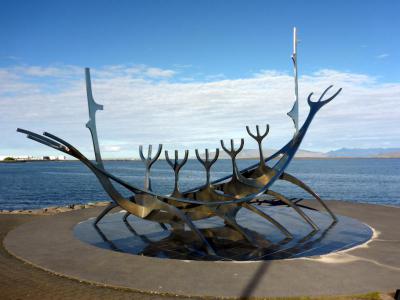
Sun Voyager is a sculpture crafted by the artist Jón Gunnar Árnason (1931-1989) and is situated alongside the Sæbraut road in Reykjavík. This artistic creation is often characterized as a representation of either a dreamboat or an homage to the sun. Jón Gunnar Árnason's intention behind this sculpture was to convey a sense of promise associated with uncharted territories, a dream symbolizing hope, progress, and freedom.
In 1986, the west district association of Reykjavík decided to sponsor a competition to commission a new outdoor sculpture in commemoration of the 200th anniversary of the city. Jón Gunnar's Sun Voyager emerged as the winning design in the competition, leading to the creation of a scaled-up aluminum model, which was later presented to the city for enlargement. The full-sized Sun Voyager was officially unveiled on Sæbraut, coinciding with the birthday of Reykjavík on August 18, 1990.
The sculpture is crafted from high-quality stainless steel and is positioned upon a circle formed by granite slabs, encircled by a material known as "town-hall concrete." Its construction meticulously followed Jón Gunnar Árnason's detailed full-scale drawing of the Sun Voyager and was supervised by the artist Kristinn E. Hrafnsson, who served as Jón Gunnar's assistant.
Why You Should Visit:
Great subject for photographs as it provides a nice vantage point to look out into the waters and think of very deep things.
In 1986, the west district association of Reykjavík decided to sponsor a competition to commission a new outdoor sculpture in commemoration of the 200th anniversary of the city. Jón Gunnar's Sun Voyager emerged as the winning design in the competition, leading to the creation of a scaled-up aluminum model, which was later presented to the city for enlargement. The full-sized Sun Voyager was officially unveiled on Sæbraut, coinciding with the birthday of Reykjavík on August 18, 1990.
The sculpture is crafted from high-quality stainless steel and is positioned upon a circle formed by granite slabs, encircled by a material known as "town-hall concrete." Its construction meticulously followed Jón Gunnar Árnason's detailed full-scale drawing of the Sun Voyager and was supervised by the artist Kristinn E. Hrafnsson, who served as Jón Gunnar's assistant.
Why You Should Visit:
Great subject for photographs as it provides a nice vantage point to look out into the waters and think of very deep things.
