Custom Walk in Melbourne, Australia by fjohn41_af644 created on 2025-08-21
Guide Location: Australia » Melbourne
Guide Type: Custom Walk
# of Sights: 10
Tour Duration: 2 Hour(s)
Travel Distance: 2.2 Km or 1.4 Miles
Share Key: M7UBT
Guide Type: Custom Walk
# of Sights: 10
Tour Duration: 2 Hour(s)
Travel Distance: 2.2 Km or 1.4 Miles
Share Key: M7UBT
How It Works
Please retrieve this walk in the GPSmyCity app. Once done, the app will guide you from one tour stop to the next as if you had a personal tour guide. If you created the walk on this website or come to the page via a link, please follow the instructions below to retrieve the walk in the app.
Retrieve This Walk in App
Step 1. Download the app "GPSmyCity: Walks in 1K+ Cities" on Apple App Store or Google Play Store.



Step 2. In the GPSmyCity app, download(or launch) the guide "Melbourne Map and Walking Tours".
Step 3. Tap the menu button located at upper right corner of the "Walks" screen and select "Retrieve custom walk". Enter the share key: M7UBT
1) ACDC Lane
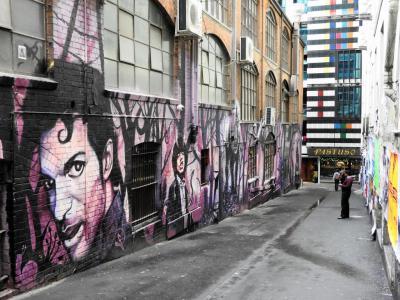
ACDC Lane is a brief, narrow alleyway situated to the south of Flinders Lane, running between Exhibition Street and Russell Street.
Originally, this street bore the name Corporation Lane, but on October 1, 2004, it underwent a name change to honor the iconic Australian rock band AC/DC. The decision to rename the street received unanimous approval from the Melbourne City Council. The adjustment was necessitated by the trademark lightning bolt or slash ("/") used to separate the AC and DC in the band's name, which violated the naming guidelines of the Office of the Registrar of Geographic Names. Consequently, the street sign omitted this punctuation.
The inauguration of ACDC Lane was led by Melbourne's Lord Mayor, John So, who expressed, "As the song suggests, there may be a highway to hell, but this alleyway is a pathway to heaven. Let us embrace the rock." Following his remarks, bagpipers performed "It's a Long Way to the Top (If You Wanna Rock 'n' Roll)." Approximately one month after the renaming, a lightning bolt was installed above and below the street sign.
The choice of renaming Corporation Lane was influenced by several factors, including the fact that AC/DC had filmed the music video for "It's a Long Way to the Top (If You Wanna Rock 'n' Roll)" on Swanston Street in Melbourne, which is close to ACDC Lane. Other considerations included AC/DC's role as cultural ambassadors for Australia, their strong ties to Melbourne, and the lane's location in the city's bustling bar district.
Originally, this street bore the name Corporation Lane, but on October 1, 2004, it underwent a name change to honor the iconic Australian rock band AC/DC. The decision to rename the street received unanimous approval from the Melbourne City Council. The adjustment was necessitated by the trademark lightning bolt or slash ("/") used to separate the AC and DC in the band's name, which violated the naming guidelines of the Office of the Registrar of Geographic Names. Consequently, the street sign omitted this punctuation.
The inauguration of ACDC Lane was led by Melbourne's Lord Mayor, John So, who expressed, "As the song suggests, there may be a highway to hell, but this alleyway is a pathway to heaven. Let us embrace the rock." Following his remarks, bagpipers performed "It's a Long Way to the Top (If You Wanna Rock 'n' Roll)." Approximately one month after the renaming, a lightning bolt was installed above and below the street sign.
The choice of renaming Corporation Lane was influenced by several factors, including the fact that AC/DC had filmed the music video for "It's a Long Way to the Top (If You Wanna Rock 'n' Roll)" on Swanston Street in Melbourne, which is close to ACDC Lane. Other considerations included AC/DC's role as cultural ambassadors for Australia, their strong ties to Melbourne, and the lane's location in the city's bustling bar district.
2) Hosier Lane
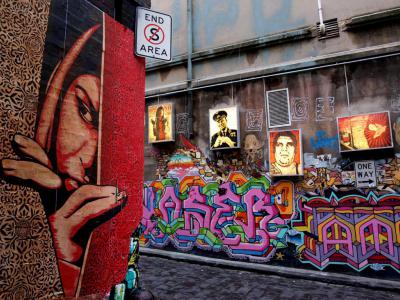
Hosier Lane is a cobblestone street situated on the southern border of the central city layout, renowned for its cultural importance and role as a hub for urban art. It was designated as a Street Art Gallery in 1998, thanks to the City Lights Initiative's endeavors. This lane is conveniently located opposite the entrance to the Atrium at Federation Square on Flinders Street, making it a prominent spot in the city.
This lane has gained recognition for the high quality and often politically-themed nature of its art. It has been featured in the state-sponsored publication, "The Melbourne Design Guide," as well as in Tourism Victoria's "Lose Yourself in Melbourne" advertising campaign. These appearances have raised questions about Victoria's contrasting approach to graffiti. The walls covered in graffiti and various art installations have become a popular backdrop for fashion and wedding photography.
Furthermore, Hosier Lane is famous for its upscale cocktail lounges, including the well-known Misty and MoVida. The lane's prominence was further highlighted when Chef Frank Camorra from MoVida conducted an open-air cooking session on Masterchef Australia season 2, showcasing it as a major attraction in Melbourne.
This lane has gained recognition for the high quality and often politically-themed nature of its art. It has been featured in the state-sponsored publication, "The Melbourne Design Guide," as well as in Tourism Victoria's "Lose Yourself in Melbourne" advertising campaign. These appearances have raised questions about Victoria's contrasting approach to graffiti. The walls covered in graffiti and various art installations have become a popular backdrop for fashion and wedding photography.
Furthermore, Hosier Lane is famous for its upscale cocktail lounges, including the well-known Misty and MoVida. The lane's prominence was further highlighted when Chef Frank Camorra from MoVida conducted an open-air cooking session on Masterchef Australia season 2, showcasing it as a major attraction in Melbourne.
3) Forum Theatre
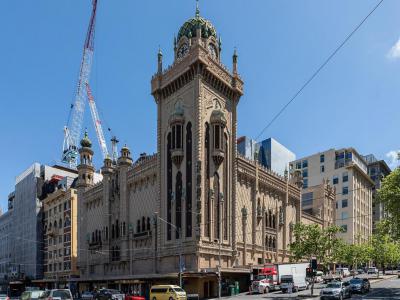
Melbourne has long been considered the cultural capital of Australia, and the Forum Theatre is one of the city’s best known cultural landmarks. Formerly known as the “State Theatre”, it was originally built as a movie palace. When the theatre opened in 1929, it had the largest seating capacity in the country with space for 3371 people. The building was designed by John Eberson, an American architect, who was well known around the world for his theatres. The exterior was in the Moorish revival style, with decadent minarets, cupola and an attention grabbing clock tower. The interior was done in an ornate Greco-Roman style and the ceiling was peppered with stars to emulate the twinkling night sky.
Today the theatre is no longer a cinema, but has for many years been used for a wide variety of theatrical, musical and cultural performances. Entertainers such as Oasis, Katy Perry and Ozzy Osborne have performed there and it is a regular venue for the Melbourne International Film Festival and Melbourne International Comedy Festival. The Forum Theatre has been on the Victorian Heritage Register since 1981.
Today the theatre is no longer a cinema, but has for many years been used for a wide variety of theatrical, musical and cultural performances. Entertainers such as Oasis, Katy Perry and Ozzy Osborne have performed there and it is a regular venue for the Melbourne International Film Festival and Melbourne International Comedy Festival. The Forum Theatre has been on the Victorian Heritage Register since 1981.
4) Australian Center for the Moving Image (ACMI)
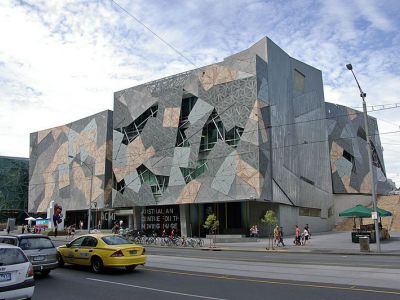
The Australian Centre for the Moving Image (ACMI) is located in Federation Square in Melbourne’s CBD. The centre, which is set out on four floors, is dedicated to promoting and preserving both Victorian and Australian moving image in all forms. There are two large cinemas within the centre that run exciting and innovative monthly programs that feature the very best of local and international films for all ages. Throughout the year ACMI also takes part in several film festivals including: the Melbourne International Film Festival, the Melbourne International Animation Festival and many others. The ongoing “Focus On” series focuses on a specific actor, genre or director.
As well as a constant stream of fascinating installations and exhibitions, there are many talks and workshops that are provided. Some workshops are directed at children and others at students or adults looking to perfect their movie making skills. The permanent exhibition, Screen Worlds invites visitors to consider the role that moving image plays in our lives and how this role has changed over more than 100 years, especially today in the Digital Age. ACMI is open every day from 10am to 6pm except for Christmas Day and Good Friday. Some installations charge an entry fee.
As well as a constant stream of fascinating installations and exhibitions, there are many talks and workshops that are provided. Some workshops are directed at children and others at students or adults looking to perfect their movie making skills. The permanent exhibition, Screen Worlds invites visitors to consider the role that moving image plays in our lives and how this role has changed over more than 100 years, especially today in the Digital Age. ACMI is open every day from 10am to 6pm except for Christmas Day and Good Friday. Some installations charge an entry fee.
5) Degraves Street
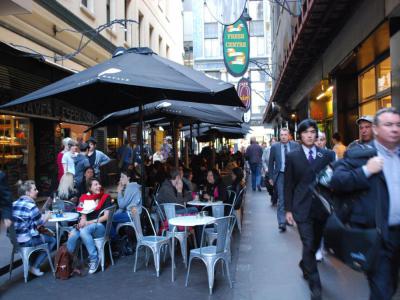
Slip off Flinders Street and onto Degraves, and suddenly Melbourne feels like it’s trying on a little Parisian flair. This narrow cobbled lane is strictly for pedestrians-no cars, just the steady hum of coffee machines, clinking glasses, and people debating which café has the best flat white. If you’re hunting for a sunny table to enjoy lunch outdoors, Degraves practically waves you over. Just don’t mix it up with Centre Place, its equally charming but often confused neighbour.
Look up, and you’ll spot the taller buildings that have been reborn as loft-style apartments, adding residents-and energy-to the laneway below. Down at street level, the soundtrack is classic Melbourne: buskers setting the mood, street art bursting from every corner, and the occasional splash of graffiti reminding you that creativity here comes in all forms.
The name “Degraves” goes back to Charles and William Degraves, merchants from Hobart who arrived here with flour-mill ambitions in 1849. William later dabbled in local politics, proving that even back then, Degraves attracted people who liked to stay busy...
Today, the lane acts as a lively connector between Flinders Street Station and the shopping streets to the north. If you need a shortcut underground, Campbell Arcade-better known to locals as the Degraves Underpass-whisks you beneath the traffic. Keep an eye out for the Platform Artists Group, who regularly turn the space into an ever-changing mini-gallery.
Step in, slow down, and enjoy the show-Degraves is Melbourne’s laneway culture at its most irresistible.
Look up, and you’ll spot the taller buildings that have been reborn as loft-style apartments, adding residents-and energy-to the laneway below. Down at street level, the soundtrack is classic Melbourne: buskers setting the mood, street art bursting from every corner, and the occasional splash of graffiti reminding you that creativity here comes in all forms.
The name “Degraves” goes back to Charles and William Degraves, merchants from Hobart who arrived here with flour-mill ambitions in 1849. William later dabbled in local politics, proving that even back then, Degraves attracted people who liked to stay busy...
Today, the lane acts as a lively connector between Flinders Street Station and the shopping streets to the north. If you need a shortcut underground, Campbell Arcade-better known to locals as the Degraves Underpass-whisks you beneath the traffic. Keep an eye out for the Platform Artists Group, who regularly turn the space into an ever-changing mini-gallery.
Step in, slow down, and enjoy the show-Degraves is Melbourne’s laneway culture at its most irresistible.
6) Block Arcade (must see)
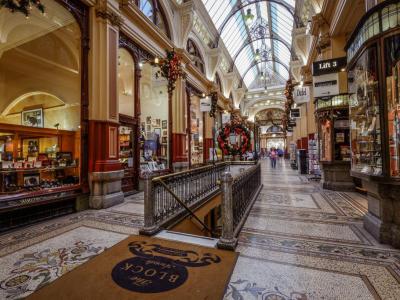
If Melbourne had a catwalk, the Block Arcade would be strutting right down the middle of it in full glamour mode. Opened in 1892, this lavish stretch of French Renaissance beauty is all towering arches, ornate cornices, and decorative tiles-basically the architectural equivalent of overdressing for every occasion, and loving it. Inside, boutiques and tea rooms line the walkways, echoing the days when this was the most fashionable shopping runway in town just off Collins Street.
Shaped like an elegant L and crowned at the bend with a domed rotunda that refuses to be ignored, the arcade links Elizabeth Street to Collins Street. And if you walk in from the Collins side, you’ll find yourself facing its slightly older sibling, the Royal Arcade, as if the two have been politely competing for attention since the Victorian era...
The name “Block Arcade” comes from the 19th-century pastime of “doing the block,” when Melbourne’s elite would dress to impress and glide along Collins Street and its arcades. This was the place to see-and be seen-long before Instagram tried to claim the job...
Nowadays, people keep stopping by because a walk through the Block Arcade feels like stepping straight into Victorian Melbourne, minus the horse-drawn traffic... Those soaring six-storey façades and meticulously restored interior are textbook Mannerist drama, and the whole place is proudly listed on the Victorian Heritage Register-because, frankly, how could it possibly not be?
And now for a tip worthy of your inner aristocrat: the Hopetoun Tea Rooms. First opened in 1894 and redecorated in 1976 in full Victorian splendour, it still delivers the kind of tea service that expects you to sit up straight and behave elegantly-well, at least until dessert arrives...
Since you're already here, glance across the street to the Royal Arcade for another dose of grandeur. Or take a quick detour into Block Court next door-its Art Deco interior no longer houses an arcade of shops, but it certainly still knows how to make an entrance.
Shaped like an elegant L and crowned at the bend with a domed rotunda that refuses to be ignored, the arcade links Elizabeth Street to Collins Street. And if you walk in from the Collins side, you’ll find yourself facing its slightly older sibling, the Royal Arcade, as if the two have been politely competing for attention since the Victorian era...
The name “Block Arcade” comes from the 19th-century pastime of “doing the block,” when Melbourne’s elite would dress to impress and glide along Collins Street and its arcades. This was the place to see-and be seen-long before Instagram tried to claim the job...
Nowadays, people keep stopping by because a walk through the Block Arcade feels like stepping straight into Victorian Melbourne, minus the horse-drawn traffic... Those soaring six-storey façades and meticulously restored interior are textbook Mannerist drama, and the whole place is proudly listed on the Victorian Heritage Register-because, frankly, how could it possibly not be?
And now for a tip worthy of your inner aristocrat: the Hopetoun Tea Rooms. First opened in 1894 and redecorated in 1976 in full Victorian splendour, it still delivers the kind of tea service that expects you to sit up straight and behave elegantly-well, at least until dessert arrives...
Since you're already here, glance across the street to the Royal Arcade for another dose of grandeur. Or take a quick detour into Block Court next door-its Art Deco interior no longer houses an arcade of shops, but it certainly still knows how to make an entrance.
7) Flinders Street Station
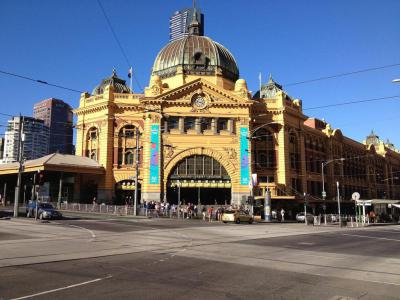
If you’re standing at the corner of Flinders and Swanston Streets and wondering why everyone else is looking up-congrats, you’ve found Flinders Street Station! It opened in 1854 as the terminus of Australia’s very first railway, back when “catching a train” meant something closer to “braving an experiment.” Today, it’s still one of Melbourne’s busiest transport hubs, funneling commuters across the suburbs and deep into the city’s daily rhythm.
The building you see now arrived later, finished in 1909. It’s an Edwardian creation that doesn’t believe in subtlety-domes, arches, towers, and enough ornamentation to fuel a century of urban legends. The curious fact associated with this building is that its design was mistakenly swapped with plans for Victoria Terminus in Bombay. No proof, however, but the rumour is almost as iconic as the station itself. Heritage-listed and instantly recognisable, it remains one of Melbourne’s most photographed faces.
And then there are the clocks. If someone in Melbourne tells you to meet them “under the clocks,” they’re not being poetic-that’s the row of indicator clocks above the main entrance. Another classic rendezvous point here is “On the steps.” Basically, this station doubles as both a transit hub and the city’s unofficial meeting app...
Its location doesn’t hurt either. Step outside and you’re right beside Federation Square, the Yarra River, and the maze of laneways, cafés, and arcades that make up the Central Business District. A truly perfect launchpad for whatever you’re doing next...
Indeed, whenever you're in Melbourne, even if you’re not catching a train, this building is always a delight to look at. The food inside is tempting, and-bonus-the station turns into a glowing postcard at night. So, make sure to have a camera handy; it likes the attention...
The building you see now arrived later, finished in 1909. It’s an Edwardian creation that doesn’t believe in subtlety-domes, arches, towers, and enough ornamentation to fuel a century of urban legends. The curious fact associated with this building is that its design was mistakenly swapped with plans for Victoria Terminus in Bombay. No proof, however, but the rumour is almost as iconic as the station itself. Heritage-listed and instantly recognisable, it remains one of Melbourne’s most photographed faces.
And then there are the clocks. If someone in Melbourne tells you to meet them “under the clocks,” they’re not being poetic-that’s the row of indicator clocks above the main entrance. Another classic rendezvous point here is “On the steps.” Basically, this station doubles as both a transit hub and the city’s unofficial meeting app...
Its location doesn’t hurt either. Step outside and you’re right beside Federation Square, the Yarra River, and the maze of laneways, cafés, and arcades that make up the Central Business District. A truly perfect launchpad for whatever you’re doing next...
Indeed, whenever you're in Melbourne, even if you’re not catching a train, this building is always a delight to look at. The food inside is tempting, and-bonus-the station turns into a glowing postcard at night. So, make sure to have a camera handy; it likes the attention...
8) Federation Square
Fed Square - yes, everyone calls it that - finally opened in 2001, after decades of Melbourne wondering why a major city had managed to function without an actual public square since the 1800s. The solution was delightfully bold: just build it right on top of the old railway yards. Prime location, close to the river, no extra land needed - problem solved.
Since then, the place has turned into Melbourne’s cultural magnet. With more than eight million visitors and around two thousand events each year, the square rarely has a quiet moment. One day it’s a food festival, the next it’s a film screening, and by the weekend you might stumble into a live performance you didn’t know was on.
Two anchors define the square’s artistic energy: the Australian Centre for the Moving Image, which is the country’s home for all things film and digital culture, and the Ian Potter Centre, the National Gallery of Victoria’s base for Australian art, both old and new. Together, they do a fine job of filling the square with ideas, stories, and the occasional burst of creative chaos.
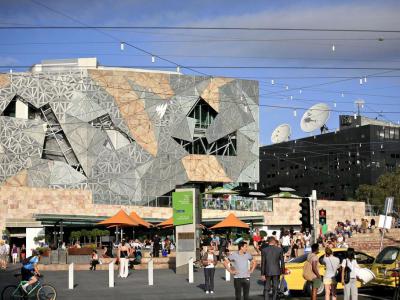
And then there’s the architecture - a patchwork of sharp angles, cranked lines, and deconstructivist drama. The buildings look like they’ve been assembled from giant geometric puzzle pieces, with glass corridors splitting them apart like modern takes on Melbourne’s historic laneways. Those tall “shards” hiding staircases and lifts are all part of the fun. And if you notice pinwheel-patterned tiles under your feet, yes, they’re meant to catch your eye.
Down toward the Yarra, the square softens into leafy paths leading to Federation Wharf, where cafés and a small marina share a calmer slice of the riverfront.
Indeed, sitting right in the middle of Melbourne’s heartbeat, Fed Square is a safe bet you'll catch something happening here all the time. Just pick up some takeaway, find a seat, and let the city’s atmosphere do the rest. The events calendar on Fed Square’s website will help you keep up - if you can...
Since then, the place has turned into Melbourne’s cultural magnet. With more than eight million visitors and around two thousand events each year, the square rarely has a quiet moment. One day it’s a food festival, the next it’s a film screening, and by the weekend you might stumble into a live performance you didn’t know was on.
Two anchors define the square’s artistic energy: the Australian Centre for the Moving Image, which is the country’s home for all things film and digital culture, and the Ian Potter Centre, the National Gallery of Victoria’s base for Australian art, both old and new. Together, they do a fine job of filling the square with ideas, stories, and the occasional burst of creative chaos.
And then there’s the architecture - a patchwork of sharp angles, cranked lines, and deconstructivist drama. The buildings look like they’ve been assembled from giant geometric puzzle pieces, with glass corridors splitting them apart like modern takes on Melbourne’s historic laneways. Those tall “shards” hiding staircases and lifts are all part of the fun. And if you notice pinwheel-patterned tiles under your feet, yes, they’re meant to catch your eye.
Down toward the Yarra, the square softens into leafy paths leading to Federation Wharf, where cafés and a small marina share a calmer slice of the riverfront.
Indeed, sitting right in the middle of Melbourne’s heartbeat, Fed Square is a safe bet you'll catch something happening here all the time. Just pick up some takeaway, find a seat, and let the city’s atmosphere do the rest. The events calendar on Fed Square’s website will help you keep up - if you can...
9) Princes Bridge
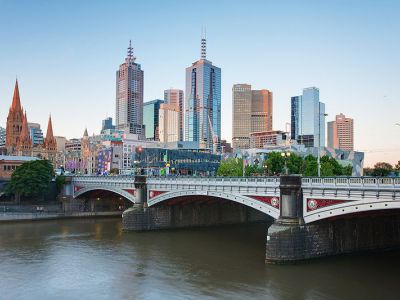
Princes Bridge, originally known as Prince's Bridge, is a prominent structure in the heart of Melbourne, spanning the Yarra River. It occupies a historical location as one of the city's earliest river crossings and serves as a prominent entrance into the city center from the southern side. This bridge connects Swanston Street on the northern bank of the Yarra River to Saint Kilda Road on the southern bank, accommodating both vehicular and pedestrian traffic, as well as trams.
Construction of the present bridge began with the laying of its foundation stone on September 7, 1886. A memorial stone featuring a suitable inscription was placed at the west end of the southern abutment. The bridge was officially inaugurated on October 4, 1888, just in time for the second International Exhibition hosted in Melbourne.
Princes Bridge spans a width of 30 meters (approximately 99 feet) and stretches over a length of 120 meters (around 400 feet). It is supported by bluestone piers adorned with Harcourt granite squat half columns, which in turn carry three iron girder arch spans. The coat of arms displayed on the bridge represent the municipal councils that contributed to the construction costs.
Due to its strategic location, Princes Bridge often serves as a central focal point for various celebratory events in Melbourne, including the Moomba Festival, New Year's Eve festivities, and numerous gatherings along the Yarra River as it flows through the city.
Construction of the present bridge began with the laying of its foundation stone on September 7, 1886. A memorial stone featuring a suitable inscription was placed at the west end of the southern abutment. The bridge was officially inaugurated on October 4, 1888, just in time for the second International Exhibition hosted in Melbourne.
Princes Bridge spans a width of 30 meters (approximately 99 feet) and stretches over a length of 120 meters (around 400 feet). It is supported by bluestone piers adorned with Harcourt granite squat half columns, which in turn carry three iron girder arch spans. The coat of arms displayed on the bridge represent the municipal councils that contributed to the construction costs.
Due to its strategic location, Princes Bridge often serves as a central focal point for various celebratory events in Melbourne, including the Moomba Festival, New Year's Eve festivities, and numerous gatherings along the Yarra River as it flows through the city.
10) National Gallery of Victoria (must see)
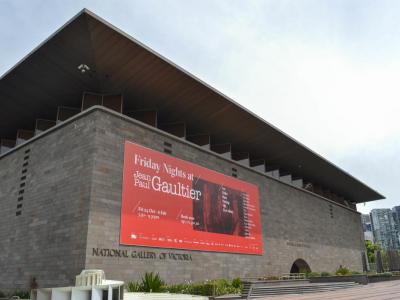
The National Gallery of Victoria was established in 1861, making it Australia’s longest running public gallery. When it was opened, the Victorian Gold Rush was in full swing and the colony was awash with money, which led to many large bequests and donations to the gallery. Today, it has more than 65,000 pieces in its permanent collection, among which are pieces by international artists such as Rembrandt, Rubens, Tintoretto, Bernini, Uccello and Veronese. The gallery is also intimately connected to the Australian impressionist movement of the 19th century, known as the Heidelberg School and has some very famous pieces by Frederick McCubbin.
As well as its impressive permanent collection, there is always a full program of visiting exhibitions planned too. Past installations have included Dutch Masters, Caravaggio, Dali and Picasso. One of Picasso’s pieces was famously stolen from the gallery in 1986 in protest against poor arts funding – it was later found in a railway locker. As well as visiting to appreciate the art on the walls, there are always classes and workshops on for adults and children and guided tours and talks help to develop your artistic appreciation and understand more about the creation of the pieces you see before you.
Why You Should Visit:
Regularly home to Australia's biggest and finest art exhibitions.
The free one-hour tours (10:30am, 12:30pm, 2:30pm) are totally worth it.
Plus it's always nice to sit near the fountain or enjoy the High Tea in the upstairs restaurant.
Tip:
Buy tickets online as ticketing is rather slow and understaffed at the gallery.
Only 30 headsets are available per tour. You must go to the Info Desk one hour before the tour and collect a laminated ticket to claim your place.
Not taking the tour? Well then, to see the most interesting contemporary art pieces, start at the top. The lower floors are mostly classic religious/portraits/tableware.
As well as its impressive permanent collection, there is always a full program of visiting exhibitions planned too. Past installations have included Dutch Masters, Caravaggio, Dali and Picasso. One of Picasso’s pieces was famously stolen from the gallery in 1986 in protest against poor arts funding – it was later found in a railway locker. As well as visiting to appreciate the art on the walls, there are always classes and workshops on for adults and children and guided tours and talks help to develop your artistic appreciation and understand more about the creation of the pieces you see before you.
Why You Should Visit:
Regularly home to Australia's biggest and finest art exhibitions.
The free one-hour tours (10:30am, 12:30pm, 2:30pm) are totally worth it.
Plus it's always nice to sit near the fountain or enjoy the High Tea in the upstairs restaurant.
Tip:
Buy tickets online as ticketing is rather slow and understaffed at the gallery.
Only 30 headsets are available per tour. You must go to the Info Desk one hour before the tour and collect a laminated ticket to claim your place.
Not taking the tour? Well then, to see the most interesting contemporary art pieces, start at the top. The lower floors are mostly classic religious/portraits/tableware.
