Custom Walk in Budapest, Hungary by jodyandersonpmhnp_a99b9 created on 2025-08-22
Guide Location: Hungary » Budapest
Guide Type: Custom Walk
# of Sights: 7
Tour Duration: 3 Hour(s)
Travel Distance: 8 Km or 5 Miles
Share Key: ASUM8
Guide Type: Custom Walk
# of Sights: 7
Tour Duration: 3 Hour(s)
Travel Distance: 8 Km or 5 Miles
Share Key: ASUM8
How It Works
Please retrieve this walk in the GPSmyCity app. Once done, the app will guide you from one tour stop to the next as if you had a personal tour guide. If you created the walk on this website or come to the page via a link, please follow the instructions below to retrieve the walk in the app.
Retrieve This Walk in App
Step 1. Download the app "GPSmyCity: Walks in 1K+ Cities" on Apple App Store or Google Play Store.



Step 2. In the GPSmyCity app, download(or launch) the guide "Budapest Map and Walking Tours".
Step 3. Tap the menu button located at upper right corner of the "Walks" screen and select "Retrieve custom walk". Enter the share key: ASUM8
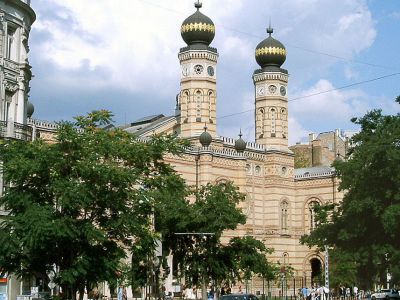
1) Great Synagogue (Dohany Street Synagogue) (must see)
Built in the 1850s for the Neolog Jewish community, this synagogue ranks as the second-largest in the world, second only to Temple Emanu-El in New York. Much like the one on nearby Rumbach Street, it was designed by Viennese architect Ludwig Forster, embracing a richly detailed Moorish Revival style. The building forms part of a larger Jewish Quarter complex that includes the Heroes’ Temple, a graveyard, a Holocaust memorial, and the Jewish Museum. During World War II, Dohány Street marked the boundary of the Budapest Ghetto, and even today, the area carries a profound sense of remembrance.
The synagogue suffered heavy damage during the war and endured years of neglect under communist rule. It wasn’t until the 1990s that an extensive restoration finally returned it to its former grandeur. The twin octagonal towers, flanking the main entrance and crowned with onion domes, now make this structure visible all over the city. Inside, the vast nave stretches nearly 40 feet high, revealing Gothic, Romantic, and Byzantine influences. A new mechanical organ fills the space, replacing the original one crafted in the 19th century.
As is traditional, the ground floor seating is reserved for men, while women are seated in the upper galleries. In all, the building can accommodate up to 3,000 worshippers.
Those curious about Jewish history will find much to explore here. Next door is the Jewish Heroes’ Mausoleum, and upstairs, the museum and archives offer informative and thought-provoking exhibits. In the adjacent graveyard, victims of the Holocaust are laid to rest alongside non-Jews who risked their lives to save others. The neighboring park holds a memorial honoring these courageous individuals.
Tip: The synagogue offers guided group tours in several languages. Visitors are asked to observe a modest dress code; if needed, special coverings are provided at the entrance.
The synagogue suffered heavy damage during the war and endured years of neglect under communist rule. It wasn’t until the 1990s that an extensive restoration finally returned it to its former grandeur. The twin octagonal towers, flanking the main entrance and crowned with onion domes, now make this structure visible all over the city. Inside, the vast nave stretches nearly 40 feet high, revealing Gothic, Romantic, and Byzantine influences. A new mechanical organ fills the space, replacing the original one crafted in the 19th century.
As is traditional, the ground floor seating is reserved for men, while women are seated in the upper galleries. In all, the building can accommodate up to 3,000 worshippers.
Those curious about Jewish history will find much to explore here. Next door is the Jewish Heroes’ Mausoleum, and upstairs, the museum and archives offer informative and thought-provoking exhibits. In the adjacent graveyard, victims of the Holocaust are laid to rest alongside non-Jews who risked their lives to save others. The neighboring park holds a memorial honoring these courageous individuals.
Tip: The synagogue offers guided group tours in several languages. Visitors are asked to observe a modest dress code; if needed, special coverings are provided at the entrance.
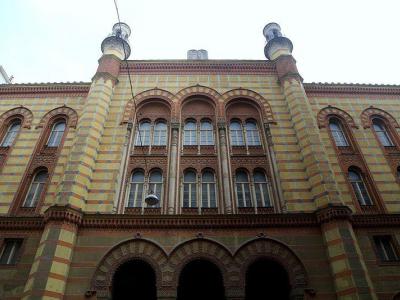
2) Rumbach Street Synagogue
Located in downtown Budapest, within the historic Belváros district, this striking synagogue has been the spiritual home for Hungary’s Neolog Jewish community since the late 1800s. Designed by Otto Wagner-famed for his Art Nouveau landmarks in Vienna-the building draws strong influence from North African and Arabic styles. Its octagonal columns, reminiscent of minarets, and its domed form echo the design of Jerusalem’s Dome of the Rock, though not as a replica-more as a respectful architectural tribute.
The exterior is a feast for the eyes. Ornamental brickwork in rich, earthy tones plays alongside carved stone, stucco details, and beautifully worked iron. A pair of stone tablets representing the Ten Commandments rests above the entrance, while arched windows feature the Star of David in stained glass, framed by Eastern-style curves that add a rhythmic elegance to the façade.
Inside, the space opens into a luminous nave with high ceilings, an ornate dome, vibrant stained glass, and intricate arabesques that flow across the walls. Though the building was severely damaged during World War II and stood dormant for nearly six decades, it has been fully restored thanks to a grant from the Budapest Government. Since the 2021 renovation, the synagogue has embraced a second life-not only as a place of remembrance but as a lively cultural venue. Visitors now come for concerts, theatrical performances, photography exhibitions, and other events that breathe new energy into this historic space.
The exterior is a feast for the eyes. Ornamental brickwork in rich, earthy tones plays alongside carved stone, stucco details, and beautifully worked iron. A pair of stone tablets representing the Ten Commandments rests above the entrance, while arched windows feature the Star of David in stained glass, framed by Eastern-style curves that add a rhythmic elegance to the façade.
Inside, the space opens into a luminous nave with high ceilings, an ornate dome, vibrant stained glass, and intricate arabesques that flow across the walls. Though the building was severely damaged during World War II and stood dormant for nearly six decades, it has been fully restored thanks to a grant from the Budapest Government. Since the 2021 renovation, the synagogue has embraced a second life-not only as a place of remembrance but as a lively cultural venue. Visitors now come for concerts, theatrical performances, photography exhibitions, and other events that breathe new energy into this historic space.
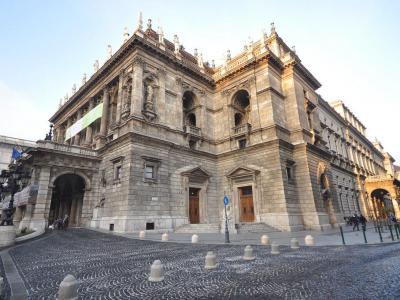
3) Hungarian State Opera House
Set at the heart of Pest, on Andrassy Avenue, the Hungarian State Opera was officially opened to the public in 1884. Designed by Miklós Ybl, a key figure of 19th-century Hungarian architecture, this grand and elegant edifice represents a blend of Baroque, Renaissance and Revival styles and took nearly a decade to build, skillfully planted into the ensemble of affluent mansions nearby.
Although nowhere near the world's major concert halls in terms of size, the Hungarian Opera House is definitely one of the most beautiful. Flanking the building's main entrance, inside the niches, are the statues of Ferenc Erkel, author of the Hungarian National Anthem, and Ferenc Liszt, the most acclaimed Hungarian composer and reputedly one of the best pianists of his time. On the balustrade, surrounding the roof, are the 16 statues of Europe's greatest composers, such as Beethoven, Mozart, Verdi, Bizet, Puccini and Tchaikovsky. On the inside, the building is just as grand as it is on the outside, replete with marble columns and staircases, vaulted ceilings and lavish gold plating, complete with a rich chandelier weighing several tons(!), and ornate frescoes depicting scenes from the Greek mythology, not to mention the wealth of finest oil paintings and sculptures to be found in Budapest added to the decoration.
The acoustics here are said to be among the best in the world, ranked #3 in Europe after La Scala in Milan and Palais Garnier in Paris.
If you can't get a ticket or if opera isn't one of your things yet, consider taking a guided tour, run three times a day, to get a sense of what the high-society life in Budapest was like back in its heyday in the late 19th century. The tour will take you to the private balconies, smoking room, royal private staircase, and the bar area lavishly clad in crystal and Croatian marble.
Otherwise, if you're an opera fan, try to book yourself a ticket – if lucky, you just might succeed. The tickets are surprisingly not as pricey as you may think, but still, be prepared to dress up to the nines as it is a rather glamorous affair, after all.
Tip:
Combine with the nearby Mai Manó House of Photography, if only to have a look at the building from the outside.
Editor's note:
The building is being renovated until 2020, therefore Opera House performances temporarily take place at the Erkel Theatre. However, the Opera Shop and certain parts of the building can be visited even during renovation.
Although nowhere near the world's major concert halls in terms of size, the Hungarian Opera House is definitely one of the most beautiful. Flanking the building's main entrance, inside the niches, are the statues of Ferenc Erkel, author of the Hungarian National Anthem, and Ferenc Liszt, the most acclaimed Hungarian composer and reputedly one of the best pianists of his time. On the balustrade, surrounding the roof, are the 16 statues of Europe's greatest composers, such as Beethoven, Mozart, Verdi, Bizet, Puccini and Tchaikovsky. On the inside, the building is just as grand as it is on the outside, replete with marble columns and staircases, vaulted ceilings and lavish gold plating, complete with a rich chandelier weighing several tons(!), and ornate frescoes depicting scenes from the Greek mythology, not to mention the wealth of finest oil paintings and sculptures to be found in Budapest added to the decoration.
The acoustics here are said to be among the best in the world, ranked #3 in Europe after La Scala in Milan and Palais Garnier in Paris.
If you can't get a ticket or if opera isn't one of your things yet, consider taking a guided tour, run three times a day, to get a sense of what the high-society life in Budapest was like back in its heyday in the late 19th century. The tour will take you to the private balconies, smoking room, royal private staircase, and the bar area lavishly clad in crystal and Croatian marble.
Otherwise, if you're an opera fan, try to book yourself a ticket – if lucky, you just might succeed. The tickets are surprisingly not as pricey as you may think, but still, be prepared to dress up to the nines as it is a rather glamorous affair, after all.
Tip:
Combine with the nearby Mai Manó House of Photography, if only to have a look at the building from the outside.
Editor's note:
The building is being renovated until 2020, therefore Opera House performances temporarily take place at the Erkel Theatre. However, the Opera Shop and certain parts of the building can be visited even during renovation.
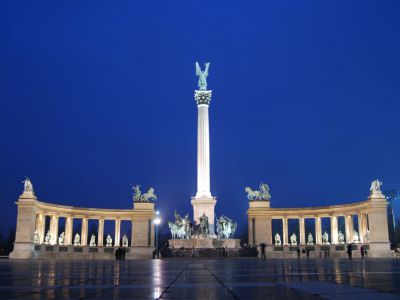
4) Heroes' Square (must see)
Heroes' Square is easy to get to, and unforgettable once you've seen it. Located in front of the City Park, at the end of Andrassy Avenue, the monument was built in 1896 to commemorate the millennial anniversary of the arrival of the people of Hungary to the Carpathian Basin. By design, it consists of two semi-circles, which have the symbols for War and Peace, Knowledge and Glory, and Wealth and Labor affixed. The place is decorated with the statues of famous kings, governors, and celebrated characters from Hungarian history, as well as little reliefs depicting the most pinnacle moment of their lives.
The centerpiece of the memorial is the 36-meter high statue of the Archangel Gabriel holding a crown in his right hand and the double cross of Christianity in the other. The base of the column is surrounded by seven equestrian statues of ferocious-looking warriors, which depict the Magyar chieftains of the Hungarian tribes, the most notable being Árpád, whose descendants started the Hungarian royal line.
In front of the Millennium, Column stands the Monument of National Heroes, a cenotaph also referred to as the Tomb of the Unknown Soldier, in tribute to Hungary's nameless heroes of war.
The sheer size of everything means one cannot fail to be impressed! Flanked by two important buildings – the Museum of Fine Arts on the left and the Palace of Art (Kunsthalle) on the right – this is, in fact, one of Budapest's most visited sights.
Tip:
You can easily combine your visit with a stroll to Vajdahunyad Castle, the peaceful park across the road, and the Széchenyi bath building.
The centerpiece of the memorial is the 36-meter high statue of the Archangel Gabriel holding a crown in his right hand and the double cross of Christianity in the other. The base of the column is surrounded by seven equestrian statues of ferocious-looking warriors, which depict the Magyar chieftains of the Hungarian tribes, the most notable being Árpád, whose descendants started the Hungarian royal line.
In front of the Millennium, Column stands the Monument of National Heroes, a cenotaph also referred to as the Tomb of the Unknown Soldier, in tribute to Hungary's nameless heroes of war.
The sheer size of everything means one cannot fail to be impressed! Flanked by two important buildings – the Museum of Fine Arts on the left and the Palace of Art (Kunsthalle) on the right – this is, in fact, one of Budapest's most visited sights.
Tip:
You can easily combine your visit with a stroll to Vajdahunyad Castle, the peaceful park across the road, and the Széchenyi bath building.
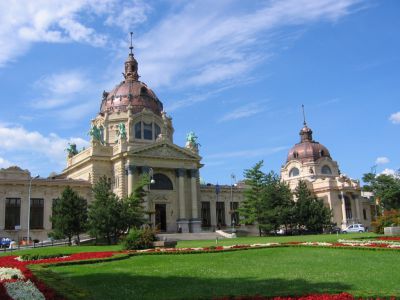
5) Szechenyi Baths and Spa (must see)
The biggest thermal bath in Budapest, Szechenyi Baths is one of the largest spas in Europe as well. There is a vast open-air section with 3 pools – one hot (40°), one cold and one for fun. The Spa is well known not only for its size and different facilities but also for its interior and decorations, made by some of the best Hungarian artists. The neo-Gothic style Baths are located in the City Park, some 15 minutes away from the Zoo.
Why You Should Visit:
The most over the top and one of the funniest/busiest bathhouses you're likely to visit.
Great experience for tourists who have never done baths.
Tip:
You may choose from a range of different massage options and facial/cosmetics services.
There is even (for an extra fee) a beer spa where you soak in beer ingredients while pouring yourself unlimited beer from the tap next to you!
Why You Should Visit:
The most over the top and one of the funniest/busiest bathhouses you're likely to visit.
Great experience for tourists who have never done baths.
Tip:
You may choose from a range of different massage options and facial/cosmetics services.
There is even (for an extra fee) a beer spa where you soak in beer ingredients while pouring yourself unlimited beer from the tap next to you!
6) City Park
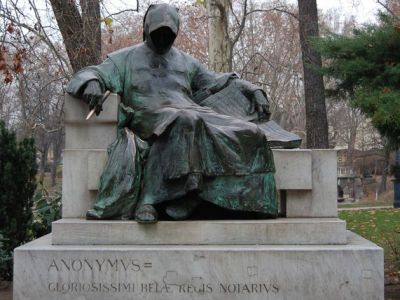
Budapest City Park is a highly popular public park in the city that offers a serene environment for locals to unwind and soak up the sun. Originally, the City Park served as a private hunting ground for the nobility, much like many other estates. However, over time, it transformed and gradually became a public park. The first trees were planted in 1751, and in the early 19th century, it became the world's first public park.
During Hungary's millennium celebrations in 1896, the City Park played a significant role as the main venue. Alongside this event, notable structures like Andrássy Avenue, Heroes Square, Millennium Underground, and the Grand Boulevard were constructed.
Presently, the City Park offers not only vast green spaces for visitors but also various attractions including sports facilities, museums, the zoo, and the renowned Széchenyi Bath. Recently, the park has introduced new museums, such as the Ethnography Museum and the House of Hungarian Music.
During Hungary's millennium celebrations in 1896, the City Park played a significant role as the main venue. Alongside this event, notable structures like Andrássy Avenue, Heroes Square, Millennium Underground, and the Grand Boulevard were constructed.
Presently, the City Park offers not only vast green spaces for visitors but also various attractions including sports facilities, museums, the zoo, and the renowned Széchenyi Bath. Recently, the park has introduced new museums, such as the Ethnography Museum and the House of Hungarian Music.
7) Tree of Life / Holocaust Memorial Park
Tucked just behind Budapest’s Great Synagogue, the Holocaust Memorial Park stands as a tribute to those who risked everything during World War II to protect Hungary’s Jewish population from Nazi persecution. Honored here are those recognized as “Righteous Among the Nations”-individuals who, through courage and compassion, saved lives in the darkest of times.
Among them is Raoul Wallenberg, the Swedish diplomat whose tireless efforts helped thousands and whose mysterious disappearance remains one of history’s enigmas. Also remembered is Ángel Sanz Briz, a Spanish consular officer who quietly issued passports and transformed the Spanish embassy into a safe haven, saving over 5,000 lives in the process.
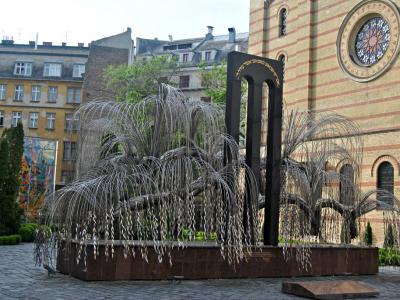
At the heart of the park stands the Tree of Life, a powerful sculpture shaped like a weeping willow-long a symbol of mourning in Hungarian Jewish tradition. Each of its leaves bears the name of a Holocaust victim buried nearby, a silent forest of remembrance that speaks louder than words.
The park was created during the 1990s, following Hungary’s return to democracy. The Tree of Life itself was completed in 1996, made possible by a donation from Estée Lauder, the famed cosmetics entrepreneur with Hungarian-Jewish roots.
Even from a distance, the tree catches the eye with its shimmering metal leaves. To step closer, you’ll need to pay a modest admission fee, but the experience is one worth taking time for.
Among them is Raoul Wallenberg, the Swedish diplomat whose tireless efforts helped thousands and whose mysterious disappearance remains one of history’s enigmas. Also remembered is Ángel Sanz Briz, a Spanish consular officer who quietly issued passports and transformed the Spanish embassy into a safe haven, saving over 5,000 lives in the process.
At the heart of the park stands the Tree of Life, a powerful sculpture shaped like a weeping willow-long a symbol of mourning in Hungarian Jewish tradition. Each of its leaves bears the name of a Holocaust victim buried nearby, a silent forest of remembrance that speaks louder than words.
The park was created during the 1990s, following Hungary’s return to democracy. The Tree of Life itself was completed in 1996, made possible by a donation from Estée Lauder, the famed cosmetics entrepreneur with Hungarian-Jewish roots.
Even from a distance, the tree catches the eye with its shimmering metal leaves. To step closer, you’ll need to pay a modest admission fee, but the experience is one worth taking time for.
