Custom Walk in Nicosia, Cyprus by ujvaryedit_34434 created on 2025-09-05
Guide Location: Cyprus » Nicosia
Guide Type: Custom Walk
# of Sights: 7
Tour Duration: 2 Hour(s)
Travel Distance: 2.9 Km or 1.8 Miles
Share Key: DKDYG
Guide Type: Custom Walk
# of Sights: 7
Tour Duration: 2 Hour(s)
Travel Distance: 2.9 Km or 1.8 Miles
Share Key: DKDYG
How It Works
Please retrieve this walk in the GPSmyCity app. Once done, the app will guide you from one tour stop to the next as if you had a personal tour guide. If you created the walk on this website or come to the page via a link, please follow the instructions below to retrieve the walk in the app.
Retrieve This Walk in App
Step 1. Download the app "GPSmyCity: Walks in 1K+ Cities" on Apple App Store or Google Play Store.



Step 2. In the GPSmyCity app, download(or launch) the guide "Nicosia Map and Walking Tours".
Step 3. Tap the menu button located at upper right corner of the "Walks" screen and select "Retrieve custom walk". Enter the share key: DKDYG
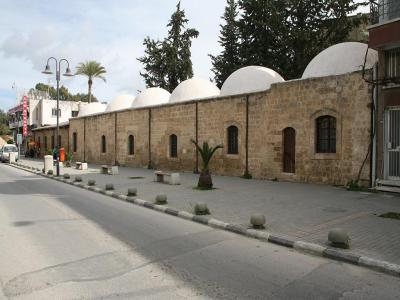
1) Mevlevi Tekke (Whirling Dervishes Museum)
Here is a 17th century Tekke, or Dervish house, now a museum. It was a center for followers of the Mevlevi Order. The Mevlevi were a branch of Sufi (mystical) Islam. They are better known as "whirling" dervishes.
Their spinning dances could produce a trance-like meditative state of serenity and peace. The dervishes would move to the melody of a reed flute, a lute and a drum. Inside the museum are figures of whirling dervishes accompanied by a trio in the gallery. There are musical instruments, costumes and Turkish artifacts.
The Mevlevi sect was founded in Konya, Turkey in the 13th century by the mystic poet Mevlana Rumi. It is believed that the tekke of Nicosia was built in 1593 by Arab Ahmed Pasha on his own land. The compound was later enlarged by land donated by Lady Emine Hatun. By 1607 the tekke was demolished and rebuilt by Ferhad Pasha.
The building is an Ottoman classic in modern Nicosia. The structures extant today are the semehana, where the whirling seme dance rituals are held, the tomb, a few rooms and a yard. The tekke of 1607 had rooms for dervishes, guest rooms, a kitchen and a garden. There is a mausoleum with sarcophagi of spiritual leaders including Selim Dede.
Their spinning dances could produce a trance-like meditative state of serenity and peace. The dervishes would move to the melody of a reed flute, a lute and a drum. Inside the museum are figures of whirling dervishes accompanied by a trio in the gallery. There are musical instruments, costumes and Turkish artifacts.
The Mevlevi sect was founded in Konya, Turkey in the 13th century by the mystic poet Mevlana Rumi. It is believed that the tekke of Nicosia was built in 1593 by Arab Ahmed Pasha on his own land. The compound was later enlarged by land donated by Lady Emine Hatun. By 1607 the tekke was demolished and rebuilt by Ferhad Pasha.
The building is an Ottoman classic in modern Nicosia. The structures extant today are the semehana, where the whirling seme dance rituals are held, the tomb, a few rooms and a yard. The tekke of 1607 had rooms for dervishes, guest rooms, a kitchen and a garden. There is a mausoleum with sarcophagi of spiritual leaders including Selim Dede.
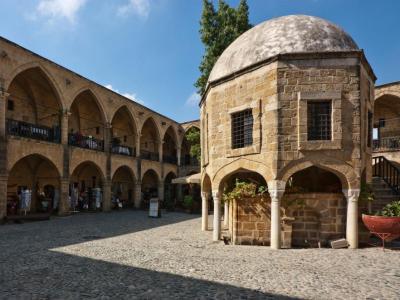
2) Büyük Han (Great Inn) (must see)
Great Inn is the largest roadside inn in Cyprus. It was built by the Ottomans in 1572, shortly after they expelled the Venetians. In the middle of the courtyard is a mosque and a fountain for religious ablutions.
The Great Inn was ordered built by Muzaffer Pasha, first ottoman governor. He got as far as the groundbreaking when he was executed. Politics was the cause, not construction. The roadside in was initially called the "New Inn." After the smaller Gambler's Inn was built it became the "Great Inn."
Under British colonial rule in 1878 the inn was restored and modified to serve as a prison. From 1903 to 1947 the place was put to its proper use as an inn. Between 1947 and 1962 it was low income housing.
The roadside inn typically has two floors and an inner courtyard. It is square shaped. The rooms of the inner courtyard have cross-vaulted colonnades. Altogether, there are 68 rooms on the two floors. The lower floor is used for commercial activity while the upper floor accommodates guests. There are ten shops behind the eastern colonnades.
The main entrance is on Asmaalti Square. There are hexagonal or octagonal shaped chimneys in each room. In the courtyard is a grave thought to be that of Muzaffer Pasha himself. This has been disputed, but who's to look?
By order of the Evkaf Administration all items sold in the Great Inn must be made by the tenants themselves. After the restorations of the 1990s, the inn has been reborn as an arts center featuring galleries and shops. In the courtyard are cafes and souvenir shops. If the Evkaf law still applies, tourists get the real thing. No Cypriot dolls made in China.
The Great Inn was ordered built by Muzaffer Pasha, first ottoman governor. He got as far as the groundbreaking when he was executed. Politics was the cause, not construction. The roadside in was initially called the "New Inn." After the smaller Gambler's Inn was built it became the "Great Inn."
Under British colonial rule in 1878 the inn was restored and modified to serve as a prison. From 1903 to 1947 the place was put to its proper use as an inn. Between 1947 and 1962 it was low income housing.
The roadside inn typically has two floors and an inner courtyard. It is square shaped. The rooms of the inner courtyard have cross-vaulted colonnades. Altogether, there are 68 rooms on the two floors. The lower floor is used for commercial activity while the upper floor accommodates guests. There are ten shops behind the eastern colonnades.
The main entrance is on Asmaalti Square. There are hexagonal or octagonal shaped chimneys in each room. In the courtyard is a grave thought to be that of Muzaffer Pasha himself. This has been disputed, but who's to look?
By order of the Evkaf Administration all items sold in the Great Inn must be made by the tenants themselves. After the restorations of the 1990s, the inn has been reborn as an arts center featuring galleries and shops. In the courtyard are cafes and souvenir shops. If the Evkaf law still applies, tourists get the real thing. No Cypriot dolls made in China.
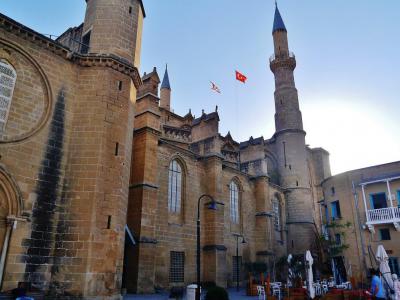
3) Selimiye Mosque (must see)
Once it was the cathedral of Saint Sophia, then it became Ayasofya. As a cathedral it makes a fine mosque. The Selimiye Mosque is the main mosque of Nicosia and the oldest remaining Gothic church in Cyprus. The Lusignan church turned mosque is built over the bones of an earlier Byzantine church. Its interior dimensions are 217 feet by 69 feet.
The mosque can hold 2500 souls at a time. It is the largest historical building in town. It was the coronation church of the kings of Cyprus. The original Byzantine church was called Hagia Sophia or "Holy Wisdom." The existence of this early church is mentioned in an 11th century manuscript and some remains continue to be found.
The foundation stone for the Cathedral of Saint Sophia was laid in 1209. The Cathedral was completed in 1249 after the arrival on the island of King Louis IX of France. The Cathedral suffered some damage from earthquakes and Genoese raids. Saint Sophia's became the center of the city with the building of the Venetian walls.
In 1570, after a 50-day siege, the city fell to the Ottomans and the Cathedral became a mosque just in time for Friday prayers. The first imam climbed to the pulpit leaning on a sword used in the siege. This custom continued until 1949. In 1954 the mosque was officially named Selimiye Mosque in memory of Selim II, Ottoman ruler during the siege.
The mosque can hold 2500 souls at a time. It is the largest historical building in town. It was the coronation church of the kings of Cyprus. The original Byzantine church was called Hagia Sophia or "Holy Wisdom." The existence of this early church is mentioned in an 11th century manuscript and some remains continue to be found.
The foundation stone for the Cathedral of Saint Sophia was laid in 1209. The Cathedral was completed in 1249 after the arrival on the island of King Louis IX of France. The Cathedral suffered some damage from earthquakes and Genoese raids. Saint Sophia's became the center of the city with the building of the Venetian walls.
In 1570, after a 50-day siege, the city fell to the Ottomans and the Cathedral became a mosque just in time for Friday prayers. The first imam climbed to the pulpit leaning on a sword used in the siege. This custom continued until 1949. In 1954 the mosque was officially named Selimiye Mosque in memory of Selim II, Ottoman ruler during the siege.
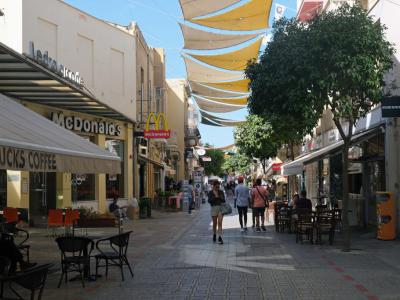
4) Ledra Street (must see)
Ledra Street is a popular shopping street named after the ancient kingdom of Ledra. In 1050 BC, Ledra was located where Nicosia is today. Ledra Street is a pedestrian-only street, so you can walk and shop without the noise and inconvenience of vehicle traffic.
The street was known as Murder Mile during the EOKA struggle in the 1950s. During this time, EOKA fighters targeted the British military along Ledra Street.
The buffer zone was established in 1974 to separate the northern Turkish-controlled part of Nicosia from the Greek-controlled southern part.
It used to have a barricade as the center of the United Nations buffer zone between the Turkish and Greek sides of the city. The barricade was removed in 2008, and now people can walk across the border.
Most of Ledra Street is on the Greek side. The Greek side features international brands, and the Turkish side has smaller boutiques. The Shacolas Tower is one of the tallest buildings in Nicosia and links to three arcades that are filled with shops and cafes.
The street was known as Murder Mile during the EOKA struggle in the 1950s. During this time, EOKA fighters targeted the British military along Ledra Street.
The buffer zone was established in 1974 to separate the northern Turkish-controlled part of Nicosia from the Greek-controlled southern part.
It used to have a barricade as the center of the United Nations buffer zone between the Turkish and Greek sides of the city. The barricade was removed in 2008, and now people can walk across the border.
Most of Ledra Street is on the Greek side. The Greek side features international brands, and the Turkish side has smaller boutiques. The Shacolas Tower is one of the tallest buildings in Nicosia and links to three arcades that are filled with shops and cafes.
5) Cyprus Classic Motorcycle Museum
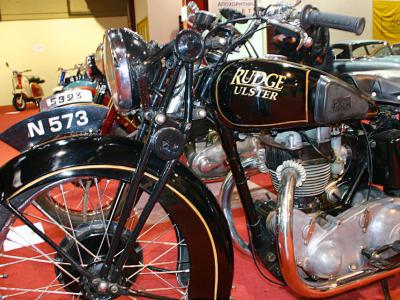
Tucked within the winding streets of Nicosia’s Old City, the Cyprus Classic Motorcycle Museum is the result of a lifelong passion project by Andreas Nicolaou. What began in 1980 as a personal endeavor has since grown into the largest motorcycle museum in the Middle East, with a collection that now exceeds 450 motorcycles.
The museum is dedicated to preserving the history of motorcycles manufactured between 1914 and 1983. It showcases a wide array of classic machines, with a strong emphasis on British marques such as Norton, BSA, Triumph, Ariel, and AJS. Italian craftsmanship is also well represented with MV Agusta and Moto Guzzi, alongside German engineering from BMW. A particular highlight is the extremely rare 1914 New Hudson, one of only three of its kind known to still exist.
Beyond its technical and aesthetic appeal, the museum also delves into Cyprus's historical fabric. It houses motorcycles with compelling local backstories, including three police bikes that once escorted Archbishop Makarios III, the motorcycle used by EOKA fighter Stylianos Lenas for transporting arms, and the racing bike of Zeki Isa, Cyprus’s first motorcycle champion and a prominent Turkish Cypriot sports figure.
Visitors are also treated to a rotating photography exhibition that complements the mechanical exhibits with visual narratives from Cyprus’s motorcycling past.
Whether you’re a die-hard enthusiast or a curious traveler, the Cyprus Classic Motorcycle Museum offers an immersive journey through nearly seven decades of two-wheeled history, all under one roof.
The museum is dedicated to preserving the history of motorcycles manufactured between 1914 and 1983. It showcases a wide array of classic machines, with a strong emphasis on British marques such as Norton, BSA, Triumph, Ariel, and AJS. Italian craftsmanship is also well represented with MV Agusta and Moto Guzzi, alongside German engineering from BMW. A particular highlight is the extremely rare 1914 New Hudson, one of only three of its kind known to still exist.
Beyond its technical and aesthetic appeal, the museum also delves into Cyprus's historical fabric. It houses motorcycles with compelling local backstories, including three police bikes that once escorted Archbishop Makarios III, the motorcycle used by EOKA fighter Stylianos Lenas for transporting arms, and the racing bike of Zeki Isa, Cyprus’s first motorcycle champion and a prominent Turkish Cypriot sports figure.
Visitors are also treated to a rotating photography exhibition that complements the mechanical exhibits with visual narratives from Cyprus’s motorcycling past.
Whether you’re a die-hard enthusiast or a curious traveler, the Cyprus Classic Motorcycle Museum offers an immersive journey through nearly seven decades of two-wheeled history, all under one roof.
6) Ethnographic Museum of Cyprus
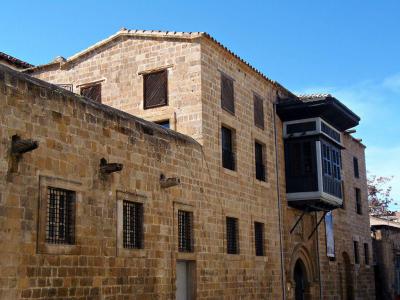
Located on the ground floor of the historic Old Archbishopric in Nicosia, the Ethnographic Museum of Cyprus offers a rich window into the everyday life and traditions of 19th- and early 20th-century Cypriots. The museum’s extensive collection-over 5,000 items-features intricately carved wooden objects, tapestries, embroidery, hand-thrown pottery, and traditional Cypriot costumes, many of which were donated or purchased directly from villagers. The collection includes important private contributions, such as those of Maria Eleutheriou Gaffiero and G. Filis.
Among its treasures is a 19th-century door from the church of Saint Mamas in Morphou, which inspired Greek Nobel laureate Giorgos Seferis in his poem Little Things of Cyprus. Another unique piece is a mural from a coffee shop in the village of Geri, portraying Athanasios Diakos, a hero of the Greek War of Independence.
The museum building began as a Benedictine monastery during the French period in the 13th century and later became a church dedicated to Saint John under the Order of Saint John-Hospitallers. King Hugo I was buried here in 1218. After the Benedictines left in 1426, the Greek Orthodox Church took over and renovated it over the next centuries. Notable features include Gothic architecture, chevron arches, and a 16th-century Annunciation fresco uncovered in 1950.
Adjacent to the Cathedral of Agios Ioannis Evangelistis and close to the Byzantine Museum, National Struggle Museum, and Archbishop’s Palace, the museum is set in a square named after Archbishop Kyprianos, a central figure in Cyprus’ national history who was executed by the Ottomans in 1821. The first floor still preserves a room associated with Kyprianos himself.
Founded in 1937 as a non-profit cultural initiative, the museum has been sustained largely by volunteers and continues to serve as a key institution for preserving and showcasing the island’s folk heritage.
Among its treasures is a 19th-century door from the church of Saint Mamas in Morphou, which inspired Greek Nobel laureate Giorgos Seferis in his poem Little Things of Cyprus. Another unique piece is a mural from a coffee shop in the village of Geri, portraying Athanasios Diakos, a hero of the Greek War of Independence.
The museum building began as a Benedictine monastery during the French period in the 13th century and later became a church dedicated to Saint John under the Order of Saint John-Hospitallers. King Hugo I was buried here in 1218. After the Benedictines left in 1426, the Greek Orthodox Church took over and renovated it over the next centuries. Notable features include Gothic architecture, chevron arches, and a 16th-century Annunciation fresco uncovered in 1950.
Adjacent to the Cathedral of Agios Ioannis Evangelistis and close to the Byzantine Museum, National Struggle Museum, and Archbishop’s Palace, the museum is set in a square named after Archbishop Kyprianos, a central figure in Cyprus’ national history who was executed by the Ottomans in 1821. The first floor still preserves a room associated with Kyprianos himself.
Founded in 1937 as a non-profit cultural initiative, the museum has been sustained largely by volunteers and continues to serve as a key institution for preserving and showcasing the island’s folk heritage.
7) Podocataro Bastion and Medieval Venetian Walls (must see)
Nicosia's Medieval Venetian Walls are one of the city's most visited attractions. Nicosia's original walls were built during the Middle Ages. However, the Republic of Venice rebuilt the walls during the 16th century. Today, the walls are one of the Eastern Mediterranean's best-preserved city walls.
The first walls were built in the 14th century. When Cyprus became part of the Republic of Venice in 1489, the Venetians planned new fortifications, but their plans were delayed. Ottoman expansion inspired the Venetians to rebuild the city's walls in 1567. The Venetians also added an 80-meter-wide (262-feet) moat.
The walls were still under construction when the Ottomans invaded in 1570 and breached Podocattaro Bastion's walls. The Ottomans left thousands of soldiers in Nicosia and repaired the walls.
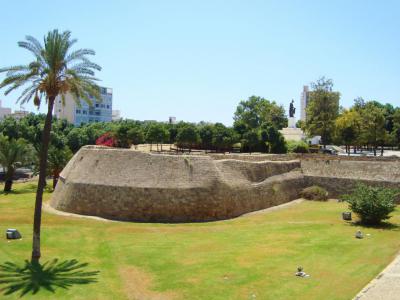
Nicosia's Venetian walls are circular and have eleven bastions and three gates. The bastions were named after members of the Italian aristocracy who donated funds to build the walls. Today, the Podocattaro Bastion is home to the Liberty Monument.
The walls feature innovative building techniques, such as improving the gate's protection and the wall's ability to withstand cannon fire.
Today, the walls are a much-visited tourist attraction. In addition, the dry moat is now used for sports fields, car parking, exhibitions, and a sculpture exhibition.
The first walls were built in the 14th century. When Cyprus became part of the Republic of Venice in 1489, the Venetians planned new fortifications, but their plans were delayed. Ottoman expansion inspired the Venetians to rebuild the city's walls in 1567. The Venetians also added an 80-meter-wide (262-feet) moat.
The walls were still under construction when the Ottomans invaded in 1570 and breached Podocattaro Bastion's walls. The Ottomans left thousands of soldiers in Nicosia and repaired the walls.
Nicosia's Venetian walls are circular and have eleven bastions and three gates. The bastions were named after members of the Italian aristocracy who donated funds to build the walls. Today, the Podocattaro Bastion is home to the Liberty Monument.
The walls feature innovative building techniques, such as improving the gate's protection and the wall's ability to withstand cannon fire.
Today, the walls are a much-visited tourist attraction. In addition, the dry moat is now used for sports fields, car parking, exhibitions, and a sculpture exhibition.
