Custom Walk in Naples, Italy by parksider1970_cf597 created on 2025-09-08
Guide Location: Italy » Naples
Guide Type: Custom Walk
# of Sights: 6
Tour Duration: 2 Hour(s)
Travel Distance: 4.5 Km or 2.8 Miles
Share Key: 26L29
Guide Type: Custom Walk
# of Sights: 6
Tour Duration: 2 Hour(s)
Travel Distance: 4.5 Km or 2.8 Miles
Share Key: 26L29
How It Works
Please retrieve this walk in the GPSmyCity app. Once done, the app will guide you from one tour stop to the next as if you had a personal tour guide. If you created the walk on this website or come to the page via a link, please follow the instructions below to retrieve the walk in the app.
Retrieve This Walk in App
Step 1. Download the app "GPSmyCity: Walks in 1K+ Cities" on Apple App Store or Google Play Store.



Step 2. In the GPSmyCity app, download(or launch) the guide "Naples Map and Walking Tours".
Step 3. Tap the menu button located at upper right corner of the "Walks" screen and select "Retrieve custom walk". Enter the share key: 26L29
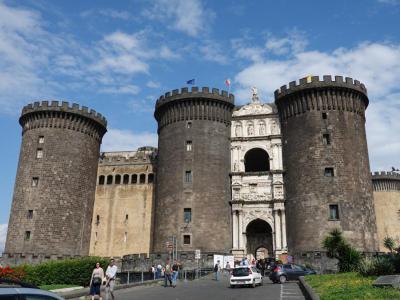
1) Castel Nuovo (New Castle) (must see)
The New Castle is not new, it is a large medieval castle first built in 1279. Its scenic location and imposing size make the castle one of the main architectural landmarks of the city. It was a royal seat for kings of Naples, Aragon and Spain until 1815.
Commissioned by Charles I of Anjou and built between 1279-82 as the royal residence after the capital of the Sicily Kingdom shifted from Palermo to Naples, it became the venue for all important events during the rule of the Angevin dynasty. The Spanish Aragon dynasty that ruled Naples after the Angevins improved the structure and used it both as a royal residence and a military fortress. The marble entrance arch was created by sculptors from Catalonia in Spain to celebrate the beginning of the Aragonese rule of Naples.
The New Castle has housed the Neapolitan Society of National History since 1875 and the Civic Museum that contains works of art from churches around Naples. It is open for public viewing and managed by the Naples Ministry of Culture. Among the things to see are a display of weapons in the armory hall and the Palatine or Saint Barbara chapel located within the castle. Cultural events and exhibitions are held at the two levels of the southern courtyard and at the Charles V Hall and the Salla della Loggia inside the castle.
The castle is truly breathtaking when observing it from outside. Massive and beautiful, it can really impress. Make sure to visit the excavations underground and also take the elevator/stairs to the top, where the city view is extensive.
Tip:
If you go, it is highly recommended that you join a guided tour, if you want to make most of your visit - the small extra fee is worth it.
Commissioned by Charles I of Anjou and built between 1279-82 as the royal residence after the capital of the Sicily Kingdom shifted from Palermo to Naples, it became the venue for all important events during the rule of the Angevin dynasty. The Spanish Aragon dynasty that ruled Naples after the Angevins improved the structure and used it both as a royal residence and a military fortress. The marble entrance arch was created by sculptors from Catalonia in Spain to celebrate the beginning of the Aragonese rule of Naples.
The New Castle has housed the Neapolitan Society of National History since 1875 and the Civic Museum that contains works of art from churches around Naples. It is open for public viewing and managed by the Naples Ministry of Culture. Among the things to see are a display of weapons in the armory hall and the Palatine or Saint Barbara chapel located within the castle. Cultural events and exhibitions are held at the two levels of the southern courtyard and at the Charles V Hall and the Salla della Loggia inside the castle.
The castle is truly breathtaking when observing it from outside. Massive and beautiful, it can really impress. Make sure to visit the excavations underground and also take the elevator/stairs to the top, where the city view is extensive.
Tip:
If you go, it is highly recommended that you join a guided tour, if you want to make most of your visit - the small extra fee is worth it.
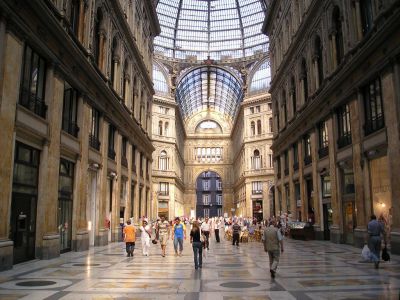
2) Galleria Umberto I
The Galleria Umberto is a public shopping arcade in Naples located opposite the San Carlo opera house. It was named after King Umberto I, who was the King of Italy at the time of its construction.
The Galleria Umberto was designed by architect, Emanuele Rocco and built between 1887 and 1891. It was meant to be a residential and commercial complex and has one of the largest glass roofs in the world. It was the most famous structures constructed during the ten-year Rebuilding of Naples that ended with the beginning of World War I.
The Galleria Umberto has three floors topped by a 184 feet tall arched dome. The dome is supported by 16 metal ribs. The arcade is designed in the shape of a cross with a beautiful mosaic depicting the signs of the Zodiac at the center of the floor. Shops, cafes and offices occupy the first and second floors and the third floor has residential apartments. It consists of four glass roofed wings. One wing opens to the main thoroughfare of the city, the Via Toledo and another opens to the San Carlo Theatre. The Galleria Umberto is the setting of the book, ‘The Gallery’, by John Horne Burns about life in occupied Naples in 1944 after World War II.
Tip:
The food here is amazing – you cannot go wrong with pizza and pastries.
The Galleria Umberto was designed by architect, Emanuele Rocco and built between 1887 and 1891. It was meant to be a residential and commercial complex and has one of the largest glass roofs in the world. It was the most famous structures constructed during the ten-year Rebuilding of Naples that ended with the beginning of World War I.
The Galleria Umberto has three floors topped by a 184 feet tall arched dome. The dome is supported by 16 metal ribs. The arcade is designed in the shape of a cross with a beautiful mosaic depicting the signs of the Zodiac at the center of the floor. Shops, cafes and offices occupy the first and second floors and the third floor has residential apartments. It consists of four glass roofed wings. One wing opens to the main thoroughfare of the city, the Via Toledo and another opens to the San Carlo Theatre. The Galleria Umberto is the setting of the book, ‘The Gallery’, by John Horne Burns about life in occupied Naples in 1944 after World War II.
Tip:
The food here is amazing – you cannot go wrong with pizza and pastries.
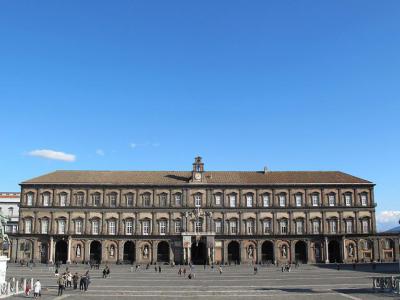
3) Royal Palace (must see)
The Royal Palace is located opposite the Basilica of San Francesco di Paola on the Piazza Plebiscito. It was used as a residence by the Bourbon kings who ruled Naples between 1730 and 1860.
The palace is on the site of an earlier residence, which had housed the former viceroy Don Pedro de Toledo, Marquis of Villafranca. Construction on the present building was begun in the 17th century by the architect Domenico Fontana. It was intended to house the King Philip III of Spain on his visit to this part of his kingdom. However the visit never materialized. Instead the palace initially housed the Viceroy Fernando Ruiz de Castro, count of Lemos.
In 1734, with the arrival of Charles III of Spain to Naples, the palace became the royal residence of the Bourbons. It was greatly expanded and embellished during the reign of King Ferdinand II. The most recent refurbishment was after the damage caused to the structure during World War II.
Today the Royal Palace houses the National Library of Naples, several city offices including the tourist office and a small museum. A magnificent double staircase takes visitors up to the former royal apartments with their lavish furniture and furnishings. The Royal Chapel has a large 18th century Nativity scene that is regarded as the building’s art treasure.
The National Library of Naples has an impressive collection of papyrus scrolls found during excavations at Herculaneum and a 5th century Coptic Bible. The western facade of the palace that faces the Piazza Plebiscito has statues of many of the kings from different dynasties that ruled Naples from the 12th century.
The palace is on the site of an earlier residence, which had housed the former viceroy Don Pedro de Toledo, Marquis of Villafranca. Construction on the present building was begun in the 17th century by the architect Domenico Fontana. It was intended to house the King Philip III of Spain on his visit to this part of his kingdom. However the visit never materialized. Instead the palace initially housed the Viceroy Fernando Ruiz de Castro, count of Lemos.
In 1734, with the arrival of Charles III of Spain to Naples, the palace became the royal residence of the Bourbons. It was greatly expanded and embellished during the reign of King Ferdinand II. The most recent refurbishment was after the damage caused to the structure during World War II.
Today the Royal Palace houses the National Library of Naples, several city offices including the tourist office and a small museum. A magnificent double staircase takes visitors up to the former royal apartments with their lavish furniture and furnishings. The Royal Chapel has a large 18th century Nativity scene that is regarded as the building’s art treasure.
The National Library of Naples has an impressive collection of papyrus scrolls found during excavations at Herculaneum and a 5th century Coptic Bible. The western facade of the palace that faces the Piazza Plebiscito has statues of many of the kings from different dynasties that ruled Naples from the 12th century.
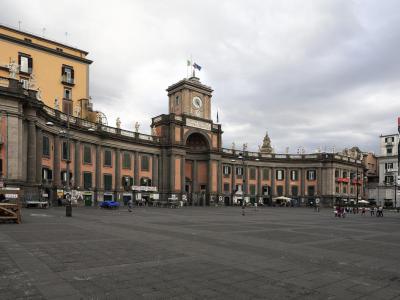
4) Dante Square
The Piazza Dante or Dante Square in Naples is dominated by the statue of the renaissance poet, Dante Alighieri. It is a centrally located square in the city.
The Piazza Dante was once the site of a large marketplace. At the time, it was called the Largo del Mercatello or Market Square. The square was redesigned and renovated by the architect, Luigi Vanvitelli in 1765. After the modifications, it was called the Foro Carolina after Maria Carolina of Austria, the consort of the then reigning King of Naples, Ferdinand IV. After the unification of Italy in 1871, the statue of Dante Alighieri by sculptor, Tito Angelini was erected here in 1872.
The Piazza Dante today is a popular square for both locals and tourists. It is within easy reach of most of the important monuments in Naples and lies near the new first line of the underground station. There is also a well known food market at the Rione della Pignasecca nearby. The original modifications by Luigi Vanvitelli including a semicircle of highly decorated columns with statues are still located on Piazza Dante and form the western side of a boarding school. It is a popular venue for family activities in Naples.
The Piazza Dante was once the site of a large marketplace. At the time, it was called the Largo del Mercatello or Market Square. The square was redesigned and renovated by the architect, Luigi Vanvitelli in 1765. After the modifications, it was called the Foro Carolina after Maria Carolina of Austria, the consort of the then reigning King of Naples, Ferdinand IV. After the unification of Italy in 1871, the statue of Dante Alighieri by sculptor, Tito Angelini was erected here in 1872.
The Piazza Dante today is a popular square for both locals and tourists. It is within easy reach of most of the important monuments in Naples and lies near the new first line of the underground station. There is also a well known food market at the Rione della Pignasecca nearby. The original modifications by Luigi Vanvitelli including a semicircle of highly decorated columns with statues are still located on Piazza Dante and form the western side of a boarding school. It is a popular venue for family activities in Naples.
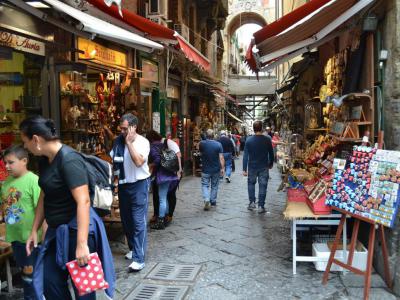
5) Via San Gregorio Armeno (St. Gregory of Armenia Street) (must see)
This ancient street was once home to a temple dedicated to Ceres, a Roman Goddess. The faithful would bring small figurines made in nearby shops to the temple. The tradition continues today as this street became famous for artists that create figurines for Nativity scenes.
Nativity scene creations include different size houses, terracotta shepherds, fruit vendors, or even a pizza vendor. In addition, shoppers can find mechanical items to complete the perfect scene, including windmills and waterfalls.
Today, workshops continue to create religious figures and more modern figures such as famous football players, celebrities, and politicians.
This beautiful, narrow alley is the perfect place to shop for a unique souvenir. Visitors might see the artists at work carving out the next figurine. Via San Gregorio Armeno is busy year-round but absolutely packed with locals and tourists during the Christmas season.
Nativity scene creations include different size houses, terracotta shepherds, fruit vendors, or even a pizza vendor. In addition, shoppers can find mechanical items to complete the perfect scene, including windmills and waterfalls.
Today, workshops continue to create religious figures and more modern figures such as famous football players, celebrities, and politicians.
This beautiful, narrow alley is the perfect place to shop for a unique souvenir. Visitors might see the artists at work carving out the next figurine. Via San Gregorio Armeno is busy year-round but absolutely packed with locals and tourists during the Christmas season.
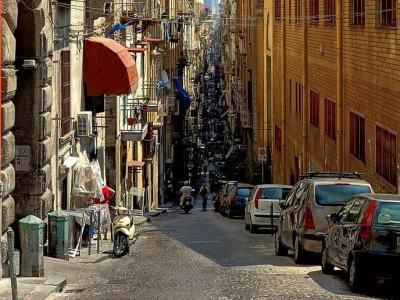
6) Spaccanapoli Street (must see)
Spaccanapoli Street can be translated to "Naples splitter." This long street is popular with locals and visitors alike as it provides access to the most popular landmarks and sights in Naples. The ancient street is actually several different streets, such as Via San Biagio and Via Benedetto Croce.
Along Spaccanapoli Street, visitors will find artist's workshops, overhanging balconies, and narrow through-ways. This is the perfect place to immerse yourself in the daily life of Naples.
At the intersection with Via Duomo, visitors will find sweet local stores, bars, restaurants, shopping boutiques, and vegetable stands.
One of the more unique shops is the L'Ospedale delle Bambole, which specializes in restoring statues and antique dolls. Kids enjoy checking out the doll hospital, complete with doll hospital beds. There's also a museum with antique dolls and toys.
While walking, don't miss the opportunity for a distinctive Naples pizza. Stroll along Spaccanapoli to find several important churches and landmarks. Visitors will find the Church of Gesu Nuovo, the Church of Santa Chiara, the Cappella Sansevero, and the Cathedral of San Gennaro.
Along Spaccanapoli Street, visitors will find artist's workshops, overhanging balconies, and narrow through-ways. This is the perfect place to immerse yourself in the daily life of Naples.
At the intersection with Via Duomo, visitors will find sweet local stores, bars, restaurants, shopping boutiques, and vegetable stands.
One of the more unique shops is the L'Ospedale delle Bambole, which specializes in restoring statues and antique dolls. Kids enjoy checking out the doll hospital, complete with doll hospital beds. There's also a museum with antique dolls and toys.
While walking, don't miss the opportunity for a distinctive Naples pizza. Stroll along Spaccanapoli to find several important churches and landmarks. Visitors will find the Church of Gesu Nuovo, the Church of Santa Chiara, the Cappella Sansevero, and the Cathedral of San Gennaro.
