Custom Walk in Milan, Italy by lauralrosew_82e5b created on 2025-11-27
Guide Location: Italy » Milan
Guide Type: Custom Walk
# of Sights: 9
Tour Duration: 3 Hour(s)
Travel Distance: 8.1 Km or 5 Miles
Share Key: S7CTR
Guide Type: Custom Walk
# of Sights: 9
Tour Duration: 3 Hour(s)
Travel Distance: 8.1 Km or 5 Miles
Share Key: S7CTR
How It Works
Please retrieve this walk in the GPSmyCity app. Once done, the app will guide you from one tour stop to the next as if you had a personal tour guide. If you created the walk on this website or come to the page via a link, please follow the instructions below to retrieve the walk in the app.
Retrieve This Walk in App
Step 1. Download the app "GPSmyCity: Walks in 1K+ Cities" on Apple App Store or Google Play Store.



Step 2. In the GPSmyCity app, download(or launch) the guide "Milan Map and Walking Tours".
Step 3. Tap the menu button located at upper right corner of the "Walks" screen and select "Retrieve custom walk". Enter the share key: S7CTR
1) Milano Centrale railway station
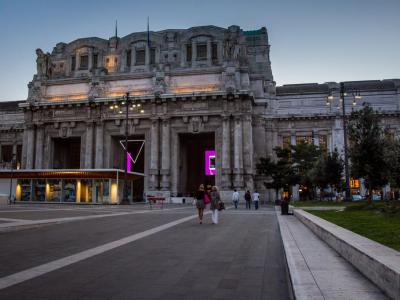
The grand and iconic Milano Centrale railway station located in the heart of Milan was designed by architect Ulisse Stacchini and opened in 1931 as part of the city's urban renewal project.
The station features a distinctive Art Deco style, with a grand entrance hall adorned with marble floors and a vast glass dome that serves as the station's centerpiece. The station's exterior is equally impressive, with a neoclassical façade that features numerous decorative elements such as columns, statues, and reliefs.
Throughout its history, Milano Centrale has played a significant role in Italian transportation, serving as a major hub for both domestic and international trains. The station features 24 platforms, with numerous trains departing and arriving every day, making it a bustling and vibrant hub of activity.
Over the years, Milano Centrale has undergone several renovations and upgrades to modernize its facilities and services. Today, it offers a wide range of amenities and services, including restaurants, cafes, shops, a post office, a pharmacy, and a bank, making it a convenient and accessible destination for travelers.
Milano Centrale's grand architecture and rich history have also made it a popular cultural landmark and tourist attraction in Milan. The station has appeared in numerous movies and TV shows over the years and is a popular destination for architecture enthusiasts and history buffs.
The station features a distinctive Art Deco style, with a grand entrance hall adorned with marble floors and a vast glass dome that serves as the station's centerpiece. The station's exterior is equally impressive, with a neoclassical façade that features numerous decorative elements such as columns, statues, and reliefs.
Throughout its history, Milano Centrale has played a significant role in Italian transportation, serving as a major hub for both domestic and international trains. The station features 24 platforms, with numerous trains departing and arriving every day, making it a bustling and vibrant hub of activity.
Over the years, Milano Centrale has undergone several renovations and upgrades to modernize its facilities and services. Today, it offers a wide range of amenities and services, including restaurants, cafes, shops, a post office, a pharmacy, and a bank, making it a convenient and accessible destination for travelers.
Milano Centrale's grand architecture and rich history have also made it a popular cultural landmark and tourist attraction in Milan. The station has appeared in numerous movies and TV shows over the years and is a popular destination for architecture enthusiasts and history buffs.
2) Bosco Verticale (Vertical Forest) (must see)
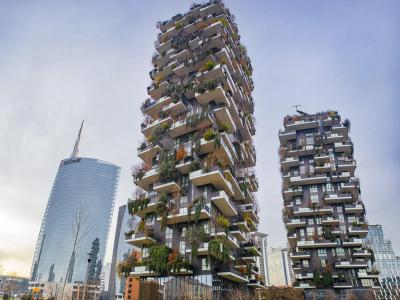
Bosco Verticale, which means "Vertical Forest" in English, is a pair of residential towers located in Milan's Porta Nuova district. Designed by architect Stefano Boeri, the towers were completed in 2014 and have since become one of the city's most iconic landmarks. They stand at heights of 110 and 76 meters and are home to over 900 trees, 5,000 shrubs, and 11,000 plants, creating a green oasis in the heart of the city.
The design of Bosco Verticale was based on the concept of urban reforestation, with the aim of improving the quality of urban life by providing natural spaces for residents. The towers are also equipped with sustainable technologies, including solar panels and a rainwater harvesting system, making them energy-efficient and eco-friendly.
In addition to their ecological features, the towers offer luxurious living spaces, with a range of apartments, penthouses, and duplexes available. The towers also feature a range of amenities, including a fitness center, a spa, and a rooftop swimming pool. Bosco Verticale has won numerous awards for its innovative design and sustainable features, including the International Highrise Award in 2014 and the "Best Tall Building Worldwide" award in 2015.
The design of Bosco Verticale was based on the concept of urban reforestation, with the aim of improving the quality of urban life by providing natural spaces for residents. The towers are also equipped with sustainable technologies, including solar panels and a rainwater harvesting system, making them energy-efficient and eco-friendly.
In addition to their ecological features, the towers offer luxurious living spaces, with a range of apartments, penthouses, and duplexes available. The towers also feature a range of amenities, including a fitness center, a spa, and a rooftop swimming pool. Bosco Verticale has won numerous awards for its innovative design and sustainable features, including the International Highrise Award in 2014 and the "Best Tall Building Worldwide" award in 2015.
3) Pinacoteca di Brera (Brera Art Gallery) (must see)
The moment you step inside the Brera Gallery, you’re essentially walking through Napoleon’s carefully curated art collection. During his rule, churches and monasteries were closed, and their finest artworks were quietly relocated here. The result was one of Italy’s richest aggregations of paintings, gathered under one elegant roof on Via Brera, surrounded by cafés where locals argue about art, politics, and espresso strength.
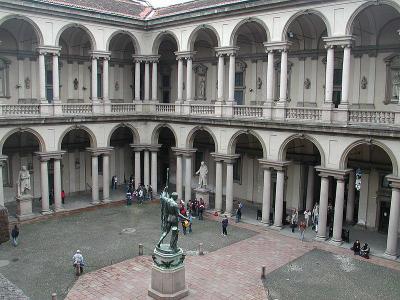
Walking through the main gate, you’re greeted-as you naturally might expect-by a confident statue of Napoleon Bonaparte. The building itself multitasks: the first floor houses the Academy of Fine Arts, while the masterpieces wait upstairs on the second floor. Climb up, and suddenly you’re facing nearly 40 rooms of Italian brilliance.
Here’s Andrea Mantegna’s dramatically foreshortened Dead Christ, looking almost three-dimensional. There’s Raphael’s graceful Betrothal of the Virgin, and Piero della Francesca’s serene Madonna with Saints. Room after room unfolds in chronological order, so you can actually see how painting techniques evolve from the 14th to the 19th centuries-gold backgrounds fade, perspective sharpens, faces become more human. It’s like watching art grow up...
And just when you think you’ve settled comfortably into the Renaissance, the gallery shifts gears. A modern section brings in bold names like Modigliani and Picasso, reminding you that Italian art history doesn’t stop at halos and saints.
Behind the scenes, there’s even a working restoration lab, where experts carefully bring faded masterpieces back to life. Then step outside into the quiet garden. It’s small, aromatic, and unexpectedly peaceful. Herbs, flowers, climbing plants-and towering among them, some of Europe’s oldest ginkgo biloba trees, brought from China in the early 18th century. Yes, you can admire Renaissance genius and ancient botany in one visit.
And if you’re planning your route, grab the free map at the entrance. It helps. The collection is vast, and your feet will notice. Use the benches whenever you see them-this is not a sprint. An audio guide also adds useful context, especially when saints start looking suspiciously alike.
So, give yourself a full morning or afternoon here. Then step back into Brera’s streets for lunch or a drink. Art first, espresso second. That’s the proper order...
Walking through the main gate, you’re greeted-as you naturally might expect-by a confident statue of Napoleon Bonaparte. The building itself multitasks: the first floor houses the Academy of Fine Arts, while the masterpieces wait upstairs on the second floor. Climb up, and suddenly you’re facing nearly 40 rooms of Italian brilliance.
Here’s Andrea Mantegna’s dramatically foreshortened Dead Christ, looking almost three-dimensional. There’s Raphael’s graceful Betrothal of the Virgin, and Piero della Francesca’s serene Madonna with Saints. Room after room unfolds in chronological order, so you can actually see how painting techniques evolve from the 14th to the 19th centuries-gold backgrounds fade, perspective sharpens, faces become more human. It’s like watching art grow up...
And just when you think you’ve settled comfortably into the Renaissance, the gallery shifts gears. A modern section brings in bold names like Modigliani and Picasso, reminding you that Italian art history doesn’t stop at halos and saints.
Behind the scenes, there’s even a working restoration lab, where experts carefully bring faded masterpieces back to life. Then step outside into the quiet garden. It’s small, aromatic, and unexpectedly peaceful. Herbs, flowers, climbing plants-and towering among them, some of Europe’s oldest ginkgo biloba trees, brought from China in the early 18th century. Yes, you can admire Renaissance genius and ancient botany in one visit.
And if you’re planning your route, grab the free map at the entrance. It helps. The collection is vast, and your feet will notice. Use the benches whenever you see them-this is not a sprint. An audio guide also adds useful context, especially when saints start looking suspiciously alike.
So, give yourself a full morning or afternoon here. Then step back into Brera’s streets for lunch or a drink. Art first, espresso second. That’s the proper order...
4) Galleria Vittorio Emanuele II (Vittorio Emanuele II Gallery) (must see)
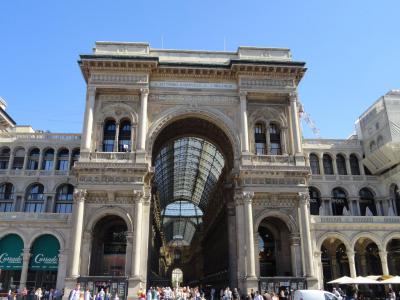
Walk into the Galleria Vittorio Emanuele II, and you’re not simply entering a mall - you’re stepping straight into Italy’s grand 19th-century statement piece. Five storeys high, wrapped in curved glass and iron, dressed up with patriotic mosaics and statues, it feels like a country saying, “We’re unified now - and we’re fabulous!”
Construction began in 1865 under architect Giuseppe Mengoni, the mastermind behind the grand plan connecting the Milan Cathedral to La Scala Opera House. The gallery was named after Vittorio Emanuele II, the first king of a united Italy, and officially opened in 1867.
But perfection takes time. Work continued for another decade. Then came the twist: in December 1877, just one day before completion, Mengoni fell from the top of the triumphal arch and died. A truly dramatic ending for a dramatic project...
Architecturally, it’s bold. The layout forms a Latin cross: two grand glass-vaulted passages - one 196 meters long, the other just over 105 - intersect beneath a soaring dome nearly 47 meters high. Iron and glass do the heavy lifting, pioneering the idea of the enclosed shopping arcade. Some even say this iron confidence later inspired the Eiffel Tower in Paris.
Now look down. The floor is a marble map of Italian pride, with mosaics representing major cities. And there it is - the famous bull. Tradition says that you should place your right heel on a certain anatomical detail, spin around, and make a wish. Centuries of enthusiastic spinning have worn an actual hole into the mosaic. A vivid example of Milanese optimism, carved in marble...
Indeed, visiting here feels like stepping into a perfectly preserved postcard of 19th-century Milan - light streaming through the dome, elegant shopfronts glowing, conversations echoing under glass. And yes, you can sit down at one of the cafés, order something indulgent, and watch the stylish parade drift by without emptying your wallet.
At the far end, opposite the statue of Leonardo da Vinci, you’ll even find a museum dedicated to the master himself.
For the best experience, come early in the morning or late at night, when the crowds thin out and the dome belongs almost entirely to you. And whatever you do - find the bull. Spin. Make the wish. Milan expects nothing less...
Construction began in 1865 under architect Giuseppe Mengoni, the mastermind behind the grand plan connecting the Milan Cathedral to La Scala Opera House. The gallery was named after Vittorio Emanuele II, the first king of a united Italy, and officially opened in 1867.
But perfection takes time. Work continued for another decade. Then came the twist: in December 1877, just one day before completion, Mengoni fell from the top of the triumphal arch and died. A truly dramatic ending for a dramatic project...
Architecturally, it’s bold. The layout forms a Latin cross: two grand glass-vaulted passages - one 196 meters long, the other just over 105 - intersect beneath a soaring dome nearly 47 meters high. Iron and glass do the heavy lifting, pioneering the idea of the enclosed shopping arcade. Some even say this iron confidence later inspired the Eiffel Tower in Paris.
Now look down. The floor is a marble map of Italian pride, with mosaics representing major cities. And there it is - the famous bull. Tradition says that you should place your right heel on a certain anatomical detail, spin around, and make a wish. Centuries of enthusiastic spinning have worn an actual hole into the mosaic. A vivid example of Milanese optimism, carved in marble...
Indeed, visiting here feels like stepping into a perfectly preserved postcard of 19th-century Milan - light streaming through the dome, elegant shopfronts glowing, conversations echoing under glass. And yes, you can sit down at one of the cafés, order something indulgent, and watch the stylish parade drift by without emptying your wallet.
At the far end, opposite the statue of Leonardo da Vinci, you’ll even find a museum dedicated to the master himself.
For the best experience, come early in the morning or late at night, when the crowds thin out and the dome belongs almost entirely to you. And whatever you do - find the bull. Spin. Make the wish. Milan expects nothing less...
5) Duomo di Milano (Milan Cathedral) (must see)
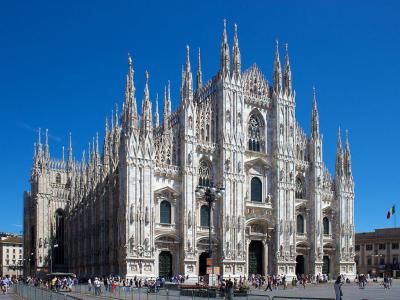
Some cities have a landmark; Milan has a marble mountain. The Milan Cathedral - or simply the Duomo - is not just big. It’s enormous. This is the seat of the Archbishop of Milan, the largest church in Italy, the third largest in Europe, and the fourth in the world. It spreads across 12,000 square meters and weighs around 325,000 tons. In other words, subtle it is not...
Dedicated to Saint Mary Nascent, the Duomo has been at the heart of city life since 1386. Its foundation stone was laid by Gian Galeazzo Visconti, the first duke of Milan, who had grand ambitions - but unfortunately died in 1402 when only half the cathedral was done. Construction then politely paused for almost 80 years. The reason? - No money and a clear plan. Just a very large unfinished church...
Work finally resumed around 1500, and by 1510, the octagonal dome was complete, decorated with rows of statues straight out of the Bible - 60 figures watching over Milan from above.
Then came Napoleon. In 1805, he decided the façade needed to be finished - promptly. Seven years later, it was done. To thank him, a statue of Napoleon was placed on one of the spires. Not modest, but effective. The Duomo even hosted his coronation.
Still, the cathedral refused to rush history. It wasn’t until 1965, with the final gate completed, that this centuries-long building project could finally call itself finished.
Now, about visiting. The real adventure begins when you climb to the roof. 201 steps through a narrow spiral passage - unless you wisely choose the elevator. Up there, 70 meters above the piazza, you walk among spires, statues, gargoyles, and flying buttresses, with Milan stretching out below you. It feels less like a rooftop and more like a marble forest in the sky.
Below ground, the Paleo-Christian baptistery beneath the west side reveals even older layers of the city. So yes, the Duomo works both up and down.
If you do one thing in Milan, make it this. Book your ticket online, skip the queue, and stay until evening. When the white lights illuminate the façade, the cathedral stops being impressive - and becomes unforgettable!
Dedicated to Saint Mary Nascent, the Duomo has been at the heart of city life since 1386. Its foundation stone was laid by Gian Galeazzo Visconti, the first duke of Milan, who had grand ambitions - but unfortunately died in 1402 when only half the cathedral was done. Construction then politely paused for almost 80 years. The reason? - No money and a clear plan. Just a very large unfinished church...
Work finally resumed around 1500, and by 1510, the octagonal dome was complete, decorated with rows of statues straight out of the Bible - 60 figures watching over Milan from above.
Then came Napoleon. In 1805, he decided the façade needed to be finished - promptly. Seven years later, it was done. To thank him, a statue of Napoleon was placed on one of the spires. Not modest, but effective. The Duomo even hosted his coronation.
Still, the cathedral refused to rush history. It wasn’t until 1965, with the final gate completed, that this centuries-long building project could finally call itself finished.
Now, about visiting. The real adventure begins when you climb to the roof. 201 steps through a narrow spiral passage - unless you wisely choose the elevator. Up there, 70 meters above the piazza, you walk among spires, statues, gargoyles, and flying buttresses, with Milan stretching out below you. It feels less like a rooftop and more like a marble forest in the sky.
Below ground, the Paleo-Christian baptistery beneath the west side reveals even older layers of the city. So yes, the Duomo works both up and down.
If you do one thing in Milan, make it this. Book your ticket online, skip the queue, and stay until evening. When the white lights illuminate the façade, the cathedral stops being impressive - and becomes unforgettable!
6) Piazza del Duomo (Cathedral Square) (must see)
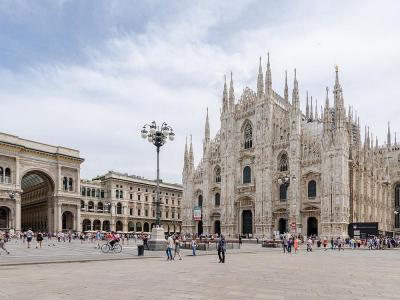
Milan's central square-vast, echoing, alive with camera clicks, quick footsteps, and pigeons who clearly believe they own the place. It feels grand, almost theatrical. On the one side stands the Museum of the Twentieth Century, cool and modern against the Gothic drama of the Duomo.
Strangely, no café terraces spread across the square itself. The space is left open, almost ceremonial. But slip under the porticoes, and you’ll find Camparino, founded in 1867 by the Campari family.
Right here, at the entrance to the Vittorio Emanuele II Gallery, Giuseppe Verdi used to stop for a drink after his concerts. In 1877, Milanese aristocrats gathered at this very spot to witness one of the city’s first experiments with electric lighting. Imagine the excitement-people staring upward as bulbs flickered to life...
Today, inside its Art Nouveau interior, the ritual continues. Suits loosen ties. Conversations soften. Coffee arrives. Campari glows red in the glass, usually accompanied by olives large enough to demand attention.
Now turn to the south side of the Duomo and meet the Royal Palace. Beneath its neoclassical façade lies a complicated past. This was once the Broletto (or Milan’s medieval town hall), destroyed by Frederick Barbarossa in 1162. Rebuilt in 1171, it later became the Ducal Palace of the Visconti and Sforza dynasties. When Galeazzo Visconti married Beatrice d’Este, the couple celebrated their entrance into Milan with eight full days of festivities here. Eight days! No short reception, indeed...
In 1336, the Visconti added their private chapel, San Gottardo in Corte. Its elegant colonnaded bell tower still rises behind the palace, even though the church itself disappeared during later renovations. In 1412, drama returned when Giovanni Maria Visconti was murdered on the church steps. After that, the family wisely moved to the more secure Sforzesco Castle. Under the Sforzas, a theater operated inside the palace, and in 1595, a 14-year-old Mozart performed here.
Also standing proudly in the piazza is an 1896 equestrian statue of Vittorio Emanuele II, the first king of unified Italy, who entered Milan triumphantly in 1859. Horse rearing up. King upright. History cast in bronze. In this square, Milan does not whisper. It performs!
Strangely, no café terraces spread across the square itself. The space is left open, almost ceremonial. But slip under the porticoes, and you’ll find Camparino, founded in 1867 by the Campari family.
Right here, at the entrance to the Vittorio Emanuele II Gallery, Giuseppe Verdi used to stop for a drink after his concerts. In 1877, Milanese aristocrats gathered at this very spot to witness one of the city’s first experiments with electric lighting. Imagine the excitement-people staring upward as bulbs flickered to life...
Today, inside its Art Nouveau interior, the ritual continues. Suits loosen ties. Conversations soften. Coffee arrives. Campari glows red in the glass, usually accompanied by olives large enough to demand attention.
Now turn to the south side of the Duomo and meet the Royal Palace. Beneath its neoclassical façade lies a complicated past. This was once the Broletto (or Milan’s medieval town hall), destroyed by Frederick Barbarossa in 1162. Rebuilt in 1171, it later became the Ducal Palace of the Visconti and Sforza dynasties. When Galeazzo Visconti married Beatrice d’Este, the couple celebrated their entrance into Milan with eight full days of festivities here. Eight days! No short reception, indeed...
In 1336, the Visconti added their private chapel, San Gottardo in Corte. Its elegant colonnaded bell tower still rises behind the palace, even though the church itself disappeared during later renovations. In 1412, drama returned when Giovanni Maria Visconti was murdered on the church steps. After that, the family wisely moved to the more secure Sforzesco Castle. Under the Sforzas, a theater operated inside the palace, and in 1595, a 14-year-old Mozart performed here.
Also standing proudly in the piazza is an 1896 equestrian statue of Vittorio Emanuele II, the first king of unified Italy, who entered Milan triumphantly in 1859. Horse rearing up. King upright. History cast in bronze. In this square, Milan does not whisper. It performs!
7) Colonne di San Lorenzo (Columns of San Lorenzo)
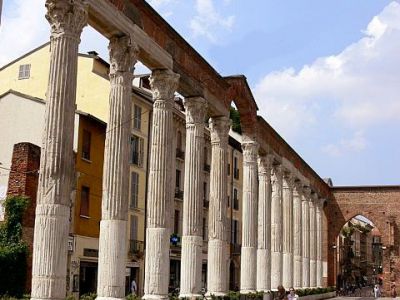
The Columns of San Lorenzo is a popular group of ancient Roman ruins, located in front of the Basilica of San Lorenzo in central Milan, which dates back to the 4th century AD. Consisting mainly of 16 tall Corinthian columns in a row, extracted from a likely 2nd-century pagan temple or public bath house structure, the collonade now fronts an open square. South of the columns, one of the medieval gates still has some Roman marble decoration in place.
Up until 1935, the space between the church and columns was entirely occupied by old houses abutting onto the façade of the church itself. Despite the plans to conserve this ancient urban fabric, the renovations led to the demolition of the old houses and the isolation of the monument on the front side. Following bombing during World War II, the church complex became further isolated on the rear side, where the fenced park now stands, allowing popular views of the Basilica.
A great place to explore and soak up the atmosphere of Milan.
Up until 1935, the space between the church and columns was entirely occupied by old houses abutting onto the façade of the church itself. Despite the plans to conserve this ancient urban fabric, the renovations led to the demolition of the old houses and the isolation of the monument on the front side. Following bombing during World War II, the church complex became further isolated on the rear side, where the fenced park now stands, allowing popular views of the Basilica.
A great place to explore and soak up the atmosphere of Milan.
8) Chiesa di Santa Maria delle Grazie (Church of Holy Mary of Grace); "The Last Supper" fresco (must see)
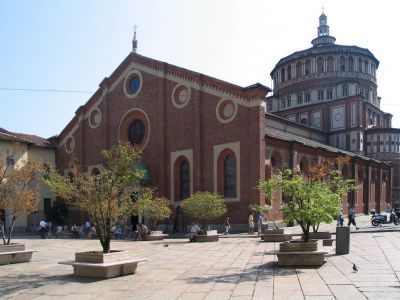
Santa Maria delle Grazie (the Church of Holy Mary of Grace) is a world-famous church and Dominican convent in Milan, included in the UNESCO World Heritage sites list. The Duke of Milan, Francesco I Sforza, ordered the building of Santa Maria delle Grazie in the 15th century. The design of its apse has been attributed to Donato Bramante, who at that time was in the service of the Duchy. While adhering to the overall Gothic style of the convent, he added some Romanesque touches as well.
The church is primarily famous for the mural of The Last Supper (Il Cenacolo Vinciano) found in the refectory of the convent. Created by Leonardo da Vinci for his patron Duke Ludovico Sforza and the Duchess, this 15th-century wall painting was made on a dry wall rather than on wet plaster, and, thus, is not truly a fresco. A fresco cannot be altered as the artist works; therefore, Leonardo decided to paint on the stone wall and then cover it with a sealing layer. The work began to deteriorate a few years after he had finished it. Two early copies of "The Last Supper", thought to be the work of Leonardo's assistant, still exist.
During World War II, on the night of 15 August 1943, an allied aerial bombardment hit the church and the convent. Much of the refectory was destroyed, but some walls survived, including the one holding "The Last Supper", which had been sand-bagged for protection. The preservation works continuously done ever since, and hopefully in the future, are believed to maintain this painting intact for many centuries to come.
Why You Should Visit:
Viewing "The Last Supper" in its own setting will make you feel more appreciative of the single point linear perspective and the 3D effect so cleverly used by Da Vinci.
Tip:
To view "The Last Supper", make sure to book your tickets well in advance on the official website, as they are usually sold out within at least two weeks prior to the sought date.
The church is primarily famous for the mural of The Last Supper (Il Cenacolo Vinciano) found in the refectory of the convent. Created by Leonardo da Vinci for his patron Duke Ludovico Sforza and the Duchess, this 15th-century wall painting was made on a dry wall rather than on wet plaster, and, thus, is not truly a fresco. A fresco cannot be altered as the artist works; therefore, Leonardo decided to paint on the stone wall and then cover it with a sealing layer. The work began to deteriorate a few years after he had finished it. Two early copies of "The Last Supper", thought to be the work of Leonardo's assistant, still exist.
During World War II, on the night of 15 August 1943, an allied aerial bombardment hit the church and the convent. Much of the refectory was destroyed, but some walls survived, including the one holding "The Last Supper", which had been sand-bagged for protection. The preservation works continuously done ever since, and hopefully in the future, are believed to maintain this painting intact for many centuries to come.
Why You Should Visit:
Viewing "The Last Supper" in its own setting will make you feel more appreciative of the single point linear perspective and the 3D effect so cleverly used by Da Vinci.
Tip:
To view "The Last Supper", make sure to book your tickets well in advance on the official website, as they are usually sold out within at least two weeks prior to the sought date.
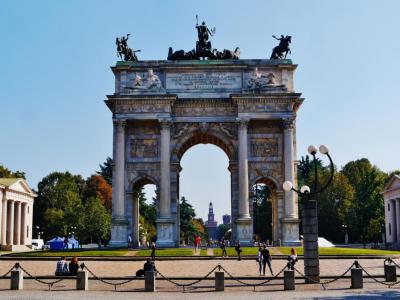
9) Arco della Pace (Arch of Peace)
At the northwestern corner of Parco Sempione, lies a Napoleon's triumphal arch, a neoclassical wonder standing tall at a height of 25 meters and spanning an impressive width of 24 meters. Designed by architect Luigi Cagnola in 1807, this imposing structure mirrors Paris' famed Arc de Triomphe and beckons one towards Corso Sempione, the principal avenue that connects Milan to Paris via the Simplon (Sempione) Pass.
The grandeur of this arch is matched only by its intricate details, with numerous bas-reliefs, statues, and Corinthian columns adorning its façade. Made from a plethora of materials, including marble, bronze, wood, and stucco, these embellishments pay tribute to various significant events in the history of Italy and Europe. For instance, some bas-reliefs honor the Battle of Leipzig, the Congress of Vienna, and the founding of the Kingdom of Lombardy–Venetia. Meanwhile, classical mythology also takes center stage, with depictions of Mars, Ceres, Minerva, Apollo, and Victoria-Nike adorning the arch. Even the great rivers of North Italy, such as the Po, the Adige, and the Ticino, find representation through a group of allegorical statues.
A true testament to the beauty of neoclassical architecture and the grandeur of Italy's history and culture, Arco della Pace could only have been possible with the collaboration of notable artists, including Pompeo Marchesi, Luigi Acquisti, Grazioso Rusca, Luigi Buzzi Leone, and more.
The grandeur of this arch is matched only by its intricate details, with numerous bas-reliefs, statues, and Corinthian columns adorning its façade. Made from a plethora of materials, including marble, bronze, wood, and stucco, these embellishments pay tribute to various significant events in the history of Italy and Europe. For instance, some bas-reliefs honor the Battle of Leipzig, the Congress of Vienna, and the founding of the Kingdom of Lombardy–Venetia. Meanwhile, classical mythology also takes center stage, with depictions of Mars, Ceres, Minerva, Apollo, and Victoria-Nike adorning the arch. Even the great rivers of North Italy, such as the Po, the Adige, and the Ticino, find representation through a group of allegorical statues.
A true testament to the beauty of neoclassical architecture and the grandeur of Italy's history and culture, Arco della Pace could only have been possible with the collaboration of notable artists, including Pompeo Marchesi, Luigi Acquisti, Grazioso Rusca, Luigi Buzzi Leone, and more.
