Custom Walk in Salzburg, Austria by mariesands09_4c6ed created on 2025-12-03
Guide Location: Austria » Salzburg
Guide Type: Custom Walk
# of Sights: 9
Tour Duration: 2 Hour(s)
Travel Distance: 3.1 Km or 1.9 Miles
Share Key: MV9G7
Guide Type: Custom Walk
# of Sights: 9
Tour Duration: 2 Hour(s)
Travel Distance: 3.1 Km or 1.9 Miles
Share Key: MV9G7
How It Works
Please retrieve this walk in the GPSmyCity app. Once done, the app will guide you from one tour stop to the next as if you had a personal tour guide. If you created the walk on this website or come to the page via a link, please follow the instructions below to retrieve the walk in the app.
Retrieve This Walk in App
Step 1. Download the app "GPSmyCity: Walks in 1K+ Cities" on Apple App Store or Google Play Store.



Step 2. In the GPSmyCity app, download(or launch) the guide "Salzburg Map and Walking Tours".
Step 3. Tap the menu button located at upper right corner of the "Walks" screen and select "Retrieve custom walk". Enter the share key: MV9G7
1) Mirabell Palace and Gardens (must see)
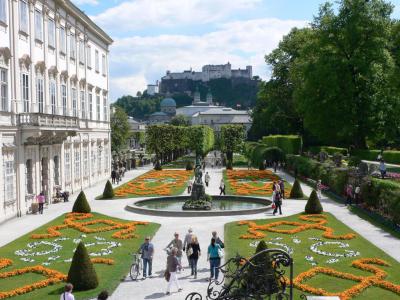
Mirabell Palace: part love story, part symphony, part surreal garden party. Here, Baroque drama meets soap opera realness and UNESCO-approved elegance. Originally constructed in 1606 by Prince-Archbishop Wolf Dietrich von Raitenau - who wasn’t just building a palace, but also a very fancy love nest for himself and his mistress - this place has always known how to turn heads.
After Wolf got the boot in 1612 (through palace intrigue), his successor renamed it Mirabell - meaning “wonderful” in Italian, which, come to think of it, is a bit more subtle than “Archbishop’s Love Shack.” The whole palace got a glitzy Baroque makeover between 1721 and 1727, and later a Neoclassical facelift - because palaces, of all properties, do need to keep up appearances...
Step inside and brace yourself for the grand staircase - or the 'staircase of thunder' if you like: with sweeping curves, angelic sculptures, and a shine so dramatic it practically sings. At the top of it is the Marble Hall. Mozart played here. You won’t. But you could get married here - if you book a few years ahead and maybe win a small lottery...
Fun fact: Hitler’s sister-in-law tied the knot here in 1944, with some disturbingly famous guests in attendance. But don’t let that kill the vibe - today, it’s more Mozart concerts and Instagram moments than fascist footnotes.
Venture further and you'll find a chapel dressed in Baroque finery, with statues so saintly they might just bless your photo.
Outside, the gardens are a mythological fever dream. Statues of Hercules, Aeneas, and Pluto look on, while the flower beds explode in geometric perfection - a riot of color that makes your eyeballs do pirouettes. At the center of it is the Pegasus Fountain, a scene-stealer from The Sound of Music’s “Do Re Mi.” Yes, that very one...
Climb the steps like a Von Trapp child chasing high notes, peek into the vine tunnel and hedge maze, and finish at Dwarf Park - where a regiment of lumpy marble gnomes stares you down with all the charm of a slightly haunted chess set.
And beyond it all, the High Salzburg Fortress, sitting smugly on its hilltop, watches centuries go by.
After Wolf got the boot in 1612 (through palace intrigue), his successor renamed it Mirabell - meaning “wonderful” in Italian, which, come to think of it, is a bit more subtle than “Archbishop’s Love Shack.” The whole palace got a glitzy Baroque makeover between 1721 and 1727, and later a Neoclassical facelift - because palaces, of all properties, do need to keep up appearances...
Step inside and brace yourself for the grand staircase - or the 'staircase of thunder' if you like: with sweeping curves, angelic sculptures, and a shine so dramatic it practically sings. At the top of it is the Marble Hall. Mozart played here. You won’t. But you could get married here - if you book a few years ahead and maybe win a small lottery...
Fun fact: Hitler’s sister-in-law tied the knot here in 1944, with some disturbingly famous guests in attendance. But don’t let that kill the vibe - today, it’s more Mozart concerts and Instagram moments than fascist footnotes.
Venture further and you'll find a chapel dressed in Baroque finery, with statues so saintly they might just bless your photo.
Outside, the gardens are a mythological fever dream. Statues of Hercules, Aeneas, and Pluto look on, while the flower beds explode in geometric perfection - a riot of color that makes your eyeballs do pirouettes. At the center of it is the Pegasus Fountain, a scene-stealer from The Sound of Music’s “Do Re Mi.” Yes, that very one...
Climb the steps like a Von Trapp child chasing high notes, peek into the vine tunnel and hedge maze, and finish at Dwarf Park - where a regiment of lumpy marble gnomes stares you down with all the charm of a slightly haunted chess set.
And beyond it all, the High Salzburg Fortress, sitting smugly on its hilltop, watches centuries go by.
2) Makartplatz
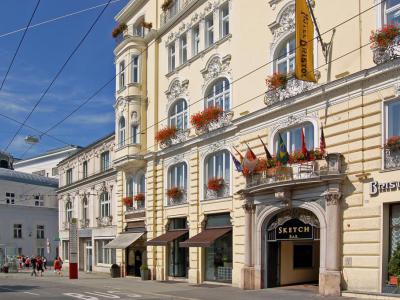
Makartplatz or Markart Square is a busy part of the city of Salzburg surrounded by some of its important buildings. The main attraction in the square today is a museum dedicated to Mozart and his works.
Makartplatz was developed by Archbishop Paris Lodron and architect Bernhard Fischer von Erlach. At the time it was called Hannibalplatz after Hannibal von Raitenau, the brother of the Prince Archbishop Wolf Dietrich. Later, it was named after Hans Makart, a celebrated 19th century Salzburg born artist and son of a chamberlain at the Mirabell Palace.
The most visited part of Makartplatz is the Tanzmeisterhaus where Mozart’s family lived when he was a young boy. The former residence was rebuilt after having been destroyed by bombs in World War II. It is located at No: 8 Makartplatz and houses the museum dedicated to the great composer. The next house to the museum is the Doppler House where eminent physicist, Christian Doppler who founded the Doppler effect of sound was born in 1803. The façade of the Church of the Holy Trinity faces the square and the Landestheater, built by Archbishop Colloredo is located here. The main entrance to the Mirabell Gardens is also located in Makartplatz.
Makartplatz was developed by Archbishop Paris Lodron and architect Bernhard Fischer von Erlach. At the time it was called Hannibalplatz after Hannibal von Raitenau, the brother of the Prince Archbishop Wolf Dietrich. Later, it was named after Hans Makart, a celebrated 19th century Salzburg born artist and son of a chamberlain at the Mirabell Palace.
The most visited part of Makartplatz is the Tanzmeisterhaus where Mozart’s family lived when he was a young boy. The former residence was rebuilt after having been destroyed by bombs in World War II. It is located at No: 8 Makartplatz and houses the museum dedicated to the great composer. The next house to the museum is the Doppler House where eminent physicist, Christian Doppler who founded the Doppler effect of sound was born in 1803. The façade of the Church of the Holy Trinity faces the square and the Landestheater, built by Archbishop Colloredo is located here. The main entrance to the Mirabell Gardens is also located in Makartplatz.
3) Linzer Gasse
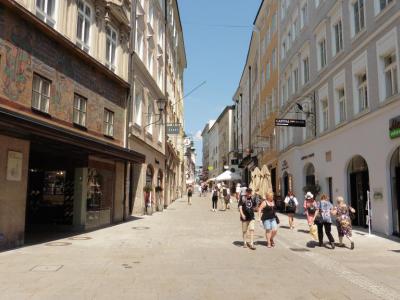
Linzergasse is a busy street in Salzburg flanked by medieval buildings. It is called Linzergasse because it was once the main road from Salzburg to Linz in Austria.
Linzergasse was an important road in Juvavum, the Roman city that later became Salzburg. In the Middle Ages, travelers and tradesman going to Linz passed through the Linzertor Gate that stood at the end of the street until 1894. The houses that flank Linzergasse date back to the 14th or 15th centuries and were always occupied by small craftsmen and their families.
There are many important buildings in Linzergasse. At No:1 is the St. Andrews Church that was built in 1898. No: 3 was the home of the scientist Paracelsus who lived here from 1540 to 1541. He was buried in the cemetery of the nearby St. Sebastian’s Church. House No: 7 was an old pharmacy where the poet George Trakl worked in 1887. House No: 9 is an old brewery and a scion of the family who owned it, Richard Mayr became a famous opera singer. One can climb the steps to the Kapuziner Abbey for breathtaking views. House No: 43 was a medieval bath house. The street ends with the St. Sebastian Church. The cemetery of the church also contains the graves of Mozart’s father Leopold and his wife Constanze.
Linzergasse was an important road in Juvavum, the Roman city that later became Salzburg. In the Middle Ages, travelers and tradesman going to Linz passed through the Linzertor Gate that stood at the end of the street until 1894. The houses that flank Linzergasse date back to the 14th or 15th centuries and were always occupied by small craftsmen and their families.
There are many important buildings in Linzergasse. At No:1 is the St. Andrews Church that was built in 1898. No: 3 was the home of the scientist Paracelsus who lived here from 1540 to 1541. He was buried in the cemetery of the nearby St. Sebastian’s Church. House No: 7 was an old pharmacy where the poet George Trakl worked in 1887. House No: 9 is an old brewery and a scion of the family who owned it, Richard Mayr became a famous opera singer. One can climb the steps to the Kapuziner Abbey for breathtaking views. House No: 43 was a medieval bath house. The street ends with the St. Sebastian Church. The cemetery of the church also contains the graves of Mozart’s father Leopold and his wife Constanze.
4) Café Tomaselli
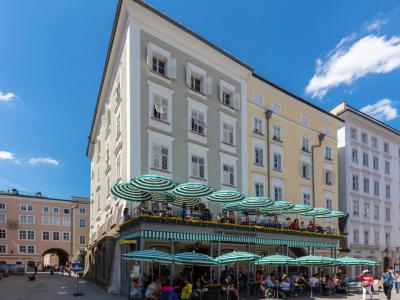
Every European city has what can be referred to as "the posh-café" – the one with history and elevated prices. The Café Tomaselli is the main contender for Salzburg's "posh-café" status, with a long and distinguished history going back over 300 years, allied to a good reputation and superb location. On the whole, it could easily be viewed as one of the city's best, especially in summer when it can spread out into the Old Market (Alter Markt) square, making for a perfect people-watching spot.
According to research, the origins of this coffeehouse can be traced back to 1700. Since then, the café changed hands several times, moving from its original location on Gold Lane (Goldgasse) to the Old Market in 1764. Carl Tomaselli purchased the place in 1852. In his hands, the café became renowned far beyond the borders of Salzburg.
Since the old days, celebrities such as Wolfgang Amadeus Mozart, Austrian poet and novelist Hugo von Hofmannsthal, Austrian theater and film director Max Reinhardt, and world-renowned musical conductor Herbert von Karajan, among others, frequented this place. Wolfgang Amadeus, in particular, used to have his almond milk here when he was young. The proprietor, Carl Tomaselli, the son of tenor Giuseppe Tomaselli from Milan, enjoyed a close relationship with the composer's family, playing music with his father Leopold, and his sister Nannerl. Later on, Wolfgang's widow, Constanze von Nissen, also lived in the same building, from 1820 to 1826.
Magnificent wood paneling with inlays adorns the walls and takes guests back in time, as do the marble tables, silver trays, waiters in dinner jackets, and the “cake ladies” who roam around with a tray of the most delicious-looking confectionery. Only women serve the cakes, while men serve the drinks – just a bit of a nice tradition! The place exudes stylish Austrian coffeehouse culture with its vibrant sense of living history and a tempting array of sweet dishes.
Local specialties include espresso topped with whipped cream (Einspänner) and espresso topped with steamed milk froth (Melange), Esterhazy or Dobos torte, apple, curd cheese, and berry strudel, strawberry dessert, Salzburger Nockerl slice, and croissants with walnut filling, plus a variety of egg dishes.
Tip:
Ideally, take a book of Stefan Zweig, go to Tomaselli, have one of their delicious coffees and pastries, and relax...
According to research, the origins of this coffeehouse can be traced back to 1700. Since then, the café changed hands several times, moving from its original location on Gold Lane (Goldgasse) to the Old Market in 1764. Carl Tomaselli purchased the place in 1852. In his hands, the café became renowned far beyond the borders of Salzburg.
Since the old days, celebrities such as Wolfgang Amadeus Mozart, Austrian poet and novelist Hugo von Hofmannsthal, Austrian theater and film director Max Reinhardt, and world-renowned musical conductor Herbert von Karajan, among others, frequented this place. Wolfgang Amadeus, in particular, used to have his almond milk here when he was young. The proprietor, Carl Tomaselli, the son of tenor Giuseppe Tomaselli from Milan, enjoyed a close relationship with the composer's family, playing music with his father Leopold, and his sister Nannerl. Later on, Wolfgang's widow, Constanze von Nissen, also lived in the same building, from 1820 to 1826.
Magnificent wood paneling with inlays adorns the walls and takes guests back in time, as do the marble tables, silver trays, waiters in dinner jackets, and the “cake ladies” who roam around with a tray of the most delicious-looking confectionery. Only women serve the cakes, while men serve the drinks – just a bit of a nice tradition! The place exudes stylish Austrian coffeehouse culture with its vibrant sense of living history and a tempting array of sweet dishes.
Local specialties include espresso topped with whipped cream (Einspänner) and espresso topped with steamed milk froth (Melange), Esterhazy or Dobos torte, apple, curd cheese, and berry strudel, strawberry dessert, Salzburger Nockerl slice, and croissants with walnut filling, plus a variety of egg dishes.
Tip:
Ideally, take a book of Stefan Zweig, go to Tomaselli, have one of their delicious coffees and pastries, and relax...
5) St. Peter's Abbey and Cemetery (must see)
Saint Peter's Abbey (Stift Sankt Peter) is a Benedictine monastery and former cathedral. Considered one of the oldest monasteries in the German-speaking world, the abbey was founded in 696 by Saint Rupert. Despite challenges during the Nazi regime in 1938, the abbey maintained operation and remains active to this very day.
A marvelous steeple crowned with an onion dome gives an admirable facade to the Abbey Church. Since its dedication in 1147, this Romanesque church underwent multiple renovations, acquiring its Rococo style in 1782. The church houses significant graves, including that of Martin Luther's superior.
Saint Peter's Abbey is home to Austria's oldest library, comprising nearly 100,000 volumes. The Rococo-style library is particularly noted for its extensive collection of manuscripts, incunabula, and local history volumes, along with special collections of graphics and maps. It also contains a notable collection of music manuscripts from composers like Mozart and Haydn. Additionally, the abbey houses diverse collections of paintings and other artifacts, although some are not accessible to the public. Access to the library requires a special permit.
During his early years in Salzburg, Wolfgang Amadeus Mozart composed the Dominikus Mass for Saint Peter's Abbot Dominikus Hagenauer, in 1769. Hagenauer wrote in his diary: "Music for the Mass composed by Wolfgang Mozart, 14 years of age, was in every one's opinion most elegant. Wolfgang Mozart played on the great organ for half an hour to the astonishment of all." The composer returned to Saint Peter's in 1783 to conduct his "Mass in C minor," which is now performed at the Salzburg Festival each summer.
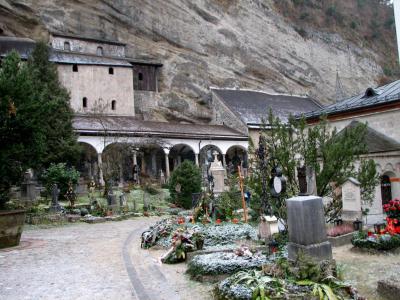
The abbey complex also contains a very old (established circa 700 AD) cemetery. The oldest graves in Saint Peter's Cemetery (Petersfriedhof) date back to the late 13th century. Distinguished individuals including Mozart's sister Nannerl (an accomplished musician in her own right), Joseph Haydn's brother Michael, and sculptor Josef Thorak are buried here.
The cemetery grounds are also known for the catacombs carved into rocks, which served as early Christian assembly places and hermitages. Wonderful to visit, they are filled with early altars, faded murals, and inscriptions.
In "The Sound of Music" movie, the Von Trapp family goes into hiding from the Nazis at a local cemetery. The actual scene was filmed on a Hollywood set meticulously recreating the setting inspired by Saint Peter's cemetery.
Why You Should Visit:
Everything here is free to visit except for the catacombs which cost a modest fee.
A marvelous steeple crowned with an onion dome gives an admirable facade to the Abbey Church. Since its dedication in 1147, this Romanesque church underwent multiple renovations, acquiring its Rococo style in 1782. The church houses significant graves, including that of Martin Luther's superior.
Saint Peter's Abbey is home to Austria's oldest library, comprising nearly 100,000 volumes. The Rococo-style library is particularly noted for its extensive collection of manuscripts, incunabula, and local history volumes, along with special collections of graphics and maps. It also contains a notable collection of music manuscripts from composers like Mozart and Haydn. Additionally, the abbey houses diverse collections of paintings and other artifacts, although some are not accessible to the public. Access to the library requires a special permit.
During his early years in Salzburg, Wolfgang Amadeus Mozart composed the Dominikus Mass for Saint Peter's Abbot Dominikus Hagenauer, in 1769. Hagenauer wrote in his diary: "Music for the Mass composed by Wolfgang Mozart, 14 years of age, was in every one's opinion most elegant. Wolfgang Mozart played on the great organ for half an hour to the astonishment of all." The composer returned to Saint Peter's in 1783 to conduct his "Mass in C minor," which is now performed at the Salzburg Festival each summer.
The abbey complex also contains a very old (established circa 700 AD) cemetery. The oldest graves in Saint Peter's Cemetery (Petersfriedhof) date back to the late 13th century. Distinguished individuals including Mozart's sister Nannerl (an accomplished musician in her own right), Joseph Haydn's brother Michael, and sculptor Josef Thorak are buried here.
The cemetery grounds are also known for the catacombs carved into rocks, which served as early Christian assembly places and hermitages. Wonderful to visit, they are filled with early altars, faded murals, and inscriptions.
In "The Sound of Music" movie, the Von Trapp family goes into hiding from the Nazis at a local cemetery. The actual scene was filmed on a Hollywood set meticulously recreating the setting inspired by Saint Peter's cemetery.
Why You Should Visit:
Everything here is free to visit except for the catacombs which cost a modest fee.
6) Kapitelplatz (Chapter Square)
Chapter Square (Kapitelplatz), in the heart of Salzburg’s Old Town, is a spacious, diamond-shaped square surrounded by historical buildings. Bordering it on the north side is the Salzburg Cathedral. The Cathedral Provost's Office and the Archbishop's Palace are on the east side, while to its west are the novice's wing of Saint Peter's Monastery and the Cathedral Chapter's mills. The religious sites around the square serve as reminders of the powerful archdiocese that once ruled the city.
The square and the adjacent Chapter Lane (Kapitelgasse) are named after the Salzburg cathedral chapter, a set of canons that regulated worship services at the cathedral and in the city of Salzburg.
The Waldstein Canon House at Number 2, first mentioned in 1547, has served various purposes through the centuries, from housing the cathedral chapter's administration to serving as military and tax offices. It is now used by the Archdiocese of Salzburg. Nearby, the Number 4 Chapter House was rebuilt in its present form after a catastrophic fire in 1598. Today, this building houses the University of Salzburg’s rectorate and administrative offices.
The Salm-Firmian Canonical House at Numbers 5-7, initially designed as a hospital and later transformed into canon housing, is now a part of the university, hosting law libraries. Also noteworthy is the Cathedral Deanery at Number 6.
Significant too is the Cardinal Schwarzenberg House, which has transitioned from a granary to a "storehouse of knowledge," presently housing the cathedral archive and music rooms.
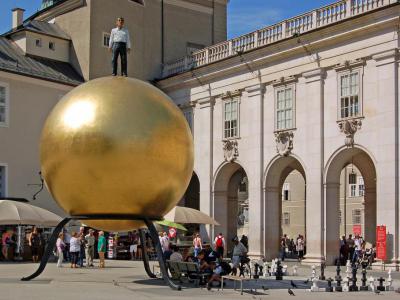
Aside from the beautiful view of High Salzburg Fortress (perfect for taking pictures), three things stand out on the square itself. These include the giant chessboard that often draws a crowd; the playful modern sculpture of the 'emotionless man' on the golden ball (called 'Sphaera') installed in 2007; and a spectacular Neptune's Fountain, built in 1732 on the site of one of the old horse ponds. Forming part of the so-called Chapter Flood (Kapitelschwemme) ensemble, the fountain shows the God of the Sea holding a trident and crown while being mounted on a seahorse spurting water. It looks a bit like a mini-version of the Fontana di Trevi in Rome, which is probably why many tourists throw coins into the shallow well.
The square and the adjacent Chapter Lane (Kapitelgasse) are named after the Salzburg cathedral chapter, a set of canons that regulated worship services at the cathedral and in the city of Salzburg.
The Waldstein Canon House at Number 2, first mentioned in 1547, has served various purposes through the centuries, from housing the cathedral chapter's administration to serving as military and tax offices. It is now used by the Archdiocese of Salzburg. Nearby, the Number 4 Chapter House was rebuilt in its present form after a catastrophic fire in 1598. Today, this building houses the University of Salzburg’s rectorate and administrative offices.
The Salm-Firmian Canonical House at Numbers 5-7, initially designed as a hospital and later transformed into canon housing, is now a part of the university, hosting law libraries. Also noteworthy is the Cathedral Deanery at Number 6.
Significant too is the Cardinal Schwarzenberg House, which has transitioned from a granary to a "storehouse of knowledge," presently housing the cathedral archive and music rooms.
Aside from the beautiful view of High Salzburg Fortress (perfect for taking pictures), three things stand out on the square itself. These include the giant chessboard that often draws a crowd; the playful modern sculpture of the 'emotionless man' on the golden ball (called 'Sphaera') installed in 2007; and a spectacular Neptune's Fountain, built in 1732 on the site of one of the old horse ponds. Forming part of the so-called Chapter Flood (Kapitelschwemme) ensemble, the fountain shows the God of the Sea holding a trident and crown while being mounted on a seahorse spurting water. It looks a bit like a mini-version of the Fontana di Trevi in Rome, which is probably why many tourists throw coins into the shallow well.
7) Domplatz
Wedged between Salzburg Cathedral and a cluster of church-owned buildings, Domplatz isn’t just a picturesque square-it is also the beating festive heart of the city. Every winter, for over 500 years (yes, five centuries of yuletide commitment), the square transforms into a Christmas market wonderland. Wooden huts sprout up like festive mushrooms, brimming with handmade trinkets, rustic crafts, and all things delicious like mulled wine warming your soul and chestnuts roasted to perfection.
If you find yourself here on Christmas Eve, prepare for the Turmblasen-a centuries-old musical tradition where brass players serenade the square with chorales from above, either from the church tower or steeple. It’s like a holiday soundtrack sent straight from heaven.
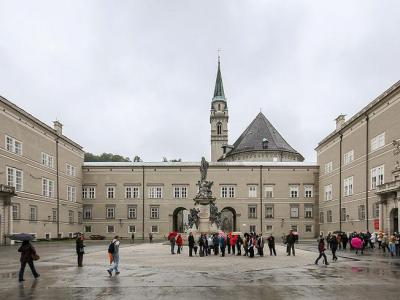
Architecturally speaking, the square is framed by three grand open arches-north, south, and west-linking the cathedral, the Salzburg Residence palace, and St. Peter’s Abbey into one impressively enclosed rectangle of piety and Baroque ambition. Domplatz stretches 101 meters long, 69 meters wide, and is surrounded by walls so tall (81 meters!) you’d swear they were trying to touch the divine.
At the center of it all stands the Immaculate Mary column, a baroque marvel sculpted in the 1760s. With marble clouds, iron angels, and a globe-worthy Virgin Mary enthroned on top, it’s not exactly subtle. The surrounding statues get theatrical, too-angels beam, wisdom goes “poof,” the devil throws a tantrum, and the Church celebrates like it's just won the Eurovision contest.
If you stand dead center in the rear arcade, from that spot you can see the Marian statue align perfectly with the cathedral façade’s own angles, as if wearing its rooftop crown. Divine optics, indeed...
Oh, and if you're on the Sound of Music trail, you’ll spot Domplatz when Maria sweeps out through the arches and again as she and the kids dash across the square during the “My Favorite Things” montage. Picnic clothes, twirls, and all that...
If you find yourself here on Christmas Eve, prepare for the Turmblasen-a centuries-old musical tradition where brass players serenade the square with chorales from above, either from the church tower or steeple. It’s like a holiday soundtrack sent straight from heaven.
Architecturally speaking, the square is framed by three grand open arches-north, south, and west-linking the cathedral, the Salzburg Residence palace, and St. Peter’s Abbey into one impressively enclosed rectangle of piety and Baroque ambition. Domplatz stretches 101 meters long, 69 meters wide, and is surrounded by walls so tall (81 meters!) you’d swear they were trying to touch the divine.
At the center of it all stands the Immaculate Mary column, a baroque marvel sculpted in the 1760s. With marble clouds, iron angels, and a globe-worthy Virgin Mary enthroned on top, it’s not exactly subtle. The surrounding statues get theatrical, too-angels beam, wisdom goes “poof,” the devil throws a tantrum, and the Church celebrates like it's just won the Eurovision contest.
If you stand dead center in the rear arcade, from that spot you can see the Marian statue align perfectly with the cathedral façade’s own angles, as if wearing its rooftop crown. Divine optics, indeed...
Oh, and if you're on the Sound of Music trail, you’ll spot Domplatz when Maria sweeps out through the arches and again as she and the kids dash across the square during the “My Favorite Things” montage. Picnic clothes, twirls, and all that...
8) Alter Markt (Old Market Square) (must see)
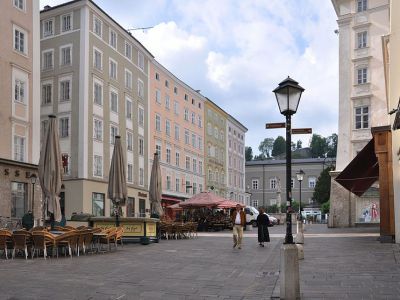
Sometimes street and square names immediately reveal what once took place within them and became defining. So is the case with Salzburg's small and cozy Old Market (Alter Markt) square. The city’s third market square, it dates back to the 13th century. Historically, it hosted weekly markets (selling dairy, vegetables, and poultry), as well as annual Lent and Autumn markets until the late 19th century. It also hosted vibrant folk events such as the Whitsun dance and the Saint John’s bonfire.
Today, the place is encircled by baroque buildings and features the ornate Floriani fountain (Florianibrunnen) at its center. The fountain's oldest component, a delicate, ornamental metal fence was made in 1583, featuring iron figures, including horseback riders and unicorns. Replacing the original medieval draw-well, this sophisticated Baroque fountain was built in several stages.
By 1687, it had acquired a new central pillar and an octagonal marble basin adorned with rosettes and acanthus leaves. The statue of Saint Florian, added in 1734, crowns the fountain and is supposed to protect buildings from fire. Historically, this fountain was central to the annual butcher's jump ritual, marking the passage of apprentices into journeymen on Ash Wednesday (the first day of Lent before Easter).
The Old Market in Salzburg is characterized by its medieval core and is flanked by a row of Baroque burgher houses, with influences from the early modern period evident in its architecture. Notably, Old Market No. 3, currently a bank, sits atop Roman foundations and features a late Baroque marble portal from a former pawnshop. Old Market No. 6 and 7 have housed the Old Court Pharmacy since the 16th century, with the latter still operating today. The pharmacy's original Rococo design and late Baroque window frames are preserved, alongside historical furnishings from the 18th century. Meanwhile, House No. 7, originally late Gothic, now sports a classicist façade and a memorial plaque for Carl Petter, a notable local pharmacist. Additionally, Café Tomaselli, at Numbers 9 and 10, is the oldest continuously operating café in Central Europe. Adjacent to it stands Salzburg's smallest house, a mere 1.42 meters wide, built between 1830 and 1860.
Tip:
Have something from the many local vendors! You can try delicious local as well as other types of (inexpensive) food here.
Today, the place is encircled by baroque buildings and features the ornate Floriani fountain (Florianibrunnen) at its center. The fountain's oldest component, a delicate, ornamental metal fence was made in 1583, featuring iron figures, including horseback riders and unicorns. Replacing the original medieval draw-well, this sophisticated Baroque fountain was built in several stages.
By 1687, it had acquired a new central pillar and an octagonal marble basin adorned with rosettes and acanthus leaves. The statue of Saint Florian, added in 1734, crowns the fountain and is supposed to protect buildings from fire. Historically, this fountain was central to the annual butcher's jump ritual, marking the passage of apprentices into journeymen on Ash Wednesday (the first day of Lent before Easter).
The Old Market in Salzburg is characterized by its medieval core and is flanked by a row of Baroque burgher houses, with influences from the early modern period evident in its architecture. Notably, Old Market No. 3, currently a bank, sits atop Roman foundations and features a late Baroque marble portal from a former pawnshop. Old Market No. 6 and 7 have housed the Old Court Pharmacy since the 16th century, with the latter still operating today. The pharmacy's original Rococo design and late Baroque window frames are preserved, alongside historical furnishings from the 18th century. Meanwhile, House No. 7, originally late Gothic, now sports a classicist façade and a memorial plaque for Carl Petter, a notable local pharmacist. Additionally, Café Tomaselli, at Numbers 9 and 10, is the oldest continuously operating café in Central Europe. Adjacent to it stands Salzburg's smallest house, a mere 1.42 meters wide, built between 1830 and 1860.
Tip:
Have something from the many local vendors! You can try delicious local as well as other types of (inexpensive) food here.
9) Augustiner Brewery
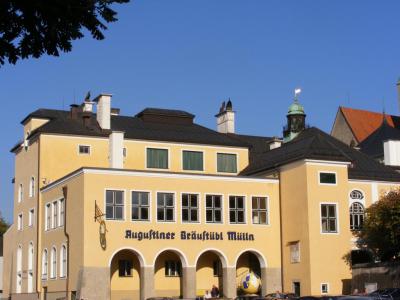
The Augustiner Brewery is a traditional beer garden in Salzburg. Visitors and locals can drink beer poured straight from the barrel into a traditional Austrian Stein mug.
The Augustiner brewery is located in an ancient Augustine Monastery. It was established in 1605 and given to the Augustine order of monks by Archbishop Wolf Dietrich von Raitenau. The old abbey buildings contain an ancient mill and the parish church, Müllner Stadtpfarrkirche. The brewery has a large gate with decorations by artist, Diego Francesco Carlone, two statues of St. Benedict and St. Augustinus with the coat of arms of Prince Archbishop Wolf Dietrich von Raitenau between them. The beer is brewed using traditional methods. It is made manually according to the Purity Laws of 1516 and only natural ingredients are used. The beer is stored in 15, 20 and 50 liter barrels and three types of beer are made, the Lenten Beer, the Marzen beer and the Christmas Bock Beer for different celebrations. Visitors will find viewing the impressive beer cellar an interesting and worthwhile experience.
The Augustiner brewery has a beer garden and many beer halls. From 1890 beer is traditionally self catered and visitors can rinse their stein under the cool water of the fountain before filling it with beer from the barrel. Visitors can enjoy their beer while sitting at the tables in the garden under the shade of chestnut trees.
The Augustiner brewery is located in an ancient Augustine Monastery. It was established in 1605 and given to the Augustine order of monks by Archbishop Wolf Dietrich von Raitenau. The old abbey buildings contain an ancient mill and the parish church, Müllner Stadtpfarrkirche. The brewery has a large gate with decorations by artist, Diego Francesco Carlone, two statues of St. Benedict and St. Augustinus with the coat of arms of Prince Archbishop Wolf Dietrich von Raitenau between them. The beer is brewed using traditional methods. It is made manually according to the Purity Laws of 1516 and only natural ingredients are used. The beer is stored in 15, 20 and 50 liter barrels and three types of beer are made, the Lenten Beer, the Marzen beer and the Christmas Bock Beer for different celebrations. Visitors will find viewing the impressive beer cellar an interesting and worthwhile experience.
The Augustiner brewery has a beer garden and many beer halls. From 1890 beer is traditionally self catered and visitors can rinse their stein under the cool water of the fountain before filling it with beer from the barrel. Visitors can enjoy their beer while sitting at the tables in the garden under the shade of chestnut trees.
