Custom Walk in Berlin, Germany by jwo4159997 created on 2025-12-06
Guide Location: Germany » Berlin
Guide Type: Custom Walk
# of Sights: 7
Tour Duration: 4 Hour(s)
Travel Distance: 9.6 Km or 6 Miles
Share Key: 9N8Z3
Guide Type: Custom Walk
# of Sights: 7
Tour Duration: 4 Hour(s)
Travel Distance: 9.6 Km or 6 Miles
Share Key: 9N8Z3
How It Works
Please retrieve this walk in the GPSmyCity app. Once done, the app will guide you from one tour stop to the next as if you had a personal tour guide. If you created the walk on this website or come to the page via a link, please follow the instructions below to retrieve the walk in the app.
Retrieve This Walk in App
Step 1. Download the app "GPSmyCity: Walks in 1K+ Cities" on Apple App Store or Google Play Store.



Step 2. In the GPSmyCity app, download(or launch) the guide "Berlin Map and Walking Tours".
Step 3. Tap the menu button located at upper right corner of the "Walks" screen and select "Retrieve custom walk". Enter the share key: 9N8Z3
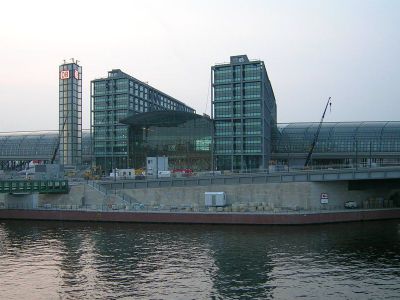
1) Berlin Hauptbahnhof (Central Station)
Berlin's primary railway station officially commenced full operations just two days after a grand ceremonial inauguration on May 26, 2006. The event was attended by former Chancellor Angela Merkel and marked the replacement of an older 19th-century railway building.
This station plays a pivotal role in Berlin's transportation landscape, embodying the "mushroom concept," where it serves as a central nexus for various modes of public transport, facilitating seamless connections and intersections of different lines. The name "mushroom" is derived from the unique shape created by the integration of the new railway line with existing ones, resembling, albeit loosely, the form of a mushroom.
The station's impressive hall is constructed with steel and glass, stretching from east to west. At its heart lies a station building with a sprawling 70,000 square meters of floor space, housing a diverse array of retail stores and cafes. From pharmacies to florists, you can find all sorts of shops within this multifaceted complex, leading to its description as a shopping center with the added bonus of being connected to the railway network.
This station plays a pivotal role in Berlin's transportation landscape, embodying the "mushroom concept," where it serves as a central nexus for various modes of public transport, facilitating seamless connections and intersections of different lines. The name "mushroom" is derived from the unique shape created by the integration of the new railway line with existing ones, resembling, albeit loosely, the form of a mushroom.
The station's impressive hall is constructed with steel and glass, stretching from east to west. At its heart lies a station building with a sprawling 70,000 square meters of floor space, housing a diverse array of retail stores and cafes. From pharmacies to florists, you can find all sorts of shops within this multifaceted complex, leading to its description as a shopping center with the added bonus of being connected to the railway network.
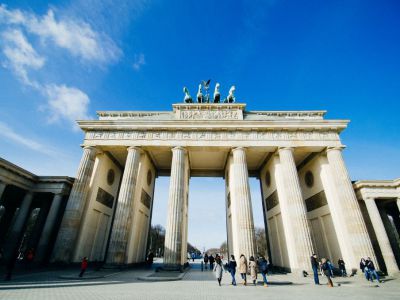
2) Brandenburger Tor (Brandenburg Gate) (must see)
The Brandenburg Gate is the last standing part of the western side of the Customs Wall that surrounded Berlin in the 18th century. It marks a monumental entry to Unter den Linden, the famed boulevard lined with lime trees that once led to the palace of the Prussian monarchs.
This neoclassical landmark was built between 1788 and 1791 during the reign of King Frederick William II of Prussia. Inspired by Roman triumphal arches and the classical Greek gateway to the Acropolis of Athens, the gate has twelve fluted Doric columns flanked by two pavilions originally occupied by guards, as well as five passageways, and reliefs depicting the Labors of Hercules. Its crowning glory is the bronze Quadriga sculpture – the goddess of victory atop a four-horsed chariot, originally regarded as a symbol of peace.
Throughout its history, the gate has played a crucial role in Germany's political narrative. In 1806, during the French occupation, Napoleon ordered its dismantling and transportation to Paris. However, upon its return in 1814, after Napolean's defeat, the gate was declared a symbol of victory, and the goddess was adorned with the Prussian eagle and iron cross, symbolizing triumph. The structure has stood witness to many pivotal events in Berlin's history, from military parades to the rise of the Third Reich and Hitler's ascent to power, upon which it was used as a Nazi propaganda symbol.
The Brandenburg Gate also holds memories of the Fall of Berlin and the Russian flag's raising in May 1945. After World War II, it stood damaged but intact and became part of the Soviet occupation zone. During the Cold War era, the gate – blocked by the Berlin Wall from 1961 until the fall of the Berlin Wall in 1989 – remained in no-man's land between East and West Germany. Back then, it served as a defining symbol of Berlin's and Germany’s division and their eventual reunification.
Today, the Brandenburg Gate is a venue for commemorations and public events. Apart from being a photo-op, its historical importance is just as good a reason to visit.
Tip:
Consider visiting at night when the gate is beautifully illuminated and less crowded, allowing for contemplation of its storied past and symbolic value.
This neoclassical landmark was built between 1788 and 1791 during the reign of King Frederick William II of Prussia. Inspired by Roman triumphal arches and the classical Greek gateway to the Acropolis of Athens, the gate has twelve fluted Doric columns flanked by two pavilions originally occupied by guards, as well as five passageways, and reliefs depicting the Labors of Hercules. Its crowning glory is the bronze Quadriga sculpture – the goddess of victory atop a four-horsed chariot, originally regarded as a symbol of peace.
Throughout its history, the gate has played a crucial role in Germany's political narrative. In 1806, during the French occupation, Napoleon ordered its dismantling and transportation to Paris. However, upon its return in 1814, after Napolean's defeat, the gate was declared a symbol of victory, and the goddess was adorned with the Prussian eagle and iron cross, symbolizing triumph. The structure has stood witness to many pivotal events in Berlin's history, from military parades to the rise of the Third Reich and Hitler's ascent to power, upon which it was used as a Nazi propaganda symbol.
The Brandenburg Gate also holds memories of the Fall of Berlin and the Russian flag's raising in May 1945. After World War II, it stood damaged but intact and became part of the Soviet occupation zone. During the Cold War era, the gate – blocked by the Berlin Wall from 1961 until the fall of the Berlin Wall in 1989 – remained in no-man's land between East and West Germany. Back then, it served as a defining symbol of Berlin's and Germany’s division and their eventual reunification.
Today, the Brandenburg Gate is a venue for commemorations and public events. Apart from being a photo-op, its historical importance is just as good a reason to visit.
Tip:
Consider visiting at night when the gate is beautifully illuminated and less crowded, allowing for contemplation of its storied past and symbolic value.
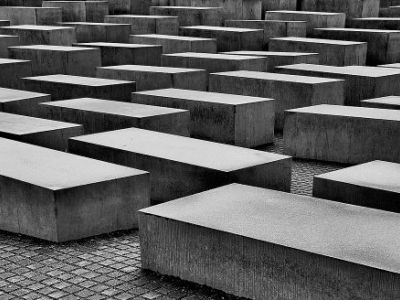
3) Holocaust Denkmal (Holocaust Memorial) (must see)
Officially named The Memorial to the Murdered Jews of Europe, this solemn expanse of concrete, situated near Berlin’s Brandenburg Gate, stands as a stark and enduring tribute to the millions of Jewish lives extinguished under the Nazi regime between the years 1933 and 1945.
Unveiled in 2005, the memorial was conceived by American architect Peter Eisenman. It spans nearly 19,000 square meters and consists of more than 2,700 concrete stelae-each of varying height and dimension-arranged in a strict grid across a subtly sloping field. The result is a landscape that is simultaneously orderly and disorienting.
Though the design is intentionally abstract and, according to its creator, devoid of explicit symbolism, its resemblance to a graveyard is unmistakable. Some interpret the sea of grey pillars as evoking unmarked graves or the cold efficiency of a bureaucratic system that facilitated mass murder. Others see in its rigid structure a metaphor for a state that lost its humanity behind walls of administration and ideology.
As one moves deeper into the memorial, the concrete blocks grow taller, eclipsing the cityscape and swallowing sound. The sensation is deliberate. It conveys isolation, loss of identity, and the disorienting fear that accompanied the systematic persecution of Jews under the Third Reich. The path dips downward, suggesting the slow descent into darkness that defined those years.
The unfinished quality of some surfaces serves as a quiet reminder: remembrance is not complete, and history’s wounds do not fully heal. The fragmentation of space may reflect the fragmented memories of survivors-and of those lost, whose stories were never told.
This memorial does not offer resolution or unity. It does not attempt to console. Instead, it confronts. It calls forth reflection-on individual memory, on collective guilt, and on the enduring responsibility to remember, in a world where forgetting is all too easy...
Unveiled in 2005, the memorial was conceived by American architect Peter Eisenman. It spans nearly 19,000 square meters and consists of more than 2,700 concrete stelae-each of varying height and dimension-arranged in a strict grid across a subtly sloping field. The result is a landscape that is simultaneously orderly and disorienting.
Though the design is intentionally abstract and, according to its creator, devoid of explicit symbolism, its resemblance to a graveyard is unmistakable. Some interpret the sea of grey pillars as evoking unmarked graves or the cold efficiency of a bureaucratic system that facilitated mass murder. Others see in its rigid structure a metaphor for a state that lost its humanity behind walls of administration and ideology.
As one moves deeper into the memorial, the concrete blocks grow taller, eclipsing the cityscape and swallowing sound. The sensation is deliberate. It conveys isolation, loss of identity, and the disorienting fear that accompanied the systematic persecution of Jews under the Third Reich. The path dips downward, suggesting the slow descent into darkness that defined those years.
The unfinished quality of some surfaces serves as a quiet reminder: remembrance is not complete, and history’s wounds do not fully heal. The fragmentation of space may reflect the fragmented memories of survivors-and of those lost, whose stories were never told.
This memorial does not offer resolution or unity. It does not attempt to console. Instead, it confronts. It calls forth reflection-on individual memory, on collective guilt, and on the enduring responsibility to remember, in a world where forgetting is all too easy...
4) Topographie des Terrors (Topography of Terror) (must see)
In the place where tyranny once took root and festered now stands the Topography of Terror-an open wound of memory carved into the very ground that bore witness to some of the darkest chapters of the 20th century. This site marks the former location of the Gestapo and SS headquarters, epicenters of persecution, intimidation, and state-sanctioned terror under the Nazi regime.
Though Allied bombing in early 1945 reduced much of the complex to rubble, and the remnants were later cleared away, one part remained-the original outer wall. It now frames an outdoor historical exhibition, where a chronological procession of images and documents lays bare the machinery of oppression. Here, history is neither softened nor forgotten.
Just beyond, visitors can descend into the excavated basement of a Gestapo building, preserved from the era of the Third Reich. These remnants of stone and steel speak with a quiet finality-a stark reminder of how systematic cruelty was carried out behind closed doors.
Within a modern, thoughtfully constructed museum building adjacent to the site, the story continues. The indoor exhibition is a comprehensive and unsparing exploration of the rise of National Socialism and its catastrophic consequences, not only for Germany but for Europe and the world. Through meticulously curated photographs, letters, official documents, and audiovisual recordings, the exhibit provides both clarity and emotional depth, presenting an unflinching narrative while honoring the gravity of its subject matter.
Visitors are encouraged to make use of the free lockers before beginning the experience. A self-guided audio tour, rich in detail and historical context, is available and highly recommended. Facilities such as a café and restrooms offer a brief reprieve in what is otherwise a sobering journey through history.
Tip:
To begin your exploration of the outdoor memorial, start from the left side of the display panels. If visiting during colder months, dress appropriately-the open-air setting can be brisk. For those seeking an overview rather than an in-depth reading of each panel, consider the free English-language tour held every Sunday at 3:30 pm.
Though Allied bombing in early 1945 reduced much of the complex to rubble, and the remnants were later cleared away, one part remained-the original outer wall. It now frames an outdoor historical exhibition, where a chronological procession of images and documents lays bare the machinery of oppression. Here, history is neither softened nor forgotten.
Just beyond, visitors can descend into the excavated basement of a Gestapo building, preserved from the era of the Third Reich. These remnants of stone and steel speak with a quiet finality-a stark reminder of how systematic cruelty was carried out behind closed doors.
Within a modern, thoughtfully constructed museum building adjacent to the site, the story continues. The indoor exhibition is a comprehensive and unsparing exploration of the rise of National Socialism and its catastrophic consequences, not only for Germany but for Europe and the world. Through meticulously curated photographs, letters, official documents, and audiovisual recordings, the exhibit provides both clarity and emotional depth, presenting an unflinching narrative while honoring the gravity of its subject matter.
Visitors are encouraged to make use of the free lockers before beginning the experience. A self-guided audio tour, rich in detail and historical context, is available and highly recommended. Facilities such as a café and restrooms offer a brief reprieve in what is otherwise a sobering journey through history.
Tip:
To begin your exploration of the outdoor memorial, start from the left side of the display panels. If visiting during colder months, dress appropriately-the open-air setting can be brisk. For those seeking an overview rather than an in-depth reading of each panel, consider the free English-language tour held every Sunday at 3:30 pm.
5) Checkpoint Charlie (must see)
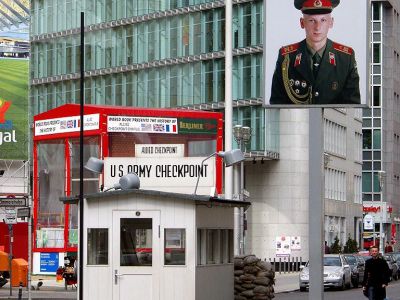
Immortalized by American movies and spy novels, Checkpoint Charlie is one of the most famous and historically significant spots in Berlin. A symbol of the Cold War, originally it was one of the three designated crossing points – A (Alpha), B (Bravo), and C (Charlie) – for foreigners and members of the Allied forces, established after the construction of the Berlin Wall. Here the documents of visitors and diplomats were checked by East Germans prior to issuing visas.
Checkpoint Charlie became a sole crossing point in 1962. A year earlier, it made history as the venue of a famous stand-off between US and Soviet tanks facing each other across the border, when an American diplomat was refused a visa. The stand-off nearly led to a war but fortunately ended peacefully.
Today, a replica of the original Checkpoint Charlie booth with a "You are now leaving the American Sector" sign serves largely as a photo opportunity in the middle of the street that once marked the border between East and West Berlin. Nearby is the Wall Museum-House dedicated to freedom, featuring, among other exhibits, a piece of the Berlin Wall and historical information relating to the many escape attempts made over the Wall throughout decades. There are also a number of panels and photos that give a useful summary and timeline. Not far away is the Topography of Terror exhibition which also deserves attention.
Lately, to keep the site from turning into a commercial circus, the German authorities have put the kibosh on actors donning military uniforms and cashing in on clueless tourists. Undoubtedly an interesting location, albeit the guard house and other elements are only replicas, Checkpoint Charlie is about an appreciation of how things once were in this great city.
Why You Should Visit:
Bit of a tourist trap, but a good part of the city's history. The surrounding area is also steeped in history and you can walk around the streets to see the Berlin Wall and try the great local cafes.
Tip:
Get here early to avoid crowds, as taking a photo can be quite tricky due to the hustle and bustle of traffic, etc.
Checkpoint Charlie became a sole crossing point in 1962. A year earlier, it made history as the venue of a famous stand-off between US and Soviet tanks facing each other across the border, when an American diplomat was refused a visa. The stand-off nearly led to a war but fortunately ended peacefully.
Today, a replica of the original Checkpoint Charlie booth with a "You are now leaving the American Sector" sign serves largely as a photo opportunity in the middle of the street that once marked the border between East and West Berlin. Nearby is the Wall Museum-House dedicated to freedom, featuring, among other exhibits, a piece of the Berlin Wall and historical information relating to the many escape attempts made over the Wall throughout decades. There are also a number of panels and photos that give a useful summary and timeline. Not far away is the Topography of Terror exhibition which also deserves attention.
Lately, to keep the site from turning into a commercial circus, the German authorities have put the kibosh on actors donning military uniforms and cashing in on clueless tourists. Undoubtedly an interesting location, albeit the guard house and other elements are only replicas, Checkpoint Charlie is about an appreciation of how things once were in this great city.
Why You Should Visit:
Bit of a tourist trap, but a good part of the city's history. The surrounding area is also steeped in history and you can walk around the streets to see the Berlin Wall and try the great local cafes.
Tip:
Get here early to avoid crowds, as taking a photo can be quite tricky due to the hustle and bustle of traffic, etc.
6) Neue Synagoge - Centrum Judaicum (New Synagogue)
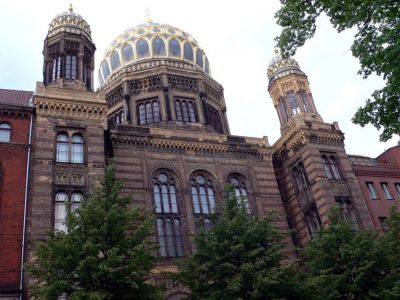
This painstakingly restored landmark, constructed between 1859 and 1866, is a captivating blend of architectural styles. With its splendid eastern Moorish style, it bears a striking resemblance to the Alhambra, making it an unquestionably significant architectural monument from the latter half of the 19th century in Berlin. The bulbous, gilded cupola commands attention in the city's skyline.
When it first opened its doors, this synagogue held the distinction of being the largest in Europe, with a seating capacity for 3,200 people. Tragically, on November 9, 1938, during the so-called Night of the Broken Glass (or "Kristallnacht"), a night when Nazi vandals wreaked havoc across Germany by burning synagogues and vandalizing the few Jewish shops and homes that remained, this synagogue too fell victim to destruction.
The synagogue suffered further damage during Allied bombing in 1943, and it wasn't until the mid-1980s that the East German government undertook the task of its restoration. Inside, a small museum offers an informative exhibit detailing the history of the building and its congregation, featuring remnants of the original architecture and furnishings. Sabbath services are conducted in a modern addition.
When it first opened its doors, this synagogue held the distinction of being the largest in Europe, with a seating capacity for 3,200 people. Tragically, on November 9, 1938, during the so-called Night of the Broken Glass (or "Kristallnacht"), a night when Nazi vandals wreaked havoc across Germany by burning synagogues and vandalizing the few Jewish shops and homes that remained, this synagogue too fell victim to destruction.
The synagogue suffered further damage during Allied bombing in 1943, and it wasn't until the mid-1980s that the East German government undertook the task of its restoration. Inside, a small museum offers an informative exhibit detailing the history of the building and its congregation, featuring remnants of the original architecture and furnishings. Sabbath services are conducted in a modern addition.
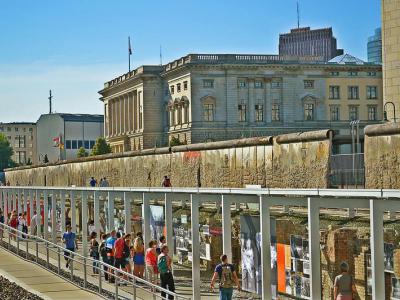
7) Gedenkstatte Berliner Mauer (Berlin Wall Memorial) (must see)
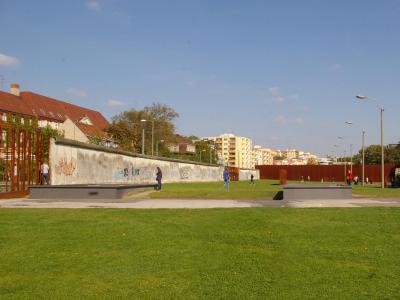
Located a bit away from the tourist hubbub, allowing you to avoid the crowds at Checkpoint Charlie, the Berlin Wall Memorial offers a more scholarly perspective on Germany's division. More precisely, it focuses on a section of the former border strip, with an outdoor exhibition tracing the history of Bernauer Strasse and the Wall. This outdoor exhibit extends for 1.4 kilometers, reaching up to the Mauerpark, and includes remnants of border obstacles that preserve the appearance of the Wall as it stood in the past.
Across from the memorial, the museum expanded in 2014 and now houses a permanent exhibition titled "1961–1989: the Berlin Wall", which delves into the lives of those who tried to escape the dictatorship (notably, some of the most successful escape tunnels were dug nearby) and the resistance efforts, often deadly, organized by those living in the vicinity. Additionally, there is a separate exhibition within the adjacent Nordbahnhof station, detailing the division of the U-Bahn and S-Bahn lines (open during station hours). On weekdays at noon, the chapel hosts prayer services in memory of the Berlin Wall's victims.
Across from the memorial, the museum expanded in 2014 and now houses a permanent exhibition titled "1961–1989: the Berlin Wall", which delves into the lives of those who tried to escape the dictatorship (notably, some of the most successful escape tunnels were dug nearby) and the resistance efforts, often deadly, organized by those living in the vicinity. Additionally, there is a separate exhibition within the adjacent Nordbahnhof station, detailing the division of the U-Bahn and S-Bahn lines (open during station hours). On weekdays at noon, the chapel hosts prayer services in memory of the Berlin Wall's victims.
