Custom Walk in Panama City, Panama by djmphck4_243f8 created on 2025-12-12
Guide Location: Panama » Panama City
Guide Type: Custom Walk
# of Sights: 7
Tour Duration: 7 Hour(s)
Travel Distance: 20.2 Km or 12.6 Miles
Share Key: JF6F9
Guide Type: Custom Walk
# of Sights: 7
Tour Duration: 7 Hour(s)
Travel Distance: 20.2 Km or 12.6 Miles
Share Key: JF6F9
How It Works
Please retrieve this walk in the GPSmyCity app. Once done, the app will guide you from one tour stop to the next as if you had a personal tour guide. If you created the walk on this website or come to the page via a link, please follow the instructions below to retrieve the walk in the app.
Retrieve This Walk in App
Step 1. Download the app "GPSmyCity: Walks in 1K+ Cities" on Apple App Store or Google Play Store.



Step 2. In the GPSmyCity app, download(or launch) the guide "Panama City Map and Walking Tours".
Step 3. Tap the menu button located at upper right corner of the "Walks" screen and select "Retrieve custom walk". Enter the share key: JF6F9
1) Panama Canal Museum (must see)
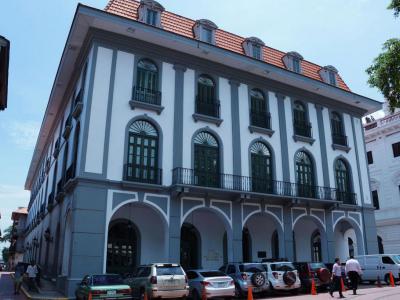
The Panama Canal Museum documents the building of the Panama Canal. Visitors will find exhibits that chronicle the entire process, from before work began, to its transfer from American control to the Panamanian government.
The building that houses the Panama Canal Museum is also historically significant. It was built in 1874 and served as the original headquarters of the French Canal Company. The building was later used as the headquarters of the United States Isthmian Canal Commission. In 1912, the building was used as Panama City's main post office.
The museum has several levels with fascinating exhibits, plans, photos, and artifacts.
Countries across the world were long interested in building a canal that would shorten shipping times and increase safety. However, the financial costs, engineering feats required, and staggering deaths due to yellow fever and malaria significantly hindered the canal's development.
Visitors will learn about the first French attempt at building a canal, which was abandoned after skyrocketing costs and 20,000 deaths. Next, visitors will learn about American involvement in creating the canal that exists today.
The Panama Canal Museum has many exhibits focusing on the day-to-day lives of the canal workers, who came from 97 countries.
The lobby features a massive original Fresnel lens used in one of the now decommissioned lighthouses along the canal.
Why You Should Visit:
The Panama Canal is one of the most fascinating feats of engineering and perseverance in the modern world. The Panama Canal Museum lays out the story of its creation while recognizing the challenges and hardships faced by the workers.
Tips:
The exhibits feature a lot of information in Spanish. You can pay for an English language audio tour to save some effort in translation.
The building that houses the Panama Canal Museum is also historically significant. It was built in 1874 and served as the original headquarters of the French Canal Company. The building was later used as the headquarters of the United States Isthmian Canal Commission. In 1912, the building was used as Panama City's main post office.
The museum has several levels with fascinating exhibits, plans, photos, and artifacts.
Countries across the world were long interested in building a canal that would shorten shipping times and increase safety. However, the financial costs, engineering feats required, and staggering deaths due to yellow fever and malaria significantly hindered the canal's development.
Visitors will learn about the first French attempt at building a canal, which was abandoned after skyrocketing costs and 20,000 deaths. Next, visitors will learn about American involvement in creating the canal that exists today.
The Panama Canal Museum has many exhibits focusing on the day-to-day lives of the canal workers, who came from 97 countries.
The lobby features a massive original Fresnel lens used in one of the now decommissioned lighthouses along the canal.
Why You Should Visit:
The Panama Canal is one of the most fascinating feats of engineering and perseverance in the modern world. The Panama Canal Museum lays out the story of its creation while recognizing the challenges and hardships faced by the workers.
Tips:
The exhibits feature a lot of information in Spanish. You can pay for an English language audio tour to save some effort in translation.
2) Iglesia la Merced (Church of Merced)
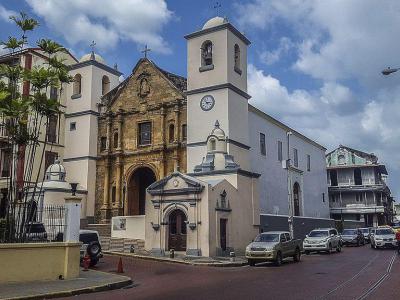
If you are a history lover or want to visit some exquisite historic divine place, Church of Merced is the right place for you. The Church of Merced is a very old church which was constructed way back in 1680 and situated in Casco Antiguo, which is close to Cathedral Park within Panama City. The church is remarkable and its beautiful and intricate Baroque stonework was moved piece by piece from the original site in Panama Viejo which incidentally was the initial city center that the Spaniards had founded.
Although the chapel has undergone renovations recently, its ornate Baroque facade is a classic example of Baroque architecture that is only observed amongst the oldest buildings in Casco Viejo. The church’s Baroque façade squarely faces anyone walking from the North towards it on Avenida Central. Despite the small structure, the stones with which the church is built have an impressive and long history. The church is said to have a better exterior than the interior and that it is best photographed and viewed late in the afternoon. The afternoon sun’s rays provide a sparkling effect on the tiny chapels and the bell towers. This amazing sight makes every tourist’s trip worthwhile and mesmerizing.
A museum that houses documents of historic and religious value lies in close proximity to the church, which incidentally was the site for storing birth and baptism records in Panama City.
Although the chapel has undergone renovations recently, its ornate Baroque facade is a classic example of Baroque architecture that is only observed amongst the oldest buildings in Casco Viejo. The church’s Baroque façade squarely faces anyone walking from the North towards it on Avenida Central. Despite the small structure, the stones with which the church is built have an impressive and long history. The church is said to have a better exterior than the interior and that it is best photographed and viewed late in the afternoon. The afternoon sun’s rays provide a sparkling effect on the tiny chapels and the bell towers. This amazing sight makes every tourist’s trip worthwhile and mesmerizing.
A museum that houses documents of historic and religious value lies in close proximity to the church, which incidentally was the site for storing birth and baptism records in Panama City.
3) Iglesia Santa Ana (Church of Santa Ana)
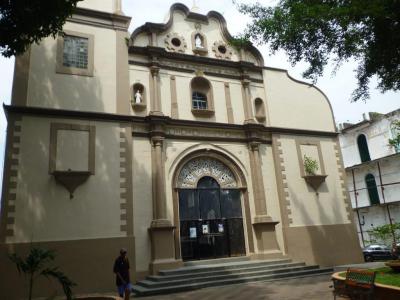
In the center of the city of Panama is located the township of Santa Ana. The town gets its name from the Church of Santa Ana, a shrine dedicated to Santa Ana, who, according to Christian tradition, is the mother of Mary and the grandmother of Jesus. The Church of Santa Ana was initially a parish church. The Count of Santa Ana donated funds to build the church and it was consecrated in 1764. The church was very popular in its early days and attracted a community of humble people all around it. These were the people who were engaged in various trades and the town of Santa Ana grew in reputation as a transit point for many trade routes.
The church was destroyed by fire in the year 1854 and was completely renovated only in the twentieth century. In 1980, the Church of Santa Ana was declared a historic landmark of national importance. Surrounding the church is a park that also goes by the name of the church. The area surrounding the church is far from the main tourist attractions that are in the old part of the city. You can experience a bit of the traditional Panamanian lifestyle with folk festivals, dance and music in a gazebo that is also a national landmark.
The church was destroyed by fire in the year 1854 and was completely renovated only in the twentieth century. In 1980, the Church of Santa Ana was declared a historic landmark of national importance. Surrounding the church is a park that also goes by the name of the church. The area surrounding the church is far from the main tourist attractions that are in the old part of the city. You can experience a bit of the traditional Panamanian lifestyle with folk festivals, dance and music in a gazebo that is also a national landmark.
4) Plaza Santa Ana (Santa Ana Square)
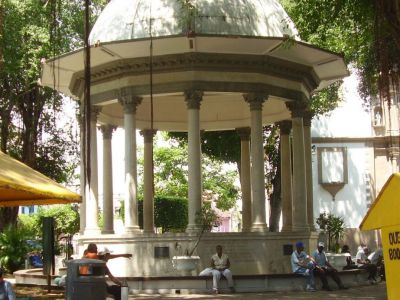
Santa Ana Square (Plaza Santa Ana), located in the historic section of Panama City, is a vibrant and essential destination for both tourists and locals. Historically known as Arrabal in the 19th century, this area was originally outside the city walls, serving as a venue for bullfights and markets. By the 1890s, it transformed into a park, now celebrated for its lush greenery and ample seating areas.
The square is anchored by the beautiful Santa Ana Church, adding a significant cultural and architectural element to the site. Today, Santa Ana Square is a bustling commercial hub characterized by its lively atmosphere. It differs markedly from other parts of Old Town (Casco Viejo), thanks to its dynamic mix of activities and commercial offerings. Visitors frequently gather here, drawn by the combination of relaxation and social interaction opportunities.
Around the square, a variety of hotels offer accommodation, while numerous eateries provide a wide selection of culinary choices. Shoppers can explore an array of stores selling everything from fruits and grains to mobile phones and toys. A notable local favorite is Café Coca-Cola, located adjacent to the park, famous particularly for its breakfast offerings. Santa Ana Square is a perfect spot to immerse in local culture, meet friends, or simply enjoy a leisurely day in an engaging and historic setting.
The square is anchored by the beautiful Santa Ana Church, adding a significant cultural and architectural element to the site. Today, Santa Ana Square is a bustling commercial hub characterized by its lively atmosphere. It differs markedly from other parts of Old Town (Casco Viejo), thanks to its dynamic mix of activities and commercial offerings. Visitors frequently gather here, drawn by the combination of relaxation and social interaction opportunities.
Around the square, a variety of hotels offer accommodation, while numerous eateries provide a wide selection of culinary choices. Shoppers can explore an array of stores selling everything from fruits and grains to mobile phones and toys. A notable local favorite is Café Coca-Cola, located adjacent to the park, famous particularly for its breakfast offerings. Santa Ana Square is a perfect spot to immerse in local culture, meet friends, or simply enjoy a leisurely day in an engaging and historic setting.
5) Panama Viejo (Old Panama) (must see)
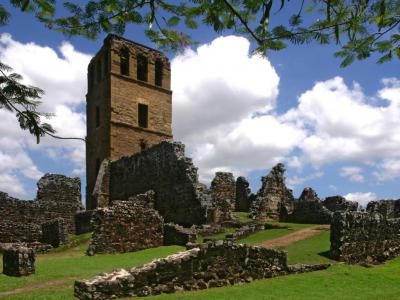
Old Panama (Panama Viejo) is the remaining part of the original Panama City. It served as the former capital of Panama before its destruction in 1671 by the Welsh privateer Henry Morgan. Located in the suburbs of the current capital, it is a site of great historical significance and, together with the historical district of Panama, has been recognized as a UNESCO World Heritage Site since 1997.
The settlement, initially called Castilla del Oro, was established on August 15, 1519, by Pedro Arias Dávila and 100 other settlers. This marked the first permanent European settlement on the Pacific Ocean, replacing the earlier cities of Santa María la Antigüa del Darién and Acla. In 1521, the settlement was elevated to city status by a royal decree from Charles V of Spain, who also granted it a coat of arms, thereby forming a new municipal council (cabildo). Old Panama quickly became a pivotal starting point for expeditions to Peru and an essential hub for the shipment of gold and silver to Spain.
Despite experiencing significant fires in 1539 and 1563, which destroyed parts of the city, Old Panama continued to grow. By 1610, it boasted a population of 5,000, with 500 houses, convents, chapels, a hospital, and a cathedral. However, the city faced multiple attacks from pirates and indigenous people from Darién in the early 17th century. Additionally, a destructive earthquake on May 2, 1620, and the Great Fire of February 21, 1644, which destroyed 83 religious buildings, including the cathedral, were significant setbacks. By this time, the city's population had reached 8,000.
The most catastrophic event in Old Panama's history occurred on January 28, 1671, when Henry Morgan attacked the city with a force of 1,400 men. After defeating the city's militia, Morgan's men sacked Panama. Whether the subsequent fire that destroyed the city was started by Morgan's forces or was a result of an order from Captain General Don Juan Pérez de Guzmán to blow up the gunpowder magazines remains unclear. The attack led to the loss of thousands of lives and necessitated the rebuilding of Panama City a few kilometers to the west at its present location.
Today, Old Panama stands as a symbol of the rich and tumultuous history of Panama. It has also featured in popular culture, serving as a Pit Stop in the 19th season of "The Amazing Race" and hosting a reward feast in the 7th season of the CBS show "Survivor."
The settlement, initially called Castilla del Oro, was established on August 15, 1519, by Pedro Arias Dávila and 100 other settlers. This marked the first permanent European settlement on the Pacific Ocean, replacing the earlier cities of Santa María la Antigüa del Darién and Acla. In 1521, the settlement was elevated to city status by a royal decree from Charles V of Spain, who also granted it a coat of arms, thereby forming a new municipal council (cabildo). Old Panama quickly became a pivotal starting point for expeditions to Peru and an essential hub for the shipment of gold and silver to Spain.
Despite experiencing significant fires in 1539 and 1563, which destroyed parts of the city, Old Panama continued to grow. By 1610, it boasted a population of 5,000, with 500 houses, convents, chapels, a hospital, and a cathedral. However, the city faced multiple attacks from pirates and indigenous people from Darién in the early 17th century. Additionally, a destructive earthquake on May 2, 1620, and the Great Fire of February 21, 1644, which destroyed 83 religious buildings, including the cathedral, were significant setbacks. By this time, the city's population had reached 8,000.
The most catastrophic event in Old Panama's history occurred on January 28, 1671, when Henry Morgan attacked the city with a force of 1,400 men. After defeating the city's militia, Morgan's men sacked Panama. Whether the subsequent fire that destroyed the city was started by Morgan's forces or was a result of an order from Captain General Don Juan Pérez de Guzmán to blow up the gunpowder magazines remains unclear. The attack led to the loss of thousands of lives and necessitated the rebuilding of Panama City a few kilometers to the west at its present location.
Today, Old Panama stands as a symbol of the rich and tumultuous history of Panama. It has also featured in popular culture, serving as a Pit Stop in the 19th season of "The Amazing Race" and hosting a reward feast in the 7th season of the CBS show "Survivor."
6) Herons' Palace (Presidential Palace)
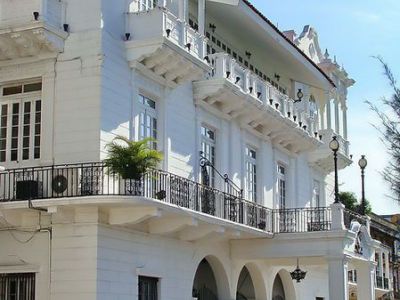
This official presidential residence was originally constructed by the Spanish in the 17th century and is a beautiful example of Spanish colonial architecture. Initially this pristine white building, decorated in true Moorish style, was used as a customs house.
You can see the spacious inner courtyard along with the airy lobby designed in a way to emulate Andalusian style. Ornately decorated fountains adorn the courtyard. However, it is not the white color or the décor that earn the building its sobriquet, but the white African herons that are found strolling freely in the palace. The herons were brought here after the completion of the final renovations that were carried out under the then president, Belisario Porras.
An elevator was added in 1934 for a state visit by U.S. President Franklin Roosevelt so that he could access the chambers where he was to stay. Rumors have it that during the visit of the U.S. president Richard Nixon in 1977, the palace was sprayed with disinfectant that caused the death of all herons there. The dead herons were said to be replaced overnight.
The palace lies in the center of the old quarter of Panama City. Though an entry to the palace is restricted, you can easily liaise with a friendly guard and take a quick peek and maybe click a few snaps too.
You can see the spacious inner courtyard along with the airy lobby designed in a way to emulate Andalusian style. Ornately decorated fountains adorn the courtyard. However, it is not the white color or the décor that earn the building its sobriquet, but the white African herons that are found strolling freely in the palace. The herons were brought here after the completion of the final renovations that were carried out under the then president, Belisario Porras.
An elevator was added in 1934 for a state visit by U.S. President Franklin Roosevelt so that he could access the chambers where he was to stay. Rumors have it that during the visit of the U.S. president Richard Nixon in 1977, the palace was sprayed with disinfectant that caused the death of all herons there. The dead herons were said to be replaced overnight.
The palace lies in the center of the old quarter of Panama City. Though an entry to the palace is restricted, you can easily liaise with a friendly guard and take a quick peek and maybe click a few snaps too.
7) Church of Saint Francis of Assisi
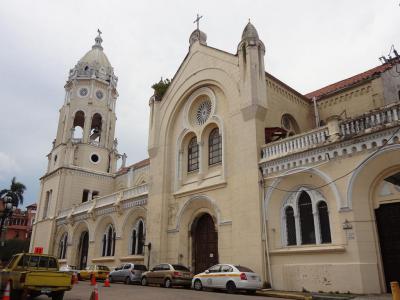
Church of Saint Francis of Assisi is a Roman Catholic Church in the historic district of Casco Viejo. This church is very popular for its magnificent view, making it a very popular tourist spot in Panama City. The church is small compared to the other churches but you will be dazed by its splendor as it is one of the most beautiful local churches.
Located on the ground of Bolivar Park, the Church of Saint Francis of Assisi was repeatedly destroyed by fire in 1737 and 1756. It was fully rebuilt in 1998. The church lies across the street from the National Theater. Down the street, just a block away, is the residence of Panamanian President, the Herons' Palace.
The Church of Saint Francis of Assisi was built of a stout stone structure way back in the early 1700s. Indigenous artisans from the nearby town of San Francisco, supervised by Franciscan monks, helped to build the eight hardwood baroque altars. The elegant main altar consists of over 400 pieces of colorfully painted tropical cedar and is an impressive example of colonial art. All in all, this historical church is well worth a visit.
Located on the ground of Bolivar Park, the Church of Saint Francis of Assisi was repeatedly destroyed by fire in 1737 and 1756. It was fully rebuilt in 1998. The church lies across the street from the National Theater. Down the street, just a block away, is the residence of Panamanian President, the Herons' Palace.
The Church of Saint Francis of Assisi was built of a stout stone structure way back in the early 1700s. Indigenous artisans from the nearby town of San Francisco, supervised by Franciscan monks, helped to build the eight hardwood baroque altars. The elegant main altar consists of over 400 pieces of colorfully painted tropical cedar and is an impressive example of colonial art. All in all, this historical church is well worth a visit.
