Custom Walk in Kuala Lumpur, Malaysia by johnprobst_b939d created on 2026-01-01
Guide Location: Malaysia » Kuala Lumpur
Guide Type: Custom Walk
# of Sights: 11
Tour Duration: 9 Hour(s)
Travel Distance: 25.2 Km or 15.7 Miles
Share Key: XFX95
Guide Type: Custom Walk
# of Sights: 11
Tour Duration: 9 Hour(s)
Travel Distance: 25.2 Km or 15.7 Miles
Share Key: XFX95
How It Works
Please retrieve this walk in the GPSmyCity app. Once done, the app will guide you from one tour stop to the next as if you had a personal tour guide. If you created the walk on this website or come to the page via a link, please follow the instructions below to retrieve the walk in the app.
Retrieve This Walk in App
Step 1. Download the app "GPSmyCity: Walks in 1K+ Cities" on Apple App Store or Google Play Store.



Step 2. In the GPSmyCity app, download(or launch) the guide "Kuala Lumpur Map and Walking Tours".
Step 3. Tap the menu button located at upper right corner of the "Walks" screen and select "Retrieve custom walk". Enter the share key: XFX95
1) Central Market (must see)
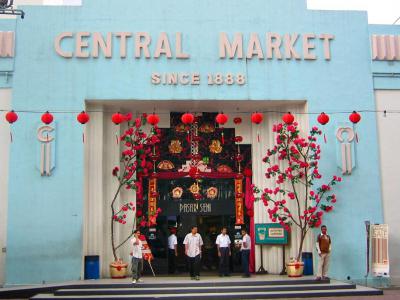
Central Market has grown from a practical marketplace into one of the city’s main cultural attractions. Founded in 1888 during the British period, it originally operated as a wet market serving miners and local residents. The present building, completed in 1937 in an Art Deco style, reflects a shift toward a more permanent and organized structure. Today, it is recognized as a heritage site and a key landmark of Malaysian culture.
Begin your visit at the entrance and step inside to explore the structured layout of the market. The interior is lined with stalls offering handicrafts, textiles, souvenirs, and locally made goods. As you walk through, notice how the ground floor is organized into themed “streets,” such as Lorong Melayu, Lorong Cina, and Lorong India. Items such as batik fabrics, wood carvings, jewelry, and traditional clothing highlight both individual traditions and a shared, distinctly Malaysian character.
Compared to its early days, when it was known as a “wet market” with constantly damp floors, the space is now clean, well-lit, and adapted for visitors. The variety of goods extends beyond crafts to include bags, clothing, sweets, and small gifts, making it a practical stop for souvenirs.
Before leaving, step out toward Kasturi Walk, the covered pedestrian lane at the front of the building. Here, additional vendors and street food stalls create a more casual atmosphere. You may also choose to pause at the food court or nearby cafés to sample local dishes. Together, these spaces present Central Market as both a shopping destination and a compact introduction to Kuala Lumpur’s multicultural character.
Begin your visit at the entrance and step inside to explore the structured layout of the market. The interior is lined with stalls offering handicrafts, textiles, souvenirs, and locally made goods. As you walk through, notice how the ground floor is organized into themed “streets,” such as Lorong Melayu, Lorong Cina, and Lorong India. Items such as batik fabrics, wood carvings, jewelry, and traditional clothing highlight both individual traditions and a shared, distinctly Malaysian character.
Compared to its early days, when it was known as a “wet market” with constantly damp floors, the space is now clean, well-lit, and adapted for visitors. The variety of goods extends beyond crafts to include bags, clothing, sweets, and small gifts, making it a practical stop for souvenirs.
Before leaving, step out toward Kasturi Walk, the covered pedestrian lane at the front of the building. Here, additional vendors and street food stalls create a more casual atmosphere. You may also choose to pause at the food court or nearby cafés to sample local dishes. Together, these spaces present Central Market as both a shopping destination and a compact introduction to Kuala Lumpur’s multicultural character.
2) Sri Mahamariamman Temple
Kuala Lumpur in itself is a culmination of brewing together different cultures and people. The resultant of this rich blend of ideas, philosophies and heritage coming from different cultures and parts of the world is what makes it a fascinating place to visit and a tourist’s paradise. One such architectural example is the Sri Mahamariamman Temple.
Built in 1873, this enchanting temple is the oldest functioning Hindu Temple in Malaysia. Founded by K. Thamboosamy Pillai, a pre-independence Tamil settler and one of the most prominent figures in the Tamil community in the country, the Temple was initially used exclusively by the Pillai family. It was not until 1920s that they opened the doors so that it could become a place of worship for the immigrants from India.
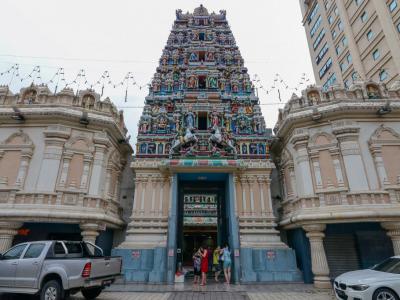
One of the most striking features of the Sri Mahamariamman is its dramatic tower filled with intricate sculptures of the various Hindu deities – a whopping 228 idols. Known as the ‘gopuram’, the tower is dedicated to the deity Mariamman, protector of all those in distant lands to preserve them from the evils of the world. This temple is especially relevant because the procession at Thaipusam (Hindu festival) during the month of February starts from here.
Tip:
Entry is free, but ladies need to cover properly and shoes must be removed and stored on the side for a small fee (bring wet wipes for your feet to avoid getting socks dirty). Friday afternoon prayer time is an exciting experience; watching the ritual, and all the music to go with it.
Built in 1873, this enchanting temple is the oldest functioning Hindu Temple in Malaysia. Founded by K. Thamboosamy Pillai, a pre-independence Tamil settler and one of the most prominent figures in the Tamil community in the country, the Temple was initially used exclusively by the Pillai family. It was not until 1920s that they opened the doors so that it could become a place of worship for the immigrants from India.
One of the most striking features of the Sri Mahamariamman is its dramatic tower filled with intricate sculptures of the various Hindu deities – a whopping 228 idols. Known as the ‘gopuram’, the tower is dedicated to the deity Mariamman, protector of all those in distant lands to preserve them from the evils of the world. This temple is especially relevant because the procession at Thaipusam (Hindu festival) during the month of February starts from here.
Tip:
Entry is free, but ladies need to cover properly and shoes must be removed and stored on the side for a small fee (bring wet wipes for your feet to avoid getting socks dirty). Friday afternoon prayer time is an exciting experience; watching the ritual, and all the music to go with it.
3) Thean Hou Temple (must see)
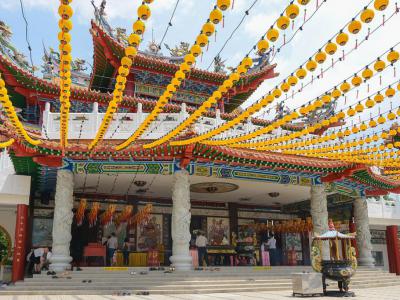
The Thean Hou Temple is known as the Temple of the Goddess of Heaven. It is a six-tiered Buddhist temple dedicated to Tian Hou, the goddess of the sea.
The temple was built in 1894 by the Hainanese community of Kuala Lumpur. Its construction uses elements from Buddhism, Confucianism and Taoism.
Along with Tian Hou, the temple offers a statue of Guan Yin, the goddess of mercy; Shui Wei Sheng Niang, the goddess of the waterfront; Guan Di, the god of war and Wei Tuo, the protector.
The temple is open from 9 AM through 6 PM daily. Visitors can enter the temple or enjoy the tortoise pond and traditional medicinal garden that are located on the temple grounds. There are also a number of fortune tellers and martial arts demonstrations nearby.
The temple was built in 1894 by the Hainanese community of Kuala Lumpur. Its construction uses elements from Buddhism, Confucianism and Taoism.
Along with Tian Hou, the temple offers a statue of Guan Yin, the goddess of mercy; Shui Wei Sheng Niang, the goddess of the waterfront; Guan Di, the god of war and Wei Tuo, the protector.
The temple is open from 9 AM through 6 PM daily. Visitors can enter the temple or enjoy the tortoise pond and traditional medicinal garden that are located on the temple grounds. There are also a number of fortune tellers and martial arts demonstrations nearby.
4) Sultan Abdul Samad Building
Sultan Abdul Samad Building was completed in 1897 during British colonial rule. It originally housed key government offices, including the colonial secretariat. Named after the fourth Sultan of Selangor, the building reflects the administrative importance of the area and continues to anchor the historic center of the city.
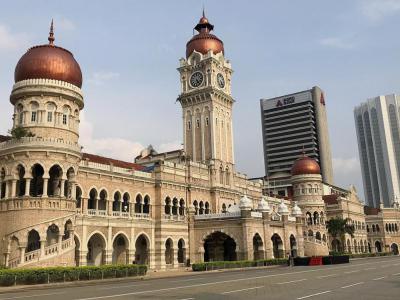
As you approach, take time to observe its distinctive architectural style, often described as Indo-Saracenic or Moorish Revival, with elements of Neo-Gothic influence. The façade is defined by a sequence of pointed arches and colonnades, while copper domes crown the towers. At the center, a clock tower rising to about 40 meters draws the eye. Walk along the length of the building to notice how its details repeat and shift. The shaded arcades at ground level form a continuous passage, offering relief from the heat, while the upper levels introduce balconies and decorative features typical of late 19th-century design.
If you move toward the rear of the building, you will find a quieter area facing the river, where a small garden with tiled fountains and benches provides a place to pause. Today, although its functions have evolved, the building continues to house government offices and serves as a backdrop for national celebrations. In the evening, it is often illuminated, emphasizing its architectural details and reinforcing its role as a central landmark in Kuala Lumpur.
As you approach, take time to observe its distinctive architectural style, often described as Indo-Saracenic or Moorish Revival, with elements of Neo-Gothic influence. The façade is defined by a sequence of pointed arches and colonnades, while copper domes crown the towers. At the center, a clock tower rising to about 40 meters draws the eye. Walk along the length of the building to notice how its details repeat and shift. The shaded arcades at ground level form a continuous passage, offering relief from the heat, while the upper levels introduce balconies and decorative features typical of late 19th-century design.
If you move toward the rear of the building, you will find a quieter area facing the river, where a small garden with tiled fountains and benches provides a place to pause. Today, although its functions have evolved, the building continues to house government offices and serves as a backdrop for national celebrations. In the evening, it is often illuminated, emphasizing its architectural details and reinforcing its role as a central landmark in Kuala Lumpur.
5) Panggung Bandaraya DBKL Theatre
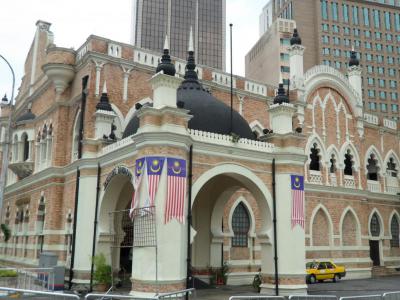
The Panggung Bandaraya DBKL Theater, completed in 1904 and designed by Arthur Benison Hubback, reflects the early period of British administration, when public buildings served both civic and social functions. Originally built as the Kuala Lumpur Town Hall, it also served as the headquarters of the Kuala Lumpur Municipal Council.
The building’s façade combines neoclassical balance with Indo-Saracenic architectural elements, a style closely associated with Hubback’s work, blending European structural principles with features such as horseshoe arches and domed forms. Though more modest in scale than some of the surrounding government buildings, it stands out as a carefully preserved example of early 20th-century design and has been officially recognized as a heritage building.
Inside, the theater has hosted a wide range of performances, from traditional Malay productions to modern plays and musical events. Over time, the interior has been adapted to support stage performances. A major fire in 1992 caused extensive damage, leading to a full restoration. Today, the Panggung Bandaraya DBKL Theater remains an important part of Kuala Lumpur’s cultural landscape. Even when performances are not taking place, the building itself offers insight into how the city’s public spaces have evolved.
The building’s façade combines neoclassical balance with Indo-Saracenic architectural elements, a style closely associated with Hubback’s work, blending European structural principles with features such as horseshoe arches and domed forms. Though more modest in scale than some of the surrounding government buildings, it stands out as a carefully preserved example of early 20th-century design and has been officially recognized as a heritage building.
Inside, the theater has hosted a wide range of performances, from traditional Malay productions to modern plays and musical events. Over time, the interior has been adapted to support stage performances. A major fire in 1992 caused extensive damage, leading to a full restoration. Today, the Panggung Bandaraya DBKL Theater remains an important part of Kuala Lumpur’s cultural landscape. Even when performances are not taking place, the building itself offers insight into how the city’s public spaces have evolved.
6) Bukit Bintang (Bintang Walk) (must see)
One of the most happening places in Kuala Lumpur is the Bukit Walk, your one-stop destination to a complete Kuala Lumpur shopping experience! Stretching from Jalan Bukit Bintang and Jalan Imbi, all the way to Jalan Pudu, the Bintang Walk is a place you do not want to miss.
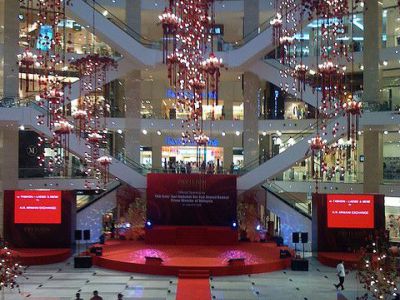
No matter what your budget is, the Bukit Walk has something to offer every visitor. Right from upscale classy and glamorous malls and boutiques like the Pavillion and Star Hill Shopping Gallery, to road side bargains, electronic shopping complexes and exclusive shops like the Low Yat Plaza, the Bukit Walk is truly a shopper’s paradise.
But don’t let the excessive shopping put you off. If you are not very keen on peeking into the retail stores, you have plenty of other things to do at the Bukit Walk. Some of Kuala Lumpur finest eateries can be found here. Whatever be your style, you are sure to find the perfect place, menu and cuisine to tempt, tantalize and satisfy your hunger. From hawkers who are famous all over the city for their offerings to specialty restaurants that are known world over, from delicious local fare to alfresco restaurants, the Bukit Walk is the place to get a mouthful of Kuala Lumpur.
No matter what your budget is, the Bukit Walk has something to offer every visitor. Right from upscale classy and glamorous malls and boutiques like the Pavillion and Star Hill Shopping Gallery, to road side bargains, electronic shopping complexes and exclusive shops like the Low Yat Plaza, the Bukit Walk is truly a shopper’s paradise.
But don’t let the excessive shopping put you off. If you are not very keen on peeking into the retail stores, you have plenty of other things to do at the Bukit Walk. Some of Kuala Lumpur finest eateries can be found here. Whatever be your style, you are sure to find the perfect place, menu and cuisine to tempt, tantalize and satisfy your hunger. From hawkers who are famous all over the city for their offerings to specialty restaurants that are known world over, from delicious local fare to alfresco restaurants, the Bukit Walk is the place to get a mouthful of Kuala Lumpur.
7) Jalan Alor (must see)
Jalan Alor is a notable street in Kuala Lumpur. Visitors to the city will find a vibrant nightlife, plenty of places to shop and, most of all, delicious food.
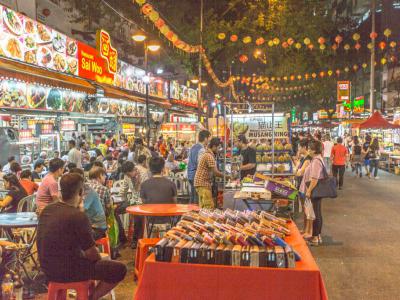
Food stalls, referred sometimes as hawker stalls, are set up on both sides of the street. As Malaysia is a blend of many cultures, so is the food. Patrons will find barbecue, seafood, noodles and more. Chinese, Thai, Vietnamese and Cambodian restaurants share space with vendors selling chicken drumsticks, bowls of ice cream and colorful arrays of fruit and vegetables from carts.
The area, lovingly referred to as Food Street, is not just for tourists. Plenty of locals populate the street thanks to its delicious food at reasonable prices. Many prefer the street food on Jalan Alor to the pricier sit-down cafes in other parts of the city.
Jalan Alor is a short street nestled between Jalan Tong Shin and Changkat Bukit Bintang. Stalls and restaurants are open throughout the day and night, so visitors can come here any time they feel a pang of hunger.
Food stalls, referred sometimes as hawker stalls, are set up on both sides of the street. As Malaysia is a blend of many cultures, so is the food. Patrons will find barbecue, seafood, noodles and more. Chinese, Thai, Vietnamese and Cambodian restaurants share space with vendors selling chicken drumsticks, bowls of ice cream and colorful arrays of fruit and vegetables from carts.
The area, lovingly referred to as Food Street, is not just for tourists. Plenty of locals populate the street thanks to its delicious food at reasonable prices. Many prefer the street food on Jalan Alor to the pricier sit-down cafes in other parts of the city.
Jalan Alor is a short street nestled between Jalan Tong Shin and Changkat Bukit Bintang. Stalls and restaurants are open throughout the day and night, so visitors can come here any time they feel a pang of hunger.
8) Pavilion Kuala Lumpur (must see)
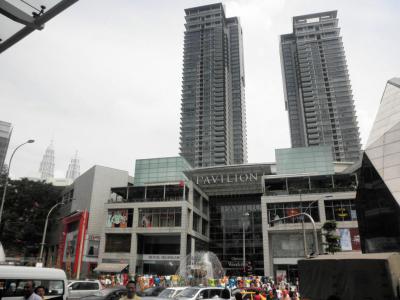
Pavilion Kuala Lumpur is a prominent shopping center located in the vibrant Bukit Bintang district of Kuala Lumpur. This bustling complex was constructed on the site where the historic Bukit Bintang Girls' School once stood. This school, known as the oldest in Kuala Lumpur, was relocated to Cheras in 2000, where it was renamed Sekolah Seri Bintang Utara.
The Pavilion Kuala Lumpur officially opened its doors on September 20, 2007. The extensive development comprises not only a premier shopping center but also includes two blocks of serviced apartments, an office block, and a luxurious 5-star hotel. In 2016, the mall expanded with the addition of Pavilion Elite, a significant extension, and was further enhanced by the development of a new residential block constructed above it.
Further expanding its presence, Pavilion Kuala Lumpur launched a sister mall in the southern suburbs of the city on December 3, 2021. This new mall, named Pavilion Bukit Jalil, boasts an impressive 1.8 million square feet of retail space. It houses notable features such as Malaysia's first Tsutaya Bookstore and the country's longest Muji Store. A distinctive highlight of Pavilion Bukit Jalil is its projection mapping dome located at the center court, adding a unique visual element to the shopping experience.
Continuing its expansion, a third mall under the Pavilion brand opened on October 8, 2023. Named Pavilion Damansara Heights, this mall, though smaller with only 1 million square feet of space, marks another significant addition to the Pavilion Kuala Lumpur's growing portfolio of retail destinations. Each of these malls, with their distinct characteristics and offerings, contributes to the dynamic retail landscape of Kuala Lumpur, drawing both local shoppers and international tourists.
The Pavilion Kuala Lumpur officially opened its doors on September 20, 2007. The extensive development comprises not only a premier shopping center but also includes two blocks of serviced apartments, an office block, and a luxurious 5-star hotel. In 2016, the mall expanded with the addition of Pavilion Elite, a significant extension, and was further enhanced by the development of a new residential block constructed above it.
Further expanding its presence, Pavilion Kuala Lumpur launched a sister mall in the southern suburbs of the city on December 3, 2021. This new mall, named Pavilion Bukit Jalil, boasts an impressive 1.8 million square feet of retail space. It houses notable features such as Malaysia's first Tsutaya Bookstore and the country's longest Muji Store. A distinctive highlight of Pavilion Bukit Jalil is its projection mapping dome located at the center court, adding a unique visual element to the shopping experience.
Continuing its expansion, a third mall under the Pavilion brand opened on October 8, 2023. Named Pavilion Damansara Heights, this mall, though smaller with only 1 million square feet of space, marks another significant addition to the Pavilion Kuala Lumpur's growing portfolio of retail destinations. Each of these malls, with their distinct characteristics and offerings, contributes to the dynamic retail landscape of Kuala Lumpur, drawing both local shoppers and international tourists.
9) Petronas Towers (must see)
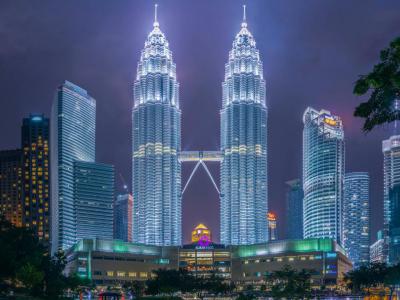
Petronas Twin Towers were completed in 1998 and rise to 1,483 feet, remaining the tallest twin towers in the world. Designed by Argentine architect Cesar Pelli, the structure draws on Islamic geometric patterns, giving the towers a distinct identity that reflects both modern engineering and cultural symbolism. Construction began in 1993 and involved two separate international teams working simultaneously on each tower, contributing to the project’s pace and precision.
From ground level, the scale of the towers becomes immediately apparent. Their façade, made of reinforced concrete, steel, and glass, reflects changing light throughout the day. Midway up, the two towers are connected by a skybridge on the 41st and 42nd floors, which serves both as a structural feature and a viewing platform. The towers are also designed with a double-deck elevator system, allowing efficient movement within the building despite its height.
Visitors can access the towers through a ticketed experience that includes the skybridge and an observation deck on the 86th floor. From these vantage points, Kuala Lumpur spreads out in all directions, revealing a mix of modern developments and older districts. The towers are not only a visual landmark but also a functioning business center, housing offices for major companies, including Malaysia’s national oil company, Petronas, from which they take their name.
From ground level, the scale of the towers becomes immediately apparent. Their façade, made of reinforced concrete, steel, and glass, reflects changing light throughout the day. Midway up, the two towers are connected by a skybridge on the 41st and 42nd floors, which serves both as a structural feature and a viewing platform. The towers are also designed with a double-deck elevator system, allowing efficient movement within the building despite its height.
Visitors can access the towers through a ticketed experience that includes the skybridge and an observation deck on the 86th floor. From these vantage points, Kuala Lumpur spreads out in all directions, revealing a mix of modern developments and older districts. The towers are not only a visual landmark but also a functioning business center, housing offices for major companies, including Malaysia’s national oil company, Petronas, from which they take their name.
10) National Library of Malaysia
The National Library of Malaysia, established in 1972, is key in keeping and sharing knowledge for Malaysians now and in the future. It's more than a place for books; it's a main spot for the country's thinking and cultural history.
A big part of the Library is the Malaysiana Collection, a source of pride with a wide variety of stuff from Malaysia and elsewhere. It focuses on things closely related to Malaysia, showing the country's varied cultural and intellectual scene and offering insights into Malaysian life, history, and culture.
A special item in the Library is the "Hikayat Hang Tuah," a Malay Manuscript. UNESCO recognized it, putting it in the Memory of the World Register. This shows the Library's role in keeping manuscripts that are important for understanding Malaysia's history and culture.
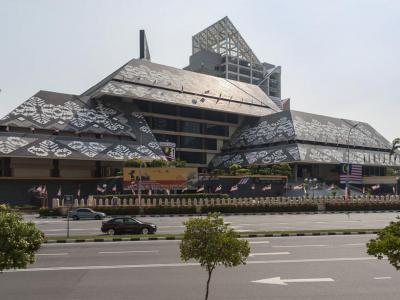
The Library's design reflects Malaysian identity and culture. Made by Kumpulan Akitek, it's inspired by the tengkolok, a traditional Malay headgear, showing intellectual pride and respect in Malaysian culture. The roof tiles, inspired by the Kain Songket, a hand-woven cloth, add to the cultural importance.
The Library has about 4.78 million items: 4.52 million printed, 98,406 non-printed, 4,974 Malay manuscripts, and 158,316 digital. This huge collection is not just for research and learning, but also to protect the nation's history and cultural identity.
The Malaysian Library not only preserves but also promotes its collections nationally and internationally, playing a vital role in fostering intellectual growth. The Malaysiana collection embodies Malaysia's rich heritage and history.
Tip:
This is a great place for kids to chill. The kids' section is equipped with a media/internet room, as well as a TV area and a comfy carpeted section for kids to roll around.
Easy access to café and restrooms, friendly ànd helpful staff. Food is fairly cheap, with plenty of choices compared to other government cafeterias.
Just across the road is IJN. Take the overpass pedestrian bridge, and you'll find some hip cafés for more food choices.
A big part of the Library is the Malaysiana Collection, a source of pride with a wide variety of stuff from Malaysia and elsewhere. It focuses on things closely related to Malaysia, showing the country's varied cultural and intellectual scene and offering insights into Malaysian life, history, and culture.
A special item in the Library is the "Hikayat Hang Tuah," a Malay Manuscript. UNESCO recognized it, putting it in the Memory of the World Register. This shows the Library's role in keeping manuscripts that are important for understanding Malaysia's history and culture.
The Library's design reflects Malaysian identity and culture. Made by Kumpulan Akitek, it's inspired by the tengkolok, a traditional Malay headgear, showing intellectual pride and respect in Malaysian culture. The roof tiles, inspired by the Kain Songket, a hand-woven cloth, add to the cultural importance.
The Library has about 4.78 million items: 4.52 million printed, 98,406 non-printed, 4,974 Malay manuscripts, and 158,316 digital. This huge collection is not just for research and learning, but also to protect the nation's history and cultural identity.
The Malaysian Library not only preserves but also promotes its collections nationally and internationally, playing a vital role in fostering intellectual growth. The Malaysiana collection embodies Malaysia's rich heritage and history.
Tip:
This is a great place for kids to chill. The kids' section is equipped with a media/internet room, as well as a TV area and a comfy carpeted section for kids to roll around.
Easy access to café and restrooms, friendly ànd helpful staff. Food is fairly cheap, with plenty of choices compared to other government cafeterias.
Just across the road is IJN. Take the overpass pedestrian bridge, and you'll find some hip cafés for more food choices.
11) Batu Caves (must see)
Batu Caves, located in the Gombak district, approximately 13 kilometers north of Kuala Lumpur, is a limestone hill featuring a series of caves and cave temples. Its name is derived from the Sungai Batu, or Batu River, which flows alongside it. Additionally, there is a village nearby that shares the same name.
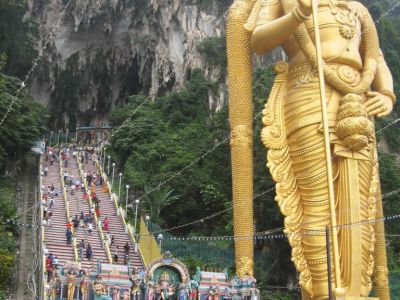
This cave complex is renowned as one of the most prominent Hindu shrines found outside of India and is dedicated to Lord Murugan. It plays a central role in the Hindu festival of Thaipusam in Malaysia.
Geologically, the limestone that comprises Batu Caves is believed to be approximately 400 million years old. Historically, some of the cave entrances were utilized as shelters by the indigenous Temuan people, a tribe of the Orang Asli.
In the early 1860s, Chinese settlers began mining guano from the caves for use as fertilizer in their agricultural activities. However, Batu Caves gained significant recognition only after colonial authorities, including Daly and Syers, as well as American Naturalist William Hornaday, documented the limestone hills in 1878.
The transformation of Batu Caves into a place of worship can be attributed to K. Thamboosamy Pillai, an Indian trader. He was inspired by the 'vel'-shaped entrance of the primary cave and decided to establish a temple dedicated to Lord Murugan within the caves. In 1890, Pillai, who was also responsible for founding the Sri Mahamariamman Temple in Kuala Lumpur, placed the consecrated statue (murti) of Sri Murugan Swami in what is now known as the Temple Cave. Since 1892, the Thaipusam festival has been celebrated there during the Tamil month of Thai, which typically falls in late January or early February.
The original wooden steps leading to the Temple Cave were constructed in 1920 and have since been replaced by 272 concrete steps. Among the various cave temples found at the site, the most significant and well-known is the Temple or Cathedral Cave, named for the numerous Hindu shrines it houses beneath its lofty vaulted ceiling.
This cave complex is renowned as one of the most prominent Hindu shrines found outside of India and is dedicated to Lord Murugan. It plays a central role in the Hindu festival of Thaipusam in Malaysia.
Geologically, the limestone that comprises Batu Caves is believed to be approximately 400 million years old. Historically, some of the cave entrances were utilized as shelters by the indigenous Temuan people, a tribe of the Orang Asli.
In the early 1860s, Chinese settlers began mining guano from the caves for use as fertilizer in their agricultural activities. However, Batu Caves gained significant recognition only after colonial authorities, including Daly and Syers, as well as American Naturalist William Hornaday, documented the limestone hills in 1878.
The transformation of Batu Caves into a place of worship can be attributed to K. Thamboosamy Pillai, an Indian trader. He was inspired by the 'vel'-shaped entrance of the primary cave and decided to establish a temple dedicated to Lord Murugan within the caves. In 1890, Pillai, who was also responsible for founding the Sri Mahamariamman Temple in Kuala Lumpur, placed the consecrated statue (murti) of Sri Murugan Swami in what is now known as the Temple Cave. Since 1892, the Thaipusam festival has been celebrated there during the Tamil month of Thai, which typically falls in late January or early February.
The original wooden steps leading to the Temple Cave were constructed in 1920 and have since been replaced by 272 concrete steps. Among the various cave temples found at the site, the most significant and well-known is the Temple or Cathedral Cave, named for the numerous Hindu shrines it houses beneath its lofty vaulted ceiling.
