Custom Walk in Funchal, Portugal by rrodrigues6518_82552 created on 2026-01-29
Guide Location: Portugal » Funchal
Guide Type: Custom Walk
# of Sights: 17
Tour Duration: 4 Hour(s)
Travel Distance: 8.4 Km or 5.2 Miles
Share Key: 3X86S
Guide Type: Custom Walk
# of Sights: 17
Tour Duration: 4 Hour(s)
Travel Distance: 8.4 Km or 5.2 Miles
Share Key: 3X86S
How It Works
Please retrieve this walk in the GPSmyCity app. Once done, the app will guide you from one tour stop to the next as if you had a personal tour guide. If you created the walk on this website or come to the page via a link, please follow the instructions below to retrieve the walk in the app.
Retrieve This Walk in App
Step 1. Download the app "GPSmyCity: Walks in 1K+ Cities" on Apple App Store or Google Play Store.



Step 2. In the GPSmyCity app, download(or launch) the guide "Funchal Map and Walking Tours".
Step 3. Tap the menu button located at upper right corner of the "Walks" screen and select "Retrieve custom walk". Enter the share key: 3X86S

1) Hotel Porto Mare
This custom location is created on gpsmycity.com website.
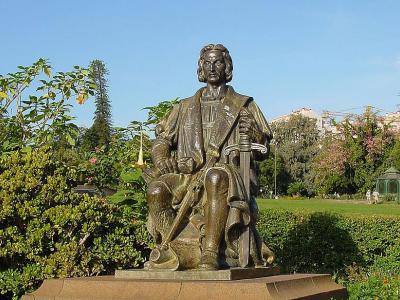
2) Estátua de Cristóvão Colombo (Statue of Christopher Columbus)
Located in the center of Funchal, Santa Catarina Park is a serene oasis with shady trees and lawns. Overlooking the harbor, within this park, stands the statue of Christopher Columbus, created by Portuguese sculptor Henrique Moreira. The City Hall acquired the statue, which was inaugurated in 1968. The bronze statue rests on a stone base, placed near the viewpoint from where one can see the city. The statue serves as a reminder of Columbus's voyages to the Americas and his stopovers in Madeira in 1475, 1480, and 1492.
In addition to the statue, several other things on the island commemorate Columbus's presence, such as the Columbus library, Columbus House, and Columbus's ship, the Santa Maria.
In addition to the statue, several other things on the island commemorate Columbus's presence, such as the Columbus library, Columbus House, and Columbus's ship, the Santa Maria.
3) FX Restaurant & Sports Bar
Located in the south wing of São Lourenço Galleries (Galerias São Lourenço) in Funchal's Sea Avenue (Avenida do Mar) area, the FX Restaurant & Sports Bar is a contemporary and versatile space that exudes a welcoming family vibe. Its advantageous positioning provides customers access to two sizeable covered terraces, perfect for indulging in the diverse gastronomic options or taking advantage of the extensive bar service. The interior features a restaurant area and two bars, each with its unique atmosphere.
FX Restaurant & Sports Bar embraces all major holidays and specializes in hosting events and gatherings for individuals, groups, or corporations. The menus range from special to à la carte and buffet style. The FX also provides ambient music and year-round entertainment, including live television broadcasts of major sporting events. On occasion, the FX Restaurant & Sports Bar features live music performances by renowned regional bands.
FX Restaurant & Sports Bar embraces all major holidays and specializes in hosting events and gatherings for individuals, groups, or corporations. The menus range from special to à la carte and buffet style. The FX also provides ambient music and year-round entertainment, including live television broadcasts of major sporting events. On occasion, the FX Restaurant & Sports Bar features live music performances by renowned regional bands.
4) Jardim Municipal (Municipal Garden)
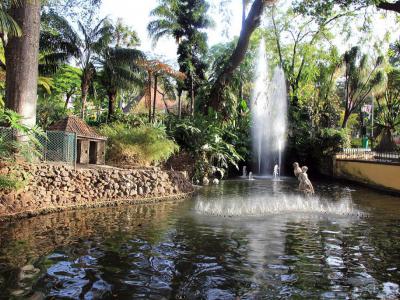
The Funchal Municipal Garden, also known as Dona Amélia Garden, is situated in a prime location, enhancing the beauty of this distinguished area with its lush and vibrant flora. This natural haven in the heart of the city attracts both locals and tourists, providing a serene escape.
Spanning across 8,300 square meters, the garden is located on the north side of Arriaga Avenue (Avenida Arriaga), opposite the Municipal Theatre, on the site where the Convent of São Francisco once stood. The Coat of Arms of the convent can still be admired on one of the lawns.
The garden boasts a vast collection of botanical species, including plants indigenous to Madeira and other regions of the world, making it a fascinating destination for nature enthusiasts. Visitors can explore a variety of captivating species during their visit.
Established in 1880, the Funchal Municipal Garden offers ample space for relaxation and entertainment. Its leisure area features shaded trees, a lake, and a stream inhabited by fish, ducks, and swans. The garden also houses an amphitheater, hosting numerous cultural events, and an esplanade.
Spanning across 8,300 square meters, the garden is located on the north side of Arriaga Avenue (Avenida Arriaga), opposite the Municipal Theatre, on the site where the Convent of São Francisco once stood. The Coat of Arms of the convent can still be admired on one of the lawns.
The garden boasts a vast collection of botanical species, including plants indigenous to Madeira and other regions of the world, making it a fascinating destination for nature enthusiasts. Visitors can explore a variety of captivating species during their visit.
Established in 1880, the Funchal Municipal Garden offers ample space for relaxation and entertainment. Its leisure area features shaded trees, a lake, and a stream inhabited by fish, ducks, and swans. The garden also houses an amphitheater, hosting numerous cultural events, and an esplanade.
5) Arcadas de São Francisco (San Francisco Arcades)
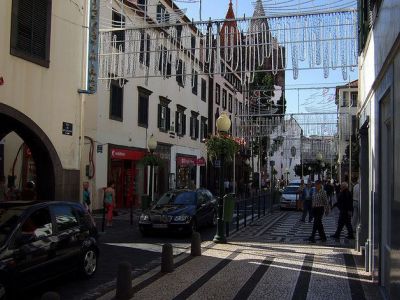
San Francisco Arcades (Arcadas São Francisco), situated near the Vicentes Photography Museum and Municipal Garden of Funchal, is more than just a shopping center. This space boasts ancient architecture perfectly blended with the city center. With a variety of shops, cafes, and restaurants, visitors can find everything they need in this large area.
Inaugurated in 1995, San Francisco Arcades were built in a space that dates back to 1811, following public policies that aimed to value the city's historical testimonies. This commercial area is part of a building that was adjacent to the former convent of San Francisco. Acquired by Charles Ridpath Blandy in 1840, the building was later transformed into a wine cellar. Take the opportunity to visit the São Francisco Cellars "The Old Blandy Wine Lodges" and learn more about the history of Madeira Wine, as well as taste and purchase some copies.
The San Francisco Arcades, a set of historical heritage in the place, are covered walkways in the form of arches, housing commercial and cultural points, art galleries, and antique shops. They were part of the unfinished church of São Francisco.
Inaugurated in 1995, San Francisco Arcades were built in a space that dates back to 1811, following public policies that aimed to value the city's historical testimonies. This commercial area is part of a building that was adjacent to the former convent of San Francisco. Acquired by Charles Ridpath Blandy in 1840, the building was later transformed into a wine cellar. Take the opportunity to visit the São Francisco Cellars "The Old Blandy Wine Lodges" and learn more about the history of Madeira Wine, as well as taste and purchase some copies.
The San Francisco Arcades, a set of historical heritage in the place, are covered walkways in the form of arches, housing commercial and cultural points, art galleries, and antique shops. They were part of the unfinished church of São Francisco.
6) Praça do Município (Municipal Square)
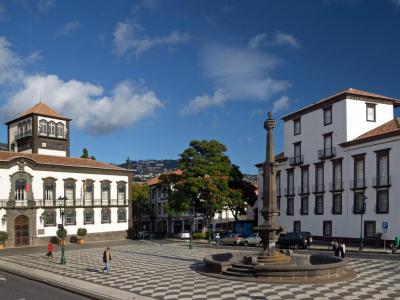
Municipal Square is a pedestrianized area paved with dark and light basalt and limestone tiles arranged in flowing wave patterns typical of Madeiran pavements. At its heart rises a tall fountain spire in a Portuguese architectural style from the early 1500s, set above a wide, overflowing basin that has become one of the square’s defining features. Although the inner area is reserved for pedestrians, traffic and parking are allowed around the perimeter, forming a ring road that frames the space.
This square is widely regarded as the most important public gathering place in Funchal. It is surrounded by some of the city’s finest historic buildings: the 18th-century Town Hall, the 17th-century Church of Saint John the Evangelist, the Museum of Sacred Art housed in the 16th-century Episcopal Palace, and the former Jesuits’ College, today serving as the rectory of the University of Madeira.
If you want to stop in a nearby restaurant, to feel the square vibe, Just behind the Museum of Sacred Art sits the popular Museum Cafe, known for its shaded patio and relaxed atmosphere. The square frequently serves as a ceremonial and cultural stage. Christmas illuminations, open-air concerts, civic celebrations, and public dances fill the space throughout the year.
This square is widely regarded as the most important public gathering place in Funchal. It is surrounded by some of the city’s finest historic buildings: the 18th-century Town Hall, the 17th-century Church of Saint John the Evangelist, the Museum of Sacred Art housed in the 16th-century Episcopal Palace, and the former Jesuits’ College, today serving as the rectory of the University of Madeira.
If you want to stop in a nearby restaurant, to feel the square vibe, Just behind the Museum of Sacred Art sits the popular Museum Cafe, known for its shaded patio and relaxed atmosphere. The square frequently serves as a ceremonial and cultural stage. Christmas illuminations, open-air concerts, civic celebrations, and public dances fill the space throughout the year.
7) Câmara Municipal (City Hall)
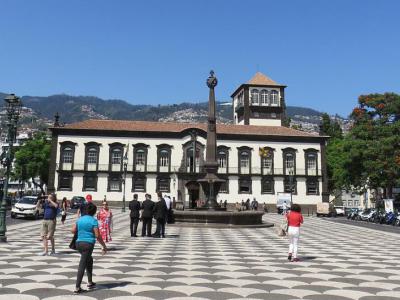
The first Funchal town hall was built in 1486 on Duque Square. The town council moved several times afterward, finally settling in Cathedral Square in 1802. Still dissatisfied with the facilities, the council eventually purchased the Carvalhal Esmeraldo Palace in 1883, adjoining the present-day Municipal Square.
Francisco António Camara Leme built his home, the Carvalhal Esmeraldo Palace in 1758. Although the original structure dates from the mid-18th century, it was later remodeled by the renowned Portuguese architects Raul Lino and Carlos Ramos during intensive restoration works around 1940. Construction materials included masonry, stone, wood, cast iron, and decorative tiles.
As you approach the City Hall, pay attention to the impressive entrance doorway carved in gray stone. On the second floor, the reception area is lined with eleven windows, each with its own small balcony. The ground-floor windows retain 17th-century wrought-iron security gratings. From the entrance, an extravagant interior staircase leads to the central courtyard. Here visitors encounter the sculpture “Leda and the Swan”, created by Madeiran sculptor Germano José Salles. The sculpture depicts the myth in which Zeus, disguised as a swan, approaches Leda-an ancient legend long admired for its symbolism and dramatic narrative.
Francisco António Camara Leme built his home, the Carvalhal Esmeraldo Palace in 1758. Although the original structure dates from the mid-18th century, it was later remodeled by the renowned Portuguese architects Raul Lino and Carlos Ramos during intensive restoration works around 1940. Construction materials included masonry, stone, wood, cast iron, and decorative tiles.
As you approach the City Hall, pay attention to the impressive entrance doorway carved in gray stone. On the second floor, the reception area is lined with eleven windows, each with its own small balcony. The ground-floor windows retain 17th-century wrought-iron security gratings. From the entrance, an extravagant interior staircase leads to the central courtyard. Here visitors encounter the sculpture “Leda and the Swan”, created by Madeiran sculptor Germano José Salles. The sculpture depicts the myth in which Zeus, disguised as a swan, approaches Leda-an ancient legend long admired for its symbolism and dramatic narrative.
8) Bazar do Povo (People's Bazaar)
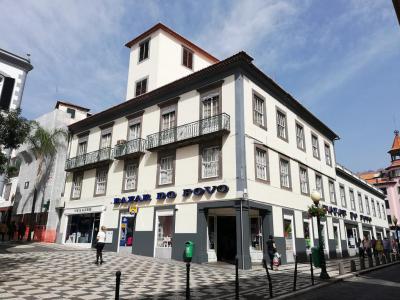
Bazar do Povo (People's Bazaar) is a popular shopping destination located in Funchal. This historical shopping center has been a hub of commercial activity in Funchal since the late 19th century and has become an iconic landmark in the city.
People's Bazaar was founded in 1883. Over the years, the shopping center has undergone several renovations and updates, but it has retained its historic charm and appeal.
Today, Bazar do Povo is a bustling marketplace with a diverse range of goods and services. The shopping center is home to several shops selling clothing, footwear, accessories, souvenirs, and handicrafts. Visitors can also find a wide variety of food and drink options, including cafes and restaurants serving traditional Madeiran cuisine.
Bazar do Povo building features a unique blend of traditional Portuguese and Art Deco styles, with intricate details adorning the façade. The interior of the shopping center is equally impressive, with a grand staircase and soaring ceilings that add to the sense of grandeur and elegance.
Bazar do Povo is located in the heart of Funchal's historic district, making it an ideal destination for those looking to explore the city's rich cultural heritage. The shopping center is just a short walk from several other popular attractions, including the Farmers' Market (Mercado dos Lavradores), the Cathedral of Funchal (the Cathedral of Our Lady of the Assumption), and the beautiful Municipal Garden.
Bazar do Povo is probably the only department store in the city that has still preserved its traditional charm. With its rich history, beautiful architecture, and diverse range of goods and services, it is a true gem of the city and a testament to Madeira's vibrant cultural heritage.
People's Bazaar was founded in 1883. Over the years, the shopping center has undergone several renovations and updates, but it has retained its historic charm and appeal.
Today, Bazar do Povo is a bustling marketplace with a diverse range of goods and services. The shopping center is home to several shops selling clothing, footwear, accessories, souvenirs, and handicrafts. Visitors can also find a wide variety of food and drink options, including cafes and restaurants serving traditional Madeiran cuisine.
Bazar do Povo building features a unique blend of traditional Portuguese and Art Deco styles, with intricate details adorning the façade. The interior of the shopping center is equally impressive, with a grand staircase and soaring ceilings that add to the sense of grandeur and elegance.
Bazar do Povo is located in the heart of Funchal's historic district, making it an ideal destination for those looking to explore the city's rich cultural heritage. The shopping center is just a short walk from several other popular attractions, including the Farmers' Market (Mercado dos Lavradores), the Cathedral of Funchal (the Cathedral of Our Lady of the Assumption), and the beautiful Municipal Garden.
Bazar do Povo is probably the only department store in the city that has still preserved its traditional charm. With its rich history, beautiful architecture, and diverse range of goods and services, it is a true gem of the city and a testament to Madeira's vibrant cultural heritage.
9) Rua Fernão Ornelas (Fernão Ornelas Street)
Doctor Fernão de Ornelas became mayor of Funchal in 1929. At just 27 years old, he was the youngest person ever to hold the office. He took over a city that had stagnated and set out to modernize its urban structure. During his tenure, he improved streets, reorganized commercial districts, and introduced significant reforms in education, sanitation, and overall civic planning, helping transform Funchal into a more functional and accessible city.
One of his most lasting contributions was the creation of new thoroughfares and the paving of older, uneven streets. Fernão Ornelas Street, named in his honor, was laid out under his administration as a key access route to the Workers’ Market-another major project he initiated. The street opened in the 1940s and quickly became one of the city’s busiest commercial corridors.
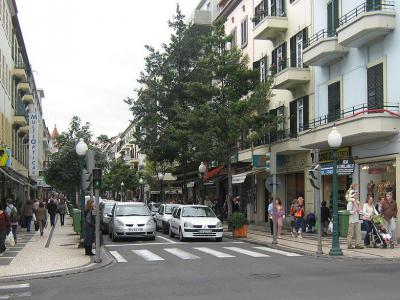
Today, Fernão Ornelas Street is known for its colorful shopfronts, traditional Madeiran tiles, and pedestrian-friendly layout. Next time you walk down the street towards the market, remember you’re literally walking through the mayor’s big urban experiment from the 1940s – and his statue is still here so check it out.
One of his most lasting contributions was the creation of new thoroughfares and the paving of older, uneven streets. Fernão Ornelas Street, named in his honor, was laid out under his administration as a key access route to the Workers’ Market-another major project he initiated. The street opened in the 1940s and quickly became one of the city’s busiest commercial corridors.
Today, Fernão Ornelas Street is known for its colorful shopfronts, traditional Madeiran tiles, and pedestrian-friendly layout. Next time you walk down the street towards the market, remember you’re literally walking through the mayor’s big urban experiment from the 1940s – and his statue is still here so check it out.
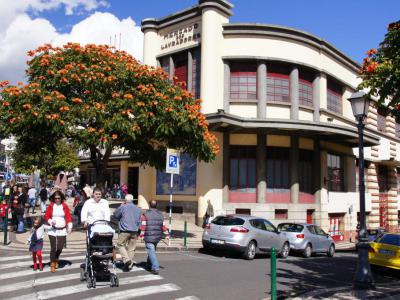
10) Mercado dos Lavradores (The Workers Market) (must see)
At the far end of Fernão Ornelas Street stands the Workers’ Market of Funchal, created in the late 1930s as part of a citywide modernization plan aimed at organizing food commerce and improving sanitary conditions. Designed by architect Edmundo Tavares and opened in 1940, the building reflects the Estado Novo political regime’s preference for strong geometric forms and practical public architecture. Its facade is lined with blue-and-white azulejo panels, illustrating scenes of Madeiran life and celebrating the island’s agricultural and fishing traditions.
As soon as you enter through the main Art Deco doorway, the flower hall is immediately on your left. This is where you’ll see rows of flower vendors, along with stalls selling seeds and bulbs-some in operation for more than fifty years. To continue into the market, walk straight ahead from the entrance and you will step into the central patio, where fruit and vegetable stands fill the open space. Small cafes, wine shops, and souvenir stalls line the perimeter on your right-hand side.
From the central patio, head straight across to the far end of the square. The Fish Hall is through the large doorway directly opposite the entrance. As you walk in, fishmongers line both the left and right sides, with long marble counters displaying black scabbardfish, tuna, octopus, and other local catches. The walls around you are decorated with tile illustrations of regional sea life.
To reach the upper level, turn right as you exit the Fish Hall and you’ll find the staircase leading to the second floor. Once upstairs, vendors selling exotic fruits, dried berries, spices, teas, and cork goods stretch out to your left and right along the balcony walkway. Keep walking to the far corner and you’ll reach the terrace, where two large cafes overlook the market. From here, you can look down into the central patio and even catch views of the surrounding rooftops.
The market neighborhood is always busy, but nothing compares to the night before Christmas Eve. This is when Market Night transforms the Workers’ Market into one of Funchal’s biggest street celebrations. Stalls spill into the streets, live music fills the air, people sing carols, and food and drink flow freely. It is one of Madeira’s most beloved traditions and a festive way to experience the island’s community spirit.
As soon as you enter through the main Art Deco doorway, the flower hall is immediately on your left. This is where you’ll see rows of flower vendors, along with stalls selling seeds and bulbs-some in operation for more than fifty years. To continue into the market, walk straight ahead from the entrance and you will step into the central patio, where fruit and vegetable stands fill the open space. Small cafes, wine shops, and souvenir stalls line the perimeter on your right-hand side.
From the central patio, head straight across to the far end of the square. The Fish Hall is through the large doorway directly opposite the entrance. As you walk in, fishmongers line both the left and right sides, with long marble counters displaying black scabbardfish, tuna, octopus, and other local catches. The walls around you are decorated with tile illustrations of regional sea life.
To reach the upper level, turn right as you exit the Fish Hall and you’ll find the staircase leading to the second floor. Once upstairs, vendors selling exotic fruits, dried berries, spices, teas, and cork goods stretch out to your left and right along the balcony walkway. Keep walking to the far corner and you’ll reach the terrace, where two large cafes overlook the market. From here, you can look down into the central patio and even catch views of the surrounding rooftops.
The market neighborhood is always busy, but nothing compares to the night before Christmas Eve. This is when Market Night transforms the Workers’ Market into one of Funchal’s biggest street celebrations. Stalls spill into the streets, live music fills the air, people sing carols, and food and drink flow freely. It is one of Madeira’s most beloved traditions and a festive way to experience the island’s community spirit.
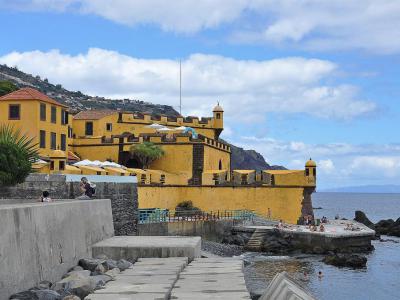
11) Forte de São Tiago (Saint James Fort)
There was a time when Portugal dominated the commercial routes of the North Atlantic, and the safety of Funchal seemed assured. Who would want to attack an isolated island in the mid-ocean? Someone did. In 1566, French corsairs under aristocrate Bertrand de Montluc ravaged the undefended port for several days, looting churches, burning homes, and killing many residents. The danger was real and recurring, yet Funchal was not fortified until 1614, decades after the attack.
Construction of the fortress began under the direction of master builder Jerónimo Jorge, the royal engineer responsible for several military projects in Madeira. The work was continued later by his son, Bartolomeu João, and by the Italian-born engineer Tossi Columbano, who also contributed to the development of the Port of Funchal. By the mid-18th century, the fort’s main defensive structures were considered complete, including the thick walls, battlements, and sea-facing gun platforms.
As pirate and privateer activity diminished, the fort took on new roles. It served as a base for British troops during the Peninsular War in the early 19th century, when Portugal and Britain were allied against Napoleonic France. Later, the military police and the Funchal Lancers were quartered within its walls. In 1803, after catastrophic floods swept through Funchal, the fort provided emergency shelter for hundreds of displaced families. Its role shifted again in 1901, when King Carlos I and Queen Amélie visited Madeira and were formally received here, taking lunch under a tent in the courtyard.
Today, Saint James Fort is open to visitors and remains one of Funchal’s most recognizable historical landmarks. Travelers can walk freely into the courtyard, explore the ramparts overlooking the Atlantic, and view small military displays inside the former barracks. Parts of the interior host rotating cultural exhibitions, and the seaside terrace-now occupied by a restaurant-offers some of the best panoramic views along Madeira’s coast.
Construction of the fortress began under the direction of master builder Jerónimo Jorge, the royal engineer responsible for several military projects in Madeira. The work was continued later by his son, Bartolomeu João, and by the Italian-born engineer Tossi Columbano, who also contributed to the development of the Port of Funchal. By the mid-18th century, the fort’s main defensive structures were considered complete, including the thick walls, battlements, and sea-facing gun platforms.
As pirate and privateer activity diminished, the fort took on new roles. It served as a base for British troops during the Peninsular War in the early 19th century, when Portugal and Britain were allied against Napoleonic France. Later, the military police and the Funchal Lancers were quartered within its walls. In 1803, after catastrophic floods swept through Funchal, the fort provided emergency shelter for hundreds of displaced families. Its role shifted again in 1901, when King Carlos I and Queen Amélie visited Madeira and were formally received here, taking lunch under a tent in the courtyard.
Today, Saint James Fort is open to visitors and remains one of Funchal’s most recognizable historical landmarks. Travelers can walk freely into the courtyard, explore the ramparts overlooking the Atlantic, and view small military displays inside the former barracks. Parts of the interior host rotating cultural exhibitions, and the seaside terrace-now occupied by a restaurant-offers some of the best panoramic views along Madeira’s coast.
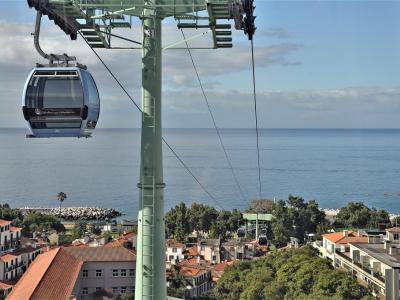
12) Teleférico Funchal-Monte (Funchal-Monte Cable Car) (must see)
The Funchal–Monte Cable Car offers one of Madeira’s most memorable experiences, gliding from the edge of Funchal’s old town up to the hillside village of Monte. Inaugurated in 2000, this modern gondola lift travels along a 3,200-meter cable line with a vertical rise of around 560 meters. The ride takes about fifteen minutes each way, carrying up to six passengers per cabin. The views unfold dramatically-the harbor, the city’s red rooftops, and the blue Atlantic opening out beneath you.
The cabins are comfortable and fitted with large, clear windows that offer panoramas over gardens, ravines, homes, and terraced hillsides. The ascent feels smooth rather than frightening, making it appealing even to those unsure about heights. Midway along the route, the landscape becomes greener and more rural until the line reaches its upper station, positioned between Babosas Village and the Mount Garden.
Stepping out at the top, visitors find themselves in Monte, a quieter, cooler village first established in 1565 as the parish of Our Lady of the Mount. Its leafy gardens, narrow lanes, small cafes, and scenic viewpoints offer a gentler pace compared to downtown Funchal. From here, travelers can explore nearby gardens, enjoy refreshments in Babosas Village or continue their visit to the Church of Our Lady of the Monte.
When it is time to return, there are two options. One is simply to board the cable car for a glide back down to the city. The other is the island’s famous traditional wicker-basket toboggan ride: a hand-guided descent on wooden runners, steered by two drivers who expertly guide passengers down the winding streets toward Funchal. Safe, lively, and entirely unique to Madeira, it provides a playful contrast to the calm, scenic ascent by cable car.
The cabins are comfortable and fitted with large, clear windows that offer panoramas over gardens, ravines, homes, and terraced hillsides. The ascent feels smooth rather than frightening, making it appealing even to those unsure about heights. Midway along the route, the landscape becomes greener and more rural until the line reaches its upper station, positioned between Babosas Village and the Mount Garden.
Stepping out at the top, visitors find themselves in Monte, a quieter, cooler village first established in 1565 as the parish of Our Lady of the Mount. Its leafy gardens, narrow lanes, small cafes, and scenic viewpoints offer a gentler pace compared to downtown Funchal. From here, travelers can explore nearby gardens, enjoy refreshments in Babosas Village or continue their visit to the Church of Our Lady of the Monte.
When it is time to return, there are two options. One is simply to board the cable car for a glide back down to the city. The other is the island’s famous traditional wicker-basket toboggan ride: a hand-guided descent on wooden runners, steered by two drivers who expertly guide passengers down the winding streets toward Funchal. Safe, lively, and entirely unique to Madeira, it provides a playful contrast to the calm, scenic ascent by cable car.
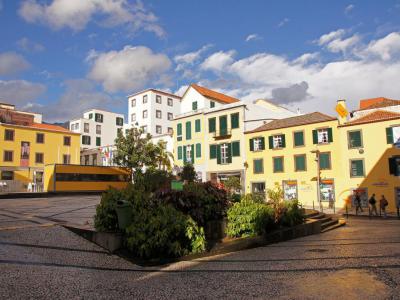
13) Praça do Colombo (Columbus Square)
Situated in Funchal, Columbus Square is also referred to as Yellow Square because of the dominant yellow hue of the buildings around it. The square came into being part of a regeneration scheme that concluded in 1993.
The square was named in honor of the renowned explorer Christopher Columbus, who, as per historical accounts, lived in a mansion that stood on the same site during his visit to Madeira in 1498. The mansion was constructed in 1494 and belonged to João Esmeraldo, a farmer and trader, whose name has been given to the street on the eastern side of the square - Rua do Esmeraldo. The mansions in the vicinity were razed to the ground in 1876.
For a while, warehouses and stores occupied the square, but after a severe fire in the 1970s and the deterioration of the block's buildings, the Funchal City Council decided to redevelop the area in 1984, demolishing the structures and erecting the square. In 1989, archaeological excavations were initiated at the site during construction works, and some of the recovered artifacts are currently exhibited at the Municipal Sugar Museum (Núcleo Museológico da Cidade do Açúcar), north of the square.
In line with the renovation project, an underground car park was built in 1990, the Sugar Museum was finished in 1992, and the square was completed in 1993.
Presently, Columbus Square is a charming and well-liked spot in Funchal, featuring outdoor seating areas, eateries, and stores, and acting as a venue for public gatherings. With its historic cobblestone streets, the square is surrounded by some of the city's oldest colonial buildings, providing visitors with a distinctive shopping and dining experience.
The square was named in honor of the renowned explorer Christopher Columbus, who, as per historical accounts, lived in a mansion that stood on the same site during his visit to Madeira in 1498. The mansion was constructed in 1494 and belonged to João Esmeraldo, a farmer and trader, whose name has been given to the street on the eastern side of the square - Rua do Esmeraldo. The mansions in the vicinity were razed to the ground in 1876.
For a while, warehouses and stores occupied the square, but after a severe fire in the 1970s and the deterioration of the block's buildings, the Funchal City Council decided to redevelop the area in 1984, demolishing the structures and erecting the square. In 1989, archaeological excavations were initiated at the site during construction works, and some of the recovered artifacts are currently exhibited at the Municipal Sugar Museum (Núcleo Museológico da Cidade do Açúcar), north of the square.
In line with the renovation project, an underground car park was built in 1990, the Sugar Museum was finished in 1992, and the square was completed in 1993.
Presently, Columbus Square is a charming and well-liked spot in Funchal, featuring outdoor seating areas, eateries, and stores, and acting as a venue for public gatherings. With its historic cobblestone streets, the square is surrounded by some of the city's oldest colonial buildings, providing visitors with a distinctive shopping and dining experience.
14) Rua de João Tavira (João Tavira Street)
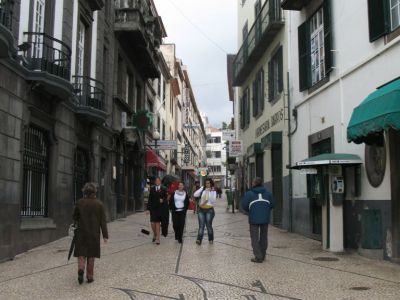
The bustling João Tavira Street (Rua de João Tavira), which runs parallel to a section of Blacksmiths Street (Rua dos Ferreiros), has been a notable landmark in Funchal since the late 16th century when it was included in the city plans. It was named after João Tavira, a notary who resided there during the 15th century.
This colonial-style street is a shopper's paradise, offering a variety of shopping and dining options. It boasts a vast selection of brands at great discounts, making it the perfect place for a shop-till-you-drop adventure. Although it was once a significant thoroughfare, the entire length of the street is now closed to automobile traffic.
One of the street's highlights is the Portuguese Pharmacy (Farmácia Portuguesa), one of the oldest pharmacies in Madeira. The pharmacy, which has a historical designation from the Municipality of Funchal, maintains its original furniture layout and ornate facade, attracting tourists.
This colonial-style street is a shopper's paradise, offering a variety of shopping and dining options. It boasts a vast selection of brands at great discounts, making it the perfect place for a shop-till-you-drop adventure. Although it was once a significant thoroughfare, the entire length of the street is now closed to automobile traffic.
One of the street's highlights is the Portuguese Pharmacy (Farmácia Portuguesa), one of the oldest pharmacies in Madeira. The pharmacy, which has a historical designation from the Municipality of Funchal, maintains its original furniture layout and ornate facade, attracting tourists.
15) Sé Catedral do Funchal (Funchal Cathedral) (must see)
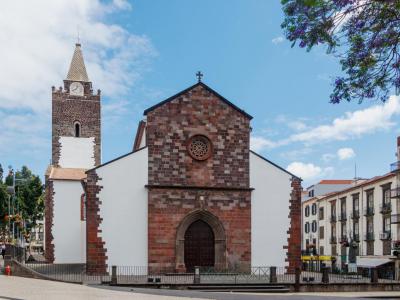
Dedicated in 1514, the Funchal Cathedral is one of the few buildings that have survived largely intact since the early colonization of Madeira. Its design follows the late Gothic style, with three naves supported by robust stone pillars. The structure was built using massive blocks of volcanic rock, giving the building its characteristic solidity. The facades are white, framed with dark stone corners, typical of Madeiran ecclesiastical architecture.
Inside, as you walk down the central nave toward the high altar, continue straight into the raised choir area. On both your right and left, you’ll see the 16th-century wooden choir stalls set against the walls, carved with prophets, disciples, and cherubs carrying fruit and wine. Another highlight is the large silver processional cross donated by King Manuel I kept in the Cathedral Treasury. To see it, turn to your right before leaving the church and follow the signs for the “Cathedral Treasury" or “Tesouro da Sé”, where the cross is displayed among the cathedral’s liturgical treasures.”
The cathedral itself was designed in the 1490s by architects Pêro Anes and Gil Enes. Construction progressed quickly: the main structure was completed by 1514, and the bell tower with its distinctive spire was finished by 1517. In its past, the cathedral had not fared well. The exterior volcanic tuff masonry suffered severe moisture damage, and the roof tiles leaked. Interior woodwork needed cleaning and repair. A comprehensive restoration began in 2000, and the cathedral was fully reopened to the public by 2014.
Outside, on the square directly in front of the cathedral’s main facade, stands a bronze statue of Pope John Paul II. As you exit the church, you’ll see it slightly to your left, raised on a stone pedestal overlooking the plaza. The statue commemorates the Pope’s visit to Madeira in 1991, when he celebrated Mass in Funchal and spoke about the island’s long Catholic heritage.
Inside, as you walk down the central nave toward the high altar, continue straight into the raised choir area. On both your right and left, you’ll see the 16th-century wooden choir stalls set against the walls, carved with prophets, disciples, and cherubs carrying fruit and wine. Another highlight is the large silver processional cross donated by King Manuel I kept in the Cathedral Treasury. To see it, turn to your right before leaving the church and follow the signs for the “Cathedral Treasury" or “Tesouro da Sé”, where the cross is displayed among the cathedral’s liturgical treasures.”
The cathedral itself was designed in the 1490s by architects Pêro Anes and Gil Enes. Construction progressed quickly: the main structure was completed by 1514, and the bell tower with its distinctive spire was finished by 1517. In its past, the cathedral had not fared well. The exterior volcanic tuff masonry suffered severe moisture damage, and the roof tiles leaked. Interior woodwork needed cleaning and repair. A comprehensive restoration began in 2000, and the cathedral was fully reopened to the public by 2014.
Outside, on the square directly in front of the cathedral’s main facade, stands a bronze statue of Pope John Paul II. As you exit the church, you’ll see it slightly to your left, raised on a stone pedestal overlooking the plaza. The statue commemorates the Pope’s visit to Madeira in 1991, when he celebrated Mass in Funchal and spoke about the island’s long Catholic heritage.
16) Fortaleza e Palácio de São Lourenço (Saint Lawrence Fortress)
Funchal's initial fortress was constructed between 1529 and 1540 in response to an incident in which a boat moored in the harbor of Funchal was plundered, following the entreaties of the local population. However, the fortification, which was finished in the latter half of the 16th century, was inadequate for all of the necessary fortification requirements, and as a result, it was easily overcome by French pirates in 1566.
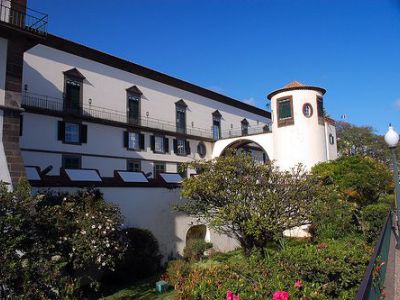
Numerous alterations, extensions, and improvements were made to the primitive original structure in the following years until the 19th century, resulting in Saint Lawrence Fortress and Palace (Fortaleza e Palácio de São Lourenço), which is still standing today, and is one of the finest examples of Portuguese fortification from the 16th and 17th centuries.
The Saint Lawrence Fortress initially served as a dwelling for many island captains and governors before gradually evolving into a national residential palace. It was designated a National Monument in August of 1943 and now functions as the residence of the Prime Minister of the Autonomous Region and the Military Command.
The fortress presently houses a permanent exhibit, which was created by the Military Command and opened in July of 1993 and pertains to the history and growth of the fortress. The National Palace within the fortress can be visited after scheduling an appointment with the office of the Prime Minister.
Numerous alterations, extensions, and improvements were made to the primitive original structure in the following years until the 19th century, resulting in Saint Lawrence Fortress and Palace (Fortaleza e Palácio de São Lourenço), which is still standing today, and is one of the finest examples of Portuguese fortification from the 16th and 17th centuries.
The Saint Lawrence Fortress initially served as a dwelling for many island captains and governors before gradually evolving into a national residential palace. It was designated a National Monument in August of 1943 and now functions as the residence of the Prime Minister of the Autonomous Region and the Military Command.
The fortress presently houses a permanent exhibit, which was created by the Military Command and opened in July of 1993 and pertains to the history and growth of the fortress. The National Palace within the fortress can be visited after scheduling an appointment with the office of the Prime Minister.
17) Café do Teatro
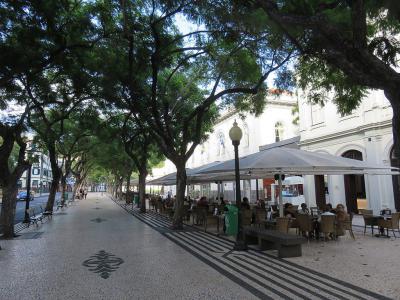
Café do Teatro is one of the most emblematic cafés in Madeira. Its name is due to its location right next to the classic Baltazar Dias Municipal Theater, built in 1888. The café is located near the center of Funchal, close to the Municipal Garden on Arriaga Avenue, and it hosts a restaurant and a nightclub beside the coffee shop, so it is very sought after by many different groups, from families having a calm meal to young friends looked for a fun night out.
Cafe do Teatro is an intimate event space that caters to live performances of all kinds. Providing a stage for upcoming local artists ensures that every performance staged here is a grand success. For this reason, it has equipped itself with the latest sound and lighting technology.
The cafe features minimalist contemporary decor for the bar and patio with a mezzanine. Madeira people flock there in the evening for a drink and a bite. Very popular with Madeira's high society but also and above all with tourists. The food served here also merits praise. During the day, quieter and more pleasant to make a fresh stop or snack (pizzas, meat, salads, pasta, or omelet) and observe the life of the capital from its cozy and large terrace.
Cafe do Teatro is an intimate event space that caters to live performances of all kinds. Providing a stage for upcoming local artists ensures that every performance staged here is a grand success. For this reason, it has equipped itself with the latest sound and lighting technology.
The cafe features minimalist contemporary decor for the bar and patio with a mezzanine. Madeira people flock there in the evening for a drink and a bite. Very popular with Madeira's high society but also and above all with tourists. The food served here also merits praise. During the day, quieter and more pleasant to make a fresh stop or snack (pizzas, meat, salads, pasta, or omelet) and observe the life of the capital from its cozy and large terrace.
