Custom Walk in Toronto, Canada by family_herbalist_ad8743 created on 2026-01-21
Guide Location: Canada » Toronto
Guide Type: Custom Walk
# of Sights: 9
Tour Duration: 3 Hour(s)
Travel Distance: 7.6 Km or 4.7 Miles
Share Key: 3GSD8
Guide Type: Custom Walk
# of Sights: 9
Tour Duration: 3 Hour(s)
Travel Distance: 7.6 Km or 4.7 Miles
Share Key: 3GSD8
How It Works
Please retrieve this walk in the GPSmyCity app. Once done, the app will guide you from one tour stop to the next as if you had a personal tour guide. If you created the walk on this website or come to the page via a link, please follow the instructions below to retrieve the walk in the app.
Retrieve This Walk in App
Step 1. Download the app "GPSmyCity: Walks in 1K+ Cities" on Apple App Store or Google Play Store.



Step 2. In the GPSmyCity app, download(or launch) the guide "Toronto Map and Walking Tours".
Step 3. Tap the menu button located at upper right corner of the "Walks" screen and select "Retrieve custom walk". Enter the share key: 3GSD8
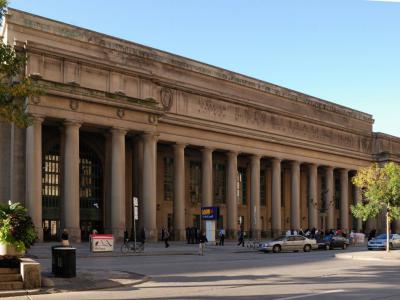
1) Union Station
Toronto's Union Station stands as a prominent railway station and intermodal transportation hub, recognized as a National Historic Site of Canada since 1975. Moreover, it holds the distinction of being a Heritage Railway Station since 1989.
Renowned as Canada's largest and most magnificent railway station, Union Station in Toronto was masterfully crafted by the Montreal architecture firm of Ross and Macdonald. Designed in the elegant Beaux-Arts style, this architectural gem emerged as a collaborative effort between the Grand Trunk Railway, the Canadian Pacific Railway, and notable architects Hugh Jones from CPR and John M. Lyle from Toronto. Recognizing its exceptional design, the Historic Sites and Monuments Board of Canada acclaimed it in 1975 for its "national architectural significance as one of the finest examples of Beaux-Arts railway station design in Canada."
The striking exterior of Union Station showcases a Front Street façade meticulously laid out in an ashlar pattern. Smooth beige Indiana and Queenston limestone were meticulously employed in its construction. Along the colonnaded loggia facing Front Street, visitors are greeted by 22 Roman Tuscan columns, equally spaced and crafted from Bedford limestone. Enhancing the grandeur, the recessed main entrance is adorned by two sets of four columns, with intricately carved relief wreaths adorning the entablature above them.
Renowned as Canada's largest and most magnificent railway station, Union Station in Toronto was masterfully crafted by the Montreal architecture firm of Ross and Macdonald. Designed in the elegant Beaux-Arts style, this architectural gem emerged as a collaborative effort between the Grand Trunk Railway, the Canadian Pacific Railway, and notable architects Hugh Jones from CPR and John M. Lyle from Toronto. Recognizing its exceptional design, the Historic Sites and Monuments Board of Canada acclaimed it in 1975 for its "national architectural significance as one of the finest examples of Beaux-Arts railway station design in Canada."
The striking exterior of Union Station showcases a Front Street façade meticulously laid out in an ashlar pattern. Smooth beige Indiana and Queenston limestone were meticulously employed in its construction. Along the colonnaded loggia facing Front Street, visitors are greeted by 22 Roman Tuscan columns, equally spaced and crafted from Bedford limestone. Enhancing the grandeur, the recessed main entrance is adorned by two sets of four columns, with intricately carved relief wreaths adorning the entablature above them.
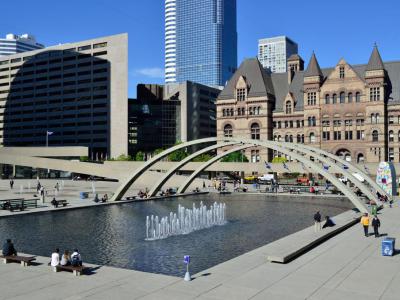
2) Nathan Phillips Square
Nathan Phillips Square stands as a bustling urban plaza, positioned as the welcoming space before Toronto City Hall, also known as New City Hall. Situated at the intersection of Queen Street West and Bay Street, this vibrant square derives its name from Nathan Phillips, who served as the mayor of Toronto between 1955 and 1962. The visionary architect Viljo Revell, in collaboration with landscape architect Richard Strong, crafted the design of this square, which was officially inaugurated in 1965.
In present times, Nathan Phillips Square remains a vibrant hub, hosting a diverse range of public events. It serves as a venue for captivating art exhibitions, thrilling concerts, inspiring rallies, and a bustling weekly farmers' market, among other ceremonies. Notable annual occasions include the lively New Year's Eve Party and the enchanting Cavalcade of Lights Festival, where the official Christmas tree is splendidly illuminated.
The square also welcomes the renowned Nuit Blanche art festival, which transforms the square into an artistic haven, extending its displays into the underground parking garage. Furthermore, during the winter months, the reflective pool undergoes a marvelous metamorphosis, transforming into an inviting ice rink for ice-skating enthusiasts.
Year after year, Nathan Phillips Square magnetizes an estimated 1.5 million visitors, allured by its charm and grandeur. Covering an expansive area of 4.85 hectares (12.0 acres), this city square proudly claims the title of Canada's largest, offering an expansive and captivating experience to all who venture within its borders.
In present times, Nathan Phillips Square remains a vibrant hub, hosting a diverse range of public events. It serves as a venue for captivating art exhibitions, thrilling concerts, inspiring rallies, and a bustling weekly farmers' market, among other ceremonies. Notable annual occasions include the lively New Year's Eve Party and the enchanting Cavalcade of Lights Festival, where the official Christmas tree is splendidly illuminated.
The square also welcomes the renowned Nuit Blanche art festival, which transforms the square into an artistic haven, extending its displays into the underground parking garage. Furthermore, during the winter months, the reflective pool undergoes a marvelous metamorphosis, transforming into an inviting ice rink for ice-skating enthusiasts.
Year after year, Nathan Phillips Square magnetizes an estimated 1.5 million visitors, allured by its charm and grandeur. Covering an expansive area of 4.85 hectares (12.0 acres), this city square proudly claims the title of Canada's largest, offering an expansive and captivating experience to all who venture within its borders.
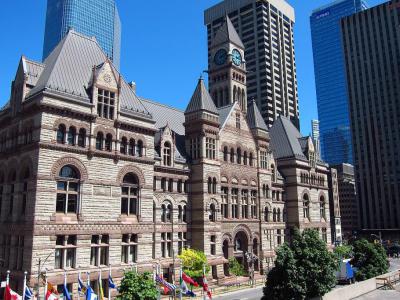
3) Old City Hall
Located at the intersection of Queen and Bay Streets in Downtown Toronto stands an impressive building with Romanesque-style architecture. This remarkable structure, known today as the Old City Hall, served as the Toronto City Council's home from 1899 to 1966, becoming the third city hall constructed for the flourishing city. Upon its completion, it ranked among the largest buildings in Toronto and stood as the largest civic edifice in North America.
Renowned architect Edward James Lennox led the creation of this masterpiece. Over a decade of construction, the majestic City Hall emerged as an iconic landmark. Its remarkable clock tower, standing at 103.6 meters (340 feet), became the city's crown jewel. The clock mechanism was crafted in Croydon, England. Inside the clock room, three bells were placed: two smaller ones that chimed every quarter hour, and a bourdon bell weighing 5,443 kilograms, which tolled every hour.
Matching the splendid exterior, the interior of the building exuded charm, adorned with intricate details. Noteworthy features include a grand staircase adorned with stained glass windows depicting Canadian history, various murals, statues, and other decorative elements.
Despite its grandeur, the Old City Hall proved inadequate for Toronto's expanding municipal government within a few decades of its construction. In the 1960s, plans were made to demolish the building and make way for a retail complex known as the Eaton Centre. However, thanks to public outcry, the Old City Hall was saved and repurposed as a courthouse. In 1984, it received the prestigious designation as a National Historic Site, preserving its historical significance for future generations.
Tip:
Make sure to visit the small "lake" close by, as many of the pictures from Toronto you might know are taken from this place while facing the "TORONTO" sign.
Renowned architect Edward James Lennox led the creation of this masterpiece. Over a decade of construction, the majestic City Hall emerged as an iconic landmark. Its remarkable clock tower, standing at 103.6 meters (340 feet), became the city's crown jewel. The clock mechanism was crafted in Croydon, England. Inside the clock room, three bells were placed: two smaller ones that chimed every quarter hour, and a bourdon bell weighing 5,443 kilograms, which tolled every hour.
Matching the splendid exterior, the interior of the building exuded charm, adorned with intricate details. Noteworthy features include a grand staircase adorned with stained glass windows depicting Canadian history, various murals, statues, and other decorative elements.
Despite its grandeur, the Old City Hall proved inadequate for Toronto's expanding municipal government within a few decades of its construction. In the 1960s, plans were made to demolish the building and make way for a retail complex known as the Eaton Centre. However, thanks to public outcry, the Old City Hall was saved and repurposed as a courthouse. In 1984, it received the prestigious designation as a National Historic Site, preserving its historical significance for future generations.
Tip:
Make sure to visit the small "lake" close by, as many of the pictures from Toronto you might know are taken from this place while facing the "TORONTO" sign.
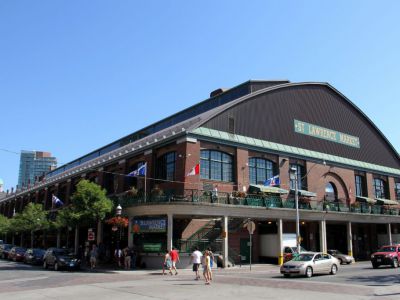
4) St. Lawrence Market (must see)
Established in 1803, Saint Lawrence Market is the nerve centre of Toronto's commercial activity. Located in the former industrial area (between Jarvis, Front, King, and Church streets), this is the city's largest and perhaps most famous market. The bulk of its crowd are locals doing regular grocery shopping or simply popping in for a cup of coffee or chit-chat with neighbors. Tourists are also seen here rather often, lured by the bustling atmosphere and tasty foods.
Undoubtedly, food is the main draw at Saint Lawrence. Here, you can find everything: from beef to kangaroo meat, plus hundreds of kinds of cheeses, gourmet dog treats, local wines, French baked goods, Greek olive oil, and even New Zealand honey. There is also plenty of prepared food, such as the famous peameal bacon sandwich, that you can eat right on site.
The South Market section houses daily sales of fresh produce, dairy, and meats. Freshly-baked goods are also available here all day, much as some non-food items. There is a number of artisan shops selling jewelry and other crafts. Also, the Market Gallery, on the second floor, has an area for cultural events.
The North Market section traditionally houses a Saturday farmer’s market (featuring producers from southern Ontario) and a Sunday antiques sale. Both ventures start at 5 o'clock in the morning and run until 5 o'clock in the evening.
From an architectural standpoint, Saint Lawrence is just as attractive. Its massive main brick building, with a cast-iron ceiling inspired by London’s Saint Pancras train station, was constructed in 1902. Part of the Old City Hall, which dates from 1845, was incorporated into the building, and you can still see part of the original jail on the lower level of the market.
Undoubtedly, food is the main draw at Saint Lawrence. Here, you can find everything: from beef to kangaroo meat, plus hundreds of kinds of cheeses, gourmet dog treats, local wines, French baked goods, Greek olive oil, and even New Zealand honey. There is also plenty of prepared food, such as the famous peameal bacon sandwich, that you can eat right on site.
The South Market section houses daily sales of fresh produce, dairy, and meats. Freshly-baked goods are also available here all day, much as some non-food items. There is a number of artisan shops selling jewelry and other crafts. Also, the Market Gallery, on the second floor, has an area for cultural events.
The North Market section traditionally houses a Saturday farmer’s market (featuring producers from southern Ontario) and a Sunday antiques sale. Both ventures start at 5 o'clock in the morning and run until 5 o'clock in the evening.
From an architectural standpoint, Saint Lawrence is just as attractive. Its massive main brick building, with a cast-iron ceiling inspired by London’s Saint Pancras train station, was constructed in 1902. Part of the Old City Hall, which dates from 1845, was incorporated into the building, and you can still see part of the original jail on the lower level of the market.
5) Stone Distillery
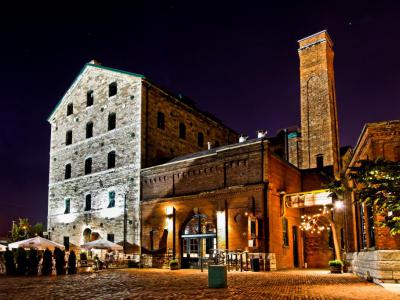
The Stone Distillery, located in the Distillery District complex of Gooderham & Worts Distillery, is a historic industrial structure dating back to 1859. It stands as the oldest and largest building in the complex.
Designed by David Roberts, Sr., this remarkable edifice was constructed between 1858 and 1861. The construction materials included limestone transported from nearby Kingston, as well as double-timber beams. The purpose of the building was to accommodate various functions such as a grist mill, powerhouse, mashing, distilling, and fermentation. The main building, spanning five stories, housed the grist mill, powerhouse, and distilling operations, while the one-story western extension was dedicated to fermentation.
The Stone Distillery commands attention in the Distillery District due to its massive size and distinctive materials. With dimensions of 300 by 80 feet (24 meters), it exemplifies the grandeur of Victorian industrial architecture while also incorporating elements reminiscent of the ancient Florentine style. Each floor in the main building is delineated by a layer of stone, while the first floor, featuring larger dimensions and square windows, grounds the structure firmly. The unadorned facade is adorned by a rhythmic arrangement of windows, separated by circular iron tie plates. The entire building harmonizes through a color scheme of warm grey limestone with dark green accents on the windows, doors, and other decorative elements.
Currently, the Stone Distillery is home to several restaurants, galleries, offices, and other amenities, offering a vibrant hub of activity within the Distillery District.
Designed by David Roberts, Sr., this remarkable edifice was constructed between 1858 and 1861. The construction materials included limestone transported from nearby Kingston, as well as double-timber beams. The purpose of the building was to accommodate various functions such as a grist mill, powerhouse, mashing, distilling, and fermentation. The main building, spanning five stories, housed the grist mill, powerhouse, and distilling operations, while the one-story western extension was dedicated to fermentation.
The Stone Distillery commands attention in the Distillery District due to its massive size and distinctive materials. With dimensions of 300 by 80 feet (24 meters), it exemplifies the grandeur of Victorian industrial architecture while also incorporating elements reminiscent of the ancient Florentine style. Each floor in the main building is delineated by a layer of stone, while the first floor, featuring larger dimensions and square windows, grounds the structure firmly. The unadorned facade is adorned by a rhythmic arrangement of windows, separated by circular iron tie plates. The entire building harmonizes through a color scheme of warm grey limestone with dark green accents on the windows, doors, and other decorative elements.
Currently, the Stone Distillery is home to several restaurants, galleries, offices, and other amenities, offering a vibrant hub of activity within the Distillery District.
6) Distillery Historic District (must see)
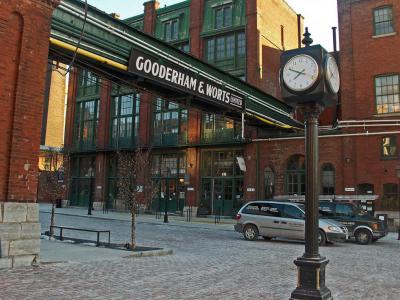
The Distillery District in Toronto is an enchanting area that combines history and entertainment. Situated east of Downtown Toronto, this district has a rich industrial past. It was once the largest industrial zone in Toronto but saw a decline in the distilling industry, leading to its transformation into a bustling shopping and entertainment destination. Spanning over 13 acres (53,000 square meters), the district boasts more than 40 beautifully preserved heritage buildings and 10 charming streets, making it the largest collection of Victorian-era industrial architecture in North America.
A distinguishing feature of the Distillery District is its traditional brick-paved streets and lanes, which are exclusively reserved for pedestrians and cyclists. Vehicle traffic is restricted to the streets and parking areas outside the district's historic center, ensuring a tranquil and pedestrian-friendly environment. Adding to its charm, the lanes are adorned with several captivating sculptures, with three located on Distillery Lane and the final one at the parking area towards the end of Trinity Street. One of the prominent landmarks in the area is the chimney stack atop the Boiler House complex.
Visitors to the Distillery District can find both informal and formal public spaces to relax, socialize, and enjoy the unique ambiance. Pedestrianized streets offer inviting chairs and tables where people can gather and unwind. Additionally, various coffee houses and restaurants feature formal patios, providing an ideal setting for a delightful dining experience. This well-designed district not only attracts pedestrian traffic but also encourages visitors to spend quality time in its inviting spaces.
Why You Should Visit:
The old buildings in combination with art stores & galleries, eateries, craft breweries, and occasional live performances make a stroll worthwhile if you have spare time.
Tip:
They run a Christmas market in the District and it's quite fun and well-decorated. The whole area is closed off with entrances and you can walk about looking, eating, drinking, and shopping all you like.
A distinguishing feature of the Distillery District is its traditional brick-paved streets and lanes, which are exclusively reserved for pedestrians and cyclists. Vehicle traffic is restricted to the streets and parking areas outside the district's historic center, ensuring a tranquil and pedestrian-friendly environment. Adding to its charm, the lanes are adorned with several captivating sculptures, with three located on Distillery Lane and the final one at the parking area towards the end of Trinity Street. One of the prominent landmarks in the area is the chimney stack atop the Boiler House complex.
Visitors to the Distillery District can find both informal and formal public spaces to relax, socialize, and enjoy the unique ambiance. Pedestrianized streets offer inviting chairs and tables where people can gather and unwind. Additionally, various coffee houses and restaurants feature formal patios, providing an ideal setting for a delightful dining experience. This well-designed district not only attracts pedestrian traffic but also encourages visitors to spend quality time in its inviting spaces.
Why You Should Visit:
The old buildings in combination with art stores & galleries, eateries, craft breweries, and occasional live performances make a stroll worthwhile if you have spare time.
Tip:
They run a Christmas market in the District and it's quite fun and well-decorated. The whole area is closed off with entrances and you can walk about looking, eating, drinking, and shopping all you like.
7) Harbourfront Center
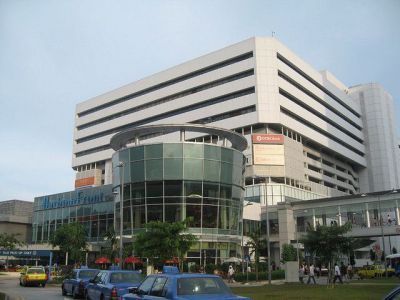
One feeling that can never arise when you are in Toronto, is boredom. The city has a buzzing urban life, which is filled with the glitz and glamor of the night life, combined with an architectural feast of buildings and monuments both old and new and the galore of restaurants, theaters, activity center and amusement parks. One just can’t get bored here!
If you are on a shortage of time however, there is a quick way of getting a whiff of what the city has in store for you at the sparkling waterfront of Toronto. With more than thousand events year round, the Harbourfront Center is the most happening place in terms of concerts, art shows, cultural fests and theater. If you admire the fine arts and enjoy an evening of fun, drama, emotions and you are in a mood to be entertained, the Habourfront Center is the place to be. Attracting artists and performers from all over the world, the Center plays an important role in bringing to its audiences some rich entertainment that satisfies the audience’s cultural, intellectual and creative cravings.
With such a dynamic schedule, make sure to keep yourself updated with the latest shows and events at the Center. And when you have had your fill and satiated your creative appetite, there are loads of eateries, restaurants and fine dining places for a bite or two.
If you are on a shortage of time however, there is a quick way of getting a whiff of what the city has in store for you at the sparkling waterfront of Toronto. With more than thousand events year round, the Harbourfront Center is the most happening place in terms of concerts, art shows, cultural fests and theater. If you admire the fine arts and enjoy an evening of fun, drama, emotions and you are in a mood to be entertained, the Habourfront Center is the place to be. Attracting artists and performers from all over the world, the Center plays an important role in bringing to its audiences some rich entertainment that satisfies the audience’s cultural, intellectual and creative cravings.
With such a dynamic schedule, make sure to keep yourself updated with the latest shows and events at the Center. And when you have had your fill and satiated your creative appetite, there are loads of eateries, restaurants and fine dining places for a bite or two.
8) Ripley's Aquarium of Canada (must see)
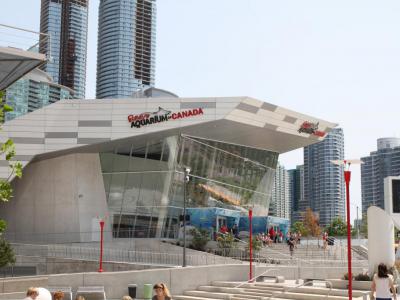
Ripley's Aquarium of Canada, located in Toronto, is a public aquatic facility owned and operated by Ripley Entertainment. With a total volume of 5.7 million liters (1.25 million gallons), this aquarium showcases diverse marine and freshwater habitats from across the globe. Inside its exhibits, visitors can marvel at over 16,000 extraordinary specimens, representing over 450 different species.
The architectural design of the building is truly remarkable, featuring a multi-faceted shell adorned with large aluminum panels. At the main entrance, the roof creates the illusion of the earth's crust peeling away, providing a captivating window into the mesmerizing underwater world. The structure incorporates colored surfaces that beautifully contrast with reflective aluminum soffits. Furthermore, special precautions were taken during the design process to ensure that the electrical systems of the building do not disturb the sharks residing within.
The aquarium presents a captivating array of marine and freshwater habitats from around the world, divided into ten distinct galleries. These galleries include Canadian Waters, Rainbow Reef, Dangerous Lagoon, Discovery Centre, The Gallery, Ray Bay, Swarm: Nature by Numbers, Planet Jellies, Life Support Systems, and the Shoreline Gallery. Altogether, the facility serves as a home to an impressive population of over 20,000 remarkable animals.
The architectural design of the building is truly remarkable, featuring a multi-faceted shell adorned with large aluminum panels. At the main entrance, the roof creates the illusion of the earth's crust peeling away, providing a captivating window into the mesmerizing underwater world. The structure incorporates colored surfaces that beautifully contrast with reflective aluminum soffits. Furthermore, special precautions were taken during the design process to ensure that the electrical systems of the building do not disturb the sharks residing within.
The aquarium presents a captivating array of marine and freshwater habitats from around the world, divided into ten distinct galleries. These galleries include Canadian Waters, Rainbow Reef, Dangerous Lagoon, Discovery Centre, The Gallery, Ray Bay, Swarm: Nature by Numbers, Planet Jellies, Life Support Systems, and the Shoreline Gallery. Altogether, the facility serves as a home to an impressive population of over 20,000 remarkable animals.
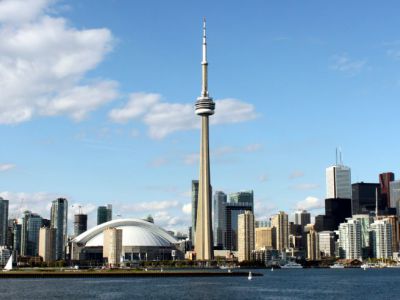
9) CN Tower (must see)
CN Tower is a concrete communications and observation tower situated in Toronto. Standing at an impressive height of 553.3 meters (1,815.3 feet), it was completed in 1976. The tower is prominently located in downtown Toronto, occupying the former Railway Lands. Its name, "CN," originates from Canadian National, the railway company responsible for its construction. When Canadian National decided to divest non-core freight railway assets before privatization in 1995, the tower was transferred to the Canada Lands Company, a federal Crown corporation responsible for the government's real estate portfolio.
For 32 years, from 1975 to 2007, the CN Tower held the distinction of being the world's tallest free-standing structure. It was surpassed by the Burj Khalifa and later the Canton Tower in 2009, relinquishing its title as the world's tallest tower. Nonetheless, it remains the tallest free-standing structure on land in the Western Hemisphere and currently ranks as the tenth-tallest free-standing structure globally. In 1995, the CN Tower was honored as one of the modern Seven Wonders of the World by the American Society of Civil Engineers. Additionally, it is a member of the World Federation of Great Towers.
The CN Tower has become an iconic symbol of Toronto's skyline, drawing over two million international visitors each year. Within its remarkable structure, visitors can explore various observation decks, dine at a revolving restaurant situated approximately 350 meters (1,150 feet) above the ground, and enjoy an entertainment complex.
Why You Should Visit:
Simply put one of the best views in North America. The city is so incredibly planned and laid out and you can truly see this from the top of the CN Tower.
Tip:
You can pay for a time slot to avoid a long wait and some extra to go to the upper levels where it's a bit quieter.
The food at the tower can be quite pricey, so plan accordingly.
For 32 years, from 1975 to 2007, the CN Tower held the distinction of being the world's tallest free-standing structure. It was surpassed by the Burj Khalifa and later the Canton Tower in 2009, relinquishing its title as the world's tallest tower. Nonetheless, it remains the tallest free-standing structure on land in the Western Hemisphere and currently ranks as the tenth-tallest free-standing structure globally. In 1995, the CN Tower was honored as one of the modern Seven Wonders of the World by the American Society of Civil Engineers. Additionally, it is a member of the World Federation of Great Towers.
The CN Tower has become an iconic symbol of Toronto's skyline, drawing over two million international visitors each year. Within its remarkable structure, visitors can explore various observation decks, dine at a revolving restaurant situated approximately 350 meters (1,150 feet) above the ground, and enjoy an entertainment complex.
Why You Should Visit:
Simply put one of the best views in North America. The city is so incredibly planned and laid out and you can truly see this from the top of the CN Tower.
Tip:
You can pay for a time slot to avoid a long wait and some extra to go to the upper levels where it's a bit quieter.
The food at the tower can be quite pricey, so plan accordingly.
