Custom Walk in Liverpool, England by mcomer60_972fd3 created on 2026-04-16
Guide Location: England » Liverpool
Guide Type: Custom Walk
# of Sights: 9
Tour Duration: 2 Hour(s)
Travel Distance: 3.2 Km or 2 Miles
Share Key: VZ8RW
Guide Type: Custom Walk
# of Sights: 9
Tour Duration: 2 Hour(s)
Travel Distance: 3.2 Km or 2 Miles
Share Key: VZ8RW
How It Works
Please retrieve this walk in the GPSmyCity app. Once done, the app will guide you from one tour stop to the next as if you had a personal tour guide. If you created the walk on this website or come to the page via a link, please follow the instructions below to retrieve the walk in the app.
Retrieve This Walk in App
Step 1. Download the app "GPSmyCity: Walks in 1K+ Cities" on Apple App Store or Google Play Store.



Step 2. In the GPSmyCity app, download(or launch) the guide "Liverpool Map and Walking Tours".
Step 3. Tap the menu button located at upper right corner of the "Walks" screen and select "Retrieve custom walk". Enter the share key: VZ8RW
1) Beatles Statues (must see)
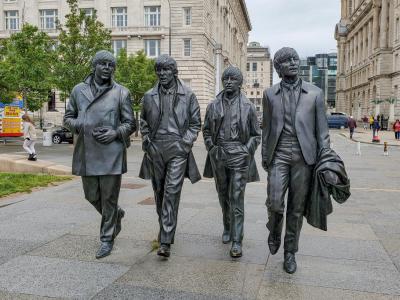
The Beatles Statue is an iconic monument located at Liverpool's Pier Head, near the intersection of Brunswick Street and Canada Boulevard. Designed by sculptor Andy Edwards, this striking bronze tribute to Paul McCartney, George Harrison, Ringo Starr, and John Lennon was unveiled on December 4, 2015. The ceremony, coinciding with the 50th anniversary of the Beatles' last Liverpool concert, was attended by Ann O'Byrne, the city’s deputy mayor, and Julia Baird, John Lennon's sister. The statue was generously donated to the city by The Cavern Club, the legendary music venue closely linked to the band’s early days.
The monument depicts the four Beatles walking together in a larger-than-life composition based on a 1963 photograph taken in Liverpool. Each figure features personal and symbolic details that celebrate the individuality of the band members. McCartney is seen holding a camera close to his chest, a nod to his late wife Linda McCartney, a photographer. Harrison's belt bears a Sanskrit inscription, symbolizing his spiritual interests. Starr’s right shoe has a card with the postal code "L8," referencing his childhood neighborhood in the Welsh Streets. He is positioned slightly behind the others, reflecting his placement as the drummer on stage. Lennon carries two acorns in his hand, referencing his and Yoko Ono’s 1968 acorn-planting gesture for world peace.
Standing prominently in front of the Liver Building, the statue has become a favorite photo stop for visitors and Beatles fans worldwide. Each small, thoughtful detail in the sculpture enriches the narrative of the Beatles' legacy, making it one of Liverpool’s most cherished attractions.
The monument depicts the four Beatles walking together in a larger-than-life composition based on a 1963 photograph taken in Liverpool. Each figure features personal and symbolic details that celebrate the individuality of the band members. McCartney is seen holding a camera close to his chest, a nod to his late wife Linda McCartney, a photographer. Harrison's belt bears a Sanskrit inscription, symbolizing his spiritual interests. Starr’s right shoe has a card with the postal code "L8," referencing his childhood neighborhood in the Welsh Streets. He is positioned slightly behind the others, reflecting his placement as the drummer on stage. Lennon carries two acorns in his hand, referencing his and Yoko Ono’s 1968 acorn-planting gesture for world peace.
Standing prominently in front of the Liver Building, the statue has become a favorite photo stop for visitors and Beatles fans worldwide. Each small, thoughtful detail in the sculpture enriches the narrative of the Beatles' legacy, making it one of Liverpool’s most cherished attractions.
2) Royal Insurance Building
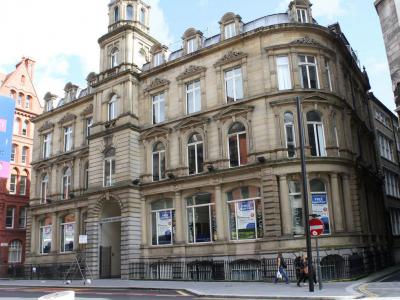
The Royal Insurance Building can be found on North John Street, in the historic heart of Liverpool’s Victorian city centre. As the name suggests, it was constructed as a national head office for the city’s successful Royal Insurance Company. The company moved out in 1980, and sadly the building is still disused. Having deteriorated since its closure, it was placed on English Heritage’s Buildings at Risk Register. There is hope for the grand old building yet, however, as plans are afoot to convert it into a hotel.
The Royal Insurance Building took seven years to complete, and opened in 1903. The architect, James Doyle, won an open contest and was assisted by famous Scottish architect Norman Shaw, who chose the winning design. Fashioned from Portland stone supported by a steel frame – and one of the earliest buildings in the city to use this technique – the building stands out from the subtly European influenced architecture that surrounds it.
Broadly described as Neo-Baroque, the design combines several different styles, including Greek Doric colonnades, sash windows and quirky domed towers at the top of the building. A Grade II listed building that won high praise from observers upon its completion, the Royal Insurance building replaced an earlier headquarters, which still stands on nearby Queen Avenue.
The Royal Insurance Building took seven years to complete, and opened in 1903. The architect, James Doyle, won an open contest and was assisted by famous Scottish architect Norman Shaw, who chose the winning design. Fashioned from Portland stone supported by a steel frame – and one of the earliest buildings in the city to use this technique – the building stands out from the subtly European influenced architecture that surrounds it.
Broadly described as Neo-Baroque, the design combines several different styles, including Greek Doric colonnades, sash windows and quirky domed towers at the top of the building. A Grade II listed building that won high praise from observers upon its completion, the Royal Insurance building replaced an earlier headquarters, which still stands on nearby Queen Avenue.
3) Municipal Building
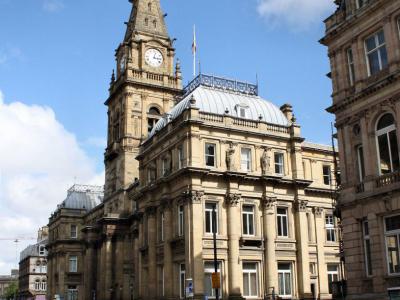
The Municipal Buildings are located on Dale Street in Liverpool’s City Centre. Dale Street forms part of the city’s commercial conservation area. This region of the city, midway between Lime Street station and Albert Dock, comprises several streets of well preserved Victorian architecture, on the site of the medieval centre of Liverpool. The Municipal Buildings is the main publicly accessible council building in the city, and has served this purpose since it opened in 1866.
In the early Victorian era, as Liverpool, like many industrial port towns, grew rapidly and needed a new building to house the city’s expanding council staff. The Municipal Buildings were started by John Weightman in 1860, and eventually completed six years later under the guidance of architect E.R. Robson. The building carries hallmarks of French and Italian architectural influence, but has a tall bell tower typical of the traditional English town hall.
The building’s balcony houses sixteen sandstone figures representing the city’s success in science, industry and the arts. The bell tower has five bells, which still chime regularly, and is topped with an unusual pyramid shaped spire. The building is still open to the public, and is open during usual office hours, although tours are unavailable.
In the early Victorian era, as Liverpool, like many industrial port towns, grew rapidly and needed a new building to house the city’s expanding council staff. The Municipal Buildings were started by John Weightman in 1860, and eventually completed six years later under the guidance of architect E.R. Robson. The building carries hallmarks of French and Italian architectural influence, but has a tall bell tower typical of the traditional English town hall.
The building’s balcony houses sixteen sandstone figures representing the city’s success in science, industry and the arts. The bell tower has five bells, which still chime regularly, and is topped with an unusual pyramid shaped spire. The building is still open to the public, and is open during usual office hours, although tours are unavailable.
4) World Museum (must see)
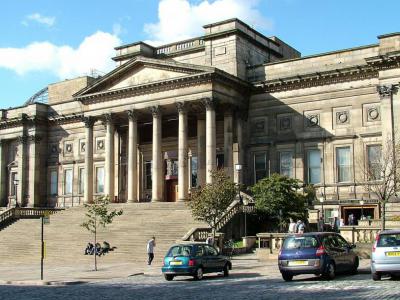
Established in 1851, Liverpool’s World Museum is a treasure trove of global knowledge and history, housed in an imposing Neoclassical building on William Brown Street. Originally founded as the Derby Museum to showcase the 13th Earl of Derby's natural history collection, the museum has evolved significantly over the years. Today, it is part of the National Museums Liverpool, offering free entry and a range of exhibits spanning archaeology, ethnology, natural sciences, and physical sciences.
The museum's diverse offerings include a planetarium-the first outside London, opened in 1970-featuring shows on space science and exploration, attracting around 90,000 visitors annually. Another major draw is the Natural World area, which hosts live insect colonies, interactive displays in the Clore Natural History Centre, and exhibits on zoology and botany.
A key attraction is the museum's Egyptology collection, boasting well-preserved mummies and ancient artifacts. The World Cultures gallery showcases treasures such as a full set of ancient Samurai armor and objects from Asia and beyond. British archaeology enthusiasts can marvel at items like the Anglo-Saxon Kingston brooch and Liudhard medalet, part of the Canterbury-St Martin's hoard.
The physical sciences collection is notable for its specialized instruments, including artifacts from CERN and early planetary calculators. Visitors can also explore the museum's meteorite from Mars, which landed in Nigeria in the 1960s, underscoring its interplanetary reach.
Initially sharing space with a library on Duke Street, the museum quickly outgrew its premises due to its immense popularity. A purpose-built structure was erected in 1860 on land donated by Sir William Brown. Over the decades, the museum expanded, survived significant wartime damage during the Blitz, and underwent a refurbishment in 2005. This transformation introduced a central atrium, new galleries, and increased display spaces, earning it the name World Museum to reflect its global focus.
From the live creepy crawlies in the Bug House to the cutting-edge planetarium and the award-winning interactive history centers, the museum offers something for all ages. Whether exploring ancient treasures, marveling at meteorites, or delving into the mysteries of the universe, the World Museum remains a must-visit destination that captures Liverpool’s vibrant spirit and global connections.
Why You Should Visit:
Floors and floors of things to see; it's a mix of exhibits so there should be something to interest everyone.
You could easily spend all day here if you bought your picnic (the cafe is to be avoided) and went to the planetarium.
Tip:
If you're on a budget and need to take kids out and keep them entertained, this is the place to take them!
Just make sure you book well in advance – online booking is very easy and you can just show tickets on the phone.
Also, consider combining your visit with a trip to the Walker Art Gallery (a 2-minute walk away) and discover a diverse range of world-class art.
The museum's diverse offerings include a planetarium-the first outside London, opened in 1970-featuring shows on space science and exploration, attracting around 90,000 visitors annually. Another major draw is the Natural World area, which hosts live insect colonies, interactive displays in the Clore Natural History Centre, and exhibits on zoology and botany.
A key attraction is the museum's Egyptology collection, boasting well-preserved mummies and ancient artifacts. The World Cultures gallery showcases treasures such as a full set of ancient Samurai armor and objects from Asia and beyond. British archaeology enthusiasts can marvel at items like the Anglo-Saxon Kingston brooch and Liudhard medalet, part of the Canterbury-St Martin's hoard.
The physical sciences collection is notable for its specialized instruments, including artifacts from CERN and early planetary calculators. Visitors can also explore the museum's meteorite from Mars, which landed in Nigeria in the 1960s, underscoring its interplanetary reach.
Initially sharing space with a library on Duke Street, the museum quickly outgrew its premises due to its immense popularity. A purpose-built structure was erected in 1860 on land donated by Sir William Brown. Over the decades, the museum expanded, survived significant wartime damage during the Blitz, and underwent a refurbishment in 2005. This transformation introduced a central atrium, new galleries, and increased display spaces, earning it the name World Museum to reflect its global focus.
From the live creepy crawlies in the Bug House to the cutting-edge planetarium and the award-winning interactive history centers, the museum offers something for all ages. Whether exploring ancient treasures, marveling at meteorites, or delving into the mysteries of the universe, the World Museum remains a must-visit destination that captures Liverpool’s vibrant spirit and global connections.
Why You Should Visit:
Floors and floors of things to see; it's a mix of exhibits so there should be something to interest everyone.
You could easily spend all day here if you bought your picnic (the cafe is to be avoided) and went to the planetarium.
Tip:
If you're on a budget and need to take kids out and keep them entertained, this is the place to take them!
Just make sure you book well in advance – online booking is very easy and you can just show tickets on the phone.
Also, consider combining your visit with a trip to the Walker Art Gallery (a 2-minute walk away) and discover a diverse range of world-class art.
5) Walker Art Gallery
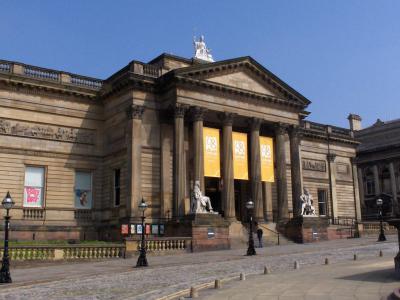
The Walker Art Gallery, located in Liverpool, boasts one of the largest art collections in England outside London. As part of the National Museums Liverpool group, it has been a cultural cornerstone since its establishment in 1877. The gallery is housed in an impressive neo-classical building on William Brown Street, surrounded by cultural landmarks such as the William Brown Library, World Museum Liverpool, and Saint George’s Hall.
The Walker Art Gallery began in 1819 with 37 paintings from William Roscoe's collection, saved after his financial downfall. Over time, Liverpool Town Council expanded the collection with works from the Liverpool Academy and Society for the Fine Arts. Named after philanthropist Sir Andrew Barclay Walker, it opened on 6 September 1877, designed by Cornelius Sherlock and H.H. Vale. Expanded in 1884 and 1933, it was refurbished in 2002. During WWII, the building served the Ministry of Food, with its collection safely dispersed. It reopened in 1951, integrating key works and post-war additions.
The Walker Art Gallery showcases artwork spanning centuries, including Italian and Netherlandish pieces (1300–1550) by Pittoni and Rembrandt, European art (1550–1900) by Poussin and Degas, and British Victorian and Pre-Raphaelite works like Rossetti's Dante’s Dream. Modern highlights feature Freud, Hockney, Gilbert, and George, alongside sculptures such as Degas’ La Masseuse. Unique pieces include Stuart Sutcliffe’s only painting on display in Liverpool and Banksy’s provocative Cardinal Sin, a commentary on Church scandals.
In 1986, the Walker Art Gallery achieved national status as part of the National Museums and Galleries on Merseyside. Its proximity to Tate Liverpool, located at the Albert Dock, makes it a must-visit for art enthusiasts exploring the city’s vibrant cultural scene.
Why You Should Visit:
To enjoy a really good selection of free exhibits that are easy to navigate, as well as additional exhibits you can pay for.
Even though the presentation is somewhat dated, the depth, variety, and quality of the art more than makeup for it.
The café is good value and situated in the rear of the foyer, therefore convenient and with plenty of atmosphere.
Tip:
There are usefully-sized lockers on the ground floor to the left of the café – pay £1 coin for a token at the gallery entrance.
The Walker Art Gallery began in 1819 with 37 paintings from William Roscoe's collection, saved after his financial downfall. Over time, Liverpool Town Council expanded the collection with works from the Liverpool Academy and Society for the Fine Arts. Named after philanthropist Sir Andrew Barclay Walker, it opened on 6 September 1877, designed by Cornelius Sherlock and H.H. Vale. Expanded in 1884 and 1933, it was refurbished in 2002. During WWII, the building served the Ministry of Food, with its collection safely dispersed. It reopened in 1951, integrating key works and post-war additions.
The Walker Art Gallery showcases artwork spanning centuries, including Italian and Netherlandish pieces (1300–1550) by Pittoni and Rembrandt, European art (1550–1900) by Poussin and Degas, and British Victorian and Pre-Raphaelite works like Rossetti's Dante’s Dream. Modern highlights feature Freud, Hockney, Gilbert, and George, alongside sculptures such as Degas’ La Masseuse. Unique pieces include Stuart Sutcliffe’s only painting on display in Liverpool and Banksy’s provocative Cardinal Sin, a commentary on Church scandals.
In 1986, the Walker Art Gallery achieved national status as part of the National Museums and Galleries on Merseyside. Its proximity to Tate Liverpool, located at the Albert Dock, makes it a must-visit for art enthusiasts exploring the city’s vibrant cultural scene.
Why You Should Visit:
To enjoy a really good selection of free exhibits that are easy to navigate, as well as additional exhibits you can pay for.
Even though the presentation is somewhat dated, the depth, variety, and quality of the art more than makeup for it.
The café is good value and situated in the rear of the foyer, therefore convenient and with plenty of atmosphere.
Tip:
There are usefully-sized lockers on the ground floor to the left of the café – pay £1 coin for a token at the gallery entrance.
6) St. George's Hall (must see)
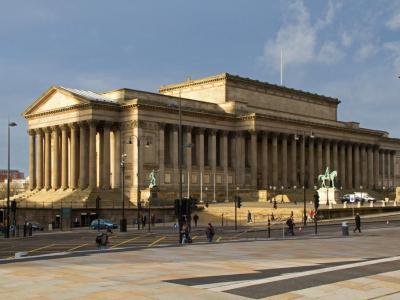
Saint George's Hall is a masterpiece of neoclassical architecture and stands proudly in the heart of Liverpool. Widely regarded as one of the finest examples of neo-Grecian design worldwide, this Grade I listed building showcases a majestic Greek-columned façade that commands attention. The hall serves as a hub for cultural and social events, including live music performances, and remains open for visitors free of charge.
The main entrance, located at the center of the east façade, is accessible via an elegant flight of steps. A portico featuring 16 Corinthian columns dominates the front, flanked by a series of square pillars adorned with reliefs, which were added between 1882 and 1901. Inside, the roof’s tunnel vault is supported by polished red granite columns and decorated with intricate plasterwork depicting allegorical figures representing Virtues, Science, and Arts. Statues placed in wall niches further accentuate the grandeur of the interior.
One of the hall's most striking features is its exquisite floor, composed of 30,000 Minton tiles. These tiles, often covered to preserve their beauty, occasionally make public appearances, much to the delight of visitors. Other notable elements include bronze doors with openwork panels featuring the letters "SPQL" (a nod to ancient Rome's "Senate and People"), an impressive organ positioned at the north end, and a round arch at the south end that leads directly into the Crown Court.
Saint George's Hall also holds a fascinating claim to innovation: it houses the world’s first Victorian-era air-conditioning system. Combining artistic excellence with engineering ingenuity, the hall remains a testament to Liverpool’s rich cultural and architectural heritage. Whether marveling at its neoclassical details or enjoying a musical performance, visitors will find their time at Saint George's Hall truly memorable.
Why You Should Visit:
Wonderful architecture from a time when bureaucracy knew that, if they were going to keep you waiting half an hour to fill in a form, then it may as well be somewhere nice!
Tip:
Try and find out when the original tile flooring is on show, as that is a perfect time to go (doesn't happen very often).
Don't miss the coffee shop on the ground floor – superb value and quite reasonably priced and atmospheric.
The main entrance, located at the center of the east façade, is accessible via an elegant flight of steps. A portico featuring 16 Corinthian columns dominates the front, flanked by a series of square pillars adorned with reliefs, which were added between 1882 and 1901. Inside, the roof’s tunnel vault is supported by polished red granite columns and decorated with intricate plasterwork depicting allegorical figures representing Virtues, Science, and Arts. Statues placed in wall niches further accentuate the grandeur of the interior.
One of the hall's most striking features is its exquisite floor, composed of 30,000 Minton tiles. These tiles, often covered to preserve their beauty, occasionally make public appearances, much to the delight of visitors. Other notable elements include bronze doors with openwork panels featuring the letters "SPQL" (a nod to ancient Rome's "Senate and People"), an impressive organ positioned at the north end, and a round arch at the south end that leads directly into the Crown Court.
Saint George's Hall also holds a fascinating claim to innovation: it houses the world’s first Victorian-era air-conditioning system. Combining artistic excellence with engineering ingenuity, the hall remains a testament to Liverpool’s rich cultural and architectural heritage. Whether marveling at its neoclassical details or enjoying a musical performance, visitors will find their time at Saint George's Hall truly memorable.
Why You Should Visit:
Wonderful architecture from a time when bureaucracy knew that, if they were going to keep you waiting half an hour to fill in a form, then it may as well be somewhere nice!
Tip:
Try and find out when the original tile flooring is on show, as that is a perfect time to go (doesn't happen very often).
Don't miss the coffee shop on the ground floor – superb value and quite reasonably priced and atmospheric.
7) Mathew Street (must see)
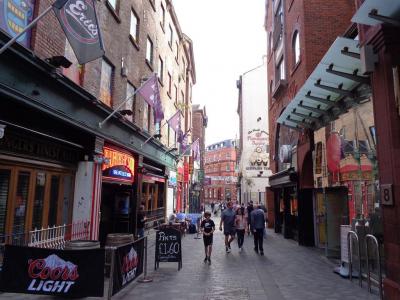
Mathew Street is an unassuming side road in Liverpool city centre that houses a world famous musical attraction – the Cavern Club, the city’s most famous music venue and a place forever associated with the Beatles. The Liverpudlian four piece, considered by many to be the world’s greatest ever band, played at the venue several times in their early years. As a result, the street is visited by thousands of tourists each year, and is the centre of the Cavern Quarter, a bohemian area of arcades filled with must see attractions for Beatles fans.
In addition to the Cavern Club, which is still a hugely popular night-time venue, the street hosts a music festival each August. The largest free festival in Europe, the Mathew Street Festival plays host to dozens of tribute bands – with a Beatles act usually headlining. The street is also notable for the Grapes pub, often frequented by the Fab Four, and an unusual statue by Arthur Dooley, depicting the four band members in a religious pose. The statue, built into the wall on Mathew Street, bears the inscription ‘Four Lads who Shook the World’. The street was also believed to be visited by renowned philosopher Carl Jung; a plaster statue of the great Swiss thinker also stands on the street.
In addition to the Cavern Club, which is still a hugely popular night-time venue, the street hosts a music festival each August. The largest free festival in Europe, the Mathew Street Festival plays host to dozens of tribute bands – with a Beatles act usually headlining. The street is also notable for the Grapes pub, often frequented by the Fab Four, and an unusual statue by Arthur Dooley, depicting the four band members in a religious pose. The statue, built into the wall on Mathew Street, bears the inscription ‘Four Lads who Shook the World’. The street was also believed to be visited by renowned philosopher Carl Jung; a plaster statue of the great Swiss thinker also stands on the street.

8) Victoria Monument
The Victoria Monument stands in the centre of Derby Square, a secluded section of the docklands area, close to Saint James rail station. Built in 1906 as a memorial to Queen Victoria, it contains her statue at its centre, surrounded by pillars and topped with a domed roof. Around the monument, there are four groups of statues representing areas where Liverpool and the UK as a whole have excelled – Agriculture, Commerce, Industry and Education. The four dark figures on the domed roof represent Justice, Knowledge, Medicine and Sciences. At the monument’s summit stands a cherubic statue, representing Victory, and bringing the height of this imposing creation to 18 feet in total.
The monument was designed by C.J. Allen, an artist and architect with a fondness for mystical and allegorical statues. It has stood in Derby Square for over a century, although the landscape around it has changed remarkably in that time. Much of the square and nearby Castle Street were destroyed by German bombs in World War 2, yet the monument somehow survived virtually intact. Iconic photographs show the statue of Victory atop the monument, surveying the rubble. The statue, and the monument as a whole, became a symbol for the city’s post war recovery as a result.
The monument was designed by C.J. Allen, an artist and architect with a fondness for mystical and allegorical statues. It has stood in Derby Square for over a century, although the landscape around it has changed remarkably in that time. Much of the square and nearby Castle Street were destroyed by German bombs in World War 2, yet the monument somehow survived virtually intact. Iconic photographs show the statue of Victory atop the monument, surveying the rubble. The statue, and the monument as a whole, became a symbol for the city’s post war recovery as a result.
9) Museum of Liverpool (must see)
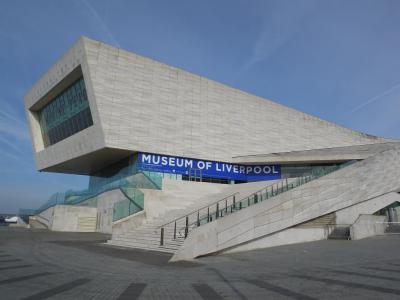
The Museum of Liverpool, the latest addition to the National Museums Liverpool group, opened its doors in 2011 as a modern replacement for the former Museum of Liverpool Life. Strategically located on Mann Island at the iconic Pier Head, this purpose-built venue was designed to narrate the story of Liverpool, its people, and its global significance.
The museum’s exhibits draw from the vast collections of National Museums Liverpool, showcasing an array of items that span costume and decorative arts, social and urban history, entomology, botany, archaeology, oral testimonies, and photographic archives. The displays are thoughtfully divided into four core themes: The Great Port, Global City, People’s Republic, and Wondrous Place.
In addition to these main galleries, the museum offers unique spaces such as Little Liverpool, a hands-on gallery tailored for children under six; History Detectives, an interactive resource center for history and archaeology enthusiasts; City Soldiers Gallery, dedicated to the story of the King’s Regiment; and a 180-seat theatre hosting community events and multimedia performances.
The Museum of Liverpool also serves as a dynamic cultural hub. Notable among its exhibitions was the Liverpool Love display, held from September to November 2012. This event brought together the creative expressions of prominent figures like Yoko Ono, Sir Peter Blake, and Noel Fielding to celebrate Liverpool's vibrant identity.
Whether exploring its rich urban history or engaging with its interactive features, the Museum of Liverpool offers a comprehensive and engaging tribute to the city’s enduring legacy.
Why You Should Visit:
Not only an outstanding piece of modernist design but also an amazing waterfront location, not to mention a surprising amount to learn about Liverpool's history.
Plus – helpful and friendly staff, a gift shop, clean toilets on every floor, a large affordable café, and even a separate room to use for indoor picnics when the weather is poor.
Tip:
Use the lockers on the ground floor to save you from having to carry any bags, then get the lift to the top floor so you can work your way down and not have to keep climbing stairs.
On the top floor, get into the exhibition room and walk straight till the end – there's a glass wall to enjoy the view of River Mersey and the Liver Building. The restrooms there have less of a queue, too.
The museum’s exhibits draw from the vast collections of National Museums Liverpool, showcasing an array of items that span costume and decorative arts, social and urban history, entomology, botany, archaeology, oral testimonies, and photographic archives. The displays are thoughtfully divided into four core themes: The Great Port, Global City, People’s Republic, and Wondrous Place.
In addition to these main galleries, the museum offers unique spaces such as Little Liverpool, a hands-on gallery tailored for children under six; History Detectives, an interactive resource center for history and archaeology enthusiasts; City Soldiers Gallery, dedicated to the story of the King’s Regiment; and a 180-seat theatre hosting community events and multimedia performances.
The Museum of Liverpool also serves as a dynamic cultural hub. Notable among its exhibitions was the Liverpool Love display, held from September to November 2012. This event brought together the creative expressions of prominent figures like Yoko Ono, Sir Peter Blake, and Noel Fielding to celebrate Liverpool's vibrant identity.
Whether exploring its rich urban history or engaging with its interactive features, the Museum of Liverpool offers a comprehensive and engaging tribute to the city’s enduring legacy.
Why You Should Visit:
Not only an outstanding piece of modernist design but also an amazing waterfront location, not to mention a surprising amount to learn about Liverpool's history.
Plus – helpful and friendly staff, a gift shop, clean toilets on every floor, a large affordable café, and even a separate room to use for indoor picnics when the weather is poor.
Tip:
Use the lockers on the ground floor to save you from having to carry any bags, then get the lift to the top floor so you can work your way down and not have to keep climbing stairs.
On the top floor, get into the exhibition room and walk straight till the end – there's a glass wall to enjoy the view of River Mersey and the Liver Building. The restrooms there have less of a queue, too.
