Custom Walk in Rome, Italy by junkmailjld_4ef572 created on 2026-02-01
Guide Location: Italy » Rome
Guide Type: Custom Walk
# of Sights: 16
Tour Duration: 6 Hour(s)
Travel Distance: 13.2 Km or 8.2 Miles
Share Key: SZKE3
Guide Type: Custom Walk
# of Sights: 16
Tour Duration: 6 Hour(s)
Travel Distance: 13.2 Km or 8.2 Miles
Share Key: SZKE3
How It Works
Please retrieve this walk in the GPSmyCity app. Once done, the app will guide you from one tour stop to the next as if you had a personal tour guide. If you created the walk on this website or come to the page via a link, please follow the instructions below to retrieve the walk in the app.
Retrieve This Walk in App
Step 1. Download the app "GPSmyCity: Walks in 1K+ Cities" on Apple App Store or Google Play Store.



Step 2. In the GPSmyCity app, download(or launch) the guide "Rome Map and Walking Tours".
Step 3. Tap the menu button located at upper right corner of the "Walks" screen and select "Retrieve custom walk". Enter the share key: SZKE3
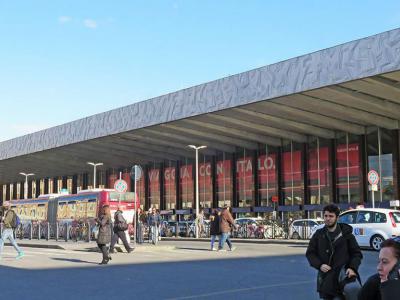
1) Roma Termini (Rome's main railway station)
Roma Termini, also known as Stazione Termini, stands as the central hub of Rome's railway system. Located in the district bearing the same name, which is derived from the ancient Baths of Diocletian ("thermae" in Latin), the station boasts a prime position just across the street from this historic site.
With an impressive 29 platforms and an extensive network of daily services reaching destinations throughout Italy and beyond, Roma Termini is one of the largest railway stations in Europe. It provides travelers with numerous amenities and seamless connections, including ItaliaRail's exclusive VIP oasis, the ItaliaPass Lounge situated at the beginning of Track 25.
As you enter the station from Piazza dei Cinquecento, you'll find a bustling entrance hall adorned with restaurants, a spacious ticket office, travel agencies, currency exchange booths, as well as a vibrant cluster of shops that shops remain open until 10pm, even on Sundays, making it a convenient "shop before you hop" destination. From popular chains like Mango, Moleskine, and Sephora to bookstores offering a wide selection of English-language bestsellers, you'll find a diverse range of options. Additionally, there is a grocery store and a well-stocked food court, providing a variety of culinary delights to satisfy your cravings.
With an impressive 29 platforms and an extensive network of daily services reaching destinations throughout Italy and beyond, Roma Termini is one of the largest railway stations in Europe. It provides travelers with numerous amenities and seamless connections, including ItaliaRail's exclusive VIP oasis, the ItaliaPass Lounge situated at the beginning of Track 25.
As you enter the station from Piazza dei Cinquecento, you'll find a bustling entrance hall adorned with restaurants, a spacious ticket office, travel agencies, currency exchange booths, as well as a vibrant cluster of shops that shops remain open until 10pm, even on Sundays, making it a convenient "shop before you hop" destination. From popular chains like Mango, Moleskine, and Sephora to bookstores offering a wide selection of English-language bestsellers, you'll find a diverse range of options. Additionally, there is a grocery store and a well-stocked food court, providing a variety of culinary delights to satisfy your cravings.
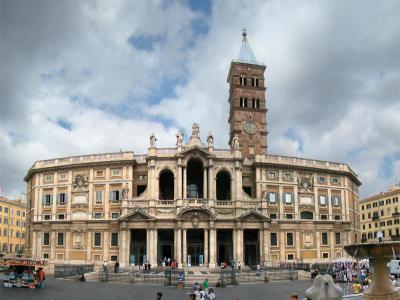
2) Basilica di Santa Maria Maggiore (Basilica of Saint Mary Major) (must see)
As the largest among the 26 churches in Rome dedicated to the Virgin Mary, the Basilica of Saint Mary Major holds a significant place in history. Originally constructed by Pope Liberius in the 4th century, the grandiose church has undergone renovations and enhancements by successive popes while still retaining its early medieval structure. The colonnaded nave, an integral part of the original 5th-century building, offers a glimpse into its ancient origins. The medieval era contributed the captivating Cosmatesque marble floor and the delightful Romanesque bell tower adorned with intricate blue ceramic roundels. During the Renaissance, a new coffered ceiling was introduced, while the Baroque period left its imprint with twin domes and grand facades at the front and rear. All in all, it’s a most successful blend of different architectural styles.
However, the true splendor of Saint Mary Major lies in its mosaics, which are among the oldest in Rome. The biblical scenes adorning the aisles date back to the 5th century, captivating visitors with their artistic depiction. The mosaics on the triumphal arch are particularly breathtaking, showcasing the skill and craftsmanship of the time. Among other medieval highlights is a magnificent 13th-century mosaic featuring an enthroned Christ in the loggia, adding to the artistic treasures within.
In 2001, Pope John Paul II inaugurated the Basilica Museum, dedicated to the church's history and the spread of Catholicism throughout the world. Here you will see ecclesiastical paintings, ritual vestments, scores from the choir and various manuscripts.
Tips: When visiting, be sure to take advantage of the small tours available to explore the church's hidden treasures. Additionally, don't miss the opportunity to visit the balcony loggia, which offers a unique perspective and allows you to admire more of the church's architecture. As evening sets in, find a serene spot by the fountain and marvel at the illuminated beauty of the building.
However, the true splendor of Saint Mary Major lies in its mosaics, which are among the oldest in Rome. The biblical scenes adorning the aisles date back to the 5th century, captivating visitors with their artistic depiction. The mosaics on the triumphal arch are particularly breathtaking, showcasing the skill and craftsmanship of the time. Among other medieval highlights is a magnificent 13th-century mosaic featuring an enthroned Christ in the loggia, adding to the artistic treasures within.
In 2001, Pope John Paul II inaugurated the Basilica Museum, dedicated to the church's history and the spread of Catholicism throughout the world. Here you will see ecclesiastical paintings, ritual vestments, scores from the choir and various manuscripts.
Tips: When visiting, be sure to take advantage of the small tours available to explore the church's hidden treasures. Additionally, don't miss the opportunity to visit the balcony loggia, which offers a unique perspective and allows you to admire more of the church's architecture. As evening sets in, find a serene spot by the fountain and marvel at the illuminated beauty of the building.
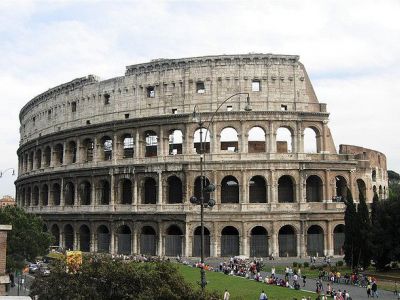
3) Colosseo (Colosseum) (must see)
The Colosseum, Rome’s iconic elliptical amphitheater, is the largest ancient amphitheater ever built, covering 24,000 square meters. Constructed between 69 and 80 AD by the Flavian dynasty, it was initially called the Flavian Amphitheater. Its modern name stems from the Colossus of Nero statue that once stood nearby, with the term "Colosseum" emerging during the medieval period.
Built on the land reclaimed from Emperor Nero’s landscaped Domus Aurea complex after the Great Fire of 64 AD, the Colosseum represented a gift to the Roman people under Emperor Vespasian. It was constructed using travertine, tuff, and concrete and was funded by spoils from the Jewish War. The latter, fought in 70 AD, led to the Siege of Jerusalem and brought back numerous prisoners who largely contributed to the massive workforce needed for the construction. The amphitheater comprised four tiers that could hold between 50,000 and 80,000 spectators at a time. Its free-standing structure features three architectural orders – Doric, Ionic, and Corinthian.
The lowest tier was for the emperor and the royal family, the two middle ones were for the noble Romans and members of government, while the highest tier was for the ordinary citizens. The elaborate system included 80 entrances, passageways for crowd control, and numbered pottery tickets for seating. Admission was free and the main sponsor was the emperor himself.
The Colosseum hosted gladiatorial contests, animal hunts, and mythological reenactments. Events often featured exotic animals imported from Africa and the Middle East. Emperor Trajan's games, for example, involved over 11,000 animals and 10,000 gladiators over 123 days! The below-ground passages were used to bring men and animals into the arena, which was separated from the audience by a ditch. Occasionally, it was reportedly even flooded for naval battles. Executions were common during intervals, with the condemned facing wild beasts or acting out tragic myths.
During the medieval period, the Colosseum served as a fortress and even a stone quarry. Passers-by habitually chipped off pieces of it for souvenirs which, together with some natural causes like earthquakes, led to its partial destruction.
Despite popular belief that the early Christians were martyred here in numbers, evidence suggests that most executions occurred elsewhere. By the 17th century, the Colosseum became recognized as a sacred site. Today, it hosts the Pope’s Good Friday “Way of the Cross” procession.
Only the north side of the building, as well as the underground passages, have survived intact. The arena floor is totally gone. Inside the Colosseum, there's a historical exhibition with both permanent and changing displays.
Tips:
Visit early in the morning or late in the evening to avoid long queues and heat. The ground and first floors are open to visitors without a special ticket, while the subterranean part and the third floor are accessed on pre-booked tours only. Opt for a guided tour to skip lines and access the Forum area. Alternatively, buy tickets in advance or at the Roman Forum. Enhance your experience with an audio guide for detailed historical insights.
Built on the land reclaimed from Emperor Nero’s landscaped Domus Aurea complex after the Great Fire of 64 AD, the Colosseum represented a gift to the Roman people under Emperor Vespasian. It was constructed using travertine, tuff, and concrete and was funded by spoils from the Jewish War. The latter, fought in 70 AD, led to the Siege of Jerusalem and brought back numerous prisoners who largely contributed to the massive workforce needed for the construction. The amphitheater comprised four tiers that could hold between 50,000 and 80,000 spectators at a time. Its free-standing structure features three architectural orders – Doric, Ionic, and Corinthian.
The lowest tier was for the emperor and the royal family, the two middle ones were for the noble Romans and members of government, while the highest tier was for the ordinary citizens. The elaborate system included 80 entrances, passageways for crowd control, and numbered pottery tickets for seating. Admission was free and the main sponsor was the emperor himself.
The Colosseum hosted gladiatorial contests, animal hunts, and mythological reenactments. Events often featured exotic animals imported from Africa and the Middle East. Emperor Trajan's games, for example, involved over 11,000 animals and 10,000 gladiators over 123 days! The below-ground passages were used to bring men and animals into the arena, which was separated from the audience by a ditch. Occasionally, it was reportedly even flooded for naval battles. Executions were common during intervals, with the condemned facing wild beasts or acting out tragic myths.
During the medieval period, the Colosseum served as a fortress and even a stone quarry. Passers-by habitually chipped off pieces of it for souvenirs which, together with some natural causes like earthquakes, led to its partial destruction.
Despite popular belief that the early Christians were martyred here in numbers, evidence suggests that most executions occurred elsewhere. By the 17th century, the Colosseum became recognized as a sacred site. Today, it hosts the Pope’s Good Friday “Way of the Cross” procession.
Only the north side of the building, as well as the underground passages, have survived intact. The arena floor is totally gone. Inside the Colosseum, there's a historical exhibition with both permanent and changing displays.
Tips:
Visit early in the morning or late in the evening to avoid long queues and heat. The ground and first floors are open to visitors without a special ticket, while the subterranean part and the third floor are accessed on pre-booked tours only. Opt for a guided tour to skip lines and access the Forum area. Alternatively, buy tickets in advance or at the Roman Forum. Enhance your experience with an audio guide for detailed historical insights.
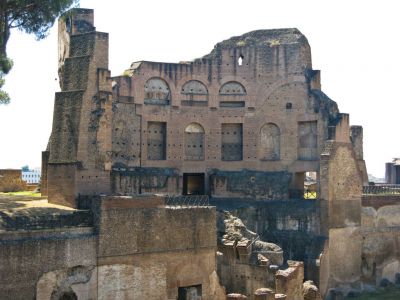
4) Palatino (Palatine Hill) (must see)
The Palatine Hill, centrally located among Rome’s seven hills, is one of the city’s oldest and most historically significant areas. Often referred to as "the first nucleus of the Roman Empire," it is now a vast open-air museum.
Overlooking the Roman Forum and Circus Maximus, Palatine Hill became the desirable location for the homes of Rome's wealthiest citizens during the Republican era. During the Imperial era, starting from the reign of Augustus, it was an exclusive domain of emperors, featuring luxurious palaces like those of Augustus, Tiberius, and Domitian. Before imperial development, the hill had two summits, Palatium and Germalus, separated by a depression. Over time, the Palatine played a central role in Rome’s evolution, with continuous habitation traced back to the 10th century BC. Excavations reveal funerary huts from the 9th–7th centuries BC, aligning with the city’s mythological founding period.
The modern-day word “palace” is derived from the word “Palatine”.
Roman mythology enriches its legacy, as the hill was believed to be the site where Rome was reportedly founded. According to legend, it was on this hill that the twins Romulus and Remus, the legendary founders of Rome, were discovered by a she-wolf who raised them. When they grew up, the twins set out to build a city of their own. While Remus wanted to build it on Aventine Hill, Romulus had his mind set firmly on Palatine Hill. The brothers argued fiercely, and during the fight, Romulus killed Remus. He went on to build the city in 753 BC, calling it Rome, and reigned as its first king.
Monumental structures dominate the site, including the Palace of Domitian and the House of Livia, the latter renowned for its well-preserved frescoes. The House of Tiberius partially survives within the Farnese Gardens.
Extensive archaeological excavations, dating back to Augustus’ time, have uncovered significant finds, including Bronze Age artifacts and the Palatine House, thought to be the birthplace of Emperor Augustus. Modern investigations have revealed frescoed walls and mosaics, along with the Lupercal, the cave at the southwest foot of the Palatine Hill, where Romulus and Remus were suckled by the she-wolf.
Tip:
"Super" tickets provide access to the key attractions on the Hill, including the Roman Forum and Colosseum. Prepare with water, snacks, sunscreen, a hat, and sturdy shoes, as the steep paths and lack of vending machines can be challenging.
Overlooking the Roman Forum and Circus Maximus, Palatine Hill became the desirable location for the homes of Rome's wealthiest citizens during the Republican era. During the Imperial era, starting from the reign of Augustus, it was an exclusive domain of emperors, featuring luxurious palaces like those of Augustus, Tiberius, and Domitian. Before imperial development, the hill had two summits, Palatium and Germalus, separated by a depression. Over time, the Palatine played a central role in Rome’s evolution, with continuous habitation traced back to the 10th century BC. Excavations reveal funerary huts from the 9th–7th centuries BC, aligning with the city’s mythological founding period.
The modern-day word “palace” is derived from the word “Palatine”.
Roman mythology enriches its legacy, as the hill was believed to be the site where Rome was reportedly founded. According to legend, it was on this hill that the twins Romulus and Remus, the legendary founders of Rome, were discovered by a she-wolf who raised them. When they grew up, the twins set out to build a city of their own. While Remus wanted to build it on Aventine Hill, Romulus had his mind set firmly on Palatine Hill. The brothers argued fiercely, and during the fight, Romulus killed Remus. He went on to build the city in 753 BC, calling it Rome, and reigned as its first king.
Monumental structures dominate the site, including the Palace of Domitian and the House of Livia, the latter renowned for its well-preserved frescoes. The House of Tiberius partially survives within the Farnese Gardens.
Extensive archaeological excavations, dating back to Augustus’ time, have uncovered significant finds, including Bronze Age artifacts and the Palatine House, thought to be the birthplace of Emperor Augustus. Modern investigations have revealed frescoed walls and mosaics, along with the Lupercal, the cave at the southwest foot of the Palatine Hill, where Romulus and Remus were suckled by the she-wolf.
Tip:
"Super" tickets provide access to the key attractions on the Hill, including the Roman Forum and Colosseum. Prepare with water, snacks, sunscreen, a hat, and sturdy shoes, as the steep paths and lack of vending machines can be challenging.
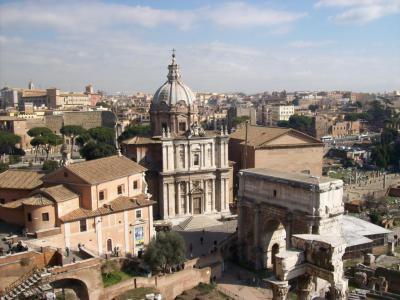
5) Chiesa dei Santi Luca e Martina (Church of Saints Luca and Martina)
The Church of Saints Luca and Martina is a significant Catholic place of worship situated within the Roman Forum. It falls under the parish of San Marco Evangelista al Campidoglio. Originally dedicated to Santa Martina, it is believed to have been founded in the 7th century, possibly by Honorius I, who is also credited with establishing the nearby church of Sant'Adriano in the Curia Julia, the seat of the Senate.
Throughout its history, the church has undergone periods of decline, restoration, and re-consecration. Alexander IV consecrated it again in 1256, as indicated by a plaque walled up in the chapel on the right side. The church is mentioned in the Catalog of Cencio Camerario, although Martina is not specifically listed among the saints whose relics were kept there.
The church features a central plan, resembling a Greek cross with four apses. However, the arms of the transept are shorter than the longitudinal section, and the curvature is more flattened. The convex facade, completed in 1664, enhances its architectural beauty.
Upon entering the church, one is immediately struck by the spaciousness dominated by the high dome. The connecting spandrels are adorned with stucco depictions of the Four Symbols of the Evangelists, created by Camillo Rusconi. At the main altar, a notable artwork portrays San Luca Evangelista painting the Madonna. This painting is a copy by Antiveduto Gramatica, an artist in the style of Caravaggio, based on the original by Raphael, now housed in the Galleria dell'Accademia di San Luca.
In the chapel of the left transept, visitors can appreciate the altarpiece depicting the Virgin of the Assumption and San Sebastiano, created by Sebastiano Conca around 1740. It is worth noting that Conca himself funded the construction of this chapel, which was inaugurated on October 18, 1733, on the feast day of San Luca.
The crypt, designed by Pietro da Cortona, reflects the architectural style of the upper church on a smaller scale. Additionally, two reliefs crafted by Alessandro Algardi can be found in the church, adding to its artistic grandeur.
Throughout its history, the church has undergone periods of decline, restoration, and re-consecration. Alexander IV consecrated it again in 1256, as indicated by a plaque walled up in the chapel on the right side. The church is mentioned in the Catalog of Cencio Camerario, although Martina is not specifically listed among the saints whose relics were kept there.
The church features a central plan, resembling a Greek cross with four apses. However, the arms of the transept are shorter than the longitudinal section, and the curvature is more flattened. The convex facade, completed in 1664, enhances its architectural beauty.
Upon entering the church, one is immediately struck by the spaciousness dominated by the high dome. The connecting spandrels are adorned with stucco depictions of the Four Symbols of the Evangelists, created by Camillo Rusconi. At the main altar, a notable artwork portrays San Luca Evangelista painting the Madonna. This painting is a copy by Antiveduto Gramatica, an artist in the style of Caravaggio, based on the original by Raphael, now housed in the Galleria dell'Accademia di San Luca.
In the chapel of the left transept, visitors can appreciate the altarpiece depicting the Virgin of the Assumption and San Sebastiano, created by Sebastiano Conca around 1740. It is worth noting that Conca himself funded the construction of this chapel, which was inaugurated on October 18, 1733, on the feast day of San Luca.
The crypt, designed by Pietro da Cortona, reflects the architectural style of the upper church on a smaller scale. Additionally, two reliefs crafted by Alessandro Algardi can be found in the church, adding to its artistic grandeur.
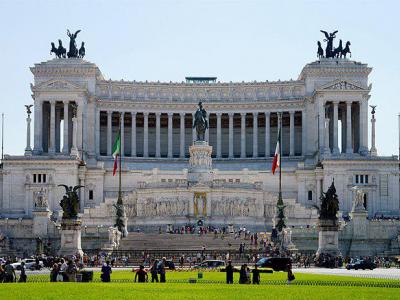
6) Vittoriano (Victor Emmanuel II National Monument) (must see)
The Victor Emmanuel II National Monument, also known as the Altar of the Fatherland, honors Italy’s first king and symbolizes the nation’s unification. Constructed from 1885 to 1935, its design was inspired by the Roman Forum. The neoclassical monument blends Hellenistic influences with modern urban design, featuring grand staircases, Corinthian columns, fountains, and statues, including a striking equestrian statue of Victor Emmanuel II.
Its dimensions are imposing, with a width of 135 meters and a height of 81 meters, including statues of the goddess Victoria atop quadrigas. Also adding to its grandeur are the two colossal Italian tricolors at the sides.
The monument's key features include the Tomb of the Unknown Soldier, inaugurated in 1921. Its eternal flames perpetually guarded by soldiers reflect classical traditions of remembrance. Sculptures like The Thought and The Action are complemented by allegorical decorations and mosaics highlighting Italian virtues, sciences, and intellectual achievements. The site also honors Italy's pre-unification legacy through sculptures of 14 historic capitals and other artistic elements.
Ascending the central staircase rewards visitors with a view of the monument itself but also a panoramic vista over the city. This elevated spot offers an ideal opportunity for capturing memorable photos. For added convenience, a lift was installed in 2007, enabling visitors to reach the rooftop and enjoy a bird's-eye panorama of Rome (please note that there is a small fee for the ride).
Flanking Venice Square, the Fountains of the Two Seas symbolize Italy's geographical unity, representing the Adriatic and Tyrrhenian Seas. Beneath the monument lies a crypt built with materials from World War I battlefields, creating a sacred space for reflection.
At the base of the complex, visitors can explore the Central Museum of Italian Unification, which chronicles the country’s history from the late 18th century to World War I, and the Shrine of the Flags, showcasing military flags and artifacts. The admission is free.
The monument is a centerpiece for national celebrations like Republic Day and Liberation Day. Although initially met with controversy and subjected to derogatory nicknames like the "wedding cake," it has become one of the city's most popular attractions after the Vatican and the Roman Ruins. Despite some locals considering it tacky, there is an undeniable allure in witnessing triumphal architecture that aspires to rival the grandeur of ancient structures.
Tip:
Visit the monument at night when it is beautifully illuminated.
Its dimensions are imposing, with a width of 135 meters and a height of 81 meters, including statues of the goddess Victoria atop quadrigas. Also adding to its grandeur are the two colossal Italian tricolors at the sides.
The monument's key features include the Tomb of the Unknown Soldier, inaugurated in 1921. Its eternal flames perpetually guarded by soldiers reflect classical traditions of remembrance. Sculptures like The Thought and The Action are complemented by allegorical decorations and mosaics highlighting Italian virtues, sciences, and intellectual achievements. The site also honors Italy's pre-unification legacy through sculptures of 14 historic capitals and other artistic elements.
Ascending the central staircase rewards visitors with a view of the monument itself but also a panoramic vista over the city. This elevated spot offers an ideal opportunity for capturing memorable photos. For added convenience, a lift was installed in 2007, enabling visitors to reach the rooftop and enjoy a bird's-eye panorama of Rome (please note that there is a small fee for the ride).
Flanking Venice Square, the Fountains of the Two Seas symbolize Italy's geographical unity, representing the Adriatic and Tyrrhenian Seas. Beneath the monument lies a crypt built with materials from World War I battlefields, creating a sacred space for reflection.
At the base of the complex, visitors can explore the Central Museum of Italian Unification, which chronicles the country’s history from the late 18th century to World War I, and the Shrine of the Flags, showcasing military flags and artifacts. The admission is free.
The monument is a centerpiece for national celebrations like Republic Day and Liberation Day. Although initially met with controversy and subjected to derogatory nicknames like the "wedding cake," it has become one of the city's most popular attractions after the Vatican and the Roman Ruins. Despite some locals considering it tacky, there is an undeniable allure in witnessing triumphal architecture that aspires to rival the grandeur of ancient structures.
Tip:
Visit the monument at night when it is beautifully illuminated.
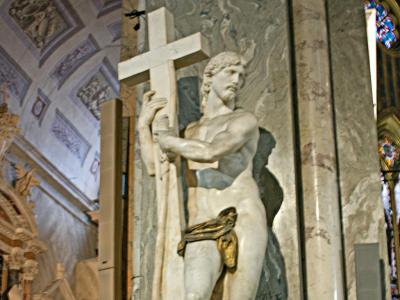
7) Basilica di Santa Maria sopra Minerva (Basilica of Saint Mary above Minerva) (must see)
Tucked away just behind the Pantheon in Minerva Square, Santa Maria above Minerva is a Dominican church and a hidden gem of both religious and architectural importance. This is the only surviving example of original Gothic religious architecture in Rome, as most medieval churches were modified with Baroque designs.
Despite its somewhat unassuming facade, the Santa Maria above Minerva – formerly the Dominican order's headquarters – also boasts an intriguing history and some truly magnificent artistic treasures. Chief among them are Michelangelo’s Christ the Redeemer sculpture and the Carafa Chapel's frescoes.
The former is found to the left of the main altar. The sculpture's first version, begun in 1515, was abandoned due to a flaw in the marble. The one we see today, completed in 1521, received acclaim for its artistry, particularly its lifelike knees. Originally, Michelangelo depicted Christ unclothed to symbolize his triumph over sin, however, a bronze loincloth was added in 1546.
The Carafa Chapel, commissioned by Cardinal Oliviero Carafa in honor of Saint Thomas Aquinas, was inaugurated in 1493. Lavishly adorned with frescoes by Florentine painter Filippino Lippi, it shows the scenes of Saint Thomas's life, including him debating with heretics, as well as some allegorical ones like him presenting Cardinal Carafa to the Virgin Mary. These frescoes are widely recognized as the best Renaissance painting in Rome outside the Sistine Chapel.
Looking up, you can't fail to notice the stunning deep blue painted ceiling and the round stained glass windows, rightfully regarded as the finest in the city.
The basilica also holds the remains of the Saint Catherine of Siena and early Renaissance painter Fra Angelico.
In 1628, the Convent of Minerva became the seat of the Congregation of the Holy Office, where the Roman Inquisition held trials, including that of Galileo Galilei. In 1633, Galileo was tried for heresy for supporting the theory that the Earth revolves around the Sun. Facing interrogation under threat of torture, he was found "vehemently suspect of heresy" and forced to recant. Galileo was sentenced to house arrest for life, and his works were banned. His trial marked a defining moment in the conflict between science and religion. Legend claims that, after his abjuration, Galileo allegedly muttered the rebellious phrase: "and yet it moves..."
Despite its somewhat unassuming facade, the Santa Maria above Minerva – formerly the Dominican order's headquarters – also boasts an intriguing history and some truly magnificent artistic treasures. Chief among them are Michelangelo’s Christ the Redeemer sculpture and the Carafa Chapel's frescoes.
The former is found to the left of the main altar. The sculpture's first version, begun in 1515, was abandoned due to a flaw in the marble. The one we see today, completed in 1521, received acclaim for its artistry, particularly its lifelike knees. Originally, Michelangelo depicted Christ unclothed to symbolize his triumph over sin, however, a bronze loincloth was added in 1546.
The Carafa Chapel, commissioned by Cardinal Oliviero Carafa in honor of Saint Thomas Aquinas, was inaugurated in 1493. Lavishly adorned with frescoes by Florentine painter Filippino Lippi, it shows the scenes of Saint Thomas's life, including him debating with heretics, as well as some allegorical ones like him presenting Cardinal Carafa to the Virgin Mary. These frescoes are widely recognized as the best Renaissance painting in Rome outside the Sistine Chapel.
Looking up, you can't fail to notice the stunning deep blue painted ceiling and the round stained glass windows, rightfully regarded as the finest in the city.
The basilica also holds the remains of the Saint Catherine of Siena and early Renaissance painter Fra Angelico.
In 1628, the Convent of Minerva became the seat of the Congregation of the Holy Office, where the Roman Inquisition held trials, including that of Galileo Galilei. In 1633, Galileo was tried for heresy for supporting the theory that the Earth revolves around the Sun. Facing interrogation under threat of torture, he was found "vehemently suspect of heresy" and forced to recant. Galileo was sentenced to house arrest for life, and his works were banned. His trial marked a defining moment in the conflict between science and religion. Legend claims that, after his abjuration, Galileo allegedly muttered the rebellious phrase: "and yet it moves..."
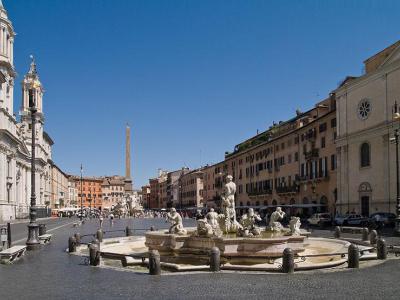
8) Piazza Navona (Navona Square) (must see)
Navona Square, one of Rome’s most iconic places, is built on the site of the ancient (1st-century AD) Stadium of Domitian. The stadium’s elongated oval shape defines the square’s layout, which was originally designed for Roman games (or agones). Over time, the name evolved from Circus Agonalis (which means “competition arena”) to Navona. After the fall of the Roman Empire, the stadium fell into ruin and was quarried for materials, leaving few remnants today.
In the late 15th century, Navona Square was designated a public space when the city market moved there from Capitoline Hill. It became a celebrated example of Baroque architecture and art during the mid-17th century under Pope Innocent X, whose family property, the Pamphili Palace, overlooks the square. The latter also features several masterpieces, including Gian Lorenzo Bernini’s Fountain of the Four Rivers at its center, crowned by the Obelisk of Domitian. The renowned Church of Saint Agnes in Agone with its impressive dome further highlights the area's artistic significance. Also noteworthy are the Braschi Palace, presently home to the Museum of Rome, and the Cupis Palace, which now offers pre-booked accommodations.
Navona Square is also home to two additional fountains. The Fountain of the Moor, at the southern end, was originally sculpted by Giacomo della Porta in 1575, with Bernini adding a statue of a Moor wrestling a dolphin in 1673. At the northern end, the Fountain of Neptune, also by della Porta (created in 1574), gained its central Neptune statue in 1878.
The square has a rich cultural history, hosting theatrical performances and festivals, including a popular annual Christmas market, from December to January.
Navona Square made an appearance in several movies, including “Angels & Demons” (of 2008, starring Tom Hanks), “Yesterday, Today and Tomorrow” (with Sophie Loren, made in 1964), and “The Talented Mr. Ripley” (directed in 1999 by Anthony Minghella, featuring Matt Damon). The atmosphere in Navona Square exudes a cool and relaxed vibe which, complete with its cinematic and architectural appeal, makes it an ideal spot for photography.
Tip:
In the evenings, when the central fountain is illuminated, the square becomes particularly scenic.
If looking for more intimate and more value-for-money meals and refreshments, consider venturing onto one of the side streets adjacent to the square, filled with multiple eateries and cafes.
In the late 15th century, Navona Square was designated a public space when the city market moved there from Capitoline Hill. It became a celebrated example of Baroque architecture and art during the mid-17th century under Pope Innocent X, whose family property, the Pamphili Palace, overlooks the square. The latter also features several masterpieces, including Gian Lorenzo Bernini’s Fountain of the Four Rivers at its center, crowned by the Obelisk of Domitian. The renowned Church of Saint Agnes in Agone with its impressive dome further highlights the area's artistic significance. Also noteworthy are the Braschi Palace, presently home to the Museum of Rome, and the Cupis Palace, which now offers pre-booked accommodations.
Navona Square is also home to two additional fountains. The Fountain of the Moor, at the southern end, was originally sculpted by Giacomo della Porta in 1575, with Bernini adding a statue of a Moor wrestling a dolphin in 1673. At the northern end, the Fountain of Neptune, also by della Porta (created in 1574), gained its central Neptune statue in 1878.
The square has a rich cultural history, hosting theatrical performances and festivals, including a popular annual Christmas market, from December to January.
Navona Square made an appearance in several movies, including “Angels & Demons” (of 2008, starring Tom Hanks), “Yesterday, Today and Tomorrow” (with Sophie Loren, made in 1964), and “The Talented Mr. Ripley” (directed in 1999 by Anthony Minghella, featuring Matt Damon). The atmosphere in Navona Square exudes a cool and relaxed vibe which, complete with its cinematic and architectural appeal, makes it an ideal spot for photography.
Tip:
In the evenings, when the central fountain is illuminated, the square becomes particularly scenic.
If looking for more intimate and more value-for-money meals and refreshments, consider venturing onto one of the side streets adjacent to the square, filled with multiple eateries and cafes.
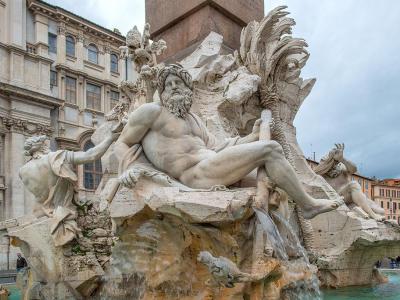
9) Fontana dei Quattro Fiumi (Fountain of the Four Rivers) (must see)
The focal point of Navona Square, the Fountain of the Four Rivers has been in place since the 17th century. While Rome has a longstanding affinity for fountains, dating back to antiquity, the Baroque era brought a new dimension to these water features, showcasing the generosity of the papacy.
In the case of the Fountain of the Four Rivers, Pope Innocent X, whose family seat – the Pamphili Palace – overlooks the square, entrusted the task to one of the most groundbreaking artists of the time, Gian Lorenzo Bernini. Created in 1651, the fountain was Rome's pinnacle achievement in fountain design, a symbolic masterpiece brimming with the dynamic and dramatic elements sought after by Baroque artists. Its central Egyptian obelisk is crowned with the Pamphili emblem, a dove with an olive twig.
Pope Innocent X chose Bernini after being secretly shown his model. The fountain was innovative, combining sculpture and architecture in a way unmatched by previous Roman fountains.
Here, the travertine base supports sculptures of four river gods, representing the major rivers of the continents over which papal authority had extended at that time. These include the Nile (for Africa), the Danube (for Europe), the Ganges (for Asia), and the Plate (for the Americas). Each figure conveys symbolic details: the Ganges is depicted holding a long oar, symbolizing the river's navigability; the Nile's veiled head signifies its unknown source; the Danube, the largest river near Rome touches the Pope's coat of arms; and the Plate sits atop a pile of coins, reflecting America’s wealth.
The fountain's unveiling on June 12, 1651, was marked by grand celebrations orchestrated by the Pamphili family. Allegorical figures of Fame and Curiosity paraded the streets, urging Romans to witness the reveal. The crowd marveled at the lifelike sculptures and water features, described as naturalistic and astonishing.
However, the project faced significant public opposition. Critics condemned its expense during the famine of 1646 to 1648, expressing their discontent through pasquinades demanding "Bread, not fountains." Street vendors and Roman Jews lamented their displacement from the square's market, which was closed to enhance its splendor.
Despite the controversy, the Fountain of the Four Rivers remains a cornerstone of Rome’s cultural and architectural legacy, blending mythology, artistry, and geographical narratives.
Tip:
To capture the essence of this fountain in photographs, it is recommended to shoot from various angles and positions, so as to get as much detail as possible. With ample space surrounding the fountain, take your time to find the perfect shot-or perhaps even multiple perfect shots.
In the case of the Fountain of the Four Rivers, Pope Innocent X, whose family seat – the Pamphili Palace – overlooks the square, entrusted the task to one of the most groundbreaking artists of the time, Gian Lorenzo Bernini. Created in 1651, the fountain was Rome's pinnacle achievement in fountain design, a symbolic masterpiece brimming with the dynamic and dramatic elements sought after by Baroque artists. Its central Egyptian obelisk is crowned with the Pamphili emblem, a dove with an olive twig.
Pope Innocent X chose Bernini after being secretly shown his model. The fountain was innovative, combining sculpture and architecture in a way unmatched by previous Roman fountains.
Here, the travertine base supports sculptures of four river gods, representing the major rivers of the continents over which papal authority had extended at that time. These include the Nile (for Africa), the Danube (for Europe), the Ganges (for Asia), and the Plate (for the Americas). Each figure conveys symbolic details: the Ganges is depicted holding a long oar, symbolizing the river's navigability; the Nile's veiled head signifies its unknown source; the Danube, the largest river near Rome touches the Pope's coat of arms; and the Plate sits atop a pile of coins, reflecting America’s wealth.
The fountain's unveiling on June 12, 1651, was marked by grand celebrations orchestrated by the Pamphili family. Allegorical figures of Fame and Curiosity paraded the streets, urging Romans to witness the reveal. The crowd marveled at the lifelike sculptures and water features, described as naturalistic and astonishing.
However, the project faced significant public opposition. Critics condemned its expense during the famine of 1646 to 1648, expressing their discontent through pasquinades demanding "Bread, not fountains." Street vendors and Roman Jews lamented their displacement from the square's market, which was closed to enhance its splendor.
Despite the controversy, the Fountain of the Four Rivers remains a cornerstone of Rome’s cultural and architectural legacy, blending mythology, artistry, and geographical narratives.
Tip:
To capture the essence of this fountain in photographs, it is recommended to shoot from various angles and positions, so as to get as much detail as possible. With ample space surrounding the fountain, take your time to find the perfect shot-or perhaps even multiple perfect shots.
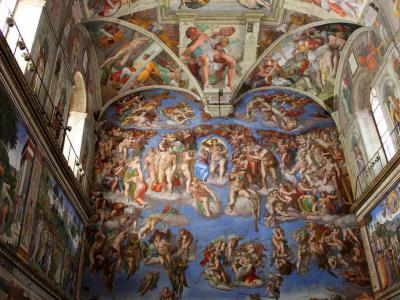
10) Cappella Sistina (Sistine Chapel) (must see)
The Sistine Chapel is one of the most significant artistic and religious landmarks in the world. Originally known as the "Great Chapel," it was reconstructed and consecrated between 1473 and 1483, under Pope Sixtus IV; hence its name.
The chapel’s fame largely stems from its breathtaking frescoes, particularly Michelangelo’s ceiling and The Last Judgment on the altar wall. Before that, Renaissance painters such as Botticelli, Perugino, and several others had already adorned the side walls with depictions of The Life of Moses and The Life of Christ. Above these biblical scenes, portraits of popes and “deceive the eye” drapery added to the visual splendor. Raphael later designed tapestries for the lower walls in 1515, though many were looted and only partially restored in the 20th century.
Under the patronage of Pope Julius II, in 1508, Michelangelo repainted the chapel's ceiling, originally decorated with a blue background and golden stars. Despite considering himself more of a sculptor than a painter, he undertook the monumental task, conditioned he was given full artistic control. Michelangelo's work, completed in 1512, transformed Western art with vivid colors and a masterful composition that depicted The Creation of the World, The Fall of Man, and The Redemption of Humanity. More than 300 figures, arranged in three layers, included prophets, ancestors of Christ, and nine dramatic scenes from Genesis, covering over 5,000 square feet.
These frescoes are accompanied by the presence of male nudes. Additionally, the spandrels surrounding the vault feature sibyls, prophetesses from pagan mythology, who were embraced by Christian artists during the Renaissance as capable of foreseeing the arrival of Christ. One of the most iconic paintings within the chapel is The Creation of Adam, portraying God reaching out to create Adam against a backdrop of cloudy heavens. This renowned artwork is among the most reproduced religious paintings in history.
In 1535, under Pope Paul III, Michelangelo returned to paint "The Last Judgment" and completed it in 1541. This monumental fresco, portraying Christ’s Second Coming, stirred controversy due to its nude figures, leading to a censorship campaign. The artist mocked critics by incorporating their likenesses into the painting, while later interventions saw parts of the nudity covered.
The chapel’s structure, measuring 35 meters long, 14 meters wide, and 20 meters high, follows precise Renaissance proportions. Though plain on the outside, its interior is a masterpiece of composition and storytelling.
The chapel’s fame largely stems from its breathtaking frescoes, particularly Michelangelo’s ceiling and The Last Judgment on the altar wall. Before that, Renaissance painters such as Botticelli, Perugino, and several others had already adorned the side walls with depictions of The Life of Moses and The Life of Christ. Above these biblical scenes, portraits of popes and “deceive the eye” drapery added to the visual splendor. Raphael later designed tapestries for the lower walls in 1515, though many were looted and only partially restored in the 20th century.
Under the patronage of Pope Julius II, in 1508, Michelangelo repainted the chapel's ceiling, originally decorated with a blue background and golden stars. Despite considering himself more of a sculptor than a painter, he undertook the monumental task, conditioned he was given full artistic control. Michelangelo's work, completed in 1512, transformed Western art with vivid colors and a masterful composition that depicted The Creation of the World, The Fall of Man, and The Redemption of Humanity. More than 300 figures, arranged in three layers, included prophets, ancestors of Christ, and nine dramatic scenes from Genesis, covering over 5,000 square feet.
These frescoes are accompanied by the presence of male nudes. Additionally, the spandrels surrounding the vault feature sibyls, prophetesses from pagan mythology, who were embraced by Christian artists during the Renaissance as capable of foreseeing the arrival of Christ. One of the most iconic paintings within the chapel is The Creation of Adam, portraying God reaching out to create Adam against a backdrop of cloudy heavens. This renowned artwork is among the most reproduced religious paintings in history.
In 1535, under Pope Paul III, Michelangelo returned to paint "The Last Judgment" and completed it in 1541. This monumental fresco, portraying Christ’s Second Coming, stirred controversy due to its nude figures, leading to a censorship campaign. The artist mocked critics by incorporating their likenesses into the painting, while later interventions saw parts of the nudity covered.
The chapel’s structure, measuring 35 meters long, 14 meters wide, and 20 meters high, follows precise Renaissance proportions. Though plain on the outside, its interior is a masterpiece of composition and storytelling.
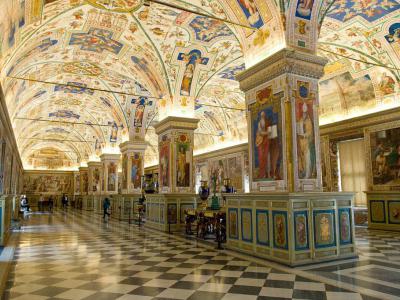
11) Musei Vaticani (Vatican Museums) (must see)
The Vatican Museums house an extensive collection of art and historical artifacts amassed by the Catholic Church over centuries. With approximately 70,000 works, of which 20,000 are on display, they rank among the most significant museums in the world and are the second most-visited art museum after the Louvre.
The museums trace their origins to Pope Julius II in the early 16th century. Their foundation is closely linked to the discovery of the famous Roman sculpture "Laocoon and His Sons" in 1506. Following expert advice from Michelangelo and Giuliano da Sangallo, who was an Italian sculptor, architect, and military engineer, the Pope acquired the piece and put it on display. Over time, the collection expanded, with Pope Pius IX establishing the Museum Christianum and Lateran Museum in 1854. In 2006, the museums celebrated their 500th anniversary by opening the Vatican Hill necropolis to the public.
The museums include 24 galleries, culminating in the Sistine Chapel, famous for Michelangelo’s frescoed ceiling and The Last Judgment. Other highlights include the Raphael Rooms, featuring masterpieces like The School of Athens, and the Vatican Art Gallery, showcasing works by Giotto, Leonardo da Vinci, Raphael, Titian, Caravaggio, and Veronese.
Several museums surrounding the Belvedere Courtyard specialize in sculpture. The Pio-Clementino Museum is the most prominent, housing Greek and Roman sculptures, such as Apollo Belvedere and Laocoön and His Sons. The Chiaramonti Museum displays statues, friezes, and sarcophagi, while the Gregoriano Etrusco and Gregoriano Egiziano museums feature Etruscan and Egyptian antiquities, respectively.
The Vatican Historical Museum (established in 1973) displays papal artifacts, including a red marble papal throne. The Gallery of Maps, commissioned by Pope Gregory XIII, remains the largest geographical pictorial study ever created. The Borgia Apartment, once home to Pope Alexander VI, contains Renaissance frescoes. Another highlight is the Bramante Staircase, a stunning double-helix design from 1932.
Tip:
Before embarking on a visit, ensure you have a satisfying breakfast and wear comfortable walking shoes. It can be helpful to prioritize a few key pieces of art that you don't want to miss and focus on experiencing those. Alternatively, if you wish to explore the entire collection, plan for multiple visits.
It is highly recommended to book tickets in advance online, particularly for an afternoon visit during the middle of the week. Saturdays and Mondays tend to be the busiest days, so opting for other times can enhance your experience.
The museums trace their origins to Pope Julius II in the early 16th century. Their foundation is closely linked to the discovery of the famous Roman sculpture "Laocoon and His Sons" in 1506. Following expert advice from Michelangelo and Giuliano da Sangallo, who was an Italian sculptor, architect, and military engineer, the Pope acquired the piece and put it on display. Over time, the collection expanded, with Pope Pius IX establishing the Museum Christianum and Lateran Museum in 1854. In 2006, the museums celebrated their 500th anniversary by opening the Vatican Hill necropolis to the public.
The museums include 24 galleries, culminating in the Sistine Chapel, famous for Michelangelo’s frescoed ceiling and The Last Judgment. Other highlights include the Raphael Rooms, featuring masterpieces like The School of Athens, and the Vatican Art Gallery, showcasing works by Giotto, Leonardo da Vinci, Raphael, Titian, Caravaggio, and Veronese.
Several museums surrounding the Belvedere Courtyard specialize in sculpture. The Pio-Clementino Museum is the most prominent, housing Greek and Roman sculptures, such as Apollo Belvedere and Laocoön and His Sons. The Chiaramonti Museum displays statues, friezes, and sarcophagi, while the Gregoriano Etrusco and Gregoriano Egiziano museums feature Etruscan and Egyptian antiquities, respectively.
The Vatican Historical Museum (established in 1973) displays papal artifacts, including a red marble papal throne. The Gallery of Maps, commissioned by Pope Gregory XIII, remains the largest geographical pictorial study ever created. The Borgia Apartment, once home to Pope Alexander VI, contains Renaissance frescoes. Another highlight is the Bramante Staircase, a stunning double-helix design from 1932.
Tip:
Before embarking on a visit, ensure you have a satisfying breakfast and wear comfortable walking shoes. It can be helpful to prioritize a few key pieces of art that you don't want to miss and focus on experiencing those. Alternatively, if you wish to explore the entire collection, plan for multiple visits.
It is highly recommended to book tickets in advance online, particularly for an afternoon visit during the middle of the week. Saturdays and Mondays tend to be the busiest days, so opting for other times can enhance your experience.
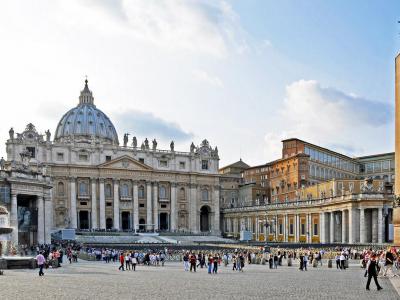
12) Basilica Papale di San Pietro in Vaticano (Saint Peter's Basilica) (must see)
Despite not being the mother church of Catholicism or Rome's cathedral, Saint Peter's Basilica in the Vatican is one of Christianity's holiest sites. Tradition holds that Saint Peter, the first Bishop of Rome, is buried inside, beneath the high altar, known as the Altar of the Confession.
Built to replace the aging original basilica, the new construction began in 1506, under Pope Julius II, and was completed in 1626. Designed by Renaissance masters such as Donato Bramante, Michelangelo, and Carlo Maderno, the structure embodies the grandeur of Italian High Renaissance architecture. Its vast interior makes it the largest church in the world by space.
The Latin cross layout features a vast dome, spanning 42 meters in diameter and towering 120 meters high. Meanwhile, the imposing façade adorned with statues of Saints Peter and Paul is complemented by a narthex housing the Holy Door. The latter, walled up with bricks, is opened only during jubilee years. Inside, the immense nave, wide aisles, and chapels are decorated with elaborate sculptures and artwork. Among these are Michelangelo’s Pietà and Bernini’s Baldachin, a monumental canopy over the Papal Altar. Other notable artworks include Giotto’s Navicella mosaic and equestrian statues of Constantine and Charlemagne.
Michelangelo played a crucial role in shaping the place, refining its design into a more unified and monumental form. His dome, completed in 1590, has profoundly influenced Western church architecture. Slightly more pointed than Michelangelo's original plan, the dome's design blends Renaissance ideals with Baroque dynamism. Encircling the interior is an inscription that reads: "You are Peter, and on this rock I will build my church... and I will give you the keys of the kingdom of heaven."
The basilica also has six bells. The largest of them, "Campanone," weighs 9 tons and is used for ringing for papal blessings. Up on the roof are the sculptures of Christ the Redeemer, Saint John the Baptist, and 11 Apostles. Meanwhile, inside, there are over 100 tombs. Among those laid to rest are many popes, including Pope Jean Paul II, royals, and other historical figures, such as Holy Roman Emperor Otto II and Italian composer Giovanni Pierluigi da Palestrina.
Tips:
Arrive early in the morning to avoid long queues. Admission is free (until 5 PM when the gates close), but expect to undergo a security check before entering. Remember to dress modestly, with knees and shoulders covered (affordable scarves for ladies are available from nearby vendors). If you're feeling adventurous, ascend to the top of the dome. An elevator ride can save you from climbing more than 300 stairs.
Built to replace the aging original basilica, the new construction began in 1506, under Pope Julius II, and was completed in 1626. Designed by Renaissance masters such as Donato Bramante, Michelangelo, and Carlo Maderno, the structure embodies the grandeur of Italian High Renaissance architecture. Its vast interior makes it the largest church in the world by space.
The Latin cross layout features a vast dome, spanning 42 meters in diameter and towering 120 meters high. Meanwhile, the imposing façade adorned with statues of Saints Peter and Paul is complemented by a narthex housing the Holy Door. The latter, walled up with bricks, is opened only during jubilee years. Inside, the immense nave, wide aisles, and chapels are decorated with elaborate sculptures and artwork. Among these are Michelangelo’s Pietà and Bernini’s Baldachin, a monumental canopy over the Papal Altar. Other notable artworks include Giotto’s Navicella mosaic and equestrian statues of Constantine and Charlemagne.
Michelangelo played a crucial role in shaping the place, refining its design into a more unified and monumental form. His dome, completed in 1590, has profoundly influenced Western church architecture. Slightly more pointed than Michelangelo's original plan, the dome's design blends Renaissance ideals with Baroque dynamism. Encircling the interior is an inscription that reads: "You are Peter, and on this rock I will build my church... and I will give you the keys of the kingdom of heaven."
The basilica also has six bells. The largest of them, "Campanone," weighs 9 tons and is used for ringing for papal blessings. Up on the roof are the sculptures of Christ the Redeemer, Saint John the Baptist, and 11 Apostles. Meanwhile, inside, there are over 100 tombs. Among those laid to rest are many popes, including Pope Jean Paul II, royals, and other historical figures, such as Holy Roman Emperor Otto II and Italian composer Giovanni Pierluigi da Palestrina.
Tips:
Arrive early in the morning to avoid long queues. Admission is free (until 5 PM when the gates close), but expect to undergo a security check before entering. Remember to dress modestly, with knees and shoulders covered (affordable scarves for ladies are available from nearby vendors). If you're feeling adventurous, ascend to the top of the dome. An elevator ride can save you from climbing more than 300 stairs.
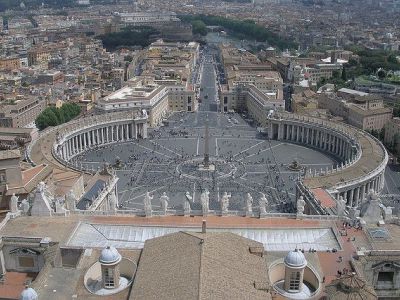
13) Piazza San Pietro (St. Peter's Square) (must see)
Saint Peter's Square is a grand plaza in front of Saint Peter's Basilica in Vatican City. Both the square and the basilica (the largest Christian temple and spiritual heart of Catholicism), are dedicated to Saint Peter, one of Jesus’s apostles, who is also regarded as the first Pope.
Dominating the square's center is the Vatican obelisk, a red granite structure, rising to approximately 25 meters (or 83 feet). Originally erected in Heliopolis, Egypt, it was moved to Rome by Emperor Caligula in the 1st century AD and was finally relocated to its current position in 1586 by engineer Domenico Fontana under Pope Sixtus V. The obelisk, adorned with bronze lions and a cross-topped Chigi family crest, has remained intact since antiquity. It serves as the plaza's focal point and symbolizes the triumph of Christianity over paganism.
Designed by Gian Lorenzo Bernini between 1656 and 1667 under Pope Alexander VII, the square was intended to maximize visibility for papal blessings. Bernini incorporated colossal Tuscan colonnades, which are four columns deep and comprise 284 columns and 88 pilasters. The colonnades encircle the oval-shaped plaza, symbolizing the "maternal arms of Mother Church." The trapezoidal approach enhances the visual impact, a hallmark of Baroque design.
The square also features two matching fountains, flanking the obelisk, created by Carlo Maderno and Bernini (in 1613 and 1675 respectively), balancing the architectural harmony. The fountains represent the life-giving waters of the Christian faith.
The paving of the square includes travertine lines that radiate outward, breaking up the vast stone surface. In 1817, circular stones were added to transform the obelisk into a giant sundial, marking the sun’s position as it enters each zodiac sign.
Saint Peter's Square is accessible via Conciliation Street, an avenue created between 1937 and 1950 following the demolition of the medieval “spina” area. Its removal, under Mussolini's directive, made the basilica visible from Saint Angel's Castle.
Apart from being an architectural marvel, today the square serves as a gathering space for momentous events and ceremonies within the Catholic Church. These attract annually millions of visitors and pilgrims from across the globe seeking to attend papal audiences and receive blessings from the Pope. During significant occasions like Easter Sunday and Christmas, the square transforms into a splendid backdrop for grand celebrations and religious rituals, much as for capturing memorable photos.
Dominating the square's center is the Vatican obelisk, a red granite structure, rising to approximately 25 meters (or 83 feet). Originally erected in Heliopolis, Egypt, it was moved to Rome by Emperor Caligula in the 1st century AD and was finally relocated to its current position in 1586 by engineer Domenico Fontana under Pope Sixtus V. The obelisk, adorned with bronze lions and a cross-topped Chigi family crest, has remained intact since antiquity. It serves as the plaza's focal point and symbolizes the triumph of Christianity over paganism.
Designed by Gian Lorenzo Bernini between 1656 and 1667 under Pope Alexander VII, the square was intended to maximize visibility for papal blessings. Bernini incorporated colossal Tuscan colonnades, which are four columns deep and comprise 284 columns and 88 pilasters. The colonnades encircle the oval-shaped plaza, symbolizing the "maternal arms of Mother Church." The trapezoidal approach enhances the visual impact, a hallmark of Baroque design.
The square also features two matching fountains, flanking the obelisk, created by Carlo Maderno and Bernini (in 1613 and 1675 respectively), balancing the architectural harmony. The fountains represent the life-giving waters of the Christian faith.
The paving of the square includes travertine lines that radiate outward, breaking up the vast stone surface. In 1817, circular stones were added to transform the obelisk into a giant sundial, marking the sun’s position as it enters each zodiac sign.
Saint Peter's Square is accessible via Conciliation Street, an avenue created between 1937 and 1950 following the demolition of the medieval “spina” area. Its removal, under Mussolini's directive, made the basilica visible from Saint Angel's Castle.
Apart from being an architectural marvel, today the square serves as a gathering space for momentous events and ceremonies within the Catholic Church. These attract annually millions of visitors and pilgrims from across the globe seeking to attend papal audiences and receive blessings from the Pope. During significant occasions like Easter Sunday and Christmas, the square transforms into a splendid backdrop for grand celebrations and religious rituals, much as for capturing memorable photos.
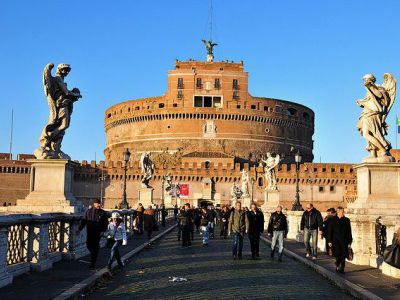
14) Museo Nazionale di Castel Sant'Angelo (National Museum of the Holy Angel Castle) (must see)
The Mausoleum of Hadrian, commonly known as the Castle of the Holy Angel, is a cylindrical tower in Rome’s Adriano Park. Commissioned by Emperor Hadrian between 134 and 139 AD as a family mausoleum, it was once the tallest building in Rome.
Initially, the mausoleum housed the ashes of Hadrian, his wife Sabina, and subsequent emperors, ending with Caracalla in 217. The structure was adorned with a garden-topped cylinder and a golden quadriga. Hadrian also built the nearby Pons Aelius bridge, which still offers a scenic route adorned with Baroque angel statues.
In 401, the mausoleum was converted into a fortress and incorporated into Rome's Aurelian Walls. Over centuries, its treasures and urns were scattered, including during the Visigoth sack of Rome in 410. The building also served as a defense during the Gothic siege in 537, with statues thrown down on attackers. Some remnants, like a capstone from Hadrian's urn, found their way into significant structures such as Saint Peter’s Basilica.
Legend holds that Archangel Michael appeared over the building in 590, signaling the end of a plague and inspiring the castle's current name. The statue of Michael atop the castle, first sculpted in 1536 and replaced by a bronze version in 1753, commemorates this event.
The popes transformed the structure into a fortress and residence. Pope Nicholas III linked it to Saint Peter's Basilica with the fortified Borgo Passage, while Clement VII used it as a refuge during the 1527 Sack of Rome (by the mutinous troops of the Holy Roman Emperor, Charles V). The castle also became a prison, housing figures like the Italian philosopher and astrologer Giordano Bruno. Executions occurred in its courtyard, and the structure was immortalized in Puccini’s opera Tosca.
Decommissioned as a fortress in 1901, the castle now operates as a museum, attracting over a million visitors per year. It offers a fascinating display, featuring cannons, armor, and ornately decorated papal apartments. A highlight is the hidden passageway connecting the Vatican to the castle.
Visitors can enjoy coffee with incredible views of Saint Peter's Basilica at the on-site café. For breathtaking panoramas of Rome and Vatican City, head to the rooftop terrace, ideal on clear days or evenings to experience the city's vibrant nighttime charm. While there is some walking involved, the museum is easily navigable and offers a memorable blend of history, architecture, and stunning vistas.
Initially, the mausoleum housed the ashes of Hadrian, his wife Sabina, and subsequent emperors, ending with Caracalla in 217. The structure was adorned with a garden-topped cylinder and a golden quadriga. Hadrian also built the nearby Pons Aelius bridge, which still offers a scenic route adorned with Baroque angel statues.
In 401, the mausoleum was converted into a fortress and incorporated into Rome's Aurelian Walls. Over centuries, its treasures and urns were scattered, including during the Visigoth sack of Rome in 410. The building also served as a defense during the Gothic siege in 537, with statues thrown down on attackers. Some remnants, like a capstone from Hadrian's urn, found their way into significant structures such as Saint Peter’s Basilica.
Legend holds that Archangel Michael appeared over the building in 590, signaling the end of a plague and inspiring the castle's current name. The statue of Michael atop the castle, first sculpted in 1536 and replaced by a bronze version in 1753, commemorates this event.
The popes transformed the structure into a fortress and residence. Pope Nicholas III linked it to Saint Peter's Basilica with the fortified Borgo Passage, while Clement VII used it as a refuge during the 1527 Sack of Rome (by the mutinous troops of the Holy Roman Emperor, Charles V). The castle also became a prison, housing figures like the Italian philosopher and astrologer Giordano Bruno. Executions occurred in its courtyard, and the structure was immortalized in Puccini’s opera Tosca.
Decommissioned as a fortress in 1901, the castle now operates as a museum, attracting over a million visitors per year. It offers a fascinating display, featuring cannons, armor, and ornately decorated papal apartments. A highlight is the hidden passageway connecting the Vatican to the castle.
Visitors can enjoy coffee with incredible views of Saint Peter's Basilica at the on-site café. For breathtaking panoramas of Rome and Vatican City, head to the rooftop terrace, ideal on clear days or evenings to experience the city's vibrant nighttime charm. While there is some walking involved, the museum is easily navigable and offers a memorable blend of history, architecture, and stunning vistas.
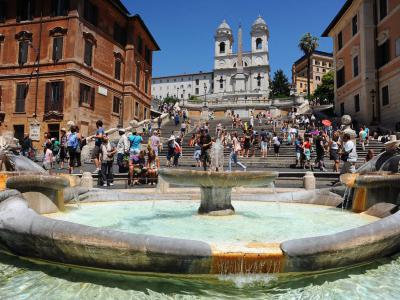
15) Scalinata di Trinita dei Monti (Spanish Steps) (must see)
The Spanish Steps, a monumental stairway of 135 steps, holds the distinction of being the longest and widest in Europe. The steps link Spanish Square, at the base, with the Trinity of the Mountains Square at the top.
The stairway was completed under Pope Clement XI in 1717, deriving its name from the nearby Spanish Embassy to the Holy See. Financed in part by a French diplomat, it features Baroque elements, inspired by garden stairs, and incorporates symbolic decorations such as the Bourbon heraldic lily flowers and papal eagles.
As a cultural and seasonal hub hosting public events such as Christmas cribs, spring azalea displays, and a flower market, the Spanish Steps have captivated artists and people of letters since the 18th century. Among them was the renowned English poet, John Keats, who lived and died practically next door. His house, at the base of the steps (located to the right, if you face the stairs), is now a museum.
Other nearby landmarks include the Ferrari di Valbona Palace, redesigned in 1936, and Babington's tea room, a resilient establishment that has withstood two world wars and numerous adversities, ultimately becoming a beloved tourist attraction.
The steps' cinematic appeal also made them a backdrop for numerous films, including the Hollywood blockbuster “Roman Holiday” made in 1953, starring Audrey Hepburn and Gregory Peck. In the scene where Joe Bradley, played by Peck, meets Princess Ann, played by Hepburn, she sits on the steps, enjoying the view and eating ice cream. Fresh after the haircut, the princess takes compliments for her new look and makes up a story that she has run away from school. She accepts his proposal to spend the day together before she returns, and thus the Roman Holiday story begins!
Other filmmakers also made a mark on the steps, such as “The Talented Mr. Ripley” movie with Matt Damon, shot in 1999, and “Mission: Impossible – Dead Reckoning Part One,” featuring Tom Cruise, which premiered at the steps on June 19, 2023.
Consequently, the Spanish Steps became a magnet for aspiring models, affluent Romans, international travelers, and people from all walks of life. The tradition of gathering here is deeply ingrained in the locals and visitors alike. Today, the steps are protected by strict regulations against loitering, eating, or damaging, with heavy fines introduced to maintain decorum.
Tip:
The staircase offers picturesque views of Rome from its pinnacle, particularly at sunset-a truly unbeatable sight!
The afternoon and late hours are the best for visiting, so to avoid the heat of the day.
Alongside tourist activities such as carriage rides, you'll find nearby an array of shops and bars worth exploring.
The stairway was completed under Pope Clement XI in 1717, deriving its name from the nearby Spanish Embassy to the Holy See. Financed in part by a French diplomat, it features Baroque elements, inspired by garden stairs, and incorporates symbolic decorations such as the Bourbon heraldic lily flowers and papal eagles.
As a cultural and seasonal hub hosting public events such as Christmas cribs, spring azalea displays, and a flower market, the Spanish Steps have captivated artists and people of letters since the 18th century. Among them was the renowned English poet, John Keats, who lived and died practically next door. His house, at the base of the steps (located to the right, if you face the stairs), is now a museum.
Other nearby landmarks include the Ferrari di Valbona Palace, redesigned in 1936, and Babington's tea room, a resilient establishment that has withstood two world wars and numerous adversities, ultimately becoming a beloved tourist attraction.
The steps' cinematic appeal also made them a backdrop for numerous films, including the Hollywood blockbuster “Roman Holiday” made in 1953, starring Audrey Hepburn and Gregory Peck. In the scene where Joe Bradley, played by Peck, meets Princess Ann, played by Hepburn, she sits on the steps, enjoying the view and eating ice cream. Fresh after the haircut, the princess takes compliments for her new look and makes up a story that she has run away from school. She accepts his proposal to spend the day together before she returns, and thus the Roman Holiday story begins!
Other filmmakers also made a mark on the steps, such as “The Talented Mr. Ripley” movie with Matt Damon, shot in 1999, and “Mission: Impossible – Dead Reckoning Part One,” featuring Tom Cruise, which premiered at the steps on June 19, 2023.
Consequently, the Spanish Steps became a magnet for aspiring models, affluent Romans, international travelers, and people from all walks of life. The tradition of gathering here is deeply ingrained in the locals and visitors alike. Today, the steps are protected by strict regulations against loitering, eating, or damaging, with heavy fines introduced to maintain decorum.
Tip:
The staircase offers picturesque views of Rome from its pinnacle, particularly at sunset-a truly unbeatable sight!
The afternoon and late hours are the best for visiting, so to avoid the heat of the day.
Alongside tourist activities such as carriage rides, you'll find nearby an array of shops and bars worth exploring.
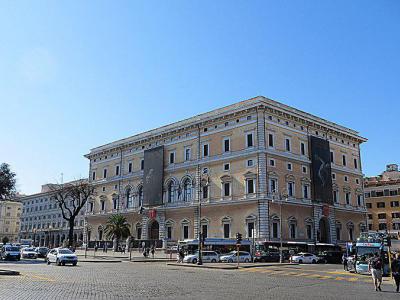
16) Museo Nazionale Romano - Palazzo Massimo alle Terme (National Museum of Rome in Massimo Palace) (must see)
Visit the Palazzo Massimo alle Terme to truly immerse yourself in the world of ancient Roman art, rivaling even the collections found within the Vatican. As part of the Museo Nazionale Romano, this location serves as the main site among the four museum locations, which also include Palazzo Altemps, Crypta Balbi, and the Museo delle Terme di Diocleziano. Within its expansive structure, you will discover a wealth of ancient treasures from the archaeological and coin collections, spanning from the 2nd century BC to the end of the 4th century AD.
Upon entering, the courtyard greets you with its enchanting portico adorned with statues, creating a captivating introduction to the remarkable treasures housed within. Noteworthy highlights include the Dying Niobid, the renowned bronze sculpture of the Boxer at Rest, and the iconic Discobolus Lancellotti. However, the true gem of the museum lies on the top floor, where ancient frescoes are meticulously displayed to "re-create" the ambiance of the homes they once adorned. Among them are the extraordinary stuccoes and wall paintings discovered in the area of the Villa Farnesina in Trastevere, as well as the legendary frescoes from Empress Livia's villa at Prima Porta. These delightful depictions showcase blooming gardens and lively orchards teeming with birds, their vibrant colors remarkably preserved. Such intricate decorations once adorned the walls of cool, sunken rooms in Livia's countryside retreat, offering a glimpse into the elegant lifestyle enjoyed outside the bustling city.
Why You Should Visit:
The wall paintings transported here from the Casa di Livia are quite stunning, but there are also some wonderful mosaics and sculptures, including the bronze Boxer – surprisingly moving.
The building is airy and there are several excellent restrooms, plus cloakroom and gift shop. The only thing lacking is a café, but there is one in the square opposite which compensates.
Tip:
If you visit, take the lift to the 2nd floor and then work your way down.
It is possible to buy a ticket that allows you to see the three other Museo Nazionale venues in the span of 5 days.
Upon entering, the courtyard greets you with its enchanting portico adorned with statues, creating a captivating introduction to the remarkable treasures housed within. Noteworthy highlights include the Dying Niobid, the renowned bronze sculpture of the Boxer at Rest, and the iconic Discobolus Lancellotti. However, the true gem of the museum lies on the top floor, where ancient frescoes are meticulously displayed to "re-create" the ambiance of the homes they once adorned. Among them are the extraordinary stuccoes and wall paintings discovered in the area of the Villa Farnesina in Trastevere, as well as the legendary frescoes from Empress Livia's villa at Prima Porta. These delightful depictions showcase blooming gardens and lively orchards teeming with birds, their vibrant colors remarkably preserved. Such intricate decorations once adorned the walls of cool, sunken rooms in Livia's countryside retreat, offering a glimpse into the elegant lifestyle enjoyed outside the bustling city.
Why You Should Visit:
The wall paintings transported here from the Casa di Livia are quite stunning, but there are also some wonderful mosaics and sculptures, including the bronze Boxer – surprisingly moving.
The building is airy and there are several excellent restrooms, plus cloakroom and gift shop. The only thing lacking is a café, but there is one in the square opposite which compensates.
Tip:
If you visit, take the lift to the 2nd floor and then work your way down.
It is possible to buy a ticket that allows you to see the three other Museo Nazionale venues in the span of 5 days.
