Custom Walk in Paris, France by karl_mortelmans_3b9d3b created on 2026-02-04
Guide Location: France » Paris
Guide Type: Custom Walk
# of Sights: 12
Tour Duration: 2 Hour(s)
Travel Distance: 2.8 Km or 1.7 Miles
Share Key: X983H
Guide Type: Custom Walk
# of Sights: 12
Tour Duration: 2 Hour(s)
Travel Distance: 2.8 Km or 1.7 Miles
Share Key: X983H
How It Works
Please retrieve this walk in the GPSmyCity app. Once done, the app will guide you from one tour stop to the next as if you had a personal tour guide. If you created the walk on this website or come to the page via a link, please follow the instructions below to retrieve the walk in the app.
Retrieve This Walk in App
Step 1. Download the app "GPSmyCity: Walks in 1K+ Cities" on Apple App Store or Google Play Store.



Step 2. In the GPSmyCity app, download(or launch) the guide "Paris Map and Walking Tours".
Step 3. Tap the menu button located at upper right corner of the "Walks" screen and select "Retrieve custom walk". Enter the share key: X983H
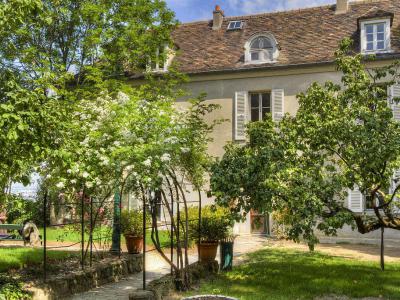
1) Musee de Montmartre (Montmartre Museum)
The Montmartre Museum occupies several historic buildings including the Hôtel Demarne, Maison du Bel Air, and the studio apartment once a residence for painters, writers, and cabaret artists at the turn of the 20th century.
This time-honored structure dates back three centuries. The Maison du Bel Air, constructed in 1660, is among Montmartre's oldest surviving buildings and hosts the museum's permanent exhibits. The Hôtel Demarne, a private neoclassical mansion from 1680, accommodates temporary exhibits.
This address has been historically a hub for artists. One of its most illustrious occupants was Auguste Renoir. During his 1876 residency, Renoir created here several masterpieces, including the iconic "Dance at the Galette Windmill" painting immortalizing the scene of sun-soaked merrymakers.
Established in 1960 and redeveloped in 2011, the museum showcases a comprehensive collection of over 6,000 art pieces including paintings, sculptures, and prints, along with 100,000 archival items, which together chronicle Montmartre’s cultural, artistic, and social evolution. Exhibits capture the essence of Montmartre’s bohemian spirit, its cabarets like Agile Rabbit and Moulin Rouge, and the broader historical context of its integration into Paris.
The museum's permanent collection features historical maps, documents, photographs, Toulouse-Lautrec posters, and original musical scores of Erik Satie (a French composer who used to work as a pianist in café-cabaret in Montmartre). It also showcases sections dedicated to pivotal events in the neighborhood's history like the French Revolution, the Russian invasion of 1814, the Paris Commune, and the construction of the Sacred Heart Basilica in 1875.
Complementing the museum's exhibits are the enchanting Renoir gardens that have been revitalized and meticulously recreated according to the artist's paintings. From here, visitors can gaze at the vineyard flourishing since the Middle Ages.
Recent additions to the place include the Café Renoir, offering a seasonal dining experience within the gardens, opened in 2014. That same year, in a bold move the museum underwent an ambitious renovation expanding its exhibition space twofold. This was done by incorporating Suzanne Valadon's studio-apartment which was reconstructed to reflect its original state, based on extensive archival research and historical analysis. The French painter lived here together with her son, Maurice Utrillo, and partner, André Utter, both of whom were also painters and formed the so-called "Infernal Trio," significantly contributing to the Montmartre art scene.
This time-honored structure dates back three centuries. The Maison du Bel Air, constructed in 1660, is among Montmartre's oldest surviving buildings and hosts the museum's permanent exhibits. The Hôtel Demarne, a private neoclassical mansion from 1680, accommodates temporary exhibits.
This address has been historically a hub for artists. One of its most illustrious occupants was Auguste Renoir. During his 1876 residency, Renoir created here several masterpieces, including the iconic "Dance at the Galette Windmill" painting immortalizing the scene of sun-soaked merrymakers.
Established in 1960 and redeveloped in 2011, the museum showcases a comprehensive collection of over 6,000 art pieces including paintings, sculptures, and prints, along with 100,000 archival items, which together chronicle Montmartre’s cultural, artistic, and social evolution. Exhibits capture the essence of Montmartre’s bohemian spirit, its cabarets like Agile Rabbit and Moulin Rouge, and the broader historical context of its integration into Paris.
The museum's permanent collection features historical maps, documents, photographs, Toulouse-Lautrec posters, and original musical scores of Erik Satie (a French composer who used to work as a pianist in café-cabaret in Montmartre). It also showcases sections dedicated to pivotal events in the neighborhood's history like the French Revolution, the Russian invasion of 1814, the Paris Commune, and the construction of the Sacred Heart Basilica in 1875.
Complementing the museum's exhibits are the enchanting Renoir gardens that have been revitalized and meticulously recreated according to the artist's paintings. From here, visitors can gaze at the vineyard flourishing since the Middle Ages.
Recent additions to the place include the Café Renoir, offering a seasonal dining experience within the gardens, opened in 2014. That same year, in a bold move the museum underwent an ambitious renovation expanding its exhibition space twofold. This was done by incorporating Suzanne Valadon's studio-apartment which was reconstructed to reflect its original state, based on extensive archival research and historical analysis. The French painter lived here together with her son, Maurice Utrillo, and partner, André Utter, both of whom were also painters and formed the so-called "Infernal Trio," significantly contributing to the Montmartre art scene.
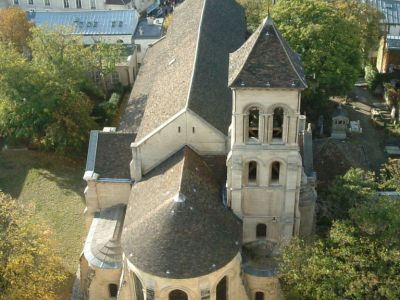
2) Eglise Saint-Pierre de Montmartre (Church of St. Peter at Montmartre)
Saint-Pierre de Montmartre is the second oldest surviving church in Paris, tracing its origins back to the 3rd century AD with foundations attributed to Saint Denis. The site, historically believed to have been a Temple of Mars, became a pilgrimage destination by the 9th century.
Officially established in 1133, the church formed the nucleus of the prestigious Montmartre Abbey, a site deeply intertwined with Parisian and religious history. After being reconsecrated in 1147, the church thrived under the patronage of French nobility up until the end of the 17th century. However, the French Revolution marked a period of decline, with the abbey's destruction and the church's desecration, temporarily transforming into a "Temple of Reason."
Post-Revolution, the church saw various uses, including a stint as a visual telegraph station and as barracks for Russian soldiers in 1814. Avoiding demolition, Saint-Pierre de Montmartre was eventually restored between 1899 and 1905 and formally returned to the religious service in 1908.
The church's hidden entry opens to a tree-filled courtyard, leading to a façade renovated in 1775 and adorned with modern bronze doorways added in 1980. These doors depict scenes from the lives of the Virgin Mary, Saint Peter, and Saint Denis of Paris. The interior showcases a Romanesque design with Gothic influences, featuring a nave with vaulted ceilings supported by intricately decorated pillars, a choir and apse with ancient elements, and unique Merovingian carvings.
Key artifacts within include the venerated statue of Our Lady of Montmartre, a Renaissance-style oval baptismal font from 1537, and a replica of the Vatican’s Saint Peter statue. The church also houses a historic organ, originally from Notre-Dame-de-Lorette, rebuilt in the 19th century.
Officially established in 1133, the church formed the nucleus of the prestigious Montmartre Abbey, a site deeply intertwined with Parisian and religious history. After being reconsecrated in 1147, the church thrived under the patronage of French nobility up until the end of the 17th century. However, the French Revolution marked a period of decline, with the abbey's destruction and the church's desecration, temporarily transforming into a "Temple of Reason."
Post-Revolution, the church saw various uses, including a stint as a visual telegraph station and as barracks for Russian soldiers in 1814. Avoiding demolition, Saint-Pierre de Montmartre was eventually restored between 1899 and 1905 and formally returned to the religious service in 1908.
The church's hidden entry opens to a tree-filled courtyard, leading to a façade renovated in 1775 and adorned with modern bronze doorways added in 1980. These doors depict scenes from the lives of the Virgin Mary, Saint Peter, and Saint Denis of Paris. The interior showcases a Romanesque design with Gothic influences, featuring a nave with vaulted ceilings supported by intricately decorated pillars, a choir and apse with ancient elements, and unique Merovingian carvings.
Key artifacts within include the venerated statue of Our Lady of Montmartre, a Renaissance-style oval baptismal font from 1537, and a replica of the Vatican’s Saint Peter statue. The church also houses a historic organ, originally from Notre-Dame-de-Lorette, rebuilt in the 19th century.
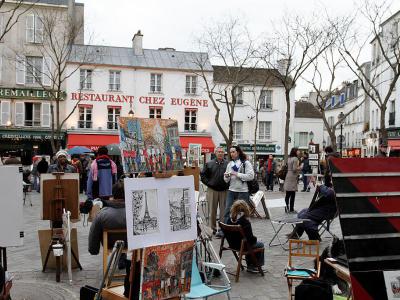
3) Place du Tertre (Tetre Square)
Tertre Square is more than just a square but a living museum of Montmartre's artistic soul. Perched at an altitude of 130 meters, close to the iconic Sacred Heart Basilica and the ancient Church of Saint-Pierre de Montmartre, it marks the historic center of Paris.
Famed worldwide, the square is a hub for artists who, much like their illustrious predecessors – Toulouse-Lautrec, Van Gogh, Modigliani, and Picasso, drawn by the affordable rent and tax-free wine in the late 19th and early 20th centuries, – set up their easels here daily to capture the essence of Montmartre for the throngs of tourists. Today, the artistic spirit continues to thrive, and visitors flock to the square to purchase local art and have their portraits painted.
The square itself houses significant sites such as the original town hall of Montmartre, established in 1790, and the restaurant À la Mère Catherine, dating back to 1793, adding layers to its rich historical narrative.
Its French name 'du Tertre,' sometimes translated as "Grave Hill", or more accurately as "square on a mound", is derived either from its high geographical position or ties to the Dutertre family, dating back to 1503. The area's history is marked by significant events, such as a conflict over cannons stored in the square during the Paris Commune in 1871. Another landmark event associated with the square is when Louis Renault's petroleum-powered car reached it on December 24, 1898, thus heralding the birth of the French automobile industry.
Competition for space in Tertre Square is intense, with artists enduring a ten-year wait for a tiny shared spot. Restrictions limit creations to specific forms of art, namely: paintings, portraits, silhouettes, and caricatures only. Since the 1990s, Tertre Square has also been a battleground for artists' rights amid escalated conflicts with restaurant terraces encroaching on their space.
As a cornerstone of Montmartre's cultural and historical identity, the square features notable buildings and commemorations, including the former town hall, the pioneering restaurant À la Mère Catherine, and commemorative plaques. A popular legend claims that the term "bistro" was coined in this square in 1814, courtesy of the Russian troops stationed here. Soldiers would shout "bystro," which means "quickly" in Russian, urging their comrades to finish their drinks and return to their duties.
Famed worldwide, the square is a hub for artists who, much like their illustrious predecessors – Toulouse-Lautrec, Van Gogh, Modigliani, and Picasso, drawn by the affordable rent and tax-free wine in the late 19th and early 20th centuries, – set up their easels here daily to capture the essence of Montmartre for the throngs of tourists. Today, the artistic spirit continues to thrive, and visitors flock to the square to purchase local art and have their portraits painted.
The square itself houses significant sites such as the original town hall of Montmartre, established in 1790, and the restaurant À la Mère Catherine, dating back to 1793, adding layers to its rich historical narrative.
Its French name 'du Tertre,' sometimes translated as "Grave Hill", or more accurately as "square on a mound", is derived either from its high geographical position or ties to the Dutertre family, dating back to 1503. The area's history is marked by significant events, such as a conflict over cannons stored in the square during the Paris Commune in 1871. Another landmark event associated with the square is when Louis Renault's petroleum-powered car reached it on December 24, 1898, thus heralding the birth of the French automobile industry.
Competition for space in Tertre Square is intense, with artists enduring a ten-year wait for a tiny shared spot. Restrictions limit creations to specific forms of art, namely: paintings, portraits, silhouettes, and caricatures only. Since the 1990s, Tertre Square has also been a battleground for artists' rights amid escalated conflicts with restaurant terraces encroaching on their space.
As a cornerstone of Montmartre's cultural and historical identity, the square features notable buildings and commemorations, including the former town hall, the pioneering restaurant À la Mère Catherine, and commemorative plaques. A popular legend claims that the term "bistro" was coined in this square in 1814, courtesy of the Russian troops stationed here. Soldiers would shout "bystro," which means "quickly" in Russian, urging their comrades to finish their drinks and return to their duties.
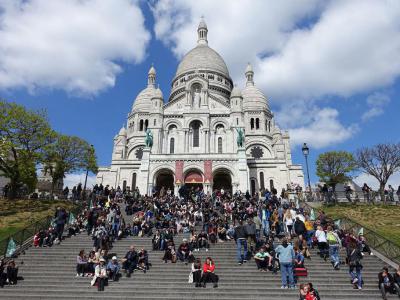
4) Basilique du Sacre-Coeur (Basilica of the Sacred Heart of Jesus) (must see)
The Basilica of the Sacred Heart of Montmartre is a Catholic church and a national historic monument since 2022. The imposing structure sits atop the Montmartre summit – the highest point in Paris (some 200 meters above the Seine). It offers a breathtaking panorama of the city from its dome, which makes it the second most-visited tourist site in the capital after the Eiffel Tower.
The idea to build the basilica came in the aftermath of the Franco-Prussian War of 1870-1871 (resulting in a humiliating defeat for France), followed by the brief and bloody Paris Commune period. Many in France, particularly conservative Catholics, viewed these events as moral failures of the nation. They believed it was a divine punishment for what they saw as the growing secularization and moral decay of French society in the decades following the French Revolution.
The new church was thus to symbolize national repentance. Its location at the highest point in Paris, however, made it a subject of controversy among left-wing politicians, as it overlooks the area where the Paris Commune erupted and was seen by some as a monument to conservative reactionism.
The construction spanned from 1875 to 1914 under the supervision of various architects. The basilica's consecration was delayed until the end of World War I, in 1919.
The building showcases a blend of Neo-Byzantine and Romanesque styles with a central rotunda, a nave, and transepts. The main dome rises 83 meters, flanked by four smaller cupolas and a bell tower that houses France’s largest bell, the Savoyarde. The rectangular base beneath the high dome is supported by massive columns as if bridging the celestial and terrestrial realms. The design incorporates a Greek cross layout centralizing the altar, surrounded by a Latin-influenced choir and ambulatory.
Artistic elements within the basilica include the grand 475-square-meter mosaic of The Triumph of the Sacred Heart of Jesus and various chapels adorned by specific professional groups, enhancing the spiritual ambiance with their thematic decorations. The crypt, unlike typical underground crypts, features stained glass windows that allow light to filter in, enriching the spiritual atmosphere. Also noteworthy is the basilica’s historic organ, recognized as a national landmark.
As a pilgrimage site, the basilica requires visitors to observe modest dress and silence out of respect for its sacredness and historical significance.
Tip:
You will need a level of fitness to climb the stairs from the base of Montmartre to the Sacred Heart Basilica. Alternatively, you can hop on the free mini-train which starts from opposite the Windmill Theater and stops behind the basilica.
The idea to build the basilica came in the aftermath of the Franco-Prussian War of 1870-1871 (resulting in a humiliating defeat for France), followed by the brief and bloody Paris Commune period. Many in France, particularly conservative Catholics, viewed these events as moral failures of the nation. They believed it was a divine punishment for what they saw as the growing secularization and moral decay of French society in the decades following the French Revolution.
The new church was thus to symbolize national repentance. Its location at the highest point in Paris, however, made it a subject of controversy among left-wing politicians, as it overlooks the area where the Paris Commune erupted and was seen by some as a monument to conservative reactionism.
The construction spanned from 1875 to 1914 under the supervision of various architects. The basilica's consecration was delayed until the end of World War I, in 1919.
The building showcases a blend of Neo-Byzantine and Romanesque styles with a central rotunda, a nave, and transepts. The main dome rises 83 meters, flanked by four smaller cupolas and a bell tower that houses France’s largest bell, the Savoyarde. The rectangular base beneath the high dome is supported by massive columns as if bridging the celestial and terrestrial realms. The design incorporates a Greek cross layout centralizing the altar, surrounded by a Latin-influenced choir and ambulatory.
Artistic elements within the basilica include the grand 475-square-meter mosaic of The Triumph of the Sacred Heart of Jesus and various chapels adorned by specific professional groups, enhancing the spiritual ambiance with their thematic decorations. The crypt, unlike typical underground crypts, features stained glass windows that allow light to filter in, enriching the spiritual atmosphere. Also noteworthy is the basilica’s historic organ, recognized as a national landmark.
As a pilgrimage site, the basilica requires visitors to observe modest dress and silence out of respect for its sacredness and historical significance.
Tip:
You will need a level of fitness to climb the stairs from the base of Montmartre to the Sacred Heart Basilica. Alternatively, you can hop on the free mini-train which starts from opposite the Windmill Theater and stops behind the basilica.
5) Le Mur des Je t'aime (Wall of Love)
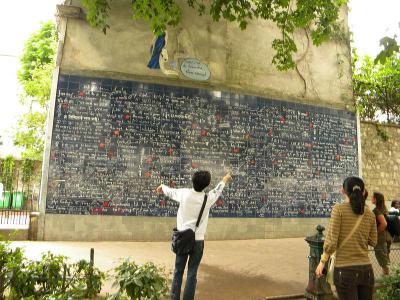
In the enchanting district of Montmartre, the “I Love You” Wall is a unique monument to romance, far removed from the traditional grandeur of historical attractions. Spanning 40 square meters, this mural is intricately composed of 612 glazed lava tiles that showcase the phrase "I love you" in more than 250 languages, celebrating both common and obscure dialects such as Navajo, Inuit, Bambara, and Esperanto.
This creation is the brainchild of Frédéric Baron, who initiated the project by collecting these tender words from his brother, neighbors, friends, and even strangers, amassing a global lexicon of affection. His vision took form when he teamed up with Claire Kito, a calligraphist and mural artist skilled in Chinese calligraphy, in 1997. Together, they scoured the Paris region to find the perfect site for their project, eventually deciding on the Jehan Rictus garden square at Abbesses Square.
Daniel Boulogne, a specialist in painted walls and art construction, joined the team in 1998. He played a crucial role in realizing the physical installation of the mural, which was completed and inaugurated in the autumn of 2000. The design incorporates red fragments scattered across the tiles, symbolizing pieces of a broken heart that, when viewed together, form a complete heart-a powerful metaphor chosen by Baron to transform the conventional image of walls as dividers into a unifying expression of love.
Today, the Wall of Love is not only a tourist attraction but also a popular backdrop for romantic milestones such as marriage proposals and wedding photographs. The serene setting is enhanced by the lush greenery of the surrounding park and occasional live music performances, creating an ideal atmosphere for visitors to experience and reflect on the profound simplicity and universality of love. The wall thus serves as a poignant reminder that even the simplest expressions of human emotion can bridge diverse cultures and languages, turning a mere space into a sanctuary of heartfelt connections.
Tip:
Don't forget to keep an eye out for the red splashes on the wall, symbolizing parts of a broken heart. Who knows, maybe you can take on the challenge of piecing them back together to form a full heart.
This creation is the brainchild of Frédéric Baron, who initiated the project by collecting these tender words from his brother, neighbors, friends, and even strangers, amassing a global lexicon of affection. His vision took form when he teamed up with Claire Kito, a calligraphist and mural artist skilled in Chinese calligraphy, in 1997. Together, they scoured the Paris region to find the perfect site for their project, eventually deciding on the Jehan Rictus garden square at Abbesses Square.
Daniel Boulogne, a specialist in painted walls and art construction, joined the team in 1998. He played a crucial role in realizing the physical installation of the mural, which was completed and inaugurated in the autumn of 2000. The design incorporates red fragments scattered across the tiles, symbolizing pieces of a broken heart that, when viewed together, form a complete heart-a powerful metaphor chosen by Baron to transform the conventional image of walls as dividers into a unifying expression of love.
Today, the Wall of Love is not only a tourist attraction but also a popular backdrop for romantic milestones such as marriage proposals and wedding photographs. The serene setting is enhanced by the lush greenery of the surrounding park and occasional live music performances, creating an ideal atmosphere for visitors to experience and reflect on the profound simplicity and universality of love. The wall thus serves as a poignant reminder that even the simplest expressions of human emotion can bridge diverse cultures and languages, turning a mere space into a sanctuary of heartfelt connections.
Tip:
Don't forget to keep an eye out for the red splashes on the wall, symbolizing parts of a broken heart. Who knows, maybe you can take on the challenge of piecing them back together to form a full heart.
6) Cafe des Deux Moulins
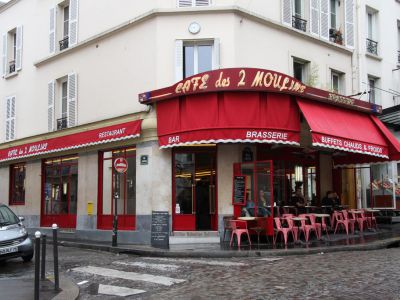
Situated in the Montmartre neighborhood of Paris, the Café des Deux Moulins derives its name from the two historical windmills nearby, the Moulin Rouge and the Moulin de la Galette. Thanks to its appearance in the 2001 film "Amélie", where it served as the workplace of the title character, the café has gained considerable fame and has become a popular tourist attraction. Visitors can expect the interior of the café to be exactly as it was in the movie, with Amelie memorabilia decorating the window on the side street and photos of lead actress Audrey Tautou smiling at them from behind the glass. Although the original owner has sold the café (under the condition that the interior remains intact), the quality/price ratio is still remarkable, with the vegetarian dishes being particularly impressive.
7) Rue Lepic (Lepic Street) and Van Gogh's Apartment
Renowned for its significance in the artistic and historical canvas of Montmartre, Lepic Street is named after General Louis Lepic, who shone at the Battle of Eylau during the Napoleonic wars in the early 1800s.
This street emerged from the transformation of several paths leading from Barriere Blanche to Montmartre's summit. Originally, this area comprised dirt roads until an 1809 incident involving Napoleon I, who, frustrated by the poor condition of the path leading to the Saint-Pierre Church, commanded the construction of a more accessible road. This eventually became Lepic Street. Over the years, it has undergone several name changes-from "New Road" to "Emperor Street," and then to "Royal Street" before settling on its current name in 1864.
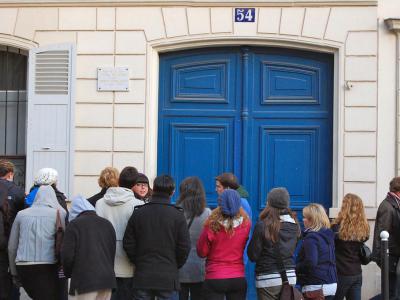
Lepic Street has witnessed significant historical events, including barricades during the Paris Commune and a bombing during the First World War, on September 2, 1914. It also harbors a deep connection with the art world. Notably, Vincent van Gogh and his brother Theo lived here, at No. 54, between 1886 and 1888. Vincent found much of his inspiration in the lively Montmartre street scenes visible from their apartment, despite his later move to the south of France for a quieter environment. Another point of interest associated with van Gogh is No. 96, painted by him.
Today, Lepic Street is vibrant with cafes and restaurants, including the Café des 2 Moulins, famously featured in the film "Amélie." Additionally, this street gained contemporary attention when it featured in the road cycling events of the 2024 Summer Olympics, drawing large crowds and highlighting its ongoing cultural relevance.
This street emerged from the transformation of several paths leading from Barriere Blanche to Montmartre's summit. Originally, this area comprised dirt roads until an 1809 incident involving Napoleon I, who, frustrated by the poor condition of the path leading to the Saint-Pierre Church, commanded the construction of a more accessible road. This eventually became Lepic Street. Over the years, it has undergone several name changes-from "New Road" to "Emperor Street," and then to "Royal Street" before settling on its current name in 1864.
Lepic Street has witnessed significant historical events, including barricades during the Paris Commune and a bombing during the First World War, on September 2, 1914. It also harbors a deep connection with the art world. Notably, Vincent van Gogh and his brother Theo lived here, at No. 54, between 1886 and 1888. Vincent found much of his inspiration in the lively Montmartre street scenes visible from their apartment, despite his later move to the south of France for a quieter environment. Another point of interest associated with van Gogh is No. 96, painted by him.
Today, Lepic Street is vibrant with cafes and restaurants, including the Café des 2 Moulins, famously featured in the film "Amélie." Additionally, this street gained contemporary attention when it featured in the road cycling events of the 2024 Summer Olympics, drawing large crowds and highlighting its ongoing cultural relevance.
8) Moulin de la Galette (Galette Windmill)
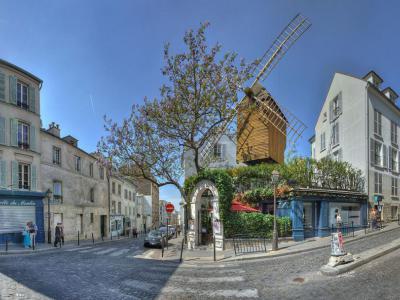
A legendary spot in Montmartre, the historic Galette Windmill is known for more than its original milling purposes. First built in 1622, the place evolved to include a famous tavern, eventually becoming a prominent leisure spot to which it owes its current fame.
Beneath the surface of the festive atmosphere, the site bears marks of historical strife. The Debray family, who acquired the windmill in 1809, expanded its operations from flour production to pressing harvest and grinding materials for manufacturing. During the siege of Paris by Russian Cossacks at the end of the Napoleonic Wars, in 1814, and then during the Franco-Prussian War, in 1870, four Debray men lost their lives defending the property and were nailed to the wings of the windmill.
The surviving Debray son transformed the mill into a tavern, capitalizing on the popularity of its galette, a type of brown bread they produced. Adding alcohol to its menu, the windmill became a cabaret and attracted Parisians with its simple country pleasures - a glass of wine, fresh bread made from the mill's flour, and panoramic views of Paris and the Seine down below. The idea was an instant success and the introduction of a dance hall in 1833, dedicated to the Greek muse Terpsichore, further solidified its status as a social and cultural hub.
Artists like Renoir, van Gogh, and Picasso immortalized the vibrant atmosphere of the place in their paintings. The most famous of them is Renoir's depiction called "Dance at the Galette Windmill."
Despite destruction threats and changes over time, including shifts from an open-air café to a music hall, television studio, and restaurant, the property was preserved and declared a monument in 1958.
The Radet windmill marks the entrance to The Galette Windmill bistro, preserving its legacy as a historical and cultural landmark. In fair weather, the place is still a great spot to savor locally made wine and enjoy live music in the garden, much like the Parisians did centuries ago in Renoir's famous painting.
Beneath the surface of the festive atmosphere, the site bears marks of historical strife. The Debray family, who acquired the windmill in 1809, expanded its operations from flour production to pressing harvest and grinding materials for manufacturing. During the siege of Paris by Russian Cossacks at the end of the Napoleonic Wars, in 1814, and then during the Franco-Prussian War, in 1870, four Debray men lost their lives defending the property and were nailed to the wings of the windmill.
The surviving Debray son transformed the mill into a tavern, capitalizing on the popularity of its galette, a type of brown bread they produced. Adding alcohol to its menu, the windmill became a cabaret and attracted Parisians with its simple country pleasures - a glass of wine, fresh bread made from the mill's flour, and panoramic views of Paris and the Seine down below. The idea was an instant success and the introduction of a dance hall in 1833, dedicated to the Greek muse Terpsichore, further solidified its status as a social and cultural hub.
Artists like Renoir, van Gogh, and Picasso immortalized the vibrant atmosphere of the place in their paintings. The most famous of them is Renoir's depiction called "Dance at the Galette Windmill."
Despite destruction threats and changes over time, including shifts from an open-air café to a music hall, television studio, and restaurant, the property was preserved and declared a monument in 1958.
The Radet windmill marks the entrance to The Galette Windmill bistro, preserving its legacy as a historical and cultural landmark. In fair weather, the place is still a great spot to savor locally made wine and enjoy live music in the garden, much like the Parisians did centuries ago in Renoir's famous painting.
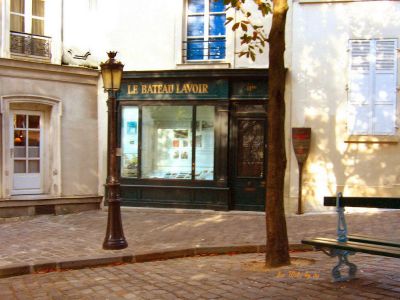
9) Le Bateau-Lavoir – Picasso's Old Studio
This building, nicknamed "Washhouse Boat," holds a distinguished place in art history as the epicenter of the early 20th-century artistic development in Montmartre. Originally a ballroom and piano factory, it was transformed into a warren of artists’ studios around 1889. Housing small, unheated rooms along a shared corridor with a solitary water source, it earned its nickname due to its dark, cramped conditions and tendency to sway on stormy days, reminiscent of laundry boats on the Seine.
The place attracted a host of emerging artists, writers, actors, and art dealers, many of whom, initially extremely poor and unappreciated, later came to shape modern art and culture. Among the early residents here was the French landscape and marine painter Maxime Maufra, followed by more prominent figures like Kees van Dongen and Pablo Picasso, between 1900 and 1904. The building became an informal club, drawing the talents of Henri Matisse, Georges Braque, Amedeo Modigliani, and Juan Gris, alongside literary figures such as Guillaume Apollinaire and Gertrude Stein.
Picasso, who lived here from 1904 to 1912, created seminal works like "Young Girl with a Flower Basket" and "Boy with a Pipe" in 1905, and "The Young Ladies of Avignon" in 1907, signaling the beginnings of Cubism. Daily discussions in the studios spilled out into the neighboring cafes. Slowly, the old style of painting was abandoned and a new aesthetic doctrine started to emerge.
The cultural exodus initiated by World War I saw many residents move to the Montparnasse district in the south of Paris, on the left bank of the Seine, for a more comfortable, calmer abode. Yet the Washhouse Boat legend, marked by events like the banquet for Henri Rousseau and Modigliani’s destructive rage, endures as a cornerstone of Montmartre's bohemian and artistic history.
However, the building's artistic legacy faced a harsh interruption when the wooden structure caught fire and was mostly destroyed in 1970, leaving only the façade intact. Fortunately, the edifice was rebuilt eight years later. Today, the birthplace of Cubism is no longer open to the public, but its front window, filled with old photographs, vividly depicts the eventful history of the place.
For those fascinated by the artistic movements of early 20th-century Paris, a visit here is a pilgrimage to one of the cradles of modern art, providing a deep insight into the lives and works of some of the most influential figures in art and literature.
The place attracted a host of emerging artists, writers, actors, and art dealers, many of whom, initially extremely poor and unappreciated, later came to shape modern art and culture. Among the early residents here was the French landscape and marine painter Maxime Maufra, followed by more prominent figures like Kees van Dongen and Pablo Picasso, between 1900 and 1904. The building became an informal club, drawing the talents of Henri Matisse, Georges Braque, Amedeo Modigliani, and Juan Gris, alongside literary figures such as Guillaume Apollinaire and Gertrude Stein.
Picasso, who lived here from 1904 to 1912, created seminal works like "Young Girl with a Flower Basket" and "Boy with a Pipe" in 1905, and "The Young Ladies of Avignon" in 1907, signaling the beginnings of Cubism. Daily discussions in the studios spilled out into the neighboring cafes. Slowly, the old style of painting was abandoned and a new aesthetic doctrine started to emerge.
The cultural exodus initiated by World War I saw many residents move to the Montparnasse district in the south of Paris, on the left bank of the Seine, for a more comfortable, calmer abode. Yet the Washhouse Boat legend, marked by events like the banquet for Henri Rousseau and Modigliani’s destructive rage, endures as a cornerstone of Montmartre's bohemian and artistic history.
However, the building's artistic legacy faced a harsh interruption when the wooden structure caught fire and was mostly destroyed in 1970, leaving only the façade intact. Fortunately, the edifice was rebuilt eight years later. Today, the birthplace of Cubism is no longer open to the public, but its front window, filled with old photographs, vividly depicts the eventful history of the place.
For those fascinated by the artistic movements of early 20th-century Paris, a visit here is a pilgrimage to one of the cradles of modern art, providing a deep insight into the lives and works of some of the most influential figures in art and literature.
10) Place du Calvaire (Calvary Square)
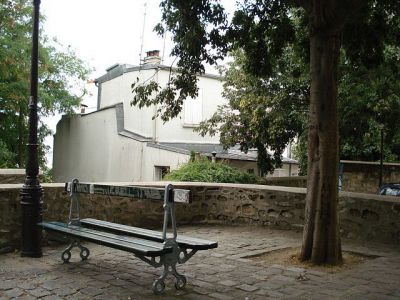
The Place du Calvaire in Montmartre is a picturesque and rustic location that offers a shady, peaceful retreat from the bustling atmosphere of nearby Place du Tertre. Its name originates from the "calvary" monument made up of thee crosses that was built in the gardens of the Saint-Pierre Church in 1805. Although the old monument is in a deteriorated state, it can still be seen behind the church's apse from Rue du Chevalier de la Barre.
The square now boasts one of Montmartre's highest property prices per square meter. It's no surprise when you take in the pure and fresh air, surrounded by well-preserved wild gardens and the buzzing of bees producing the renowned honey of the Butte.
In the heart of Montmartre, the Place du Calvaire stands as a small miracle. Its authentic and charming allure serves as a reminder of the neighborhood's unique character, making it a special place to explore.
Tip:
At number 4, you'll discover the famous restaurant "Chez Plumeau", which achieved fame as a beloved cabaret for singers during the 1950s. This brasserie regularly hosts live concerts, providing a delightful musical backdrop to your dining experience. The menu features traditional cuisine crafted from fresh, seasonal ingredients, including their renowned escargots and fisherman's stew.
The square now boasts one of Montmartre's highest property prices per square meter. It's no surprise when you take in the pure and fresh air, surrounded by well-preserved wild gardens and the buzzing of bees producing the renowned honey of the Butte.
In the heart of Montmartre, the Place du Calvaire stands as a small miracle. Its authentic and charming allure serves as a reminder of the neighborhood's unique character, making it a special place to explore.
Tip:
At number 4, you'll discover the famous restaurant "Chez Plumeau", which achieved fame as a beloved cabaret for singers during the 1950s. This brasserie regularly hosts live concerts, providing a delightful musical backdrop to your dining experience. The menu features traditional cuisine crafted from fresh, seasonal ingredients, including their renowned escargots and fisherman's stew.
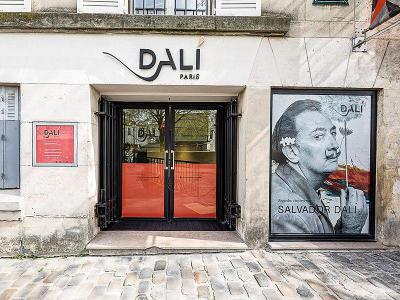
11) Dali Paris (Espace Dali)
Dalí Paris, previously known as Espace Dalí, is a museum near Tertre Square in the Montmartre district, dedicated entirely to the works of Salvador Dalí, one of the 20th century's most celebrated surrealist artists. Opened in 1991, the museum boasts the largest collection of Dalí's sculptures and engravings in France, with nearly 300 original pieces on display.
The museum's collection includes a significant array of Dalí's three-dimensional work, reflecting his journey from Impressionism through Cubism to his ultimate fame in surrealism. These sculptures embody the transformation of his iconic surrealistic paintings into tangible forms, such as the well-known “Space Elephant” and “Alice in Wonderland.” The display also extends to include some of his lesser-known works on paper like “Moses and Monotheism” and “Memories of Surrealism,” offering a comprehensive insight into his diverse artistic endeavors.
Curated by Italian gallerist and collector Beniamino Levi, the museum – part of the extensive Dalí Universe collection – not only showcases his works but also immerses visitors in the Catalan master’s imaginative world. The atmosphere is enriched with background music and includes creative workshops for children, making it a family-friendly venue that encourages younger generations to engage with Dalí's art.
Adjacent to the main exhibition space are two art galleries: Galerie Dalí and Galerie Montmartre. The former presents a selection of Dalí’s sculptures, engravings, and lithographs, while Galerie Montmartre features works by various contemporary artists, further enhancing the museum’s artistic environment.
The museum also offers unique glimpses into Dalí's multifaceted creativity through displays of his clothing designs and a rare film shown in one of the corridors, providing a broader context of his contributions to both art and fashion.
Each year, Dalí Paris also introduces a new temporary exhibition, continually refreshing its appeal to visitors and Dalí aficionados eager to delve deeper into the surreal and inventive world of Salvador Dalí.
Tip:
There is a lovely gift shop on the premises and even the opportunity to buy some of the original artwork if you feel like spending serious money.
The museum's collection includes a significant array of Dalí's three-dimensional work, reflecting his journey from Impressionism through Cubism to his ultimate fame in surrealism. These sculptures embody the transformation of his iconic surrealistic paintings into tangible forms, such as the well-known “Space Elephant” and “Alice in Wonderland.” The display also extends to include some of his lesser-known works on paper like “Moses and Monotheism” and “Memories of Surrealism,” offering a comprehensive insight into his diverse artistic endeavors.
Curated by Italian gallerist and collector Beniamino Levi, the museum – part of the extensive Dalí Universe collection – not only showcases his works but also immerses visitors in the Catalan master’s imaginative world. The atmosphere is enriched with background music and includes creative workshops for children, making it a family-friendly venue that encourages younger generations to engage with Dalí's art.
Adjacent to the main exhibition space are two art galleries: Galerie Dalí and Galerie Montmartre. The former presents a selection of Dalí’s sculptures, engravings, and lithographs, while Galerie Montmartre features works by various contemporary artists, further enhancing the museum’s artistic environment.
The museum also offers unique glimpses into Dalí's multifaceted creativity through displays of his clothing designs and a rare film shown in one of the corridors, providing a broader context of his contributions to both art and fashion.
Each year, Dalí Paris also introduces a new temporary exhibition, continually refreshing its appeal to visitors and Dalí aficionados eager to delve deeper into the surreal and inventive world of Salvador Dalí.
Tip:
There is a lovely gift shop on the premises and even the opportunity to buy some of the original artwork if you feel like spending serious money.
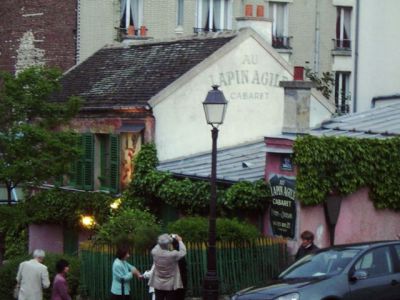
12) Cabaret Au Lapin Agile (Agile Rabbit Cabaret)
This strange-looking but lovely little house on the northern slope of Montmartre has been in place for over one and a half centuries. Its pub-like setting exudes genuine French cabaret vibes, though, unlike regular cabarets, it does not feature topless dancers. Instead, patrons here are treated to songs, poetry, and humor (all in French, though).
The Agile Rabbit Cabaret has a storied past stretching back to around 1860 when it was known as "Where the Thieves Meet". Evolving in name and reputation, the venue was re-titled “The Cabaret of Assassins” after an incident involving gangsters killing the owner's son and its decoration with portraits of famous murderers. The cabaret’s current name is derived from a pun on a painting by French caricaturist Andre Gill depicting a rabbit leaping from a saucepan, known originally as "Gill's Rabbit" and eventually morphing into "Agile Rabbit". A replica of that painting now adorns the premises. Sadly, the original was stolen in 1893.
Purchased in the early 20th century by cabaret singer and nightclub owner Aristide Bruant, the Agile Rabbit was preserved from demolition and became a regular haunt for artists and writers, such as Picasso, Modigliani, Utrillo, and Apollinaire, who congregated here to debate the essence of art. Situated near the Sacred Heart Basilica, the epicenter of Paris's artistic movement at the time, this cabaret also attracted a diverse crowd including local eccentrics, students, and members of the bourgeoisie.
In 1905, Picasso paid for a meal here with one of his paintings, following which he quickly exited and painted another one, which he named "At Agile Rabbit". In the 1980s, this painting sold for millions of pounds at an auction, largely elevating the cabaret's global recognition. Today, it is on display at the Metropolitan Museum of Art in New York City. Other Montmartre artists like Roman Greco and Maurice Utrillo have also depicted Agile Rabbit in their works.
The cabaret's legacy further extended into modern pop culture when American comedian Steve Martin wrote the play “Picasso at the Agile Rabbit” in 1993, which fictionalizes a meeting between Pablo Picasso and Albert Einstein here.
Today, the Agile Rabbit remains largely unchanged, continuing its legacy as an informal cabaret venue that showcases poets and singers performing traditional French songs, some dating back to the 15th century. Sometimes, shows last as long as four hours, creating an incredibly warm atmosphere and making the time spent here well worth remembering.
Tip:
This place is usually rather busy, so advance reservations are highly recommended.
The Agile Rabbit Cabaret has a storied past stretching back to around 1860 when it was known as "Where the Thieves Meet". Evolving in name and reputation, the venue was re-titled “The Cabaret of Assassins” after an incident involving gangsters killing the owner's son and its decoration with portraits of famous murderers. The cabaret’s current name is derived from a pun on a painting by French caricaturist Andre Gill depicting a rabbit leaping from a saucepan, known originally as "Gill's Rabbit" and eventually morphing into "Agile Rabbit". A replica of that painting now adorns the premises. Sadly, the original was stolen in 1893.
Purchased in the early 20th century by cabaret singer and nightclub owner Aristide Bruant, the Agile Rabbit was preserved from demolition and became a regular haunt for artists and writers, such as Picasso, Modigliani, Utrillo, and Apollinaire, who congregated here to debate the essence of art. Situated near the Sacred Heart Basilica, the epicenter of Paris's artistic movement at the time, this cabaret also attracted a diverse crowd including local eccentrics, students, and members of the bourgeoisie.
In 1905, Picasso paid for a meal here with one of his paintings, following which he quickly exited and painted another one, which he named "At Agile Rabbit". In the 1980s, this painting sold for millions of pounds at an auction, largely elevating the cabaret's global recognition. Today, it is on display at the Metropolitan Museum of Art in New York City. Other Montmartre artists like Roman Greco and Maurice Utrillo have also depicted Agile Rabbit in their works.
The cabaret's legacy further extended into modern pop culture when American comedian Steve Martin wrote the play “Picasso at the Agile Rabbit” in 1993, which fictionalizes a meeting between Pablo Picasso and Albert Einstein here.
Today, the Agile Rabbit remains largely unchanged, continuing its legacy as an informal cabaret venue that showcases poets and singers performing traditional French songs, some dating back to the 15th century. Sometimes, shows last as long as four hours, creating an incredibly warm atmosphere and making the time spent here well worth remembering.
Tip:
This place is usually rather busy, so advance reservations are highly recommended.
